A war within a war: Yemen’s latest conflict
By AFP
December 30, 2025

A Saudi air strike damaged military vehicles in the port of Makalla, but the UAE inisisted there were no weapons aboard - Copyright AFP STRINGER
David STOUT, Haitham EL-TABEI
Yemen has been fighting a crippling war with itself since Iran-backed Houthi rebels ousted the government in 2014, triggering a Saudi-led military intervention.
Now, a new conflict is brewing within the conflict, involving rival armed factions loosely grouped under the government but separately backed by the United Arab Emirates and Saudi Arabia.
The confrontation could tear apart the already-fractured government and threaten slow-moving peace negotiations with the Houthis, including a UN-brokered ceasefire that has largely held since 2022.
It began earlier this month when the Southern Transitional Council (STC) — a UAE-backed secessionist group and key government partner — seized military bases, checkpoints and oil fields and captured in most of resource-rich Hadramawt province and swaths of neighbouring Mahrah.
Saudi Arabia, Yemen’s wealthy neighbour and chief supporter of the government, has hit back, striking what it called a weapons shipment from the UAE to the separatists on Tuesday.
The UAE denied sending weapons to the STC, saying it was shipping vehicles to its own forces in Yemen.
Here’s a guide to the latest events and what could happen next.
What’s happening now?
Tensions escalated on Tuesday when the Saudi-led military coalition attacked a shipment of weapons and combat vehicles that it said was sent from the UAE for the separatists.
STC positions were also hit by airstrikes on Friday, following calls from Riyadh for a withdrawal from Hadramawt and Mahrah.
A Yemeni military official said around 15,000 Saudi-backed fighters were amassed near the Saudi border, but had not been given orders to advance.
“The standoff risks upending Yemen’s fragile three-and-a-half-year truce, renewing a war that has repeatedly played to the advantage of the Iran-backed Houthis,” wrote April Longley Alley, a senior fellow at the Washington Institute, in an analysis.
“It could also further strain relations between key US allies Saudi Arabia and the UAE.”
Abu Dhabi is key supporter of the STC, with UAE flags reguarly seen at the separatists’ rallies.
What does the STC want?
The STC appears to be launching a bid for greater self-determination over territories it controls or even outright independence, according to observers.
Headed by Aidaros Alzubidi, the STC is a coalition of groups that want to bring back South Yemen, which existed from 1967 to 1990, when it reunified with North Yemen.
They now control almost all of South Yemen’s former territory.
“The Southern Transitional Council is betting that if the South can be united under a single leadership –- its own, of course –- it can cordon the South off from the Houthis in the North, utilise oil and gas revenue, and create a stable and functioning state,” wrote Gregory D. Johnsen, a non-resident fellow at the Arab Gulf States Institute, in a recent analysis.
Such a move “is a tall order, and it will likely be contested both internally and externally”, Johnsen added.
Why is Saudi ‘sleepless’ over Hadramawt?
Hadramawt is Yemen’s largest province — compromising roughly a third of the country’s territory — and its wealthiest.
It home to most of the country’s petroleum deposits that are vital to government revenues, and borders Saudi Arabia to the north.
And its ports are away from the Red Sea hotspot that regularly comes under Houthi fire.
But, for the Saudis, the province that abuts its southern border is about more than just land and wealth.
For generations, Hadramawt families have been a force in the Saudi economy and make up a sizeable portion of the business community.
Seen as having entrepreneurial skills and grit, migrants from Hadramawt have long flourished in Saudi Arabia — from running family restaurants to starting multi-billion dollar construction consortiums.
Losing control and influence over Hadramawt to a militia backed by the UAE would be both a psychological and strategic blow to Riyadh.
“If I’m Saudi Arabia, I’d be sleepless if I lose Hadramawt,” said Farea al-Muslimi, a research fellow at Chatham House’s Middle East and North Africa Programme.
Can the Saudis stop the separatists?
The latest conflict pits the Saudi alliance against a militia keen to exert control over territory that it sees as historically distinct from the rest of Yemen.
The decade-long, largely fruitless fight against the Houthis may not give Riyadh much cause for optimism.
Despite spending billions in a decade-long campaign including withering air strikes, the Saudi-led campaign has failed to bring the Houthis to heel.
Military experts cite the south’s more open terrain as playing to Saudi Arabia’s possible advantage. An air campaign alone, however, is unlikely to dislodge their forces.
Airstrikes “can never make a significant difference in battles if there is no ground war”, said Muslimi.
By AFP
December 30, 2025
A Saudi air strike damaged military vehicles in the port of Makalla, but the UAE inisisted there were no weapons aboard - Copyright AFP STRINGER
David STOUT, Haitham EL-TABEI
Yemen has been fighting a crippling war with itself since Iran-backed Houthi rebels ousted the government in 2014, triggering a Saudi-led military intervention.
Now, a new conflict is brewing within the conflict, involving rival armed factions loosely grouped under the government but separately backed by the United Arab Emirates and Saudi Arabia.
The confrontation could tear apart the already-fractured government and threaten slow-moving peace negotiations with the Houthis, including a UN-brokered ceasefire that has largely held since 2022.
It began earlier this month when the Southern Transitional Council (STC) — a UAE-backed secessionist group and key government partner — seized military bases, checkpoints and oil fields and captured in most of resource-rich Hadramawt province and swaths of neighbouring Mahrah.
Saudi Arabia, Yemen’s wealthy neighbour and chief supporter of the government, has hit back, striking what it called a weapons shipment from the UAE to the separatists on Tuesday.
The UAE denied sending weapons to the STC, saying it was shipping vehicles to its own forces in Yemen.
Here’s a guide to the latest events and what could happen next.
What’s happening now?
Tensions escalated on Tuesday when the Saudi-led military coalition attacked a shipment of weapons and combat vehicles that it said was sent from the UAE for the separatists.
STC positions were also hit by airstrikes on Friday, following calls from Riyadh for a withdrawal from Hadramawt and Mahrah.
A Yemeni military official said around 15,000 Saudi-backed fighters were amassed near the Saudi border, but had not been given orders to advance.
“The standoff risks upending Yemen’s fragile three-and-a-half-year truce, renewing a war that has repeatedly played to the advantage of the Iran-backed Houthis,” wrote April Longley Alley, a senior fellow at the Washington Institute, in an analysis.
“It could also further strain relations between key US allies Saudi Arabia and the UAE.”
Abu Dhabi is key supporter of the STC, with UAE flags reguarly seen at the separatists’ rallies.
What does the STC want?
The STC appears to be launching a bid for greater self-determination over territories it controls or even outright independence, according to observers.
Headed by Aidaros Alzubidi, the STC is a coalition of groups that want to bring back South Yemen, which existed from 1967 to 1990, when it reunified with North Yemen.
They now control almost all of South Yemen’s former territory.
“The Southern Transitional Council is betting that if the South can be united under a single leadership –- its own, of course –- it can cordon the South off from the Houthis in the North, utilise oil and gas revenue, and create a stable and functioning state,” wrote Gregory D. Johnsen, a non-resident fellow at the Arab Gulf States Institute, in a recent analysis.
Such a move “is a tall order, and it will likely be contested both internally and externally”, Johnsen added.
Why is Saudi ‘sleepless’ over Hadramawt?
Hadramawt is Yemen’s largest province — compromising roughly a third of the country’s territory — and its wealthiest.
It home to most of the country’s petroleum deposits that are vital to government revenues, and borders Saudi Arabia to the north.
And its ports are away from the Red Sea hotspot that regularly comes under Houthi fire.
But, for the Saudis, the province that abuts its southern border is about more than just land and wealth.
For generations, Hadramawt families have been a force in the Saudi economy and make up a sizeable portion of the business community.
Seen as having entrepreneurial skills and grit, migrants from Hadramawt have long flourished in Saudi Arabia — from running family restaurants to starting multi-billion dollar construction consortiums.
Losing control and influence over Hadramawt to a militia backed by the UAE would be both a psychological and strategic blow to Riyadh.
“If I’m Saudi Arabia, I’d be sleepless if I lose Hadramawt,” said Farea al-Muslimi, a research fellow at Chatham House’s Middle East and North Africa Programme.
Can the Saudis stop the separatists?
The latest conflict pits the Saudi alliance against a militia keen to exert control over territory that it sees as historically distinct from the rest of Yemen.
The decade-long, largely fruitless fight against the Houthis may not give Riyadh much cause for optimism.
Despite spending billions in a decade-long campaign including withering air strikes, the Saudi-led campaign has failed to bring the Houthis to heel.
Military experts cite the south’s more open terrain as playing to Saudi Arabia’s possible advantage. An air campaign alone, however, is unlikely to dislodge their forces.
Airstrikes “can never make a significant difference in battles if there is no ground war”, said Muslimi.
What do we know about deadly conflict in Yemen?
The war in Yemen, now in its second decade, is one of the world’s most devastating conflicts, involving local factions, regional powers and international interests.
The war in Yemen, now in its second decade, is one of the world’s most devastating conflicts, involving local factions, regional powers and international interests.
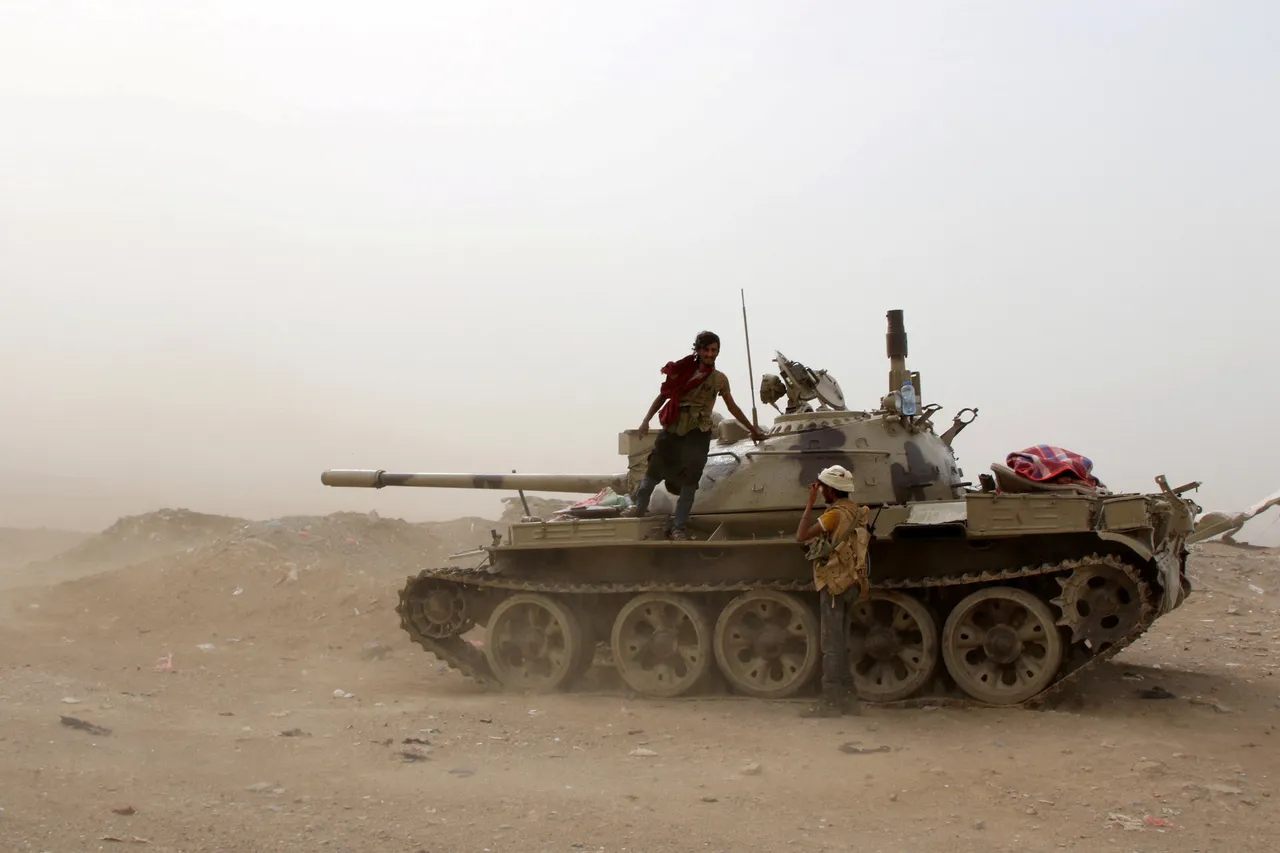
Members of UAE-backed southern Yemeni separatist forces stand by a tank during clashes with government forces in Aden / Reuters
TRT WORLD
12/30/2025
On Tuesday, a Saudi-led coalition targeted a large quantity of weapons and combat vehicles — destined for UAE-backed separatist Southern Transitional Council (STC) forces —that were being offloaded from ships at a port in Yemen.
Historically its ally, Saudi Arabia slammed the UAE for backing STC, which has recently claimed control over swathes of territory in southeastern Yemen. This marked the most significant escalation between the two Gulf nations.
The STC has been part of the coalition fighting alongside the internationally recognised government against the Iran-backed group Houthis, which holds Yemen's capital, Sanaa, and the heavily populated northwest.
The Houthis gained global prominence after the start of Israel’s genocidal war on Gaza in October 2023, when they started attacking commercial vessels in the Red Sea in what they said was solidarity with Palestinians in Gaza, prompting the US and Israel to carry out strikes on Houthi targets. The Houthis have stopped their strikes since an October 10 ceasefire came into effect between Israel and Hamas.
The over two-decade conflict in Yemen has led to a devastating humanitarian crisis, with the UNICEF reporting in March 2025 that one in two children under five in Yemen is malnourished.
What is behind the current escalation in Yemen?
The unification
Yemen, situated between Saudi Arabia and an important shipping route on the Red Sea, was split into northern and southern states until 1990.
South Yemen agreed to unification with the north after a factional civil war in 1986 that wiped out its political leadership, and as its main financial patron, the erstwhile Soviet Union, collapsed.
Meanwhile, in the north, the Houthis emerged in the late 1990s, fighting guerrilla wars against the government.
The vast majority of Houthis are followers of Zaidi Shiaism and are backed by Iran.
In 2004, the group's founder launched a rebellion against the state, leading to six wars between 2004 and 2010. The group is led by Abdul Malik al Houthi.
Arab spring
Protests erupted across Yemen in January 2011, calling for an end to President Ali Abdullah Saleh’s 33-year rule.
Key tribal groups and military commanders defected to the opposition, triggering clashes in the capital, Sanaa.
Saleh was seriously wounded in a June bombing and flown to Saudi Arabia for treatment before returning months later.
In November 2011, Saleh finally signed a deal transferring power to his deputy, Abdrabbuh Mansour Hadi.
In late 2014, the Houthis seized control of much of Sanaa after weeks of protests.
Houthis take control
By early 2015, the group had placed President Hadi under house arrest, prompting his resignation.
He later fled to the southern city of Aden, rescinded his resignation, and denounced the Houthi takeover as a coup.
As Houthi rebels advanced south, President Hadi fled Yemen for Saudi Arabia.
Later that month, a Saudi-led coalition launched Operation Decisive Storm, citing a request from Hadi to restore his government.
In May 2015, former president Saleh formally allied with the Houthis, despite years of rivalry.
UAE-backed STC
By 2017, the war had triggered what aid agencies described as one of the world’s worst humanitarian crises, with widespread displacement, cholera outbreaks and growing fears of famine.
In December 2017, fighting erupted in Sanaa between the Houthis and Saleh’s forces after Saleh broke with the group.
Saleh was killed, consolidating Houthi control over much of northern Yemen.
In January 2018, the UAE-backed STC seized control of Aden after clashes with forces loyal to President Hadi.
The STC and the Hadi government, however, formalised a new power-sharing agreement in Aden in December 2020.
On 7 April 2022, Hadi announced in a televised speech that he was resigning from office and transferring power to the newly formed eight-member Presidential Leadership Council, chaired by Rashad al-Alimi.
While the internationally recognised government has formally been based in Aden since fleeing the Houthis in early 2015, it has spent much of that time operating from the Saudi capital, Riyadh.
Its head, Rashad al-Alimi, and Prime Minister Salem Saleh Bin Braik both left Aden for Riyadh when the STC took over.
Since the April 2022 UN-brokered truce between Saudi-backed coalition forces and the Iran-backed Houthis, open warfare has paused, but peace has remained elusive.
TRT WORLD
12/30/2025
On Tuesday, a Saudi-led coalition targeted a large quantity of weapons and combat vehicles — destined for UAE-backed separatist Southern Transitional Council (STC) forces —that were being offloaded from ships at a port in Yemen.
Historically its ally, Saudi Arabia slammed the UAE for backing STC, which has recently claimed control over swathes of territory in southeastern Yemen. This marked the most significant escalation between the two Gulf nations.
The STC has been part of the coalition fighting alongside the internationally recognised government against the Iran-backed group Houthis, which holds Yemen's capital, Sanaa, and the heavily populated northwest.
The Houthis gained global prominence after the start of Israel’s genocidal war on Gaza in October 2023, when they started attacking commercial vessels in the Red Sea in what they said was solidarity with Palestinians in Gaza, prompting the US and Israel to carry out strikes on Houthi targets. The Houthis have stopped their strikes since an October 10 ceasefire came into effect between Israel and Hamas.
The over two-decade conflict in Yemen has led to a devastating humanitarian crisis, with the UNICEF reporting in March 2025 that one in two children under five in Yemen is malnourished.
What is behind the current escalation in Yemen?
The unification
Yemen, situated between Saudi Arabia and an important shipping route on the Red Sea, was split into northern and southern states until 1990.
South Yemen agreed to unification with the north after a factional civil war in 1986 that wiped out its political leadership, and as its main financial patron, the erstwhile Soviet Union, collapsed.
Meanwhile, in the north, the Houthis emerged in the late 1990s, fighting guerrilla wars against the government.
The vast majority of Houthis are followers of Zaidi Shiaism and are backed by Iran.
In 2004, the group's founder launched a rebellion against the state, leading to six wars between 2004 and 2010. The group is led by Abdul Malik al Houthi.
Arab spring
Protests erupted across Yemen in January 2011, calling for an end to President Ali Abdullah Saleh’s 33-year rule.
Key tribal groups and military commanders defected to the opposition, triggering clashes in the capital, Sanaa.
Saleh was seriously wounded in a June bombing and flown to Saudi Arabia for treatment before returning months later.
In November 2011, Saleh finally signed a deal transferring power to his deputy, Abdrabbuh Mansour Hadi.
In late 2014, the Houthis seized control of much of Sanaa after weeks of protests.
Houthis take control
By early 2015, the group had placed President Hadi under house arrest, prompting his resignation.
He later fled to the southern city of Aden, rescinded his resignation, and denounced the Houthi takeover as a coup.
As Houthi rebels advanced south, President Hadi fled Yemen for Saudi Arabia.
Later that month, a Saudi-led coalition launched Operation Decisive Storm, citing a request from Hadi to restore his government.
In May 2015, former president Saleh formally allied with the Houthis, despite years of rivalry.
UAE-backed STC
By 2017, the war had triggered what aid agencies described as one of the world’s worst humanitarian crises, with widespread displacement, cholera outbreaks and growing fears of famine.
In December 2017, fighting erupted in Sanaa between the Houthis and Saleh’s forces after Saleh broke with the group.
Saleh was killed, consolidating Houthi control over much of northern Yemen.
In January 2018, the UAE-backed STC seized control of Aden after clashes with forces loyal to President Hadi.
The STC and the Hadi government, however, formalised a new power-sharing agreement in Aden in December 2020.
On 7 April 2022, Hadi announced in a televised speech that he was resigning from office and transferring power to the newly formed eight-member Presidential Leadership Council, chaired by Rashad al-Alimi.
While the internationally recognised government has formally been based in Aden since fleeing the Houthis in early 2015, it has spent much of that time operating from the Saudi capital, Riyadh.
Its head, Rashad al-Alimi, and Prime Minister Salem Saleh Bin Braik both left Aden for Riyadh when the STC took over.
Since the April 2022 UN-brokered truce between Saudi-backed coalition forces and the Iran-backed Houthis, open warfare has paused, but peace has remained elusive.
The UAE-backed STC, which seeks a separate state in Yemen's south, has in recent weeks swept through swathes of the country.
12/30/2025
TRT/AA

Fighters from Yemen’s UAE-backed Southern Transitional Council during a military operation in Abyan province, southern Yemen, Dec. 15, 2025. / Reuters
Yemen's presidential council has ordered all forces of the United Arab Emirates to leave the country within 24 hours, and cancelled a security pact with the UAE as tensions rise in the years-long infighting in which regional powers back different factions.
The Presidential Leadership Council on Tuesday also imposed a state of emergency and a 72-hour ban on all border crossings into the territory they hold.
"The Joint Defence Agreement with the United Arab Emirates is hereby cancelled," according to a statement from Yemen’s Presidential Leadership Council head Rashad al-Alimi on Tuesday. At the same time, a separate decree from him announced a 90-day state of emergency, including a 72-hour air, sea, and land blockade.
The statement came as the Saudi-led coalition said it targeted a large quantity of weapons and combat vehicles destined for Southern Transitional Council (STC) forces that were being offloaded from ships at Mukalla port in Yemen.
In remarks reported by the Saudi Press Agency, Coalition Forces spokesperson Major General Turki al-Maliki said two vessels arriving from the UAE port of Fujairah entered the port of Mukalla on December 27-28 without securing official authorisation from the coalition’s Joint Forces Command.
The UAE-backed STC, which seeks to revive the formerly independent state of South Yemen, has in recent weeks swept through swathes of the country, expelling government forces and their allies.
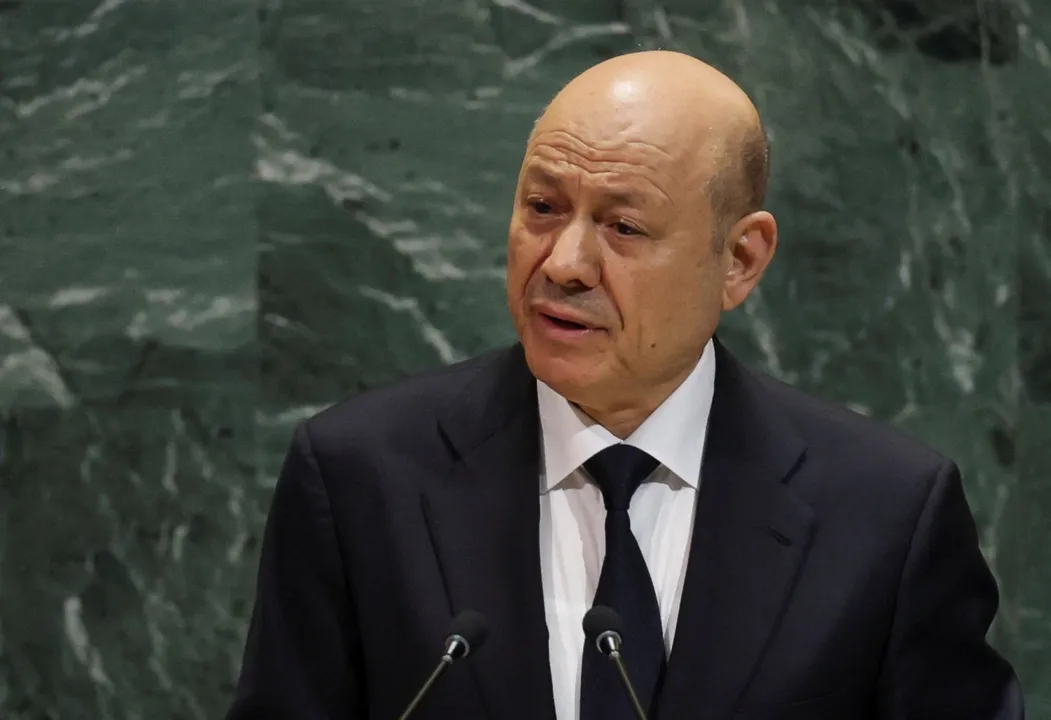
Yemen’s Presidential Leadership Council head Rashad al-Alimi orders UAE forces out within 24 hours. / AA
Tensions escalated after the STC took control of the Hadramaut and Al-Mahra provinces in December after clashes with government forces.
Alimi ordered the STC to hand over the territory, calling their advance an "unacceptable rebellion" in a televised address.
Meanwhile, Saudi Arabia has said the UAE should respond positively to Yemen’s demand to withdraw its forces within 24 hours and to cease any military or financial support to any party.
A Saudi foreign ministry statement also expressed regret over the pressure exerted by the UAE on STC forces, pushing them to carry out military operations near the southern borders of Saudi Arabia.
Yemen’s presidential council government is a patchwork of groups that also includes STC members and is held together by shared opposition to the Iran-aligned Houthis.
The Houthis pushed the government forces out of Yemen's capital, Sanaa, in 2014 and secured control over most of the north.
Saudi Arabia slams UAE's backing of STC in Yemen as a 'red line' and national security threat
Saudi Arabia said the UAE should respond positively to Yemen’s demand to withdraw its forces within 24 hours and to cease any military or financial support to any party.
12/30/2025
TRT/AA
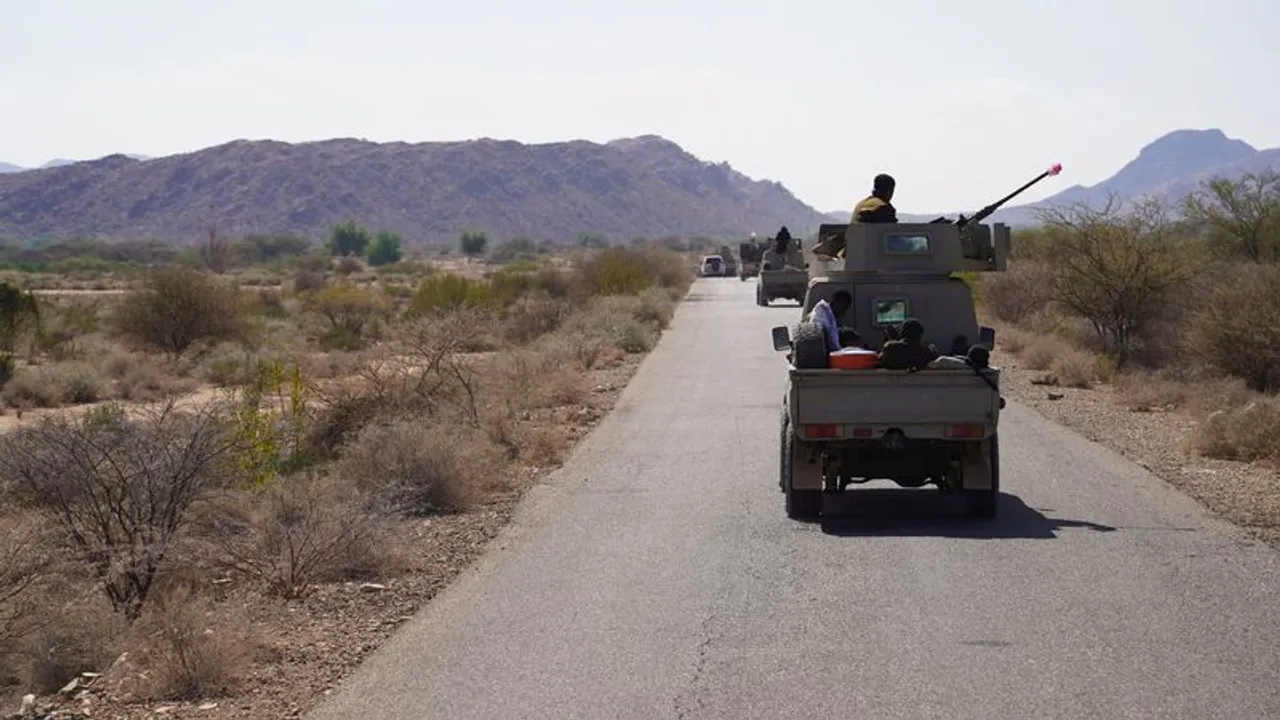
Tensions escalated after the STC took control of the Hadramaut and Al-Mahra provinces. / Reuters
Saudi Arabia has said the UAE's support for the separatist Southern Transitional Council's (STC) offensive in Yemen is a threat to it and regional security and called for it to respond positively to the Yemeni Presidential Leadership Council's demand to withdraw its forces from Yemen within 24 hours.
The UAE's actions in Yemen "constitute a threat to the Kingdom's national security, as well as to security and stability in the Republic of Yemen and the region," read a statement by the Saudi foreign ministry published online on Tuesday, which added that the "steps taken by the brotherly United Arab Emirates are extremely dangerous.”
“The Kingdom stresses that any threat to its national security is a red line, and the Kingdom will not hesitate to take all necessary steps and measures to confront and neutralise any such threat.”
The statement came as the Saudi-led coalition said it targeted a large quantity of weapons and combat vehicles destined for Southern Transitional Council (STC) forces that were being offloaded from ships at Mukalla port in Yemen.
According to the Saudi-led coalition, the ships came from the UAE port of Fujairah and entered the port of Mukalla on December 27-28.
Meanwhile, Yemen's presidential council ordered all forces of the UAE to leave the country within 24 hours and cancelled a security pact with Abu Dhabi as tensions rose in the years-long infighting in which regional powers back different factions.
Saudi Arabia said the UAE must cease military or financial support to any party.
“The Kingdom stresses the importance that the brotherly United Arab Emirates accept the Republic of Yemen’s request for all its forces to leave the Republic of Yemen within twenty-four hours and halt any military or financial support to any party within Yemen.”
The UAE-backed STC, which seeks to revive the formerly independent state of South Yemen, has in recent weeks swept through swathes of the country, expelling government forces and their allies.
Tensions escalated after the STC took control of the Hadramaut and Al-Mahra provinces in December after clashes with government forces.
Yemen’s presidential council government is a patchwork of groups that also includes STC members and is held together by shared opposition to the Iran-backed Houthis.
The Houthis pushed the government forces out of Yemen's capital, Sanaa, in 2014 and secured control over most of the north.
Saudi Arabia has said the UAE's support for the separatist Southern Transitional Council's (STC) offensive in Yemen is a threat to it and regional security and called for it to respond positively to the Yemeni Presidential Leadership Council's demand to withdraw its forces from Yemen within 24 hours.
The UAE's actions in Yemen "constitute a threat to the Kingdom's national security, as well as to security and stability in the Republic of Yemen and the region," read a statement by the Saudi foreign ministry published online on Tuesday, which added that the "steps taken by the brotherly United Arab Emirates are extremely dangerous.”
“The Kingdom stresses that any threat to its national security is a red line, and the Kingdom will not hesitate to take all necessary steps and measures to confront and neutralise any such threat.”
The statement came as the Saudi-led coalition said it targeted a large quantity of weapons and combat vehicles destined for Southern Transitional Council (STC) forces that were being offloaded from ships at Mukalla port in Yemen.
According to the Saudi-led coalition, the ships came from the UAE port of Fujairah and entered the port of Mukalla on December 27-28.
Meanwhile, Yemen's presidential council ordered all forces of the UAE to leave the country within 24 hours and cancelled a security pact with Abu Dhabi as tensions rose in the years-long infighting in which regional powers back different factions.
Saudi Arabia said the UAE must cease military or financial support to any party.
“The Kingdom stresses the importance that the brotherly United Arab Emirates accept the Republic of Yemen’s request for all its forces to leave the Republic of Yemen within twenty-four hours and halt any military or financial support to any party within Yemen.”
The UAE-backed STC, which seeks to revive the formerly independent state of South Yemen, has in recent weeks swept through swathes of the country, expelling government forces and their allies.
Tensions escalated after the STC took control of the Hadramaut and Al-Mahra provinces in December after clashes with government forces.
Yemen’s presidential council government is a patchwork of groups that also includes STC members and is held together by shared opposition to the Iran-backed Houthis.
The Houthis pushed the government forces out of Yemen's capital, Sanaa, in 2014 and secured control over most of the north.
Saudi Arabia bombs Yemen over shipment of weapons for separatists that arrived from UAE
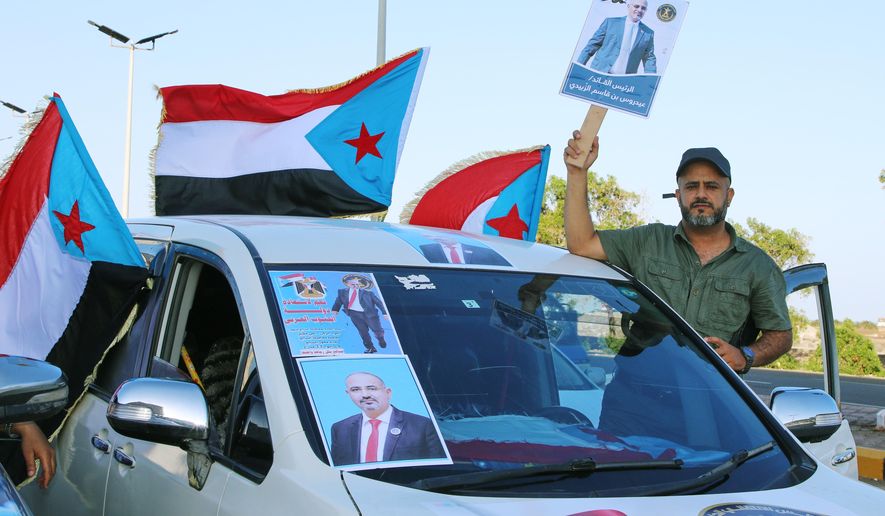
Supporters of the Southern Transitional Council (STC), a coalition of separatist groups seeking to restore the state of South Yemen, hold South Yemen flags and a poster of their leader, Aidarous al-Zubaidi during a rally, in Aden, Yemen, Dec. 25, …more >
By Associated Press - Monday, December 29, 2025
DUBAI, United Arab Emirates — Saudi Arabia on Tuesday said it bombed the port city of Mukalla in Yemen over a shipment of weapons for a separatist force there that arrived from the United Arab Emirates.
The attack signals a new escalation in tensions between the kingdom and the Southern Transitional Council, which is backed by the Emirates. It also further strains ties between Riyadh and Abu Dhabi, which had been backing competing sides in Yemen’s decadelong war against the Iranian-backed Houthi rebels.
A military statement carried by the state-run Saudi Press Agency announced the strikes, which it said came after ships arrived there from Fujairah, a port city on the UAE’s eastern coast.
“Given the danger and escalation posed by these weapons, which threaten security and stability, the Coalition Air Forces conducted a limited military operation this morning targeting weapons and combat vehicles unloaded from the two ships at the port of al-Mukalla,” it said.
There was no immediate comment from the UAE.
By Associated Press - Monday, December 29, 2025
DUBAI, United Arab Emirates — Saudi Arabia on Tuesday said it bombed the port city of Mukalla in Yemen over a shipment of weapons for a separatist force there that arrived from the United Arab Emirates.
The attack signals a new escalation in tensions between the kingdom and the Southern Transitional Council, which is backed by the Emirates. It also further strains ties between Riyadh and Abu Dhabi, which had been backing competing sides in Yemen’s decadelong war against the Iranian-backed Houthi rebels.
A military statement carried by the state-run Saudi Press Agency announced the strikes, which it said came after ships arrived there from Fujairah, a port city on the UAE’s eastern coast.
“Given the danger and escalation posed by these weapons, which threaten security and stability, the Coalition Air Forces conducted a limited military operation this morning targeting weapons and combat vehicles unloaded from the two ships at the port of al-Mukalla,” it said.
There was no immediate comment from the UAE.

No comments:
Post a Comment