PKK agrees to disband as part of peace process with Turkey

PKK fighters training to use pistols in the fight against ISIS in 2015. Photo: Getty
Aveen Karim
Lizzie Porter
Abu Dhabi │Istanbul
May 12, 2025
The Kurdistan Workers' Party (PKK), which has been in armed conflict with the Turkish state for more than four decades, announced it was agreeing to disband and dissolve as part of a peace process with Ankara.
“The PKK’s 12th Congress decided to dissolve the PKK’s organisational structure and end the armed struggle, with the practical process to be managed and carried out by Leader Apo [Abdullah Ocalan], and ended the work carried out under the PKK name,” Firat news agency, affiliated with the group, said on Monday.
The group, classified as a terrorist organisation by Turkey, the US, and the European Union, on Friday said it had held a congress to heed the call of its jailed leader to lay down arms, disband and enter a peace initiative with the Turkish state.
Omer Celik, spokesman for Turkish President Recep Tayyip Erdogan's Justice and Development Party (AKP) said the PKK's decision was, “an important stage in terms of the goal of a 'terror-free Turkey'” – a phrase Turkish government officials have used to describe overtures to the PKK.
Ocalan’s call in February ordering the dissolution came after a months-long process initiated by an ally of Mr Erdogan, the ultranationalist politician Devlet Bahceli, for greater freedoms for Abdullah Ocalan in exchange for the PKK’s dissolution.
The PKK said it believes Kurdish political parties will fulfil their responsibilities in developing Kurdish democracy and “ensure democratic Kurdish nationhood.”
Kurdish officials, including those in northern Iraq's semi-autonomous Kurdistan region, have framed the talks with Turkey as aimed at peace and dialogue, and about ensuring rights for Turkey's ethnically Kurdish citizens, who make up around one-fifth of the population. Turkey has continued striking the group's positions in the Kurdistan region.
Foreign Minister Hakan Fidan on Friday said disarmament alone was not sufficient, while Mr Erdogan has continued to publicly call for the group's eradication.
The PKK had previously said it would not heed any calls to disarm unless Ocalan was released from jail and a meeting could take place in person. Many questions remain about how the PKK disarmament process will work in practice. It remains unclear if members will be granted an amnesty, and if those in Iraq and Syria will be allowed to return to Turkey.
The fate of imprisoned Kurdish politicians and militants also remains unclear. Ocalan is serving a life sentence on the island of Imrali in the Sea of Marmara, south of Istanbul, where he has been imprisoned since he was captured in Kenya in February 1999.
Turkish politicians have indicated that the disarming and dissolution process will not happen overnight, and have said that it must extend to all branches and offshoots of the PKK.
“This decision must be implemented in practice and realised in all its dimensions. The concrete and complete implementation of the 'dissolution' and 'surrender of arms' decision, which will close all branches and extensions of the PKK and its illegal structures, will be a turning point,” Mr Celik added. “This process will be meticulously monitored in the field by our state institutions.”
The PKK was founded by Ocalan in 1978 and has waged an insurgency against the Turkish state for four decades, with about 40,000 killed on both sides. In recent years, the group's activity has been more limited to the mountainous areas of the Kurdish region of northern Iraq, and Syria, where PKK offshoots developed a presence in the country's north-east.
The pro-Kurdish People's Equality and Democracy Party, also known as DEM Party, which played a crucial role in mediating between the PKK and Ankara, welcomed the congress.
On Sunday, the party announced the formation of the Democratic Unity Initiative, describing it as a “civil society platform” aimed at uniting Kurds across Iraq, Syria, Turkey and Iran to “build a democratic life”.
Kurdish militant group PKK announces plans to disband after four decades of armed conflict
12 May 2025, 07:57

A Kurdish militant group has confirmed it will disband and disarm as part of a new peace initiative with Turkey, ending four decades of armed conflict.
The Kurdistan Workers’ Party, usually referred to as the PKK, comes just days after it convened a party congress in northern Iraq.
The group said that "historic" decisions taken at the congress would be shared with the public soon.
In February, its leader Abdullah Ocalan, who has been imprisoned on an island near Istanbul since 1999, urged his group to convene a congress and formally decide to disband, marking a pivotal step toward ending the decades-long conflict that has claimed tens of thousands of lives since the 1980s.

The report also said a statement by PKK leader Abdullah Ocalan outlining his "perspectives and proposals" were read during the congress.
In February, Ocalan called on his group to lay down arms and dissolve itself in a bid to end the conflict that has claimed tens of thousands of lives since the 1980s.
The outlawed PKK, which is listed as a terrorist organization by Turkey and most Western states, announced a ceasefire days later but had set conditions to disband, including the establishment of a legal mechanism for peace talks.
The latest peace initiative was launched in October by Devlet Bahceli, a far-right Turkish politician who suggested that Ocalan, who is imprisoned on an island off Istanbul, could be granted parole if his group renounces violence and disbands.
Previous peace efforts between Turkey and the group have ended in failure, most recently in 2015.
Kurdish PKK disbands and ends insurgency against Turkish state
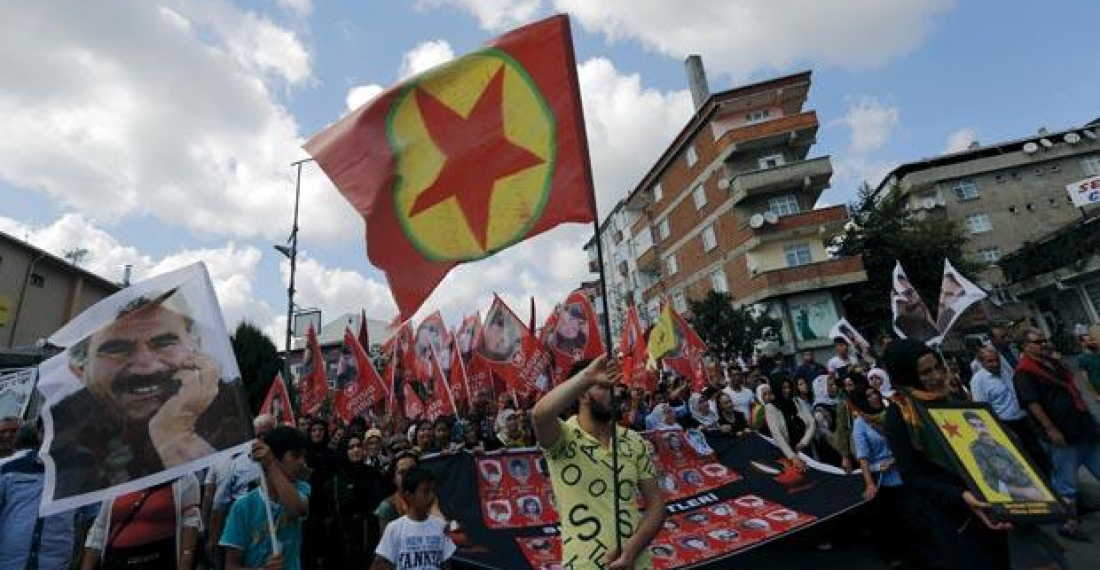
The Kurdistan Workers Party (PKK) militant group, which has been in conflict with the Turkish state for more than four decades, has decided to dissolve itself and end its armed struggle, a news agency close to the group reported on Monday.
The PKK decision is set to have far-reaching political and security consequences for the region, including in neighbouring Syria where Kurdish forces are allied with U.S. forces.
The Firat news agency published what it said was the closing declaration of a congress that the PKK held last week in northern Iraq, in response to a call in February from its jailed leader Abdullah Ocalan to disband.
Turkish President Tayyip Erdogan's office and the foreign ministry did not immediately comment on the announcement.
More than 40,000 people have been killed in the conflict since the PKK launched its insurgency in 1984. It is designated a terrorist group by Türkiye and its Western allies.
Source: commonspace.eu with agencies. Photo: People march in Istanbul with flags and banners of pictures of victims who were killed in a 2015 bomb attack in Suruc.The flag in the foreground belongs to the Kurdistan Workers Party (PKK). PKK leader Abdullah Öcalan is featured on the poster.
Reuters
By AFP
May 12, 2025

Abdullah Ocalan founded the PKK in the late 1970s and it began its armed insurgency in 1984 - Copyright AFP Money SHARMA
Hazel WARD and Burcin GERCEK
The Kurdistan Workers’ Party (PKK) on Monday announced its dissolution, saying it was ending its armed struggle against the Turkish state and drawing a line under its bloody four-decade insurgency.
Founded in the late 1970s by Abdullah Ocalan, the PKK carried out attacks aimed at defending Kurdish autonomy in Turkey that cost more than 40,000 lives.
“The 12th PKK Congress has decided to dissolve the PKK’s organisational structure and end its method of armed struggle,” the group said in a statement published by the pro-Kurdish ANF news agency.
The move was welcomed by President Recep Tayyip Erdogan’s AKP party as an “important step”, saying the implementation of the process would be “meticulously monitored” by the government.
The historic announcement came after an appeal by Ocalan, who on February 27 urged his fighters disarm and disband in a letter from Istanbul’s Imrali prison island, where he has been held since 1999.
He also asked the PKK to hold a congress to formalise the decision, which the call and declared a ceasefire, holding its congress early last week in Iraq’s Kandil mountains.
There its leader took “decisions of historic importance concerning the PKK’s activities”, ANF had reported on Friday.
AKP spokesman Omer Celik said if the decision were “implemented in practise and realised in all its dimensions” it would open the door to a new era.
“The PKK’s decision to dissolve itself and lay down its arms following the call from Imrali is an important step towards a terror-free Turkey,” Celik said.
“The full and concrete implementation of the decision to dissolve and surrender arms… will be a turning point,” he added, saying the process would be “meticulously monitored” by the government.
– ‘Huge win for Erdogan’ –
The declaration was the culmination of seven months of work to renew long-stalled talks that began in October when Ankara offered Ocalan an unexpected olive branch.
“If the PKK announces it is disbanding and finalises the process without any road accidents, that will be a huge win for Erdogan,” Gonul Tol of the Washington-based Middle East Institute told AFP.
She said seeking a rapprochement with the Kurds was very much related to domestic politics, coming just months after Erdogan’s AKP suffered a blow at the ballot box.
Analysts say a deal with the Kurds could allow Erdogan to amend the constitution and extend his term in office, while simultaneously driving a wedge between pro-Kurdish parties and the rest of Turkey’s opposition.
“The main driver behind this Ocalan opening has always been about consolidating Erdogan’s rule. Because if this whole process succeeds, he will go into the 2028 elections as a stronger candidate who is facing a divided opposition,” Tol said.
In a weekend speech, Erdogan hinted the dissolution could be announced at any moment, saying that “We are advancing with firm steps on the path toward the goal of a terror-free Turkey”.
The PKK, designated a terrorist group by Ankara, Washington and Brussels, has waged an insurgency against the Turkish state since 1984.
Its original aim was to carve out a homeland for Kurds, who make up about 20 percent of Turkey’s 85 million people.
Kurdish militant group PKK agrees to disband
In short:
The militant Kurdistan Workers' Party, which fought a four-decade insurgency against Türkiye, has reportedly agreed to disband and lay down its weapons.
The revelation comes after the group's jailed leader, Abdullah Öcalan, had called for the disbanding as part of a deal offered by the Turkish government for his release.
What's next?
The future of the PKK — a listed terrorist organisation in Türkiye, Australia, the US and Europe — and its fighters remains uncertain, including whether they may be relocated.
A Kurdish militant group that fought a four-decade insurgency against Türkiye has reportedly agreed to disband and lay down its weapons.
A news agency linked to the Kurdistan Workers' Party (PKK), which is a listed terrorist organisation in Türkiye, Australia, the United States and Europe, says it resolved to disband at a meeting in eastern Türkiye last week.
"The PKK has completed its historic mission," the group said, according to the Firat news agency, which published what it said was the closing declaration of a congress that the PKK held in northern Iraq, where it is based.
Abdullah Öcalan, who has been jailed since 1999, has called for the group's disbandment in recent months. (AP: Metin Yoksu)
The group's jailed leader, Abdullah Öcalan, had called for the disbanding as part of a deal offered by the Turkish government for his release.
The PKK began its insurgency in pursuit of a Kurdish state, then later, greater Kurdish rights and autonomy.
On March 1, the PKK announced a unilateral ceasefire but attached conditions, including the creation of a legal framework for peace negotiations.
Kurdish militants PKK declare ceasefire in 40-year conflict with Türkiye
Kurdish militants who have waged a 40-year insurgency in Türkiye declare a ceasefire two days after their imprisoned leader called for the group to disarm.
The conflict between Türkiye and the PKK has spilled over into northern Iraq and northern Syria.
In the statement published by Firat News, the PKK announced its decision to end its "organisational structure," suggesting that its armed struggle has successfully challenged policies that sought to suppress Kurdish rights.
The congress assessed that the PKK's struggle had "brought the Kurdish issue to the point of resolution through democratic politics, thus completing its historical mission," according to the statement.
"As a result, activities carried out under the name 'PKK' were formally terminated," the statement said.
In February, news of talks, supported by the government, with Öcalan sparked protests by the Turkish Youth Union. (Reuters: Umit Bektas)
Details of the peace initiative have not been made public and it was not clear how the process would proceed, including how weapons would be disposed of and who would monitor the procedures.
The future of PKK fighters remains uncertain, including whether they may be relocated to third countries. Any concessions the PKK might obtain in exchange for its decision to disband have not been disclosed.
"The PKK struggle has broken the policy of denial and annihilation of our people and brought the Kurdish issue to a point of solving it through democratic politics," the statement said.
The PKK's decision will give President Tayyip Erdoğan the opportunity to boost development in the mainly Kurdish south-east, where the insurgency has handicapped the regional economy for decades.
Ömer Çelik, a spokesperson for President Erdoğan's ruling AK Party, said the PKK's decision to dissolve was an "an important step toward a terror-free Türkiye".
The decision to dissolve is significant for Kurdish people and the Middle East as a whole, the deputy co-chair of the pro-Kurdish DEM Party Tayip Temel said.
"The PKK's decision to end its existence and embark on a new transformation will also necessitate a major shift in the official state mentality of Türkiye, and compel the adoption of a new paradigm," Mr Temel told Reuters
Previous peace efforts between Türkiye and the group — most recently in 2015 — have ended with failure.
Türkiye leaders debate how to end PKK conflict
Photo shows Three men in military gear walk on a footpath as an armoured vehicle drives past on the road.
Türkiye's relationship with Kurdish nationalists is the political problem that won't go away.
The announcement by the PKK comes against a backdrop of major changes in the region, including the coming to power of a new administration in Syria, the weakening of the Hezbollah militant movement in Lebanon and the Israel-Hamas war in Gaza.
In recent years, the PKK has been limited to isolated attacks inside Türkiye as the Turkish military, backed by armed drones, has pushed PKK insurgents increasingly across the mountainous border into Iraq.
The latest peace initiative was launched in October by Mr Erdoğan's coalition partner, Devlet Bahçeli, a far-right politician who suggested that Öcalan could be granted parole if his group renounces violence and disbands.
Around 40,000 people are estimated to have died in the conflict, which devastated some large eastern Turkish cities and spilled into Iraq and Syria.
ABC/wires
UPDATED May 12, 2025
ISTANBUL - The Kurdistan Workers Party (PKK) militant group, which has formally dissolved itself according to a report by a news agency close to the group on Monday, has battled the Turkish state for more than four decades.
In February, Abdullah Ocalan, the PKK's founder who is jailed in Turkey, appealed for it to disarm and dissolve. The decision opens the door to ending a conflict that has ravaged southeastern Turkey, and will also have significant implications for Syria and Iraq.
Here are details about the PKK:
WHAT IS THE PKK?
The PKK is a militant group founded by Ocalan in southeast Turkey in 1978 with an ideology based on Marxist-Leninist ideas.
WHAT DOES THE GROUP WANT?
The PKK launched its insurgency against Turkey in 1984 with the aim of creating an independent Kurdish state. It later moderated its goals to seeking greater Kurdish rights and limited autonomy in southeast Turkey.
More than 40,000 people have been killed in the conflict, most of them militants. Much of the fighting was focused in rural areas of mainly Kurdish southeast Turkey, but the group also conducted attacks in urban areas including Ankara and Istanbul.
The PKK is listed as a terrorist organisation by Ankara, the United States, the European Union and some other countries.
WHAT IS THE GROUP'S HISTORY?
The PKK operated in Syria until 1998 when Ocalan had to flee amid growing Turkish pressure. He was captured by Turkish special forces several months later in Kenya and sentenced to death by a Turkish court in 1999. The sentence was commuted to life imprisonment in October 2002 after Turkey abolished the death penalty and he is still imprisoned on an island near Istanbul.
Fighting dwindled after Ocalan's capture, which led to the withdrawal of rebel fighters from Turkey.
After a flare-up in violence, Turkey and the PKK became involved in peace talks from late 2012. That process collapsed in July 2015, unleashing the bloodiest period of the conflict and resulting in extensive destruction in some urban areas of southeast Turkey.
In October of 2024, Devlet Bahceli, the Nationalist Movement Party (MHP) leader and President Tayyip Erdogan's political ally, shocked Ankara when he suggested Ocalan could be released if he announced an end to his group's insurgency.
Erdogan's ruling AKP backed the proposal and leaders of the opposition pro-Kurdish DEM party, which seeks greater Kurdish rights and autonomy, has held talks with Ocalan at his prison.
The PKK, declared an immediate ceasefire following the call and said it was ready to convene a congress, as Ocalan urged, but the necessary security conditions should be established for him to "personally direct and run" it.
WHERE HAS THE CONFLICT BEEN FOCUSED MORE RECENTLY?
In recent years the conflict shifted to neighbouring northern Iraq where the PKK has mountain bases and Turkey has dozens of outposts. Ankara has launched operations against the militants there, including air strikes with warplanes and combat drones, which Baghdad has said violates its sovereignty.
Yet Iraq and Turkey had agreed to boost anti-PKK cooperation, and Baghdad labelled it a banned organisation for the first time.
Turkey also targets the YPG militia in Syria, regarding it as a PKK affiliate, and has conducted cross-border operations alongside allied Syrian forces to push it back from its border. However the YPG spearheads the SDF, the primary ally of the U.S.-led coalition against Islamic State.
Washington's support for the SDF has been a source of U.S.-Turkey tension for years.
The ouster in December of former Syrian President Bashar Al-Assad - whom Ankara long opposed, backing Syrian rebels - bolstered Turkey's position and influence there. It called for the YPG to be disbanded and its leaders expelled from Syria, and threatened a Turkish military operation to "crush" the group if its demands were not met.
Turkish, U.S., Syrian and Kurdish officials have sought an agreement on the future of the Syrian Kurdish fighters.

No comments:
Post a Comment