Assessing Labour’s First Year

John McDonnell MP sets the stage for an important conference on the first anniversary of Labour’s election.
JULY 10, 2025
Recent weeks in Parliament have been dominated by the issue of disability benefit cuts, the latest in a line of unpopular austerity policies put forward by an increasingly unpopular Government.
From the moment the cuts were first proposed by the Government. To voting against the Bill in its latest form this Wednesday, I have been getting hundreds of emails from my constituents every week, expressing grave concerns at the effects the cuts will have.
These concerns are shared by people I meet on the bus, in the shop, or at community events. All these people have been – and are – extremely distressed about this legislation going through. Rightly, they will not forget lightly that it was a Labour Government – just one year on from a landslide victory in terms of seats won – who were the architects of these cruel cuts.
These cuts still amounted in the legislation passed this week to a massive £3 billion cut to universal credit payments, at a time when millions are struggling with the cost-of-living emergency, and poverty continues to rise.
And as sure as night follows day, when cuts go through on this scale, people will lose their lives. People will suffer immense harm, just as they have during fifteen years of failed austerity.
I will always vote against legislation that cuts benefits to some of the poorest people I represent, and we must continue to mobilise against any further cuts to come.
We must also clearly put forward the argument that these cuts – and the decisions to cut the Winter Fuel Allowance and not scrap the two-child benefit cap before them – are inextricably linked to the Government’s failing economic approach, including Rachel Reeves’ self-defeating fiscal rules.
Prior to last year’s election, we said that the inheritance from the 14 years of Conservative austerity would be the worst any Labour government had faced. Unfortunately, as the policy choices cited above have clearly illustrated, one year in, it is obvious that the incoming Labour government was inadequately prepared for this challenge.
The result is that a year on from the elation of ejecting the Tories from office, the policy programme of the Labour administration is so disillusioning many of its supporters that it is opening the door to far-right populists, with the threat of Reform making this a particularly dangerous moment.
Even where progressive policies have been pursued, they have been watered down by corporate lobbying and combined with Treasury-imposed policy decisions that have alienated even some of Labour’s loyalist supporters and provoked rebellion in the PLP.
If the Government’s approach is not changed, then not only will more cuts follow, but we will not see the investment in public services, the green jobs of the future, or measures to tackle poverty and inequality, that this country so desperately needs.
It is therefore time for an urgent rethink and redirection. And that is why on July 19th in central London, just after the anniversary of its election, we have called a major conference to assess the Labour Government’s performance and pose the question: where next?
This conference aims to provide an objective assessment of Labour’s performance in office over its first year and a discussion of the redirection needed in key policy areas. It will address the central question of how this can be achieved, while also effectively fighting the further cuts to come if the Government continues to wrong-headedly refuse to change course
We will be joined by a range of expert speakers and prominent campaigners to discuss different key policy areas – from the need for a new approach to ending poverty and inequality, to how we tackle climate catastrophe in the age of Trump 2.0, to how we defend our rights and resist the rise in racism. I hope to see you there.CONFERENCE: Labour in Government: one year on. Saturday, July 19th, 10am, Hamilton House, Mabledon Place, London, WC1H 9BB
Speakers include civil liberties campaigner Shami Chakrabarti; Kate Pickett, author, The Spirit Level: Why More Equal Societies Almost Always Do Better; economists Prem Sikka and James Meadway; Asad Rehman, prominent campaigner for climate justice; Ellen Clifford, DPAC; Ali Milani from the Labour Muslim Network; eminent radical lawyers John Hendy and Shami Chakrabarti; and MPs John McDonnell, Richard Burgon, Clive Lewis. Register here.
John McDonnell MP was Labour’s Shadow Chancellor from 2015 to 2020.
Image: John McDonnell MP. Author: Sophie Brown, licensed under the Creative Commons Attribution-Share Alike 4.0 International license.
1 year on from overturning Starmer’s attempted purge, Diane Abbott stands strong as a voice for the voiceless

“Abbott’s politics align with core Labour beliefs: public ownership, human dignity, social justice & the redistribution of power…. In contrast, today’s Labour leadership seems more comfortable appealing to corporate media than mobilising the working class.”
By Lucie Scott looks at how Diane Abbott continues to be “a voice for the voiceless” one year into the Labour Government.
Diane Abbott, the UK’s first Black woman MP, stands as a political figure of profound historical and moral significance. Her presence in the Labour Party has long symbolised a commitment to anti-racism, equality, and working-class solidarity. Yet, in the context of Keir Starmer’s leadership, Abbott’s marginalisation reflects a troubling pattern of factional corruption and racism.
The Forde Report — commissioned by the Labour Party itself — highlighted systemic racism and the toxic factionalism that targeted Abbott and other Black MPs. The party’s handling of her suspension, despite apologies and clarification, caused deep offence, not only to Abbott but to countless members of the Black community who see her as a vital voice of justice within Labour ranks.
The crushing of the Left has become a defining feature of Starmer’s leadership. Many of the principles that Abbott has championed — economic justice, peace, and anti-imperialism — have been sidelined. In sidelining her, Labour is not merely isolating one MP; it is attempting to erase a legacy of grassroots activism and solidarity that has always challenged the party’s drift toward centrism. Abbott’s exclusion signalled a rejection of the socialist, anti-racist, pro-equality politics that once surged during the Corbyn years.
As a veteran anti-racist, Abbott has spent decades confronting institutional inequality. She stood firm against apartheid, police brutality, and discriminatory immigration policies when it was neither popular nor politically expedient to do so. To see a party that once claimed to champion social justice now treat her with disdain is tragic. Worse still, it crushes anti-racist voices by sending a chilling message: that speaking up against injustice, especially within the party, may cost you your career.
Abbott has had to fight every step of the way. From enduring misogynoir and media abuse unmatched by her peers, to facing internal briefings and hostile environments, her political journey is one of resilience. No other MP has received the scale of abuse she has, much of it racially charged. Yet she remained principled and focused on serving her constituents.
As MP for Hackney North and Stoke Newington since 1987, Abbott has rooted her politics in the real-life struggles of working people. She has worked closely with schools, food banks, housing groups, youth organisations, and trade unions. She represents not just her borough, but generations of Labour supporters who believed the party could be a vehicle for liberation.
Her role as a Black woman in a predominantly white, male-dominated Parliament has been groundbreaking. Her very presence challenged assumptions and forced institutions to confront their own biases. She has inspired generations of Black women and girls to imagine themselves in public life, to speak boldly, and to lead.
To the Black community, Abbott is not merely a politician — she is a trailblazer and a truth-teller. Her voice resonates beyond Westminster; it reaches communities long overlooked by mainstream politics. Her defence of Windrush victims, her calls for police accountability, and her insistence on education and health equity speak directly to those who have been failed by the system.
Abbott’s politics align with core Labour beliefs: public ownership, human dignity, social justice, and the redistribution of power. Her career has never wavered from those foundations. In contrast, today’s Labour leadership seems more comfortable appealing to corporate media than mobilising the working class.
This moment demands scrutiny of current governance. A party that claims to uphold equality cannot be seen marginalising one of its most committed anti-racist MPs. It must be asked: who is Labour for, if not for people like Diane Abbott and the millions she speaks for?
Abbott has always been a voice for the voiceless. Whether on refugee rights, NHS cuts, or international justice, she has spoken where others have stayed silent. After all she has suffered, often from those within her own party, her dignity remains intact.
Honest, steadfast, and dignified, Diane Abbott’s legacy is not one that any leadership can erase. The movement she represents is larger than any party faction. It is the conscience of a party that, after a year in government, risks losing its soul.Lucie Scott was previously Vice-Chair of Hackney North & Stoke Newington Constituency Labour Party, and is currently a member of Tottenham CLP.
One year of Government failure for workers and young people

11th July 2025
11th July 2025
“Any party that is opposed to some form of wealth tax or the nationalisation of key utilities such as energy and water cannot seriously claim to be on the side of working people.”
Vincent Conquest reviews one year of the Starmer Government – and what it has meant for workers and young people.
We’re a little over a year on from Labour’s landslide election win in 2024, a win that many hoped would be a victory for workers and a victory for young people. However, we live in a time of political disappointment, and this Labour Government has shown time and time again that it is not representative of the working class.
Labour figures now like to proudly proclaim, Labour is the “party of work.” Not those who do work but work itself – a purposeful turn of phrase used to distract from the lack of vision or belief in a shift of wealth and power to a struggling working class.
While certain pieces of legislation, such as the Employment Rights Bill and the Renters’ Rights Bill, and of course the increase in the minimum wage are genuinely positive, this Government has failed to address the deep decline in living standards, our crumbling public services and spiralling inequality.
The current iteration of the Labour Party is struggling with young people. Unpopular stances on immigration and LGBT rights, and the continuation of support for Israel in its ongoing genocide in Gaza, has led many young people to look for alternatives.
In November, Labour also announced that university tuition fees would increase by over £300 – squeezing students in an already overpriced market. The problem for the Government is that, in switching their electoral focus to voters who currently would vote for Reform UK, they have failed to represent the interests of young people, but now young people have alternative places to go with their vote.
Another key issue for young people is housing – and Labour has made movement on banning no-fault eviction. But it’s slow and cautious, and tenants’ union ACORN has claimed that “on affordability the bill is lacking.” For example, Labour have protected landlords’ profits over renters’ rights by introducing market-linked annual rent increases, rather than imposing outright caps.
While there are positives with Labour’s Employment Rights Bill, it does not go far enough. Once implemented, it will introduce measures such as day-1 basic employment rights and bans on zero-hour contracts and fire-and-rehire, though the Bill does specify that it is only a ban on “exploitative” zero-hour contracts – a clarification which many view as a form of watering-down. But the Bill does not repeal any of the anti-trade union laws introduced by Conservative governments over the last years.
Issues such as the NHS, transport, and other public services are of major importance to workers and young people. Rail public ownership is a victory for workers, and it’s popular, though for many the process is too slow and too unnoticeable to make a tangible difference in people’s lives. Raising the bus cap from £2 to £3 is less popular – particularly for people who have to commute for work. If you were to commute to and from work five days a week, that’s an average loss of £40 a month.
All these issues that workers and young people are faced with, in a time of stagnant growth and stagnant wages, lead to a perception of failure and disappointment, at a time when the country is so clearly crying out for change. We see the Government aim to make cuts to disability support and pensioners’ Winter Fuel Allowance – despite the former resulting in a partial U-turn and the latter being U-turned on almost completely.
A Government that attempts to balance its books on the backs of the poor, the sick and the disabled in order to protect “working people” – despite working people facing rent rises, extortionate travel costs, a cost-of-living crisis, and a general sense of despair at the poor state of the country – will never succeed in fundamentally redistributing any kind of real power to a long neglected working class.
In reality, any party that is opposed to some form of wealth tax or the nationalisation of key utilities such as energy and water cannot seriously claim to be on the side of working people, as Keir Starmer and Rachel Reeves have tried to portray themselves as. The money to fix public services broken by successive Conservative Government underfunding has to come from somewhere, and politicians from the main parties are all too eager to dismiss redistributive measures such as wealth taxes. Often, this leads to spending cuts, which hurts the working class far more than it does the super-rich.
The Labour leadership should listen to the range of voices within its party, who so often voice what many in the country think, and remember who they are in power to represent.
Until the structure of power and wealth is properly challenged, the Government will by default favour the interests of the super-rich, and it will inevitably be those who work and young people who bear the burden for that.
Labour Outlook is running a series of daily articles, reviewing one year of the Starmer Government across different key areas.
If you support Labour Outlook’s work amplifying the voices of left movements and struggles here and internationally, please consider becoming a supporter on Patreon.
A Year of Keir, An Irish Perspective…

10th July 2025Leave a Commenton A Year of Keir, An Irish Perspective…
“With one year of office under its belt, the British Labour Party has categorically failed to deliver on its stated promise of change.”
Joe Dwyer reviews Starmer’s first year in office from an Irish perspective.
In the late 1960s, it was often said that what separated the then ‘Prime Minister of Northern Ireland’, Captain Terence O’Neill, from his predecessors was that; while Craigavon and Brookeborough had walked over Catholics with hob-nail boots, O’Neill walked over them with carpet slippers! Effectively, whatever about the niceties and the optics, little had materially changed. Particularly for those beneath the heel of power.
As a metaphor, it could readily be applied to the present British Labour Party Government. Because, while the Tories trampled over the sensitivities and complexities of British-Irish relations with all the grace of a reversing dump truck, the British Labour Party has hardly navigated its first year in office without exhibiting its own unique style of inelegance.
Indeed, it could be said normal service has been resumed. The people of the North of Ireland remain entirely disregarded when it comes to Whitehall’s decision-making.
Initially, one could be excused for having a small measure of optimism. Labour Party politicians have always been better suited to the subtleties and nuance of British-Irish relations. Indeed, twenty-five years on, the Good Friday Agreement remains a rhetorical touchstone for the achievements of the last Labour Government.
In the course of the 2024 Westminster Election, Labour had struck a positive, albeit measured, tone. Beneath the one-word title of ‘Change’, Labour’s manifesto promised just that: change. The document spoke of upholding “both the letter and the spirit of the [Good Friday] Agreement,” and committed to working with Dublin to “strengthen the relationship between our two countries.” Miles away from a Conservative Party that had driven a horse and cart through the scaffolding of the peace process.
Going beyond such warm platitudes, however, Labour also proffered a tangible commitment to “repeal and replace” the shameful Legacy Act, and to return to “the principles of the Stormont House Agreement… seeking support from all communities in Northern Ireland.”
The new British Secretary of State, Hilary Benn, started off on a good foot. On September 11, he announced the launch of an independent statutory public inquiry into the 1989 murder of the solicitor Pat Finucane. A longstanding commitment of the British Labour Party in opposition.
However, it must be borne in mind that this was not the gift of Mr Benn. It was a point that the British establishment had been doggedly dragged towards. In 2019, the Supreme Court in London had declared that none of the previous investigations into Mr Finucane’s murder adequately met the standards required under Article II of the European Convention on Human Rights. In July 2024, Justice Horner of the Court of Appeal issued a timetable which stipulated that the British government had to enact an Article II compliant investigation.
Taken in the round, the British Labour Party has fundamentally failed to address the legacy of the past. Indeed, the same month that saw the new British Government announce a public inquiry into the case of Pat Finucane, also saw it reject a statutory public inquiry into the 1997 murder of the GAA official Seán Brown. Despite the explicit direction of two High Court judges, Mr Justice Patrick Kinney and Mr Justice Michael Humphrey.
Additionally, it also ruled out public inquiries into the 1992 murders of Kevin and John McKearney and Charles and Teresa Fox, despite Judge Richard Greene’s stated opinion that public inquiries would be the only viable route forward for an Article II compliant investigation.
Once settled in office, the Labour Party began to unpick its manifesto commitment to establish an agreed way forward on the past. ‘Repeal and replace,’ suddenly became ‘repeal (some parts) and (don’t) replace (others)’.
Instead of dismantling the Legacy Act root-and-branch, Hilary Benn became a chief advocate for the Act’s controversial investigative body, the Independent Commission for Reconciliation and Information Recovery (or ICRIR). A body that does not contain the necessary powers of investigation and does not carry the trust or confidence of victims, survivors or their families. Despite the Secretary of State’s protestations to the contrary, the ICRIR provides no credible alternative to public inquiries, and does not meet the standards or safeguards of the Stormont House Agreement.
Rather than working with victims and survivors, Labour in Government has actively worked against them. Most recently, in May 2025, the British Government sought leave to appeal Lady Chief Justice Siobhan Keegan’s reaffirmation of the previous court ruling that the British Government must hold a public inquiry into Sean Brown’s killing.
Equally, Labour has sought to whitewash the illegal actions of past British Governments. In 2020, the British Supreme Court ruled that Interim Custody Orders, issued during the introduction of internment in 1971-72, were not directly approved or authorised by the British Secretary of State and were therefore illegal. Rather than accept that internment constituted a shameful abuse of state power and a widespread denial of human rights, Labour has committed itself to circumventing any compensation to the victims of such wrongful imprisonment.
In parallel to this retrogressive approach to the past, Labour has also sought to follow the Tory practice of penny pinching. On September 13, Hillary Benn confirmed that Casement Park would not be built in time to host UEFA Euro 2028. He would spend the subsequent nine months prevaricating and refusing to clarify what funding would be allocated to the project.
That same day, last thing on a Friday, the Secretary of State cynically announced a pause on the pledged funding for City and Growth Deals. An action that was later reversed, following intense lobbying by locally elected political representatives.
Nonetheless, the high-handed fiscal diktats continued. In February 2025, the Secretary of State delivered an ill-judged and arrogant speech during an unannounced visit to Ulster University. Like a visiting Governor General, the Leeds South MP stated that lack of funding from Whitehall was not hindering the delivery of public service transformation. Instead, the responsibility lay with locally elected representatives who had failed to take ‘difficult choices.’ As ever, ‘difficult choices’ is Whitehall-speak for punitive taxes, additional charges, and increased costs for struggling workers and families.
Only four months later, following intense negotiations with the Finance Minister, John O’Dowd, the British Government conceded additional funding for public services in the North. While also confirming a substantial financial package to get Casement Park built. Although a late step in the right direction, such announcements still fall far short in terms of what is needed.
Most reckless of all the British Labour Party has failed to engage constructively in relation to the North’s constitutional future. Speaking at a fringe meeting at the 2024 Labour Party conference, the Parliamentary Under-Secretary of State, Fleur Anderson, made the careless remark that a referendum on Irish unity was “not a priority” for her government. Irrespective of the priorities of the British Labour Party, British Government Ministers must embrace the principles of rigorous impartiality and respect for the provisions in the Good Friday Agreement for constitutional change.
Hillary Benn’s opinion that constitutional change remains “a long way off,” is equally imprudent. It is beyond time for the British Secretary of State to set definitive criteria for the calling of a unity referendum, particularly at this time when the gap between those who seek unity and those who want to maintain the union is rapidly narrowing. The imperative to plan and prepare for change is overwhelming and the British Labour Party must begin a process of structured dialogue with Dublin about preparation and logistics for potential referendum.
With one year of office under its belt, the British Labour Party has categorically failed to deliver on its stated promise of change.
This should come as little surprise however to Irish republicans. As any student of Irish history should know; whatever the political character of a British Government, real change for the Irish people cannot be realised on British terms.
After all, if it wasn’t for the British Government there would be no ‘Irish Question’ to begin with… and perhaps that’s the answer?
Labour Outlook is running a series of daily articles, reviewing one year of the Starmer Government across different key areas.
Joe Dwyer is a political organiser for the Sinn Féin London Office. You can follow him on Twitter/X.
Starmer’s Foreign and ‘Defence’ Policies, One Year On – Kate Hudson, CND

9th July 2025
9th July 2025
“A year into the Labour government I have come to the following conclusion… this government is a genocide-facilitating, nuclear proliferator, that has abandoned its political and economic sovereignty to the whims of the leader of a rogue state.”
Kate Hudson, Vice President of the Campaign for Nuclear Disarmament (CND), reviews Starmer’s first year in office, with a look at the Government’s increasing militarism, adherence to Trump’s global agenda and support for Israel’s genocide in Gaza.
I’ve been scratching my head to think of a more shameful period in British foreign and ‘defence’ policy than this first year of Starmer’s Labour government. Quite frankly, I can’t think of one. Facilitating and supporting a genocide is as low as it gets. A year ago, I feared that Labour’s policies would be a continuity with those of the Tories, but in fact Labour’s position on so-called defence — actually war-fighting and militarism — has at times been more extreme than that of the Tories.
Labour’s policies have been explicitly pro-nuclear weapons, they have backed massively increased arms spending, been pro-war in Ukraine and Gaza, pro-NATO, and tied into the US ideological and military framework.
The government continues to support and facilitate the genocide by the Israeli forces in Gaza and the rest of occupied Palestine, and has condoned their attacks on Lebanon and Iran.
At every point, Keir Starmer has taken the most dangerous, provocative position. Within weeks of acceding to power, he had championed the use of NATO long-range missiles by Ukraine into Russia, thereby openly risking direct war between nuclear-armed NATO and Russia. His refusal to support a negotiated settlement has led to countless thousands more deaths.
One of the first acts of the new government was to launch a new strategic defence review process (SDR). The main purpose of the SDR was to justify and provide for an increase to 2.5% of GDP on military spending in the next couple of years, prior to a hike to 3% in the next parliament. It was also designed to provide a big boost to the British arms industry, to create the false impression that military production can generate economic growth. On publication last month, it duly delivered on both.
I can only imagine the scenes in 10 Downing Street, that led – just weeks later – to Starmer announcing that UK military spending would actually be increasing to 4.1% by 2027, and 5% by 2035. Of course this was driven by Trump’s demand at the recent NATO summit that NATO members should spend 5% of GDP on ‘defence’; it was accepted by all member states except valiant Spain which was told it would have to pay twice as much in tariffs, as punishment. What price national sovereignty?
Of course, Trump heralded the 5% increase as a ‘great victory’ and, most tellingly, said he hoped the money would be spent on buying US military hardware. That’s something the government couldn’t do quickly enough, swiftly putting in an order for 12 nuclear-capable F-35A fighter jets from US manufacturer Lockheed Martin, at a cost of $80-100 million each. These jets will be armed with US B61-12 nuclear bombs. They amount to illegal British nuclear proliferation and are to be thoroughly condemned.
The big question for Starmer is where the money will come from: presumably from social spending and the cost will be enormous.
The announcement of this came alongside the publication of Starmer’s National Security Strategy, with its emphasis on sovereign capability – making and controlling things ‘in house’ such as steel production and securing supply chains.
All this ties in with the government’s new industrial strategy, which includes £86 billion for research and development with the intention of driving growth in technologies for economic and military competitiveness.
Some people may like the sound of this, but this is something our movement has to be very clear about: ‘Military Keynesianism’, promoting military spending as an economic benefit, does not add up. We must use the work done for the Alternative Defence Review in the trade unions and wider society, to demonstrate the harms of the ‘defence dividend’ approach. Specifically we need to bust the ‘jobs myth’, and explain how military spending is a much lower economic and employment multiplier than other public investments. In other words, military spending generates less overall economic activity and jobs, and fewer secondary benefits, than spending on essential services or infrastructure and on job rich technology, particularly renewables.
We need to say no to the militarisation of our society, and recognise that real security is human security that comes from investment in communities, in welfare, in good jobs and decent housing and education, not on weapons of war and mass destruction.
So a year into the Labour government I have come to the following conclusion – sadly of course, because we all wanted something better after so many years of Tory rule: this government is a genocide-facilitating, nuclear proliferator, that has abandoned its political and economic sovereignty to the whims of the leader of a rogue state. It’s time to build something better than this.Labour Outlook is running a series of daily articles, reviewing one year of the Starmer Government across different key areas.
Kate Hudson, Vice President of the Campaign for Nuclear Disarmament (CND), reviews Starmer’s first year in office, with a look at the Government’s increasing militarism, adherence to Trump’s global agenda and support for Israel’s genocide in Gaza.
I’ve been scratching my head to think of a more shameful period in British foreign and ‘defence’ policy than this first year of Starmer’s Labour government. Quite frankly, I can’t think of one. Facilitating and supporting a genocide is as low as it gets. A year ago, I feared that Labour’s policies would be a continuity with those of the Tories, but in fact Labour’s position on so-called defence — actually war-fighting and militarism — has at times been more extreme than that of the Tories.
Labour’s policies have been explicitly pro-nuclear weapons, they have backed massively increased arms spending, been pro-war in Ukraine and Gaza, pro-NATO, and tied into the US ideological and military framework.
The government continues to support and facilitate the genocide by the Israeli forces in Gaza and the rest of occupied Palestine, and has condoned their attacks on Lebanon and Iran.
At every point, Keir Starmer has taken the most dangerous, provocative position. Within weeks of acceding to power, he had championed the use of NATO long-range missiles by Ukraine into Russia, thereby openly risking direct war between nuclear-armed NATO and Russia. His refusal to support a negotiated settlement has led to countless thousands more deaths.
One of the first acts of the new government was to launch a new strategic defence review process (SDR). The main purpose of the SDR was to justify and provide for an increase to 2.5% of GDP on military spending in the next couple of years, prior to a hike to 3% in the next parliament. It was also designed to provide a big boost to the British arms industry, to create the false impression that military production can generate economic growth. On publication last month, it duly delivered on both.
I can only imagine the scenes in 10 Downing Street, that led – just weeks later – to Starmer announcing that UK military spending would actually be increasing to 4.1% by 2027, and 5% by 2035. Of course this was driven by Trump’s demand at the recent NATO summit that NATO members should spend 5% of GDP on ‘defence’; it was accepted by all member states except valiant Spain which was told it would have to pay twice as much in tariffs, as punishment. What price national sovereignty?
Of course, Trump heralded the 5% increase as a ‘great victory’ and, most tellingly, said he hoped the money would be spent on buying US military hardware. That’s something the government couldn’t do quickly enough, swiftly putting in an order for 12 nuclear-capable F-35A fighter jets from US manufacturer Lockheed Martin, at a cost of $80-100 million each. These jets will be armed with US B61-12 nuclear bombs. They amount to illegal British nuclear proliferation and are to be thoroughly condemned.
The big question for Starmer is where the money will come from: presumably from social spending and the cost will be enormous.
The announcement of this came alongside the publication of Starmer’s National Security Strategy, with its emphasis on sovereign capability – making and controlling things ‘in house’ such as steel production and securing supply chains.
All this ties in with the government’s new industrial strategy, which includes £86 billion for research and development with the intention of driving growth in technologies for economic and military competitiveness.
Some people may like the sound of this, but this is something our movement has to be very clear about: ‘Military Keynesianism’, promoting military spending as an economic benefit, does not add up. We must use the work done for the Alternative Defence Review in the trade unions and wider society, to demonstrate the harms of the ‘defence dividend’ approach. Specifically we need to bust the ‘jobs myth’, and explain how military spending is a much lower economic and employment multiplier than other public investments. In other words, military spending generates less overall economic activity and jobs, and fewer secondary benefits, than spending on essential services or infrastructure and on job rich technology, particularly renewables.
We need to say no to the militarisation of our society, and recognise that real security is human security that comes from investment in communities, in welfare, in good jobs and decent housing and education, not on weapons of war and mass destruction.
So a year into the Labour government I have come to the following conclusion – sadly of course, because we all wanted something better after so many years of Tory rule: this government is a genocide-facilitating, nuclear proliferator, that has abandoned its political and economic sovereignty to the whims of the leader of a rogue state. It’s time to build something better than this.Labour Outlook is running a series of daily articles, reviewing one year of the Starmer Government across different key areas.
Kate Hudson is the Vice-President of the Campaign for Nuclear Disarmament (CND). You can follow Kate on Twitter/X; and follow the CND on Facebook, Instagram and Twitter/X.
LabourList readers reveal their highs and lows of Labour’s first year
Luke O'Reilly, James Moules & Tom Belger
9th July, 2025
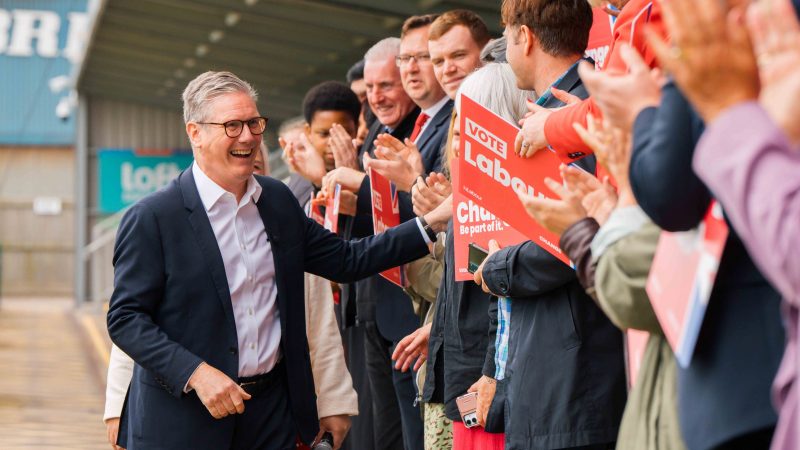
Keir Starmer campaigning for Labour at the 2024 general election.
LabourList readers have shared their best and worst moments of the new Labour government in a recent informal survey.
Winning the general election this time last year was an obvious highlight for many of our readers, which saw Labour return to power with a stonking parliamentary majority.
However, for some it was their only highlight, with wide-ranging discontent with the party recorded in our responses. That said, it wasn’t all doom and gloom.
Many also cited the nationalisation of rail and international statesmanship as highlights.
While by far the most mentioned lowlight was the winter fuel allowance cut, its reversal was the second most common highlight for our readers.
A Flourish data visualization
READ MORE: Survey results: Which new Labour MPs are most popular with LabourList readers?
The second most common lowlight was welfare reform, with many readers saying these policies were “not Labour” and accusing the leadership of targeting the most vulnerable.
Here were some of the highlights:Winning the general election.
Reversal on winter fuel allowance cuts.
Rail nationalisation.
Support for Ukraine and international statesmanship.
Employment rights bill.
Resetting relations with the EU.
NHS investment and waiting list reductions.
Social policies such as free school means, the assisted dying bill, and the decriminalisation of abortion.
A Flourish data visualization
And here were some of the reported lowlights:
LabourList readers have shared their best and worst moments of the new Labour government in a recent informal survey.
Winning the general election this time last year was an obvious highlight for many of our readers, which saw Labour return to power with a stonking parliamentary majority.
However, for some it was their only highlight, with wide-ranging discontent with the party recorded in our responses. That said, it wasn’t all doom and gloom.
Many also cited the nationalisation of rail and international statesmanship as highlights.
While by far the most mentioned lowlight was the winter fuel allowance cut, its reversal was the second most common highlight for our readers.
A Flourish data visualization
READ MORE: Survey results: Which new Labour MPs are most popular with LabourList readers?
The second most common lowlight was welfare reform, with many readers saying these policies were “not Labour” and accusing the leadership of targeting the most vulnerable.
Here were some of the highlights:Winning the general election.
Reversal on winter fuel allowance cuts.
Rail nationalisation.
Support for Ukraine and international statesmanship.
Employment rights bill.
Resetting relations with the EU.
NHS investment and waiting list reductions.
Social policies such as free school means, the assisted dying bill, and the decriminalisation of abortion.
A Flourish data visualization
And here were some of the reported lowlights:
Winter fuel allowance cuts and the handling of its reversal.
Welfare reform and disability benefit cuts.
Labour’s stance on Gaza, and then proscription of Palestine Action.
Poor communication and media management.
Immigration rhetoric and the ‘Island of Strangers’ speech.
Leadership styles, including Starmer’s general style and Rachel Reeves’ communication.
Rise of Reform and local election defeats, including the Runcorn by-election.
Foreign policy, such as Labour’s perceived conciliatory approach to Trump.
Note this informal survey was carried out by LabourList only, and is not part of our polling series with professional pollsters Survation. It is not weighted to be more reflective of party members.
LabourList used AI tools to assist our journalists with researching this story.
Welfare reform and disability benefit cuts.
Labour’s stance on Gaza, and then proscription of Palestine Action.
Poor communication and media management.
Immigration rhetoric and the ‘Island of Strangers’ speech.
Leadership styles, including Starmer’s general style and Rachel Reeves’ communication.
Rise of Reform and local election defeats, including the Runcorn by-election.
Foreign policy, such as Labour’s perceived conciliatory approach to Trump.
Note this informal survey was carried out by LabourList only, and is not part of our polling series with professional pollsters Survation. It is not weighted to be more reflective of party members.
LabourList used AI tools to assist our journalists with researching this story.
The Good, the Bad & the Ugly – Socialist Health Association Reviews One Year of Labour for our NHS

“The central concern of the Socialist Health Association is that the NHS has been turned into a £200 billion cash cow for corporate interests.”
Mark Ladbrooke, Socialist Health Association, looks at what Labour’s first year in office has meant for our NHS.
Labour inherited an NHS in crisis at every level – record waiting lists worsened by a series of defensive strikes. This crisis gave us a unique opportunity to junk Tory and New Labour marketisation of health care where the NHS increasingly buys in services from corporations. Instead, as Labour Conference has agreed whenever it has been allowed to vote on the subject, we could return it to an integrated public service which provides services itself and is accountable to the electorate – not shareholders.
NHS Pay
The pay settlement (for now) has been a step forward. Many staff struggle with huge debts following extensive periods of training. Pay levels must be restored. It should be noted that shamefully the lowest NHS pay was overtaken by the minimum wage in April so had to be raised to comply with the law. Yet the latest pay settlement being ‘imposed’ by the government on health unions offers this group a mere 1.5% increase over the minimum. The latest NHS 10 year plan now threatens national pay bargaining – and this from a Labour government!
Tackling social ills
Hospitals alone can’t fix the health impacts of poverty, destitution, appalling housing and homelessness. For those on the lowest income life expectancy is actually falling in places – children are becoming physically shorter!
The government has responded with an increase the ‘living wage’, modest actions to strengthen union rights and a commitment to building social housing at scale. But these welcome gains have been undermined by a determination to cut the welfare bill (happily frustrated to a degree by principled Labour MPs) and a poisonous political discourse on migrant workers, exceptionally damaging among NHS staff.
A number of councils and even the nation of Wales have elected to become Marmot places to try to tackle massive health inequalities. The SHA supports this and urges the strongest possible local engagement.
NHS Funding
Despite the hype around the NHS settlement in the recent spending review the NHS will be funded at below the current rate of inflation in health care. In particular, government spending on crumbling NHS buildings is woeful; the deeply flawed ‘solution’ on offer seems to be a revamped Private Finance Initiative – notorious for its bad value for the taxpayer and NHS and its push to outsource more of the workforce. It looks as though much of the community based care facilities will be funded this way. Investors in health infrastructure will make a fortune.
Promises for technological solutions such as robot-assisted surgery are good but no investment appears to be available. The NHS app on your phone is likely to become a gateway for provision of private health services. The Palantir Federated Data Platform deal which involves handing over our health data to a giant US corporation (with strong interests in the war, surveillance and contracts with the Israel Occupation Force) must be opposed.
The first year of Labour has been marked by the publication of the NHS England 10 year plan. Particularly worrying is the removal of systems of accountability, Health Watch, an organisation in England set up as the voice of local patients, is to be abolished, council health scrutiny committees which could challenge the decisions of local hospital bosses are to be abolished and even the rather token public representation on the boards of NHS Foundation Trusts is to be abolished. The model of public participation seems to be based on Trip Advisor type feedback by individuals. Oh and the new breed of mayors should fix things!

DHL delivers parcels and NHS patients!
The conspicuous failure to start building a National Care Service will have a huge impact on clients, councils and the NHS itself. It has suffered heavy privatisation and fragmentation. It must be fixed.
The central concern of the SHA is that the NHS has been turned into a £200 billion cash cow for corporate interests. The latest proposals reorganise and empower quangos, the ‘Integrated Care Boards’ who will have the responsibility for ‘market making’ for health companies and balancing the books. NHS Foundation trusts will operate increasingly like private companies in this market. The arrival of Alan Milburn in November at the Department of Health and Social Care’s board to “support the government’s ambitious plans for reform” was a clear sign of Wes Streeting’s political direction. Milburn was the architect of much or the market under Blair which is destroying the NHS.
Recent analysis by SHA President, Prof Allyson Pollock shows the real cost to patients of this system.

The conspicuous failure to start building a National Care Service will have a huge impact on clients, councils and the NHS itself. It has suffered heavy privatisation and fragmentation. It must be fixed.
The central concern of the SHA is that the NHS has been turned into a £200 billion cash cow for corporate interests. The latest proposals reorganise and empower quangos, the ‘Integrated Care Boards’ who will have the responsibility for ‘market making’ for health companies and balancing the books. NHS Foundation trusts will operate increasingly like private companies in this market. The arrival of Alan Milburn in November at the Department of Health and Social Care’s board to “support the government’s ambitious plans for reform” was a clear sign of Wes Streeting’s political direction. Milburn was the architect of much or the market under Blair which is destroying the NHS.
Recent analysis by SHA President, Prof Allyson Pollock shows the real cost to patients of this system.
Picture: Loughborough town centre
The SHA totally opposes the marketisation and privatisation of health. We have taken a strong line on ministers taking funding from health corporations – our rule change to Labour conference can be seen here.
We urge all those who support our position on the NHS in Labour to join us to maximise pressure to defend the NHS and stand with socialists in the party.
The SHA totally opposes the marketisation and privatisation of health. We have taken a strong line on ministers taking funding from health corporations – our rule change to Labour conference can be seen here.
We urge all those who support our position on the NHS in Labour to join us to maximise pressure to defend the NHS and stand with socialists in the party.
Labour Outlook is running a series of daily articles, reviewing one year of the Starmer Government across different key areas.
Mark Ladbrooke is the National Secretary of the Socialist Health Association. You can follow Mark on Twitter/X and follow the Socialist Health Association (SHA) on Facebook and Twitter/X.
If you support Labour Outlook’s work amplifying the voices of left movements and struggles here and internationally, please consider becoming a supporter on Patreon.
Labour’s mission drift on climate change – the greatest unaddressed challenge

“[The Government] should be putting welfare before warfare, and real human and common security, in addressing the greatest unaddressed challenges of poverty, inequality, climate and environmental catastrophe.”
Sam Mason reviews the first year of the Labour Government, the green promises made in their manifesto, and their failure to rise to the urgent challenge of tackling the climate crisis.
A year since the Labour Party came into power under an agenda of change and mission led government, it’s a mixed picture on how far they are living up to their manifesto commitments on climate change and the environment.
The opening line to Labours’ second mission to make Britain a clean energy superpower states “the climate and nature crisis is the greatest long-term global challenge that we face”. Yet having just emerged from the heat dome gripping much of the UK and Europe – the fastest warming continent on the planet – this mission is largely overshadowed by the drive to make Britain a war-ready nuclear nation.
A repeated refrain that the first duty of government is to keep the country safe, feels particularly vacuous when we’re sweltering through another heat ‘weather event’. Of course, climate change gets an obligatory reference in the news when these events occur, largely focused on how we’re going to cope in the future mixed in with some media banter on keeping cool in the hot weather, which can blur the more serious public health warnings and wider consequences such as the impact on food production.
With the warmest spring ever and driest since 1893, predictions are for the third worse harvest on record. All occurring in this decade, this is not an exception as climate change is leading to regular water shortages and summer droughts. Along with the pollution crisis of our waterways, all the more baffling is this government’s opposition to public ownership of water.
Coupled with alarm bells ringing around the Infrastructure and Planning Bill’s impact on the environment, and tree planting targets being missed, there’s not much optimism at the moment for reversing biodiversity losses.
A major element of Labour’s clean energy superpower mission was the creation of Great British Energy, now established as a publicly owned energy company but, not producing any publicly owned energy. Outside of the National Energy System Operator element of energy planning, energy remains fully in private hands with GB Energy and the Clean Energy Action plan 2030 working to leverage in private sector finance via public subsidy.
Initiatives therefore, like the welcome drive to use more solar energy outlined in the recently published solar roadmap, lifting the ban on onshore wind power and increased support for offshore wind will be underwritten by the public ‘seed capital’ for private profits.
Fears that funding for the Warm Homes Plan would be cut in the latest spending review were thankfully unfounded. However it still leaves the Government plans woefully short of what is required. As Fuel Poverty Action have pointed out, we have had 50 years of failure on insulation schemes and this Government’s plan “threatens to be more of a rebranding of existing fragmented and flawed schemes than the major improvements needed”.
Decarbonising our energy system and mass insulation/retrofit of homes should be a foundational priority. While we have all the hype for increasing energy demand through AI and data centres, this remains the one area which would address energy costs, reduce demand, and provide good skilled jobs under a nationally led, locally delivered, publicly funded scheme. The billions in investment being provided for unsafe, unclean, and overpriced new nuclear projects and carbon capture and storage to continue business as usual would go a long way to help finance this.
Some good news? The Committee on Climate Change recently reported that they are now “more optimistic” that the UK can reach its emissions reduction targets than they were prior to the election of the Labour government. And while there is a weaponisation of climate and environmental policy, Ed Miliband at least has to be credited for his commitment to this agenda and refusing to fall in-step with downgrading this to appease Reform. It should also be remembered that this optimism of course is possible because of the Climate Change Act 2008, a globally unprecedented piece of legislation to his and Labour’s credit that has framed climate policy ever since.
As we continue to fight for the NHS and a welfare system that properly looks after people from cradle to grave, so we must fight to keep climate change and the environment central to all government policy. It is tragic irony, that as the UK show more seriousness at the upcoming climate talks in Brazil (COP30) this November, this is overshadowed by its priority to make military spending and war readiness the central mission of government policy.
It’s also an unwelcome metaphor, that the backdrop to this latest weather event has been the ‘hot’ debate on welfare reform. Climate change impacts the poorest, disabled, children, women – the most vulnerable the greatest. Therefore climate considerations need to be central to ensuring we have a properly resourced welfare system that faces the challenges now and ahead.
If this Labour government truly stood by its duty to keep the country safe, then increasing militarisation, war including the heightened risk of nuclear confrontation is serious mission drift. Instead, it should be putting welfare before warfare, and real human and common security, in addressing the greatest unaddressed challenges of poverty, inequality, climate and environmental catastrophe. Join the year of trade union action on climate change from this autumn, starting with global days of action on 14th and 15th November.
See Help build a trade union year of climate action | Campaign against Climate Change Trade Union Group for more details.
Sam Mason is a trade unionist, climate and peace campaigner, and regular contributor to Labour Outlook.
Over the next period, Labour Outlook is running a series of daily articles, reviewing one year of the Starmer Government across different key areas.
Labour one year on. Words Fail Me – Hugh Lanning, Labour & Palestine

6th July 2025
“Logic, international law, appeals to humanity, insults, pleas and petitions have all been tried, but all words have failed. Labour has lost its ‘sense of sin’, it has lost its moral compass – the difference between right and wrong.”
Hugh Lanning, Labour & Palestine, looks at what Starmer’s first year in office has meant for Palestine and at UK Government complicity in Israel’s war crimes in Gaza.
With Labour’s failure to call for a ceasefire early in October 2023 before it became irrelevant, expectations of Labour in government on Palestine were incredibly low if not non-existent. But even their most fervent critics would have found it difficult to believe – one year on, just how low they could sink.
This Starmer-led UK government is not Labour in spirit or practice, it is certainly not socialist. In its policies and actions. On Palestine, it can only be described as a genuinely reactionary and conservative government. Its complicity in Israel’s war crimes is not only because it knows of the wrong being done, but also because it is actively involved in perpetrating those crimes. Notwithstanding David Lammy’s statements, we continue to allow British-manufactured military parts to be bought or supplied to Israel for them to use in their illegal war of occupation. It is not as if there is any doubt as to how the weapons are going to be used – there are ‘reasonable grounds’ of suspicion being shown on the television every night.
Not content with this, we are an active participant in the military alliance against the Palestinian people. We provide military and security intelligence, we provide naval and military support, we allow trade and finance to directly bolster the Israeli regime and its colonisation by settlement of Palestinian land, we allow its war criminals to wander free, providing training to police and military.
Logic, international law, appeals to humanity, insults, pleas and petitions have all been tried, but all words have failed. Labour has lost its ‘sense of sin’, it has lost its moral compass – the difference between right and wrong.
Not being religious, I still regard “thou shalt not kill” as a pretty strong moral imperative. It is the basis of most civilised frameworks of law and ethics. It is hard to imagine a clearer cut ‘sin’ than the planned, deliberate decision to use the starvation of tens of thousands of innocent women and children as a weapon of war to obtain Palestinian land and deliver military objectives. Now, as a direct consequence, ever more Palestinians are daily being callously shot down in their desperate seeking of food and water.
Even this falls on deaf ears, Labour fails to call out, not even supporting the UN’s careful use of the words, the genocide and apartheid colonisation that has now been globally recognised for what it is. With George Orwell turning in his grave, rather than denouncing the perpetrators of the crimes, it has turned its firepower on those who have the nerve to challenge this ‘hear no evil, see no evil’ narrative. Israel, it seems, can in reality do no wrong that would cause the UK Government to take any meaningful ‘concrete action’ as it is required to do under international law. Trump’s might is stronger than any words of law could be
Instead, they spout evil at all their critics. Widening the legislation to make it easy to ban protests, supporting ridiculous police constraints on demonstrations that are no threat to any section of the public. At the shameless behest of the Israeli government they sought to ban ‘Kneecap’ from Glastonbury using the BBC to redact any images or words they disapprove of.
The recent rebellion of MPs on disability benefits has shown that the only thing the closed elite circle running Labour will listen to is the possible loss of power and control. It is shaming to Labour Party members that many more Labour MPs are not challenging this Government’s policies on Palestine. Regional Offices are actively being used to silence debate at constituency level. Leaving the space for friends of Israel, hostile to any form of Palestinian self-determination, to set the media narrative, despite clear public support for sanctions and meaningful action in response to Israel’s attritional war on Gaza.
Israel has lost global public opinion and any moral authority it once had to lecture the world. It has lost support not just amongst the young people, the Global South – but also of a growing number of Jewish people. Labour has already lost the support and confidence of millions of voters. It will not win these people back, it is not accidental that ‘anti-Keir’ chants are de rigueur at Glastonbury and on the huge ongoing protests – the largest post-war movement seen in this country. Labour has successfully turned itself into the enemy.
After a year, what chance of it getting re-elected? Little or none unless there is a major shift of tone, policy and actions on Palestine. It cannot silence or imprison all its opponents; millions more voters will carry these memories of Labour’s abandonment of civilised values into the ballot box. And it is not that Palestine is a one-off, it is a belief system that underpins so many of their actions – it is the victims that are to blame. They need to remember that victims can still vote. The majority support Palestine, they support action when words fail to help its resistance to genocide and occupation – they are not terrorists, they are not the sinners.Over the next period, Labour Outlook is running a series of daily articles, reviewing one year of the Starmer Government across different key areas.
Hugh Lanning is an officer of Labour and Palestine, former Chair of the Palestine Solidarity Campaign and former Deputy General Secretary of the Public and Commercial Services Union.
You can follow Labour & Palestine on Facebook and Twitter/X.
If you support Labour Outlook’s work amplifying the voices of left movements and struggles here and internationally, please consider becoming a supporter on Patreon.

No comments:
Post a Comment