Report: Israel Asks U.S. to Resume Attacks on Houthis After Ship Losses
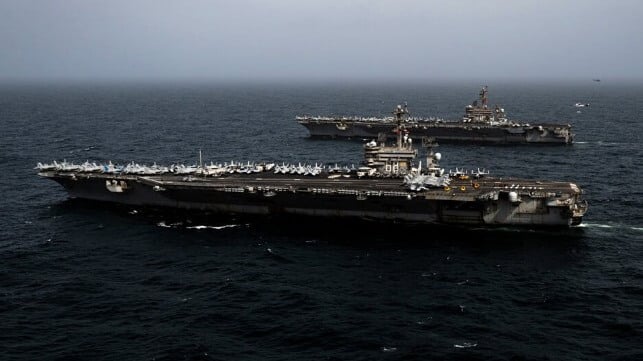
Reports in the Israeli media are saying that the Israeli government has approached the United States, calling for a resumption of the attacks on the Houthis, saying that a wider coalition is necessary. The call comes as the Houthis have continued to launch missiles at Israel and this week sank two merchant ships killing multiple seafarers.
The Trump administration stopped its attacks in May after less than two months in a brokered agreement established by the Omanis. The U.S. staged nearly around-the-clock attacks starting on March 15, supported by two aircraft carriers and, according to media reports, expended at least $1 billion worth of weaponry in 1,100 airstrikes.
Trump told the media that the Houthis had taken “tremendous punishment” in an effort that U.S. officials said was to ensure the safety of navigation. He said the U.S. was taking the Houthis at their word and stopped all the attacks and brought the carrier Harry S. Truman home after an extended deployment in the Red Sea region.
The leaders of the militants, however, have vowed to continue their attacks and said that this week’s sinking of the Magic Seas and Eternity C was the result of increased targeting. They said the blockade of Israel and shipping to Israel had never been stopped and will continue until the siege in Gaza ends. At the same time, they highlight the launch of long-range ballistic missiles toward Israel, celebrating that air raid sirens had sounded in towns and cities across Israel.
The Israelis staged a series of attacks on their own against the Houthis, mostly targeting the ports in Yemen. They contended that the ports have been heavily damaged, but the Houthis said they were able to restore operations. It also did not stop the missile launches.
The report from Israeli public broadcaster Kan network said Israel has now told the U.S. the Houthis “can no longer remain solely an Israeli problem.” Kan reports that Israeli officials called for “more intense combined attacks against Houthi regime targets — not just [Israeli] air force fighter jet strikes, but also a renewal of American attacks and the formation of a coalition including additional countries.”
This comes as the shipping community remains on edge. In the past, the Houthis staged several attacks against a single ship spread over hours, but in this case appeared to combine their tactics to stop and disable the vessels. Then they repeatedly attacked using unmanned explosive boats, drones, and missiles. Their fighters shot at the ships and fired rocket-propelled grenades. In the case of the Magic Seas, they later mined the ship, whereas the damage to the Eternity C was sufficient to sink the ship.
While they claimed not to be targeting the crew and said they provided humanitarian assistance to the crew of the Eternity C, at least 10 seafarers and a security guard are missing, although some may be in captivity in Yemen. The shipping company confirmed that one person was killed and said four others had not been seen since the attacks.
The Financial Times reports that U.S.-based insurer Travelers did not extend war risk coverage to the Greek-owned Eternity C due to the extreme danger. Lloyd’s List had earlier reported that the vessel sailed without war risk coverage and confirmed the FT report that Travelers had declined the coverage. Reuters is quoting sources saying that the cost of the war risk coverage spiked to as high as one percent of the vessel’s value, equaling the peak in 2024. It reports that the cost of the coverage went from 0.3 to 0.7 percent in one week after the latest attacks.
This week, U.S. Central Command highlighted that two Nimitz-class aircraft carriers, USS Nimitz and USS Carl Vinson, were now both operating in its area of responsibility. There, however, has been no public statement from the U.S. about possibly resuming efforts to stop the Houthis’ attacks.
Red Sea shipping insurance doubles after deadly Houthi attacks
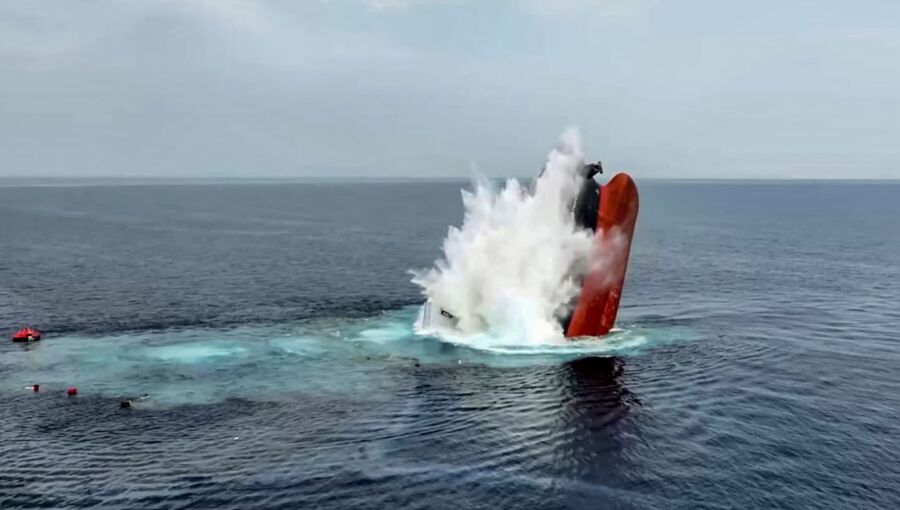
Insurance costs for Red Sea shipping have more than doubled following Yemen's deadly attacks that sank two vessels and killed at several ship workers in recent days.
The past week has seen a sharp escalation in both the cost and difficulty of insuring ships linked to Israel or transiting the Red Sea, driven by renewed Yemeni attacks and persistent geopolitical risks. The insurance boycott remains firmly in place, with no signs of abating under current conditions.
War risk premiums have surged to around 0.7% of a ship's value from approximately 0.3% last week before the latest attacks, with some underwriters pausing cover for certain voyages, industry sources told Reuters on July 10.
Rates for typical seven-day voyage periods have been quoted at up to 1% this week, matching peak 2024 levels when daily attacks occurred. This adds hundreds of thousands of dollars in additional costs for every shipment through the critical oil and commodities route.
A Houthi attack on the Greek ship Eternity C on Wednesday killed four of 25 people aboard, with rescuers pulling four more survivors from the Red Sea on Thursday. Houthi militants said they were holding some crew members still missing.
The attack followed Monday's sinking of another Greek-operated vessel, which the Houthis claimed responsibility for. Analysis of shipping data showed some sister vessels had called at Israeli ports in the past year.
The Iran-aligned group has attacked more than 100 ships since November 2023 in what they said was solidarity with Palestinians in the Gaza war. Traffic through the Red Sea has dropped sharply since the campaign began.
The United States announced a deal in May to stop bombing the Houthis in return for ending shipping attacks, though the Houthis said the agreement did not include sparing Israel.
Insurance industry sources said underwriters would try to avoid covering any vessel with Israeli links, even indirect ones.
"What we have seen in the last week appears to be a return to mid-2024 targeting criteria, which essentially involves any vessel with even a remote Israeli connection," said Munro Anderson, head of operations at marine war risk insurance specialist Vessel Protect.

No comments:
Post a Comment