BANNED IN AMERIKA, MADE IN CANADA
Antifa: A Graphic History of its Origins
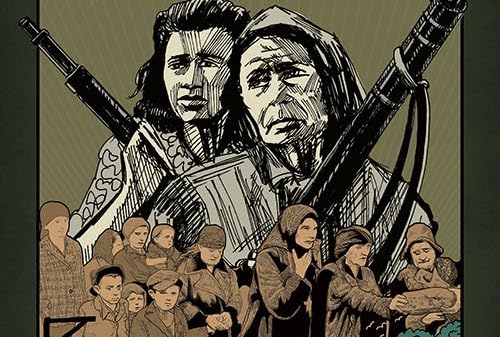
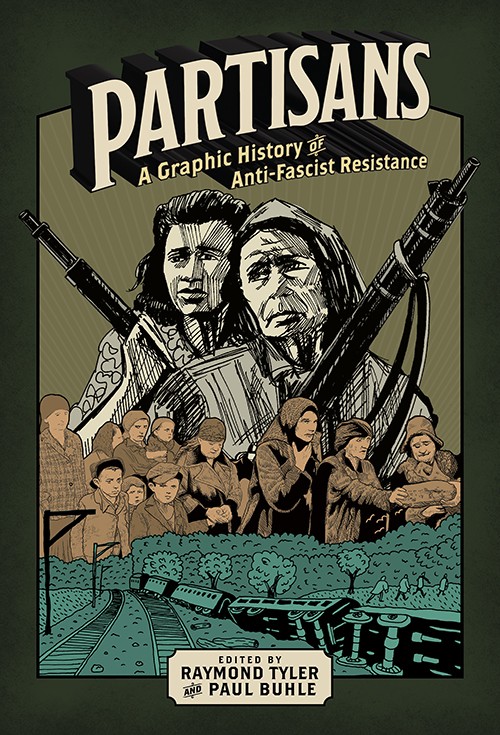
Cover art for the graphic novel Partisans: A Graphic History of Anti-fascist Resistance edited by Paul Buhle and Raymond Tyler
Leonard Cohen sings a song called “The Partisan”. It tells the story of an antifascist fighter in the heart of the war against Nazism. Beautifully rendered by Cohen on his 1969 album Songs From a Room, it tells the story of an antifascist fighter and his squad in what I assume to be the French countryside. By the time the tune is over, the teller of the tale is the only survivor. In the middle verses, the listener is introduced to a woman who gives the three fighters shelter and “Kept us hidden in the garret/Then the soldiers came/She died without a whisper.” The tragedy in this verse, so beautifully told, represents the facts of resisting fascists; fascists whose concern for the lives of those whose opinions they don’t share is virtually non-existent and is perhaps exceeded only by the anonymity of those who bomb and kill from the sky.
Recently, the Trump regime made the modern antifascist movement—known as antifa—a primary target in its establishment of a fascist USA. Although my immediate reaction to the announcement labeling antifa as a domestic terrorist organization involved at least a couple jokes regrading the essential ignorance of the White House declaration, it was underlined by the potentially greater danger that ignorance created for opponents of the trumpist movement. Because there is no actual entity that is antifa, the forces of law and order can label anyone opposed to Trump and his authoritarian program a domestic terrorist. Once an individual or organization is labeled in such a manner, even the pretense of civil rights and liberties pretty much disappears. Likewise, so do people.
Fighting fascism is a serious business. The recent case of writer and scholar Mark Bray is but one example of this. Bray’s primary work opposing fascism was to write a book titled Antifa: The Antifascist Handbook discussing fascism’s modern manifestations and the nature of the opposition to it. Right wing students at Rutgers University where he taught began a campaign of harassment in an ultimately successful campaign to force him out of his job. The harassment included threats to his family and himself; threats that convinced him they should leave the United States. For people who know the history of those opponents of Nazism who left Germany during the early years of the so-called Third Reich, Bray’s exile can’t help but make them wonder who will be next. Or how far will the installation of fascism progress around the world in the current period. When does the opposition to fascism require more than sarcasm, more than protest and how would that opposition look?
Of course, only time will give us the answers to those questions. In the meantime, it seems like a good practice would be to familiarize oneself with the history of resistance to fascism. There are dozens of texts, films and websites that are quite instructive for that pursuit. Some are fictive in nature and others are straight-up history and analysis. One recent addition to this collection of antifascist history is a supremely rendered graphic history titled Partisans: A Graphic History of Anti-Fascist Resistance. Edited by comics writer Raymond Tyler and longtime leftist historian Paul Buhle, this collection of handsomely depicted histories of various elements of the resistance to European fascism during World War Two is an inviting introduction to this under acknowledged aspect of the war against fascism in the twentieth century. The artwork, which ranges from the vivid colors of Seth Tobocman’s portrayal of the Yugoslav partisans under the leadership of Josip Broz Tito to the classical black and white cartoon panels of Daniel Selig’s entry on the French Partisans, invites readers young and old into a history that is simultaneously informative and inspirational. The narratives bend from the first person narrative of David Lasky’s water colored story of a Jewish uprising in eastern Europe to a story about the Soviet Partisans written and drawn by Raymond Tyler that reminded this reviewer of vintage Our Army at War comics from my 1960s childhood.
The different politics of various partisan groups is part of the conversation in several of the dozen stories in this collection. So are the differences based on ethnicity and religious beliefs. Women’s roles in the resistance are mentioned. Indeed, longtime comics writer Trina Robbins’ (the creator of Wimmen’s Comix) collaboration with artist Anne Timmons tells the story of three young Dutch women who served with the partisans in the Netherlands. Another story titled “Piccola Staffetta:My Small Contribution to the Resistance Against Mussolini” composed by Franca Bannerman, Isabella Bannerman, and Luisa Caetti is a tale about a girl who realizes she has been brainwashed by the fascists and joins the resistance performing small but important tasks. While reading this particular chapter, I was reminded of Hans Fallada’s novel about Nazi Germany and the small acts of resistance of a middle-aged couple, Every Man Dies Alone.
The moral of these stories and the watchword for any opposition to fascism is simple and evident throughout this graphic history. It’s not any kind of heroism that matters, but the resistance itself.
A Graphic History of Anti-Fascist Resistance
Paperback
Ebook
$34.95
148 pages
Praise
“Vibrant, compelling stories of personal bravery and collective struggle—Partisans provides much-needed insights into the struggle for a better world.”
– Kate Evans, author of Red Rosa: A Graphic Biography of Rosa Luxemburg
“A stellar collection documenting the brief history of anti-fascists in Europe. By the end, you too will be excited to slap a fascist or two.”
– Yazan Al-Saadi, author of Lebanon is Burning and Other Dispatches
“Partisans, a graphic novel anthology of anti-fascist resistance, covers a wide scope of heroic activity by Russians, Ukrainians, Yugoslavians, Greeks, French, and others. It relies upon the latest research, which highlights the efforts of a variety of actors, including children, and illuminates the backdrop for armed struggle. Explaining this little-known though extremely compelling part of history to new readers will go far to puncture anti-Left myths and recover the real story, as lived first by the veterans of the Spanish Civil War and culminating with those who contributed to the final defeat of the Axis. The outstanding comic art both entertains and educates, political proof of an emerging and powerful form of storytelling.”
– Oliver Stone and Peter Kuznick, coauthors of The Untold History of the United States
“Partisans is masterful. Tyler and Buhle encapsulate complicated histories in compelling and easily understood narratives that burst to life through gorgeous illustrations. There is much to learn and enjoy in this book for young readers, newcomers to anti-fascist history, and even knowledgeable historians and activists.”
– Mark Bray, author of Antifa: The Anti-Fascist Handbook
“Vital history, the lessons of which should inform our thinking on what resistance can look like in the present.”
– Michael DeForge, author of Holy Lacrimony
“Partisans is a powerful, visually stunning tribute to the resisters who defied totalitarian regimes. Through evocative graphic novel chapters, each by a different artist, this book brings to life the stories of Partisans from all walks of life—young and old, women and men—from across the many lands darkened by fascism. You will learn their names. You will remember their courage. Historically rich and visually arresting, Partisans does more than explain the past; it will inspire readers to resist injustice now.”
– Diana Garvin, University of Oregon; author of Feeding Fascism: The Politics of Women's Food Work
“Partisans were a vital, but often overlooked, part of the defeat of Nazi Germany and its Axis allies during World War II. In every occupied country, Partisan groups waged anti-fascist guerrilla war against the Nazi invaders, carrying out raids, ambushes, and widespread sabotage. Partisans highlights different aspects of this struggle with a variety of art styles and stories ranging from personal accounts to historical overviews of Partisans in various countries, including Holland, Hungary, France, Yugoslavia, and the Soviet Union. A valuable contribution to the history of Partisan anti-fascist resistance.”
– Gord Hill, author of The Antifa Comic Book
“Don’t let the comic-book format fool you. This is a gut-wrenching story of people from all walks of life who made moral choices they never thought they would have to make. Especially notable is the emphasis on the role of women. From teenagers in Holland to an internationally known star such as Josephine Baker, these women, too, risked all. Most US leftists know about the Partisans of the Abraham Lincoln Brigade and the French Resistance. Now they’ll know about those in other places who are too often forgotten.”
– Maxine Phillips, coeditor of religioussocialism.org; former executive editor of Dissent Magazine
“Visually stunning and deeply informative, Partisans demonstrates why comics are such a powerful and potent art form. This book brilliantly delivers the histories that will give us the heart to fight current threats to democracy at home and abroad.”
– Peter Kuper, author of Insectopolis: A Natural History
Contents
Partisans: An Introduction
Raymond Tyler and Paul Buhle
World War II in Europe: A Timeline
Veterans of the Spanish Civil War
Sharon Rudahl
The Hungarian Resistance
story by Sander Feinberg, art by Summer McClinton
Freedom or Death: The French Partisans
story and art by Daniel Selig
Secret Agent
story and art by Sharon Rudahl
Tito’s Partisans
story and art by Seth Tobocman
story by Franca Bannerman and Luisa Cetti, art by Isabella Bannerman
Andartiko: Fighting Fascism in Greece
story and art by David Lester
Three Dutch Girls: Teenage Partisans in Holland
story by Trina Robbins, art by Anne Timmons
Uprising: A Jewish Partisan in Eastern Europe
story and art by David Lasky
Spomenik
story and art by Kevin Pyle
Soviet Partisans
story by Raymond Tyler, art by Gary and Laura Dumm
Afterword
Paul Buhle and Raymond Tyler
Acknowledgments
References
Contributors

Show Details
Read Excerpt (PDF)
Media CBC comics list includes The Antifa Comic Book: Revised and Expanded
Description
With fascism in our midst, Indigenous artist Gord Hill revises and expands his brilliant graphic history of fascism and anti-fascist movements
When it was first published in 2018, Gord Hill's The Antifa Comic Book was heralded for its searing imagery documenting the history of fascism and anti-fascist movements over the last century. In the years since its publication, the term "antifa" has been co-opted by the right to falsely describe far-left political extremism and even terrorism. But the role played by antifa movements in fighting fascism and racism around the world remains as relevant and important as ever.
For this expanded edition, Gord Hill adds new material depicting more recent flashpoints of fascist activity, including the January 6, 2021, US Capitol attack, the murderous spree by Norwegian terrorist Anders Breivik, the infamous 2022 Canadian convoy protests, and Islamophobic and anti-migrant sentiment in a growing number of fascist governments in Europe. At the same time, Hill depicts the important work being done by anti-fascist individuals and organizations to combat this worrisome trend, made all the more crucial by Donald Trump's return to the White House.
Powerful and inspiring, The Antifa Comic Book is an important reminder of fascism in our midst and what can be done to stop it.
The book includes a new foreword by Mark Bray, historian and author of Antifa: The Anti-Fascist Handbook.
Reviews
Gord Hill's The Antifa Comic Book is so vitally important because it crafts a visual hymn to the everyday heroes, past and present, who put their bodies on the line to crush the ambitions of would-be fascist supermen. -Mark Bray, from the foreword

No comments:
Post a Comment