Madagascar’s pattern of popular revolts gets its Gen Z update

Analysis
Madagascar is experiencing its fifth political crisis since the island gained independence from France in 1960. President Andry Rajoelina fled the country on Monday after weeks of protest led by social media group Gen Z Madagascar, creating a power vacuum that has allowed the military to claim power – a situation that feels like déjà vu.
Issued on: 15/10/2025 -
FRANCE24
By:Antoine FLANDRIN
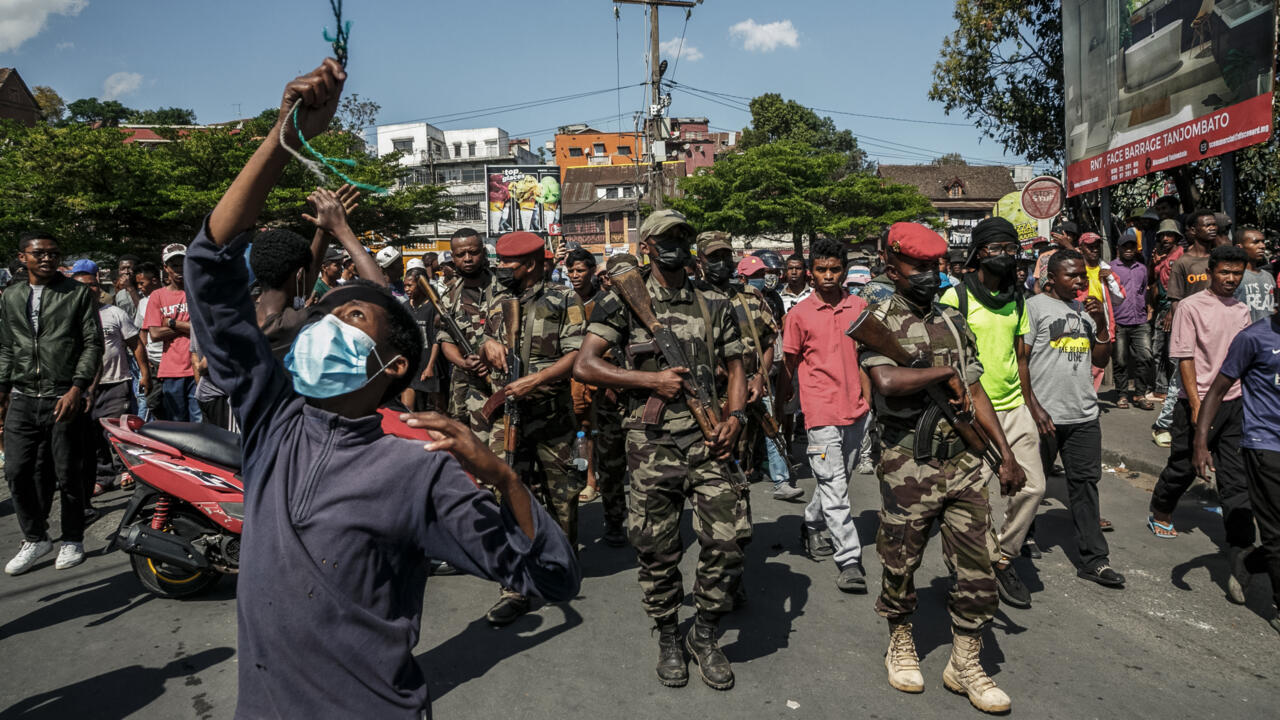
It is not the first time that Madagascar has been mired in political upheaval.
Since gaining independence from France in 1960, the country has experienced a series of similar crises. Students overthrew former president Philibert Tsiranana's pro-French regime in the name of social justice in 1972. Civil service strikes and protests in 1991 once again forced the president at the time to resign, but the fledgling democracy was hampered by the return of the same elites. Charismatic entrepreneur Marc Ravalomanana came to power in 2002 with dreams of a modern, open country. But in 2009 he was swept from power by Rajoelina, a former DJ who had risen through the political ranks to become the young mayor of Antananarivo.
Empty promises
Now Rajoelina, controversially re-elected in 2023 amid an opposition boycott, has abandoned the presidency in much the same way as his predecessor – reportedly aboard a French plane.
“Regime after regime promises they will put an end to disorder, but winds up being the cause of it,” says Arnaud Léonard, a historian specialising in Madagascar’s history. “Every president promises to be a saviour, and every generation takes to the streets to chase them out. The only thing that has changed is that slogans used to be printed on leaflets, and now they are spread on social media. But the anger is very much the same.”
Once again, that anger is being fuelled by the increasingly unbearable social and economic conditions the nation faces. Madagascar is still one of the poorest countries in the world, despite the 4.2 percent growth its economy saw in 2024 – a paradox that became even less palatable after Rajoelina promised to "improve the daily lives of the population", "increase wages" and "combat poverty".
Gen Z on the front lines
During the latest demonstrations, the military intervened to stop police from cracking down on protesters, says Rafidinarivo. “They reshuffled the chain of command to ensure things didn't [escalate] after the police and military fired on each other on Saturday,” she says.
Back in 1991 the military also played a key role, forcing politicians to reach a consensus and end the crisis. But this time around, it was young people who took to the front lines to hold the state accountable. “What is new about this generation is how connected to the world it is thanks to social media. It can compare what is happening elsewhere by going online. And unlike previous generations, young people today have not been politically censored. Their slogan is, ‘We are rising up for our children's land.’ They want change,” says Rafidinarivo.
For his part, Lahiniriko thinks the demands put forth by the Gen Z movement – like changing the way Madagascar is governed – are not based on concrete plans. “The movement was inspired by crises it saw on social media, like what was happening in Nepal [and Morocco]. But we must not forget that having electricity and running water is already a privilege most young Madagascans don't have,” he says.
Lahiniriko says that, without a strong leader or comprehensive ideology, the movement will likely dissipate quickly. “It's too early to say, but the political elite could simply return to power,” Lahiniriko says.
Thousands of protesters gathered on the capital's 13 May Square on Tuesday, dancing, singing and waving banners. Colonel Randrianirina took the stage at one point and asked: “Are you ready to accept a military takeover?” and the crowd cheered.
As news of the takeover made its way among the protesters, many were jubilant.
“We’re so happy Andry Rajoelina is finally gone ... We will start again," high-school student Fih Nomensanahary told Reuters, with four of her friends cheering alongside her.
Others were more cautious. "They need to hand over to a civilian administration quickly and have an election," said Rezafy Lova, a 68-year-old IT consultant.
This article was translated from the original in French by Lara Bullens.

Analysis
Madagascar is experiencing its fifth political crisis since the island gained independence from France in 1960. President Andry Rajoelina fled the country on Monday after weeks of protest led by social media group Gen Z Madagascar, creating a power vacuum that has allowed the military to claim power – a situation that feels like déjà vu.
Issued on: 15/10/2025 -
FRANCE24
By:Antoine FLANDRIN
Members of the Madagascan military walk in the streets of Antananarivo on October 11, 2025. © Rijasolo, AFP
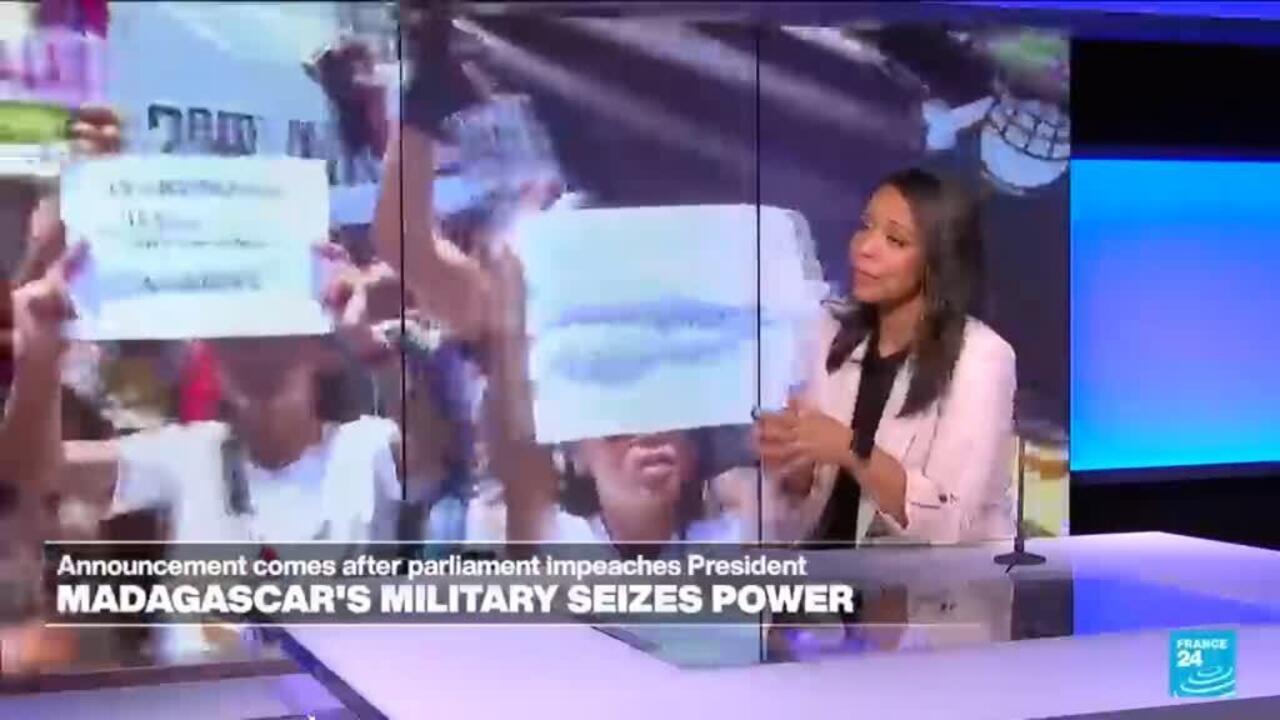
In a dizzying sequence of events, the situation in Madagascar escalated rapidly. Addressing the country on national radio Tuesday, military leader Colonel Michael Randrianirina declared the military had “taken power”. He added that it was dissolving all institutions except the lower house of parliament, which a short time earlier had voted to impeach President Andry Rajoelina for desertion of duty after he fled the country on Monday.
A spokesperson for the African Union on Wednesday said that the bloc had suspended Madagascar with immediate effect following the military's takeover, saying, "The rule of law must prevail over the rule of force."
Weeks of unprecedented protests spearheaded by Gen Z Madagascar, a movement born on social media, set the scene for the spiralling political crisis the island is now facing. Demonstrations that first erupted on September 25 over widespread water and power outages quickly intensified. Thousands of young protesters took to the streets of the capital Antananarivo, their phone flashlights held high, railing against corrupt institutions and the extreme poverty that plagues a large part of Madagascar's population.
The situation took a turn last weekend, when President Rajoelina warned that an “attempt to seize power illegally and by force” was under way. Meanwhile, Randrianirina’s elite CAPSAT (Corps d'armée des personnels et des services administratifs et techniques) military unit, which had played a key role in bringing Rajoelina to power in a 2009 coup, joined the protesters in the centre of the Madagascan capital and said they would disobey shoot-to-kill orders.
In a dizzying sequence of events, the situation in Madagascar escalated rapidly. Addressing the country on national radio Tuesday, military leader Colonel Michael Randrianirina declared the military had “taken power”. He added that it was dissolving all institutions except the lower house of parliament, which a short time earlier had voted to impeach President Andry Rajoelina for desertion of duty after he fled the country on Monday.
A spokesperson for the African Union on Wednesday said that the bloc had suspended Madagascar with immediate effect following the military's takeover, saying, "The rule of law must prevail over the rule of force."
Weeks of unprecedented protests spearheaded by Gen Z Madagascar, a movement born on social media, set the scene for the spiralling political crisis the island is now facing. Demonstrations that first erupted on September 25 over widespread water and power outages quickly intensified. Thousands of young protesters took to the streets of the capital Antananarivo, their phone flashlights held high, railing against corrupt institutions and the extreme poverty that plagues a large part of Madagascar's population.
The situation took a turn last weekend, when President Rajoelina warned that an “attempt to seize power illegally and by force” was under way. Meanwhile, Randrianirina’s elite CAPSAT (Corps d'armée des personnels et des services administratifs et techniques) military unit, which had played a key role in bringing Rajoelina to power in a 2009 coup, joined the protesters in the centre of the Madagascan capital and said they would disobey shoot-to-kill orders.
It is not the first time that Madagascar has been mired in political upheaval.
Since gaining independence from France in 1960, the country has experienced a series of similar crises. Students overthrew former president Philibert Tsiranana's pro-French regime in the name of social justice in 1972. Civil service strikes and protests in 1991 once again forced the president at the time to resign, but the fledgling democracy was hampered by the return of the same elites. Charismatic entrepreneur Marc Ravalomanana came to power in 2002 with dreams of a modern, open country. But in 2009 he was swept from power by Rajoelina, a former DJ who had risen through the political ranks to become the young mayor of Antananarivo.
Empty promises
Now Rajoelina, controversially re-elected in 2023 amid an opposition boycott, has abandoned the presidency in much the same way as his predecessor – reportedly aboard a French plane.
“Regime after regime promises they will put an end to disorder, but winds up being the cause of it,” says Arnaud Léonard, a historian specialising in Madagascar’s history. “Every president promises to be a saviour, and every generation takes to the streets to chase them out. The only thing that has changed is that slogans used to be printed on leaflets, and now they are spread on social media. But the anger is very much the same.”
Once again, that anger is being fuelled by the increasingly unbearable social and economic conditions the nation faces. Madagascar is still one of the poorest countries in the world, despite the 4.2 percent growth its economy saw in 2024 – a paradox that became even less palatable after Rajoelina promised to "improve the daily lives of the population", "increase wages" and "combat poverty".
© France 24
05:43
Rajoelina's promises turned out to be empty. Seized by corruption and capital flight, Madagascar's economy offers very few prospects to its population, whose median age is 20. As basic infrastructure began to break down, young Madagascans had had enough.
“Against this backdrop, water and power shortages fuelled outrage that pushed political mistrust to its limit. The connection between the people [of Madagascar] and its politics was already fraught, but now it is completely destroyed,” says Christiane Rafidinarivo, associate professor of political science at Sciences Po university in Paris.
For Denis-Alexandre Lahiniriko, a historian and senior lecturer at the University of Antananarivo, these recurrent political crises can be traced back to the alienation that exists between the Madagascan state and its people. “Madagascar has never succeeded in creating a socio-political structure its population identifies with,” he explains.
05:43
Rajoelina's promises turned out to be empty. Seized by corruption and capital flight, Madagascar's economy offers very few prospects to its population, whose median age is 20. As basic infrastructure began to break down, young Madagascans had had enough.
“Against this backdrop, water and power shortages fuelled outrage that pushed political mistrust to its limit. The connection between the people [of Madagascar] and its politics was already fraught, but now it is completely destroyed,” says Christiane Rafidinarivo, associate professor of political science at Sciences Po university in Paris.
For Denis-Alexandre Lahiniriko, a historian and senior lecturer at the University of Antananarivo, these recurrent political crises can be traced back to the alienation that exists between the Madagascan state and its people. “Madagascar has never succeeded in creating a socio-political structure its population identifies with,” he explains.
Gen Z on the front lines
During the latest demonstrations, the military intervened to stop police from cracking down on protesters, says Rafidinarivo. “They reshuffled the chain of command to ensure things didn't [escalate] after the police and military fired on each other on Saturday,” she says.
Back in 1991 the military also played a key role, forcing politicians to reach a consensus and end the crisis. But this time around, it was young people who took to the front lines to hold the state accountable. “What is new about this generation is how connected to the world it is thanks to social media. It can compare what is happening elsewhere by going online. And unlike previous generations, young people today have not been politically censored. Their slogan is, ‘We are rising up for our children's land.’ They want change,” says Rafidinarivo.
For his part, Lahiniriko thinks the demands put forth by the Gen Z movement – like changing the way Madagascar is governed – are not based on concrete plans. “The movement was inspired by crises it saw on social media, like what was happening in Nepal [and Morocco]. But we must not forget that having electricity and running water is already a privilege most young Madagascans don't have,” he says.
Lahiniriko says that, without a strong leader or comprehensive ideology, the movement will likely dissipate quickly. “It's too early to say, but the political elite could simply return to power,” Lahiniriko says.
Thousands of protesters gathered on the capital's 13 May Square on Tuesday, dancing, singing and waving banners. Colonel Randrianirina took the stage at one point and asked: “Are you ready to accept a military takeover?” and the crowd cheered.
As news of the takeover made its way among the protesters, many were jubilant.
“We’re so happy Andry Rajoelina is finally gone ... We will start again," high-school student Fih Nomensanahary told Reuters, with four of her friends cheering alongside her.
Others were more cautious. "They need to hand over to a civilian administration quickly and have an election," said Rezafy Lova, a 68-year-old IT consultant.
This article was translated from the original in French by Lara Bullens.
Mobilization shakes regime in Madagascar
Tuesday 14 October 2025, by Paul Martial
On 24 September 24 2025, during the United Nations General Assembly, Andry Rajoelina, the president of Madagascar, declared: “there is no development without reliable, accessible and affordable energy”, and continued: “In just six years, the rate of access to electricity in my country has increased from 24% to 40%”. As a response to this, the next day, youth began the first demonstrations against the incessant cuts in electricity and water.
Miala Rajoelina! (Rajoelina out!)
A recurring problem but one that is getting worse. These difficulties stem from a lack of investment and maintenance of the networks of Jirama, the company in charge of distribution. But they also come from embezzlement for which one of the main culprits is Mamy Ravatomanga, the country’s second richest person and the president’s éminence grise.
The demonstrators were not mistaken. Very quickly, the demands evolved to demand Rajoelina’s resignation, but also the dissolution of the Senate, the High Constitutional Court and the electoral commission, institutions synonymous with the corruption of the elites.
Rajoelina tried to defuse the crisis, but each time too late and too little. He sacked the energy minister, then resolved to dismiss his government and especially Prime Minister Christian Ntsay, a key part of the political apparatus of the president’s clan. Even his televised appearance announcing the dismissal turned ridiculous, when he addressed the young people, urging them to send their CVs for the establishment of the new government.
The mobilization is expanding
The struggle has, over time, spread across the country, affecting the main towns and cities. The desire of young people of Generation Z to expand the movement has become a reality. Political leaders of opposition parties, including former presidents Ravalomanana and Rajaonarimampianina, timidly gave their support. From them, there is nothing to expect, given their history of plundering the country’s resources. Civil society organizations have mobilized strongly against the repression of peaceful demonstrators, while the police let the gangs loot businesses. A strategy of chaos that aimed to rally at least part of the population, in vain.
The new fact is the mobilization of workers. A few days after the first demonstrations, Jirama employees went on strike, joined by the teachers’ union, SEMPAMA. Finally, Herizo Ramanambola, leader of the Solidarité trade union, called for a general strike, also demanding the resignation of the president.
Rajoelina, to hide his sixteen years of catastrophic power, now denounces a conspiracy hatched by “foreign powers or agencies with advanced technology” manipulating, thanks to algorithms, the youth. In short, “forces of darkness” that push young people into the streets... Unless it is the posts on social networks of the offspring of the Malagasy elites, who show off their golden life made possible by the plundered wealth of a country where three-quarters of the population live below the poverty line.
2 October 2025
Translated by International Viewpoint from l’Anticapitaliste.
Attached documentsmobilization-shakes-regime-in-madagascar_a9215.pdf (PDF - 905.1 KiB)
Extraction PDF [->article9215]
Paul Martial is a correspondent for International Viewpoint. He is editor of Afriques en Lutte and a member of the Fourth International in France.
International Viewpoint is published under the responsibility of the Bureau of the Fourth International. Signed articles do not necessarily reflect editorial policy. Articles can be reprinted with acknowledgement, and a live link if possible.
Tuesday 14 October 2025, by Paul Martial
On 24 September 24 2025, during the United Nations General Assembly, Andry Rajoelina, the president of Madagascar, declared: “there is no development without reliable, accessible and affordable energy”, and continued: “In just six years, the rate of access to electricity in my country has increased from 24% to 40%”. As a response to this, the next day, youth began the first demonstrations against the incessant cuts in electricity and water.
Miala Rajoelina! (Rajoelina out!)
A recurring problem but one that is getting worse. These difficulties stem from a lack of investment and maintenance of the networks of Jirama, the company in charge of distribution. But they also come from embezzlement for which one of the main culprits is Mamy Ravatomanga, the country’s second richest person and the president’s éminence grise.
The demonstrators were not mistaken. Very quickly, the demands evolved to demand Rajoelina’s resignation, but also the dissolution of the Senate, the High Constitutional Court and the electoral commission, institutions synonymous with the corruption of the elites.
Rajoelina tried to defuse the crisis, but each time too late and too little. He sacked the energy minister, then resolved to dismiss his government and especially Prime Minister Christian Ntsay, a key part of the political apparatus of the president’s clan. Even his televised appearance announcing the dismissal turned ridiculous, when he addressed the young people, urging them to send their CVs for the establishment of the new government.
The mobilization is expanding
The struggle has, over time, spread across the country, affecting the main towns and cities. The desire of young people of Generation Z to expand the movement has become a reality. Political leaders of opposition parties, including former presidents Ravalomanana and Rajaonarimampianina, timidly gave their support. From them, there is nothing to expect, given their history of plundering the country’s resources. Civil society organizations have mobilized strongly against the repression of peaceful demonstrators, while the police let the gangs loot businesses. A strategy of chaos that aimed to rally at least part of the population, in vain.
The new fact is the mobilization of workers. A few days after the first demonstrations, Jirama employees went on strike, joined by the teachers’ union, SEMPAMA. Finally, Herizo Ramanambola, leader of the Solidarité trade union, called for a general strike, also demanding the resignation of the president.
Rajoelina, to hide his sixteen years of catastrophic power, now denounces a conspiracy hatched by “foreign powers or agencies with advanced technology” manipulating, thanks to algorithms, the youth. In short, “forces of darkness” that push young people into the streets... Unless it is the posts on social networks of the offspring of the Malagasy elites, who show off their golden life made possible by the plundered wealth of a country where three-quarters of the population live below the poverty line.
2 October 2025
Translated by International Viewpoint from l’Anticapitaliste.
Attached documentsmobilization-shakes-regime-in-madagascar_a9215.pdf (PDF - 905.1 KiB)
Extraction PDF [->article9215]
Paul Martial is a correspondent for International Viewpoint. He is editor of Afriques en Lutte and a member of the Fourth International in France.
International Viewpoint is published under the responsibility of the Bureau of the Fourth International. Signed articles do not necessarily reflect editorial policy. Articles can be reprinted with acknowledgement, and a live link if possible.
Madagascar army says it has taken control after President Rajoelina impeached
The head of an elite Madagascar military unit said Tuesday that it had seized power, minutes after the National Assembly voted to impeach President Andry Rajoelina for “desertion of duty”. Rajoelina fled the country on Monday after weeks of protest, saying he feared for his life.
Issued on: 14/10/2025 -
By: FRANCE 24
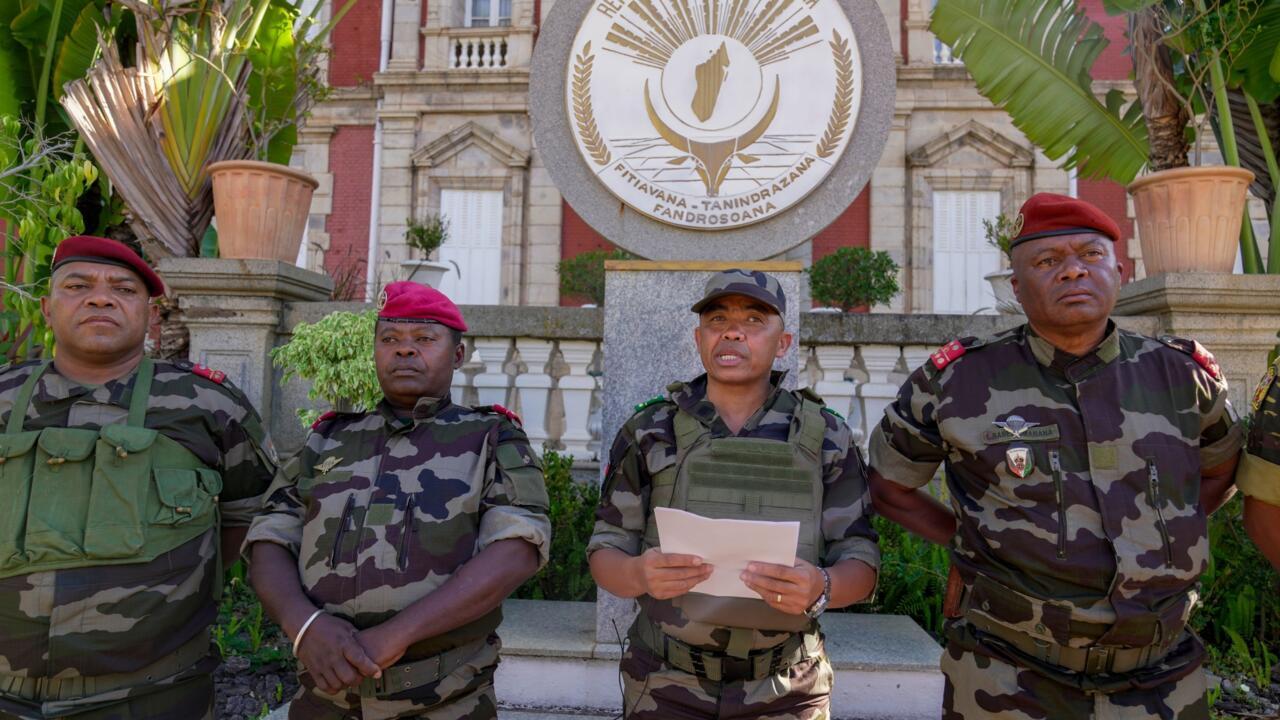
The head of an elite Madagascar military unit said Tuesday that it had seized power, minutes after the National Assembly voted to impeach President Andry Rajoelina for “desertion of duty”. Rajoelina fled the country on Monday after weeks of protest, saying he feared for his life.
Issued on: 14/10/2025 -
By: FRANCE 24
CAPSAT military unit commander Col. Michael Randrianirina, center, reads a statement saying that the armed forces are taking control of the country from the steps of the Presidency in Antananarivo, Madagascar, Tuesday, Oct. 14, 2025.
© Brian Inganga, AP
01:22
"We have taken power," said Colonel Michael Randrianirina, head of the CAPSAT (Corps d'armée des personnels et des services administratifs et techniques) unit, in a statement read out in front of a government building.
He added that Madagascar's military was dissolving all institutions except the lower house of parliament, which had voted to impeach President Andry Rajoelina just minutes before for desertion of duty.
Earlier on Tuesday, Rajoelina tried to dissolve the National Assembly in a pre-emptive attempt to halt an opposition-led vote to force him out of office over the island nation's spiralling political crisis.
Rajoelina had faced more than two weeks of deadly street clashes, led largely by young Gen-Z demonstrators furious with the ruling elite over crippling water and electricity outages, eventually forcing the 51-year-old leader into hiding.
The decree to dissolve the assembly "shall enter into force immediately upon its publication by radio and/or television broadcast", the presidency said in a statement published on Facebook. Rajoelina, who had defied mounting calls to resign, defended the move in a separate social media post as necessary to "restore order within our nation and strengthen democracy".
Opposition leader Siteny Randrianasoloniaiko said Monday he would vote to impeach Rajoelina for desertion of duty after he fled the country.
Rajoelina, former mayor of the capital Antananarivo, said late Monday he was sheltering in a "safe space" after attempts on his life, without revealing his location.
The protests began on September 25 and reached a pivotal point at the weekend when mutinous soldiers and security forces joined the demonstrators and refused orders to shoot. They joined calls for the president and other government ministers to step down.
Among them were the elite CAPSAT unit, which played a major role in the 2009 coup that first brought Rajoelina to power.
To try to defuse the protests, the president last month sacked his entire government.
Radio France Internationale reported that Rajoelina departed Madagascar aboard a French military plane at the weekend.
(FRANCE 24 with AFP)
01:22
"We have taken power," said Colonel Michael Randrianirina, head of the CAPSAT (Corps d'armée des personnels et des services administratifs et techniques) unit, in a statement read out in front of a government building.
He added that Madagascar's military was dissolving all institutions except the lower house of parliament, which had voted to impeach President Andry Rajoelina just minutes before for desertion of duty.
Earlier on Tuesday, Rajoelina tried to dissolve the National Assembly in a pre-emptive attempt to halt an opposition-led vote to force him out of office over the island nation's spiralling political crisis.
Rajoelina had faced more than two weeks of deadly street clashes, led largely by young Gen-Z demonstrators furious with the ruling elite over crippling water and electricity outages, eventually forcing the 51-year-old leader into hiding.
The decree to dissolve the assembly "shall enter into force immediately upon its publication by radio and/or television broadcast", the presidency said in a statement published on Facebook. Rajoelina, who had defied mounting calls to resign, defended the move in a separate social media post as necessary to "restore order within our nation and strengthen democracy".
Opposition leader Siteny Randrianasoloniaiko said Monday he would vote to impeach Rajoelina for desertion of duty after he fled the country.
Rajoelina, former mayor of the capital Antananarivo, said late Monday he was sheltering in a "safe space" after attempts on his life, without revealing his location.
The protests began on September 25 and reached a pivotal point at the weekend when mutinous soldiers and security forces joined the demonstrators and refused orders to shoot. They joined calls for the president and other government ministers to step down.
Among them were the elite CAPSAT unit, which played a major role in the 2009 coup that first brought Rajoelina to power.
To try to defuse the protests, the president last month sacked his entire government.
Radio France Internationale reported that Rajoelina departed Madagascar aboard a French military plane at the weekend.
(FRANCE 24 with AFP)
Impeached president confirms he fled Madagascar at the weekend
Antananarivo (Madagascar) (AFP) – Madagascar's ousted president confirmed for the first time that he had fled the country, issuing a statement after a military-led power grab prompted by weeks of demonstrations that have plunged the island nation into crisis.
Issued on: 16/10/2025 - RFI
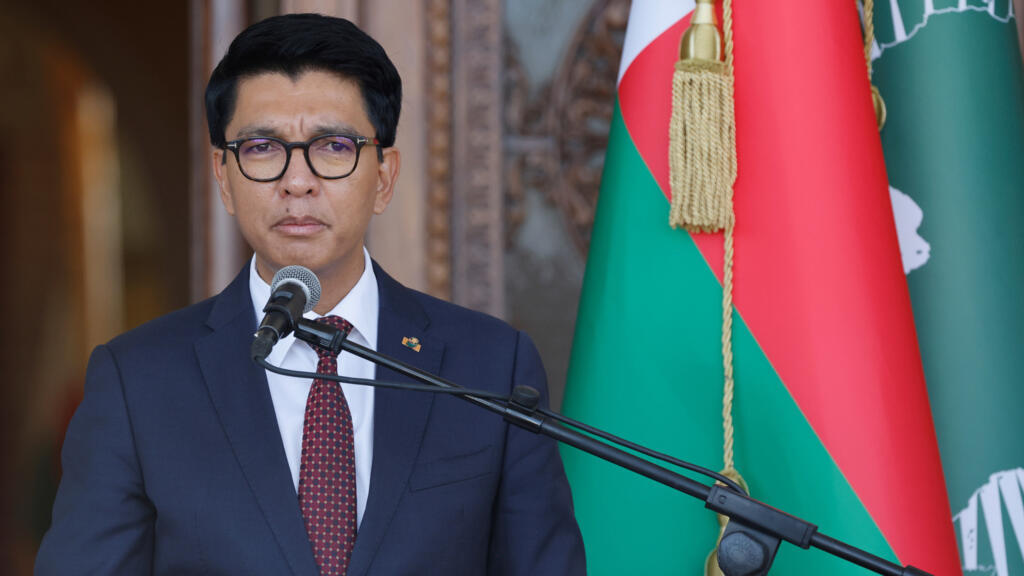
Antananarivo (Madagascar) (AFP) – Madagascar's ousted president confirmed for the first time that he had fled the country, issuing a statement after a military-led power grab prompted by weeks of demonstrations that have plunged the island nation into crisis.
Issued on: 16/10/2025 - RFI
Madagascar's ousted president Andry Rajoelina, seen here in April, has confirmed that he fled the country, but his whereabouts are still unknown.
© Ludovic MARIN / POOL/AFP
President Andry Rajoelina left between 11 and 12 October after "explicit and extremely serious threats were made against the life of the Head of State," the presidency said in a statement late Wednesday.
The threats had come when he was due to travel abroad for a mission, the statement sent to AFP said.
Media reports indicated the 51-year-old leader was evacuated on Sunday aboard a French military plane.
On Monday, he said he had taken refuge in a "safe place" without giving further details.
Madagascar army seizes power after president Rajoelina flees country
Rajoelina, who first came to power after a military-backed coup in 2009, accused the National Assembly of colluding with the military to remove him from office.
The military officers who seized power said their leader, Colonel Michael Randrianirina, would be sworn in as new president on Friday.
The youth-led Gen Z movement that initiated the protests on September 25 over lack of water and energy welcomed Randrianirina's intervention.
The international community voiced alarm, with the United Nations censuring what it called an "unconstitutional" takeover and the African Union announcing Wednesday it was suspending Madagascar "with immediate effect".
Madagascar is the latest of several former French colonies to have fallen under military control since 2020, after coups in Mali, Burkina Faso, Niger, Gabon and Guinea.
President Andry Rajoelina left between 11 and 12 October after "explicit and extremely serious threats were made against the life of the Head of State," the presidency said in a statement late Wednesday.
The threats had come when he was due to travel abroad for a mission, the statement sent to AFP said.
Media reports indicated the 51-year-old leader was evacuated on Sunday aboard a French military plane.
On Monday, he said he had taken refuge in a "safe place" without giving further details.
Madagascar army seizes power after president Rajoelina flees country
Rajoelina, who first came to power after a military-backed coup in 2009, accused the National Assembly of colluding with the military to remove him from office.
The military officers who seized power said their leader, Colonel Michael Randrianirina, would be sworn in as new president on Friday.
The youth-led Gen Z movement that initiated the protests on September 25 over lack of water and energy welcomed Randrianirina's intervention.
The international community voiced alarm, with the United Nations censuring what it called an "unconstitutional" takeover and the African Union announcing Wednesday it was suspending Madagascar "with immediate effect".
Madagascar is the latest of several former French colonies to have fallen under military control since 2020, after coups in Mali, Burkina Faso, Niger, Gabon and Guinea.

October 16, 2025
Published by the Foreign Policy Research Institute
By Charles A. Ray
(FPRI) — In “Does Africa Matter to the United States?”, published by FPRI on January 11, 2021, it was argued that the youth of Africa, who currently account for almost half the continent’s population, could become recruits for extremist movements if they are not provided gainful employment and economic opportunities. What that article failed to address is the possibility that Africa’s youth, if denied opportunity, can also pose a direct threat to governments.
Recent events across sub-Saharan Africa, where youth-led protests have challenged entrenched leadership, raise the possibility that the changes forecast in the article mentioned above could unfold well ahead of 2050, when African youth will be one of the world’s largest demographics.

Across Africa, the “Youth Bubble” is Rising
In September 2025, hundreds of young protesters took to the streets across Morocco, seeking improvements in government services and an end to endemic corruption. Demonstrators, organized by a movement known as GenZ 212, have staged protests in at least eleven of Morocco’s cities, including Casablanca, Rabat, and Marrakesh. They are urging more investment in public health and education and denouncing what they call misplaced national priorities—among them is the government’s multibillion-dollar investment in football infrastructure in preparation for the Africa Cup of Nations and FIFA World Cup soccer events, while women are dying in maternity hospitals because of the lack of sufficient medical staff. These have been some of the largest anti-government demonstrations in Morocco since the 2011 Arab Spring uprisings and resulted in an aggressive security force response and the arrest of hundreds.
Gen-Z protests in Kenya in June 2025 saw young people across the nation taking to the streets, demanding justice, accountability, and a better future. Eight young protestors were killed in a confrontation with police, and one lost fingers when a tear gas canister he was attempting to throw back at riot police exploded in his hands. While these protests have not resulted in any immediate change, observers note that they have shaken the political landscape and are likely to impact the future direction of governance in Kenya. The Kenya protests, organized by youth activists and civil society groups, reflect the frustration of young people with government policies, police brutality, and economic hardships. While protests over tax hikes in 2024 led to some reforms, including abandoning of the proposed tax legislation, it remains to be seen if this year’s protests will have similar results.

A week-long series of protests in late September and early October 2025, by young people in Madagascar over water and electricity shortages, led to the dissolution of President Andry Rajoelina’s government on September 29 and Rajoelina fleeing the country with French military assistance on October 13. The protests, which also called for broad political reforms, were reportedly inspired by protests in Kenya and Nepal. Police response to the demonstrations in Madagascar resulted in at least twenty-two dead and about 100 injured.
The Broader Context and Implications for the Future of Africa
In Africa, people under thirty make up over 70 percent of the population, with a median age of 19.3. This young population contends with high unemployment, rising cost of living, and an aging and entrenched political leadership. Gen Z, however, is rising and changing the face of protest. Equipped with smartphones, social media, and no reluctance to challenge authority, they are disrupting economies, impacting government policy, and, in all too many cases, provoking violent crackdowns that are only further fueling their movements. With access to the internet, they are influenced by events worldwide and, through social media and other high-tech communications, can mobilize large crowds throughout a country on a moment’s notice. In 2025, a wave of mass protests swept across Africa: From Nairobi to Lagos, Accra to Dakar, tens of thousands of angry young people faced tear gas and live bullets to speak out against hunger and inequality, and the movement shows no sign of abating.
A decentralized, digital organization has characterized youth-led protests. They’re often organized through social media platforms such as TikTok, Facebook, and Twitter, and show a willingness to challenge the established political structures. These protests reflect ever-increasing frustrations among young Africans and the inability or refusal of governments to address these issues. On a continent where the population is so young, with a median age of just over nineteen, the average age of African leaders in 2024 was 64.3. Over 72 percent of the leaders are over sixty. Many of these leaders have been in power for twenty years or more and show no signs of a willingness to step aside or share power with younger counterparts, leading the young population to feel excluded from the political process.
In contrast to anti-government movements of previous decades, social media has played a crucial role in organizing current protests, enabling rapid mobilization and communication not just locally, but also regionally and even internationally. Few of the elderly leaders or their governments are experienced in the use of social media, and the use of satellite communications complicates any efforts to disrupt activist communication networks. Current protests have been able to gain momentum and reach a much wider audience than in the past.
The Broader Context and Implications for the Future of Africa
In Africa, people under thirty make up over 70 percent of the population, with a median age of 19.3. This young population contends with high unemployment, rising cost of living, and an aging and entrenched political leadership. Gen Z, however, is rising and changing the face of protest. Equipped with smartphones, social media, and no reluctance to challenge authority, they are disrupting economies, impacting government policy, and, in all too many cases, provoking violent crackdowns that are only further fueling their movements. With access to the internet, they are influenced by events worldwide and, through social media and other high-tech communications, can mobilize large crowds throughout a country on a moment’s notice. In 2025, a wave of mass protests swept across Africa: From Nairobi to Lagos, Accra to Dakar, tens of thousands of angry young people faced tear gas and live bullets to speak out against hunger and inequality, and the movement shows no sign of abating.
A decentralized, digital organization has characterized youth-led protests. They’re often organized through social media platforms such as TikTok, Facebook, and Twitter, and show a willingness to challenge the established political structures. These protests reflect ever-increasing frustrations among young Africans and the inability or refusal of governments to address these issues. On a continent where the population is so young, with a median age of just over nineteen, the average age of African leaders in 2024 was 64.3. Over 72 percent of the leaders are over sixty. Many of these leaders have been in power for twenty years or more and show no signs of a willingness to step aside or share power with younger counterparts, leading the young population to feel excluded from the political process.
In contrast to anti-government movements of previous decades, social media has played a crucial role in organizing current protests, enabling rapid mobilization and communication not just locally, but also regionally and even internationally. Few of the elderly leaders or their governments are experienced in the use of social media, and the use of satellite communications complicates any efforts to disrupt activist communication networks. Current protests have been able to gain momentum and reach a much wider audience than in the past.

Government responses to the protests have also fueled them. In some cases, such as the Kenyan government’s response to protests against proposed tax hikes, governments engaged in dialogue and gave in to protestors’ demands. In others, such as in Morocco and Madagascar, governments resorted to heavy-handed tactics, including mass arrests and violence, which only inflamed protests. In the case of Madagascar, these tactics led to the military siding with the protestors and the government falling. Violent government responses also raise continental and international concerns about abuses of human rights and the suppression of free expression, which can have serious economic consequences for the affected nations.
Africa is at a pivotal point in politics. Gen-Z continues to raise its voice in protest, demanding accountability from its leaders and a seat at the table of political decision-making. The political landscape of Africa is already changing and is likely to continue changing in ways that we can only imagine at this point. What is happening in Africa is not an isolated example, either. Similar protests led by Gen-Z have taken place in Nepal, the Philippines, Indonesia, and Serbia. Gen Z, which makes up 30 percent of the global population, is the largest generational group. Having grown up in the digital age, this group is technologically savvy and highly connected on social media. This is also one of the most diverse generations, and because of their social media connectedness, they are influenced by global connections.
The bottom line is that Gen-Z will transform Africa’s political, economic, and social landscape, as will their counterparts in the rest of the world.
About the author: Charles A. Ray, a member of the Board of Trustees and Chair of the Africa Program at the Foreign Policy Research Institute, served as US Ambassador to the Kingdom of Cambodia and the Republic of Zimbabwe.
Source: This article was published by FPRI

Published by the Foreign Policy Research Institute
Founded in 1955, FPRI (http://www.fpri.org/) is a 501(c)(3) non-profit organization devoted to bringing the insights of scholarship to bear on the development of policies that advance U.S. national interests and seeks to add perspective to events by fitting them into the larger historical and cultural context of international politics.
Source: This article was published by FPRI
Published by the Foreign Policy Research Institute
Founded in 1955, FPRI (http://www.fpri.org/) is a 501(c)(3) non-profit organization devoted to bringing the insights of scholarship to bear on the development of policies that advance U.S. national interests and seeks to add perspective to events by fitting them into the larger historical and cultural context of international politics.

No comments:
Post a Comment