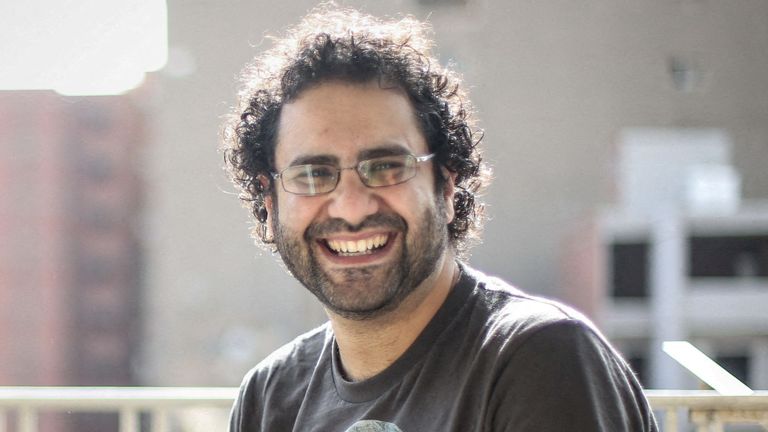
The historic social media posts by Alaa Abd El-Fattah emerged after he returned to the UK on Boxing Day following several years of imprisonment in Egypt.
Monday 29 December 2025
PM under pressure over activist
A British-Egyptian activist has apologised "unequivocally" for "shocking and hurtful" past social media posts in which he appears to call for violence against "Zionists" - but said some had been "completely twisted".
The historic tweets by Alaa Abd El-Fattah emerged after he returned to the UK on Boxing Day following several years of imprisonment in Egypt.
"I am shaken that, just as I am being reunited with my family for the first time in 12 years, several historic tweets of mine have been republished and used to question and attack my integrity and values, escalating to calls for the revocation of my citizenship," he said in a statement on Monday.
"Looking at the tweets now - the ones that were not completely twisted out of their meaning - I do understand how shocking and hurtful they are, and for that I unequivocally apologise."
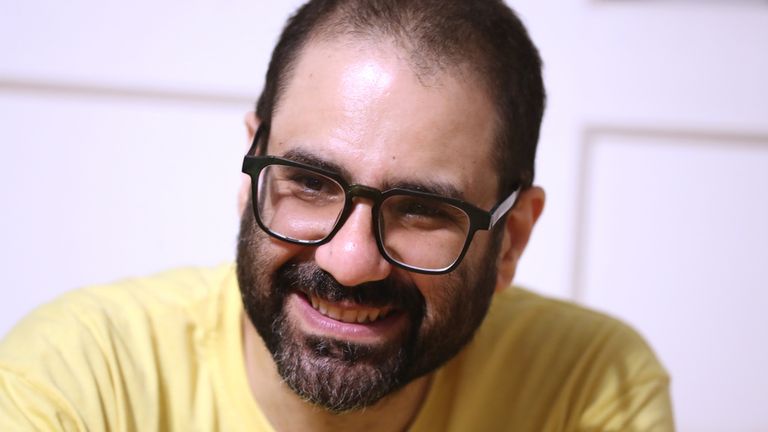
Mr Abd El-Fattah was a leading voice in Egypt's 2011 Arab Spring uprising and went on hunger strikes behind bars.
He was most recently detained in September 2019 and sentenced to five years in prison in December 2021, on charges of spreading false news.
UN investigators branded his imprisonment a breach of international law, and both Conservative and Labour governments lobbied for his release.
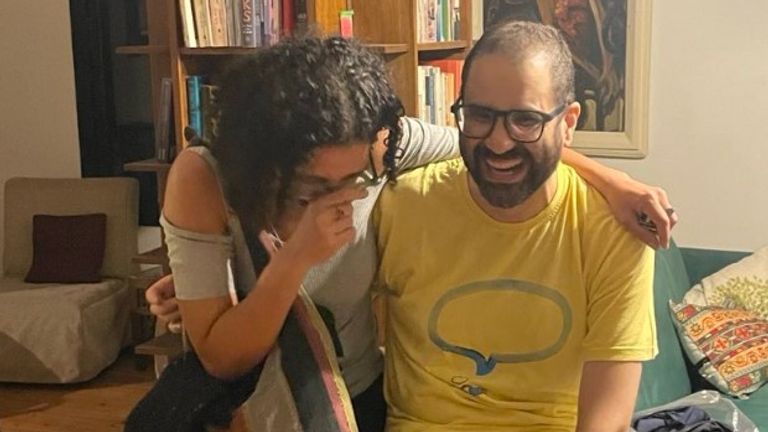
Egyptian president Abdel-Fattah el-Sisi pardoned the activist earlier this year and he flew to the UK to reunite with his young son, who lives in Brighton, last week.
He had been granted UK citizenship in December 2021 under Boris Johnson, reportedly through his UK-born mother.
'I take allegations of antisemitism very seriously'
After the historic social media posts came to light, Conservative leader Kemi Badenoch, shadow justice secretary Robert Jenrick and Reform UK leader Nigel Farage called for the home secretary to look into whether the activist can be stripped of his UK citizenship and deported.
In his statement, the activist highlighted that he is now a middle-aged father, but said the posts were "mostly expressions of a young man's anger and frustrations in a time of regional crises" and the "rise of police brutality against Egyptian youth".
He continued: "I particularly regret some that were written as part of online insult battles with the total disregard for how they read to other people. I should have known better."
Mr Abd El-Fattah said he took allegations of antisemitism "very seriously" and that some of the tweets had been "misunderstood, seemingly in bad faith".
A tweet being shared to allege homophobia was actually ridiculing homophobia, he said, while another had been "wrongly interpreted to suggest Holocaust denial - but in fact the exchange shows that I was clearly mocking Holocaust denial".
Mr Abd El-Fattah said he had been looking forward to celebrating his son's birthday with him for the first time since 2012, when he was just a year old.
He missed those birthdays because of his "consistent promotion of equality, justice and secular democracy", he said. This included "publicly rejecting anti-Jewish speech in Egypt, often at risk to myself, defence of LGBTQ rights, defence of Egyptian Christians, and campaigning against police torture and brutality - all at great risk".
Mr Abd El-Fattah said it had been "painful" to see some people who supported calls for his release now feeling regret.
"Whatever they feel now, they did the right thing," he continued. "Standing up for human rights and a citizen unjustly imprisoned is something honourable, and I will always be grateful for that solidarity."
He finished by saying he had "received huge empathy and solidarity from people across the UK, enough to win me my freedom, and I will be forever grateful for this".
A Foreign Office spokesperson said it had been a "long-standing priority under successive governments" to work for Mr Abd El-Fattah's release, "and to see him reunited with his family in the UK".
However, the government condemns the "abhorrent" historic tweets, the spokesperson added.
It is understood Prime Minister Keir Starmer was not aware of the social media posts when he celebrated Mr Abd El-Fattah's returned to the UK.

By AFP
December 28, 2025
UK Prime Minister Keir Starmer was under pressure Sunday after “abhorrent” social media posts by a British-Egyptian activist came to light days after he welcomed his return to the country.
Alaa Abdel Fattah only got back to the UK a few days ago after years of diplomatic efforts by London to secure his release from detention in Egypt.
But after old social posts emerged of him calling for violence against Zionists and the police, the opposition conservatives called Sunday for him to be stripped of his citizenship and deported to Egypt.
Posting on X Friday, British Prime Minister Keir Starmer had said he was “delighted” Abdel Fattah had been reunited with his loved ones in the UK, after Egypt lifted its travel ban.
Now Starmer is facing calls to retract those comments over the content of the activist’s posts, which date back to 2010.
A Foreign Office statement said Sunday: “Mr El-Fattah is a British citizen. It has been a long-standing priority under successive governments to work for his release from detention, and to see him reunited with his family in the UK.
“The Government condemns Mr El-Fattah’s historic tweets and considers them to be abhorrent.”
Shadow justice minister Robert Jenrick, of the opposition Conservatives, has called for El-Fattah to be stripped of his citizenship.
“If the Prime Minister really was unaware that El Fattah was an extremist, he should immediately retract his comments expressing ‘delight’ at his arrival and begin proceedings to revoke his citizenship and deport him,” Jenrick said on X.

Alaa Abdel Fattah only got back to the UK a few days ago after years detention in Egypt – Copyright AFP Farhan Aleli
Abdel Fattah was a leading voice in Egypt’s 2011 Arab Spring uprising.
He was detained in Egypt in September 2019, and in December 2021 was sentenced to five years in prison on charges of spreading false news.
His imprisonment was branded a breach of international law by UN investigators and international campaigns were launched to get him freed.
His mother went on a long-running hunger strike as part of her efforts to secure his release.
Abdel Fattah himself went on hunger strike this March whilst behind bars and was later released after being pardoned by Egyptian president Abdel-Fattah el-Sisi.
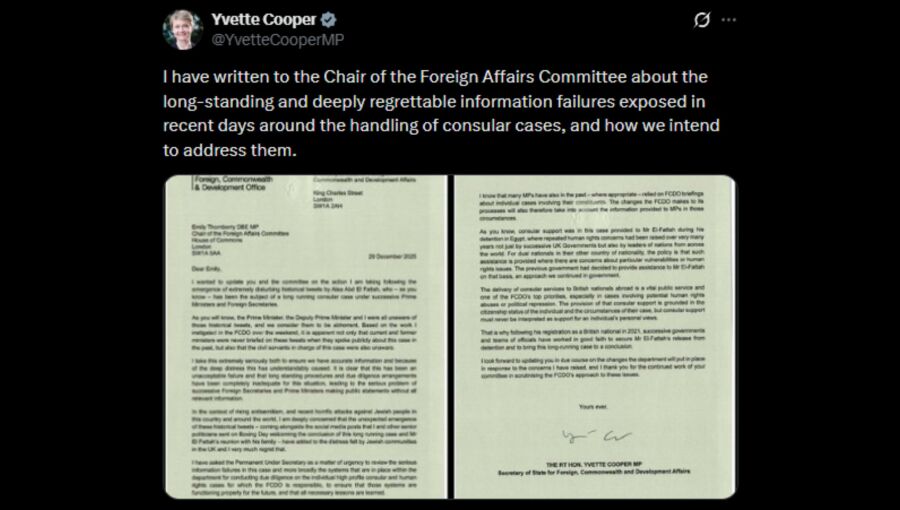
British Foreign Secretary Yvette Cooper has ordered an urgent review of information failures after discovering Prime Minister Keir Starmer, Deputy Prime Minister Angela Rayner and herself were unaware of historical tweets by Egyptian-British activist Alaa Abd El Fattah when making public statements about his case, according to a letter to the Foreign Affairs Committee dated December 29.
After Egypt lifted Abd El Fattah's travel ban and he arrived in Britain earlier this week, decade‑old tweets attributed to him resurfaced, including posts interpreted as endorsing violence against “Zionists” and police, both the British conservative-leaning parties' right‑wing and commentators branded them racist and incisive.
Figures in Reform UK and the Conservative Party have urged the government to strip him of his British citizenship or deport him, arguing it was wrongly granted in 2021 via his Egyptian UK‑born mother.
Cooper stated in the letter to committee chair Emily Thornberry that the Prime Minister, Deputy Prime Minister and herself "were all unaware of those historical tweets, and we consider them to be abhorrent".
An investigation revealed current and former ministers were never briefed on the tweets when speaking publicly about the case, with civil servants handling the matter also unaware.
"It is clear that this has been an unacceptable failure and that long standing procedures and due diligence arrangements have been completely inadequate for this situation, leading to the serious problem of successive Foreign Secretaries and Prime Ministers making public statements without all relevant information," Cooper wrote.
The Foreign Secretary stated that the unexpected emergence of historical tweets alongside social media posts by senior politicians on Boxing Day welcoming the conclusion of the long-running case and Abd El Fattah's reunion with his family "have added to the distress felt by Jewish communities in the UK and I very much regret that".
Cooper has asked the Permanent Under Secretary to review serious information failures and systems within the Foreign, Commonwealth and Development Office for conducting due diligence on high-profile consular and human rights cases.
The UK provided consular support to Abd El Fattah during his detention in Egypt, where human rights concerns were raised over many years by successive governments and world leaders.
The previous government decided to provide assistance on the basis of vulnerabilities and human rights issues, an approach continued by the current administration.
"The provision of that consular support is grounded in the citizenship status of the individual and the circumstances of their case, but consular support must never be interpreted as support for an individual's personal views," Cooper stated.
Following Abd El Fattah's belated registration as a British national in 2021, successive governments and officials worked to secure his release from detention and bring the long-running case to a conclusion.
Alaa issued an “unequivocal” apology, calling the posts “shocking and painful” and saying some had been distorted, while insisting they do not reflect his current views.
The UK government has said the apology was proper but reaffirmed that he remains a British citizen, further inciting comments from right wing pundits and politicians in recent hours.

No comments:
Post a Comment