How Jeff Bezos Uses the Washington Post to Promote Inequality
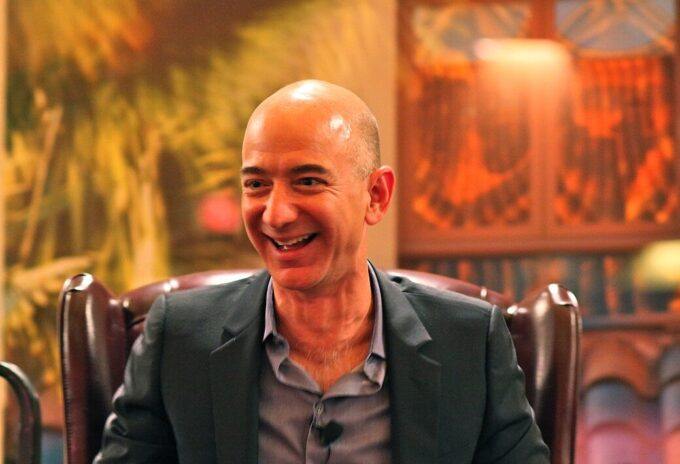
Photograph Source: Steve Jurvetson – CC BY 2.0
With the country and world being inundated with Trump craziness on a daily basis, it feels wrong to step back to deal with more basic points about economics, but sometimes the urge is overwhelming. I couldn’t resist commenting on this WaPo column by Dominic Pino, one of the paper’s editorial writers, justifying a pay package for Starbuck’s CEO Brian Niccol that could net him $95 million.
The gist of Pino’s argument is that Niccol would be worth this much money if he turns around the company’s fortunes and substantially raises its stock price. In Pino’s telling, Niccol could add many times more than this to the value of the company’s stock, so what’s wrong with giving him a small cut? This is a standard line by promoters of inequality.
What’s Wrong with a Big Paycheck?
Probably the best place to start here is a simple comparison. The fire at Notre Dame Cathedral in 2019 was first discovered by a security guard. He promptly reported the fire, as he was supposed to do. Unfortunately, there were mistakes in the follow- up and the fire quickly spread and destroyed much of the structure.
However, if the people subsequently notified had not messed up, the fire might have been quickly extinguished, saving $760 million in damages. By the Pino logic, it would be perfectly reasonable to pay the security guard a share of the savings, say $76 million, or 10 percent.
My guess is that Pino does not think we should have security guards making $76 million. The reason is that notifying people when a fire alarm is triggered is a relatively straightforward task that most workers could do. It’s not necessary to pay someone $76 million to pass along an alarm.
That’s a good response, now let’s ask that one about Niccol. Does Mr. Niccol have some special sauce that allows him to turn lemons into fantastically profitable companies. This is apparently what Niccol accomplished at Chipotle, after first having a successful stint at Taco Bell.
Does this mean Mr. Niccol has some special ability to make a fortune for Starbuck’s shareholders? Perhaps, but there are some other possibilities.
Maybe Mr. Niccol is just a replacement level CEO or even high-level executive. Perhaps any other person with some experience in the fast-food industry could turn in a comparable performance, just as presumably many other security guards could have made the initial warning at Notre Dame.
In the case of Chipotle, Mr. Niccol may have just got lucky. It does happen. Would anyone think it makes sense to pay the Notre Dame security guard $76 million at their next job?
Tales of Luck and Failure
A quarter century ago Home Depot hired Bob Nardelli as its CEO, believing also that it was getting a superstar top executive. Nardelli had been a top executive at GE, then the most valuable company in the world, and was runner-up in the contest to replace Jack Welch when he stepped down. (The winner of the contest, Jeffrey Immault, also bombed as CEO, with GE’s stock price falling 30% under his tenure.)
Nardelli captained Home Depot for seven years, during which time its stock price sank by 40 percent. The stock of its main competitor, Loew’s, nearly doubled over the same period. Nardelli walked away with $240 million, which would be a bit less than $400 million in today’s dollars.
To take another example, Lee Raymond left Exxon Mobil with a $321 million severance package. His main accomplishment at Exxon Mobil was being CEO at a time when world oil prices quadrupled.
To take a more recent example, Boeing CEO Dennis Muilenberg left the company in 2020, pocketing $62 million. He was noted for his inadequate attention to safety, resulting in two crashes of the 737 Max plane, causing hundreds of deaths. This failure sent the company’s stock price plummeting.
These are extreme cases, but Pino could have easily written the same piece about each of these executives at the time they got their jobs. There surely was a good case for why the returns they would produce for shareholders would have warranted outlandish pay.
Moving Beyond Anecdotes, What the Evidence Shows
Fortunately, we don’t have to argue by anecdote, there is research on the correlation between CEO pay and returns to shareholders, and it mostly shows that it goes the wrong way.
In the textbook story of capitalism, the corporate board that hires and sets the pay of CEOs are supposed to look at their salaries the same way the CEO looks at the pay of retail clerks and assembly line workers. The board wants to pay as little as possible for their CEOs, to leave more money for profits and shareholders. It rarely works out that way.
While corporate boards are supposed to represent shareholders, they are largely self-perpetuating entities. It is extremely difficult for shareholders to defeat an incumbent supported by their colleagues. Well over 99 percent of board members who are nominated for re-election by their board win.
This means that the best way to stay on a board is to go along with your fellow board members and not make waves. Since being a board member is a very lucrative job, paying hundreds of thousands annually for a couple of hundred hours of work, most board members want to keep the job.
And since corporate boards usually owe their appointment to the CEO and other top management, they are not likely to make friends on the board by asking questions like “can we get someone just as good for half the pay?” That doesn’t explain outlandish pay for a newly hired CEO (except they are probably recommended by top management), but it does explain how CEO pay gets so bloated in the first place.
And it is important to remember that CEO pay is not just the pay of one person. If the CEO makes $95 million, it’s likely the rest of the C-Suite are all pocketing over $10 million, and the third-tier execs are also likely making multiple millions. That means much less money for everyone else.
Imagine how different things would be if CEO pay had grown in line with ordinary workers’ pay over the last half-century and they were just earning $3-$4 million a year. And this pay structure affects salaries outside the corporate sector. The heads of universities and major non-profits often are paid multiple millions. Cabinet officers routinely tell us of the great sacrifices they are making with their $250k annual paycheck.
Moving Beyond Shareholders
This discussion is just accepting that we should only be concerned about what the CEO produces for shareholders when assessing their pay, but let’s take a step further. Mr. Niccol could produce strong returns for the classic story of free market capitalism. Perhaps Starbucks will bring in swarms of customers because it serves better coffee and food at a lower price than its competitors. In that case, we could say that Niccol had actually produced real value for society as a whole.
But that is only one way that companies increase profits. Suppose Niccol breaks the Starbucks union by ruthlessly firing organizers, in violation of the law. Since Donald Trump says it’s fine to ignore laws protecting workers under his presidency, that is certainly a possibility.
Starbucks may also increase its profits through anticompetitive practices, using its size to kneecap competitors, as it arguably did in its growth to be a worldwide giant. And it could just lie, falsely advertising items as organic or having other desirable features, knowing that the law doesn’t apply to large corporations with Donald Trump in the White House.
In these cases, Mr. Niccol’s salary might be justified in terms of its returns to shareholders. But it would be hard to make a case that giving tens of millions to a CEO for breaking the law by screwing workers, competitors, or customers is a social good.
The 401(k) Story
The best part of Pino’s piece is when he tells us that Mr. Niccol’s big paycheck will benefit all of us because it will increase the value of retirement accounts invested in index funds. This doesn’t do the 40 percent of households that don’t have retirement accounts any good, many of whom undoubtedly work at Starbucks. Even for those who do have stock, half have less than $60,000, so getting another $10k a year in their paychecks would probably look much better than whatever incremental value a jump in Starbuck’s price might have on their retirement account.
But Pino’s case is actually even weaker. If Starbuck’s stock price rises because it beats out competitors, then whatever incremental value it might produce in people’s retirement accounts will be offset by the reduced value of other stocks in people’s holdings. The only true gain in retirement accounts would be if Mr. Niccol’s changes at Starbucks increased corporate profits as a whole. Even in this case, if the gains are from ripping off workers and/or consumers, those with little or no stock are still losers.
The Populists are Right
This is a long way of saying that Zohran Mamdani, Bernie Sanders, and the other populists that Pino derides for attacking Mr. Niccol’s paycheck have a case. But you can’t make the case for populism on the Jeff Bezos-owned Washington Post opinion page committed to justifying inequality.
This first appeared on Dean Baker’s Beat the Press blog.

No comments:
Post a Comment