France marks International Migrants Day amid growing pressure on migrant workers
Issued on: 18/12/2025 - FRANCE24
On International Migrants Day, hundreds of groups across France are mobilizing to highlight migrants’ contributions and struggles as immigration rules tighten and expulsions rise. Migrant workers remain vital to sectors like restaurants and construction, even as many face years of insecurity, with expulsions up sharply in 2024.
Video by: Olivia BIZOT
Issued on: 18/12/2025 - FRANCE24
On International Migrants Day, hundreds of groups across France are mobilizing to highlight migrants’ contributions and struggles as immigration rules tighten and expulsions rise. Migrant workers remain vital to sectors like restaurants and construction, even as many face years of insecurity, with expulsions up sharply in 2024.
Video by: Olivia BIZOT
By Christina Thykjaer & Gavin Blackburn
Published on 17/12/2025 - AP
The Badalona town hall had argued that the squat was a public safety hazard. In 2020, an old factory occupied by around 100 migrants in the Catalan city near Barcelona caught fire, killing four people.
Police in Spain carried out eviction orders on Wednesday to clear an abandoned school building where around 400 mostly undocumented migrants were living north of Barcelona.
Many sub-Saharan migrants, mainly from Senegal and Gambia, had moved into the empty school building in Badalona — a working-class city that borders Barcelona — since it was left abandoned in 2023.
Badalona Mayor Xavier García Albiol announced the evictions in a post on X.
"As I had promised, the eviction of the 400 illegal squatters in the B9 school in Badalona begins," he wrote.
Albiol, of the conservative Popular Party (PP), has built his political career on an anti-immigration stance.
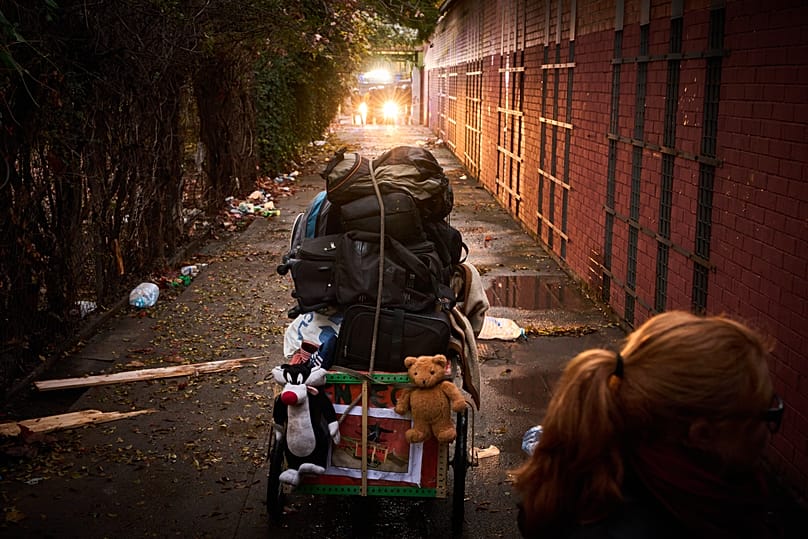
Police in Spain carried out eviction orders on Wednesday to clear an abandoned school building where around 400 mostly undocumented migrants were living north of Barcelona.
Many sub-Saharan migrants, mainly from Senegal and Gambia, had moved into the empty school building in Badalona — a working-class city that borders Barcelona — since it was left abandoned in 2023.
Badalona Mayor Xavier García Albiol announced the evictions in a post on X.
"As I had promised, the eviction of the 400 illegal squatters in the B9 school in Badalona begins," he wrote.
Albiol, of the conservative Popular Party (PP), has built his political career on an anti-immigration stance.
A migrant's belongings are packed before he leaves as police in the background prepares to carry out eviction orders at an abandoned school in Badalona, 17 December, 2025
AP Photo
Knowing that the eviction in the middle of winter was coming, most of the occupants had left the squat to try to find other shelter before police in riot gear from Catalonia's regional police Mossos d'Esquadraentered the school’s premises early in the morning under court orders.
Those who had waited left peacefully.
The judicial order made the Badalona town hall provide the evicted people with access to social services, but it did not oblige local authorities to find alternative housing for all the squatters.
Lawyer Marta Llonch, who represents the squatters, said that many people would likely end up without shelter in the cold.
"Many people are going to sleep on the street tonight," Llonch said. "Just because you evict these people it doesn’t mean they disappear. If you don’t give them an alternative place to live they will now be on the street, which will be a problem for them and the city."
Many of the squatters lived from selling scrap metal collected from the streets. Others had residency and work permits but were forced to live there because they could not afford housing during a cost-of-living crunch that is making it difficult even for working Spaniards to buy or rent homes.
That housing crisis has led to widespread social angst and public protests.
Knowing that the eviction in the middle of winter was coming, most of the occupants had left the squat to try to find other shelter before police in riot gear from Catalonia's regional police Mossos d'Esquadraentered the school’s premises early in the morning under court orders.
Those who had waited left peacefully.
The judicial order made the Badalona town hall provide the evicted people with access to social services, but it did not oblige local authorities to find alternative housing for all the squatters.
Lawyer Marta Llonch, who represents the squatters, said that many people would likely end up without shelter in the cold.
"Many people are going to sleep on the street tonight," Llonch said. "Just because you evict these people it doesn’t mean they disappear. If you don’t give them an alternative place to live they will now be on the street, which will be a problem for them and the city."
Many of the squatters lived from selling scrap metal collected from the streets. Others had residency and work permits but were forced to live there because they could not afford housing during a cost-of-living crunch that is making it difficult even for working Spaniards to buy or rent homes.
That housing crisis has led to widespread social angst and public protests.
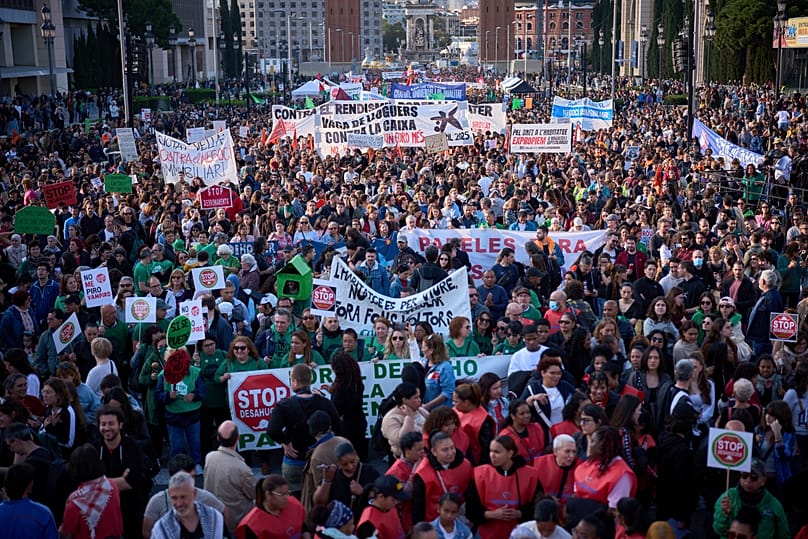
People gather during a demonstration to protest high housing costs in Barcelona, 5 April, 2025 AP Photo
The Badalona town hall had argued that the squat was a public safety hazard. In 2020, an old factory occupied by around 100 migrants in Badalona caught fire, killing four people.
Like other southern European countries, Spain has for more than a decade seen migrants come to the country after risking their lives crossing the Mediterranean or Atlantic in small boats.
While many developed countries have taken a hard-line position against migration, Spain’s left-wing government has said that legal migration has helped its economy grow.
The Badalona town hall had argued that the squat was a public safety hazard. In 2020, an old factory occupied by around 100 migrants in Badalona caught fire, killing four people.
Like other southern European countries, Spain has for more than a decade seen migrants come to the country after risking their lives crossing the Mediterranean or Atlantic in small boats.
While many developed countries have taken a hard-line position against migration, Spain’s left-wing government has said that legal migration has helped its economy grow.
Trial of NGO workers accused of assisting 'illegal' migration opens in Tunisia
Aid workers accused of assisting irregular migration to Tunisia went on trial on Monday, as Amnesty International criticised what it called "the relentless criminalisation of civil society" in the country.
Issued on: 15/12/2025 - RFI
Aid workers accused of assisting irregular migration to Tunisia went on trial on Monday, as Amnesty International criticised what it called "the relentless criminalisation of civil society" in the country.
Issued on: 15/12/2025 - RFI

People hold placards bearing the image of Sherifa Riahi, former director of Terre d'Asile Tunisie, on 15 December 2025 in Tunis. © Lilia Blaise/RFI
Six staff members of the Tunisian branch of the France Terre d'Asile aid group, along with 17 municipal workers from the eastern city of Sousse, face charges of sheltering migrants and facilitating their "illegal entry and residence".
If convicted, they face up to 10 years in prison.
Migration is a sensitive issue in Tunisia, a key transit point for tens of thousands of people seeking to reach Europe each year.
A former head of Terre d'Asile Tunisie, Sherifa Riahi, is among the accused and has been detained for more than 19 months, according to her lawyer Abdellah Ben Meftah.
Two years on from EU deal, violence against migrants in Tunisia remains rife
'Bogus criminal trial'
"The only thing I'm sure of is that Sherifa and the other members of the association did nothing wrong. I'm certain they'll be released sooner or later. Will it be this Monday or at another hearing? I don't know, it's 50-50," Ben Meftah told RFI.
He also told French news agency AFP that the accused had carried out their work as part of a project approved by the state and in "direct coordination" with the government.
Amnesty denounced what it described as a "bogus criminal trial" and called on Tunisian authorities to drop the charges.
"They are being prosecuted simply for their legitimate work providing vital assistance and protection to refugees, asylum seekers and migrants in precarious situations," Sara Hashash, Amnesty's deputy MENA (Middle East North Africa) chief, said in the statement.
The defendants were arrested in May 2024 along with about a dozen humanitarian workers, including anti-racism pioneer Saadia Mosbah, whose trial is set to start later this month.
Driven from camp to camp, Tunisia’s migrants still dream of Europe
Illegal migrants
In February 2023, President Kais Saied said "hordes of illegal migrants", many from sub-Saharan Africa, posed a demographic threat to the Arab-majority country.
His speech triggered a series of racially motivated attacks as thousands of sub-Saharan African migrants in Tunisia were pushed out of their homes and jobs.
Thousands were repatriated or attempted to cross the Mediterranean, while others were expelled to the desert borders with Algeria and Libya, where at least a hundred died that summer.
This came as the European Union boosted efforts to curb arrivals on its southern shores, including a 255-million-euro deal with Tunis.
(with newswires)
Six staff members of the Tunisian branch of the France Terre d'Asile aid group, along with 17 municipal workers from the eastern city of Sousse, face charges of sheltering migrants and facilitating their "illegal entry and residence".
If convicted, they face up to 10 years in prison.
Migration is a sensitive issue in Tunisia, a key transit point for tens of thousands of people seeking to reach Europe each year.
A former head of Terre d'Asile Tunisie, Sherifa Riahi, is among the accused and has been detained for more than 19 months, according to her lawyer Abdellah Ben Meftah.
Two years on from EU deal, violence against migrants in Tunisia remains rife
'Bogus criminal trial'
"The only thing I'm sure of is that Sherifa and the other members of the association did nothing wrong. I'm certain they'll be released sooner or later. Will it be this Monday or at another hearing? I don't know, it's 50-50," Ben Meftah told RFI.
He also told French news agency AFP that the accused had carried out their work as part of a project approved by the state and in "direct coordination" with the government.
Amnesty denounced what it described as a "bogus criminal trial" and called on Tunisian authorities to drop the charges.
"They are being prosecuted simply for their legitimate work providing vital assistance and protection to refugees, asylum seekers and migrants in precarious situations," Sara Hashash, Amnesty's deputy MENA (Middle East North Africa) chief, said in the statement.
The defendants were arrested in May 2024 along with about a dozen humanitarian workers, including anti-racism pioneer Saadia Mosbah, whose trial is set to start later this month.
Driven from camp to camp, Tunisia’s migrants still dream of Europe
Illegal migrants
In February 2023, President Kais Saied said "hordes of illegal migrants", many from sub-Saharan Africa, posed a demographic threat to the Arab-majority country.
His speech triggered a series of racially motivated attacks as thousands of sub-Saharan African migrants in Tunisia were pushed out of their homes and jobs.
Thousands were repatriated or attempted to cross the Mediterranean, while others were expelled to the desert borders with Algeria and Libya, where at least a hundred died that summer.
This came as the European Union boosted efforts to curb arrivals on its southern shores, including a 255-million-euro deal with Tunis.
(with newswires)


DW
17/12/2025
Even before Donald Trump returned to the White House, anti-immigration politics were reshaping migration flows to high-income countries. Borders have been tightened despite economies facing urgent labor shortages.

Around 600,000 Indian workers moved abroad in 2024
Image: Adnan Abidi/Reuters
The world's wealthiest economies are crying out for foreign workers, despite rising anti‑immigration sentiment, particularly in the United States and Europe. Yet a little-discussed report released last month shows labor migration is falling globally, even as ageing societies face mounting shortages.
The decline began well before the reelection of Donald Trump, who campaigned last year on a promise to sharply curb immigration.
According to the Organisation for Economic Cooperation and Development (OECD), which tracks global economic and social policy, work-related migration to its 38 member states dropped by more than a fifth last year (21%).
The OECD's International Migration Outlook 2025 report found the drop was driven less by demand than by rising political opposition to immigration and tighter visa regimes in other advanced economies. Temporary work migration continued to rise.
Decline driven by two countries
"Most of the ... decline in permanent labor migration was driven by policy changes in the United Kingdom and New Zealand," Ana Damas de Matos, senior policy analyst at the OECD, told DW. "In both cases, permanent labor migration remained above 2019 levels."
In New Zealand, the drop was tied to the end of a one‑off post‑pandemic residence pathway that had allowed more than 200,000 temporary migrants and dependents to settle permanently. The country's largest one-off residency scheme closed in July 2022.
Post-Brexit, the UK reformed the Health and Care Worker visa route, tightening employer eligibility and barring dependents, resulting in a sharp reduction in visa applications. The OECD singled out health care as a sector where curbs risk deepening labor shortages.
Seeta Sharma, a migration specialist who has advised the United Nations as well as India's national and state governments, warned that the UK's reforms, including a move to tighten eligibility for international students hoping to work after graduation, could backfire.
"The student‑to‑work pathway is now being curtailed," Sharma told DW. "When that happens, applications will slow, because Indians, for example, are not going to spend large sums on education abroad if there’s no clear return on investment."
The OECD report showed that India was by far the largest country of origin for migrant workers settling in its member countries at 600,000 last year, followed by China and Romania.
US curbs on high-skilled visas threaten tech sector
In the US, stricter caps on H‑1B visas — the main program that allows foreign professionals in fields like technology, engineering and medicine to work in the country — were introduced under the Biden administration. Trump has since substantially increased the visa cost for employers to $100,000 (€84,800), up from $2000-$5000. His broader agenda has focused on limiting permanent pathways.
Australia, meanwhile, raised salary thresholds for skilled visas, while Canada adjusted pathways for temporary workers, also contributing to the wider decline in job-related migration. Nordic countries also saw large declines, with Finland recording a 36% drop compared to the previous year.
In Germany, former Chancellor Olaf Scholz's tighter immigration policies helped a 12% fall in permanent migration inflows last year, when 586,000 foreign workers entered the country. The number of people arriving on work visas was 32% lower than the previous year. These reforms have been expanded by his successor, Friedrich Merz's government.
Herbert Brücker, professor of economics at Berlin's Humboldt University, thinks the declines are storing up trouble for the German economy.
"For many years, Germany benefited from an average migration of 550,000 people per year," Brücker told DW. "We need migration to replace retiring workers. Without it, we cannot hold the labor supply stable."
The world's wealthiest economies are crying out for foreign workers, despite rising anti‑immigration sentiment, particularly in the United States and Europe. Yet a little-discussed report released last month shows labor migration is falling globally, even as ageing societies face mounting shortages.
The decline began well before the reelection of Donald Trump, who campaigned last year on a promise to sharply curb immigration.
According to the Organisation for Economic Cooperation and Development (OECD), which tracks global economic and social policy, work-related migration to its 38 member states dropped by more than a fifth last year (21%).
The OECD's International Migration Outlook 2025 report found the drop was driven less by demand than by rising political opposition to immigration and tighter visa regimes in other advanced economies. Temporary work migration continued to rise.
Decline driven by two countries
"Most of the ... decline in permanent labor migration was driven by policy changes in the United Kingdom and New Zealand," Ana Damas de Matos, senior policy analyst at the OECD, told DW. "In both cases, permanent labor migration remained above 2019 levels."
In New Zealand, the drop was tied to the end of a one‑off post‑pandemic residence pathway that had allowed more than 200,000 temporary migrants and dependents to settle permanently. The country's largest one-off residency scheme closed in July 2022.
Post-Brexit, the UK reformed the Health and Care Worker visa route, tightening employer eligibility and barring dependents, resulting in a sharp reduction in visa applications. The OECD singled out health care as a sector where curbs risk deepening labor shortages.
Seeta Sharma, a migration specialist who has advised the United Nations as well as India's national and state governments, warned that the UK's reforms, including a move to tighten eligibility for international students hoping to work after graduation, could backfire.
"The student‑to‑work pathway is now being curtailed," Sharma told DW. "When that happens, applications will slow, because Indians, for example, are not going to spend large sums on education abroad if there’s no clear return on investment."
The OECD report showed that India was by far the largest country of origin for migrant workers settling in its member countries at 600,000 last year, followed by China and Romania.
US curbs on high-skilled visas threaten tech sector
In the US, stricter caps on H‑1B visas — the main program that allows foreign professionals in fields like technology, engineering and medicine to work in the country — were introduced under the Biden administration. Trump has since substantially increased the visa cost for employers to $100,000 (€84,800), up from $2000-$5000. His broader agenda has focused on limiting permanent pathways.
Australia, meanwhile, raised salary thresholds for skilled visas, while Canada adjusted pathways for temporary workers, also contributing to the wider decline in job-related migration. Nordic countries also saw large declines, with Finland recording a 36% drop compared to the previous year.
In Germany, former Chancellor Olaf Scholz's tighter immigration policies helped a 12% fall in permanent migration inflows last year, when 586,000 foreign workers entered the country. The number of people arriving on work visas was 32% lower than the previous year. These reforms have been expanded by his successor, Friedrich Merz's government.
Herbert Brücker, professor of economics at Berlin's Humboldt University, thinks the declines are storing up trouble for the German economy.
"For many years, Germany benefited from an average migration of 550,000 people per year," Brücker told DW. "We need migration to replace retiring workers. Without it, we cannot hold the labor supply stable."
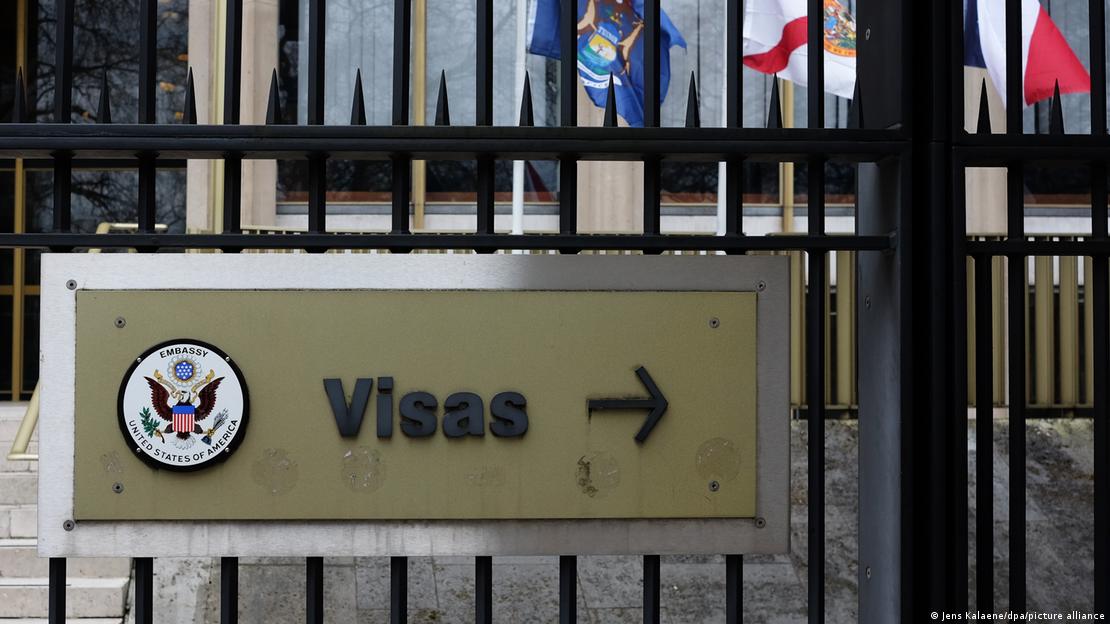
Several OECD countries have raised criteria for work-based visas for foreign nationals
Image: Jens Kalaene/dpa/picture alliance
Strong demand for migrants in Europe
Across the European Union, around two‑thirds of jobs created between 2019 and 2023 were filled by non‑EU citizens, according to the International Monetary Fund (IMF), underscoring how dependent Europe has already become on migrant labor.
Globally, there were 167.7 million migrant workers in 2022, according to International Labor Organization (ILO) estimates. This accounted for 4.7% of the total global labor force. More than two-thirds of them (114.7 million) lived in high-income countries.
Despite last year's drop, global work-related migration remains above pre-pandemic levels. But the OECD report reveals how those inflows can be abruptly curbed by political resistance, stoked by fears over illegal migration, rather than economic demand, which remains at record highs.
Trump's second‑term agenda has amplified that dynamic, with executive orders enacted since he returned to office in January aimed at curbing both legal and illegal immigration. The Trump administration argues these are necessary to safeguard US workers and ensure a skills‑based system.
Taiwan: Migrant workers face bias in booming chip industry 02:44
Temporary visas over permanent pathways
Temporary or seasonal labor migration held steady last year even as permanent inflows declined, according to the OECD report, reflecting governments' preference for short-term schemes they can expand or contract at will.
"The appetite is: 'Let's get in people when we want them and close the doors when we don't. But let’s not have these "different" people in our land permanently,'" Sharma lamented.
Seasonal and temporary worker programs remain in demand across Australia, Europe and North America, where employers in the agriculture, care and construction sectors have plugged gaps in their workforce.
The OECD notes that temporary migration programs are increasingly used for technology and other high‑skilled workers, too.
\
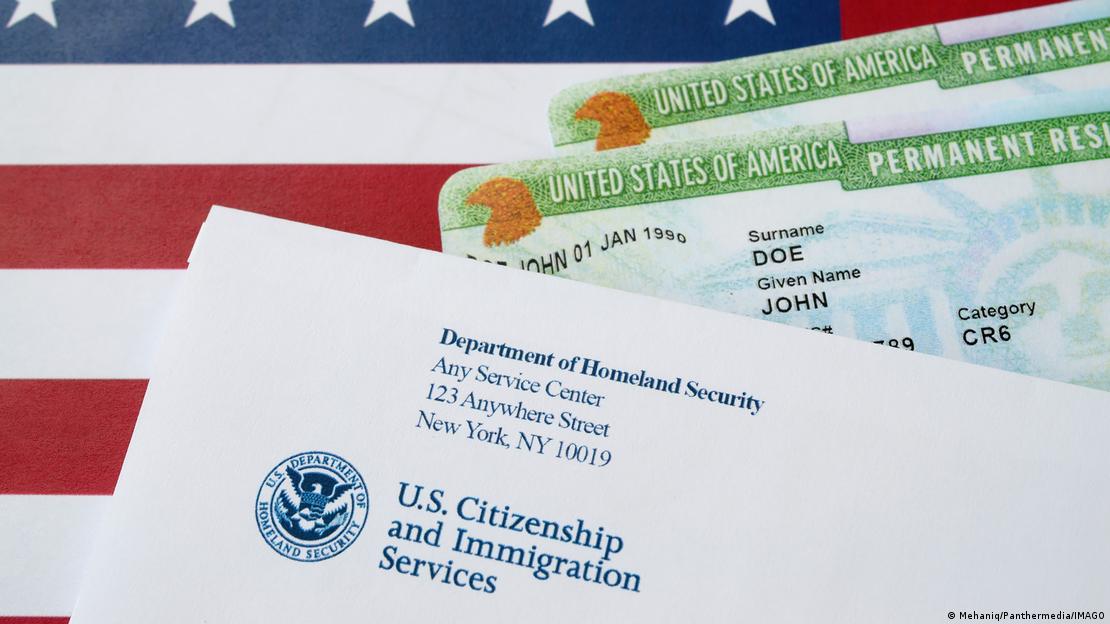
Biden restricted access to US permanent residence; Trump has gone further
Image: Mehaniq/Panthermedia/IMAGO
Red tape keeps migrants in lower-skilled jobs
As well as attracting more work-based migrants, the OECD urged advanced economies to focus on better integrating them into the labor market. The club of advanced economies cited language training and access to social services as key requirements, along with the recognition of skills and qualifications to help foreign workers contribute fully in their host countries. Often, they're employed in much lower-skilled jobs than they trained for.
Brücker, who is also head of migration research at Germany's Institute for Employment Research (IAB), noted that reforms intended to make Europe's largest economy more attractive have not worked due to a slow and bureaucratic approval process.
"The recognition of degrees and vocational training takes years and that makes it difficult for skilled workers to come," he told DW. As a result, we are now short of around three million workers."
Policymakers are also being urged to create clearer pathways that allow temporary migrant workers to transition into permanent status, ensuring their skills are fully utilized and reducing labor shortages.
While Trump often speaks positively about the need for skills‑based migration, his first year back in the White House has been marked by efforts to dismantle these avenues, reinforcing the divide between economic need and political will.
Sharma noted that often-angry rhetoric by Trump and other right-wing politicians over immigration sends "shock waves" internationally, shaping perceptions in India and beyond.
"The story coming back is that this is an unfriendly country, where it’s tough to get a job … those narratives play a huge part in migration movements," Sharma told DW, adding that if the US continues to curb work-related immigration, it could lead to more illegal migrant flows.
Edited by: Uwe Hessler
Nik Martin is one of DW's team of business reporters.

No comments:
Post a Comment