Russia offers no proof that Ukraine targeted Putin residence in drone attack
The Kremlin said on Tuesday that it could not prove its claim that Ukrainian drones targeted one of President Vladimir Putin's residences because the drones were all "shot down". Moscow accused Ukraine of launching 91 long-range drones at Putin's home in the Novgorod region in what it called a "personal attack against Putin", vowing to retaliate.
Issued on: 30/12/2025
Video by: Andrew HILLIAR
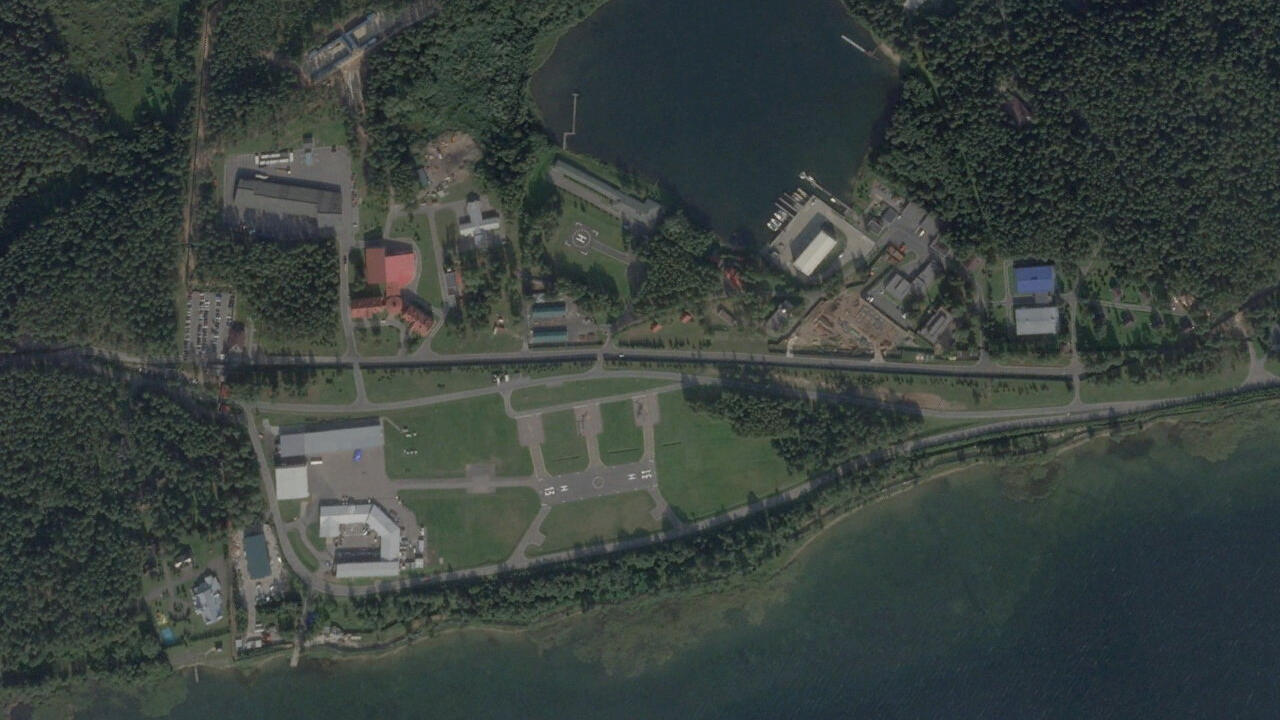
01:55
Kyiv said Tuesday there was no "plausible" evidence that it launched a drone attack on one of Vladimir Putin's residences, accusing Moscow of peddling false claims to try to manipulate peace talks on ending its invasion.
Ukraine stressed Moscow had provided no evidence, despite almost 24 hours transpiring since Russia made the claim.
"Almost a day passed and Russia still hasn't provided any plausible evidence," Foreign Minister Andriy Sybiga said on social media.
"And they won't. Because there's none. No such attack happened."
Moscow on Monday said Ukraine had launched 91 long-range attack drones at Putin's secluded home in the Novgorod region, between Moscow and Saint Petersburg, and that Moscow would retaliate.
The Kremlin said Tuesday it considered it a "terrorist act" and a "personal attack against Putin" – but added it could not provide evidence for its claim as the drones were "all shot down".
It also said the Russian army had chosen "how, when and where" to retaliate against Ukraine.
READ MORELive: Russia declines to provide proof of alleged drone attack on Putin's home
Russia has hit Ukraine with an almost daily barrage of drones and missiles for almost four years, killing thousands.
The Kremlin also said it would now "toughen" its negotiating position in talks to end Europe's worst conflict since WWII.
Zelensky dismissed the Russian accusations as "another round of lies" aimed at justifying additional attacks on Ukraine and to prolong the war under way since Putin sent troops into Ukraine in February 2022.
President Volodymyr Zelensky warned a day earlier Russia was preparing the ground for an attack on Kyiv, calling on residents of the capital to be on alert.
European leaders rallied around Zelensky following Moscow's allegation and – according to Poland – were set to discuss the war later on Tuesday.
"We are moving the peace process forward. Transparency and honesty are now required from everyone – including Russia," German Chancellor Friedrich Merz said on social media.
US President Donald Trump – who spoke to Putin on Monday – directed criticism at Kyiv on Monday, despite Ukraine calling the incident a Russian fabrication.
"You know who told me about it? President Putin, early in the morning, he said he was attacked. It's no good," Trump said.
"It's one thing to be offensive because they're offensive. It's another thing to attack his house," the US leader said.
Russia has not said where Putin was at the time.
The longtime Russian leader's residences are shrouded in secrecy in Russia – as is much of his private life.
Secretive residence
The late Russian opposition leader Alexei Navalny, who died in an Arctic prison last year, had published investigations into Putin's luxury lake-side residence in the Novgorod region.
Putin had increasingly used the residency since the Ukraine war began, as it was more secluded and better protected by air defence installations, according to an investigation by RFE/RL.
Russia's claim came after Zelensky held talks with Trump in Florida, with the Ukrainian leader saying it was a "fabrication" intended to sabotage diplomatic progress made by the US and Kyiv.
Moscow's allegation comes at a pivotal moment for diplomacy to end the war.
Ukraine has said it has agreed to 90 percent of a US-drafted peace plan, but Russia has been hesitant to accept a deal that does not meet its maximalist demands.
Putin has repeatedly said that Russia intends to seize the rest of Ukrainian land he has proclaimed as Russian if diplomacy fails.
Russia's advance in eastern Ukraine picked up pace in autumn, with Moscow's troops seizing more villages with every week since.
Ukraine on Tuesday also ordered the mandatory evacuation of several villages in the northern Chernigiv region, which borders Moscow-allied Belarus, due to intense Russian shelling.
(FRANCE 24 with AFP)
By AFP
December 30, 2025

Russia's invasion of Ukraine has dragged on for nearly four years - Copyright AFP ATTA KENARE
Stanislav DOSHCHITSYN
Kyiv said Tuesday there was no “plausible” evidence it launched a drone attack on one of Vladimir Putin’s residences, accusing Moscow of peddling false claims to try to manipulate talks on ending its invasion.
President Volodymyr Zelensky warned a day earlier Russia was preparing the ground for an attack on Kyiv, calling on residents of the capital to be on alert.
Moscow on Monday said Ukraine had launched drones at Putin’s secluded home in the Novgorod region, between Moscow and Saint Petersburg.
The Kremlin said Tuesday it considered it a “terrorist act” and a “personal attack against Putin” — but added it could not provide evidence for its claim as the drones were “all shot down”.
It also said the Russian army had chosen “how, when and where” to retaliate against Ukraine.
Russia has hit Ukraine with an almost daily barrage of drones and missiles for almost four years, killing thousands.
The Kremlin also said it would now “toughen” its negotiating position in talks to end Europe’s worst conflict since WWII.
Kyiv stressed Moscow had provided no evidence, despite almost 24 hours transpiring since Russia made the claim.
“Almost a day passed and Russia still hasn’t provided any plausible evidence,” its foreign minister Andriy Sybiga said on social media.
“And they won’t. Because there’s none. No such attack happened.”
European leaders rallied around Zelensky following Moscow’s allegation and — according to Poland — were set to discuss the war later on Tuesday.
“We are moving the peace process forward. Transparency and honesty are now required from everyone – including Russia,” German Chancellor Friedrich Merz said on social media.
US President Donald Trump — who spoke to Putin on Monday — directed criticism at Kyiv on Monday, despite Ukraine calling the incident a Russian fabrication.
“You know who told me about it? President Putin, early in the morning, he said he was attacked. It’s no good,” Trump said.
“It’s one thing to be offensive because they’re offensive. It’s another thing to attack his house,” the US leader said.
Russia has not said where Putin was at the time.
The longtime Russian leader’s residences are shrouded in secrecy in Russia — as is much of his private life.
– Secretive residence –
The late Russian opposition leader Alexei Navalny, who died in an Arctic prison last year, had published investigations into Putin’s luxury lake-side residence in the Novgorod region.
Putin had increasingly used the residency since the Ukraine war began, as it was more secluded and better protected by air defence installations, according to an investigation by RFE/RL.
Russia’s claim came after Zelensky held talks with Trump in Florida, with the Ukrainian leader saying it was a “fabrication” intended to sabotage diplomatic progress made by the US and Kyiv.
Moscow’s allegation comes at a pivotal moment for diplomacy to end the war.
Ukraine has said it has agreed to 90 percent of a US-drafted peace plan, but Russia has been hesitant to accept a deal that does not meet its maximalist demands.
Putin has repeatedly said that Russia intends to seize the rest of Ukrainian land he has proclaimed as Russian if diplomacy fails.
Russia’s advance in eastern Ukraine picked up pace in autumn, with Moscow’s troops seizing more villages with every week since.
Ukraine on Tuesday also ordered the mandatory evacuation of several villages in the northern Chernigiv region, which borders Moscow-allied Belarus, due to intense Russian shelling.
Yenişafak English AA
30/12/2025, Tuesday

AAFrench President Emmanuel Macron
France has cast significant doubt on Russia's claim that Ukraine launched a drone attack targeting President Vladimir Putin's official residence. Sources within French President Emmanuel Macron's office stated on Tuesday that they found "no solid evidence" to support the serious allegations made by the Kremlin, even after cross-checking information with international partners.
Contradictory Russian Accounts and a Firm Ukrainian Denial
The French assessment, reported by broadcaster BFMTV, pointed to what it called inconsistencies in the Russian narrative. "The Russian authorities themselves are saying everything and its opposite about what actually happened, notably regarding the number of vectors involved and the regions targeted," a presidential source said. The remark followed a statement by Russian Foreign Minister Sergey Lavrov, who alleged on Monday that Kyiv attacked the Novgorod region residence with 91 drones, all of which were destroyed without causing casualties. Ukrainian President Volodymyr Zelenskyy has firmly denied any involvement, arguing the accusation is meant to undermine diplomacy and justify further aggression.
An Incident at the Center of High-Stakes Diplomacy
The alleged attack has become a flashpoint in international diplomacy. US President Donald Trump earlier this week expressed anger over the reported incident, calling it inappropriate during sensitive peace negotiations, while also suggesting it might not have occurred. The conflicting statements from Moscow, Kyiv, Washington, and now Paris underscore the difficulty in establishing facts amid the ongoing war and the high political stakes involved in US-led ceasefire talks.
Strategic Implications and Broader Skepticism
France's public questioning of the evidence reflects a broader Western wariness of Russian claims, which are often viewed as potential pretexts for escalation. By highlighting a lack of corroborating proof, Paris aligns itself with a cautious, evidence-based approach to the volatile situation. This development is watched closely by other key mediators and regional powers, including Türkiye, which maintains communication channels with both sides and has an interest in de-escalation and credible diplomacy.

Following the failure to make a breakthrough in the Mar-a-Lago peace talks Russia accused Ukraine of firing 91 drones at president Vladimir Putin’s official residence and vowed a retaliation and to toughen its conditions for a ceasefire.
Ukrainian President Volodymyr Zelenskiy immediately denied the accusation and warned of a new intense missile attack on Ukraine. Accusations and counter accusations have been flying back and forth since. Both Russian Foreign Minister Sergei Lavrov and Zelenskiy made statements blaming the other side.
The situation is now very confusing. Pro-Ukraine supporters claim that the attack shows that Russia has no intention of ending the war and the talks in Florida were yet another ruse by the Kremlin to spin out the process to buy more time for battlefield advances. Putin told his generals the day after the US meeting ended to push ahead with the campaign in Ukraine.
However, there is another, equally plausible explanation. The Kremlin was hoping for Zelenskiy to capitulate at the weekend and when an agreement failed to appear it was simply giving itself an excuse to ratchet up the pressure further. The main take away from the Kremlin’s comment is that: the conditions of an inevitable ceasefire deal are now going to be tougher.
'They are looking for a pretext,' Zelenskiy said on his Telegram channel. He dismissed Russia's claims that Ukrainian drones attempted to attack Putin's state residence as "another lie," warning that Moscow is using the allegation to justify potential strikes, "most likely on Kyiv."
“It is clear that yesterday we had a meeting with Trump. And it is clear that for the “Russians,” if there is no scandal between us and America, and instead we have progress, this is a failure for them, Zelenskiy said. “Because they do not want to end this war. They are capable of ending it only under pressure.”
“Now, with their statement that some residence of theirs was attacked, they are simply preparing — I am convinced of this — preparing, in principle, the ground to launch strikes, most likely on the capital and probably on government buildings,” he said. “This already happened to us in September; there was a missile strike on the Cabinet of Ministers of Ukraine, you remember this. Therefore, everyone needs to be attentive now, absolutely everyone. A strike on the capital may be carried out.”
Tougher terms
Lavrov said that on the night of December 29, Ukraine launched an attack on Putin's state residence in the Novgorod Region using 91 drones, all of which were shot down. According to the head of Russia's Ministry of Foreign Affairs, in response, Moscow will “revise its negotiating position without completely withdrawing from the negotiations,” and will also “carry out a retaliatory strike,” with the timing and targets already determined.
“We do not intend to withdraw from the negotiating process with the USA,” Lavrov said. “However, given the final degeneration of the criminal Kiev regime, which has turned to a policy of state terrorism, Russia's negotiating position will be revised.”
Russia has been slowly ramping up the pressure in the run up to the Mar-a-Lago talks, significant as US president Donald Trump personally participated and earlier said he would not personally get involved unless a deal was “very close.”
Zelenskiy arrived in Florida with his revised 20-point peace plan, but the US is still backing the 27-point plan thrashed out at a Moscow meeting on December 3 between the US envoys and Putin personally.
In the Mar-a-Lago end the talks failed as no agreement was found on the key questions of territories and security guarantees. The two sides parted saying talks would continue immediately at the level of working groups, but time to close the deal is running out.
Russia ratchets up the pressure
Russia’s strategy is transparent. While most of the attention has focused on the frontline battles in the Donbas for strategically important cities like the battle for Pokrovsk, at the same time the Kremlin has been slowly destroying Ukraine’s power infrastructure.
The campaign began in 2023 when Russia started destroying the non-nuclear power stations, but with most of the generating capacity destroyed by the end of 2024 the tactics changed this summer, when the war transitioned from a drone war to a missile war. Since then Russia has widened its attacks on crucial economic infrastructure to include railway lines and crucial power substations. The attacks on both this year have already exceeded all the attacks on these objects in 2023 and 2024 combined.
The change comes as Russia’s missile production goes into surplus as it is on course to double the number of missiles it produces this year to over 2,000. With dwindling air defence ammo, Ukraine is increasingly unable to protect itself from these attacks and after two years of relative calm, residents of Kyiv are once again to overnight in metro stations as the drones and missiles rain down on the capital and other cities on almost a daily basis.
However, as bne IntelliNews reported, Putin has been pulling his punches on the attacks on the power infrastructure, so far avoiding targeting the key ultra-high voltage 750kV substations. Ukraine has a total of about 90 of these substations, powerful distribution nodes that supply entire cities with power and interconnect the regional power networks.
As the peace talks progress, Russia has begun to hit the 750kV substations. The first strike was in October, knocking out the power to the Sumy region. The second was earlier this month blacking out the whole of Odesa for several days. The most recent was on the eve of the Mar-a-Lago talks, when a third of Kyiv was plunged into darkness just as the mercury falls below zero and snowstorms begin to sweep the country.
The invention of a Ukrainian attack on Putin’s residency – regardless of if it happened or now – is a convenient excuse for Russia to intensify its attacks on these assets in response to what the Kremlin has dubbed Ukraine’s “state sponsored terrorism.” Cutting off the power to Ukraine’s major cities will trigger a fresh humanitarian catastrophe and could possibly spark a fresh wave of refugees escaping freezing conditions in their homes. Indeed, a fresh 150,000 people fled to Germany in the late autumn and Berlin authorities have been warned to prepare for a possible new wave of refugees during the winter, according to bne IntelliNews sources.
But floating the news of an attack on his residency and the extremely belligerent and rapid response to the news can be interpreted as a fresh warning: “do a deal quickly as the terms will only get worse if you don't.”
Von der Leyen signals push for Ukraine's EU accession as Russia derails talks with attack claim
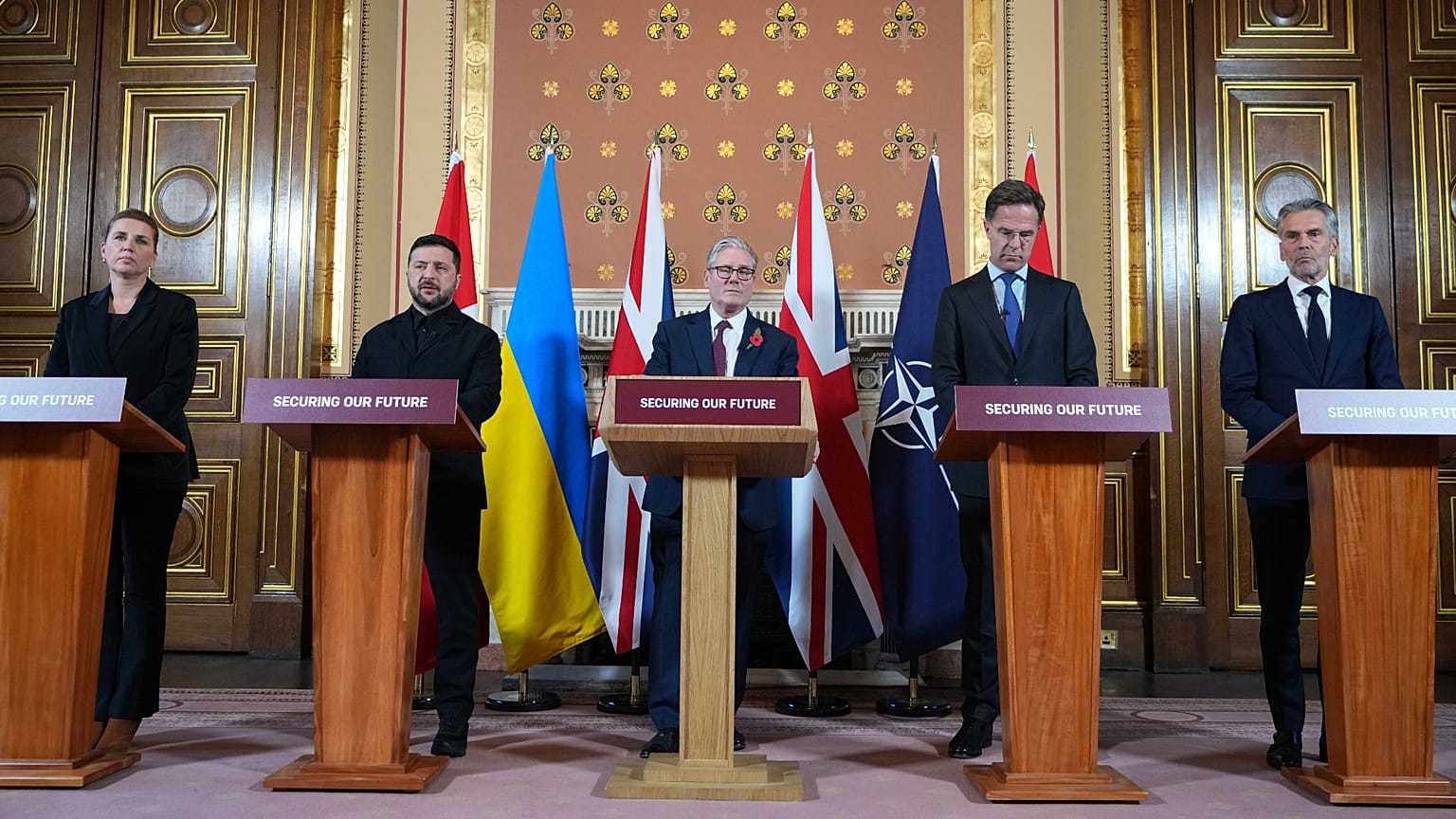
High-stakes diplomacy is set to continue next week, with the "Coalition of the Willing" convening as Ukraine seeks to secure European support. Meanwhile, Von der Leyen doubled down on Ukraine's EU membership as part of a security guarantees package for Kyiv after talks with European leaders.
European Commission President Ursula von der Leyen insisted Ukraine's accession to the European Union is a key component of the country's future security guarantees after holding talks with European leaders to debrief peace talks on Tuesday.
Von der Leyen said that accession to the 27-member bloc, which Ukraine aspires to join, represents "a key security guarantee in its own right," in a social media post following a call within the Berlin Format, which includes the leaders of Germany, France, and Poland, among others.
"Ultimately, the prosperity of a free Ukrainian state lies in the accession to the EU," she said. "Accession doesn't only benefit countries that join; as the successive waves of enlargement show, the show of Europe benefits."
Her comments follow a week of high-stakes diplomacy between US, Ukrainian and European officials. After a bilateral meeting with US President Donald Trump, his Ukrainian counterpart Volodymyr Zelenskyy said security guarantees between the three are "almost agreed".
Accession to the EU is seen as a critical component, but one that comes with multiple challenges for the bloc. Joining the EU requires significant reforms and must be unanimously approved by all 27 leaders.
For the Commission, Ukraine's accession represents a delicate balancing between implementing a merit-based process equal for all candidate countries while acknowledging the extraordinary situation of the country with peace talks ongoing.
Ukraine is also facing a veto from Hungarian Prime Minister Viktor Orbán, who has repeatedly argued that Kyiv does not meet the criteria to join the EU, instead suggesting a close partnership at best. This year, his veto has blocked any progress on Ukraine's accession negotiations, including through the technical cluster process.
The European Commission argues that Ukraine is technically ready to advance in the process. Frustration with the slow pace has prompted debate on unanimity rules for accession, but proposals for legal tweaks have not advanced either.
After the call among the Berlin Group on Tuesday morning, Dutch caretaker Prime Minister Dick Schoof said the "Coalition of the Willing," a group of countries supportive of Ukraine led by France, the UK and broader European security establishment, will convene next week.
German chancellor calls for 'honesty' in talks
After a bilateral meeting in Mar-a-Lago on Sunday, Trump and Zelenskyy hailed progress towards a US-led peace deal.
However, talks were delayed after Russia claimed Ukraine had attacked a personal residence of President Vladimir Putin in a further escalation of hostilities.
Kyiv has denied any attack on Putin's residence, calling it a "total fabrication" designed to hinder peace efforts.
Trump told reporters on Monday that he was informed by Putin about the alleged incident.
"This is not good, I don't like it," the US president said. "This is not the right time to do any of that. One thing is to be offensive, another thing is to attack his house."
The US president did not say whether US intelligence agencies had any information related to the alleged attack, instead citing the Russian president.
Russian Foreign Minister Sergei Lavrov said Monday that Russia would retaliate after the alleged attack. Over the weekend, Russia pounded Ukraine with another round of drone and missile strikes, mainly targeting the capital of Kyiv.
European leaders appeared less credulous about the Russian claims.
In a post on social media after hosting a conference call with European leaders on Monday, German Chancellor Friedrich Merz said the peace process is moving forward, but it will "require honest and transparency from everyone - including Russia."
After speaking with Zelenskyy, Putin and European leaders, the US president sounded optimistic about the prospects of a peace settlement, arguing that it is in the interest of both parties to end the war.
Still, the US president said the question of possible territorial concessions by Kyiv — including Russia's demands to gain control over the entirety of the Ukrainian eastern region of the Donbas — remains unresolved and is a "very tough" issue.
Trump also said Europeans would have to shoulder, for the most part, the effort around security guarantees, but added that the US would also help.
Separately, Zelenskyy told reporters in a WhatsApp briefing on Monday that US security guarantees would be set for 15 years, but Kyiv is seeking to extend them.
The Ukrainian president pointed instead to a period of 30 to 50 years, arguing that Russia had attacked his country for more than a decade by now, so going longer would represent a game-changer for Ukraine. "It would be a historic decision," he said.

No comments:
Post a Comment