The Demise of Social Democracy in the US and UK

Photograph Source: Sgt. Jeffrey Anderson – OGL 1
The major public opinion survey institutions in the US (Pew Research, Gallup, and others) and the UK (YouGov UK, Ipsos UK, and others) are telling the same story. The citizens of both countries are fed up with ruling class institutions. The decline in public trust began to set in during the first decade, the 1980s, of neoliberalism, a policy reset that depleted social services and extinguished the very idea of socialism (UK) or social democracy (US).
Drawing on my recent book, I argue that the real essence of a democracy is not about simply having elections and allowing voting, and even in this regard, turnouts in the UK and US are dismal. Far more important is the degree to which the government acts, as Lincoln so aptly put it, as an institution of the people, by the people, and for the people – i.e., provides for the general welfare.
In a modern capitalist state, according to the sociologist Max Weber, state legitimacy can be understood as moral authority of the political order. It rests most firmly on the public’s acceptance of the legal-rational system of governance, formal and informal. But elements not strictly based on such an order, such as the charismatic personality of leaders, also may help create the basis of state legitimacy. Populist leaders like Trump heavily rely on charisma to win the loyalty of their voters. Weber also argued that traditional values, particularly those derived from the Protestant ethos such as attitudes about hard work, discipline, and obedience to authority, establish the social psychological underpinnings of state legitimacy.
When governing and other state institutions fail to satisfy the broad public, they lose their moral authority. Once they fall, i.e., forfeit their legitimacy, as in the political interpretation of the royal Humpty Dumpty, their regimes cannot be put back together even with the most severe use of police and propaganda methods of repression at hand. A deep-seeded legitimacy crisis brings radical change, led either by the right or the left, not by the center. The US and UK have been moving in a chaotic way toward a collapse of liberal democracy, just as the USSR experienced a collapse of state socialism.
The breakdown of public trust in UK and US state institutions is abundantly evident. For decades, polls have shown a continuing decline in public respect for the ruling establishment (the courts, the legislative bodies, mainstream media, corporations, the criminal justice system, elite universities, and other powerful institutions). Unlike the US, Britain came out of WWII with a generally more social democratic and Keynesian orientation, which lasted up to the 1970s, after which the major parties began to implement forms of neoliberal austerity similar to the US deployment.
Neoliberalism has unraveled the democratic system that had been evolving since the New Deal. One startling sign of the breakdown of public order was the right-wing assault on Congress in January 2021, instigated by then-outgoing president Donald Trump. Beyond the particulars of whether Trump had been cheated of victory in the 2020 election, the riot (call it an insurrection if you will) can be viewed as the culmination of long-simmering distrust and anger toward government by various groups and individuals, mainly on the right. By 2024, public trust of governing institutions had reached a near all-time low in the post-war period.
In that year, Gallup found a new low, 28%, in its tracking of American adults who believe that democracy is working in the country. Of late, Democrats are hardly more trusting of the federal government, 35%, than the Republicans, 11%.
A 2022 study by the Carnegie UK Trust found that 73% of Englanders did not trust the UK government. At the same time, 41% believed democracy was not working, and 76% thought that MPs were not making positive changes in their lives. An overwhelming majority, 89%, considered the UK government (then under Boris Johnson) to be seriously lacking in honesty and integrity. Lower-income groups, those most damaged by the retreat from social democracy, registered the highest levels of dissatisfaction.
In recent years, Britons overall have registered record levels of distrust in politicians, parties, and government ministers along with real estate agents and journalists. Between 2014 and 2024, a British study found that Britons with low or no trust in MPs rose from 54% to 76%. Those living in Nordic countries, on the other hand, which remain strong welfare states, express high levels of trust in government.
In parallel fashion, implicating their adoption of neoliberal economic policies, Britons’ distrust of governing and economic institutions and politicians and their overall negative sense of well-being has grown significantly since the turn of the 21st century. The relatively weak organic character of British and American democracy in terms of social distribution corresponds to diminished state legitimacy, which is documented in several studies of public trust in state institutions.
Of all public institutions in America surveyed by Gallup in 2024, the lowest regard is held for the one body that symbolizes the essence of a representative democracy, the legislature. Gallup found that trust in Congress registered a “great deal” or “quite a lot” for a total of a mere 9% of respondents. Trust in the presidency registered 26%, the Supreme Court 30%, newspapers 18%, television news 12%, and internet news 16%. Big business was trusted by 16% and, rather crucially, the medical system by a minority 36%.
Deep distrust of the mainstream media and relatively easy access to alternative news sources have shifted the public’s information-seeking habits. By 2023, according to a study by the Reuters Institute, 62% of American adults had turned to social media, newsletters, and independent platforms for breaking news, much of this, apart from convenience driven by concern about “authenticity” and by growing “ideological distrust of legacy media.”
Clearly, a legitimation crisis has taken root both countries. The question is, what is at the cause of this breakdown in public trust of established institutions?
Neoliberal Political Economy
Public belief and trust in democracy are directly related to how the system that purports to be democratic delivers on fulfilling distributive expectations – that is, in the provision of collective goods. Under the transnational corporate stage of capitalism, the market system is legislated, not invisibly borne of an autonomous agency and initiative, i.e., unfetteredd “free markets.” Polanyi argued in The Great Transformation that “[l]aissez-faire was planned,” it was not and is not natural or spontaneous. Corporate deregulation and de-industrialization, which instigated capital flight to cheap, repressed labor havens, were disastrous policies that deeply eroded the collective bargaining power of workers and sense of partnership in the productive gains of the industrial system.
In Britain, Prime Minister Tony Blair and his chancellor of the exchequer and immediate successor Gordon Brown maintained Thatcher’s deindustrialization policy, rechristening their party “New Labour,” a remake of Clinton’s “New Democrats.” Blair and Brown brought down manufacturing’s share of GDP from more than 20% in 1997 when Labour took control of government to 10% in 2010 when they lost power for the next 14 years. Manufacturing jobs nosedived during Labour’s run, from 4.4 million to 2.8 million, bringing major wage losses.
Blair and Brown followed the procedural rules of neoliberal ideology, focusing on the FIRE sector: real estate rose by 18.2% of GDP and finance & insurance by 41.1%, while manufacturing grew a mere 2.7%. From 2001 to 2011, the share of manufacturing jobs in the UK fell by 33%; between 2007 and 2016, it declined nearly 25%. Over a longer stretch, worker losses in the sector were even more severe, shrinking from about 9 million jobs in the mid-1960s to 3 million by 2013. In response to a question about her own greatest accomplishment, Margaret Thatcher quipped, “Tony Blair and New Labour.”
In the US, manufacturing’s share of employment dropped by 60% between 1997 and 2010. Deindustrialization turned a once vibrant industrial center, the Midwest, into a proverbial “rust belt.” There is wide consensus that the Clinton Democrats’ virtual abandonment of working-class interests in the former industrial heartland cost them the election in 2016. In 2024, voters in the Midwest “swing states” who saw democracy as threatened, particularly white constituents, opted even more enthusiastically for the radical right demagogue Trump.
By 2000, capital’s rapid depletion of domestic manufacturing jobs in the US and UK, with millions going to “offshore” sites with new severely reduced labor costs, especially in China and impoverished countries like Bangladesh and Cambodia. The high point for manufacturing jobs in the US reached 19.5 million in 1979, falling to 11.5 million in 2010, up slightly to 12.3 million in 2016, and flattening thereafter. As a share of total US employment, manufacturing registered about one-third of all jobs in 1960 and was less than 12% in 2015. Five million American manufacturing jobs were lost between 2000 and 2014, 7.5 million between 1980 and 2019, with a small upward tick before the Covid-19-induced recession of 2020 when factory employment again plummeted.
As a share of national employment, both the US and UK fall well below the EU average. Particularly in the absence of strong unions, the downward shift in the US manufacturing employment structure has had a negative impact on real wages, social protections, job security, and labor organizing. With the weakening of the union base, both Labour and the Democrats changed their focus toward a more middle-class voter recruitment strategy. In the UK, real wages similarly were weak, expanding by a shallow 1.6% in the 1990s and 1.7% in the 2000s, with no growth in the 2010s and 2020s.
The orthodoxy about private markets as the arbiter of development, equity, justice, and social well-being has been a disastrous idea. As Polanyi observed:
To allow the market mechanism to be sole director of the fate of human beings and their natural environment, indeed, even of the amount and use of purchasing power, would result in the demolition of society…. Robbed of the protective covering of cultural institutions, human beings would perish from the effects of social exposure; they would die as the victims of acute social dislocation through vice, perversion, crime and starvation.
The Conditions of the Working Class
The US and UK have among the lowest levels of net national income per capita compared to Western European countries, while both have some of the lowest corporate tax rates in the West (UK top rate was 19% in 2023, the US was 21%), next to Ireland the lowest rate in Western Europe. According to Stewart Lansley of the Progressive Economy Forum:
Over the last four decades [corresponding to the era of neoliberalism], Britain has moved from being one of the most equal of rich nations to the second most unequal (after the United States). The same period has also seen a surge in levels of poverty, with the child poverty [and overall poverty] rate more than double that of the late 1970s.
Inequality is one of the most notable features of the neoliberal state. Sources for the following sets of data in the following paragraphs are found in my recent book, cited below. The disposable income Gini coefficient (in 2022) for the UK at 35.7% (0% 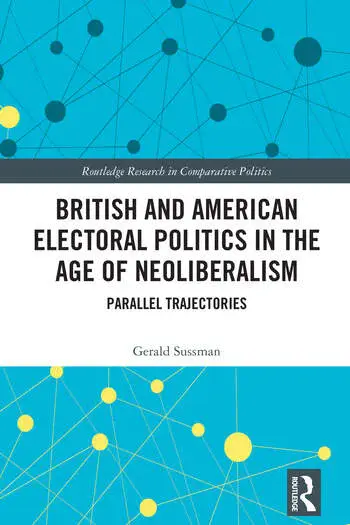 being perfect equality) compared to Germany (28.8%), France (29.8%), and the Nordic countries (average 26.7%) and was well above the EU average of 29.6%. England’s land ownership disparity is also extremely sharp, with less than 1% of the population (the royal family, aristocrats, gentry, oligarchs, corporations, bankers) owning at least half the land acreage and more wealth then 70% of the country’s citizens. The situation in 2020 only worsened for most income groups as a result of the pandemic.
The two leading neoliberal states show parallel outcomes in measures of social well-being.
+ Both the US and UK are among the weakest purchasing power economies within the OECD, whose 38 members include 15 Eastern European, Latin American, Asian, and Central Asian nations, and have higher rates of poverty than the OECD median.
+ The US has the highest rate of homelessness among wealthy countries, while the UK is the 2nd worst in all of Europe (behind only Ukraine).
+ Both countries rank among the worst in real retiree income amongst the OECD countries.
+ The share of American adults living in middle-class households fell from 61% in 1971 to 50% in 2021; in the UK 36% of working age adults were below 60% of the median income.
+ Of full-time jobs in the UK, 12.9% were paid below the living wage in April 2023; in America, 44% of workers in 2024 were not earning a living wage.
+ Some 50 million Americans are living with household incomes below 125% of poverty, including more than 15 million children.
+ In 2023, Blacks in the US had more than double the poverty rate of whites, 17.9% to 7.7%.
Poverty for working-age adults in both countries has increased in the neoliberal era. In the UK, the poverty rate for Black-headed households was 46% in 2020 compared to 19% for white-headed households.
+ Britain’s lifespan, ranked 29th worldwide in 2020, was behind every other Western European country except Denmark. Americans having less than $15,000 in earnings died on average more than 10 years earlier than those with annual income above $50,000. In comparing American pre-Covid life expectancy between the richest 1% and poorest 1% of individuals, the gap was 14.6 years. The US as a whole ranked 46th.
+ The US infant mortality rate in 2017 was 5.8 per thousand live births (6.1 in 2010), ranked 32nd (out of 36) among OECD countries, 55th worldwide. Britain at 4.2 was ranked 23rd, 40th worldwide.
+ The UK and US have among the highest numbers and rates of incarceration in the West, with extremely high rates for people of color (in the US, three times the population share for Blacks).
+ The combined Black, Asian, and Minority Ethnic population in the UK is 13% but represents 27% of the prison population, still less than half the US rate, where Blacks and Latinos make up 29% of the national population but nearly 60% of the prison population.
+ A total of more than five million Americans “are under supervision by the criminal legal system,” of whom “nearly two million people, disproportionately Black, are living in prisons and jails instead of their communities.”
+ Covid: The UK recorded the most deaths from the pandemic in Europe; the US has the most deaths of any country in the world.
+ Both the US and the UK ranked among the ten loneliest national populations, measured by percentage of people living alone, Britain being the world’s 2nd loneliest at 34% and the US 5th at 28%.
These findings may be surprising to readers in the leading neoliberal states that lay claim to being exemplars among democratic societies. The conditions of life for the majority of working people and the deteriorating standards of living under neoliberalism are an important part of the explanation of low formal political participation – voting turnouts in both countries, especially among the poorer sections of the electorate. Next, I look at the broad political profiles of citizen political engagement.
Why Britons and Americans Have Low Voter Turnouts
Using high school graduation as a proxy (since the concept of class hardly exists in US and UK statistical data), the average turnout for eligible working-class voters in recent elections hovered around 50%. Most working-class voters in the Anglo-American sphere, representing 65% of the population in each country, readily comprehend the fact that the richest 1% of the global population own half of the world’s wealth and that the electoral system is mainly controlled by corporate interests and billionaires.
Below, I compared the worldwide rankings of the UK political structure with the four main Nordic countries (Sweden, Norway, Denmark, and Finland). The term “versus” refers to averages in the latter. The sources are included in my recent book, cited below.
+ British turnout in elections was much lower (averaged since 2000): 60% versus 80% (for Nordic countries). For the Brexit referendum, 72%: 13 million failed to vote and another 8 million were not registered.
+ Proportion of citizens who are paid members of political parties: 1% (rapid Labour Party growth after 2012, however, but severe decline of young voters (18- to 24-year-olds) under the Starmer government) versus 5%
+ Women MPs: 22% in 2010 (40% after the major 2024 Labour victory) versus 46% (as of 2023)
+ British press freedom: ranked 23rd in 2024 (33rd in 2021) versus Norway (1st), Denmark (2nd), Sweden (3rd), and Finland (5th)
+ Freedom House overall UK freedom rank (2022): 29th. All Nordic countries ranked in the top 10.
+ Absence of public sector corruption in the UK: 21st in 2024 (12th in 2019) versus Denmark (1st), Finland (2nd), Norway (6th), and Sweden (8th)
+ Labor force in trade unions: 26.5% versus 69.2%
+ Democracy ranking: 14th (2019) versus Norway (1st), Sweden (3rd), Finland (5th), and Denmark (7th)
= UK ranked 11th in sustainable development in 2022, behind the Nordic countries, France, Germany, Ireland, Austria, Estonia, and Switzerland. Looking at the US on these measures, we find a parallel low ranking.
The US is widely behind the Nordic countries in every measure.
+ US presidential election turnout since 2000 (average): 55% (average turnout for congressional elections since 2000 is 48%). Presidential voting turnouts were on average considerably higher in the 1960s and 1970s. The exceptional 2020 (Biden vs. Trump) turnout rate, 66%, was the highest in 120 years. In 2024, it was 64%, also high by US standards but still very low compared to Nordic countries.
+ In the national presidential election years, 2000 to 2016, the average turnout in the primaries was 21%
+ Unlike in the UK and many other countries, there is no formal party membership. Any registered US voter can vote for the party leader via the primary, in some states even in parties to which they are not registered (open primary).
+ Women in Congress: 28% (in 2025, 23% in 2019), globally ranked at a very low 67th
+ Press freedom: 57th in 2025 (45th in 2018), behind every country in western Europe except Greece
+ Freedom House overall freedom rank (2022): 60th
+ Absence of corruption, 29th in 2024 (23rd in 2019)
+ Labor force in trade unions: 10.3% (2019)
+ Democracy ranking: 25th (2019), listed as a “flawed democracy” by Axios In 2025, well behind all of Western Europe
+ Sustainable development ranking: 41st in 2022, listed between Cuba and Bulgaria
Using the above sampled data as illustrative, the damaging distributional and political effects of neoliberalism have had a direct bearing, it is argued, on the electoral process and on citizens’ trust of public institutions. Since the takeoff of neoliberalism, Britain and the US have had among the lowest rates of civic engagement and immigrant enfranchisement of any advanced economy. In the UK, one result is that while 11% of white Britons are not registered to vote, the figure escalates to 14% for those of Indian heritage, 25% for Black Africans, and 39% for EU immigrants. About 52% of eligible Latino voters, the largest base of American immigrants, cast ballots in the 2024 election, a rate about 20% below non-Hispanic whites.
In 2024, the UK overall had the second smallest turnout of eligible voters for the House of Commons, 52%, since universal suffrage was introduced in the 1920s. Of registered voters, the turnout, 59.7%, was the lowest since 2001 and before that 1918. In 2015, turnout in working-class constituencies with high unemployment was especially low. In the US, turnout of the entire voting age population in 2024, 58%, dropped more than 4% from 2020, which was heavily impacted by young voters (18-29) whose number fell by 8% between the two elections.
The broad explanation for the failure of the young, i.e., American millennials and post-millennials, to show up at the polls (42% turnout in 2024) is discussed in a survey, which ascertained that they are alienated from the electoral process. It found that “20% said that voting was not important to them and 24% said they did not vote because they did not like any of the candidates, which was the most commonly given reason.”
Large numbers do not see the neoliberal economy or politicians working for them. In Britain, the recovery of parliamentary power by Labour in 2024 did not mean a return to the welfare state. Instead, its standard bearer Keir Starmer began a program of cutting welfare and boosting defense spending. He is seen by many commentators as “more Tory than the Tories.”
Leading the transnational oligocracy, the US with 4% of the world population has the overwhelming number of billionaires, almost 900, and the UK, with the 22nd largest population, comes in fourth with 72. Of America’s 350 million citizens, the number of millionaires, centi-millionaires, and billionaires, 6,053,302, represents less than 2% of its population. The rich and super-rich in Britain are 4% of the population and have more assets than 50% of the least wealthy Britons.
In America, the concentration of economic power is more stunning. Just three individuals, Elon Musk, Jeff Bezos, and Mark Zuckerberg, possess more wealth than the country’s lower 50% income group. Meanwhile, wages for middle- and low-income earners have stagnated or decreased over the past 45 years, which is especially stark when compared to a 75% growth in productivity in that period.
Despite the evolving constitutional basis of democracy in America, rule of, by, and for the people has seriously declined in the neoliberal era. As Wendy Brown observed, “neoliberalization transposes democratic political principles of justice into an economic idiom, transforms the state itself into a manager of the nation on the model of a firm… and hollows out much of the substance of democratic citizenship and even popular sovereignty.”
Without global domination on their agenda, wealthy countries like Britain and the US could easily provide a high standard of well-being for all their residents. Neoliberalism as a governmentality imposes market guidelines and strict entry gates for gaining well-being access. The neoliberal project has produced highly discriminatory practices that reward the rich and punish working people, in particular working-class people of color, and a dysfunctional system subject to the power of unaccountable actors.
Gerald Sussman is professor emeritus of urban studies and international studies at Portland State University. He is the author or editor of seven books, including the most recent (2025), British and American Electoral Politics in the Age of Neoliberalism: Parallel Trajectories (Routledge). This article is an abbreviated version of a forthcoming article in the journal New Political Science. Professor Sussman can be reached at: sussmag@pdx.edu

No comments:
Post a Comment