Sunday, January 11, 2026

Amid Trump’s War on Antifa, Activists Face Arrest for Zines and Group Chats


The Trump administration now has zine distributors and jail support efforts in its sights.

January 10, 2026

Composite / Getty Images / Truthout


Honest, paywall-free news is rare. Please support our boldly independent journalism with a donation of any size.

I’ve been making zines since I was 14 years young. I’ve been distributing them since I was 16. I’m now 37 years old and pursuing a doctorate in art history studying communities of zine makers.

In recent years I’ve seen a notable increase in people talking about zines, making them, and attending zine fests — it’s been heartening and wild to witness! I’ve watched what felt at times like this niche and nerdy part of my life blossom into something much more expansive.

When working with my students, or hosting community zine making workshops, I often define zines as small, independently published objects that are amateurish in the best way — they’re free or cheap to get copies of, contain typed or handwritten text, and depending on what zine you find, they’re filled with collage, art, poetry, political history, personal stories, recipes, health advice, quite literally everything you can think of. Zines are an embodiment of the “do it yourself” ethos.

Now, the latest targets of President Donald Trump and Texas Gov. Greg Abbott’s agenda of political repression include a diverse group of protesters, jail support volunteers, educators, and, crucially, zine distributors, and print artists. More than a dozen people face criminal charges, including riot; conspiracy to use and carry explosives; the use and carrying of explosives; attempted murder of officers and employees of the United States; discharging a firearm during, in relation to and in furtherance of a crime of violence; and corruptly concealing a document or record. And at the center of their charges is a box of zines and jail support group chats.

From a Typical Noise Demo to a Series of FBI Raids

On July 4, 2025, protesters had gathered at the Prairieland Immigration and Customs Enforcement (ICE) detention facility in Alvarado, Texas, to oppose immigration enforcement practices and show support for detainees, using fireworks and noise-making as their demonstration method — a traditional form of protest in solidarity with incarcerated people. When local police responded to ICE’s call to remove the protesters, an officer reportedly suffered a neck injury that authorities attributed to a gunshot. Prosecutors have only identified two individuals as alleged shooters despite the broad scope of arrests. Following the demonstration, federal authorities launched an extensive investigation that resulted in charges against 16 individuals known as the Prairieland Defendants, and harassment of their extended friends, families, and neighbors.


These Dallas Residents Are on the Front Lines of Trump’s War Against “Antifa”
If convicted, people who showed up to a protest could face “decades of prison time,” the National Lawyers Guild says. By Andrew Lee , Truthout October 25, 2025


Guidelines issued by the White House in September detail how the Trump administration will target and pursue anyone it deems to be motivated by “anti-Americanism, anti-Capitalism, and anti-Christianity” as domestic terrorists. Trump has also designated “antifa” as a domestic terrorist organization. Those of us who are anti-fascist know that “antifa” simply refers to a collective sense of being anti-fascist and believing that fascism is ultimately a real and present threat to all life. It is not a unified entity or organization. Antifa is a rallying cry, a politic, a historical reference that connects one to a legacy of fighting Nazism in Germany, and fighting other fascists in Italy, Spain, and elsewhere in the 1930s.

Zines have been criminalized before our current moment, and at times their creation and circulation was made punishable by death.

Texas resident Des Revol, in particular, is being targeted by the Trump administration under these guidelines. He did not attend the July 4 demonstration in Alvarado, Texas, but he was arrested two days afterward after he had a phone call with his wife, who was detained at the noise demonstration. FBI agents stopped him for a traffic violation in Denton, Texas, and took him into custody at gunpoint. Authorities charged him with evidence tampering constituting obstruction of justice as well as conspiracy, alleging he “transported a box that contained numerous Antifa materials” from his residence to another location. This literature — pamphlets and zines commonly found in activist spaces — became the basis for his prosecution. Despite having no connection to the original demonstration, Des faces potential federal imprisonment and additional risks from both immigration enforcement and hostile right-wing groups that have publicly identified him online.

When we spoke, Lydia Koza, the wife of Prairieland Defendant Autumn Hill, plainly stated what’s happening: “At the most abstract level, I believe the Trump administration and the state of Texas know in some collective-unconscious way that authoritarian, grasping models of power are unsustainable and require ever-greater levels of escalation; and that models predicated on care and equity are both more natural and more sustainable. Solidarity and compassion therefore become threats.”

Meanwhile, Prairieland Defendant Savanna Batten has lost more than 30 pounds since her incarceration in September of 2025, according to her sister, Amber Lowrey. When we spoke about her mounting concerns, Lowrey said:

When an individual becomes a target of state repression, it harms everyone within their orbit. Everyone who was taken from the Prairieland protest has lost, at very least, their employment. Many lost their homes or vehicles, and some owe huge repair bills as a result of violent raids that left their dwellings badly damaged and exposed to the elements. At least two minor children said goodbye to their parents as they left to go to a protest five months ago, and they never came back. Pets have had to be rehomed … State repression is violent. It is extreme. It is incredibly isolating, and that is by design. This has been, by far, the most traumatic experience of my life — and I wasn’t even the target.

Likewise, when the FBI began raiding the home of Autumn Hill and Lydia Koza, “I wondered if I was going to die or be taken to a rendition site,” Koza said. “At that moment, I had resigned myself to losing everything I cared about. Every ounce of ideological opposition to police violence, to state terror, to incarceration, suddenly became viscerally relevant.”

Are Zines a Threat?

I myself have copies of most, if not all, of the zines that Des Revol had in that box. Those zines were free or cheap to get, and are filled with history, free thought, anarchist political analysis, discussions of shared struggle, and hope. I have many such titles, and yes, I believe they are at once paper and ink and also incendiary devices. I reject the framing of innocence and crime being used to describe zines and those who make or share them.

“Zines could be called the atomic unit of free speech — the simplest possible, highest-impact pamphlet; the most entry-level way of disseminating ideas that can’t find footing in mainstream discourse,” Koza told me.

Two other Prairieland Defendants had previously established a small, independent print shop and literature distribution to support local book clubs as well as anarchist and socialist reading groups, and had only just begun tabling at book fairs and zine fests. These artists’ and writers’ arrest and subsequent incarceration has shuttered this local resource, ending access to affordable and free printing and breaking up print communities — an outcome the Trump administration is all too happy to execute.

How many of us have visited a public library’s zine rack, or attended a local print fair or zine fest? Under a fascist political regime, all oppositional discourse … is subject to attack.

Zines are often sources of great inspiration and personal conviction. If being against a regime that deports, kills, silences, poisons, and cages is criminal, then we must abandon the nonsensical concept of innocence. Political literature should make you feel, think, learn, and act. Zines have been criminalized before our current moment, and at times their creation and circulation was made punishable by death — in revolutionary France, in the post-revolutionary United States, and in Nazi Germany, just to name a few. Nothing about the Trump administration’s tactics should surprise us; we are sure to see more zines, pamphlets, leaflets, and other print culture be labeled “domestic terrorism materials” in the future.

Even still, there is solidarity everywhere. In October, I traveled to Athens, Greece, and visited La Zone, a beautiful anarchist community space and cafe, with a tremendous selection of zines, books, artwork, and free literature. At the time of writing this, I learned that La Zone hosted a “letter-writing & solidarity evening for the imprisoned Prairieland (Texas) codefendants.” Yes, zines are folded pieces of paper, but they’re also lifelines, histories, and embodiments of hope.

How many of us keep a box of zines, or leaflets, or political pamphlets around the house? Around our offices or apartment? How many of us have visited a public library’s zine rack, or attended a local print fair or zine fest? Under a fascist political regime, all oppositional discourse, literature, art, and life is subject to attack. We must recommit to solidarity, and rise to the defense of those whose lives and actions become criminal by default. The Trump administration wants us to live in ignorance and fear, so we must continue making, thinking, and learning together. Zines will continue to play vital roles in our movement organizing and political education. Keep informing yourself about the calls for support and solidarity with the Prairieland defendants. Keep reading, keep making.


This article is licensed under Creative Commons (CC BY-NC-ND 4.0), and you are free to share and republish under the terms of the license.


Brit “Red” Schulte
Brit “Red” Schulte is a doctoral candidate in art history at the University of Texas at Austin, a community organizer, and zinester. They are a guest librarian with the Sherwood Forest Zine Library in Austin, a founding member and current organizer of Midwest Perzine Fest, and The Support Ho(s)e Collective zine distro. Their writing can be found at Truthout, The Funambulist, In These Times, Monthly Review, The Avery Review, and Kernel Magazine.
HISTORICAL REVISIONISM IN PLAIN SIGHT

Smithsonian removes text referencing Trump’s 2 impeachments that 'upset' White House

WOULD MAKE STALIN PROUD
January 11, 2026
ALTERNET

The National Portrait Gallery swapped out President Donald Trump's official presidential portrait on display this week and changed his biography while they were at it.

The New York Times reported Saturday that the language on the wall about Trump and his history "removed wall text that referred to President Trump’s two impeachments — language that had upset the White House."

The official painting of Trump was recently replaced in the "America's Presidents" exhibition, and the biography was as well.

Previously, the language read: “Impeached twice, on charges of abuse of power and incitement of insurrection after supporters attacked the U.S. Capitol on January 6, 2021, he was acquitted by the Senate in both trials.”

Earlier last year, Trump fired Portrait Gallery Director Kim Sajet, crafting a dossier on her "partisanship and bias" to justify firing her.

The previous image of Trump featured his big smile and reddish skin as he stands in front of a flag and what appears to be the gold Oval Office wallpaper. The new official painting has his head floating in a sea of black with his signature red tie dangling from his neck. His hands are folded in front of him, and he's lit dramatically from his left, leaving his right side in shadow.

White House spokesman Davis Ingle told the Times that the "iconic photo” of Trump will spread and his “unmatched aura will be seen and felt throughout the halls of the National Portrait Gallery.”

The Trump biography says only that he is the 45th and 47th president and was born in 1946. Former President Bill Clinton's portrait notes his impeachment for "lying while under oath about a sexual relationship he had with a White House intern.”

Read the full report here.


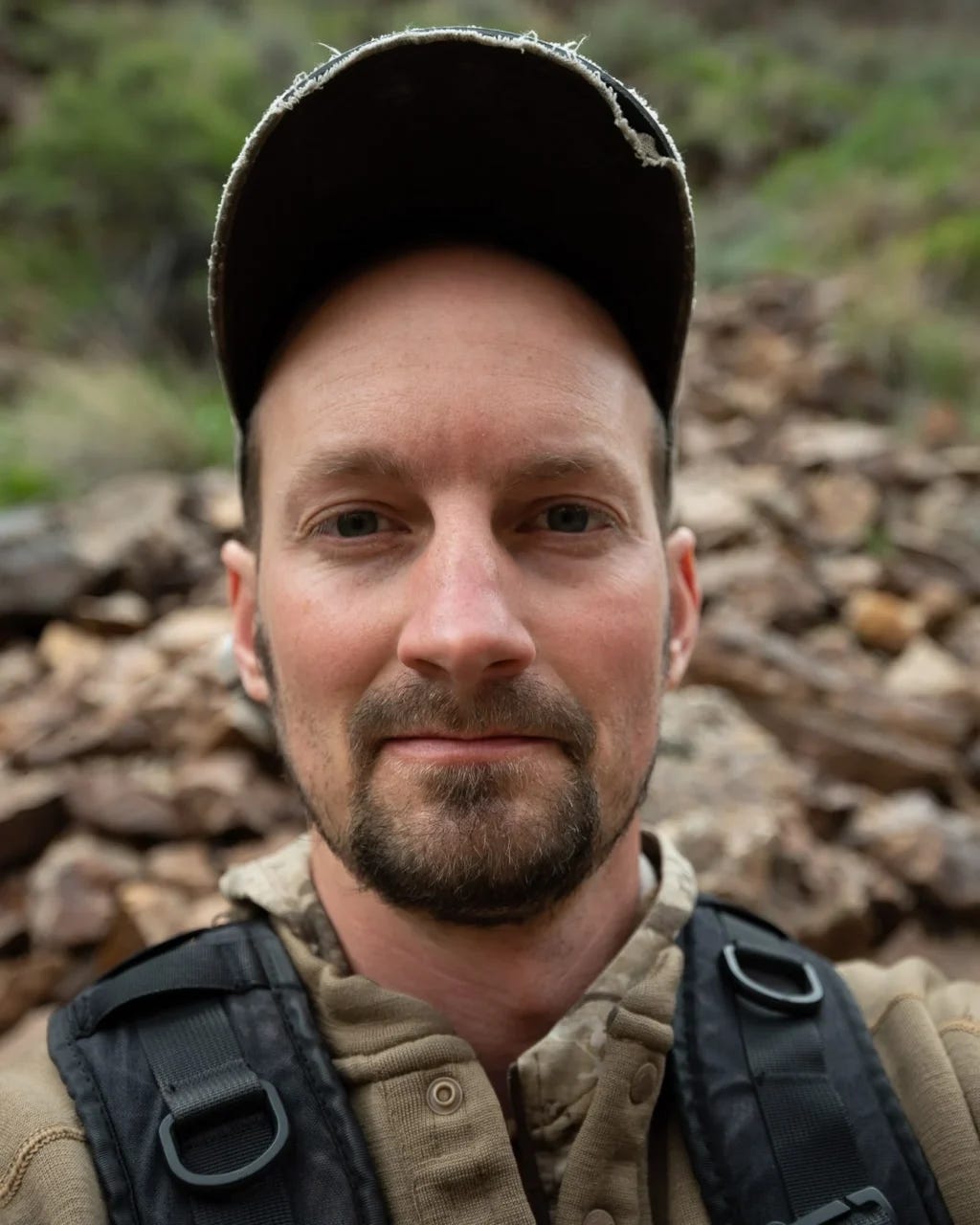
More Rapping with Biocentric’s Max Wilbert

on the State of the World as we Gallop into Year of the Fire Horse


A look at the history of COINTELPRO and the new Gestapo/Stasi/SS Semen Drip Trump's NSPM7


CELDF Board & Staff - Community Environmental Legal Defense Fund

He’s been under the weather:

Hi everyone,

I’ve been sick for four days now, and haven’t had a chance to pull a piece together. So, no post today. In lieu of that, here’s a photo of a sandstone rock formation in a coastal wilderness. A place like this, with crawdads crawling in every pool, fish darting through every riffle, and the occasional weasel swimming from one bank to the other, is far more beautiful than my writing.

More soon.


Check out his Substack and Podcasts:

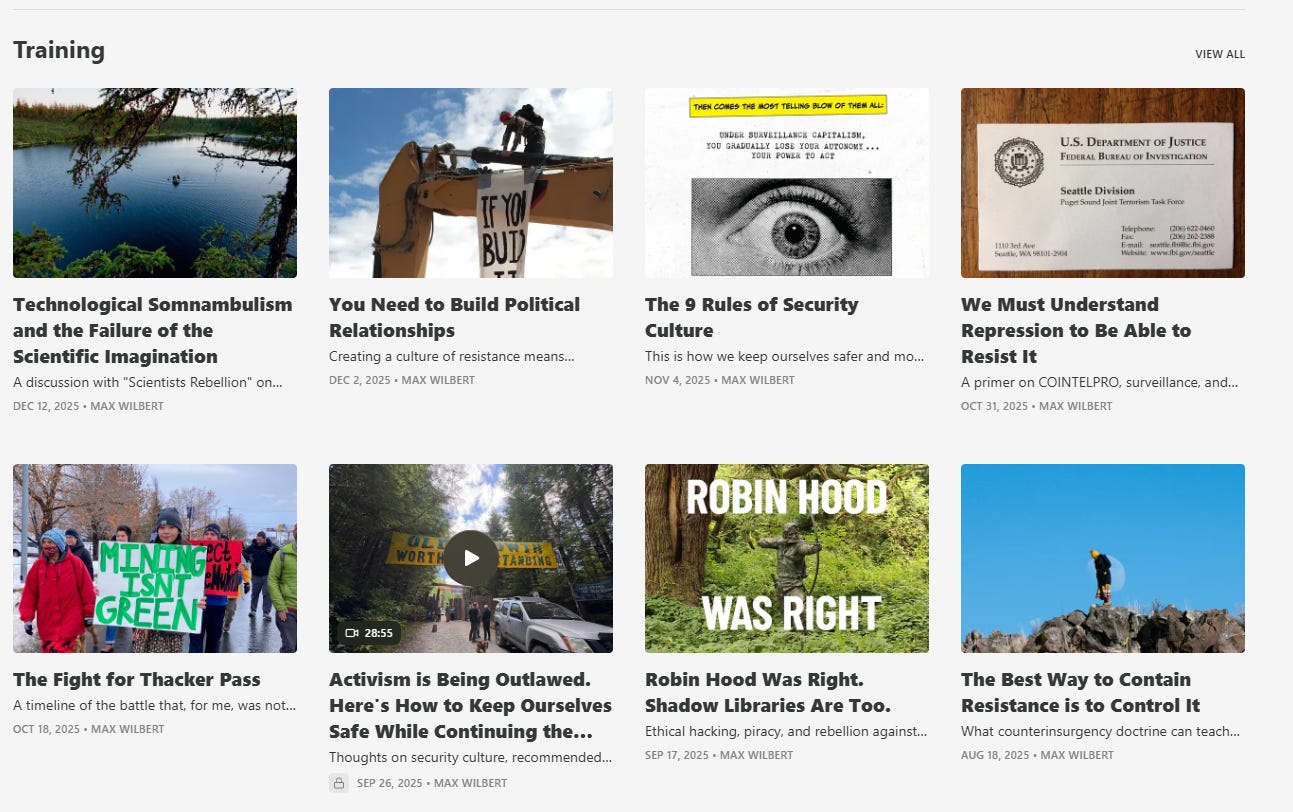
I interviewed him Oct. 31, regarding his piece, We Must Understand Repression to Be Able to Resist It: A primer on COINTELPRO, surveillance, and how our movements are attacked and undermined !

Listen here, to the interview from my weekly show, Finding Fringe: Voices from the Edge, KYAQ.org/ 91/7 FM.

I’ve had my run-ins with FBI as a newspaper journalist in El Paso, reporting on Casa Annunciacion, where ex-priest Ruben Garcia was there with volunteers and sometimes 40 refugees to assist them in gaining refugee status.

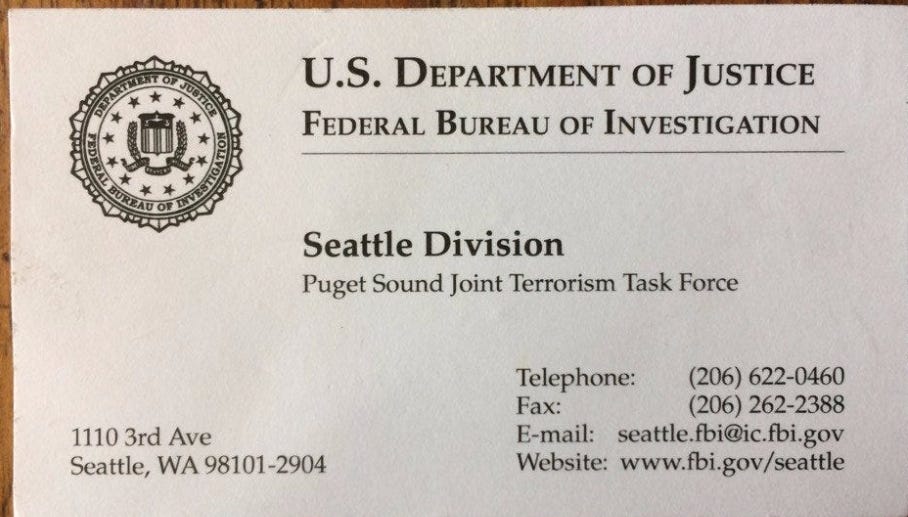
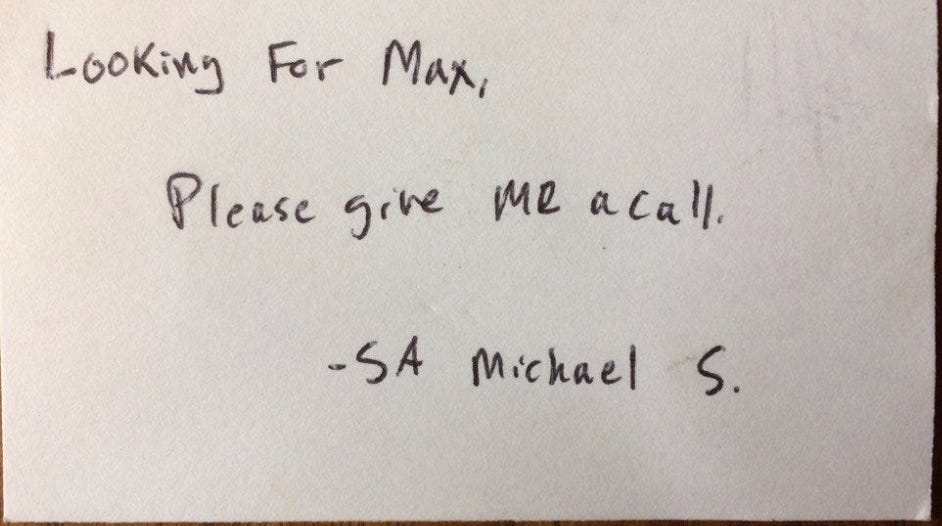
Max’s FBI mind fuck was in Seattle:

[A business card left for me in 2018, when the FBI attempted to contact me as part of a sweep targeting radical environmentalists. I declined to speak with them.]

Read the piece to readjust your scope of vision as COINTELPRO has been juiced up and amped up many ways, certainly in a major fascistic formula under the precepts of US Patriot Act I, II, III, with what we have now, with Trump Administration’s signing of the NSPM7.

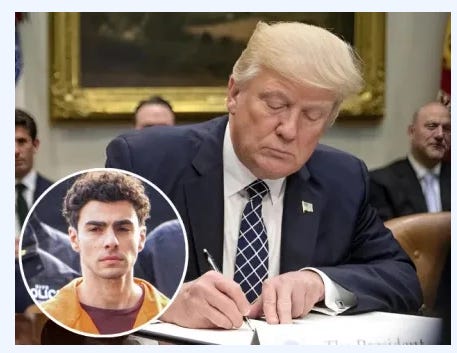
Recently, the Trump Administration has supercharged these efforts by signing National Security Presidential Memorandum 7 which “directs a new national strategy to ‘disrupt’’ any individual or groups ‘that foment political violence,’ [with a focus on those who hold anti-capitalist and other left-wing views, such as supporting Luigi Mangione] including ‘before they result in violent political acts,’” by designating ANTIFA (not an organization, but a tactic, and one which is not always used strategically) as a domestic terror organization. The administration is also planning to designate ANTIFA as a foreign terrorist organization, a much more serious legal designation that experts predict will have severe negative consequences for free speech, dissent, and protest. As the Civil Liberties Defense Center notes:

“The Trump regime will likely use [these designations] to increase surveillance and criminalization of its adversaries (increasingly similar to Putin’s Russia, where political opponents are murdered in prisons). They may attempt to use it to target, threaten, and punish people who openly protest the regime’s policies and actions. When the FBI has carried out previous domestic terrorism investigations against neo-Nazi groups like the Base and Atomwaffen Division, US prosecutors used criminal enterprise laws like RICO. We’ve seen an uptick in the State’s use of RICO to target political expression — e.g. the Atlanta Cop City cases, where a judge recently tossed out the abusive and illegal use of RICO against activists. The regime may use this designation to place the military in US cities to enforce the will of the dictator, and justify it as ‘fighting antifa protests.’”

They conclude, “It’s critically important for Americans to continue to fight against fascism and to defend our imperfect democracy.”

*****

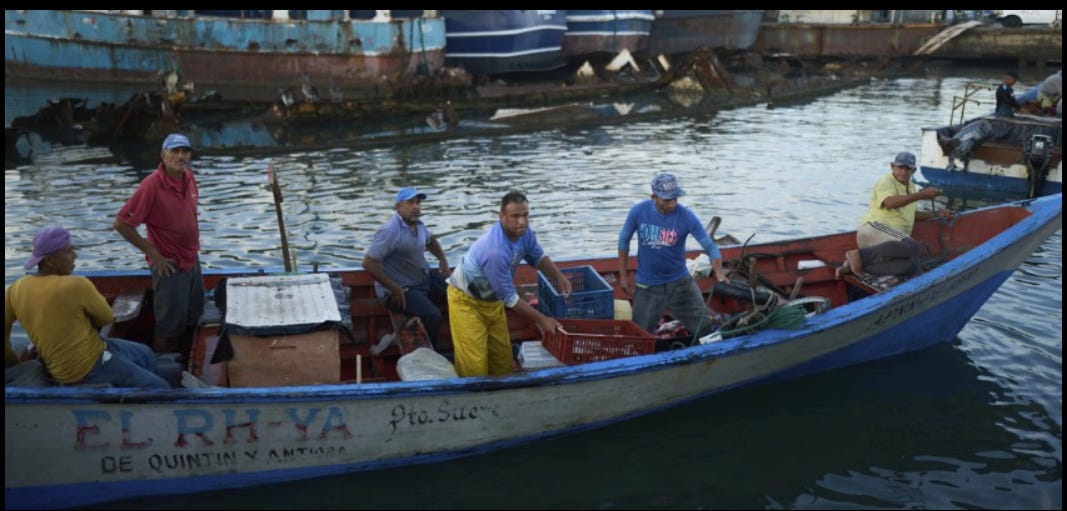
We barely talked about the murders and double and triple taps on Venezuelan fishermen, again, recorded Oct. 31 but airing Jan. 7.


STOP the killers!

by Raymond Nat Turner, BAR poet-in-residence 07 Jan 2026


Burlap bags stuffed with tuna and blue marlin.

Catch of a lifetime! Juan’s already counting the

cash in his head. Visualizing pawn shop guitar

for Gabriel, his 10 yr old son, graduating to guitar

from ukulele. Gabriel’s greeted morning rooster-

like— since age 3— with “Let’s practice, Papa!”

Before pushing off to sea Juan bought the computer

Rosario wished for from a journalism student he met

at the fish market training fishmongers to compute. He

also bought the bicycle Maria longed and stashed it at

a neighbor’s house. Juan was out to make his young

family’s Christmas the best ever.

BOOM!

Bloody mess below his waist. Juan’s a strong swimmer. But

he can’t feel his legs. He quickly grabs on to fiery flotsam.

Is that Javier hanging on for dear life across from him?

He hears his children’s joyful shrieks. Sees them jumping

Up and down with joy. He kisses Lourdes long and tenderly …

BOOM!

A pomade man has amplified orders of

his demented Don into “Kill them all!”

Laughing, they dub it a “double-tap

strike —”

like some cool dance step

signaling mad moves to come …

*****

I recommend you all get into a regular reading and listening of Max Wilbert. And, alas, since it is Gunboat Monroe Doctrine on crack, check out: Paul Cudenec and his insightful Substack, a new one, on the ZIM and Venezuela.

ZIM attacks Venezuela – ¡Viva la resistencia!


Really, the Jewish-Zionist Imperial Mafia and Venezuela!

Quoting Paul,

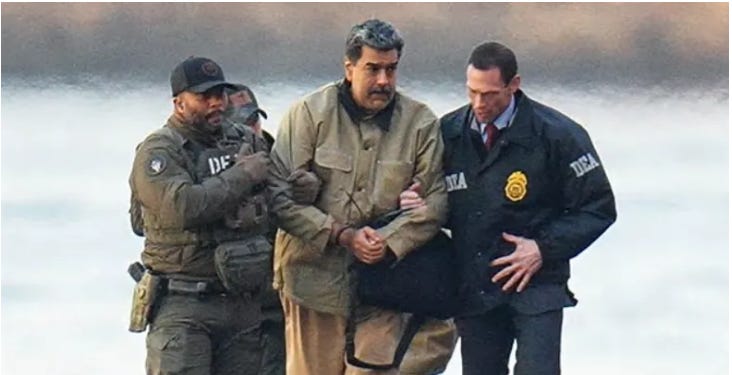
The USA’s New Year assault on Venezuela is one of the most naked acts of imperialist aggression we have seen in recent times.

There was not even a manufactured threat to America or “democracy” to justify it, only the laughable audacity of accusing kidnapped President Maduro of being involved in the drugs trafficking trade for which the CIA is so notorious.

Just as blatantly obvious, for increasing numbers of people, is that President Trump and his “special forces” are nothing but tools of the zio-imperialist mafia, ZIM.

Venezuela’s Vice President (and thus acting President) Delcy Rodríguez said as much herself when she declared: “Governments around the world are simply shocked that the Bolivarian Republic of Venezuela is the victim and target of an attack of this nature, which undoubtedly has a Zionist tinge”.

Venezuela under Maduro, as under Chavez, was highly critical of Israel and Zionism and was claimed by Israel to be close to its bogeyman/enemy Iran.

Israeli Daily News on January 6 spoke of “open hostility between Caracas and Jerusalem”.

It explained: “Israeli and Western intelligence have long warned that Venezuela provided Iran with an economic and logistical lifeline, including oil cooperation, financial channels and sanctions evasion.

“There have also been serious concerns about Iranian and Hezbollah fundraising and intelligence activity in Latin America”.

And the cherry on the cake of corruption is that the show trial of Maduro in the US is set to be presided over by 92-year-old Zionist judge Alvin Hellerstein (pictured above), known for his controversial handling of the 9/11 legal aftermath.

Leviathan’s Law will be imposed throughout Global Israel.

As with all ZIM operations, from “terrorist” attacks to “pandemics”, its puppet “leaders” lined up to display their obedience.

*****

I’ll let this one go in the can, so to speak, in order for you to listen to Max Wilbert. Articulate, focused, humane and interested in so many things.

Paul Haeder has been a teacher, social worker, newspaperman, environmental activist, and marginalized muckraker, union organizer. Paul's book, Reimagining Sanity: Voices Beyond the Echo Chamber (2016), looks at 10 years (now going on 17 years) of his writing at Dissident Voice. Read his musings at LA Progressive. Read (purchase) his short story collection, Wide Open Eyes: Surfacing from Vietnam now out, published by Cirque Journal. Here's his Amazon page with more published work AmazonRead other articles by Paul, or visit Paul's website.
WAIT, WHAT?!

UK 'drawing up plans' to deploy military to Greenland to protect it for Trump


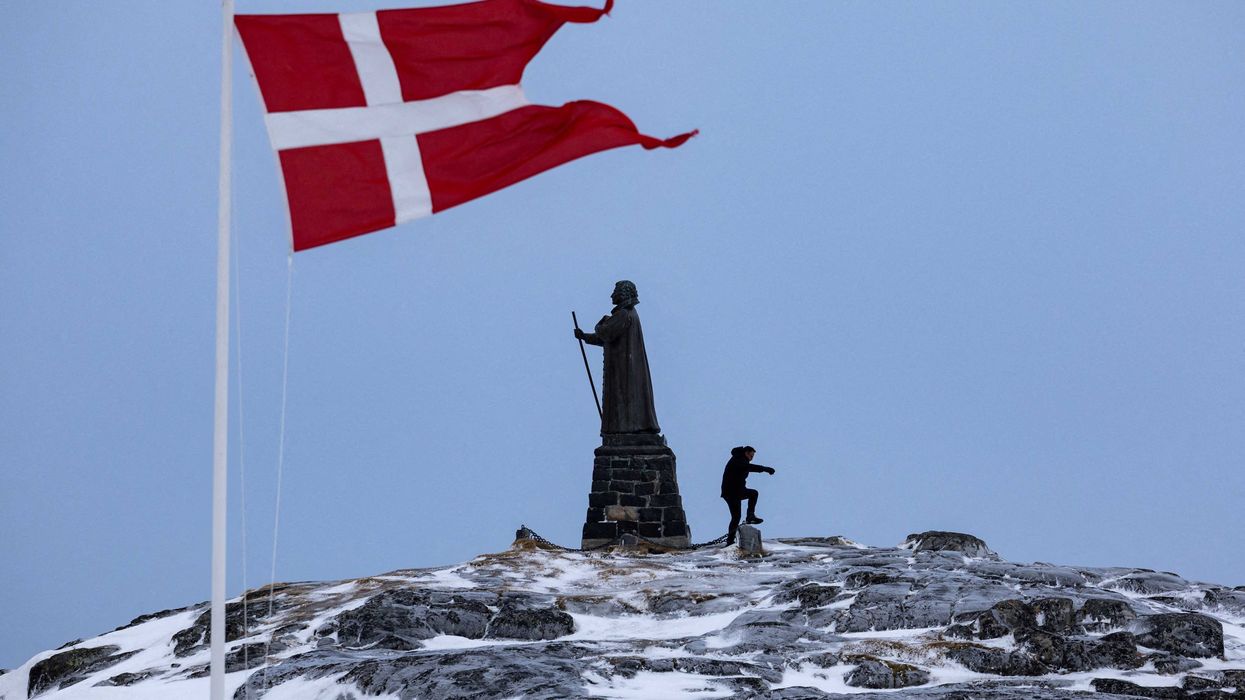
FILE PHOTO: A man walks as Danish flag flutters next to Hans Egede Statue ahead of a March 11 gene
ral election in Nuuk, Greenland, March 9, 2025. 
REUTERS/Marko Djurica/File Photo

Sarah K. BurrisJanuary 11, 2026 | 07:20AM ET


U.K. officials met with their European counterparts from Germany and France to begin a mission deploying troops to the Arctic for President Donald Trump.

The Telegraph reported Sunday that the military is "drawing up plans" now for a possible North Atlantic Treaty Organization (NATO) mission on the Danish island that the U.S. president has said he "needs" for national security purposes. While Trump has claimed that he would buy the island, his top aide, Stephen Miller, said that Greenland has only 30,000 people who live there, and claimed no one would fight the U.S. if it invaded.

The plans remain in the early stages, but it could involve "British soldiers, warships and planes being deployed" with the aim of protecting Greenland from hostile actors like Russia and China.

The hope is that with the NATO allies protecting the island, Trump may "abandon his ambition to annex the strategic island," said the report.

It could allow Trump to de-escalate his threats of a takeover and brag that Europe was paying for policing the area rather than the American taxpayers. Greenland is a territory of Denmark, which is a NATO member. However, it seeks independence from any parent country.

Trump appears to believe that Russia or China will invade Greenland and wants to do it earlier than they do.

Prime Minister Keir Starmer told the Telegraph, “We share President Trump’s view – Russia’s growing aggression in the High North must be deterred, and Euro-Atlantic security strengthened."

“NATO discussions on reinforcing security in the region continue, and we would never get ahead of those, but the UK is working with Nato allies to drive efforts to bolster Arctic deterrence and defence," he added. "The U.K. will continue to work with allies – as we always have – on operations in our national interest, protecting people back at home.”

Read the full report here.

 WORD OF THE DAY

The World, Greenland, and the Trump’s US of Autarchy


Video created for the Chinese national television, CCTV, 8 January 2026

*****

No Western media has bothered to speak with me, a Danish peace researcher, about the Trump Regime’s Greenland aggression. I also did not expect it, and it speaks volumes about their problems, including self-censorship.

Frankly, it is more effective for opinion formation and intercultural dialogue to reach 100-200 million Chinese who watch morning television and are genuinely curious about the wider world rather than just themselves. In contrast to the general West.

Here is the complete video, with the arguments divided into global, European, and Nordic perspectives.

It is also the first “TFF Peace Pulse.”

Facebook
Jan Oberg is a peace researcher, art photographer, and Director of The Transnational (TFF) where this article first appeared. Reach him at: oberg@transnational.orgRead other articles by Jan.


Edging Closer to Armageddon?

by  and  | Jan 9, 2026

Originally appeared at TomDispatch.

These days, no kids in school are ducking and covering under their desks. American magazines don’t have stories about families (with the money) building private nuclear shelters to guard against an attack on this country. And I can walk the streets of New York City without normally seeing one of those ancient yellow signs of my childhood indicating a fallout shelter (that you could quickly enter in case a war suddenly broke out and the Soviet Union — yes, can you even remember that? — lobbed a nuke our way). In truth, it’s hard to believe anymore, but all of that took place in the previous century, when those of us living in New York actually feared a nuclear attack from the Soviet Union.

And yet, so many years later, with not two but nine countries now possessing nuclear weapons (and undoubtedly more to come), nuclear war seems strangely not part of the conversation anymore. It’s true, of course — and one of the great miracles of our history — that, 80 years after the first atomic bombs destroyed the Japanese cities of Hiroshima and Nagasaki, such a weapon has never again been used. Still, given this increasingly strange planet of ours, don’t count on another 80 years like that.

In fact, as TomDispatch regular Michael Klare makes grimly (and strikingly) clear, at this very moment both our country and Russia (the Soviet Union being long gone) seem to be abandoning the basic nuclear restraints of so many decades and potentially expanding their already gigantic nuclear arsenals, already easily capable of wiping out several Earths. Fortunately, there are still groups organizing against such a nuclear nightmare, though you don’t hear much about them these days. But if you want to know more, check out the websites maintained by the Arms Control Association and the Friends Committee on National Legislation. And then, if you’re feeling anxious, instead of ducking and covering, check out Klare’s latest piece on the all too strange world we now find ourselves in. ~ Tom Engelhardt


Will the U.S. and Russia Abandon All Nuclear Restraints?

By Michael Klare

For most of us, Friday, February 6, 2026, is likely to feel no different than Thursday, February 5th. It will be a work or school day for many of us. It might involve shopping for the weekend or an evening get-together with friends, or any of the other mundane tasks of life. But from a world-historical perspective, that day will represent a dramatic turning point, with far-reaching and potentially catastrophic consequences. For the first time in 54 years, the world’s two major nuclear-weapons powers, Russia and the United States, will not be bound by any arms-control treaties and so will be legally free to cram their nuclear arsenals with as many new warheads as they wish — a step both sides appear poised to take.

It’s hard to imagine today, but 50 years ago, at the height of the Cold War, the U.S. and Russia (then the Soviet Union) jointly possessed 47,000 nuclear warheads — enough to exterminate all life on Earth many times over. But as public fears of nuclear annihilation increased, especially after the near-death experience of the 1962 Cuban Missile Crisis, the leaders of those two countries negotiated a series of binding agreements intended to downsize their arsenals and reduce the risk of Armageddon.

The initial round of those negotiations, the Strategic Arms Limitation Talks I, began in November 1969 and culminated in the first-ever nuclear arms-limitation agreement, SALT-I, in May 1972. That would then be followed in June 1979 by SALT-II (signed by both parties, though never ratified by the U.S. Senate) and two Strategic Arms Reduction Treaties (START I and START II), in 1991 and 1993, respectively. Each of those treaties reduced the number of deployed nuclear warheads on U.S. and Soviet/Russian intercontinental ballistic missiles, submarine-launched ballistic missiles, and long-range bombers.

In a drive to reduce those numbers even further, President Barack Obama and Russian President Dmitry Medvedev signed a New Strategic Arms Reduction Treaty (New START) in April 2010, an agreement limiting the number of deployed nuclear warheads to 1,550 on each side — still enough to exterminate all life on Earth, but a far cry from the START I limit of 6,000 warheads per side. Originally set to expire on Feb. 5, 2021, New START was extended for another five years (as allowed by the treaty), resetting that expiration date for February 5, 2026, now fast approaching. And this time around, neither party has demonstrated the slightest inclination to negotiate a new extension.

So, the question is: What, exactly, will it mean for New START to expire for good on February 5th?

Most of us haven’t given that a lot of thought in recent decades, because nuclear arsenals have, for the most part, been shrinking and the (apparent) threat of a nuclear war among the great powers seemed to diminish substantially. We have largely escaped the nightmarish experience — so familiar to veterans of the Cold War era — of fearing that the latest crisis, whatever it might be, could result in our being exterminated in a thermonuclear holocaust.

A critical reason for our current freedom from such fears is the fact that the world’s nuclear arsenals had been substantially diminished and that the two major nuclear powers had agreed to legally binding measures, including mutual inspections of their arsenals, meant to reduce the danger of unintended or accidental nuclear war. Together, those measures were crafted to ensure that each side would retain an invulnerable, second-strike nuclear retaliatory force, eliminating any incentive to initiate a nuclear first strike.

Unfortunately, those relatively carefree days will come to an end at midnight on February 5th.

Beginning on February 6th, Russian and American leaders will face no barriers whatsoever to the expansion of those arsenals or to any other steps that might increase the danger of a thermonuclear conflagration. And from the look of things, both intend to seize that opportunity and increase the likelihood of Armageddon. Worse yet, China’s leaders, pointing to a lack of restraint in Washington and Moscow, are now building up their own nuclear arsenal, only adding further fuel to the urge of American and Russian leaders to blow well past the (soon-to-be-abandoned) New START limits.

A Future Nuclear Arms Race?

Even while adhering to those New START limits of 1,550 deployed nuclear warheads, both Russia and the United States had taken elaborate and costly steps to enhance the destructive power of their arsenals by replacing older, less-capable intercontinental ballistic missiles (ICBMs), submarine-launched ballistic missiles (SLBMs), and nuclear bombers with newer, even more capable ones. As a result, each side was already becoming better equipped to potentially inflict catastrophic damage on its opponent’s nuclear retaliatory forces, making a first strike less inconceivable and so increasing the risk of precipitous escalation in a crisis.

The Russian Federation inherited a vast nuclear arsenal from the former Soviet Union, but many of those systems had already become obsolete or unreliable. To ensure that it maintained an arsenal at least as potent as Washington’s, Moscow sought to replace all of the Soviet-era weapons in its inventory with more modern and capable systems, a process still underway. Russia’s older SS-18 ICBMs, for example, are being replaced by the faster, more powerful SS-29 Sarmat, while its remaining five Delta-IV class missile-carrying submarines (SSBNs) are being replaced by the more modern Borei class. And newer ICBMs, SLBMs, and SSBNs are said to be in development.

At present, Russia possesses 333 ICBMs, approximately half of them deployed in silos and the other half on road-mobile carriers. It also has 192 SLBMs on 12 missile-carrying submarines and possesses 67 strategic bombers, each capable of firing multiple nuclear-armed missiles. Supposedly, those systems are currently loaded with no more than 1,550 nuclear warheads (enough, of course, to destroy several planets), as mandated by the New START treaty. However, many of Russia’s land- and sea-based ballistic missiles are MIRVed (meaning they’re capable of launching multiple independently targetable reentry vehicles) but not fully loaded, and so could carry additional warheads if a decision were ever made to do so. Given that Russia possesses as many as 2,600 nuclear warheads in storage, it could rapidly increase the number of deployed nuclear weapons at its disposal beginning on February 6, 2026.

That Russia is keen to enhance the destructive capabilities of its strategic arsenal is evident from Moscow’s drive to augment its existing nuclear weapons by developing new, longer-range ones. Those include the Poseidon, a nuclear-powered, intercontinental-range, giant nuclear torpedo to be carried by a new class of submarines, the Belgorod, meant to hold up to six of them. Reportedly, the Poseidon is designed to detonate off the coasts of American cities, rendering them uninhabitable. Following a round of tests now underway, it is scheduled to be deployed by the Russian Navy in 2027. Another new weapon, the Avangard hypersonic glide vehicle, is being installed on some of Russia’s existing SS-19 ICBMs. After being boosted into space by the SS-19, the Avangard should be able to travel another 2,000 miles by skimming along the atmosphere’s outer surface while evading most missile-tracking radars.

The United States is engaged in a comparable drive to modernize its arsenal, replacing older weapons with more modern systems. Like Russia, the U.S. maintains a “triad” of nuclear delivery systems — land-based ICBMs, submarine-launched SLBMs, and long-range bombers, each of which is now being upgraded with new warheads at an estimated cost over the next quarter century of approximately $1.5 trillion.

The existing New START-limited U.S. nuclear triad consists of 400 silo-based Minuteman-III ICBMs, 240 Trident-II SLBMs carried by 14 Ohio-class submarines (two of which are assumedly being overhauled at any time), and 96 strategic bombers (20 B-2s and 76 B-52s) armed with a variety of gravity bombs and air-launched cruise missiles. According to current plans, the Minuteman-IIIs will be replaced by Sentinel ICBMs, the Ohio-class SSBNs by Columbia-class ones, and the B-2s and B-52s by the new B-21 Raider bomber. Each of those new systems incorporates important features — greater accuracy, increased stealth, enhanced electronics — that make them even more useful as first-strike weapons, were a decision ever made to use them in such a fashion.

When initiated, the U.S. nuclear modernization project was expected to abide by the New START limit of 1,550 deployed nuclear warheads. After February 5th, however, the U.S. will be under no legal obligation to do so. It could quickly begin efforts to exceed that limit by loading all existing Minuteman-IIIs and future Sentinel missiles on MIRVed rather than single-warhead projectiles and loading the Trident missiles (already MIRVed) with a larger number of warheads, as well as by increasing production of new B-21s. The United States has also commenced development of a new delivery system, the nuclear-armed sea-launched cruise missile (SLCM-N), supposedly intended for use in a “limited” regional nuclear conflict in Europe or Asia (though how such a conflagration could be prevented from igniting a global holocaust has never been explained).

In short, after the expiration of the New START agreement, neither Russia nor the United States will be obliged to limit the numbers of nuclear warheads on their strategic delivery systems, possibly triggering a new global nuclear arms race with no boundaries in sight and an ever-increasing risk of precipitous nuclear escalation. Whether they choose to do so will depend on the political environment in both countries and their bilateral relations, as well as elite perceptions of China’s nuclear buildup in both Washington and Moscow.

The Political Environment

Both the United States and Russia have already committed vast sums to the “modernization” of their nuclear delivery systems, a process that won’t be completed for years. At present, there is a reasonably broad consensus in both Washington and Moscow on the need to do so. However, any attempt to increase the speed of that process or add new nuclear capabilities will generate immense costs along with significant supply-chain challenges (at a time when both countries are also trying to ramp up their production of conventional, non-nuclear arms), creating fresh political disputes and potential fissures.

Rather than confront such challenges, the leaders of both countries may instead choose to retain the New START limits voluntarily. Indeed, Vladimir Putin has already agreed to a one-year extension of this sort, if the United States is willing to do likewise. But pressures (which are bound to increase after February 5th) are also building to abandon those limits and begin deploying additional warheads.

In Washington, a powerful constellation of government officials, conservative pundits, weapons industry leaders, and congressional hawks is already calling for a nuclear buildup that would exceed the New START limits, claiming that a bigger arsenal is needed to deter both a more aggressive Russia and a more powerful China. As Pranay Vaddi, a senior director of the National Security Council, put it in June 2024, “Absent a change in the trajectory of the adversary arsenal, we may reach a point in the coming years where an increase from current deployed numbers is required, and we need to be fully prepared to execute if the president makes that decision.”

Those who favor such a move regularly point to China’s nuclear buildup. Just a few years ago, China possessed only some 200 nuclear warheads, a small fraction of the 5,000 possessed by both Russia and the U.S. Recently, however, China has expanded its arsenal to an estimated 600 warheads, while deploying more ICBMs, SLBMs, and nuclear-capable bombers. Chinese officials claim that such weaponry is needed to ensure retaliation against an enemy-first strike, but their very existence is being cited by nuclear hawks in Washington as a sufficient reason for the U.S. to move beyond the New START limits.

Russian leaders face an especially harsh quandary. At a moment when they are devoting so much of the country’s state finances and military-industrial capacities to the war in Ukraine, they face a more formidable and possibly expanded U.S. nuclear arsenal, not to mention the (largely unspoken) threat posed by China’s growing arsenal. Then there’s President Trump’s plan for building a “Golden Dome” missile shield, intended to protect the U.S. from any type of enemy projectile, including ICBMs — a system which, even if only partially successful, would threaten the credibility of Russia’s second-strike retaliatory capability. So, while Russia’s leaders would undoubtedly prefer to avoid a costly new arms buildup, they will probably conclude that they have little choice but to undertake one if the U.S. abandons New START.

Racing to Armageddon

Many organizations, individuals, and members of Congress are pleading with the Trump administration to accept Vladimir Putin’s proposal and agree to a voluntary continuation of the New START limits after February 5th. Any decision to abandon those limits, they argue, would only add hundreds of billions of dollars to the federal budget at a time when other priorities are being squeezed. Such a decision would also undoubtedly provoke reciprocal moves by Russia and China. The result would be an uncontrolled arms race and a rising risk of nuclear annihilation.

But even if Washington and Moscow were to agree to a one-year voluntary extension of New START, each would be free to break out of it at any moment. In that sense, February 6th is likely to bring us into a new era — not unlike the early years of the Cold War — in which the major powers will be poised to ramp up their nuclear war-fighting capabilities without any formal restrictions whatsoever. That comfortable feeling we once enjoyed of relative freedom from an imminent nuclear holocaust will also then undoubtedly begin to dissipate. If there is any hope in such a dark prognosis, it might be that such a reality could, in turn, ignite a worldwide anti-nuclear movement like the Ban the Bomb campaigns of the 1960s, 1970s, and 1980s. If only.

Michael T. Klare, a TomDispatch regular, is the five-college professor emeritus of peace and world security studies at Hampshire College and a senior visiting fellow at the Arms Control Association. He is the author of 15 books, the latest of which is All Hell Breaking Loose: The Pentagon’s Perspective on Climate Change.

Copyright 2026 Michael Klare

Follow TomDispatch on Twitter and join us on Facebook. Check out the newest Dispatch Books, John Feffer’s new dystopian novel, Songlands (the final one in his Splinterlands series), Beverly Gologorsky’s novel Every Body Has a Story, and Tom Engelhardt’s A Nation Unmade by War, as well as Alfred McCoy’s In the Shadows of the American Century: The Rise and Decline of U.S. Global Power, John Dower’s The Violent American Century: War and Terror Since World War IIand Ann Jones’s They Were Soldiers: How the Wounded Return from America’s Wars: The Untold Story.