Tuesday, January 06, 2026


China’s Hengli Claims Industry First Floating Four VLCCs Simultaneously

tanker launch
Hengli floated out four 306,000 dwt tankers at the same time on Sunday (Hengli)

Published Jan 5, 2026 4:27 PM by The Maritime Executive


The rapid rise of China’s Hengli Heavy Industry into one of the leading global shipbuilders took a new step with an event on January 4, which the company claims as an industry first. The shipyard launched four 306,000 dwt very large crude carriers (VLCC) simultaneously.

Founded in 2022, Hengli Heavy Industry has emerged rapidly on the scene as the successor to the former STX Dalian Shipbuilding. Hengli Group, which in turn is a subsidiary of Guangdong Songfa, has quickly built its orderbook with the world’s leading shipping companies.

The company highlights the complexity of building four giant ships at once in the same dry dock, while the yard is producing a broad range of ships. Dry Dock No. 1 was used and measures 741 meters by 135 meters (2,430 x 443 feet), giving it the capability of building the four massive vessels simultaneously. They highlight the use of strict schedules and synchronized processes to keep the four ships progressing at the same pace.

The launch was an equally challenging feat. The flood valves for the massive dock were opened on January 3. The yard reports that it opened the dock was ready on January 4, and they removed the large gate to float out the vessels. First out was Front Resolute, a new tanker registered in the Marshall Islands. The yard highlights that the floating out process was expedited safely with a new cable system with trolleys.

The vessels were also moved to fitting out basins to be completed.  No details were announced on the planned deliveries.

The float out comes as the yard continues to build its orderbook as the world’s largest consolidated shipbuilding base. The yard more than doubled its backlog in 2025 with reports a total of 115 vessel orders in 2025, valued at more than $14 billion. The yard concluded 2025 with seven ship orders, including two additional VLCCs, four Capesize bulkers, and a Suezmax tanker.

The yard is reported to have over 200 ships on backlog. It is scheduling deliveries to 2029. Its growth helped China to reach nearly 54 percent of global orders in the first quarter of 2025 and then to grow rapidly to 67 percent in Q2 and 65 percent in Q3.


Bankrupt Retailer Bed, Bath & Beyond Files Sixth FMC Complaint on Carriers

HMM containership
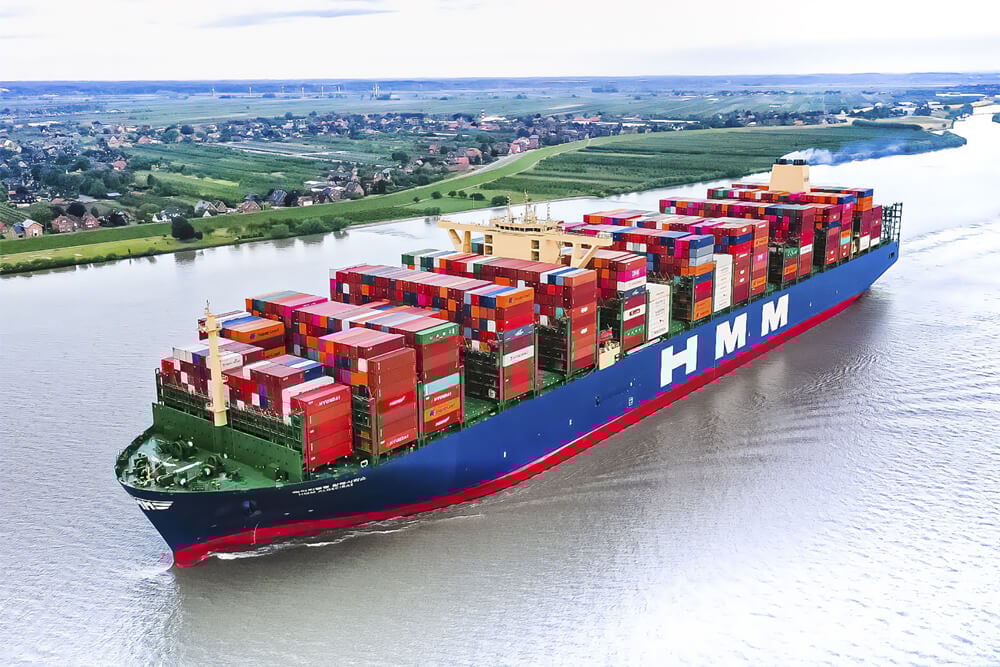
Former retailers Bed, Bath & Beyond filed its latest complaint at the FMC against HMM for failing to meet service contracts (HMM file photo)

Published Jan 5, 2026 5:41 PM by The Maritime Executive


The estate of former retailer Bed, Bath & Beyond continues its efforts to blame the shipping industry and the problems moving containers during and after the COVID pandemic as a contributing factor in its collapse. Last week, it filed a new complaint with the Federal Maritime Commission, its sixth action, and this time it is targeting HMM.

The company, today known as DK Butterfly-1, continues to seek reparations for injuries it says it suffered in the form of higher costs and the inability to get merchandise transported. The company went into a tailspin and ultimately filed for bankruptcy in April 2023. It has spent the past two and a half years complaining about the shipping industry and the large carriers, alleging there was a practice of “systematically failing to meet service commitments,” and taking advantage of the shortage of space and price inflation by “unfairly exploiting customers.”

The complaint filed against HMM on December 30, 2025, follows a similar pattern. The company filed its first complaints in 2023 against Orient Overseas Line and MSC Mediterranean Shipping Company. Since then, it has expanded its efforts by filing complaints against Evergreen, BAL Container Line, and CMA CGM. It is the largest of the complainers, but the FMC has reported it was flooded with smaller complaints from many shippers who also alleged the carriers were failing to meet their contractual obligations.

Bed, Bath & Beyond highlights that it was a new customer to HMM and that it repeatedly advised the company of the problems it was having gaining space for its containers. In July 2020, it sent an email pleading with HMM, saying “We can’t afford any booking confirmation delays ever, but esp at this critical time. We desperately need space from all of our carriers right now….” 

The company reports it had a contract for 2020-2021 for 1,000 40-foot containers at an average of 100 per month. In 2021-2022, it increased the commitment to 2,000 FEUs or approximately 166 per month. The complaint alleges a shortfall of more than 62 containers in 2020-2021 and 531 containers in 2021-2022. 

The complaint alleges the shortfall and a practice of price coercing to pay extracontractual prices, and surcharges cost the company more than $440,000 under the 2020-2021 contract and more than $8.9 million for the 2021-2022 period.

They are also seeking relief for a substantial majority of the demurrage and detention charges assessed by HMM. They cite more than $4 million in demurrage charges and a further $680,000 in detention charges between September 2021 and January 2023.  They allege the costs were incurred, although circumstances outside its control made it impossible for the company to pick up containers or return empties promptly.

The carriers have spent years fighting the complaints of the shippers, saying the industry was overwhelmed by demand. They assert they were trying to work with all shippers to help manage the situation, and like the customers, they were left powerless as ports became backlogged and congestion built around the world. 


Turkish-Owned Freighter Runs Aground Near Kerch Strait

Happy Aras aground
Courtesy Turkish Ministry of Maritime Affairs

Published Jan 5, 2026 11:26 PM by The Maritime Executive


A Turkish-owned freighter has gone aground in the Black Sea just off Novorossiysk, according to Turkey's Directorate of Maritime Affairs. 

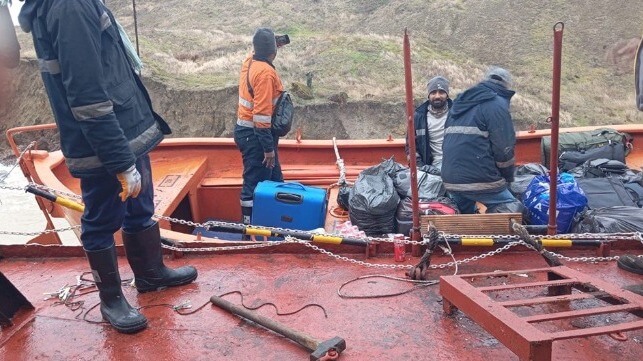
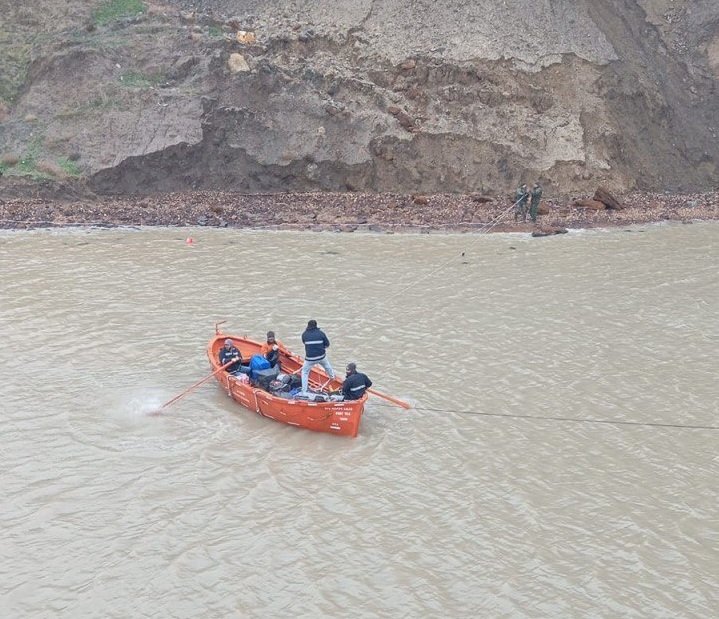
On Tuesday morning, the ministry said that the freighter Happy Aras had drifted south of he Kerch Strait and had gone aground. The vessel was taking on water, and all 14 crewmembers - including three Turkish nationals - were evacuated safely. Turkey's Maritime Rescue Center provided coordination for the response, the ministry said. 

No injuries have been reported, and the vessel's status is being monitored. 

Courtesy Ministry of Maritime Affairs

Happy Aras is a Vanuatu-flagged coastal freighter built in 1990. She has an extensive history of port state control deficiencies and detentions, with multiple issues identified in every PSC inspection since 2018. 

The vessel's AIS signal has appeared sporadically on commercial tracking since December 30, when the vessel departed Varna for Novorossisysk. The most recently-received transmission was picked up by MarineTraffic four days ago, and the vessel was moving at three knots and broadcasting "not under command." 

Along with its announcement, the ministry released the position for the Happy Aras' grounding site (45 06.65 N 036 44.73 E), just off a headland near the Taman oil export terminal. The terminal was hit by back-to-back Ukrainian strikes in December.


Rheinmetall, MBDA to Build Laser Weapon for Germany's Navy

MBDA
Courtesy MBDA

Published Jan 6, 2026 6:09 PM by The Maritime Executive


Facing increasing threats from unmanned systems and an ongoing "hybrid warfare" security environment in Europe, Germany's navy is joining the rush to develop a laser weapons system for close-in defensive use. A newly-signed agreement between defense agency MBDA and German defense conglomerate Rheinmetall is setting up a new joint venture company for laser weaponry with the objective of producing an operational, uniquely German system. 

"This step demonstrates the potential of determined industrial and technological cooperation in Germany in order to produce cutting-edge technology," said Roman Köhne, Head of Rheinmetall’s Weapons and Munitions division. "From the beginning, nationalizing the technology was the main object. One of the goals is to maintain, create and expand jobs in Germany in the long term, as well as ensuring national sovereignty and security of supply in times of crisis."

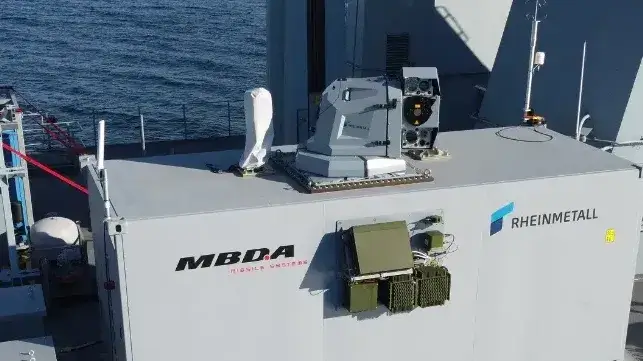
The agreement draws on a partnership that has been running since 2019. The MBDA-Rheinmetall engineering team built and tested a demonstrator unit, which was installed aboard the frigate Sachsen and trialed for about one year of service. The system worked in an operational setting and practical applications, "precisely, quickly and with minimal collateral damage," Rheinmetall said in a statement. Its naval laser is capable of tracking a target measuring the size of a small coin, without slipping off the focus area and striking something behind it - a higher safety standard than that applied to Phalanx and other CIWS gun systems, which are inherently dangerous to objects behind the target. (In a live-fire exercise in the Phalanx system's early years, excess rounds killed an officer when a gun system engaged a target and overshot, hitting the bridge of amphib USS Iwo Jima.)

The demonstrator was removed and taken ashore for more testing, Rheinmetall said. It has since "been taken back into operation" for further land-based application tests. The company has previously said that a production version could be fielded as early as 2029. 

Potentially threatening drone sightings near airports and military bases have become commonplace in Europe over the past two years, paralleling the timeline on which the EU has ramped up its defense commitments to Ukraine. The "hybrid warfare" drone threat comes with plausible deniability, but it is widely attributed to Russia. 

Rheinmetall has itself become a target. In 2024, U.S. intelligence uncovered a Russian plot to kill CEO Armin Papperger, and officials tipped off German security services in time to thwart it. Rheinmetall is a leading supplier of artillery, air defense and fighting vehicle systems to Ukraine, where its equipment is used against Russian forces. 


Chinese Container Ship Gets Mobile Launch Track for Drone Fighters

Mobile launch track for fighter drones aboard Zhong Da 79 (Chinese social media)

Published Jan 5, 2026 10:08 PM by The Maritime Executive


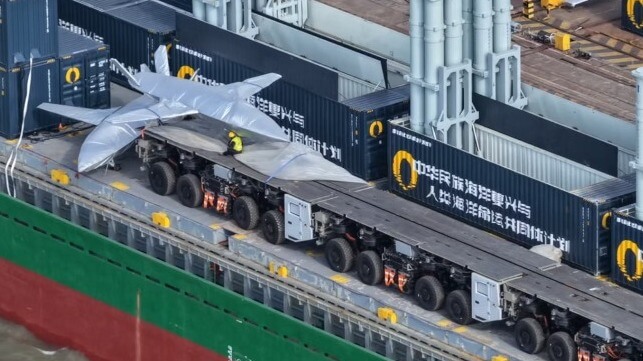
China's effort to adapt merchant ships into naval assets gained attention last month when a Chinese container feeder, the otherwise-unassuming Zhong Da 79, moored in downtown Shanghai with 60 missile launch tubes on deck. The quad-pack containerized launchers suggested a new ability to turn a normal boxship into an arsenal ship in short order, creating one more hull that could support air defense or surface warfare missions (within limitations). But Chinese defense engineers had more in store: Last week, social media images revealed that the vessel has now swapped out most of its containerized vertical launch cells for a very different equipment set - a truck-mounted catapult for launching combat drones.  

Chinese fighter drones have been seen before. The PLA's aerospace companies have developed a proliferating array of unmanned fighter aircraft, some specifically built for naval aviation. They are integrated into the PLA Navy's planning, starting with its latest vessel designs.

The truck-mounted mobile launch system seen aboard Zhong Da 79 is new, however. It first appeared alongside the pier at the same terminal in Shanghai in the last few days of December. The system is a back-to-back "train" of conjoined high mobility truck units, each with a top deck and a section of electromagnetic launch rail. 

In photos that surfaced on the Chinese internet last week, it appears that within a matter of days, most of the containerized VLS cells were lifted off the Zhong Da 79's deck to make room. The radar systems installed atop containers near the deckhouse remained in place, as well as the close-in weapons system towards the bow. In place of the missing missile tubes, the truck-mounted launch rail system was moved from the dock onto the ship, with a single drone fighter mounted atop the rail. 

This launch platform is quite short compared with a carrier's deck, measuring just 120-150 feet in length. Its dimensions match Zhong Da 79's limited deck space; a larger ship would have room for a larger number of modular launch trucks, and perhaps a fuller implementation of the concept. Even so, the display aboard the small container feeder in Shanghai provided ample publicity - as first noted by The War Zone.


Autonomous Vessel Company Buys Metal Shark

Magnet defense
Press handout courtesy Magnet Defense

Published Jan 6, 2026 4:06 PM by The Maritime Executive


The Miami-based autonomy startup Magnet Defense has acquired longtime aluminum-hull patrol boat builder Metal Shark, maker of a wide range of high-speed boat classes for domestic and overseas government customers. In a statement, Magnet said that it intends to use Metal Shark's advanced fabrication capabilities to create "a leading supplier of AI-enabled unmanned surface vessels." 

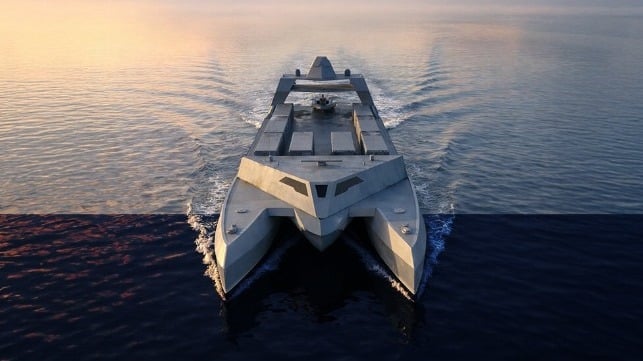
The target customer, according to Magnet Defense, is the U.S. Navy and its new "golden fleet" project. An accompanying illustration released by the firm shows a design for a catamaran- or trimaran vessel with an expanded deck area, not unlike an Austal EPF in hull form, size and material, but with an OSV's aft working deck instead of an enclosed cargo space. 

A separate design presented in December - dubbed the M48 - shows a more conventional monohull layout. Magnet said at the time that the M48 had spent more than a year at sea and completed 32,000 nautical miles of transit in conditions up to Sea State 9. 

Both designs are laid out for containerized, flexible payloads, the preferred format for the Navy's Medium Autonomous Surface Combatant (MASC) program. 

Magnet said that by acquiring a mature and well-equipped shipbuilder, it will be able to move quickly from prototype development to production of autonomous platforms. Metal Shark has been building defense and law enforcement boats for 20 years, including about 600 units for the Coast Guard and 500 for the Navy. 

The company's strategy aligns with its competitors in a hotly-contested new market. Anduril Industries has invested millions to acquire and revamp a disused shipyard in Seattle, where it will build and test prototypes. Saronic recently bought the Gulf Craft shipyard in Franklin, Louisiana and is investing $300 million in upgrading its facilities for production. 

Other technologists are contracting with existing shipyards to get construction done, without taking on the business of owning and running their own vertically-integrated yard. Boston-based Blue Water Autonomy has signed a production agreement with Conrad Shipyard, a longtime workboat and dredger builder in Conrad City, Louisiana, for a "fleet-scale" line of unmanned vessels. Greenroom Robotics, an Australian autonomy firm, is taking a fully vessel-agnostic approach to competing in the U.S. market, supplying an AI platform for a diverse array of ship designs, naval architects and shipbuilders. 


World’s First Large LCO2/Multi-Gas Carrier Delivered to Capital

multi-gas/LCO2 carrier
Active is the first large LCO2/multi-gas carrier and will operate in the charter market (Capital Clean Energy Carriers)

Published Jan 6, 2026 5:37 PM by The Maritime Executive


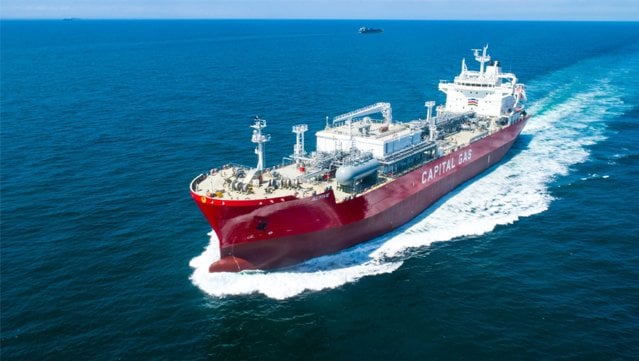
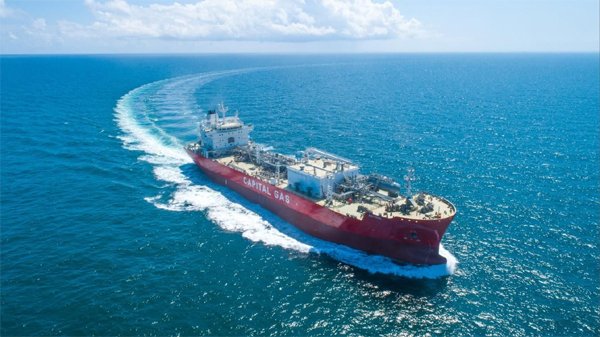
The first large capacity vessel designed to support the efforts for the capture, transport, and storage or reuse of CO2 has been completed, marking a new segment for shipping. The vessel, which has a capacity of 22,000 cubic meters, is designed for charter operations and can move seamlessly between LCO2 transport and gas cargos, including LPG, ammonia, and selected petrochemicals.

Greece’s Capital Maritime Group launched the new operation known as Capital Clean Energy Carriers to develop the emerging market. It initially placed an order for two vessels in July 2023 with South Korea’s Hyundai Mipo Dockyard and later expanded it to four vessels. The ships were designed with an approximate length of 525 feet and a unique cargo system. Capital is saying the vessels will “stand out for their versatility and optionality as they adapt to shifting market dynamics.”


They use a semi-refrigerated gas carrier system. The first ship, named Active (27,926 dwt), was delivered on January 6, and it will be immediately deployed under a six-month charter transporting LPG for an energy trading company. The charter has an option to extend the contract for an additional six months. Active is registered in the Marshall Islands.

Unlike the first LCO2 carriers, which were built tied to the specific Northern Lights project, these ships are owned by a company well established as a tanker operator. In addition to cargo versatility, they can be shifted to support different projects and cargo uses. They are also much larger than the 10,170 dwt Northern Pioneer and her sisters operating to transport LCO2 to the storage project in Norway.


Active completed sea trials in South Korea and now enters the charter market (Capital Clean Energy Carriers)


Capital highlights the emerging market opportunities tied to Carbon Capture, Utilization, and Storage. They note that the current carbon capture capacity is around 50 million tonnes per year. They cite data from the International Energy Agency that says capture capacity could reach approximately 430 million tonnes per year by 2030. At the same time, storage capacity, they note could reach approximately 670 million tonnes per year.

As a first mover in this new segment, Capital Clean Energy Carriers is saying the vessels demonstrate its commitment to fleet diversification. The company’s fleet includes 12 vessels to transport LNG. It has nine additional LNG carriers, six dual-fuel medium gas carriers, and three handy LCO2/multi-gas carriers on order to be delivered between the second quarter of 2026 and the first quarter of 2029.


Japan Will Build World’s Largest Liquefied Hydrogen Carrier

hydrogen carrier
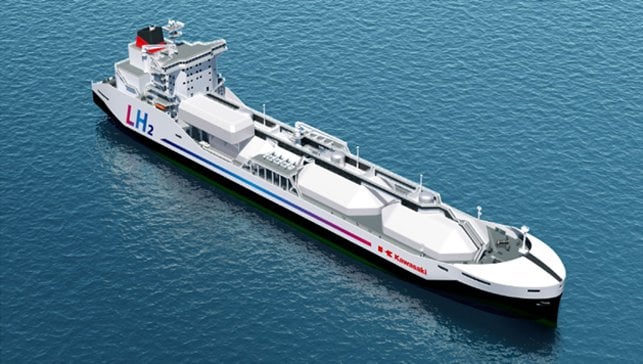
Japan will build the world's largest liquified hydrogen carrier to lay the foundation for the future supply chain (Kawasaki Heavy Industries)

Published Jan 6, 2026 6:18 PM by The Maritime Executive


A new project supported by the Japanese government is designed to provide the foundation for the future hydrogen supply chain. Four years after Japan demonstrated the world’s first liquified hydrogen carrier, the new project seeks to construct the next vessel on a commercial scale.

The Green Innovation Fund Project is supported by Japan’s New Energy and Industrial Technology Development Organization (NEDO). The project has a budget of approximately $2 billion and is designed to demonstrate the entire supply chain for liquified hydrogen.

Japan Suiso Energy (JSE), which was established in 2021 to develop the hydrogen supply chain, will lead the project, and Kawasaki Heavy Industries will build the world’s largest liquefied hydrogen carrier with a capacity of 40,000 cubic meters at its Sakaide Works. It will be approximately 250 meters (820 feet) in length and expected to have a commercial speed of 18 knots. They plan to conduct the first demonstration of loading and unloading and voyages at sea by 2030.

The vessel will have pioneering technology, including a high-performance insulation system to reduce the generation of boil-off gas (BOG) from the cryogenic storage. A double-wall vacuum jacketed piping system will keep the material at an extremely low temperature for efficient and safe transfer between the onshore facility and the liquefied hydrogen tanks on the vessel.

The shape of the hull and the draft have been especially designed considering the low density of liquified hydrogen. As a result, the vessel will require less power and achieve higher propulsion efficiency. It will use a hydrogen gas supply system with a compressor and a heat exchanger that will enable boil-off gas generated from the liquefied hydrogen cargo tanks to be used as a propellant.

The project is also building a liquified hydrogen terminal in Ogishima, Kawasaki City. It will be the world's first commercial-scale facility equipped with one of the world's largest liquefied hydrogen storage tanks (storage capacity of 50,000 cubic meters), marine cargo handling equipment (including both shipping and receiving functions), hydrogen liquefaction equipment, hydrogen gas transmission equipment, and liquefied hydrogen tanker truck loading equipment. JSE will be the project owner, and a joint venture led by Kawasaki Heavy Industries will be the main contractor responsible for the design and construction of the facilities. Groundbreaking for the facility was conducted in November 2025.

Kawasaki Heavy Industries built in 2021 the first liquified hydrogen carrier, Suiso Frontier, for the project. It had a capacity of 1,250 cubic meters and was used for a demonstration voyage that loaded hydrogen in Australia and transported it to Japan.

Japan looks to develop a new renewable energy import business as it works to transition from coal-fired energy plants. 


Along the U.S. Gulf Coast, Dive Contractors Predict a Busy Year

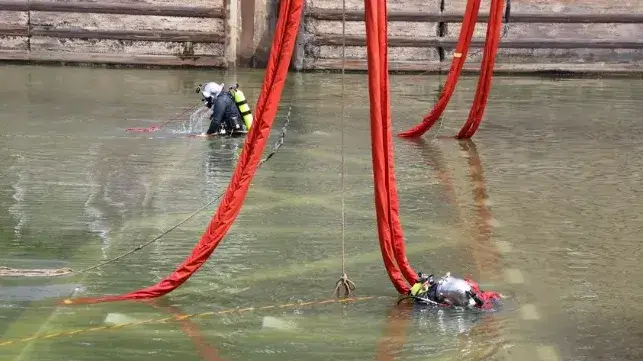
Two commercial divers place rigging during an Army Corps of Engineers construction project (USACE file image)
Two commercial divers place crane rigging during an Army Corps of Engineers construction project (USACE file image)

Published Jan 6, 2026 8:58 PM by Pat Zeitler


All along the rebranded Gulf of America, U.S. waterfront infrastructure is getting attention after decades of deferred maintenance, and the businesses of marine salvage and ship’s husbandry are on the uptick.

Industry leaders like Brady Teasely, the HSE Manager for Leviathan Offshore LLC, are looking forward to an upcycle for diving contractors. His presentation at Underwater Intervention 2025 emphasized projected growth through 2033.

Leviathan Offshore is diving into 2026 expecting a year of full asset and labor utilization. Leviathan had a busy year in 2025 and is fully vested in meeting the demand for turnkey offshore dive services by adding two new dive support vessels to their fleet.  The first is the US-flagged MPSV Kraken. The Kraken is a diesel-electric-powered, DP2  dynamic positioning system with a below-deck Drager 14-person saturation system. The second is a US-flagged 4-point anchor boat, the DSV Proteus. The 200’ long DSV Proteus boasts a 40-ton crane and below deck systems for jetting and hydraulic packages, as well as storage for dive gases.  The DSV Proteus completed sea trials late 2025 and completed her initial projects free of incidents or mechanical delays.  The MPSV Kraken will be gearing up for work as a saturation vessel and is expected to begin her maiden project during the spring of 2026.

Inland dive contractors are also forecasting 2026 to be a robust year. In the past, it was not common to have both the inland and offshore industry segments in full swing at the same time. In past years when the offshore oil and gas segment was booming, the inland segment consisting of waterfront facilities and civil infrastructure would often be in a state of lull and vice versa.  That was then. Looking ahead, the foreseeable new normal is expected to be something different.

Tim Wakefield founded Dead Calm Seas Marine Services LLC in 2019 with an intent and purpose of improving the industry. Since its inception, the Dead Calm Seas team seem to be busy doing just that. In the field, on and below the water, Tim and his team are all about setting the standard for safety, diver pay and quality of work.

“Standards, enforcement, accountability, every diver home” are key goals of diver turned businessman Tim Wakefield.  Dead Calm Seas LLC have achieved this by undergoing a near constant process of auditing from organizations like IMCA, ADCI, IOGP as well as current and potential customers. Wakefield says that “it is important to understand what customers are the right fit for your company, and it is very achievable to work for the majors if you make the sacrifice.”  This model of doing business is working: Dead Calm Seas has grown exponentially every year, and this trend is expected to continue in 2026.

Part of the trick for growth for Dead Calm Seas is to develop and hire divers with a diverse range of talent. Their team’s skillset includes salvage, marine firefighting, rope access and non-destructive testing. A group of Dead Calm Seas Divers are currently outfitting a portable IMCA-compliant saturation system. Working with surface supplied mixed gas and saturation diving is not unheard of for inland divers, but it is rare that an inland dive company or any dive contractor has such well-rounded skillsets. Maybe this too will become the new normal.

Companies like Leviathan Offshore LLC and Dead Calm Seas LLC are prepared for a period of growth during this new uptick, but this does not come without challenges. The biggest and most obvious is the shortage of qualified labor. The skill deficit is industry-wide, and is not limited to the diving crews. Support staff such as project management teams and HSE support are also in a deficit of experienced personnel. “We must find a way to get the next generation ready. This is an issue that needs to be addressed,” Wakefield says.

His sentiments are echoed by many in the industry. The expectation is that 2026 is going to be a busy year, and the art of crew management is going to be put to the test.


Bourbon Emerges From Long Restructuring With New Private-Equity Owners

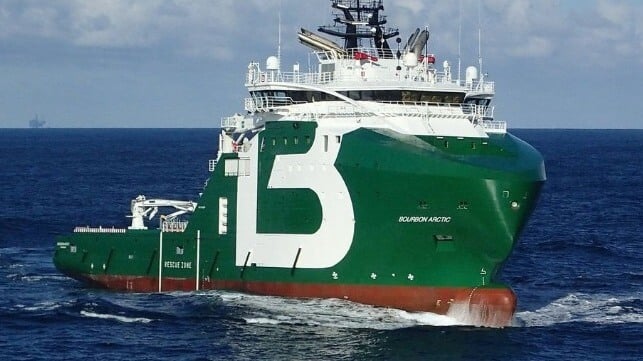
Bourbon Arctic
File image courtesy Bourbon

Published Jan 6, 2026 8:03 PM by The Maritime Executive


French offshore services company Bourbon has completed its financial restructuring program with the support of two new majority shareholders. The outcome is an important step for Bourbon, which filed for financial reorganization in 2019 and went through a second round in 2025. 

It has been a long road for Bourbon, once the market leader in global offshore services. Facing financial pressure during the sector's downturn, the company began deferring repayment of its debts in mid-2018 through an agreement with its creditors. An extension followed in January 2019, then a bankruptcy reorganization filing six months later. In late 2019, the Commercial Court of Marseilles approved its sale to a consortium of its creditors, led by French bank Société Générale. Bourbon Maritime chairman Gaël Bodénès was named CEO of the newly-restructured firm. The plan called for reducing the size of Bourbon's fleet to align with the state of the market, down from nearly 460 vessels to about 350. 

A second round of court-managed restructuring wrapped up in July 2025, when the Commercial Court of Marseilles approved a debt-reduction plan and the sale of the firm to two private equity companies, David Kempner Capital Management and Fortress Investment

Under the plan, a large share of Bourbon's debt was converted to equity, and its new owners injected more capital to reduce its leverage ratio. The new funding and strengthened balance sheet will give Bourbon an opportunity to reactivate more of its stacked OSVs, extend the life of older vessels and replace hulls in its crewboat fleet. In addition, the company's three-division structure has been compressed into a single brand and entity. Bodénès remains CEO, and former SBM CEO Bruno Chabas has been named chairman. 

"We have restored stability and visibility for a group that is now firmly looking ahead. The arrival of new shareholders combined with a board and a strengthened executive committee, give decisive momentum to our transformation. We are entering a new phase of action," said Bodénès in a statement. 


Connecticut and Rhode Island File Suit in Support of Revolution Wind

offshore wind farm
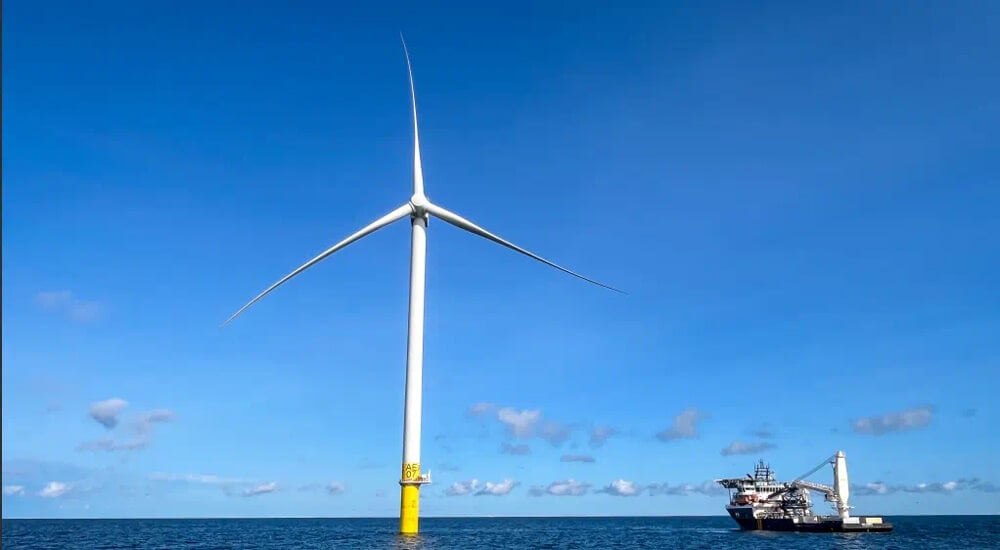
Revolution Wind had installeld 89 percent of its wind turbines before the second stop-work order (Orsted)

Published Jan 6, 2026 4:46 PM by The Maritime Executive


The states of Connecticut and Rhode Island are the latest to join the growing list of court cases filed against the Trump Administration’s suspension of work on five offshore wind farm projects. The states filed suit on Monday in the U.S. District Court for the District of Columbia in support of the Revolution Wind project, which is being developed by Ørsted and a division of BlackRock.

It is the second time the two states have joined the legal battle to oppose the administration's efforts to stop work on the project. Both states filed suit last fall when the Trump administration attempted to stop work on the wind farm, which is contracted to supply power to both states. They supported the project in the first round of legal battles and returned now, highlighting that the federal efforts continue to harm the states by delaying and threatening to undermine the reliability, affordability, and other efforts of the project.

The states filed their own request, outlining the immediate harm and asking the court for a stay pending review and a preliminary injunction against the order by the Department of the Interior to stop work on Revolution Wind. Ørsted is moving forward with a separate legal case also seeking an injunction.

“Donald Trump is escalating his lawless and erratic attack on Connecticut ratepayers and workers,” said the state’s Attorney General William Tong. “Every day this project is stalled costs us hundreds of thousands of dollars in inflated energy bills when families are in dire need of relief. Revolution Wind was vetted and approved, and the Trump Administration has yet to disclose a shred of evidence to counter that thorough and careful process.”

The Department of the Interior asserted in its letters to the wind farm developers that there was new classified information regarding the interference from wind turbine blades and towers. It said the Department of War had completed an additional assessment but provided no details. The court hearing the first case filed by Dominion Energy regarding its Coastal Virginia Offshore Wind project has ordered the Department of the Interior to turn over the data on which the decision was made for the stop-work order. That case is due to have a hearing next week.

Like Coastal Virginia, which was due to begin supplying power shortly, Connecticut and Rhode Island emphasize that their states were also expecting power from Revolution Wind in the coming weeks. They say the project is substantially complete with 89 percent of the turbines (58 of 65) installed. First power was likely as early as this month, with the project scheduled to reach full commercial operation in October 2026.

Connecticut contends in the suit that its ratepayers will bear millions of dollars in costs due to the delay. They said the costs started when the project was stalled in the first case in August, and now for a second time. The state’s Department of Energy and Environmental Protection has estimated that a 90-day delay in the construction and operation of Revolution Wind would cost ratepayers in Connecticut and the broader New England region approximately $350,000 per day, for a total of $31 million in higher electricity costs.

Both states have been active in their opposition to the Trump administration’s assault on the offshore wind industry. They joined with neighboring states in a suit against Donald Trump’s Executive Order to halt leasing and review the industry, which was ultimately blocked by the courts. Connecticut and Rhode Island also sued when the first stop-work order was issued in August against Revolution Wind. The courts issued an injunction to permit work to resume while that case was being heard. As part of yesterday’s filing, the states moved to consolidate their support with Ørsted in the cases challenging the first stop-work order on the project.

Ørsted last week said it would challenge the second order in the courts and asked for an injunction. In addition, Equinor has also filed suit to protect its Empire Wind project, and Dominion Energy was the first to sue for its Coastal Virginia project. Avangrid, which is developing Vineyard Wind 1, and Ørsted, which is also developing Sunrise Wind, have said they were considering their options for those projects.


Singapore Cites Fatigue, Manning and Safety Culture in Fatal 2024 Accident

tanker collision
Hafnia Nile on fire after hitting the anchored tanker Ceres I (Maritime Malaysia photo)

Published Jan 5, 2026 2:43 PM by The Maritime Executive


The Transport Safety Investigation Bureau of Singapore issued its final report on the July 2024 incident in which a Hafnia oil tanker hit an anchored Chinese-owned shadow fleet tanker in the South China Sea. The catastrophic allision of the fully-laden vessel moving at 14 knots with the empty tanker at anchor caused a massive fire that killed one person, injured several crew members of the anchored vessel, and severely damaged the two ships.

The report, which was issued at the end of December 2025, highlights that safety rules and company regulations were not being properly followed. The ships were in a very busy traffic area, and the report finds that both crews could have taken additional actions to prevent the allision. 

The Hafnia Nile, which was registered in Singapore, was underway, having departed Singapore after a call for fueling and a crew change. The report highlights that it had been a busy port call, with the ship also undergoing inspections during its stay. The master of the vessel later told investigators it was customary for the Chief Mate not to take the first watch after departure because of the level of fatigue from the duties during extended port stays.

The Second Mate was leading the watch after the departure. The report, however, finds he had just joined the ship traveling from Colombo, Sri Lanka, with a transit through Kuala Lumpur. He reported having had just two hours of rest in a 38.5-hour period, as well as the strains of joining the ship and involvement in port activities. When he had finally gone for a rest, it was interrupted by an unannounced fire alarm test. The investigation concludes the Second Mate was likely tired from overnight travel, workload from joining the ship, and disrupted rest.

Despite transiting a high-traffic region, the Second Mate had left the bridge to prepare two reports. He was in the chartroom, which was separated by a curtain from the wheelhouse. The report concludes that the paperwork was non-critical and could have been completed the following day.

An Able Seafarer was left alone in the wheelhouse. During the departure, the master had been on the bridge along with a pilot and an ordinary seaman. The seaman was to be the lookout but had left to restring the pilot’s ladder. He had ultimately been relieved, and the master had stayed after the pilot’s departure until he was satisfied the vessel was in the traffic lane. He reviewed safety management and the navigation before leaving the Second Mate, who was the officer of the watch, alone on the bridge with the AB. 

In command of the tanker, the Second Mate had made multiple changes in course and speed to deal with traffic before leaving the bridge at about 0540. He had returned to the bridge to make some further course adjustments. They had first spotted the anchored tanker, Ceres I, at a distance of over 6 miles and assumed there was little danger. The shadow fleet tanker had also identified the Hafnia Nile as approaching. As the distance between the vessels narrowed, another ship underway complicated the passage, but the report concludes that the Hafnia Nile and Ceres I would pass at about 0.7 nautical miles as the Hafnia Nile attempted to thread between the two ships.

The Second Mate had returned to the bridge at 0601 and saw that the Ceres I was very close and switched to manual steering and applied hard right rudder. At 0602, the Hafnia Nile’s bow contacted the Ceres I’s port anchor chain, which became entangled with the Hafnia Nile’s port bilge keel and drew the ships closer. The Ceres I’s bulbous bow breached the Hafnia Nile’s shell plating near the Heavy Fuel Tank and one of the cargo tanks loaded with naphtha, causing the fires on both ships.

The investigation also found that the Hafnia Nile’s S-band radar alarms had been silenced. The X-band radar alarms had been deactivated. It notes that these violations had removed an important safeguard for earlier detection.

The report also cites the crew of the Ceres I for not taking more actions to attempt to contact the Hafnia Nile as it was approaching. They had used sound signals and the Aldis lamp, but received no response from the Hafnia Nile. The report highlights that the Ceres I crew, despite the escalating risk, never tried using VHF to warn the Hafnia Nile.

The report notes that Hafnia has, since the incident, undertaken measurements focused on improved bridge watchkeeping practices and fatigue management after the incident. It says that the company strengthened its bridge team coordination and watchkeeping standards. The company also took steps to reinforce adherence to the bridge manning levels prescribed in its Safety Management System.

The managers of the Ceres I, it reports, updated their management systems for the use of communications tools. They revised instructions about responding to developing or time-critical close-quarter situations.

Singapore notes that the role of the Transport Safety Investigation Bureau is not to assign blame, but to prevent future maritime incidents. It is not their role to assign liability. Singapore's Maritime and Port Authority, however, filed charges related to the fatal 2024 incident. The two individuals, one from India and one from Sri Lanka, who were the navigational officer and lookout aboard the Hafnia Nile, were being charged under the Merchant Shipping Act. The Second Mate was accused of failing to maintain situational awareness and making a full situational appraisal of the risks to navigation. He was also charged with failing to ensure a proper watch was maintained. The Able Seafarer was charged with navigating the vessel on his own without the officer of the watch and failing to alert the officer of the approaching danger. If convicted, they could each face up to two years in jail and a fine of up to approximately $39,000 each.
 

Yemeni Coastguard in Action in the Bab el Mandeb

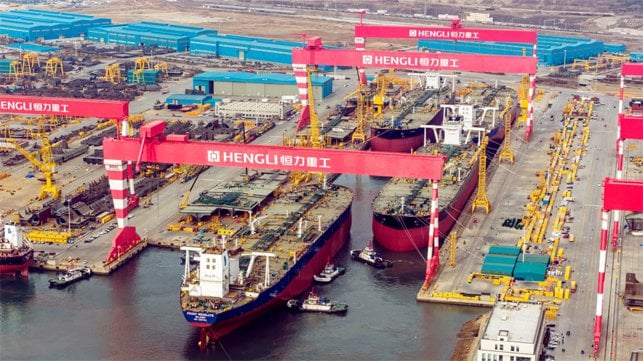
Yemeni Coastguard USN destroyer
Yemeni Coastguard patrol vessel Aden at sea with Arleigh Burke destroyer USS Dewey (DDG-105) (USN photo)

Published Jan 6, 2026 12:11 PM by The Maritime Executive


The Yemeni Coastguard, which is operated by the Internationally Recognized Government (IRG), has made a large drug seizure in the Bab el Mandeb area. In a statement made to aden-tv.com on January 5, 2026, a spokeswoman said that four smugglers had been detained and a quarter of a ton of amphetamines and hashish had been seized.

Drug and arms seizures in the Bab el Mandeb area have recently been made largely by coastal units of the National Resistance Forces (NRF), led by Major General Tarik Saleh, who, it is understood, has previously been loyal to the Southern Transition Council (STC) and sponsored by the United Arab Emirates.


The announcement that the drug seizure was made on this occasion by the Yemeni Coastguard may indicate that the NRF is distancing itself from the STC, and indeed General Tarik’s post on the NRF’s X account made no mention of the seizure, was even-handed in praise for the assistance provided both by the UAE and Saudi Arabia, and emphasized that the focus for the NRF was currently the land battle to recapture Sana’a from the Houthis. This suggests that the NRF is switching its primary allegiance away from the STC towards the IRG while trying to remain on good terms with both. Crediting the Coastguard with the drug seizure is an acknowledgement of the overarching authority of the IRG.


Hamish Falconer and British Ambassador Abda Sharif visit Coastguard patrol vessel Aden and the situation center (CJRC)

The seizure will please the UK and Saudi Arabia, who have been leading a donor group whose task is to revitalize the Yemeni Coastguard. In November, the British Minister responsible for the Middle East, Hamish Falconer, visited the Yemeni Coastguard's facility in Aden and was taken on a tour of the 200 GT patrol vessel Aden (IMO 4698611), built in 2011. British aid has recently helped refurbish the Yemeni Coastguard vessel. A UK official commented at the time that the British aid was not prescriptive, but designed to give the Yemeni Coastguard the time and space to grow organically.