Thursday, April 17, 2025

Syria extends the deadline for a probe into coastal killings of Alawites

BEIRUT (AP) — The sectarian violence was possibly among the bloodiest 72 hours in Syria’s modern history, including the 14 years of civil war from which the country is now emerging.


Sally Abou Aljoud
April 14, 2025

BEIRUT (AP) — Syria’s presidency announced on Friday that it would extend a probe into the killings of Alawite civilians in coastal areas that left hundreds dead after clashes between government forces and armed groups loyal to former President Bashar Assad spiraled into sectarian revenge attacks.

The violence erupted on March 6 after Assad loyalists ambushed patrols of the new government, prompting Islamist-led groups to launch coordinated assaults on Latakia, Baniyas, and other coastal areas.

According to human rights groups, more than 1,000 civilians — mostly Alawites, an Islamic minority to which Assad belongs — were killed in retaliatory attacks, including home raids, executions, and arson, displacing thousands.

The sectarian violence was possibly among the bloodiest 72 hours in Syria’s modern history, including the 14 years of civil war from which the country is now emerging. The violence brought fear of a renewed civil war and threatened to open an endless cycle of vengeance, driving thousands of Alawites to flee their homes, with an estimated 30,000 seeking refuge in northern Lebanon.

On March 9, President Ahmed al-Sharaa, the former leader of an Islamist insurgent group, formed a fact-finding committee and gave it 30 days to report its findings and identify perpetrators. In a decree published late Thursday, Sharaa said the committee had requested more time and was granted a three-month non-renewable extension.

The committee’s spokesperson, Yasser Farhan, said in a statement on Friday that the committee has recorded 41 sites where killings took place, each forming the basis for a separate case and requiring more time to gather evidence. He said some areas remained inaccessible due to time constraints, but that residents had cooperated, despite threats from pro-Assad remnants.

In a report published on April 3, Amnesty International said its probe into the killings concluded that at least 32 of more than 100 people killed in the town of Baniyas were deliberately targeted on sectarian grounds — a potential war crime.

The rights organization welcomed the committee’s formation but stressed it must be independent, properly resourced, and granted full access to burial sites and witnesses to conduct a credible investigation. It also said the committee should be granted “adequate time to complete the investigation.”

Witnesses to the killings identified the attackers as hard-line Sunni Islamists, including Syria-based jihadi foreign fighters and members of former rebel factions that took part in the offensive that overthrew Assad. However, many were also local Sunnis, seeking revenge for past atrocities blamed on Alawites loyal to Assad.

While some Sunnis hold the Alawite community responsible for Assad’s brutal crackdowns, Alawites themselves say they also suffered under his rule.


The Conversation religion coverage receives support through the AP’s collaboration with The Conversation US, with funding from Lilly Endowment Inc. The Conversation is solely responsible for this content.


Historic domes of Hagia Sophia are renovated to protect the landmark from earthquakes
ISTANBUL (AP) — In 2023, a 7.8 magnitude earthquake struck southern Turkey, destroying or damaging hundreds of thousands of buildings and leaving more than 53,000 people dead.


Mehmet Guzel and Robert Badendieck
April 15, 2025

ISTANBUL (AP) — Turkey has begun a new phase in sweeping restorations of the nearly 1,500-year-old Hagia Sophia in Istanbul, focusing on preserving the monument’s historic domes from the threat of earthquakes.

Officials say the project will include reinforcing Hagia Sophia’s main dome and half domes, replacing the worn lead coverings and upgrading the steel framework while worship continues uninterrupted in the mosque.

A newly installed tower crane on the eastern façade is expected to facilitate the efforts by transporting materials, expediting the renovations.

“We have been carrying out intensive restoration efforts on Hagia Sophia and its surrounding structures for three years,” said Dr. Mehmet Selim Okten, a construction engineer, lecturer at Mimar Sinan University and a member of the scientific council overseeing the renovations. “At the end of these three years, we have focused on the seismic safety of Hagia Sophia, the minarets, the main dome and the main arches, especially due to the expected Istanbul earthquake.”

In 2023, a 7.8 magnitude earthquake struck southern Turkey, destroying or damaging hundreds of thousands of buildings and leaving more than 53,000 people dead. While Istanbul was not impacted, the devastation in southern Turkey heightened fears of a similar quake with experts citing the city’s proximity to fault lines.

Okten said a “new phase” of work is about to begin, one that he describes as the most significant intervention in over 150 years and in the totality of the structure’s long history.

“A tower crane will be installed on the eastern facade, and then we will cover the top of this unique structure with a protective frame system,” he said. “That way, we can work more safely and examine the building’s layers academically, including damage it suffered from fires and earthquakes in the 10th and 14th centuries.”

Built by the Byzantine Emperor Justinian in 537, Hagia Sophia was turned into a mosque with the 1453 Ottoman conquest of Istanbul. Mustafa Kemal Ataturk, the founding leader of the Turkish republic, converted it into a museum in 1934.


Although an annex to Hagia Sophia, the sultan’s pavilion, has been open to prayers since the 1990s, religious and nationalist groups in Turkey had long yearned for the nearly 1,500-year-old edifice they regard as the legacy of Ottoman Sultan Mehmet the Conqueror to be reverted into a mosque.

Turkey’s highest administrative court overturned the 1934 decree in 2020, allowing it to reopen as a mosque.

“We have completed our work on the four minarets and the main structure,” Okten said. “But for this unique cultural heritage (of the domes), we plan to use modern, lightweight materials and keep the building open to the public.”

Visitors to the site expressed approval of the plan.

“Hagia Sophia is amazing, it’s one of the world’s most important monuments,” said Cambridge University lecturer Rupert Wegerif. “It seems really important that they are going to strengthen it in case of earthquakes and preserve it.”

Okten said that while it wasn’t clear when the renovations will be finished, the process would be open to the public to be “monitored transparently.”
In win for faith groups, federal judge rules Trump must begin admitting some refugees


(RNS) — ‘We pray the government finally respects the court order as well as human dignity, and admits the thousands of refugees,’ said Mark Hetfield, whose organization, HIAS, was one of the plaintiffs.


Jack Jenkins
April 10, 2025

(RNS) — A federal judge has denied a request by the Trump administration to reconsider a ruling in a lawsuit brought by faith-based refugee resettlement agencies, ordering the government to begin immediately processing and admitting refugees who were conditionally approved before Jan 20.

In his ruling on Wednesday (April 9), U.S. District Judge Jamal Whitehead declared, “the Government must continue processing, admitting, and providing resettlement support to them — and funding (United States Refugee Admissions Program) partners to the extent necessary to do so— consistent with this Court’s previous order.”

Mark Hetfield, head of HIAS, a Jewish organization that works with refugee resettlement, and a plaintiff in the case, celebrated the ruling. “Even after multiple court actions have ordered their admission, the Trump Administration has sadistically forced them to linger in danger, anguish and uncertainty. As we say on Passover, Dayeinu! That’s enough,” Hetfield told RNS by text.

He added, “We pray the government finally respects the court order as well as human dignity, and admits the thousands of refugees.”

The judge’s ruling follows weeks of courtroom clashes between the government and three religious groups — HIAS, Church World Service and Lutheran Community Services Northwest — who are among the 10 organizations that have long partnered with the federal government on refugee resettlement. In all, seven of the organizations are faith-based — although the U.S. Conference of Catholic bishops recently announced it would no longer participate.


Mark Hetfield discusses the U.S. Refugee Admissions Program during a panel at the Religion News Association conference, Thursday, April 3, 2025, in Arlington, Va. (RNS photo/Kit Doyle)

The latest chapter in the case, known as Pacito v. Trump, focuses on a trio of court orders issued over the past two months — two issued by Whitehead and a third originating from the 9th U.S. Circuit Court of Appeals.

The dispute began shortly after Trump took office in January, when he signed an executive order effectively freezing the U.S. refugee program and abruptly halting payments to organizations that assist with refugee resettlement. The change left refugees set to enter the U.S. in limbo, and the sudden lack of funds — including payments for work already performed, according to Church World Service — left the religious groups scrambling to find money to care for refugees who had recently arrived while also instituting mass layoffs.

The faith groups, along with several individual plaintiffs, promptly sued, and they won a victory in late February when Whitehead issued an injunction blocking the administration’s halt to the refugee program. But within a week, lawyers for the plaintiffs suggested the government was being slow to comply, prompting Whitehead to order the administration to produce a “status report” on its efforts to resume the programs. Whitehead also granted the plaintiffs a second preliminary injunction in late March, ordering the government to “reinstate all cooperative agreements” with the resettlement groups that were abruptly terminated in late February.

The government, meanwhile, appealed the initial injunction to the 9th U.S. Circuit Court of Appeals. The court partially denied the government’s motion to stay Whitehead’s ruling, but parties disagree on how to interpret the order: On Wednesday, government’s attorneys argued the 9th Circuit “largely said that the injunction needs to be paused,” whereas lawyers for the faith groups insisted Whitehead’s initial injunction should remain in effect for refugees who were conditionally approved as of Jan. 20 — a group that, lawyers for the faith groups said, likely includes “tens of thousands of people.”

Linda B. Evarts, a lawyer for the faith groups, argued the government’s lawyers “have made clear that they … have not and do not plan to comply with the court’s orders,” and she likened the legal battle to a game of “Whack-a-Mole.”

“It has now been a month and a half since the court issued its first preliminary injunction, and now defendants say that they do not have to comply not only with the first injunction, but also with the second injunction,” Evarts said.


Pastor Jennifer Castle joins others outside the U.S. District Court after a federal judge blocked President Donald Trump’s effort to halt the nation’s refugee admissions system, Feb. 25, 2025, in Seattle. (AP Photo/Ryan Sun)

Lawyers for the faith groups were even more strident in a brief filed shortly before the hearing.

“Defendants now admit that they are not complying and do not intend to comply with either of this Court’s preliminary injunctions,” the brief read. “To defend their open defiance, they splice together fragments of the Ninth Circuit’s stay order to assert an interpretation so tortured as to defy basic logic and erase this Court’s rulings from the books.”

Benjamin Mark Moss, who represented the government on Wednesday, rejected the allegation during the hearing, saying, “The government strongly disagrees with any suggestion that the government has been out of compliance.”

The ruling comes two days after an announcement from the U.S. Conference of Catholic Bishops that it would not seek to renew federal agreements to provide refugee resettlement and children’s services. Leaders at the USCCB, which is also embroiled in a separate legal battle with the government over refugee resettlement, called the decision “heartbreaking.”

“While this marks a painful end to a life-sustaining partnership with our government that has spanned decades across administrations of both political parties, it offers every Catholic an opportunity to search our hearts for new ways to assist,” the USCCB’s president, Archbishop Timothy Broglio, who leads the Archdiocese for the Military Services, said in a statement.

“We simply cannot sustain the work on our own at current levels or in current form.”

The cases have also proved turbulent for the litigators involved. Among the Trump administration lawyers who originally appeared before the court in Pacito v. Trump was August Flentje, acting director of the Office of Immigration Litigation. But Flentje was abruptly put on administrative leave over the past week for “failure to supervise a subordinate” — namely, Erez Reuveni, the office’s acting deputy director, who had also been abruptly put on leave by the Trump administration after he acknowledged in court that a Maryland man was deported to El Salvador in error.

Another government lawyer, Nancy K. Canter, withdrew from the case on Wednesday morning just hours before the hearing. A request for clarification on the reason for her departure was sent to the email associated with Canter; an automated response said she was “out of the office on extended leave” and directed inquiries to Flentje and Reuveni.

The Department of Justice did not respond to questions regarding her withdrawal.
African church leaders defend migrants after Libya bans humanitarian aid agencies


NAIROBI, Kenya (RNS) — Libya's move signals its determination not to become a resettlement zone for migrants fleeing violence in East Africa.


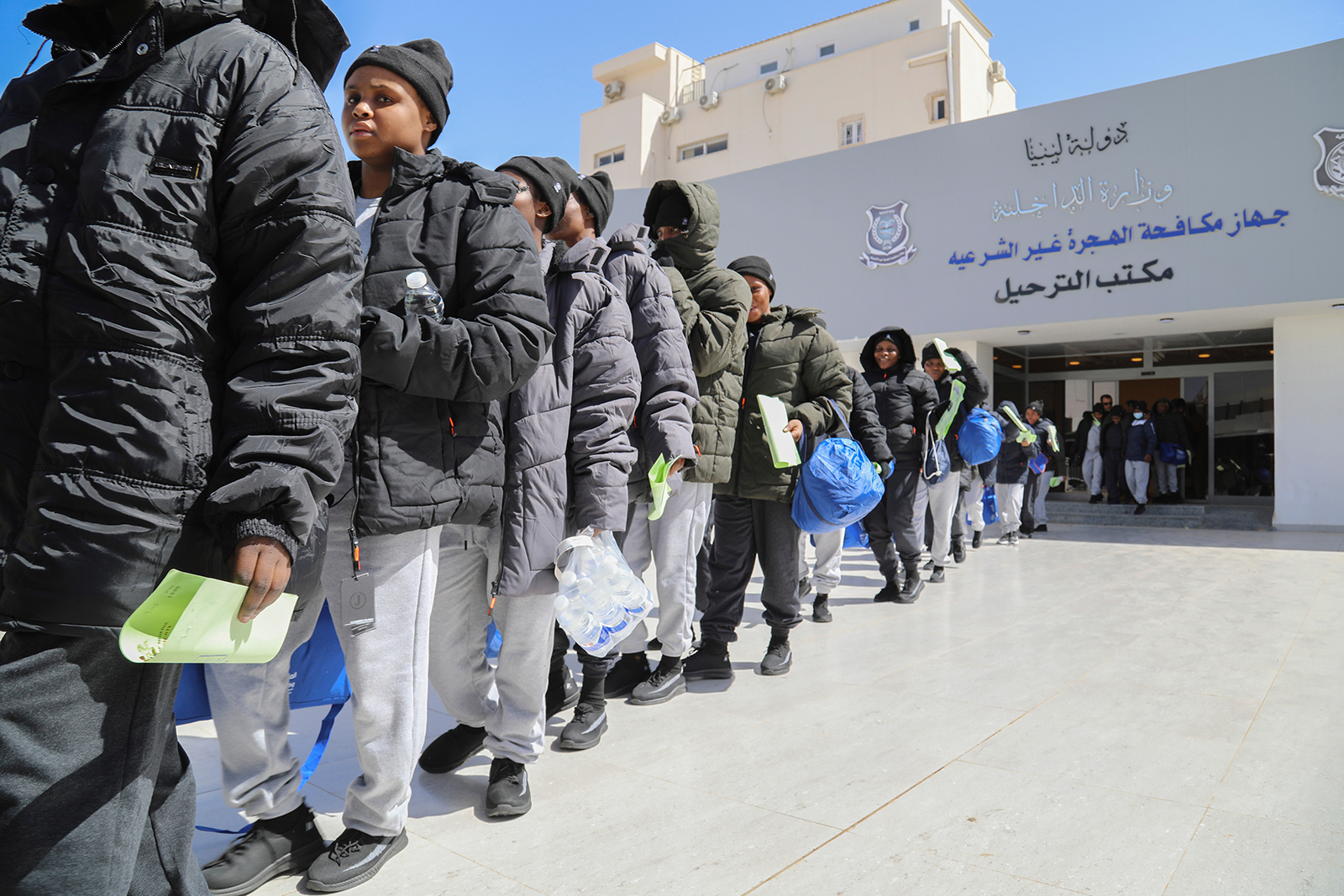
Around 180 Nigerian migrants stand in line before being deported from Tripoli, Libya, Tuesday, March 18, 2025
. (AP Photo/Yousef Murad)

Fredrick Nzwili
April 11, 2025


NAIROBI, Kenya (RNS) — African church leaders are speaking out against Libya’s move to shut down humanitarian organizations providing care to migrants and refugees being held in detention centers in the North African country.

The move is the latest signal of Libya’s determination not to become a resettlement zone for migrants fleeing violence in the Horn of Africa who have been stopped by European Union countries from crossing the Mediterranean.

“This deeply disturbs me. It (lack of care for migrants) leaves me angry,” Catholic Bishop Tesfasellassie Medhin told Religion News Service in a telephone interview from Ethiopia’s Tigray region. “It proves that we are losing communal responsibility.”

Thousands of migrants from Tigray fled into Sudan from 2020 to 2022 as the conflict between the Ethiopian army and a rebel group, the Tigray People’s Liberation Front, intensified. An estimated 600,000 people have been killed in the fighting, and an estimated 3 million others have been displaced, according to aid agencies. Barely a year later, the civil war in Sudan reignited, forcing the Tigray refugees to flee again.
RELATED: After Khartoum recaptured, badly damaged Anglican Cathedral still stands

With nowhere else to go, many landed in Libya, where they were crowded into ad hoc camps run by Libyan militias. The armed groups, some affiliated with the government but others run by smugglers and traffickers, have tortured and sexually assault refugees, according to church and human rights organizations.

On April 2, Libya’s Internal Security Authority banned 10 international non-governmental organizations from aiding migrants, accusing the nonprofits of attempting to resettle migrants of African origin in the mostly Arab country.


Libya, red, in North Africa. (Image courtesy Wikimedia/Creative Commons)

The Norwegian Refugee Council and Doctors Without Borders were among the organizations targeted. Representatives of Doctors Without Borders said that since mid-March, security agents had been summoning NGO officials and staffers at medical clinics working with them for interrogation. The authorities have ordered Doctors Without Borders to stop referring migrants to the clinics.

“Our organization is very concerned about the consequences that these (suspensions) will have on the health of patients and the safety of humanitarian workers,” a member of the NGO told Infomigrants.

Representatives of other aid organizations declined to speak about the suspension.

Libya is a major embarkation point for asylum seekers and migrants aiming to reach Europe, but church leaders say that, increasingly, militias in Tripoli, the capital, and other cities are not targeting those trying to cross to Europe but are instead arresting sub-Saharan migrants who have taken up residence while waiting for the adjudication of asylum claims. After arresting them, church sources say, they are sold as slaves; women and girls are forced into sex work.

More than 60,000 refugees and asylum seekers are in Libya, according to the United Nations High Commission for Refugees, while an estimated 4,700 migrants have been been detained by armed groups in camps, according to the African Union.

The Rev. Mussie Zerai, an Eritrean Catholic priest known as “Dr. Father Moses” for his work with migrants attempting the Mediterranean crossing, reported that in recent weeks, house-to-house raids have been carried out with a “very high dose of violence and racism.”

“We are trying to urge UNHCR and the EU to intervene, but the instigator of these anti-migrant policies underway in Libya is the European Union,” he told RNS. “Countries like Italy finance these militias to do the dirty work to prevent any potential migrants from trying to reach Europe.”

The problem has been exacerbated, Zerai said, by the Trump administration’s withdrawal of funds from U.N. refugee programs. “The UNHCR is very weakened due to a lack of funds after the political choices that Trump is carrying out in the USA, cutting funds to many U.N. agencies. So it is difficult for us to find solutions, too,” said the priest.

RELATED: Sudanese Christians pray in secret, plead for end to war and religious attacks

Zerai urged African churches to exert more pressure on the African Union to do all in its power to protect human rights and rights of migrants and refugees.

“Africa cannot continue to ignore the dignity and fundamental rights of its children that are systematically trampled in countries such as Libya, Tunisia, Algeria and Egypt, all in an anti-African key to please the Europeans,” said the priest.

The same day that Libya announced its ban, it was reported that 500 migrants will be evacuated from the country to Rwanda under an agreement struck in 2019 by the AU, Rwanda and UNHCR to set up an emergency mechanism for evacuating refugees and asylum seekers.
Fearing more faith-based attacks, many Nigerian Christians are avoiding churches this Easter

(RNS) — ‘It is unfortunate that attacks like these are eroding the freedom of worship for Christians,’ said Pastor Moses Mashat of the evangelical Christian church in central Nigeria.

People attend the funeral of a man who was killed during an attack by gunmen in the Zike farming community in north-central Nigeria, April 15, 2025. (AP Photo/Samson Omale)

Tonny Onyulo
April 17, 2025


(RNS) — As Christians across the globe prepare to celebrate Easter, many in Nigeria fear they may be unable to observe the sacred day due to escalating attacks from Islamic militants.

“We could not celebrate Palm Sunday due to the security situation in our area,” Mary Yakubu, a resident of Nigeria’s central Plateau state, where nearly 200 Christians were killed on Christmas Eve in 2023, told RNS by phone. “Once again, we will be unable to prepare and celebrate Easter, as most churches here are closed and people fear gathering due to the ongoing attacks on churches and worshippers.”

Yakubu’s fear is not unique. Communities in Plateau and other regions are facing a new wave of attacks by Islamic militant groups including the Fulani, Boko Haram and Islamic State West Africa Province. The nation of over 236 million people has seen the jihadist violence escalate in the last couple weeks.

In Plateau, over 60 Christians were killed by radicalized Fulani militants in a series of violent attacks in early April. The attacks targeted several villages and have also resulted in the displacement of more than 1,000 Christians and the destruction of 383 homes, said community leader Maren Aradong. State Gov. Caleb Mutfwang referred to the assaults as a genocide.

Open Doors — a group that supports persecuted Christians around the world — estimates that over a hundred million people, or 46.5% of the population in Nigeria, identify as Christian.

According to the Open Doors World Watch List, approximately 3,100 Christians were killed and 2,830 were kidnapped in Nigeria in 2024 — far surpassing any other country last year. Open Doors ranks Nigeria seventh on its list of countries where Christians face the highest levels of persecution.

Fulani extremists in particular are increasingly targeting Christian farmers to take over their land and livestock. In their quest to establish an Islamic caliphate, the extremists also intimidate Christians, demanding they convert to Islam or face death.

Pastor Moses Mashat of the evangelical Christian church in central Nigeria told RNS that Christians in the country are deeply concerned about their safety during Easter celebrations. Abductions and killings by militants are frequent and random, he said.

“It is unfortunate that attacks like these are eroding the freedom of worship for Christians,” he said. “Many people are avoiding church, and they will not celebrate Easter or other events like Christmas because of these threats.”

RELATED: Islamist Nigerian militants press attacks against Christians to foment religious war

Mashat asked for prayers to protect believers during Holy Week, noting it has also become challenging for ministers to establish new churches and share the gospel in certain regions due to fears of attacks.

Militant groups in northern Nigeria and the north-central region, particularly in Plateau, are especially targeting men, Mashat said, and are kidnapping, molesting and raping Christian women. They are also destroying homes, churches and people’s livelihoods. Historically, Christians were mostly at risk in the Muslim-majority northern states, but violent attacks are increasingly occurring in the south, where the majority of Nigeria’s Christians live, he added, calling it an “alarming trend that cannot be ignored any longer.”

“The attacks are on the rise, and the government needs to take action,” he said, also noting the harsh realities Christian converts from Islam face as they often endure rejection from their families and intense pressure to abandon their newfound faith.


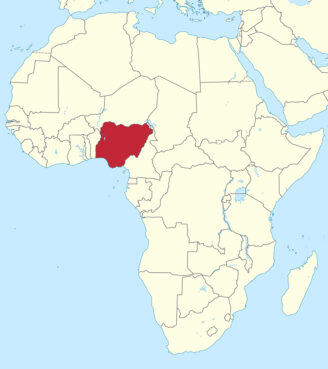
Nigeria, red, located in Africa. Image courtesy of Creative Commons

Jeff King, president of International Christian Concern, an organization advocating for persecuted Christians around the world, also raised concerns about the frequent attacks, particularly in Plateau, describing the situation as “Nigeria’s genocide against its Christian population.” He criticized the Nigerian government for its inaction and urged immediate international intervention.

“The Fulani militias have operated with impunity for almost 20 years, leaving villages in ruins and families shattered,” he said in a statement. “The Nigerian government has never acted in a meaningful way to catch the perpetrators of these attacks or bring them to justice because they choose to ignore them while they plead with the U.S. for more military aid. The global community must hold the Nigerian government accountable to stop the stealth jihad and slow-motion genocide.”

For decades, the Nigerian army has combated Islamic militant groups across the country. However, the government lacks a clear strategy and its security forces are often unable to execute precise strikes against the insurgents. Consequently, government operations frequently result in indiscriminate killings of both insurgents and civilians.


Bishop Michael Gobal Gokum of the Pankshin Diocese in Nigeria’s north-central region described the situation as devastating. He said one local church is currently sheltering over 1,000 residents who were recently attacked by Fulani militants in Plateau.
RELATED: 1 in 7 global Christians faces ‘high-level’ persecution: Open Doors report

During a visit with displaced individuals, Gokum observed that the latest round of attacks this month affected children, the elderly and the sick, leaving many with life-threatening injuries and resulting in significant destruction of property, he said. He urged the government to take action as surviving residents are traumatized by these attacks.

“The people have suffered enough at the hands of terrorists, kidnappers and criminal elements,” Gokum said. “The perpetrators of these heinous acts should face the full extent of the law.”

Yakubu emphasized the Nigerian government cannot resolve the security crisis without pressure from the international community. And as churches currently lack adequate security, people are tending to avoid worshipping in them due to fears of being targeted.

“We have been raising concerns about security for a long time, as our loved ones continue to be killed and our freedom of worship is restricted,” she said.
Opinion

It's Easter in Gaza, where Christians are praying for a miracle


(RNS) — Palestinian Christians have dwindled from 11% to less than 1% of the population in Israel, the West Bank and the Gaza Strip. The war in Gaza has put them on the precipice.


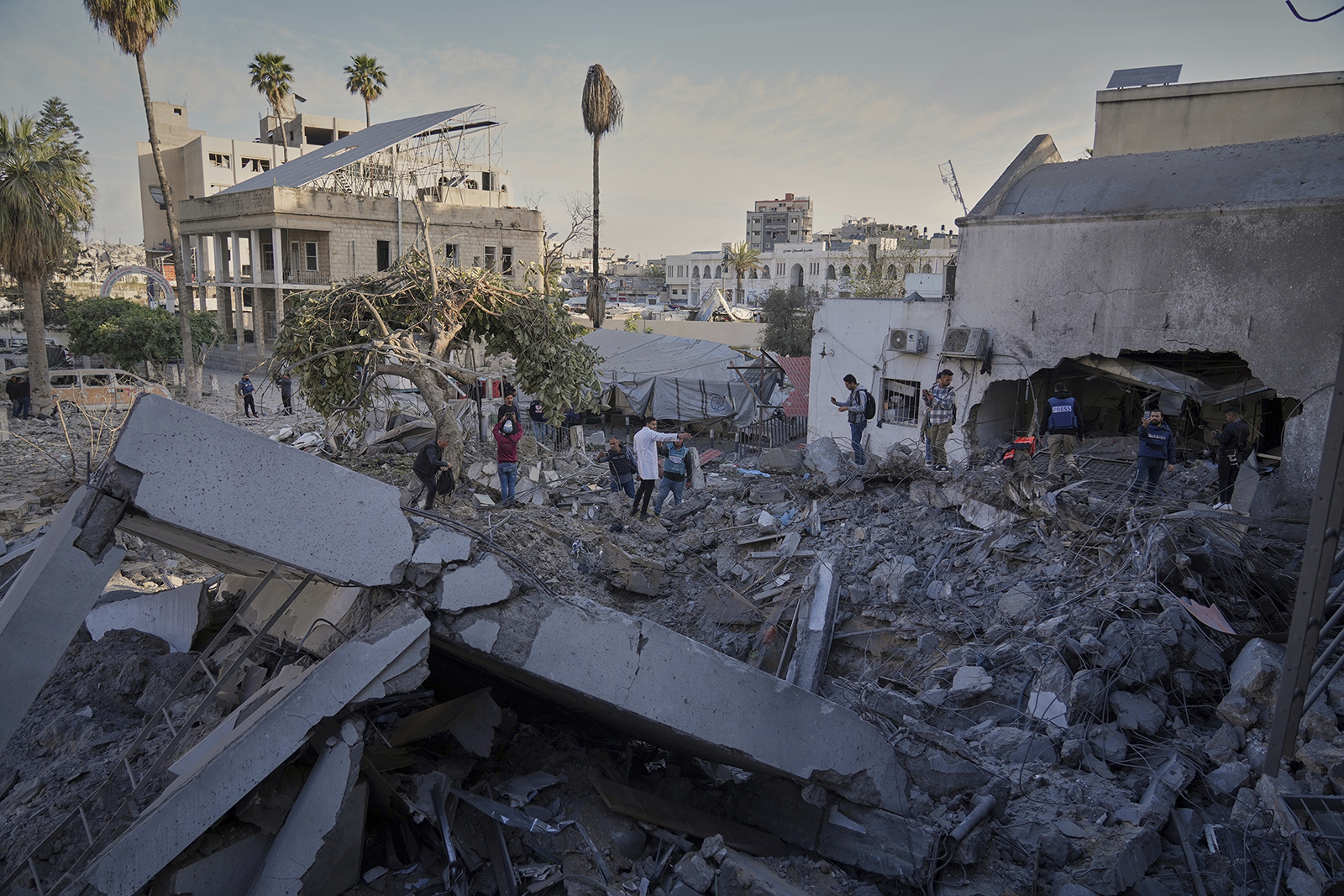
The outpatient and laboratory wards of the Al-Ahli Hospital in Gaza City are seen April 13, 2025, after being hit by an Israeli strike following a warning issued by the army to evacuate patients. (AP Photo/Jehad Alshrafi)


Gregory Khalil
April 15, 2025

(RNS) — On Palm Sunday morning (April 13), an emergency room doctor at Gaza’s last functioning hospital, the Anglican-run Al-Ahli Hospital, received a startling message: Evacuate within 20 minutes or die.

This threat could stand for the story of Palestinian Christians. For decades they have warned of their eventual extinction, but this Easter it feels imminent — not just at the hands of Israeli bombs, but another formidable foe: Christian Zionists in the United States. Even as local Christians swiftly condemned the Palm Sunday attack, most American evangelical Christians, long blinded by their zealous support for Israel to the suffering of the world’s oldest Christian community, stayed silent.

Yet silence may be preferable to championing policies that have not only gutted the Holy Land of Christians, but also brought untold horrors to millions of Palestinians and Israelis. On Ash Wednesday, President Donald Trump issued an ominous threat “to the People of Gaza: A beautiful Future awaits, but not if you hold hostages. If you do, you are DEAD!

Secretary of State Marco Rubio, a black cross smeared across his forehead, quickly echoed him: “If he says he’s going to do something, he’ll do it.” Palestinian Christians watched, horrified. “Not our cross. Not our Christ. The cross should represent Christ’s love to everyone,” replied Bethlehem pastor Munther Isaac, who rose to prominence when his church displayed the baby Jesus wrapped in a Palestinian kaffiyeh in lieu of a traditional Nativity scene in 2023. “Does he not know he’s putting our very presence at risk?” he rhetorically asked.

Palestinian Christians trace their roots directly to Jesus and his disciples. They take pride in passing their faith down from parent to child, under empire after empire, in the land of Jesus’ birth and mission.

But since the rise of Zionism a century ago, Palestinian Christians have dwindled from 11% to less than 1% of the population in Israel, the West Bank and the Gaza Strip. Aside from the “Nakba,” when three-quarters of Palestine’s indigenous Muslim and Christian Palestinians were expelled surrounding Israel’s founding in 1948, the primary drivers are well documented: a massive influx of Jewish immigrants; lower birth rates than their Muslim and Jewish counterparts; and more opportunities to emigrate for those seeking to flee what even Israeli human rights groups call “apartheid.” And that was before the war in Gaza. Over the last 18 months, Israel has killed tens of thousands of Palestinians, including an estimated 3% of Gaza’s remaining Christians, in what courts and experts around the world have deemed an active genocide.

Yet Trump and Rubio seem to care more about power than people. “I did it for the evangelicals,” Trump famously declared in 2017, after moving the United States Embassy from Tel Aviv to Jerusalem. It seems to be paying off. More than 80% of white evangelical Christians — about 20% of the U.S. electorate — have consistently voted for Trump, partly because of his hawkish support for Israel.

One prominent Christian Zionist, former Arkansas Gov. Mike Huckabee, has long supported extremist “pro-Israel” views, declaring at one point, “There’s no such thing as a Palestinian.” Huckabee, recently confirmed as ambassador to Israel, has championed Israel’s illegal settlements and opposed a two-state solution. His rationale? “God gave the land to the Jewish people 3,500 years ago,” erasing centuries of Palestinian Christian and Muslim witness, along with their humanity.

Many Christian Zionists go further, seeing Jews’ presence in Israel as a necessary condition for Jesus’ second coming. Once universally seen as antisemitic (consider the logic here: The Holocaust worked as God’s divine plan to return Jews to Israel), this view is the basis for Christian Zionists’ strong ties with the Israeli right, who have called American evangelicals more important to Israel than American Jews. Indeed, American evangelicals spend more of their lobbying dollars on Israel than on poverty, immigration and abortion.

Some Christians are pushing back. “We participate in the end of the world every time we accept the murder of our Palestinian neighbors,” said Andrew DeCort, a Chicago-based theologian and author. He called Christian Zionism “morally bankrupt” and “anti-Jesus,” ironically noting that when it comes to Palestinian Christians, “Christian Zionists are killing Christianity.”

Independently, support for Israel among younger evangelicals has plummeted from 64% to 33% from 2018 to 2021, with a plurality supporting Israelis and Palestinians equally. New polling shows that the majority of Americans now hold negative views of Israel, including both Republicans and Democrats under 50.

Some pastors believe these numbers point to something deeper. Keri Ladouceur, a former evangelical pastor and executive director of the Post Evangelical Collective, which organizes hundreds of disaffected American pastors who seek to reform their faith, said that young evangelicals embrace a “Kingdom worldview [that] doesn’t preference Christian over Muslim, Jew or Republican or Democrat.”

Daniel Bannoura, a Palestinian Christian who hosts a popular podcast connecting American and Palestinian Christians, worries “it’s too little, too late.” He said he finds it “tragic that Palestinians have to be massacred … for people to start paying attention.” He laments: “Why is it so hard for Christians to be Christ-like when it actually matters? Why do our lives, our dignity and freedom, matter so little to them?”

Steps away from the Anglican-run hospital in Gaza stands the third-oldest living church in the world, St. Porphyrios Greek Orthodox Church, which Israeli missiles once targeted in October 2023, killing 18 people. Hours after Sunday morning’s bombing, children folded palm leaves somberly into crosses. A ritual of defiant hope amid absolute dread. This Easter, they’re commemorating one miracle — the resurrection of Jesus — but remain in urgent need of another.

(Gregory Khalil is president and co-founder of Telos, a nonprofit that promotes peacemaking. He is also an adjunct professor at Columbia University’s Graduate School of Journalism, where he co-teaches the Covering Religion course. The views expressed in this commentary do not necessarily reflect those of RNS.)
Opinion

On Good Friday, Jesus was disappeared to silence his message

(RNS) — The solidarity that Jesus offered the vulnerable on the cross long ago calls Christians to stand up to oppression today.


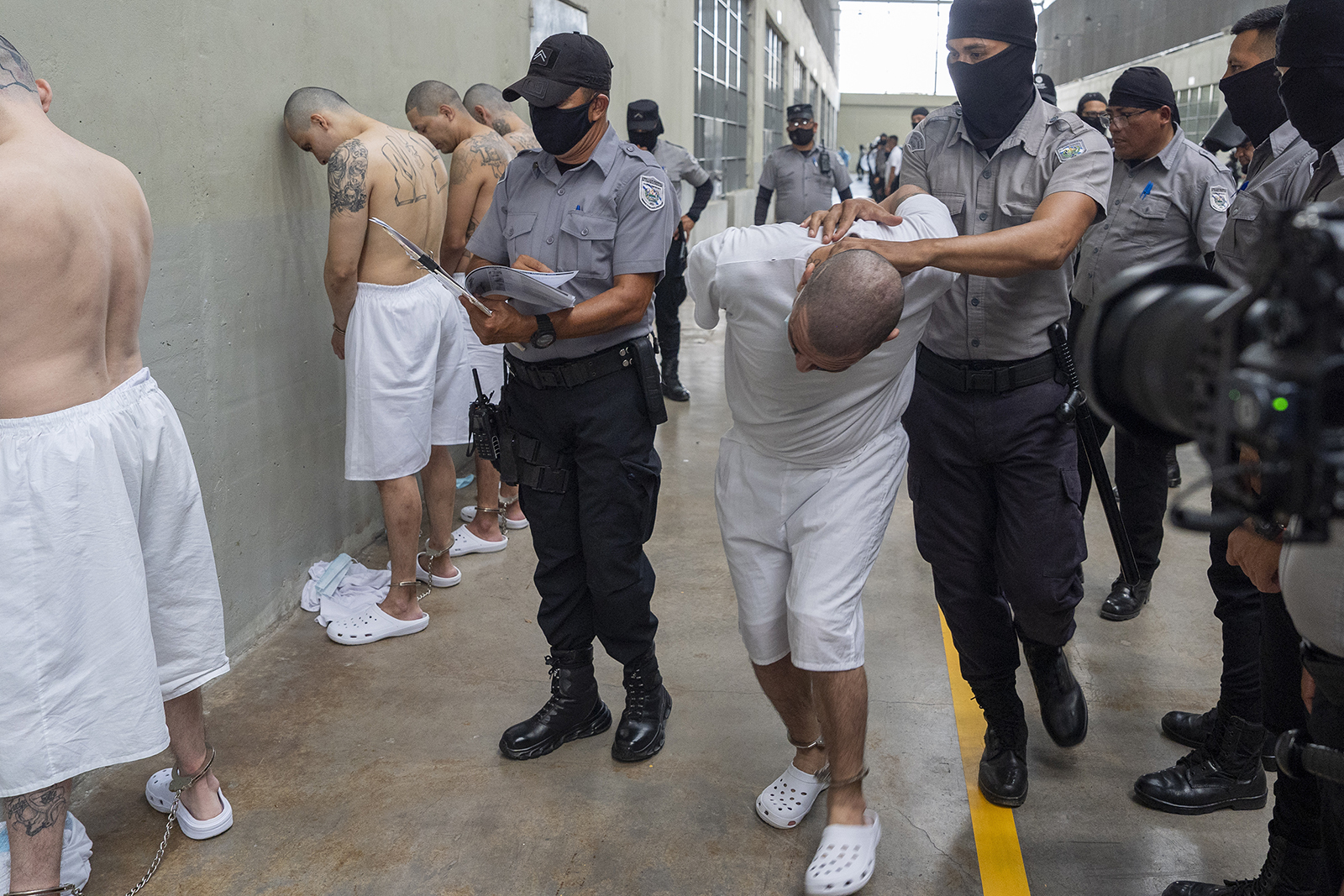
A prisoner is moved at the Terrorist Confinement Center in Tecoluca, El Salvador, March 26, 2025. (AP Photo/Alex Brandon)
Kelly Brown Douglas and Matthew Heyd
April 17, 2025


(RNS) — Kilmar Abrego Garcia sits in a megaprison in El Salvador. Stopped last month while driving home from work by federal agents with his 5-year-old son in the back seat, he was illegally deported due to “administrative error,” according to the Immigration and Customs Enforcement agency. The prison has been described as a labor camp. Garcia is not safe.

He’s one of hundreds of migrants “disappeared” through deportation in the last two months as federal agents invade neighborhoods, lurk outside food pantries and separate parents from young children.

Rome’s imperial agents wanted Jesus to be “disappeared.” The Romans who governed Judea attempted to silence Jesus and frighten his followers into submission. Crucifixion was a public spectacle of oppression. Fear was the point.

This week, Christians around the world spend time in prayer and reflection as we remember Jesus’ death and prepare for Easter celebrations on Sunday morning. Good Friday serves as a solemn day weighted with tradition.

Good Friday also shows us that God stands with us always. Jesus’ crucifixion was a radical act of solidarity. We can’t be disappeared. Oppression isn’t the way of God. Fear doesn’t win.

In this way, Good Friday represents more than a time for reflection; it is a call to action. It’s a call to take seriously the meaning of the cross in a time when people’s lives and livelihoods are at stake. At a time when the love of God must be known through the pursuit of justice.

Jesus’ ministry was defined by his identification with the marginalized — the poor, the sick, the outcasts. He didn’t just speak about caring for the needy; he embodied it through his actions. He healed the sick, fed the hungry, welcomed the excluded and stood with those whom society had cast aside. His was not a passive compassion; it was an active demonstration of love and justice.

Moreover, Jesus confronted the structures that oppressed and dehumanized people. He pronounced woes on the rich and powerful who ignored the cries of the poor and the oppressed. He boldly declared that it would be easier for a camel to pass through the eye of a needle than for a rich person to enter the Kingdom of God. This wasn’t just a spiritual teaching; it was a direct critique of the economic and social systems that perpetuated injustice.

Jesus also spoke fiercely against the leaders of his time. He called Herod, the ruler of Galilee, a “fox.” This wasn’t a personal insult, but a sharp critique of political rulers who prioritized their own power over the well-being of the people they were meant to serve. It was a condemnation of the political culture that upheld self-interest at the expense of justice.

It’s no surprise, then, that Jesus’ ministry aroused animosity among the ruling authorities. His refusal to cooperate with the political and religious systems that trampled the dignity of the poor, the marginalized and the disenfranchised made him a threat to the powers that be. In the end, the political and religious authorities of the first-century Roman world joined forces to eliminate the “Jesus problem,” and they did so by crucifying him.

In this, we see a stark parallel to our own time. The cross is, at its core, a symbol of God’s love — a love that confronts the extremities of human hate with the vast power of divine justice. It’s a reminder that God’s love is not abstract, but incarnate in the fight for justice. The crucifixion of Jesus shows us that when it comes to injustice there is no neutrality. Jesus’ commitment to God’s justice is clear, and it challenges all of us who claim to follow him to stand on the side of the oppressed.

We are living in a moment in which the church is once again being called to take seriously the cross at the center of its faith. Just as Jesus confronted the injustices of his time, so too must the church confront the injustices of ours. This means speaking out against economic inequality, racism, exploitation and any system that benefits the few while leaving the many to suffer. It means rejecting any form of Christianity that lends legitimacy to bigotry, in the guise of white Christian nationalism or of any other harmful ideology. It means standing with those whose humanity is denied, with those being criminalized for who they are. It means speaking truth to power.

Tyranny and totalitarianism thrive when fear silences resistance. Good Friday tells us that standing for justice will not always be popular or safe. Just as Jesus was crucified for challenging the status quo, so too may the church face opposition for challenging today’s powers. The cross reminds us that true discipleship is not about comfort or safety; it’s about faithfully following the path of Jesus, no matter the cost. We can’t be silenced.

The church today is called to stand against the political, cultural and economic forces that threaten not just democracy but our very humanity. As we reflect on the crucifixion of Jesus, we must also reflect on what it means for us today. It’s not enough to merely acknowledge Jesus’ sacrifice; we must take seriously the implications of his life, death and resurrection.

On Good Friday, Christians reflect on the profound weight of what this day represents: a time when we remember the crucifixion of Jesus, the pivotal moment in the Christian faith.

RELATED: For one Iranian family and their church, Trump’s refugee freeze leaves son in exile

On this Good Friday, we remember Kilmar Abrego Garcia and all those under threat in our prayers. Jesus’ death serves as a divine act of redemption for our collective salvation. The solidarity that Jesus offered on the cross long ago calls us to stand up to oppression today. We can’t be disappeared. Fear doesn’t win.

(The Rev. Kelly Brown Douglas, the canon theologian at Washington National Cathedral, is currently a visiting professor at Harvard Divinity School. The Rt. Rev. Matthew Heyd is the 17th bishop of the Episcopal Diocese of New York. The views expressed in this commentary do not necessarily reflect those of RNS.)


SISTERS OF PERPETUAL INDULGENCE


San Francisco’s Hunky Jesus Contest stirs up controversy, community and 'courage'


SAN FRANCISCO (RNS) — Hosted by a global order of drag nuns, the Easter event draws thousands to what some call sacrilege but its participants say is liberating, joyful, even sacred.
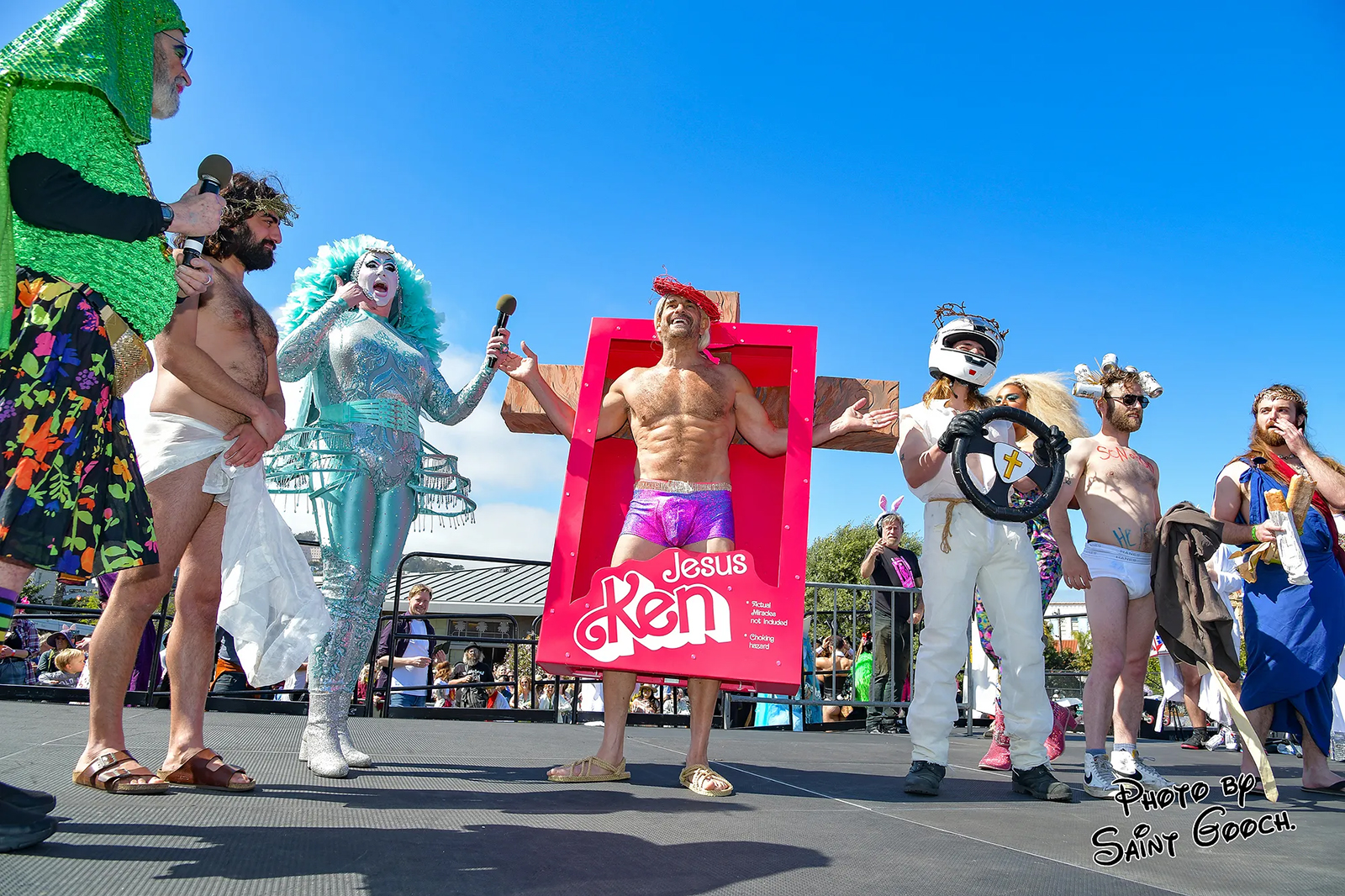

Participants in the 2024 Hunky Jesus competition at Dolores Park in San Francisco, March 31, 2024. (Photo by Garaje Gooch, courtesy of Sisters of Perpetual Indulgence)

Hayden Royster
April 17, 2025


SAN FRANCISCO (RNS) — The most popular Easter service in this capital of alternative living occurs not in church but on the sloping lawns of Dolores Park, where thousands show up in their Sunday best — which at the annual Hunky Jesus Contest can mean steampunk bonnets, a life-size Peep suit or, for those competing, elaborate (and usually scanty) Jesus and Mary costumes.

The event is hosted by the Sisters of Perpetual Indulgence, the global nonprofit group of drag nuns founded in San Francisco on Easter Sunday 46 years ago. Over the years, “Hunky Jesus” has expanded from a small anniversary celebration for the sisters alone to a raucous, all-day affair. Today, the free festival includes a family egg hunt, musical acts and a “canonization” ceremony in which community members are recognized for service.

Today, the Sisters of Perpetual Indulgence have hundreds of members across the U.S. and in 14 countries. Made up of queer and trans individuals, the sisters are not affiliated with the Catholic Church or any official religious organization. But like traditional nuns, they do take lifelong vows of service and see their work as “ministry and outreach to those on the margins.


The day’s biggest draw, of course, is its eponymous contest: A handful of competitors vie for the titles of Hunky Jesus and Foxy Mary. Last year’s winning Jesus, very of-the-moment, was “Ken Jesus,” who blasphemed both the box-office giant “Barbie” and the resurrection by sporting a pink crown of thorns and a blond bowl cut, striking a crucified pose in the doll’s distinctive box.

His packaging even included a disclaimer: “Actual miracles not included.”

From the outset, the sisters and their Easter celebration have drawn calls of sacrilege and bigotry, even by some progressive and gay Christians. In 2023, after the Los Angeles Dodgers announced plans to recognize the sisters for public service, then-U.S. Sen. Marco Rubio decried them as “a group that mocks Christians through diabolical parodies of our faith.”
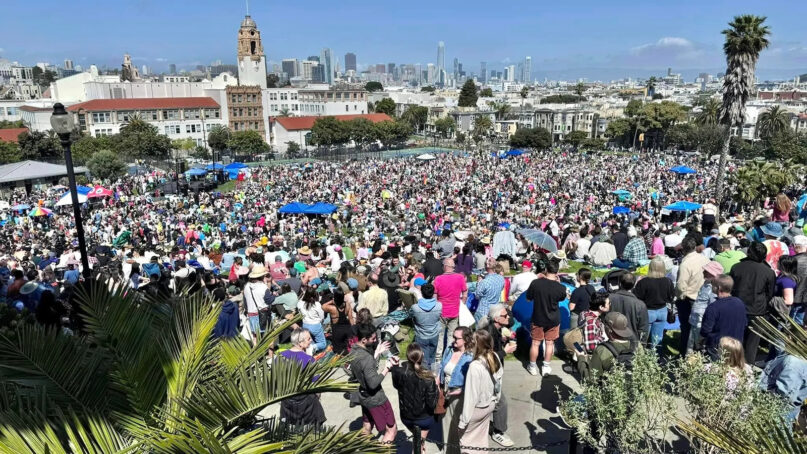

Overview of the 2024 Easter festivities at Dolores Park in San Francisco. (Photo by Ardo Servito, courtesy of Sisters of Perpetual Indulgence)

Nonetheless, in a metro area famous for its gay culture but where the number of nonreligious nearly equals the Christian population, many San Franciscans consider Hunky Jesus their Easter tradition. The event offers a playful space to celebrate both the Christian holiday and the LGBTQIA+ community. Attendees describe the day as liberatory, joyful and even sacred.

“The Easter event is probably the most spiritual, beautiful, uplifting, holy event I can think of,” said Sister Roma, the celebration’s longtime emcee. “It’s just about pure love.”

The sisters were among the first activists to serve gay men affected by AIDS. Over the years, the organization has organized HIV benefits, offered sex education, served the unhoused, advocated for public safety and raised tens of thousands of dollars for school programs and more.

The sisters, according to co-founder Ken Bunch, were born out of boredom. Bunch (later Sister Vish Knew) moved from Iowa to the Castro District in the late 1970s, bringing along some nuns’ habits that he and his drag troupe acquired from a convent in Cedar Rapids.

On a lark, Bunch and two friends decided to don the habits on Easter Sunday 1979, walking through the streets of the city. The public’s reaction was “electric,” Bunch recently told Little Village Magazine.

Exhilarated, the trio wore the outfits again at a gay softball game. By 1980, they had a name for their organization, new nun monikers and a mission statement: to “promulgate universal joy and expiate stigmatic guilt.”

It was that beginning, and not necessarily Easter itself, that the sisters chose to celebrate annually. In time, though, the anniversary and high holy day bled into one another.
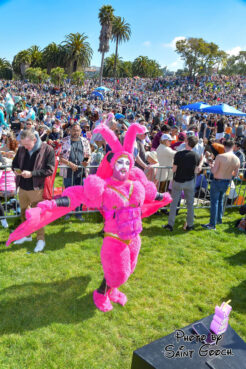
Participants in the 2024 Easter festivities at Dolores Park in San Francisco. (Photo by Garaje Gooch, courtesy of Sisters of Perpetual Indulgence)

On Easter 1995, two sisters started a controversial pub crawl that parodied the Stations of the Cross. Four years later, on its 20th anniversary, the organization obtained a permit to host an Easter block party. Some city residents were incensed. A spokesman for the Roman Catholic archdiocese compared it to “allowing a group of neo-Nazis to close a city street for a celebration on the Jewish feast of Passover.”

Sister Roma was there for the 1999 Easter party — the first time, in her recollection, there was a Hunky Jesus Contest. The event was intended as a thank-you to San Francisco for allowing the sisters to “be of service with them,” she said. Five thousand people showed up. The next year, the sisters moved the celebration to Dolores Park, where it has mostly remained ever since. In 2024, an estimated 10,000 people attended.


Devlin Shand, a photographer, has competed twice for the Hunky Jesus title, coming in second in 2016 with Drop Dead Jesus, performing a “death drop” — a dramatic drag move he has never done before or since. “I actually rolled my ankle on the stage,” he said. “But it was worth it.”

Shand first attended after relocating to San Francisco in 2014. “It was what I moved to San Francisco for: that kind of irreverent, joyful energy that allows you to poke fun at something.” A queer gay man who was raised Catholic, Shand said, “It’s no secret that queer people are oppressed by Christianity. This whole event really is reclamation of the things that have held us down.”
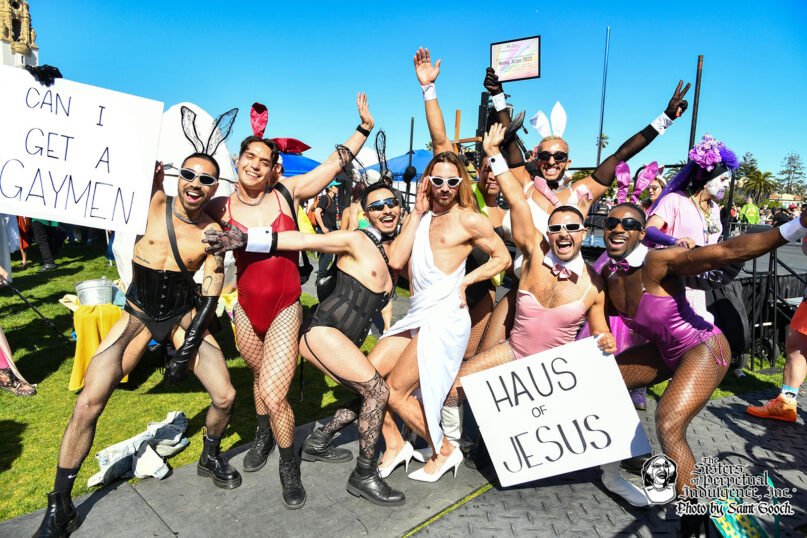


Participants in the 2023 Easter festivities at Dolores Park in San Francisco. (Photo by Garaje Gooch, courtesy of Sisters of Perpetual Indulgence)

While Shand no longer identifies as Christian, some LGBTQ individuals who do have more complicated feelings around the sisters’ Easter party. The conservative Catholic writer Andrew Sullivan, who is gay, infamously railed against the event in 2011, challenging the sisters to “hold a Hunky Mohammad Contest on Ramadan.”

The Rev. Donal Godfrey, an openly gay Jesuit priest and chaplain at the University of San Francisco, has a more measured response. “Clearly it is controversial,” he said by email. As a matter of respect, Godfrey would prefer the event not be “played out in a public park.”

At the same time, he noted, he is far more disturbed by, say, the Trump administration’s recent deportations to El Salvador. “I believe the Christian God must find that much more deeply blasphemous.”

Others see harmony between the holiday and Hunky Jesus. Julia Tremaroli, a data analyst who was raised Catholic, said she has never “felt any sort of disrespect towards Jesus, Mary and the Catholic religion” at the event. Instead, Tremaroli, who identifies as queer-curious, finds the day to be a “Venn diagram” that brings together current and former Christians and the LGBTQ+ community and “finds the beauty at the center.”

“It’s so much more than just a drag show or a costume contest,” she said. “It’s a community event that celebrates what is good and can be good about Easter and Catholicism.”

As irreverent as Hunky Jesus is, Sister Merry Peter explained, the contest embodies a core principle of the sisters: “using the symbology of these traditions to open up a conversation with a society.”
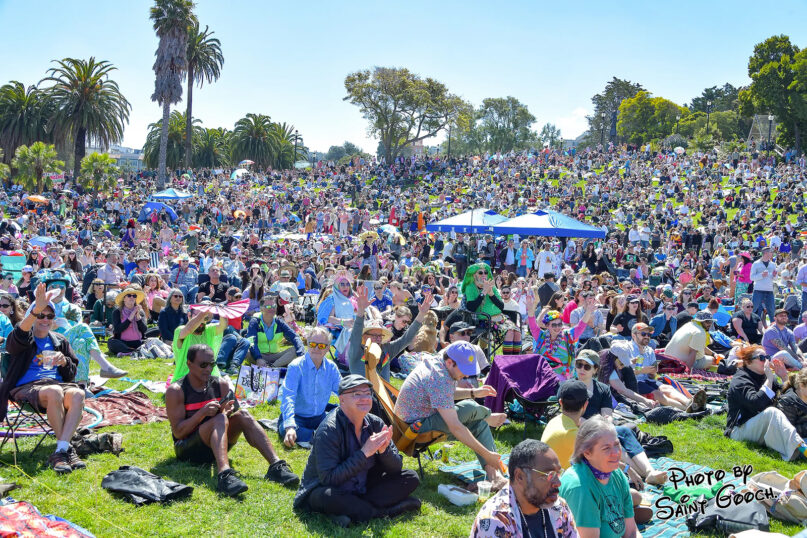

Attendees of the 2024 Easter festivities at Dolores Park in San Francisco. (Photo by Garaje Gooch, courtesy of Sisters of Perpetual Indulgence)

Often, that conversation has a political edge. Last year, state Sen. Scott Wiener stepped up to the mic and called out, “Let’s hear it for triggering the right-wing extremists!” He earned cheers from the crowd — and coverage from Fox News.

This year, the event’s theme is especially pointed: “No Easter without the T.” “We are definitely expressing solidarity with the trans members of our community, who are under really vicious and cynical attack right now,” said Sister Merry Peter.


“It’s always been an act of defiance and solidarity,” said Shand, but in a time when the Trump administration is unwinding the rights of trans people and some emboldened lawmakers are threatening same-sex marriage, Hunky Jesus is taking on an added level of resistance.

“Right now is a moment that requires courage and requires community, which our Easter definitely creates,” Sister Merry Peter said.

Over the years, she has encountered people from all walks of life at the Hunky Jesus Contest — including, she said, traditional Catholic nuns.

That kind of diversity creates courage, Sister Merry Peter argued. “You may be an Irish nun sitting on your picnic blanket, but you might be next to a 300-pound drag queen in a giant pink Easter bonnet.

“That’s going to give you a sense that, maybe, there’s a little more room to express yourself than you grew up with.”









OPINION

Why America's Greek Orthodox leader needs Trump on his side

(RNS) — The current ecumenical patriarch of Constantinople, Bartholomew I, has balanced the growing power of Moscow, but the question of a successor has become pressing.


Ecumenical Patriarch Bartholomew leads the official door-opening ceremony of lower Manhattan’s St. Nicholas Greek Orthodox Church on Nov. 2, 2021. (AP Photo/Ted Shaffrey, File)

Katherine Kelaidis
April 17, 2025


(RNS) — In September Patriarch Bartholomew I, the ecumenical patriarch of Constantinople, will travel from Istanbul to the United States to collect his Templeton Prize. In his 34 years on the throne of St. Andrew, the spiritual leader of a broad segment of the Eastern Orthodox world has made a reputation for himself as a moderate voice in not only the church but the affairs of Eastern Europe, the Balkans and the Middle East — places where the defense of human rights, interreligious dialogue and environmental justice are often helpful.

More notably, the patriarch of Constantinople has long provided the most powerful and consistent balance to Kirill, the patriarch of Moscow, an ally of Russian President Vladimir Putin and a chief propagandist for the regime at home and abroad.

But Bartholonew is 85, and the question of a successor has become pressing. The pool of successors is limited by the terms of the 1923 Treaty of Lausanne, which officially ended World War I. It also established the borders of the modern Turkish state and set the terms by which the Greek Orthodox Patriarchate was allowed to remain in the country, with the stipulation that the patriarch must be a Turkish citizen.

Over the past century, as Christians have fled genocide and persecution in the country, the number of clerics eligible to assume the patriarchal throne has diminished. For those who favor a modern Orthodox Church and a moderating presence in an increasingly authoritarian world, the obvious choice to succeed Bartholomew is Archbishop Elpidophoros of America, the current hierarch of the Greek Orthodox Archdiocese in America.


RELATED: From 65 feet above the altar, Ukrainian master races to finish Texas church’s Easter icon

Born Ioannis Lambriniadis in Istanbul in 1967, Archbishop Elpidophros attended high school and university in Athens, Greece, before doing his postgraduate work in Germany, Lebanon and Thessaloniki, Greece. Since becoming archbishop of America in 2011, he has discomfited conservatives who call his positions on abortion, same-sex couples and women’s roles in the institutional church too liberal, especially for Orthodox Christianity. This criticism that has been seized upon by pro-Russian forces eager to forward their claim to be the guardians of “traditional Orthodoxy.”

He has also drawn fire from Turkish nationalists, who have objected to his calls to end the Turkish occupation of Northern Cyprus, his use of the world “ecumenical” to describe the patriarch of Constantinople (Turkey does not recognize the global role of the patriarch) and his use of the name Constantinople for the city as opposed to its post-1930 name, Istanbul. Recently, Turkish nationalists have called for his Turkish passport to be revoked and for him to banned in the country, in effect calling for him to be barred from becoming the next patriarch of Constantinople.

These calls have come as Turks have protested the arrest by Recep Tayyip Erdogan’s regime of opposition leader and (now former) Istanbul Mayor Ekrem İmamoğlu. These protests, among the most significant resistance Erdogan has faced in more than two decades in power, could help liberal Turks navigate the country toward a more liberal future, one in which Elpidophoros could be an asset, not a source of frustration.

On March 24, the day before Greek Independence Day, Elpidophoros gave remarks at the White House to commemorate the Greek revolution against the Ottoman Empire, as is customary for the Greek archbishop. The archbishop fulsomely praised his host, President Donald Trump, saying he had led “the world in championing freedom and peace between all people,” horrifying many who had looked to Elpidophoros as a source of hope for a progressive future for the Orthodox world.

While this reaction is understandable, realpolitik is, well, real, and in the present situation, giving ground might be the best strategy to win the war. There are few people more prone to flattery than Trump, especially perhaps superfluous flattery. He also is prone to abandoning ideological commitments in the name of personal taste. This is exactly what the archbishop needs to overcome his precarious position with his countrymen.

Trump clearly has an affinity for strongmen in general and Russia in particular. Elpidophoros has proved himself a potentially powerful enemy of both. It would be disastrous for Elpidophoros to follow Bishop Marian Budde’s lead and call attention to himself. It would also be a disaster for the largely wealthy and well-connected Greek American community and for the vulnerable Greek minorities in Turkey and Cyprus, not to mention the Ukrainian Orthodox Christians who have shifted their allegiance from Moscow to Constantinople.

RELATED: Turkey’s president arrested his top opponent. Here’s why it matters to the beleaguered free world.

There are some for whom this explanation will not be enough to excuse Elpidophoros’ remarks, certainly those American progressives for whom symbolic speech acts are more valued than actually advancing the cause. But no leader, whether of church or state, will pass their test. Rather, we should let Elpidophoros’ words and deeds over more than a decade, as well as those of his enemies, speak for themselves. He remains the best hope for a moderate, modern and thoughtful future for Orthodox Christianity.

(Katherine Kelaidis, a research associate at the Institute of Orthodox Christian Studies in Cambridge, England, is the author of “Holy Russia? Holy War?” and the forthcoming “The Fourth Reformation.” The views expressed in this commentary do not necessarily reflect those of RNS.)


Catholic University of America student has visa revoked by Trump administration

WASHINGTON (RNS) — The news adds a Catholic school founded by U.S. bishops to the growing list of colleges where international students have had their visas revoked.


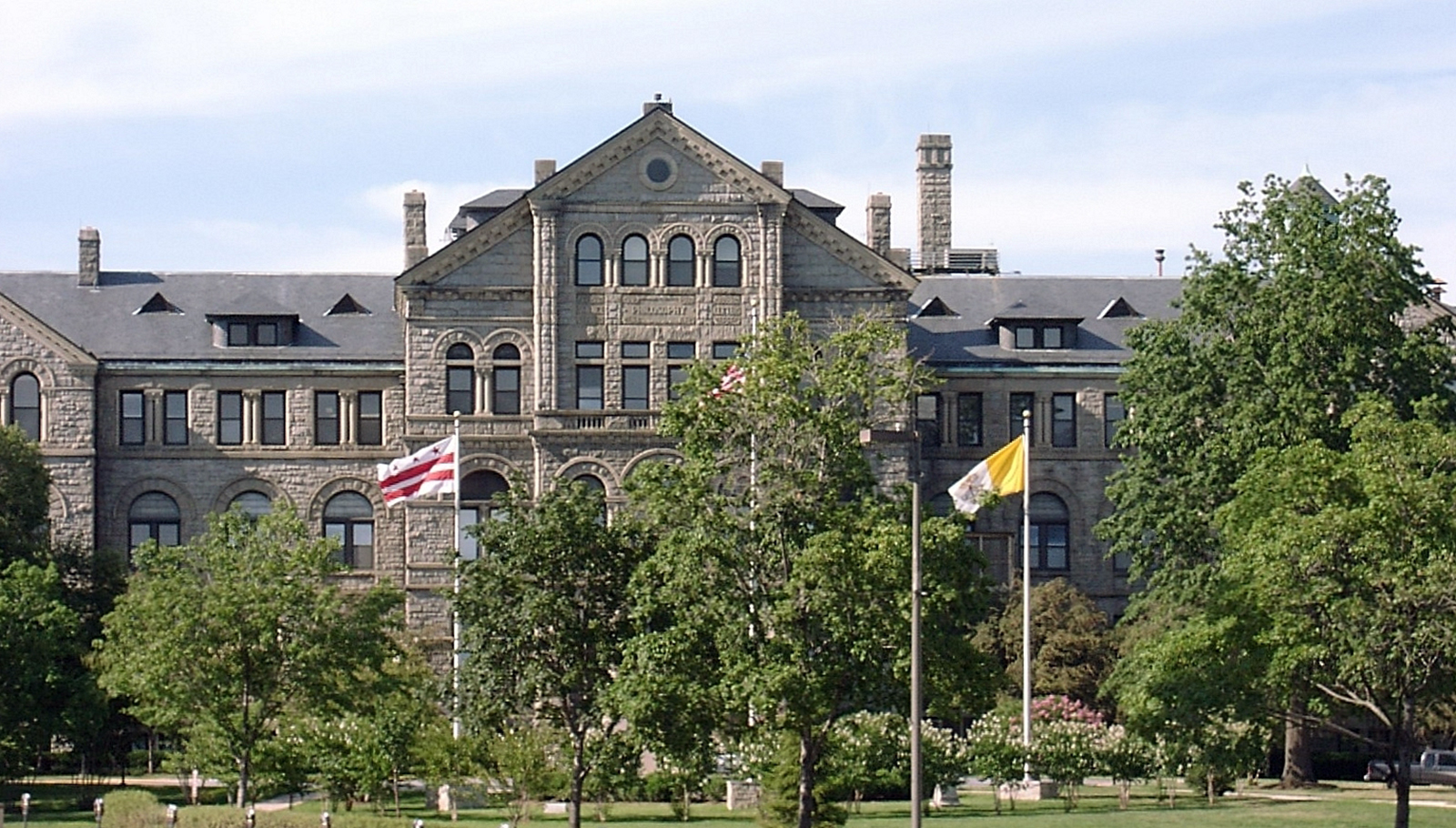
McMahon Hall at Catholic University of America, in Washington, D.C. (Photo by Túrelio/Wikipedia/CC-BY-SA-2.5)

Jack Jenkins
April 16, 2025

WASHINGTON (RNS) — A student at the Catholic University of America in Washington, D.C., has had their visa revoked by the federal government, adding a Catholic school founded by U.S. bishops to the growing list of colleges where international students have had their visas revoked by President Donald Trump’s administration.

According to a CUA spokesperson, the student was removed from the Student and Exchange Visitor Information System, a database the Department of Homeland Security uses to track international students and their statuses.

“We can acknowledge that a student’s SEVIS record has been terminated by the Department of Homeland Security,” CUA spokesperson Karna Lozoya said in a statement to RNS. “As a member of our learning community, we have been supportive of the student in ensuring he is supported and informed of his rights.”

Lozoya did not offer specific details about the student or their situation.

The move is part of a sweeping immigration crackdown by the Trump administration, with the federal government changing the legal status of more than 1,300 international students in the U.S. — often with little to no explanation — according to Inside Higher Ed. A lawsuit filed on Wednesday by some impacted students against the government alleges the reasons for the revocations are often tied to minor offenses such as traffic stops or criminal cases that were dismissed.

The number of Catholic colleges impacted is unclear. On Monday (April 14), another Catholic school in the nation’s capital, Georgetown University, announced that at least 10 students on its campus have had their visas revoked. In addition, at least two students at Fordham University in New York City have had their visas revoked.

Officials at Notre Dame, one of the most prominent Catholic universities in the country, did not respond to multiple requests to detail how many, if any, of its own students are impacted.

But while Fordham and Georgetown are often associated with more liberal versions of U.S. Catholicism, CUA, which was founded by U.S. bishops who also sit on the school’s board of trustees, has long been connected with the tradition’s conservative wing.

Catholic leaders have been vocal opponents of the administration’s immigration policies, with Cardinal Blase Cupich of Chicago criticizing Trump’s plans for mass deportation in a sermon before the president even assumed office. Vice President JD Vance, who is Catholic, feuded with bishops on the issue shortly after being inaugurated, making a theological argument that was ultimately refuted by Pope Francis himself in a letter that also condemned Trump’s mass deportation plans.

In the letter, which was addressed to U.S. bishops, Francis said that “the act of deporting people who in many cases have left their own land for reasons of extreme poverty, insecurity, exploitation, persecution or serious deterioration of the environment, damages the dignity of many men and women, and of entire families, and places them in a state of particular vulnerability and defenselessness.”

Meanwhile, the U.S. Conference of Catholic Bishops is currently suing the administration over its decision to freeze the refugee program and cut off funds to religious groups that partner with the government to resettle refugees. And last month, Catholic bishops co-authored a report with evangelical Christian groups noting that 1 in 12 Christians in the U.S. could be impacted by Trump’s deportation push, a number that rises to 1 in 5 Catholics, according to the report.

The Trump administration’s crackdown has impacted more than 210 colleges and universities, including religious colleges such as Baylor University and Oklahoma Christian University, according to Inside Higher Ed.

Whether international students at divinity schools and seminaries have been impacted remains unclear: Many did not respond to requests for comment, and while Yale Divinity School and University of Chicago Divinity acknowledged students at their parent universities have had their visa status revoked — four at Yale and three at the University of Chicago, as well as four recent graduates — officials at both institutions declined to specify whether any were students at the divinity schools.