Ukraine's Navy Gifted Two Minehunters to Boost Black Sea Security
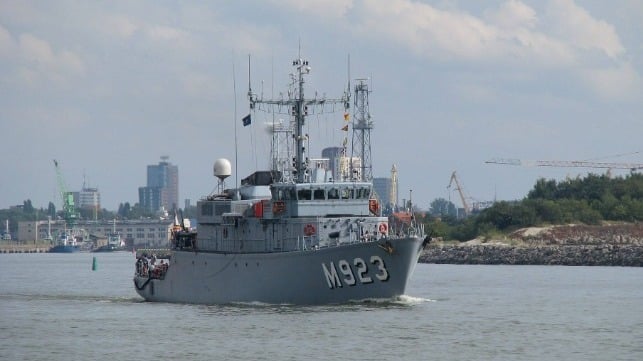
The Dutch and Belgian governments have moved to strengthen Ukraine's mine countermeasures capabilities with the donation of two minehunter vessels. The development comes soon after NATO allies committed to continue providing support to Ukraine in its war with Russia following the conclusion of the alliance’s annual summit in The Hague.
The Ministry of Defense in the Netherlands is announcing that its decommissioned minehunter Zr.Ms. Vlaardingen together with Belgian minehunter BNS Narcis were recently transferred to the Ukrainian Navy. The donation of the two vessels is intended to enhance the war-ravaged nation’s ability to protect key infrastructure, safeguard trade routes and protect the global grain supply. When eventually transferred through the Bosporus, they will enhance the Ukrainian Navy’s abilities to clear explosives from the Black Sea.
Following the donation, Vlaardingen has since undergone name change and now bears the name of a Ukrainian city, Melitopol. Narcis has been named Mariupol, after the Ukrainian city that fell to a Russian siege early in the war. The Dutch government has also announced it will be donating another decommissioned minehunter, Zr.Ms. Makkum, which will be transferred to Ukraine by the end of the year. The ship will be named after the Ukrainian city of Henichesk. (All of these namesake cities are currently in Russian-occupied territory.)
Both Vlaardingen and Makkum are Alkmaar-class ships that served the Royal Dutch Royal Navy before being decommissioned last year. Both ships have a maximum displacement of 588 tonnes, and their hulls are made from polyester reinforced with fiberglass. The material minimizes the magnetic signature of the ships, helping them to avoid the detonation of underwater magnetic mines.
Narcis is a Tripartite-class minehunter that has been part of the Belgian Navy fleet since 1990 and remained in active duty before its donation. Belgium intends to donate a total of three ships of the class to Ukraine. Transfer of Vlaardingen and Narcis to the Ukrainian navy came after the two aging ships underwent thorough maintenance and conducted a training period with their new crews.
“The major ports of Odessa and the shipping lanes in the Black Sea are the lifeblood of the Ukrainian economy,” said Dutch Defense Minister Ruben Brekelmans. “And it is constantly threatened. Ukraine may not win the war at sea, but the country can certainly lose the war there. We simply cannot let that happen. That is why it is so important for maritime security and free passage that Ukraine can use the minehunters.”
The Netherlands and Belgium are the latest NATO allies to donate warships to Ukraine. In 2023, the UK government transferred two decommissioned minehunters to the country as part of efforts to help Ukraine detect and disable sea mines.
The Turkish government has closed the Bosporus to warships of combatant nations, as is its right under the Montreux Convention. The UK's gifted minehunters have not been allowed to pass through.
At the just concluded NATO Summit 2025, leaders of the alliance have committed to continue supporting Ukraine in its war with Russia. The allies agreed to invest five percent of gross domestic product annually on core defense requirements as well as defense-and security-related spending by 2035. Part of the spending will include direct contributions towards Ukraine’s defense and its defense industry.
Ukraine May Pursue Sanctions Against Bangladeshi Buyers of Stolen Grain
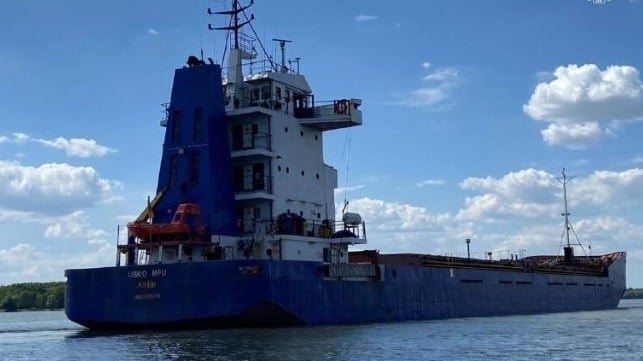
The government of Ukraine may seek EU sanctions on firms and public officials in Bangladesh for allegedly importing cargoes of grain that are partially sourced from occupied territory.
Exporters in Russia's Black Sea region routinely mix grain from Russia with grain from parts of Ukraine that are currently under Russian occupation. Ukraine considers agricultural goods from occupied areas to be stolen, and officials in Kyiv regularly pursue foreign buyers to discourage the practice. The former government of Syria was a major customer, before the collapse of the Assad regime, but other nations' importers now buy it as well - including traders in Bangladesh, according to Ukrainian diplomats.
Reuters obtained several letters that Ukraine's embassy in New Delhi sent to the Bangladeshi foreign ministry about the matter. The correspondence suggests that as much as 150,000 tonnes of stolen grain was shipped from Kavkaz to Bangladeshi ports, mixed in with "legitimate" Russian grain and undetectable to the buyer. The Ukrainian ambassador to India, Oleksandr Polishchuk, told Reuters that officials in Dhaka had not responded - even when threatened the possibility of sanctions and provided with a specific list of vessel names.
The vessels are not currently under sanctions. To date, the EU, UK and U.S. have focused on sanctioning tankers, which account for the majority of Russia's export shipments by value.
Ukraine has seized two ships for allegedly carrying stolen grain from Russian loading ports, and is planning to auction off one of them.

No comments:
Post a Comment