WEST BANK SETLLER MURDERS
Awdah Hathaleen’s murder must be the last
Israeli soldiers storm a memorial ceremony for Awdah Hathaleen on 29 July next to the spot he was killed, forcing mourners to leave. OREN ZIV
Bethany Rielly
NEW INTERNATIONALIST
1 August 2025
The Palestinian activist never gave up hope for a future free from Israel’s occupation. We must turn rage into action, writes Bethany Rielly.
On Monday afternoon a WhatsApp message from Awdah pinged on my phone: ‘URGENT CALL: The settlers … tried to cut the main water pipe for the community. We need everyone who can make something to act, if you can reach people like the congress, courts, whatever, please do anything.’
A few hours later he was shot and killed by an Israeli settler.
The news of his death hit me like a tonne of bricks. I met Awdah in 2019, as one of the countless activists he’s welcomed over the years to provide a protective presence in his home of Umm al-Khair, a village in the West Bank which is at constant risk of Israeli demolitions and settler violence. At the time he’d just got married, and was about to be a father for the first time – a rare moment of happiness.
While trying to live a life as normal as possible, Awdah carried a huge burden for a young man in his mid-20s, dedicating his time to fighting in Israel’s High Court to save his village from being demolished by the Israeli authorities. ‘We spend more time talking with lawyers than we do our family members,’ I remember him telling me. But he never stopped resisting, up until the very moment he was killed.

Awdah Hathaleen in Rome, Italy, during a visit in 2023. LIAM WHEELER
A prominent Palestinian activist, Awdah Hathaleen was shot dead on 28 July after a settler invaded his village on a bulldozer, destroying olive trees and a water pipe. When residents rushed over to intervene, the driver lunged forward, striking Awdah’s cousin Ahmed and knocking him unconscious.
Accompanying the driver was Yinon Levi, a notorious Israeli settler who’s made it his life's work to terrorize and displace Palestinian communities. Footage from the day shows Levi then firing a gun at the nearby villagers. Awdah was standing 50 metres away, filming the attack, when a bullet punctured his chest. Eye-witnesses claim the settler fired the fatal shot.
Levi was arrested in connection with the murder but was released less than 24 hours later. His house arrest ended on 31 July, and he is already free.
At the mercy of the bulldozers
Awdah lived in Umm al-Khair, a small bedouin village in the rural Masafa Yatta region in the southern West Bank. The region’s struggle against forced displacement was recently brought to international attention through the 2025 Oscar-winning documentary ‘No Other Land’, which Awdah helped to film.
It’s difficult to describe the way the people in Umm al-Khair are forced to live until you see it for yourself. Staying in the small village, home to around 150 people, is to experience the dizzying and disturbing reality of Israeli apartheid.

Women from the village of Umm al-Khair in the southern occupied West Bank walk next to the fence that seperates their homes from the illegal Israeli settlement of Carmel. OREN ZIV
A stone’s throw from the small cement and corrugated iron homes of Umm al-Khair is the Israeli settlement of Carmel. Built in the 1980s – through the theft of half of Umm al-Khair’s land – the settlement seems to have been plucked straight out of US suburbia: large yellow boxy houses with tarmacked roads and green trees.
A fence separates the two starkly different communities, so close you can hear settlers coughing as they walk by. Umm al-Khair’s patch of land is dry as Israel restricts the community’s water access to only seven hours a week. Meanwhile, Carmel is supplied with unrestricted running water from pipes built over Palestinian land.
While Carmel keeps expanding, Umm al-Khair’s residents are subjected to routine house demolitions, a cruel Israeli policy designed to make life unliveable for Palestinians. Almost every home in the village has been destroyed and rebuilt several times over. Residents never know when the bulldozers will come.
None came during the few weeks I spent there, but I saw first-hand the psychological torture of living with the constant threat of violent demolitions. This was particularly difficult to see in the children. For a blog I was writing, Awdah helped me translate interviews with his young relatives. ‘What is your biggest fear?’ we asked. They all had the same reply: ‘the bulldozers coming to destroy my home.’
Awdah spoke of the multigenerational trauma of Israel’s attempts to erase their community. Last year, after a particularly ruthless period of demolitions, he wrote: ‘The villagers look each other in the eye, searching for words of comfort, but there are none. Our children ask us why this is happening, but we have no answers.’
Hostile neighbours
Demolitions are one arm of Israel’s campaign of ethnic cleansing of Palestinians in Masafa Yatta. The other is settler violence and harassment, a shadow under which Umm al-Khair has long lived. Tariq Hathaleen, Awdah’s cousin, once shared with me the story of his older brother, Mohammed, who was brutally beaten by a settler from Carmel in the year 2000, leaving him brain-damaged.
I had seen Mohammed, a gentle man, roaming around the village muttering to himself, a glazed look in his eyes. Tariq and his family are forced to continue living in close proximity to his attacker who has never faced justice.
Since 7 October, settler violence and harassment against the villagers has escalated, with armed settlers repeatedly invading Umm al-Khair and nearby towns threatening to kill residents if they didn’t leave.
Since a group of extremist settlers established an illegal outpost about 800 metres from Awdah’s home in 2022, villagers have been unable to access their nearby grazing lands and others have been forced to sell their livestock due to ongoing harassment.
In the last few months, another settler outpost began construction in the middle of Umm al-Khair. Awdah was helping to launch a legal action against this latest violation of their land, fearing the incursion would lead to attacks. Clearly, he was right.
Adwah’s suspected killer lives nearby, in an outpost near Zanuta, a Palestinian village forced out by Levi’s campaign of harassment and intimidation. In the last two years, dozens of other communities – home to more than 2,000 people – have been forcibly displaced as a result of military and settler attacks.
Violent settlers like Levi rarely ever face justice, as the case of Tariq’s brother Mohammed shows. I fear that Awdah’s children will have to endure the same torture, growing up next door to and under the taunts of their father’s killer. It is unbearable to imagine.
‘He was always saying the same thing: “I want to live in peace. I want to raise my children in peace. I don't want them to suffer like I do”’
Levi is one of several violent settlers who’s been sanctioned by the British government, the European Union, France and the US (before Trump lifted them earlier this year), banning him from travel to those countries. But what’s the point in individual sanctions against settlers if they’re free to continue killing Palestinians with impunity? For violent extremists like Yinon Levi, who has no intention of travelling internationally and does not own a bank account, such measures don’t touch him.
Levi continues his reign of terror unabated, protected by and carrying out the will of the Israeli state to displace Palestinians. These sanctions are a step in the right direction, but unless action also targets those at the top, the Israeli government’s genocidal project, nothing will change.
The Palestinian activist never gave up hope for a future free from Israel’s occupation. We must turn rage into action, writes Bethany Rielly.
On Monday afternoon a WhatsApp message from Awdah pinged on my phone: ‘URGENT CALL: The settlers … tried to cut the main water pipe for the community. We need everyone who can make something to act, if you can reach people like the congress, courts, whatever, please do anything.’
A few hours later he was shot and killed by an Israeli settler.
The news of his death hit me like a tonne of bricks. I met Awdah in 2019, as one of the countless activists he’s welcomed over the years to provide a protective presence in his home of Umm al-Khair, a village in the West Bank which is at constant risk of Israeli demolitions and settler violence. At the time he’d just got married, and was about to be a father for the first time – a rare moment of happiness.
While trying to live a life as normal as possible, Awdah carried a huge burden for a young man in his mid-20s, dedicating his time to fighting in Israel’s High Court to save his village from being demolished by the Israeli authorities. ‘We spend more time talking with lawyers than we do our family members,’ I remember him telling me. But he never stopped resisting, up until the very moment he was killed.
Awdah Hathaleen in Rome, Italy, during a visit in 2023. LIAM WHEELER
A prominent Palestinian activist, Awdah Hathaleen was shot dead on 28 July after a settler invaded his village on a bulldozer, destroying olive trees and a water pipe. When residents rushed over to intervene, the driver lunged forward, striking Awdah’s cousin Ahmed and knocking him unconscious.
Accompanying the driver was Yinon Levi, a notorious Israeli settler who’s made it his life's work to terrorize and displace Palestinian communities. Footage from the day shows Levi then firing a gun at the nearby villagers. Awdah was standing 50 metres away, filming the attack, when a bullet punctured his chest. Eye-witnesses claim the settler fired the fatal shot.
Levi was arrested in connection with the murder but was released less than 24 hours later. His house arrest ended on 31 July, and he is already free.
At the mercy of the bulldozers
Awdah lived in Umm al-Khair, a small bedouin village in the rural Masafa Yatta region in the southern West Bank. The region’s struggle against forced displacement was recently brought to international attention through the 2025 Oscar-winning documentary ‘No Other Land’, which Awdah helped to film.
It’s difficult to describe the way the people in Umm al-Khair are forced to live until you see it for yourself. Staying in the small village, home to around 150 people, is to experience the dizzying and disturbing reality of Israeli apartheid.
Women from the village of Umm al-Khair in the southern occupied West Bank walk next to the fence that seperates their homes from the illegal Israeli settlement of Carmel. OREN ZIV
A stone’s throw from the small cement and corrugated iron homes of Umm al-Khair is the Israeli settlement of Carmel. Built in the 1980s – through the theft of half of Umm al-Khair’s land – the settlement seems to have been plucked straight out of US suburbia: large yellow boxy houses with tarmacked roads and green trees.
A fence separates the two starkly different communities, so close you can hear settlers coughing as they walk by. Umm al-Khair’s patch of land is dry as Israel restricts the community’s water access to only seven hours a week. Meanwhile, Carmel is supplied with unrestricted running water from pipes built over Palestinian land.
While Carmel keeps expanding, Umm al-Khair’s residents are subjected to routine house demolitions, a cruel Israeli policy designed to make life unliveable for Palestinians. Almost every home in the village has been destroyed and rebuilt several times over. Residents never know when the bulldozers will come.
None came during the few weeks I spent there, but I saw first-hand the psychological torture of living with the constant threat of violent demolitions. This was particularly difficult to see in the children. For a blog I was writing, Awdah helped me translate interviews with his young relatives. ‘What is your biggest fear?’ we asked. They all had the same reply: ‘the bulldozers coming to destroy my home.’
Awdah spoke of the multigenerational trauma of Israel’s attempts to erase their community. Last year, after a particularly ruthless period of demolitions, he wrote: ‘The villagers look each other in the eye, searching for words of comfort, but there are none. Our children ask us why this is happening, but we have no answers.’
Hostile neighbours
Demolitions are one arm of Israel’s campaign of ethnic cleansing of Palestinians in Masafa Yatta. The other is settler violence and harassment, a shadow under which Umm al-Khair has long lived. Tariq Hathaleen, Awdah’s cousin, once shared with me the story of his older brother, Mohammed, who was brutally beaten by a settler from Carmel in the year 2000, leaving him brain-damaged.
I had seen Mohammed, a gentle man, roaming around the village muttering to himself, a glazed look in his eyes. Tariq and his family are forced to continue living in close proximity to his attacker who has never faced justice.
Since 7 October, settler violence and harassment against the villagers has escalated, with armed settlers repeatedly invading Umm al-Khair and nearby towns threatening to kill residents if they didn’t leave.
Since a group of extremist settlers established an illegal outpost about 800 metres from Awdah’s home in 2022, villagers have been unable to access their nearby grazing lands and others have been forced to sell their livestock due to ongoing harassment.
In the last few months, another settler outpost began construction in the middle of Umm al-Khair. Awdah was helping to launch a legal action against this latest violation of their land, fearing the incursion would lead to attacks. Clearly, he was right.
Adwah’s suspected killer lives nearby, in an outpost near Zanuta, a Palestinian village forced out by Levi’s campaign of harassment and intimidation. In the last two years, dozens of other communities – home to more than 2,000 people – have been forcibly displaced as a result of military and settler attacks.
Violent settlers like Levi rarely ever face justice, as the case of Tariq’s brother Mohammed shows. I fear that Awdah’s children will have to endure the same torture, growing up next door to and under the taunts of their father’s killer. It is unbearable to imagine.
‘He was always saying the same thing: “I want to live in peace. I want to raise my children in peace. I don't want them to suffer like I do”’
Levi is one of several violent settlers who’s been sanctioned by the British government, the European Union, France and the US (before Trump lifted them earlier this year), banning him from travel to those countries. But what’s the point in individual sanctions against settlers if they’re free to continue killing Palestinians with impunity? For violent extremists like Yinon Levi, who has no intention of travelling internationally and does not own a bank account, such measures don’t touch him.
Levi continues his reign of terror unabated, protected by and carrying out the will of the Israeli state to displace Palestinians. These sanctions are a step in the right direction, but unless action also targets those at the top, the Israeli government’s genocidal project, nothing will change.
The torment continues
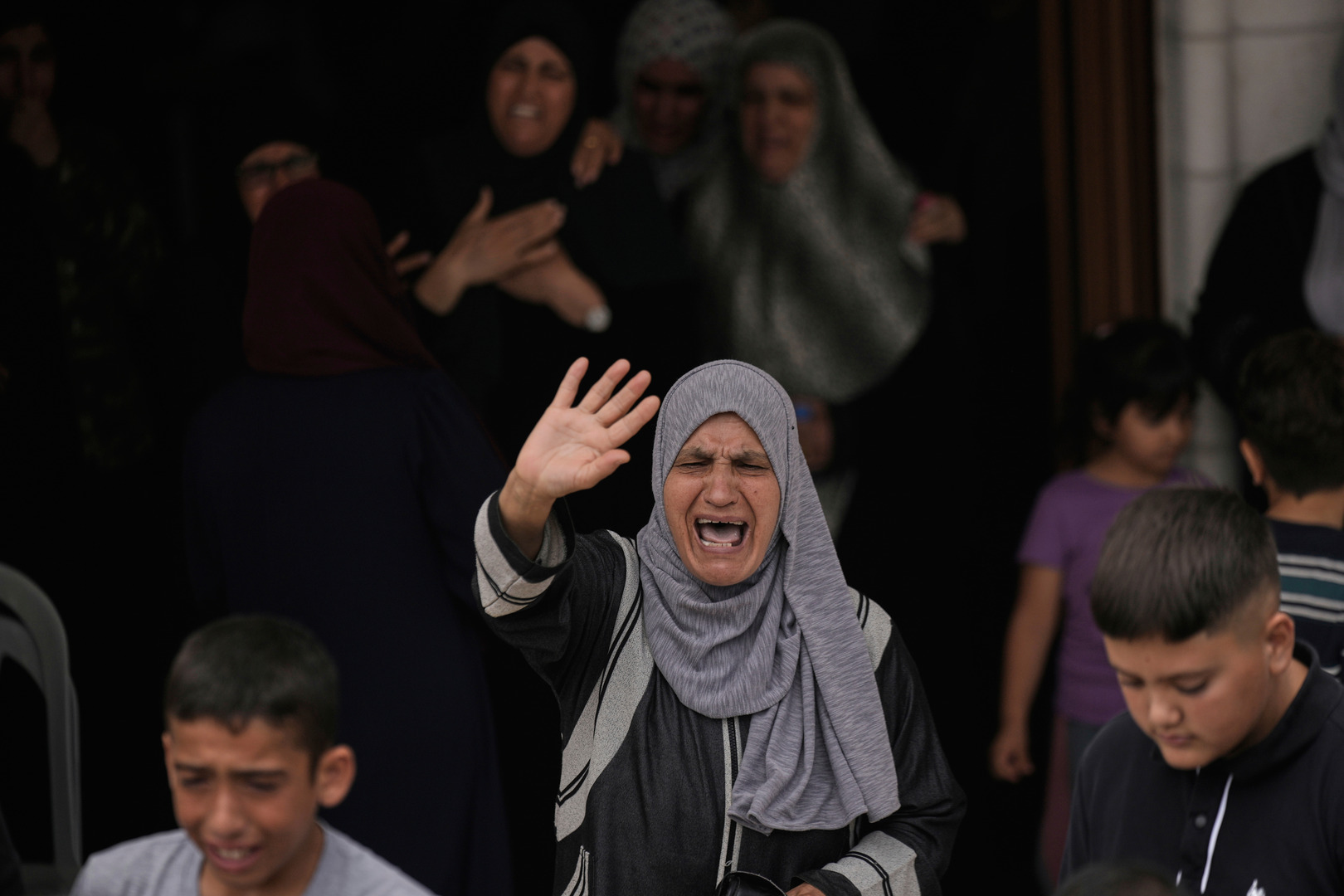
Awdah’s family have not even been given even the dignity to grieve in peace. Each night since his death, Israeli soldiers have raided Umm al-Khair, breaking into the home of his grieving wife, and arresting 17 members of his family. On Thursday, all but six were released under strict conditions which restrict their movement around the village.
Worse still, the authorities are refusing to release Awdah’s body unless the community agrees to limit the number of mourners at his funeral to 15 people and bury him outside of Umm al-Khair. Even in death, the Israeli authorities’ determination to displace Awdah continues. Women of the village have gone on hunger strike to demand he be returned to them.
At the site of Awdah’s murder, a mourning tent has been set up to allow his friends and family to pay their respects.
Last Tuesday, Israeli soldiers ordered residents to dismantle the site of grieving, aggressively expelling mourners and journalists from the tent. When journalists protested, soldiers throw stun grenades at them. Under the protection of the army, settlers have even returned to the outpost this week on Umm al-Khair’s land, activists staying in the village have told me.
‘Justice and peace for everyone’
Awdah was a voice for his community. An English teacher, he used his language skills to tell the world of the horrific violence his community suffered day in, day out. Earlier this year he was invited to speak at several synagogues and other Jewish organizations in the United States, but his visa was revoked on arrival and he was deported.
He kept the hundreds of activists, faith leaders, diplomats and human rights advocates who passed through Umm al-Khair tuned in to what was going on with regular phone updates: the confiscation of land, poisoning of trees and livestock, destruction of homes.
Among my fondest memories of Awdah are celebrating his wedding. Speeches by his friends and family highlighted his infinite kindness and positivity. We ate food in the community centre and later the women went off to have our own celebrations, dancing and laughing together in his wife’s home. It was a beautiful evening, a sign of the resilience and defiant love of life that Awdah and his community embody despite their unbearable reality.
At his memorial on Tuesday, Awdah’s cousin Alaa told reporters: ‘For a man like Awdah we should all cry. He was always saying the same thing: “I want to live in peace. I want to raise my children in peace. I don't want them to suffer like I do”.’
For Awdah this meant pursuing non-violent means of resistance to try to save his community from erasure. But in the end, whether Palestinians pick up a gun or a placard, they are treated the same by the apartheid state.
Yet he often spoke about this community’s struggle without a drop of bitterness or hate. In one of his WhatsApp updates from 2023 he wrote: ‘I hope that peace and justice will prevail for everyone.’
That he should meet such a violent end has not only devastated his community, his wife and three young children, but the hundreds of us who he welcomed to Umm al-Khair, and whose struggle and resilience left an indelible mark on our hearts. Now we must turn that collective sense of rage and loss into action, picking up Awdah’s struggle to end the deadly reality of demolitions, occupation and settler terror he dedicated his life to stopping.
Palestinian man dies in Israeli settler arson attack in occupied West Bank
Khamis Ayyad, 40, died of smoke inhalation after settlers set fire to vehicles in town of Silwad, Health Ministry says.

Settler sanctions are theatre. Hathaleen’s murder exposes the cover-up
Palestinian news agency Wafa reported that the settlers also attacked the nearby villages of Khirbet Abu Falah and Rammun, setting fire to more vehicles.
A relative of Ayyad’s, and a resident of Silwad, said they woke up at 2am (23:00 GMT) to see “flames devouring vehicles across the neighbourhood”.
“The townspeople panicked and rushed to extinguish the fires engulfing the cars and buildings,” they said, explaining that Ayyad had been trying to put out a fire burning his brother’s car.
Ayyad’s death comes amid burgeoning Israeli settler and military violence across the West Bank in tandem with Israel’s war on the Gaza Strip.
Settlers have been attacking Palestinians and their property with impunity, backed by the Israeli army.
Earlier this week, Awdah Hathaleen, a Palestinian from Masafer Yatta, the community whose resistance to Israeli settler violence was documented in the Oscar-winning film No Other Land, with which he helped, was killed by an Israeli settler.
The suspect, identified as Yinon Levi, was placed under house arrest on Tuesday after a Magistrate Court in Jerusalem declined to keep him in custody.

Separately on Thursday, Wafa reported that a group of settlers also attacked an car repair shop in the village of Bazariya, northwest of Nablus in the north of the West Bank.
Observers have warned that the uptick in Israeli violence aims to forcibly displace Palestinians and pave the way for Israel to formally annex the territory, as tens of thousands have been forced out of their homes in recent months across the West Bank.
Earlier this month, the Israeli parliament – the Knesset – overwhelmingly voted in favour of a symbolic motion calling for Israel to annex the West Bank.
On Thursday, Israeli Justice Minister Yariv Levin and Defence Minister Israel Katz said in a joint statement that “there is a moment of opportunity that must not be missed” to exert Israeli sovereignty over the West Bank, according to a Times of Israel report.
“Ministers Katz and Levin have been working for many years to implement Israeli sovereignty in Judea and Samaria,” the statement said, using a term used by Israeli settlers and their supporters to refer to the occupied Palestinian territory.

Khamis Ayyad, 40, died of smoke inhalation after settlers set fire to vehicles in town of Silwad, Health Ministry says.
Haleema Ayyad holds her son's photo after he was killed in an attack by Israeli settlers in Silwad, near Ramallah in the occupied West Bank, July 31, 2025 [Ammar Awad/Reuters]
Published On 31 Jul 2025
A Palestinian man has been killed after Israeli settlers set fire to vehicles and homes in a town in the occupied West Bank, the Palestinian Ministry of Health says.
The ministry said on Thursday that Khamis Ayyad, 40, died due to smoke inhalation after settlers attacked Silwad, northeast of Ramallah, around dawn. Ayyad and others had been trying to extinguish the fires, local residents said.
A Palestinian man has been killed after Israeli settlers set fire to vehicles and homes in a town in the occupied West Bank, the Palestinian Ministry of Health says.
The ministry said on Thursday that Khamis Ayyad, 40, died due to smoke inhalation after settlers attacked Silwad, northeast of Ramallah, around dawn. Ayyad and others had been trying to extinguish the fires, local residents said.
Settler sanctions are theatre. Hathaleen’s murder exposes the cover-up
Palestinian news agency Wafa reported that the settlers also attacked the nearby villages of Khirbet Abu Falah and Rammun, setting fire to more vehicles.
A relative of Ayyad’s, and a resident of Silwad, said they woke up at 2am (23:00 GMT) to see “flames devouring vehicles across the neighbourhood”.
“The townspeople panicked and rushed to extinguish the fires engulfing the cars and buildings,” they said, explaining that Ayyad had been trying to put out a fire burning his brother’s car.
Ayyad’s death comes amid burgeoning Israeli settler and military violence across the West Bank in tandem with Israel’s war on the Gaza Strip.
Settlers have been attacking Palestinians and their property with impunity, backed by the Israeli army.
Earlier this week, Awdah Hathaleen, a Palestinian from Masafer Yatta, the community whose resistance to Israeli settler violence was documented in the Oscar-winning film No Other Land, with which he helped, was killed by an Israeli settler.
The suspect, identified as Yinon Levi, was placed under house arrest on Tuesday after a Magistrate Court in Jerusalem declined to keep him in custody.
People gather next to a burned car after the Israeli settler attack in Silwad [Ammar Awad/Reuters]
According to the latest data from the UN’s humanitarian office (OCHA), at least 159 Palestinians have been killed by Israeli troops in the West Bank between January 1 and July 21 of this year.
Advertisement
Hundreds of Israeli settler attacks against Palestinians have also been reported so far in 2025, including at least 27 incidents that resulted in casualties, property damage, or both, between July 15 and 21, OCHA said.
According to the latest data from the UN’s humanitarian office (OCHA), at least 159 Palestinians have been killed by Israeli troops in the West Bank between January 1 and July 21 of this year.
Advertisement
Hundreds of Israeli settler attacks against Palestinians have also been reported so far in 2025, including at least 27 incidents that resulted in casualties, property damage, or both, between July 15 and 21, OCHA said.
Separately on Thursday, Wafa reported that a group of settlers also attacked an car repair shop in the village of Bazariya, northwest of Nablus in the north of the West Bank.
Observers have warned that the uptick in Israeli violence aims to forcibly displace Palestinians and pave the way for Israel to formally annex the territory, as tens of thousands have been forced out of their homes in recent months across the West Bank.
Earlier this month, the Israeli parliament – the Knesset – overwhelmingly voted in favour of a symbolic motion calling for Israel to annex the West Bank.
On Thursday, Israeli Justice Minister Yariv Levin and Defence Minister Israel Katz said in a joint statement that “there is a moment of opportunity that must not be missed” to exert Israeli sovereignty over the West Bank, according to a Times of Israel report.
“Ministers Katz and Levin have been working for many years to implement Israeli sovereignty in Judea and Samaria,” the statement said, using a term used by Israeli settlers and their supporters to refer to the occupied Palestinian territory.
Haleema Ayyad holds her son’s photo after he was killed in the attack [Ammar Awad/Reuters]
Back in Silwad, Raafat Hussein Hamed, a resident whose house was torched in Thursday’s attack, said that the settlers “burned whatever they could and then ran away”.
Hamed told the AFP news agency that the attackers “come from an outpost”, referring to an Israeli settlement that, in addition to violating international law, is also illegal under Israeli law.
The Israeli military told AFP that “several suspects … set fire to property and vehicles in the Silwad area”, but forces dispatched to the scene were unable to identify them. It added that Israeli police had launched an investigation.
Source: AFP, Al Jazeera
Back in Silwad, Raafat Hussein Hamed, a resident whose house was torched in Thursday’s attack, said that the settlers “burned whatever they could and then ran away”.
Hamed told the AFP news agency that the attackers “come from an outpost”, referring to an Israeli settlement that, in addition to violating international law, is also illegal under Israeli law.
The Israeli military told AFP that “several suspects … set fire to property and vehicles in the Silwad area”, but forces dispatched to the scene were unable to identify them. It added that Israeli police had launched an investigation.
Source: AFP, Al Jazeera
Another US citizen killed by Israeli settler attack in West Bank: Family
Relatives of slain Chicago resident Khamis Ayyad urge Trump administration to launch probe into 40-year-old’s killing.

The funeral of Khamis Ayyad, 40, a Palestinian American who was killed in an attack by Israeli settlers, takes place in Silwad, part of the Israeli-occupied West Bank, on August 1 [Ammar Awad/Reuters]
By Ali Harb
Published On 1 Aug 2025
Al Jazeera
The family of a United States citizen who was killed in a settler attack in the occupied West Bank is calling on the administration of President Donald Trump to open its own investigation into the incident.
Relatives of Khamis Ayyad, 40, who died in the town of Silwad, north of Ramallah, on Thursday, confirmed on Friday that he was an American citizen and called for justice in the case.
Ayyad — a father of five and a former Chicago resident — was the second US citizen to be killed in the West Bank in July. Earlier that month, Israeli settlers beat 20-year-old Sayfollah Musallet to death in Sinjil, a town that neighbours Silwad.
Standing alongside Ayyad’s relatives, William Asfour, the operations coordinator for the Chicago chapter of the Council on American-Islamic Relations (CAIR), described the killing as “murder”.
“We demand a full investigation from the Department of Justice,” Asfour said. “An American citizen was killed. Where’s the accountability?”
According to Mahmoud Issa, the slain 40-year-old’s cousin, settlers torched cars outside Ayyad’s home around dawn on Thursday.
Ayyad woke up to put out the fire, but then the Israeli army showed up at the scene and started firing tear gas in his direction.
The family believes that Ayyad died from inhaling tear gas and smoke from the burning vehicles.
Hear from the former guard blowing the whistle on GHF aid sites in Gaza
Witkoff visits food site in Gaza: US envoy inspects GHF site as more die of hunger
27:40
Why has Washington sanctioned the Palestinian leadership? | Inside Story
08:48
American nurse shares videos from Gaza: Elidalis Burgos volunteers at Nasser hospital
‘How many more?’
Settler attacks against Palestinian communities in the West Bank, which US officials have described as “terrorism”, have been escalating for months, particularly since Israel launched its war on Gaza in October 2023.
The Israeli residents of illegal settlements have descended on Palestinian communities, ransacked neighbourhoods and set cars and homes ablaze.
The settlers, protected by the Israeli military, are often armed and fire at will against Palestinians who try to stop them.
The Israeli military has also been intensifying its deadly raids, home demolitions and displacement campaigns in the West Bank.
Just this past month, Israel’s parliament, the Knesset, approved a non-binding motion to annex the West Bank.
And on Thursday, two top Israeli ministers, Yariv Levin and Israel Katz, called the present circumstances “a moment of opportunity” to assert “Israeli sovereignty” over the area.
Meanwhile, Israel continues to carry out a brutal assault in Gaza, which rights groups have said amounts to a genocide.
CAIR-Chicago’s Asfour stressed on Friday that Ayyad’s killing is not an isolated incident.
“Another American was killed in the West Bank just weeks ago,” he said, referring to Musallet.
“How many more before the US takes action to protect its citizens abroad? Settlers burn homes, soldiers back them up, and our government sends billions to fund all of this.”
The US Department of State did not respond to Al Jazeera’s request for comment by the time of publication.
No arrests in Musallet’s case
Last month, Musallet’s family also urged a US investigation into his killing.
But Washington has resisted calls to probe Israel’s abuses against American citizens, arguing that Israeli authorities are best equipped to investigate their own military forces and settlers.
Mike Huckabee, US ambassador to Israel, called on Israel to “aggressively investigate the murder” of Musallet in July.
“There must be accountability for this criminal and terrorist act,” he wrote in a social media post.
But more than 21 days after the incident, there has been no arrest in the case. Since 2022, Israeli soldiers and settlers have killed at least 10 US citizens. None of the cases have resulted in criminal charges.
Ayyad was killed as Israeli forces continue to detain US teenager Mohammed Ibrahim without trial or access to his family.
Mohammed, 16, has been jailed since February, and his family says it has received reports that he is drastically losing weight and suffering from a skin infection.
On Friday, Illinois State Representative Abdelnasser Rashid called Ayyad’s death part of an “ugly pattern of settler colonial violence” in Palestine.
He called for repealing an Illinois state law that penalises boycotts of Israeli firms.
Advertisement
“We need action. Here in Illinois, we have a law that punishes companies that choose to do the right thing by boycotting Israel,” Rashid told reporters.
“This shameful state law helps shield Israel’s violence and brutality from consequences.”
The family of a United States citizen who was killed in a settler attack in the occupied West Bank is calling on the administration of President Donald Trump to open its own investigation into the incident.
Relatives of Khamis Ayyad, 40, who died in the town of Silwad, north of Ramallah, on Thursday, confirmed on Friday that he was an American citizen and called for justice in the case.
Ayyad — a father of five and a former Chicago resident — was the second US citizen to be killed in the West Bank in July. Earlier that month, Israeli settlers beat 20-year-old Sayfollah Musallet to death in Sinjil, a town that neighbours Silwad.
Standing alongside Ayyad’s relatives, William Asfour, the operations coordinator for the Chicago chapter of the Council on American-Islamic Relations (CAIR), described the killing as “murder”.
“We demand a full investigation from the Department of Justice,” Asfour said. “An American citizen was killed. Where’s the accountability?”
According to Mahmoud Issa, the slain 40-year-old’s cousin, settlers torched cars outside Ayyad’s home around dawn on Thursday.
Ayyad woke up to put out the fire, but then the Israeli army showed up at the scene and started firing tear gas in his direction.
The family believes that Ayyad died from inhaling tear gas and smoke from the burning vehicles.
Hear from the former guard blowing the whistle on GHF aid sites in Gaza
Witkoff visits food site in Gaza: US envoy inspects GHF site as more die of hunger
27:40
Why has Washington sanctioned the Palestinian leadership? | Inside Story
08:48
American nurse shares videos from Gaza: Elidalis Burgos volunteers at Nasser hospital
‘How many more?’
Settler attacks against Palestinian communities in the West Bank, which US officials have described as “terrorism”, have been escalating for months, particularly since Israel launched its war on Gaza in October 2023.
The Israeli residents of illegal settlements have descended on Palestinian communities, ransacked neighbourhoods and set cars and homes ablaze.
The settlers, protected by the Israeli military, are often armed and fire at will against Palestinians who try to stop them.
The Israeli military has also been intensifying its deadly raids, home demolitions and displacement campaigns in the West Bank.
Just this past month, Israel’s parliament, the Knesset, approved a non-binding motion to annex the West Bank.
And on Thursday, two top Israeli ministers, Yariv Levin and Israel Katz, called the present circumstances “a moment of opportunity” to assert “Israeli sovereignty” over the area.
Meanwhile, Israel continues to carry out a brutal assault in Gaza, which rights groups have said amounts to a genocide.
CAIR-Chicago’s Asfour stressed on Friday that Ayyad’s killing is not an isolated incident.
“Another American was killed in the West Bank just weeks ago,” he said, referring to Musallet.
“How many more before the US takes action to protect its citizens abroad? Settlers burn homes, soldiers back them up, and our government sends billions to fund all of this.”
The US Department of State did not respond to Al Jazeera’s request for comment by the time of publication.
No arrests in Musallet’s case
Last month, Musallet’s family also urged a US investigation into his killing.
But Washington has resisted calls to probe Israel’s abuses against American citizens, arguing that Israeli authorities are best equipped to investigate their own military forces and settlers.
Mike Huckabee, US ambassador to Israel, called on Israel to “aggressively investigate the murder” of Musallet in July.
“There must be accountability for this criminal and terrorist act,” he wrote in a social media post.
But more than 21 days after the incident, there has been no arrest in the case. Since 2022, Israeli soldiers and settlers have killed at least 10 US citizens. None of the cases have resulted in criminal charges.
Ayyad was killed as Israeli forces continue to detain US teenager Mohammed Ibrahim without trial or access to his family.
Mohammed, 16, has been jailed since February, and his family says it has received reports that he is drastically losing weight and suffering from a skin infection.
On Friday, Illinois State Representative Abdelnasser Rashid called Ayyad’s death part of an “ugly pattern of settler colonial violence” in Palestine.
He called for repealing an Illinois state law that penalises boycotts of Israeli firms.
Advertisement
“We need action. Here in Illinois, we have a law that punishes companies that choose to do the right thing by boycotting Israel,” Rashid told reporters.
“This shameful state law helps shield Israel’s violence and brutality from consequences.”
Source: Al Jazeera

No comments:
Post a Comment