Gaza Sparks Global Protests — Except
in India
Since 2014 when the BJP came to power, there has been increased repression of protests, particularly those led by Muslims or aligned with a cause like Gaza, writes Betwa Sharma.
By Betwa Sharma

Modi and Netanyahu at the Centre of Excellence for Vegetables in Gujarat, 2018. (India Prime Minister’s Office, GODL)
While accepting the Orizzonti best director award at the Venice Film Festival, Anuparna Roy, the first Indian to do so, closed her acceptance speech by urging people to care about what was happening to the children in Palestine.
“Every child deserves peace, freedom, liberation, and Palestine is no exception,” Roy said. “I don’t want any claps for this. It’s a responsibility to think for a moment, to stand beside Palestine. I might upset my country, but it doesn’t matter to me anymore.”
It may seem surprising that Roy anticipated criticism for stating that all children, including those in Palestine, are entitled to peace, but she was right.
Rather than applause for her historic win, almost immediately, a barrage of criticism followed accusing her of ignoring other issues: U.S. tariffs imposed by President Donald Trump, the terrorist attack on Hindu tourists in Kashmir in April, Hindus killed in Bangladesh, and the Oct. 7 Hamas attack in Israel.
Of course, it is utterly foolish to compare starving children to trade disputes. Yet, Roy’s apprehension was entirely justified, given the intensifying Islamophobia since Prime Minister Narendra Modi and the Bharatiya Janata Party (BJP) came to power in 2014.
Repression
Since then there has been an increasingly repressive response to protests, particularly those led by Muslims or seen aligned with a Muslim cause like Gaza and any viewpoint the government considers unfavourable — including expressions of solidarity with Palestine.
There have been only a few attempts to organise protests against Israel by students, civil society leaders, Muslim organisations and Left parties — sporadic, scattered and unsustained. It has been nothing like the protests in Western capitals, and nothing on a scale one might expect from the world’s largest democracy, home to over 200 million Muslims, which is the third largest Muslim population in the world, with an historic kinship with Palestine.
Indian authorities have detained pro-Palestine protesters, breaking up gatherings, restricting permission, and registered criminal cases, including under India’s anti-terrorism law — the 1967 Unlawful Activities Prevention Act (UAPA) — citing reasons such as threats to law and order, public nuisance, obstruction, and the absence of prior authorisation.
On the other hand, the few pro-Israel protests that have taken place, including by Hindu right-wing groups, have not faced comparable restrictions or legal action.
In parallel with the crackdown on dissent and the deepening Islamophobia within the country, Prime Minister Modi’s government has undertaken a marked shift in foreign policy, moving away from India’s historic legacy of solidarity with Palestine.
Ditching Palestine
Once driven by postcolonial kinship, the Non-Aligned Movement (NAM) and support for Palestinian self-determination (recognising the Palestinian state in 1988), New Delhi has pivoted towards the strategic pragmatism anchored in arms deals (India is Israel’s largest defence buyer), military cooperation, intelligence sharing, and expanding trade.
Amid the staggering devastation and death toll in Gaza, India and Israel signed a bilateral investment treaty this year. And Modi and Prime Minister Benjamin Nentanyahu have continued to show their personal regard and affection for each other.
India’s near-total pivot away from the Palestinian cause stands in sharp contrast to the diplomatic balancing act it has maintained with old allies, most notably in its ties with Russia.
Despite pressure and sanctions from the United States, New Delhi has carefully preserved its strategic relationship with Moscow, unwilling to fully align itself with Washington or place all its bets on a single geopolitical partner.
When it comes to Palestine, India sees little strategic incentive for any kind of balancing act. It maintains its diplomatic lip service to the two-state solution, a position that has become largely symbolic, but remains mostly subdued, even as Israel’s bombardment and “man-made” famine in Gaza spark an international outcry and is increasingly described as genocide by leading genocide scholars.
India’s voting pattern on the Gaza conflict at the United Nations has been cautious, supporting resolutions calling for humanitarian ceasefires and unconditional release of hostages, protection of civilians, peace negotiations, and settlement activity, but abstained from outright condemnation of Israel without reference to terrorism and the Oct. 7 Hamas attack.
India’s voting record on the Russia-Ukraine war shows a consistent pattern of abstaining on resolutions that address or condemn Russian actions.
A Pall Of Silence
In the heart of Delhi, just off the road from Jantar Mantar, the 18th-century observatory built by Maharaja Jai Singh II and a short walk from the colonial-era facades of Connaught Place, lies the city’s designated protest site.
From opposition to government policies and Supreme Court judgments to demands for women’s rights, LGBTQ+ equality, and fair wages for ASHA [Association for Social and Health Advancement] community health workers and self-help groups, this space has echoed with the voices of protest.
But the once-constant buzz of demonstrations that defined this stretch of Delhi for decades has quieted significantly.
Almost immediately after the Israel–Palestine conflict escalated and global opinion became polarised, Yogi Adityanath, a Hindu hardliner and the chief minister of Uttar Pradesh, India’s most populous state, made it clear that pro-Palestine posts and protests would face prosecution.
Authorities in Uttar Pradesh have arrested and filed criminal cases against individuals, primarily Muslims, citing Indian Penal Code sections like promoting enmity between groups and statements promoting enmity, hatred and ill-will.
While most criminal cases have been filed in states run by the BJP, similar action has also been taken in Karnataka, a state governed by the Congress Party since 2023.
The inability to protest against Israel has been particularly painful in Kashmir, the Muslim-majority region of Jammu and Kashmir that has experienced decades of insurgency and served as the flashpoint for two wars with Pakistan, where a deep sense of kinship with Palestine is strongly felt.
Civil liberties in the region have long been curtailed, but since the Modi government revoked its partial autonomy in 2019, public demonstrations, dissent, and critical media coverage have been suppressed, often under the threat of India’s anti-terrorism law, the UAPA.
Protesters in Kashmir are facing charges under UAPA, including members of the minority Shia community who raised pro-Palestine slogans at a rally during Muharram, the first month of the Islamic calendar.
Hindu Right’s Bond With Zionism
The Hindu’s right’s fervent alignment with Israel online — at times appearing more loyal than the king — has become a vehicle for expressing anti-Muslim sentiment.
According to data from the Narrative Research Lab, pro-Israel tweets outnumbered pro-Palestine tweets by 5:1 in a sample of 4,316 tweets. India also emerged as a key source of pro-Israel disinformation, with coordinated online activity amplifying false narratives.
Despite efforts to silence dissent, two major protest movements erupted early in Modi’s second term — one against a controversial citizenship law amid rising anti-Muslim sentiment, and the other by farmers from Punjab, Haryana, and western Uttar Pradesh opposing new agricultural reforms.
In both cases, protesters were vilified. The anti-citizenship law movement, led by Muslim activists, ended after communal riots and COVID-19. Police charged the activists with terrorism, sedition and murder, holding them without trial for years— sending a message that Muslim dissent will face indefinite punishment.
The Sikh farmers were also branded anti-national and linked to separatism, with support from the pro-government media. But this didn’t stick, partly due to the affluence and influence of the Sikh community and the Hindu right’s deeper investment in portraying Muslims as the primary enemies of the nation.
Ultimately, Modi conceded, repealing the new farm laws, before state elections in Uttar Pradesh and Punjab. With Muslims, however, there is no similar political incentive.
The BJP, a national political party, rarely fields Muslim candidates and does not actively seek Muslim votes, instead often centering its campaigns around Hindu-Muslim polarisation.
Disturbed by the vitriolic backlash to their daughter Anuparna Roy’s historic Best Director win at the Venice Film Festival, her parents said that instead of celebrating her achievement, many in India were intent on tearing her down.
Yet, so pervasive is the climate of anti-Muslim sentiment in the country that they appeared cautious not to be seen as defending them. They chose their words carefully, emphasising that Anuparna’s film spoke not about any specific group, but simply about children.
“She did not speak about any community. She spoke of every child in the world. She did not say anything wrong,” they said.
Roy, 31, has said, “I am going to use my voice to talk about everything that makes us uncomfortable.”
ZNetwork is funded solely through the generosity of its readers. Donate
Betwa Sharma is the managing editor of Article 14, the former politics editor at HuffPost India, and the former U.N./New York correspondent for the Press Trust of India.
Indian Companies Complicit in Israel’s Genocide of the Palestinians
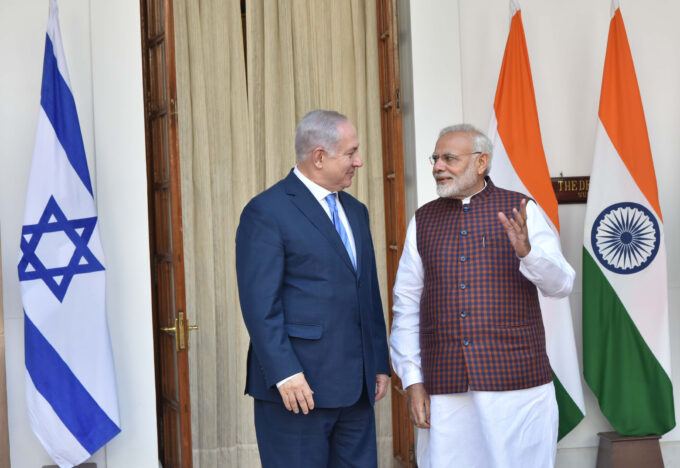
Photograph Source: Prime Minister’s Office – GODL-India
The Israeli genocide of the Palestinians has persisted for two years —a “live-streamed genocide”, as Amnesty International called it in its April 2025 annual report. Thus far, Israel has murdered over 66,000 Palestinians —the overwhelming majority of whom are civilians; 20,000 of the dead are children, meaning a Palestinian child has been killed every hour since October 2023. Two million Palestinians in Gaza have been forced to remain on the move as Israel continues to pummel the small area with missile and bomb attacks. Meanwhile, thousands of Palestinians in the West Bank have faced eviction as part of a broader ethnic cleansing policy Israel is pushing for the entire region between the Jordan River and the Mediterranean Sea.
During these two years, Israel has violated the sovereignty of seven states, from Lebanon to Qatar, killing uncounted numbers of people in these countries with no official United Nations sanction. This murderous rampage appears endless, but world opinion has now almost entirely turned against Israel. When Israel’s Prime Minister Benjamin Netanyahu, who faces an International Criminal Court warrant for crimes against humanity, spoke at the United Nations, the General Assembly hall was almost empty. Netanyahu is now unwelcome in most countries.
Almost, most. These qualifications are necessary because many countries continue to provide political support for the Israeli genocide and broad-ranging military support for the mass killings. Two recent reports measure this enduring support for Israel’s genocide. The first, From Economy of Occupation to Economy of Genocide, came from Francesca Albanese, the UN Special Rapporteur on the situation of human rights in the Palestinian territories occupied since 1967. Published in June 2025, the report prompted direct and virulent personal attacks on Albanese, even extending to her husband, who works at the World Bank. The report’s substance, detailed below, elicited no rebuttal from the Western governments, which would be hard-pressed to respond to the factual claims about Western corporate complicity in the genocide.
The second report, Profit and Genocide: Indian Investments in Israel, was written by Hajira Puthige of the Centre for Financial Accountability in New Delhi. Published in September 2025, it details the complicity of Indian corporations in the Israeli genocide.
Western Support
Israel’s most important ally is the United States, whose government continues to provide diplomatic support —the US vetoed a sixth UN Security Council cease genocide resolution in September 2025— while supplying weapons and money. Since October 2023, the US has sent over a thousand weapons shipments to Israel.
Apart from the United States, Israel’s closest allies are the states of Europe, both individually and in the European Union. These states have cracked down on their own citizens for peacefully protesting the genocide while they made arms deals with Israel. For instance, Germany began a major embargo on weapons sales to Israel but simultaneously signed a deal to import €350 million worth of weapons from Israel. Although many European states have pledged to recognise Palestine, this aligns with their existing agreements to a two-state solution; they have yet to sanction Israel in any way for its genocide.
Albanese’s report, From Economy of Occupation to Economy of Genocide, demonstrates not only how Western states have defended Israel’s genocide but also how Western corporations have profited from both the genocide in Gaza and the illegal occupation and apartheid across the Israeli landscape, including the Occupied Palestinian Territory. Western companies are no longer merely implicated in West Bank apartheid, as previously documented, but are now embedded in the economy of genocide. The report documents complicity across eight key sectors: arms manufacturers, technology, construction, mining, finance, insurance, universities, and charitable organisations. Albanese developed a database of 1000 corporate entities but highlighted only a handful, such as Amazon, BlackRock, Caterpillar, Google, Lockheed Martin, and Microsoft. Technologies previously used to control and dispossess Palestinians are now being used to inflict mass violence and immense destruction.
The report asserts that international law provides no safe harbour for firms complicit in genocide. Albanese argues that corporate engagement with any component of the genocide violates jus cogens(compelling law) norms and constitutes international crimes. She notes that the International Court of Justice’s provisional measures and the International Criminal Court’s arrest warrants “signal the risk that corporate entities – and their executives – that engage in the [Occupied Palestinian Territory] are implicated in serious international crimes”. The report concludes with a call for corporations to cease relations with Israel until the occupation and genocide end. Albanese advocates for comprehensive sanctions, arms embargoes, the suspension of trade agreements, and the prosecution of corporate executives to pressure the world to stop its support for this genocide.
Indian Support
In recent months, Prime Minister Narendra Modi and Benjamin Netanyahu have exchanged public birthday wishes on X. In early September 2025, Israel’s Finance Minister Bezalel Smotrich —member of a far-Right party who expresses such extreme racism and homophobic views that he is sanctioned by several governments, including the UK— led a delegation to Delhi to meet with Finance Minister Nirmala Sitharaman. They signed a major bilateral investment agreement to boost trade and investment. Sitharaman stressed the need for greater collaboration in “cybersecurity, defence, innovation and high-technology”.
A few days later, the UN Independent International Commission of Inquiry on the Occupied Palestinian Territory, including East Jerusalem, and Israel stated unequivocally that Israel has committed genocide against Palestinians in the Gaza Strip.
Sporadic news reports over the past two years have detailed India’s continued arms relationship with Israel. Al-Jazeera published reports on recent arms transfers, based on documents that its journalists had seen. Albanese’s report also documents weapons transfers from a company in Hyderabad to Israel. However, until recently, there has been no major study of the Indian complicity in the genocide. This gap is filled by the Centre for Financial Accountability’s publication of Puthige’s report, which details the complicity of the Indian billionaire class and their corporations.
Here are some examples:
Adani. Adani-Elbit Advanced Systems India, Ltd. manufactures the Hermes 900 drone, which has been used in Gaza. Adani Ports, which owns Haifa Ports, is therefore the owner of an Israeli navy facility that harbours Israel’s submarine fleet.
Tata. Tata Consultancy Group has been working on the Project Nimbus system, which provides surveillance and targeting of Palestinians in Gaza. Tata has sold Israel Land Rover vehicles, which the Israeli military has converted into the MDT David, an armoured vehicle it uses in patrols in the West Bank and in Gaza.
Ambani. Reliance Jio has been working closely with Israeli digital firms to build Israel’s digital infrastructure, while Reliance Defence has worked with Rafael Advanced Defence Systems to build missile systems and drones for the Israeli military.
|Jains. Jain Irrigation, through NaanDanJain, works to supply and build irrigation systems in the illegal Israeli settlements in the West Bank of the OPT.
The report provides evidence that powerful and influential sections of Indian business, like their Western counterparts, are directly complicit in the genocide.
This article was produced by Globetrotter.
Sudhanva Deshpande is a leading theatre personality in India. Deshpande has been associated, as an actor and director, with Jana Natya Manch (Janam) (People’s Theatre Front) , a radical theatre activist group, since 1987. He also heads Leftword Books, an independent publication, as its managing editor and May Day Bookstore and Café as a proprietor/barista.
Vijay Prashad is an Indian historian, editor, and journalist. He is a writing fellow and chief correspondent at Globetrotter. He is an editor of LeftWord Books and the director of Tricontinental: Institute for Social Research. He has written more than 20 books, including The Darker Nations and The Poorer Nations. His latest books are On Cuba: Reflections on 70 Years of Revolution and Struggle (with Noam Chomsky), Struggle Makes Us Human: Learning from Movements for Socialism, and (also with Noam Chomsky) The Withdrawal: Iraq, Libya, Afghanistan, and the Fragility of US Power.

No comments:
Post a Comment