Greenpeace Blockade Forces LNG Tanker Diversions From Belgian Terminal
Greenpeace activists from 17 countries blockaded Belgium’s Zeebrugge LNG terminal on Thursday, forcing at least three tankers to divert. Protesters in kayaks, inflatables, and small craft occupied the channel, demanding an end to both Russian and U.S. LNG flows.
Fluxys, which operates the terminal, told Reuters that operations inside remain unaffected, though tanker access was restricted and the blockade was expected to continue through Sunday.
The Megara and Rias Baixas Knutsen, both carrying U.S. LNG, along with the LNG Phecda carrying a Russian cargo, were among the ships that changed course, according to LSEG vessel tracking cited by Reuters. Zeebrugge, which serves not only as a Belgian import terminal but also as a re-export hub, sees Russian volumes frequently redirected from there to markets in Spain, Italy, and Asia.
Belgium imported roughly 2.3 million tonnes of Russian LNG in the first eight months of 2025, second only to France, customs data show. Despite efforts to cut ties, Europe remains a significant buyer: Russian gas supplied over 40% of EU imports in 2021, a share that dropped to below 19% by 2024.
Brussels has proposed phasing out Russian gas entirely by 2027, with the first-ever EU sanctions on Russian LNG due to take effect in January 2027. Still, NGO estimates suggest the bloc has sent €8.1 billion to Moscow this year through LNG purchases.
Europe’s reliance on LNG is growing. The IEA projects EU imports will rise 25% in 2025, with U.S. cargoes capturing more than half of incremental supply. New German terminals at Wilhelmshaven and Brunsbüttel, alongside expanded facilities in the Netherlands, France, and Spain, are anchoring this trend. Storage levels remain tight, with inventories only 39% full at mid-year, well below seasonal averages.
On Thursday, the Dutch TTF gas benchmark fell by more than 3%, slipping to 10.82, even as traders monitored disruptions from French LNG strikes and the Zeebrugge blockade. The decline reflects broader softness in European gas markets, though physical risks remain elevated.
By Charles Kennedy for Oilprice.com

Greenpeace activists from 17 countries blockaded Belgium’s Zeebrugge LNG terminal on Thursday, forcing at least three tankers to divert. Protesters in kayaks, inflatables, and small craft occupied the channel, demanding an end to both Russian and U.S. LNG flows.
Fluxys, which operates the terminal, told Reuters that operations inside remain unaffected, though tanker access was restricted and the blockade was expected to continue through Sunday.
The Megara and Rias Baixas Knutsen, both carrying U.S. LNG, along with the LNG Phecda carrying a Russian cargo, were among the ships that changed course, according to LSEG vessel tracking cited by Reuters. Zeebrugge, which serves not only as a Belgian import terminal but also as a re-export hub, sees Russian volumes frequently redirected from there to markets in Spain, Italy, and Asia.
Belgium imported roughly 2.3 million tonnes of Russian LNG in the first eight months of 2025, second only to France, customs data show. Despite efforts to cut ties, Europe remains a significant buyer: Russian gas supplied over 40% of EU imports in 2021, a share that dropped to below 19% by 2024.
Brussels has proposed phasing out Russian gas entirely by 2027, with the first-ever EU sanctions on Russian LNG due to take effect in January 2027. Still, NGO estimates suggest the bloc has sent €8.1 billion to Moscow this year through LNG purchases.
Europe’s reliance on LNG is growing. The IEA projects EU imports will rise 25% in 2025, with U.S. cargoes capturing more than half of incremental supply. New German terminals at Wilhelmshaven and Brunsbüttel, alongside expanded facilities in the Netherlands, France, and Spain, are anchoring this trend. Storage levels remain tight, with inventories only 39% full at mid-year, well below seasonal averages.
On Thursday, the Dutch TTF gas benchmark fell by more than 3%, slipping to 10.82, even as traders monitored disruptions from French LNG strikes and the Zeebrugge blockade. The decline reflects broader softness in European gas markets, though physical risks remain elevated.
By Charles Kennedy for Oilprice.com
Belgian LNG Terminal Blocked by Greenpeace Protestors
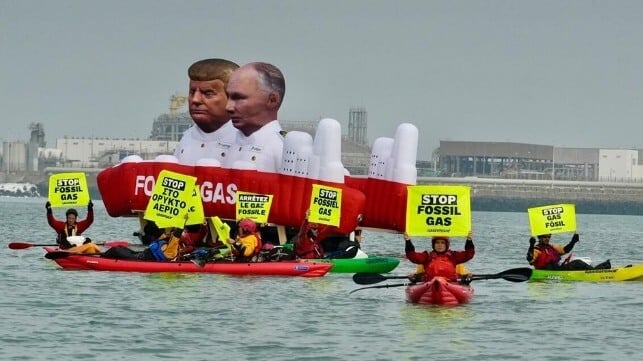
The Fluxys LNG terminal at the port of Zeebrugge, Belgium, is once again being blockaded by Greenpeace protestors. The group estimates as many as 70 activists took to small boats, rafts, and kayaks to call attention to its demands to end Russian and U.S. LNG imports into the European Union.
Media reports indicate the group was hiding at various points around the port early this morning, October 1, and launched the protest shortly after an LNG carrier departed the terminal. The terminal appears to be empty now, and the protestors are in the inner harbor area, but a cruise ship (AIDAperla), several RoRos, and general cargo ships are in other areas of the port near the protest.
Greenpeace’s sailing ship Witness (74 feet/22.5 meters) was positioned at the entrance to the LNG terminal and is displaying a large banner with images of Vladimir Putin and Donald Trump reading “They love gas, you pay the price.” In addition, the group installed a 10-meter (33-foot) inflatable also portraying the Russian and U.S. presidents represented atop a gas carrier. The small boats and kayaks were surrounding the display, also showing banners. A police boat was standing by in the harbor.
The protest is reported to be the last in a series of displays the group has staged around Europe and is timed to the discussions of the 19th EU sanction package tied to the war in Ukraine. The European Commission is proposing a ban on Russian gas imports to be completed by January 2027, but Greenpeace is also calling for a freeze on all new contracts from U.S. suppliers and a commitment by the EU and its member states to phase out all fossil gas by 2035 at the latest.
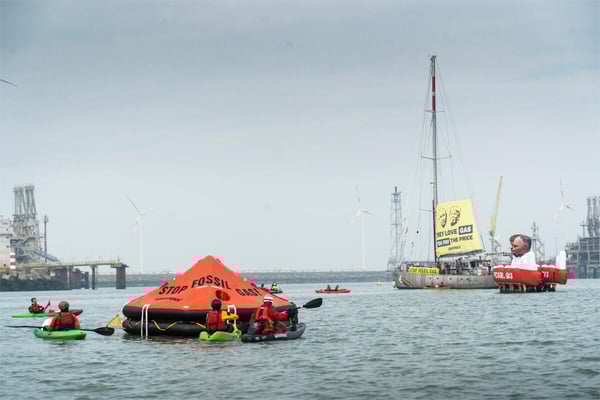
Greenpeace says it is blockading the LNG import terminal calling for an end to Russian and U.S. LNG shipments (© Eric De Mildt / Greenpeace)
“Replacing Russian gas with fracked gas from the U.S. keeps Europe trapped in dangerous dependencies,” said Lisa Göldner, fossil fuel campaigner from Greenpeace Germany. “We are here today because accelerating the transition to renewable energy is no longer just an environmental imperative; it is a matter of security.”
Greenpeace Belgium released data where it calculates that between 2022 and 2024, the Russian company Yamal LNG, the largest exporter of Russian gas to Europe, earned an estimated $40 billion and paid $9.5 billion in profit tax to the Russian state. The group asserts that from 2022 to June 2025, France, Spain, Belgium, and the Netherlands spent more on liquified gas imports from Russia (€34.3 billion) than they provided in bilateral aid to Ukraine (€21.2 billion).
The LNG terminal in Zeebrugge is one of the largest, with agreements for Eni, EDF, and Total. Operator Fluxys Belgium highlights that demand for natural gas flows from Belgium to Germany and the Netherlands increased significantly in the first half of 2025 compared to 2024. Fluxys reports shipping traffic at the terminal hit an unprecedented high in the first half of 2025, with nearly 80 ships unloading LNG in Zeebrugge. On June 6, flows from the terminal into the Belgian grid set a new record at 716 GWh.
Greenpeace has targeted the terminal during previous protests. In March, protestors circled the Marshall Islands-registered gas carrier Marvel Swallow operated by Japan’s Mitsui O.S.K. Lines as it was arriving. Hours later, they attempted to stop Dynagas’ Cyprus-flagged tanker Fedor Litke.
As of the evening of October 1, the standoff is continuing in the harbor with the police boat and the Greenpeace vessel both sitting near the entrance of the Fluxys’ terminal.

No comments:
Post a Comment