Rich nations new oil and gas approvals to breach 1.5°C Paris threshold locking in irreversible warming - study
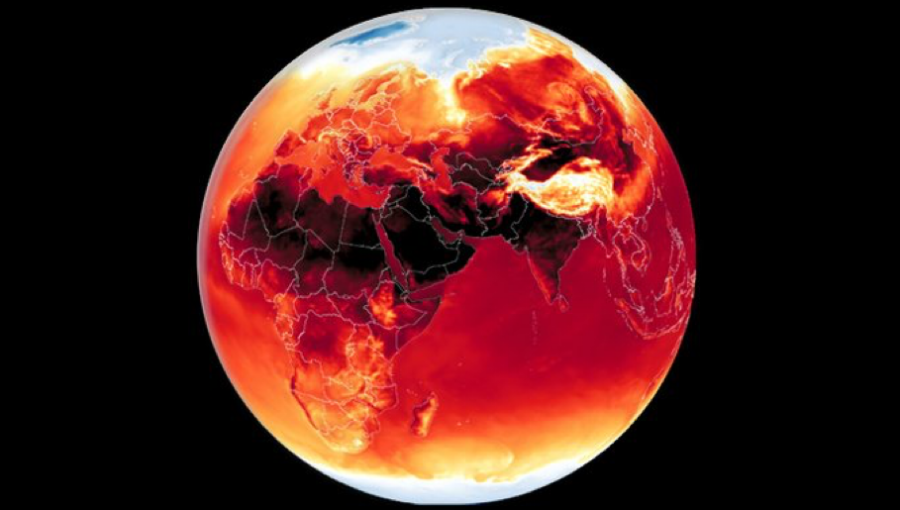
A wave of new rich nations oil and gas extraction projects approved since 2022 will consume nearly one-fifth of the world’s remaining carbon budget for limiting global warming to 1.5°C, according to a new peer-reviewed study published in Environmental Research Letters on December 19. Just five nations are responsible for most of the gains with Trump’s America accounting for a third of the increases by itself.
The study, led by researchers at the Stockholm Environment Institute and Oil Change International, finds that fossil fuel projects approved in 2022 and 2023 alone could emit more than 24bn tonnes of CO₂ over their lifetimes—equivalent to 17% of the global carbon budget remaining as of 2023 if warming is to be kept below 1.5°C with a 50% probability.
“This analysis makes clear that governments are approving new fossil fuel extraction that is fundamentally incompatible with the Paris Agreement,” said Kelly Trout, co-author of the study and research director at Oil Change International. “This is not a marginal overshoot—it is a reckless gamble with the climate system.”
The research identifies five countries as responsible for the majority of post-2021 fossil fuel project approvals: the United States, Canada, Norway, the United Kingdom, and Qatar. Of these, the US alone accounts for nearly one-third of the projected emissions, led by the approval of major oil and gas expansions including the controversial Willow project in Alaska.
According to the International Energy Agency, no new oil and gas fields are needed beyond those already producing if the world is to reach net zero by 2050. Yet the new study shows that governments have continued to greenlight major developments that would lock in emissions for decades.
"These projects are long-lived, capital-intensive, and once started, are politically and economically difficult to stop," said Ploy Achakulwisut, a scientist at the Stockholm Environment Institute and co-author of the report.
The study calculates that if all approved projects go forward, global oil and gas extraction in 2030 will exceed levels aligned with a 1.5°C pathway by 35%, and by 19% in 2050. This expansion contrasts sharply with global climate commitments, including the COP28 agreement in Dubai, which called for a “transition away from fossil fuels.”
The researchers also emphasise that these new extraction projects contradict national climate pledges. All five countries highlighted in the report have made formal net-zero commitments, and four are members of the G7, which has publicly committed to climate leadership.
The report adds to growing pressure on governments to impose moratoriums on new fossil fuel approvals, which will almost certainly be ignored. "Approving new oil and gas in 2023 is like building new coal plants in 2020—economically risky and environmentally disastrous," said Peter Erickson, another co-author.
With global CO₂ emissions are already at all-time highs and continuing to rise, the Climate Crisis is accelerating. The IPCC says that the Paris Agreement goal of keeping temperature increases to less than 1.5°C-2°C above the pre-industrial benchmark has already been missed and temperature increase are on course to reach a catastrophic 2.7C-3.1C by 2050. At that point extreme temperature events will become routine and large parts of the world will become uninhabitable.
The study serves as yet another warning that climate ambitions are being undermined by investment decisions that carry irreversible consequences.
“Time is not on our side,” said Trout. “Every new approval widens the gap between rhetoric and reality.”
Fossil fuel expansion risks triggering AMOC collapse
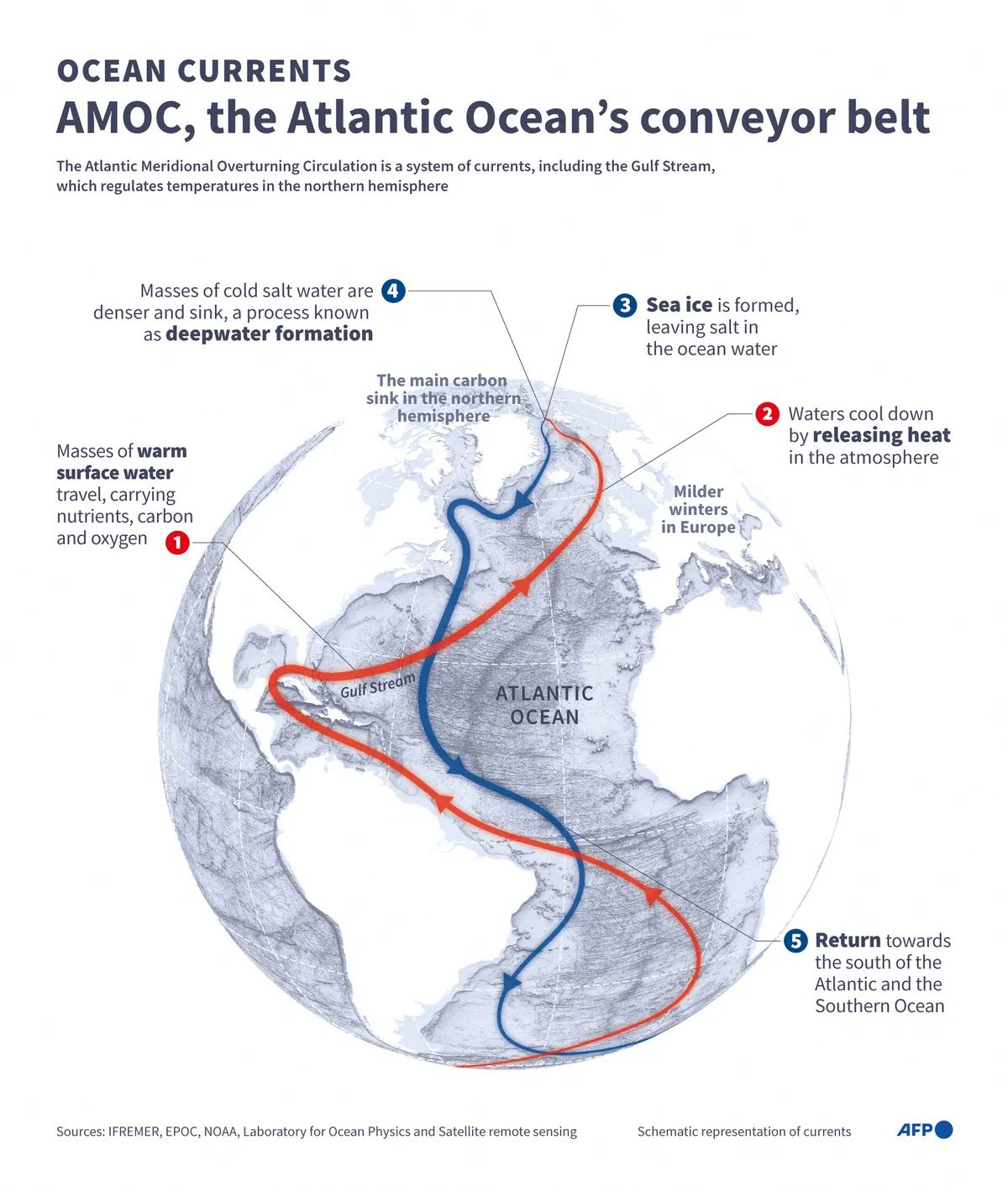
The study also highlights the growing danger of crossing irreversible climate tipping points, including the potential collapse of the Atlantic Meridional Overturning Circulation (AMOC)—a major ocean current system that regulates temperatures across the Northern Hemisphere.
The AMOC could collapse as early as mid-century, with some models projecting a breakdown between 2025 and 2095. That would trigger a mini-ice age in Europe where average winter temperatures would fall by 10°C to 30°C, accompanied by catastrophic global consequences, including intensified summertime heatwaves in Europe, disrupted monsoons in Africa and South Asia, and accelerated ice loss in the Arctic and Antarctica.
“New oil and gas projects increase the likelihood of breaching critical planetary boundaries, including the AMOC,” the authors write. They argue that by expanding fossil fuel extraction in defiance of the 1.5°C limit, governments are increasing the risk of triggering feedback loops that would amplify global warming and destabilise climate systems.
Those feedback loops are already kicking in with temperature currently rising faster than the worst case scenarios of all the climate models on which the Paris agreement targets are based.
Trout said: “The risks of passing irreversible climate tipping points are no longer theoretical—they are now part of the near-term outlook. Continuing to approve fossil fuel expansion is playing roulette with planetary systems.”
The warning follows multiple scientific assessments indicating that the window to avoid tipping points is narrowing rapidly, with carbon-intensive infrastructure locking in emissions through mid-century.

No comments:
Post a Comment