COMMENT: George Washington did it too - Trump and the long US tradition of political abduction
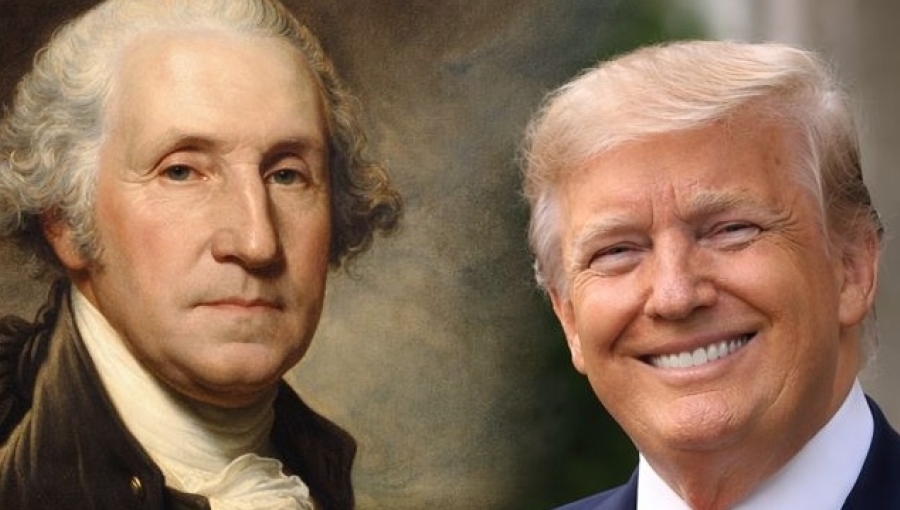
In the annals of American statecraft, the tension between ideals and realpolitik has repeatedly produced episodes of covert intervention, targeted abduction and, occasionally, outright regime decapitation. To this end – the January 3 abduction of Venezuelan President Nicolas Maduro, unbeknownst to many, was just the latest in a long line of similar actions that started way back under the leadership of the man held most holy in the US - George Washington.
From the fledgling republic’s dubious gambits at the end of the 18th century to a controversial expedition into Caracas in early 2026 that left 100 or so corpses behind, American presidents have at times stretched constitutional and international norms in pursuit of national objectives.
The Revolutionary plan to abduct a future English king
Long before the United States had fully formed the concept of executive foreign policy powers, General George Washington authorised an audacious plan to abduct Prince William Henry, a teenage son of King George III, then serving as a midshipman in the Royal Navy in British-occupied New York. The scheme was intended to secure the prince’s capture with the intention of using him to guarantee the release of American prisoners of war. Washington reportedly wrote at the time - 1781 – in a letter to the Marquis de Lafayette, who commanded American troops in Virginia, suggesting that if the opportunity arose, the prince might be seized during one of his many shore visits.
Although the plot never materialised as British intelligence heightened security around the royal figure, the episode reflects an early and ethically questionable willingness by American authority to use political abduction as a weapon.
In the following decades and centuries, the young republic did not institutionalise a formal abduction or assassination policy, but it engaged in interventions that stretched executive authority. The 19th century saw the US support filibusters and private military ventures close to home in Latin America and the Caribbean. While not always directly sanctioned as presidential “take-down” missions, these activities undercut sovereign leadership elsewhere and set a precedent for future interventions when the US saw fit.
In more recent times, the mid-20th century ushered in a distinctly different era. Under the pressures of Cold War geopolitics, successive US administrations authorised covert action programmes aimed at undermining or eliminating perceived communist threats.
Perhaps the most illustrative and well known in recent years was Operation 40, a CIA unit authorised under President Dwight Eisenhower’s administration to engage in sabotage and destabilisation against Fidel Castro’s Cuba, with assassination schemes listed in its portfolio.
The scope of such covert action was unveiled in the Church Committee reports of the 1970s, which documented multiple US assassination plots against foreign leaders, including Fidel Castro of Cuba, Patrice Lumumba in the Congo, and René Schneider in Chile.
The revelations, when made public, triggered widespread outrage and, in 1976, President Gerald Ford issued an executive order prohibiting political assassination by US operatives - a norm that would stand for decades before eventually falling flat on its face.
Late 20th Century interventions
While the Ford presidency executive order formally banned assassination, the US continued to engage in operations that toppled or captured foreign leaders, most notably Operation Just Cause in Panama, where US forces in December 1989 ousted General Manuel Noriega, a former CIA collaborator turned liability. Although Noriega was not assassinated, the invasion removed him from power and brought him to US trial on narcotics charges in an operation eerily similar to the more recent op in Venezuela.
Similarly, United States involvement in coups and civil wars across Latin America and elsewhere - from Chile in 1973 to Nicaragua in the 1980s - frequently resulted in political removal of unwanted regimes, albeit through local proxies rather than direct presidential 'decapitation' missions.
The 21st century then saw a semantic reshaping of US policy on targeting leaders and high-value individuals. The Bush and Obama administrations embraced drone strikes and special operations against non-state and quasi-state actors. The most notable example was the killing of Osama bin Laden by US Navy SEALs in Pakistan in 2011, authorised by Democratic President Barack Obama - a legal and moral precedent for executive-sanctioned targeted killing outside a formal war theatre forgotten by many anti-Trump protestors currently objecting to the Maduro abduction.
In early 2020, President Donald Trump himself, no doubt keen not to be outdone by Obama, ordered a drone strike that killed Qasem Soleimani, commander of the Iranian Revolutionary Guard Corps’ Quds Force, in Baghdad. That operation, six years to the day before the most recent US political abduction, underscored the contorted interplay between national self-defence claims by the US, and extraterritorial lethal force in a marked departure from earlier restrictions on targeting prominent individuals.
Operation Absolute Resolve: the abduction of President Nicolas Maduro
The most recent incarnation of this almost 250-year-old US political modus operandi came on January 3, 2026, when American forces reportedly conducted Operation Absolute Resolve, a large-scale military incursion into Venezuela to remove President Nicolas Maduro and his wife, Cilia Flores from the country, before transporting them to New York to face drug-trafficking and narco-terrorism charges.
The operation was publicly declared by President Donald Trump and justified under narcotics charging and law-enforcement rationales.
Unlike earlier episodes involving non-state figures, this mission involved the seizure of a sitting head of state of a sovereign nation with which the US was not at war, setting yet another distinct and dangerous precedent.
In the days since, critics have contended that the operation violated international law and the UN Charter, and may have breached constitutional limits on war powers by bypassing congressional authorisation. International reaction was swift and largely damning. Leaders from Brazil, Mexico and China denounced the raid as a flagrant violation of sovereignty, while the European Union meekly acknowledged Maduro’s contested legitimacy and emphasised adherence to international norms.
The progression from Washington’s tacit approval of a kidnapping plot centred on a future British monarch, to a modern military removal of a foreign leader underscores not only the expansion of US executive reach but also the increasingly blurred lines between counter-terrorism, law enforcement and regime change in the eyes of the Oval Office.
In Washington’s era, the norms of warfare were nascent and the American state was arguably fighting for survival. By contrast, the 2026 Venezuelan intervention occurred within an established international legal order that prohibits the use of force against another state unless in self-defence or as part of a UN mandate.
As such, be it a Revolutionary gambit to capture a British prince or the seizure of a contemporary Latin American president, American presidential authority is sinking to new lows.
The question that must be now asked of any future occupant of the White House come presidential debate time, is at what cost does the United States preserve its security, and to what extent does such intervention erode the legal and moral foundations on which its own democracy rests?

No comments:
Post a Comment