Iran's President Pezeshkian urges security forces not to target protesters
Iran's President Masoud Pezeshkian on Wednesday urged security forces not to target anti-government demonstrators that have staged more than a week of protests against soaring prices and faced a deadly crackdown. Pezeshkian's appeal comes days after US President Donald Trump threatened to intervene if protesters are killed in the unrest.
Issued on: 07/01/2026
By: FRANCE 24
Video by: Philip TURLE
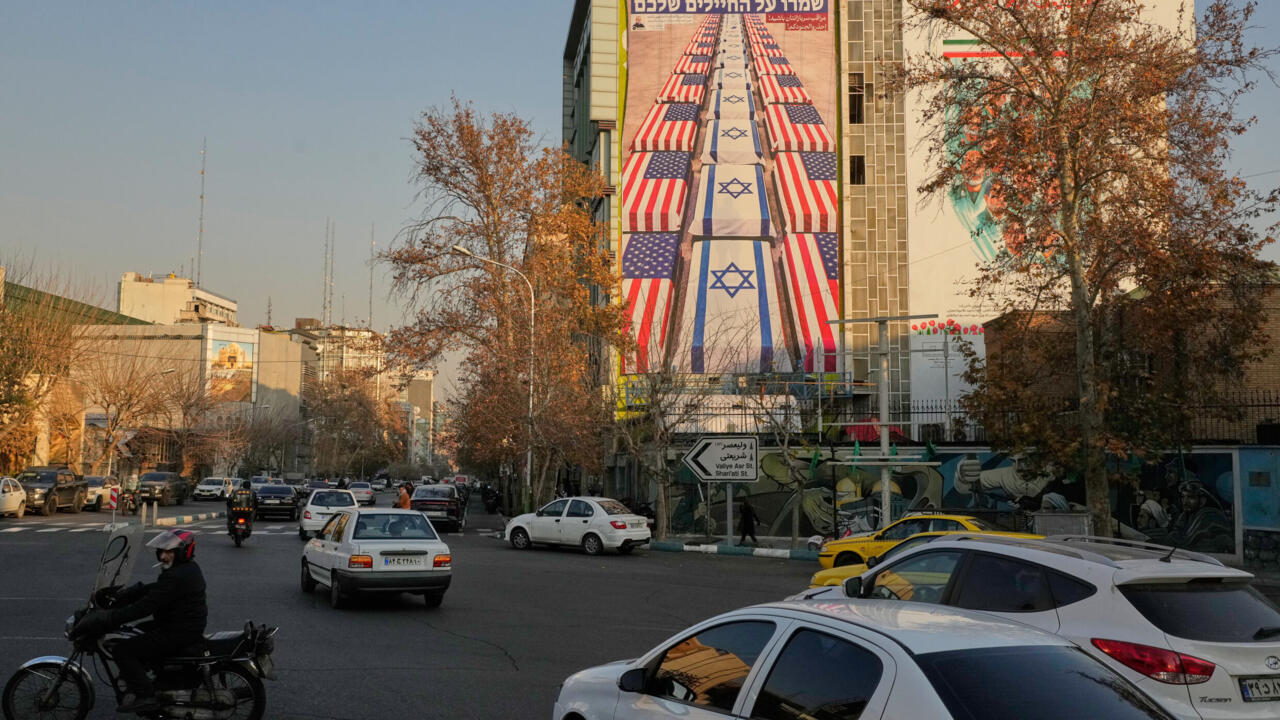
03:39
Iran's President Masoud Pezeshkian on Wednesday ordered security forces not to crack down on economic protests, drawing a distinction between peaceful demonstrators and armed "rioters".
In a video released by the news agency Mehr after a cabinet meeting, Vice President Mohammad Jafar Ghaempanah said Pezeshkian had "ordered that no security measures be taken against the demonstrators".
"Those who carry firearms, knives and machetes and who attack police stations and military sites are rioters, and we must distinguish protesters from rioters," Ghaempanah added.
READ MOREIran’s youth on the front lines of protests face worsening crackdown
Iran's military chief earlier warned that the country would not stand by and allow itself to be threatened by outside powers, after the United States and Israel expressed support for the protests.
"The Islamic Republic of Iran considers the escalation of hostile rhetoric against the Iranian nation a threat and will not tolerate its continuation without responding," General Amir Hatami said, according to the Fars news agency.
Hatami, commander of the Iranian army but not Iran's most senior officer, warned that "if the enemy makes a mistake" Iran's response would be more robust than during last June's 12-day war with Israel.
In recent days, US President Donald Trump has threatened to intervene in Iran if demonstrators were killed, while Israel's Benjamin Netanyahu has backed the protests.
Trump 'watching very closely'
On December 28 merchants in Tehran staged a protest against soaring prices and the collapse of the rial, triggering a wave of similar actions in several cities, some of them deadly.
The demonstrations have yet to reach the scale of a 2022 to 2023 movement, let alone that of the mass 2009 street protests that followed disputed elections.
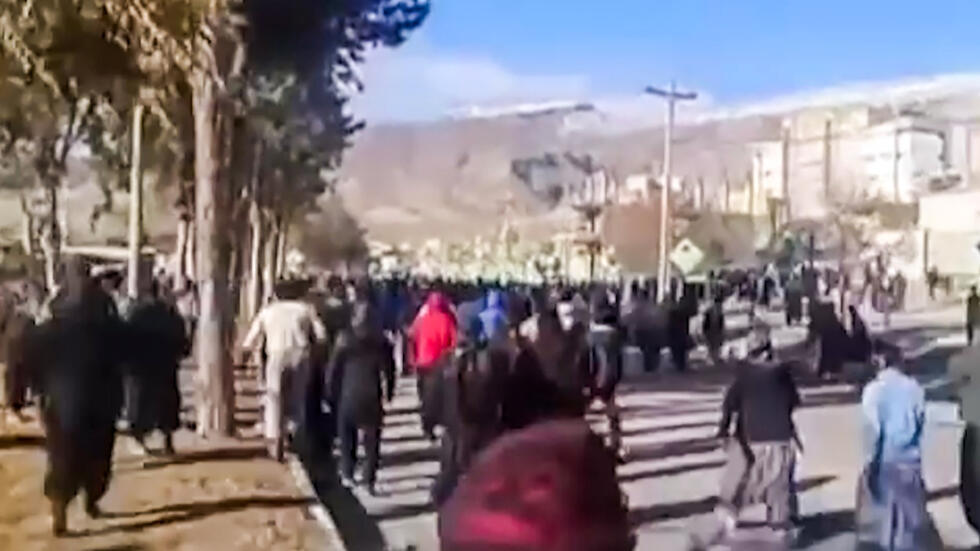
But the economic protests have attracted international attention, including from the leaders of the Islamic Republic's international foes.
"We're watching it very closely. If they start killing people like they have in the past, I think they're going to get hit very hard by the United States," Trump told reporters on Sunday.
Netanyahu, meanwhile, told Israel's cabinet: "We stand in solidarity with the struggle of the Iranian people and with their aspirations for freedom, liberty and justice."
On Monday, the Iranian foreign ministry accused Trump and Netanyahu of inciting violence and trying to undermine Iran's national unity.
READ MOREUnderstanding Iran’s protest chants: What are demonstrators’ demands?
The war in June began with an unprecedented Israeli attack on Iranian military and nuclear facilities.
The United States briefly took part in the strikes, hitting three major Iranian nuclear sites.
(FRANCE 24 with AFP)
Iran's protests continued for an eleventh consecutive day with at least 36 people killed and 2,076 arrested, whilst security forces raided hospitals in Ilam and Tehran, expatriate-based human rights group HRANA reported on January 6.
Protests occurred in 285 locations across 92 cities in 27 provinces, with 22 universities witnessing student demonstrations. The death toll includes four people under 18 years of age and two security force members, whilst dozens of protesters sustained injuries mostly from pellet and plastic bullets, the human rights group reported working off reports from towns and cities across the country. Bne IntelliNews could not verify the numbers.
In the latest report from the provinces, bazaar merchants from Bojnurd, near the border with Turkmenistan, were seen protesting on the streets, with police officers in high-visibility jackets controlling the crowds.
According to one report, security forces raided Imam Khomeini Hospital in Ilam on January 4, firing tear gas inside the facility whilst attempting to arrest injured protesters from Malekshahi who had been transferred for treatment. Videos showed tear gas deployed inside the hospital building, causing respiratory problems for patients and staff.
The Ministry of Health issued a statement saying the matter was under urgent investigation at the health minister's order, stressing the necessity of maintaining security for medical centres, patients and medical staff. President Masoud Pezeshkian ordered the Interior Minister to investigate and submit a report.
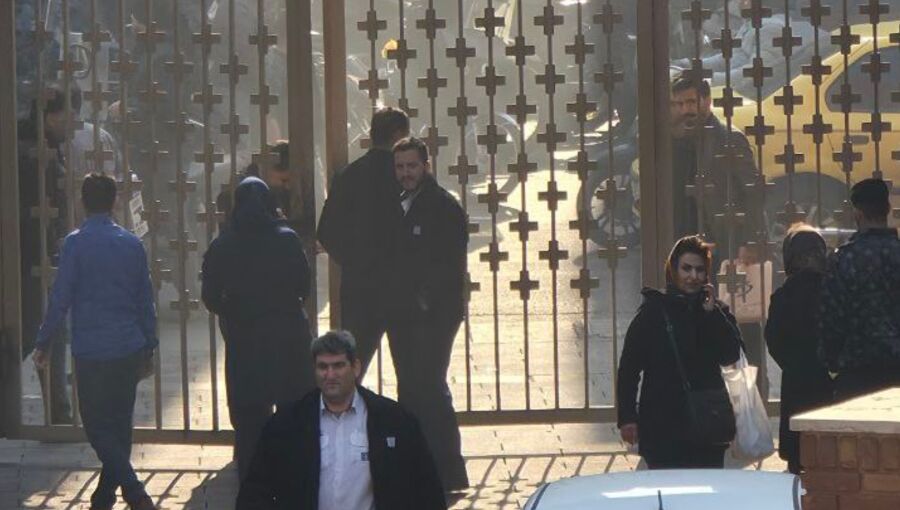
Security forces also entered Sina Hospital in Tehran on January 6, arresting injured protesters who had been transferred for treatment, with photos showing the gates the the hospital were closed to the street during the disturbances.
Eyewitnesses said the security presence created an atmosphere of fear and disrupted patient treatment, with some families avoiding medical centres for fear of arrest.
Tehran's Grand Bazaar witnessed strikes on January 6 focused on the main sections, including the gold and currency market, the textile market, and parts of the shoe and household goods markets.
The strike formed spontaneously without official calls, with shopkeepers protesting severe currency fluctuations, gold price jumps, market recession and a sharp decline in purchasing power.
IRGC-linked Tasnim News Agency, affiliated with security institutions, claimed 568 police officers and 66 Basij militia members were injured since the protests began. Fars News Agency confirmed security forces' presence at Imam Khomeini Hospital but claimed protesters used the medical facility to hide.
UN Secretary-General António Guterres expressed deep concern about developments, calling on Iranian authorities to respect freedom of expression, assembly and peaceful protest. The US State Department's Farsi account described the hospital raid as a "blatant crime against humanity".
Pezeshkian said in an official ceremony that "parliament and government together brought the country to this point", stating "we are all guilty" in an unusually critical acknowledgement of responsibility for the current situation.
Exiled former prince Reza Pahlavi, in a video message released on Tuesday, issued his first call to continue the protests and urged citizens to gather and chant slogans in a coordinated manner at 8 PM on Thursday and Friday, January 7 and 8.
A second video was released early in the morning on January 7, offering amnesty to military police and for them to register on his website, if they were willing to join his cause.

No comments:
Post a Comment