North of 60 Mining News - May 2, 2025
Shane Lasley, Mining News |


Kinross Gold Corp.
Kinross' Fort Knox mine north of Fairbanks, Alaska, has produced nearly 10 million ounces of gold over the past 29 years.
Record gold prices and rising production are expected to push Alaska's 2025 gold output value north of $3.4 billion.
With the gold shattering the $3,000-per-ounce ceiling without hesitation and Alaska mines poised to break above the 1-million-oz mark this year, the future of Alaska's mining sector is golden.
This combination of record gold prices and production positions Alaska's mining industry to crush all previous records this year when it comes to the value of the minerals and metals produced in the state.
The U.S. Geological Survey (USGS) calculates that Alaska's mining operations produced $4.7 billion of non-fuel minerals – gold, zinc, silver, lead, and aggregate products – in 2024. Adding the coal produced for in-state power plants bumps this total up to roughly $4.8 billion.
The roughly 959,000 oz of gold produced at six hardrock and more than 200 placer mines contributed $2.3 billion, or nearly half, of Alaska's mineral production value during 2024. With gold prices more than 40% higher than they were at this time last year and production on the rise, more than $3.4 billion of this precious metal could be recovered from Alaska mines this year.
This would push Alaska's mineral production value up to around $6 billion this year, even with a 20% drop in the production of zinc, the second largest contributor to the state's mining sector, expected at the Red Dog mine.

John Paulson
While breaking above the 1-million-oz-per-year gold production threshold is a momentous milestone for Alaska, output of the precious metal is expected to continue climbing and could break above 2 million oz if the new Donlin Gold owners push that world-class mine project across the finish line.
"With 39 million ounces of gold at double the industry average grade, and an optimal location in the prime jurisdiction of Alaska – already the second largest gold-producing state in the United States – we believe that the project could create value for decades to come," said John Paulson, a hedge fund billionaire that recently bought most of Barrick's 50% interest in the world-class gold project.
Kinross Gold output climbs
At 337,258 oz, the Kinross Alaska mill at the Fort Knox mine, about 20 miles north of Fairbanks, accounted for roughly 39% of Alaska's gold production in 2024.
Since operations began in 1996, the Fort Knox mine has produced nearly 10 million oz of gold. Most of those ounces have come from ore mined at Fort Knox and adjacent properties.
Last year, however, the Kinross Alaska mill began processing ore from the newly developed Manh Choh mine about 200 miles to the southeast, marking a new era for the operation and gold production across much of Alaska.
This new era is the product of an initiative launched by Kinross Gold Corp. in 2020 to enhance gold production in Alaska by supplementing the primarily heap leach-grade ore mined from the Fort Knox property with higher-grade mill feedstock from satellite deposits within a roughly 300-mile radius of the mine.
Operated under a joint venture between Kinross (70%) and Contango ORE Inc. (30%), Manh Choh is the first mine to be developed under the Kinross Alaska initiative.
The first Manh Choh ore was fed into Kinross Alaska mill around midyear, and over the final six months of 2024, nearly 254,000 oz of gold was recovered at Fort Knox.
While the operation may not quite hit the 500,000 oz mark indicated by second-half 2024 production, the combination of Fort Knox and Manh Choh ore is expected to push gold output from the Kinross Alaska mine above 400,000 oz this year.
If production from all other Alaska gold-producing operations remains steady, the increased output at Fort Knox will likely be enough to push gold production in the state above the 1-million-oz mark.

Northern Star Resources Ltd.
Northern Star Resources' Pogo Mine in Alaska is expected to produce more than 300,000 oz of gold this year.
Rising prices lift all mines
With operational improvements at some of Alaska's other big gold producers and rocketing prices attracting new placer miners, Fort Knox is not the only operation expected to push Alaska's gold production higher.
Northern Star Resources Ltd. believes Pogo, the second-largest gold-producing mine in Alaska, is poised for a breakout year.
Since acquiring the Pogo mine toward the end of 2018, Australia-based Northern Star has steadily upgraded operations and expanded the mill at Pogo.
Last year, this underground mine about 85 miles southeast of Fairbanks produced 279,427 oz of gold, roughly 10% higher than the 254,492 oz produced in 2023.
With continued improvements on both the mining and processing sides of the operation, Northern Star expects Pogo gold production to top 300,000 oz this year – an improvement that will help push total Alaska production above the 1-million-oz mark.
Production is also trending higher at the third-largest gold-producing operation in the 49th State – Coeur Mining Inc.'s Kensington mine in Southeast Alaska.
Thanks to a steady rise in production throughout the year, Kensington produced 95,671 oz of gold last year, a 13% rise over 2023. With gold output increasing steadily every quarter of 2024, from 21,183 oz during the first quarter to 25,839 oz during the final three months, Coeur's Southeast Alaska mine is on pace to top 100,000 oz of gold in 2025.
While Hecla Mining Company's Greens Creek mine is best known for the roughly 9 million oz of silver it produces each year, the Southeast Alaska operation also recovers significant gold, zinc, and lead byproducts.
During 2024, Greens Creek produced 55,275 oz of gold, which is about 10% less than in 2023 but close to the average for this silver mine that typically produces between 48,000 and 60,000 oz per year.
Sundance Mining Group's Dawson mine in Southeast Alaska adds about 12,500 oz of gold to Alaska's annual production total. While Dawson is the smallest of the hardrock gold mines, its steady output could make the difference whether 2025 Alaska gold production pushes above the 1-million-oz threshold.
Alaska's more than 200 placer gold mining operations will also help push the state's gold production total higher, as owners of these mostly family-run operations are eager to begin pushing pay dirt through wash-plants to recover $3,000/oz-plus gold.

Novagold Resources Inc.
So far, drills have outlined 39 million ounces of gold at Donlin, and geological evidence suggests the deposit is much larger.
One million-oz gold mine
As momentous as breaking above 1 million oz would be, the Donlin Gold project has the potential to single-handedly accomplish this feat – more than doubling Alaska's current gold production.
This 39-million-oz gold mine project in the Yukon-Kuskokwim region of Southwest Alaska has been on the cusp of development for more than a decade but has been delayed by optimization studies and permitting challenges.
After nearly two decades of exploration, engineering, and permitting, Barrick Gold Corp. is selling its 50% joint venture ownership of Donlin Gold to hedge fund billionaire John Paulson and project partner Novagold Resources Inc. for $1 billion.
The cash from the sale will likely be reallocated to a more diverse mining portfolio. This wider focus is reflected in the company's new name, Barrick Mining, which was announced on April 28.
With Barrick's exit, the project's owners, Novagold (60%) and Paulson (40%), are expected to make the final push toward a construction decision.
This will begin with updating a feasibility study completed in 2011 and refreshed in 2021 that details plans for a mine at Donlin that would produce 1.1 million oz of gold annually for 27 years.
The new partnership is also expected to resume the exploration of Donlin's larger potential, which is estimated to be in the 100-million-oz realm.
"Our management team welcomes this enormous vote of confidence and looks forward to initiating an updated Feasibility Study, as well as to allowing our new drill program to move towards reserve and resource expansion," said Novagold President and CEO Greg Lang.
While a mine at Donlin remains a few years out, this 1-million-oz-per-year operation could help ensure Alaska's golden future continues much deeper into the 21st century.
Author Bio
Shane Lasley, Publisher
Shane Lasley, Publisher
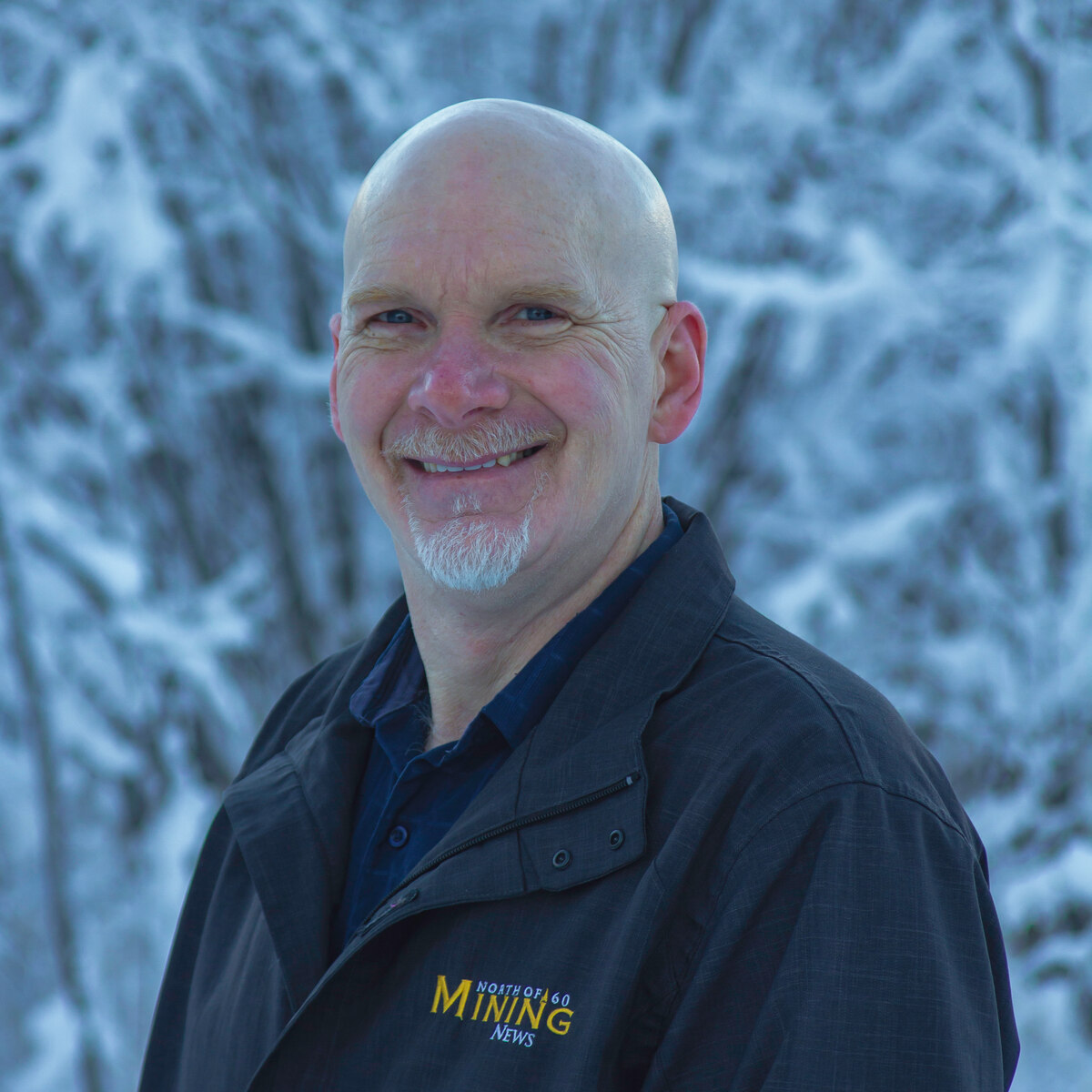
Over his more than 16 years of covering mining and mineral exploration, Shane has become renowned for his ability to report on the sector in a way that is technically sound enough to inform industry insiders while being easy to understand by a wider audience.

No comments:
Post a Comment