Mediterranean ECA Limits on Shipping’s Sulfur Emissions Are Now in Effect
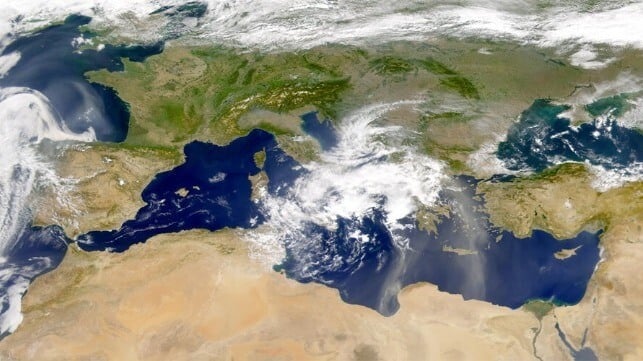
The Mediterranean Emission Control Area officially launched today, May 1, under the MARPOL Annex of the International Maritime Organizations. Officials are hopeful that it will help to clean the Mediterranean region and contribute to the overall improvements already seen in air quality since the launch of the first ECA in the Baltic and the addition of three subsequent areas. The IMO has three additional areas slated to enter the program.
The effort to create an emission control area in the Mediterranean had been a priority for activists and was discussed over the past several years before it was adopted in 2021 at the UN’s Barcelona Convention and received an IMO designation in 2022. The IMO highlights the importance of the region in shipping noting that the Mediterranean is home to some of the busiest maritime routes in the world. The IMO says the Mediterranean supports 20 percent of seaborne trade. It estimates more than 17 percent of cruises and 24 percent of the worldwide fleet navigate in the Mediterranean.
Under the new requirements, ships must reduce the sulfur content in marine fuel to 0.1 percent from the global standard of 0.5 percent. The measures became mandatory as of May 1.
EU officials highlight data that shows sulfur oxide emissions in the EU decreased by approximately 70 percent since 2024. They credit it to the establishment of the ECA in Northern Europe. They however note that nitrogen oxide (NOx) emissions in the EU have increased by 10 percent between 2015 and 2023. The data however shows that NOx emissions specifically in the Mediterranean are up eight percent. The European Commission and Mediterranean states are reported to be currently discussing the next phase steps for the most effective means to reduce NOx emissions.
The first ECA was adopted in 1997 and entered into force in 2005 for the Baltic. Since then, the program has been expanded to include the North Sea, North America, and the Caribbean region around the U.S. territories of Puerto Rico and the Virgin Islands. The IMP says since the sulfur content limit was introduced in 2020, an overall 70 percent reduction in total sulfur oxide emissions from shipping has been achieved due to the 0.5 percent global standard for maritime fuels.
In 2024, the IMO designated two further ECAs for the Canadian Arctic and the Norwegian Sea. In April, during the MEPC meeting, the IMO also approved the Northeast Atlantic ECA. Its adoption is due to be finalized this year and to go into effect in 2027. It covers the areas near Greenland, the Faroe Islands, Iceland, and the U.K.
Understanding the IMO’s Net-Zero Framework
As the International Maritime Organization (IMO) releases more detail on its forthcoming Net-Zero Framework—set to take effect in 2027 assuming it is adopted in 2025—it’s becoming increasingly clear that complexity will be one of its defining features. Though at first glance the framework may resemble the EU’s FuelEU Maritime regulation, which focuses on well-to-wake greenhouse gas (GHG) intensity, the IMO’s approach appears to go significantly further.
What distinguishes the IMO’s framework is its introduction of a two-tier compliance system, alongside differential pricing for so-called “remedial units” designed to ensure vessels remain within agreed emissions limits. This layering brings both challenges and opportunities, especially because shipowners and charterers will need to collaborate closely to navigate its implications. From the legal allocation of costs and risks to operational decision-making, the framework will demand a new level of commercial and regulatory coordination in the industry.
Unsurprisingly, the announcement of the IMO’s framework has prompted a wave of questions from across the sector. In just the past week, three separate clients have asked whether this new regime will override the existing landscape of regulations which they have only recently begun to apply and integrate into their business models —namely, the application of the EU Emissions Trading System (EU ETS) to shipping, the FuelEU Maritime regulation, and the IMO’s very own Carbon Intensity Indicator (CII). The short answer is: not yet.
For now at least, the Net-Zero Framework will supplement these regulations - not replace them. As an IMO instrument, it has no immediate impact on EU law, nor does it negate the industry’s present obligations under ETS or FuelEU Maritime. However, as with many multi-jurisdictional regimes, a key question will be whether the EU eventually adapts its rules to align with the IMO’s framework, particularly to avoid duplication or undesirable regulatory conflict.
It’s also worth noting that the CII - an earlier IMO initiative aimed at reducing emissions intensity - is itself under review and could see significant changes in 2026. Any future revision may aim to better integrate CII into the IMO’s broader net-zero ambition and align with the market-based measures that the new framework seems poised to introduce.
The framework is also sparking broader strategic conversations - especially when it comes to fuel pathways and the role of transitional technologies like LNG. Although the United States withdrew from the final negotiations, the framework is noteworthy for its inclusive stance on alternative fuels. Rather than narrowing the path, it leaves room for multiple decarbonisation options, at least for the time being.
For the LNG sector, this is a welcome signal. With LNG dual-fuel vessels currently comprising around two-thirds of the global alternative fuel-capable fleet, continued recognition of LNG as a viable transitional fuel helps ensure that these assets retain commercial value. In a sector where capital commitments are long-term and strategic, that clarity is critical.
Still, significant uncertainty remains. The industry must prepare not only for the operational and contractual consequences of the IMO’s evolving climate rules, but also for their interaction with existing regulatory structures and future market dynamics. What is clear, however, is that the IMO’s Net-Zero Framework marks a major step in the sector’s decarbonisation journey - one that will demand adaptability, legal foresight, and above all, collaboration.
Nick Austin is a lawyer in Reed Smith’s Transportation Industry Group.
The opinions expressed herein are the author's and not necessarily those of The Maritime Executive.

No comments:
Post a Comment