At least 37 people have been killed in violent clashes between Bedouin tribes and local Druze fighters in the southern Syrian city of Sweida, a war monitor reported Monday, marking the deadliest bout of unrest in the region since May. The unrest has prompted the Syrian government to deploy security forces in a bid to restore order, as fears grow of renewed instability in the Druze-majority province.
Issued on: 14/07/2025 -
By: FRANCE 24
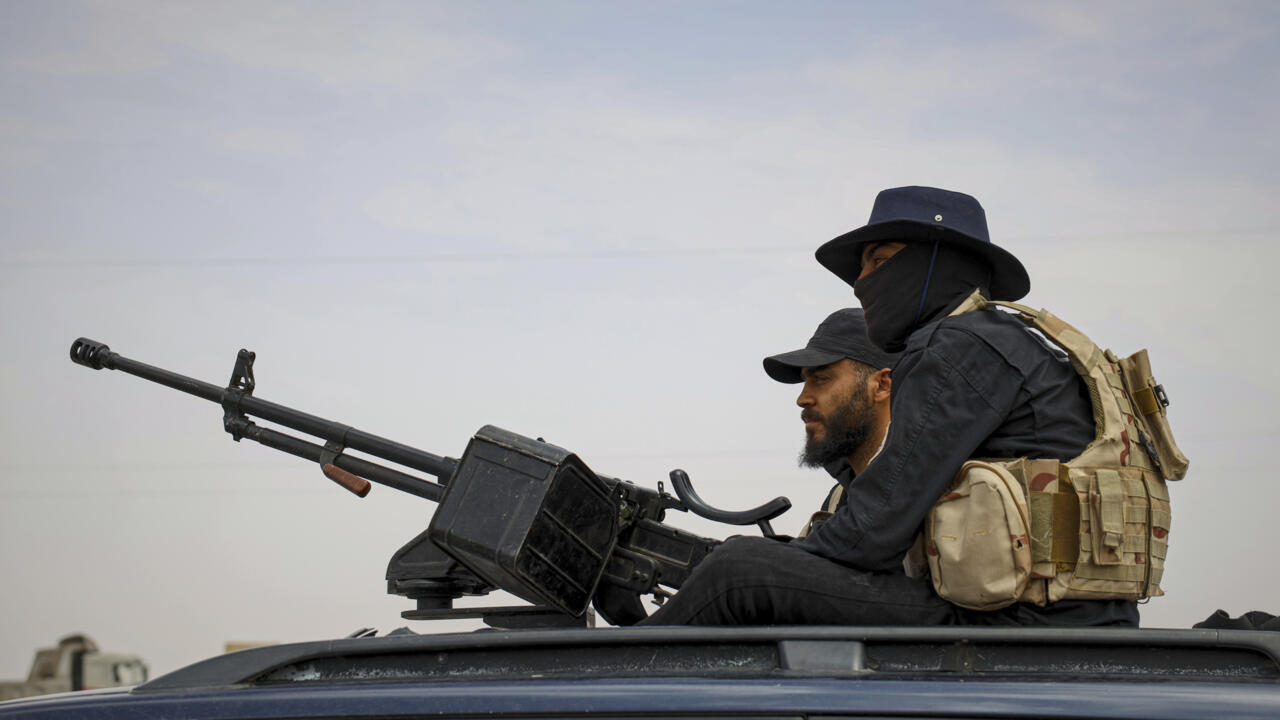
Clashes between Bedouin tribes and local fighters in the predominantly Druze city of Sweida in southern Syria have killed 37 people, a war monitor said Monday, as authorities sent forces to de-escalate the situation.
The clashes are the first outbreak of deadly violence in the area since fighting between members of the Druze community and the security forces killed dozens of people in April and May.
The Syrian Observatory for Human Rights said at least 37 people had been killed, 27 of them Druze, including two children, and 10 of them Bedouin.
It also reported the closure of the Damascus-Sweida highway due to the violence.
Syria's interior ministry put the toll at "more than 30 deaths and nearly 100 injuries" and said it would deploy troops in coordination with the defence ministry.
Those troops "will begin direct intervention in the area to resolve the conflict, stop the clashes, impose security, pursue those responsible for the incidents, and refer them to the competent judiciary," an interior ministry statement said.
Syrian state-run media outlet SANA earlier said the security forces had deployed on the administrative borders between Daraa and Sweida provinces in light of the situation.
Sweida Governor Mustapha al-Bakur called on his constituents to "exercise self-restraint and respond to national calls for reform".
Several Syrian Druze spiritual leaders have also called for calm and asked Damascus to intervene.
Due to the violence, the education ministry announced the postponement of Sweida's official secondary school exams due on Monday to a future date.
Syria's pre-civil war Druze population numbered around 700,000, with Sweida province home to the sect's largest community.
Bedouin and Druze factions have a longstanding feud in Sweida, and violence occasionally erupts between the two.
The interior ministry said the violence was "the result of unfortunate armed clashes that broke out between local military groups and clans... against a backdrop of accumulated tensions over previous periods".
Since the overthrow of longtime Syrian ruler Bashar al-Assad, concerns have been raised over the rights and safety of minorities under the new Islamist authorities, who have also struggled to re-establish security more broadly.
Clashes between the new security forces and Druze fighters in April and May killed dozens of people, with local leaders and religious figures signing agreements to contain the escalation and better integrate Druze fighters into the new government.
(FRANCE 24 with AFP)
Violence erupted after a wave of kidnappings, including the abduction of a Druze merchant on Friday on the highway linking Damascus to Sweida
Reuters| Yesterday |
More than 30 people were killed and 100 injured in armed clashes in Syria's predominantly Druze city of Sweida, the Syrian interior ministry said early on Monday, in the latest bout of sectarian clashes.
The violence erupted after a wave of kidnappings, including the abduction of a Druze merchant on Friday on the highway linking Damascus to Sweida, witnesses said.
This is the first time sectarian fighting has erupted inside the city of Sweida itself, the provincial capital of the mostly Druze province.
Last April saw clashes between Sunni fighters and armed Druze residents of Jaramana, southeast of Damascus, which later spread to another district near the provincial capital.
"This cycle of violence has exploded in a terrifyng way and if it doesn't end we are heading toward to a bloodbath," said Rayan Marouf, a Druze researcher based in Sweida who runs the Suwayda24 website.
The clashes involving Bedouin tribal fighters and Druze militias were centered in Maqwas neighborhood east of Sweida, which is inhabited by Bedouin tribes, and was encircled by armed Druze groups and later seized.
The Syrian ministry of interior said that its forces will begin direct intervention in Sweida to resolve the conflict, calling on local parties in the Druze city to cooperate with the security forces.
Armed Bedouin tribesmen also launched attacks on Druze villages on the western and north outskirts of the city, residents said.
A medical source told Reuters that at least 15 bodies had been taken to the morgue at Sweida's state hospital. Around 50 people were injured, with some transported to Deraa city for medical care.
The violence marked the latest episode of sectarian bloodshed in Syria, where fears among minority groups have surged since Islamist-led rebels toppled President Bashar al-Assad in December, installing their own government and security forces.
Those concerns intensified following the killing of hundreds of Alawites in March, in apparent retaliation for an earlier attack carried out by Assad loyalists.
It was the deadliest sectarian flare-up in years in Syria, where a 14-year civil war ended last December with Assad fleeing to Russia after his government was overthrown by rebel forces.
Israel strikes military tanks in southern Syria, where government forces clash with Druze militias
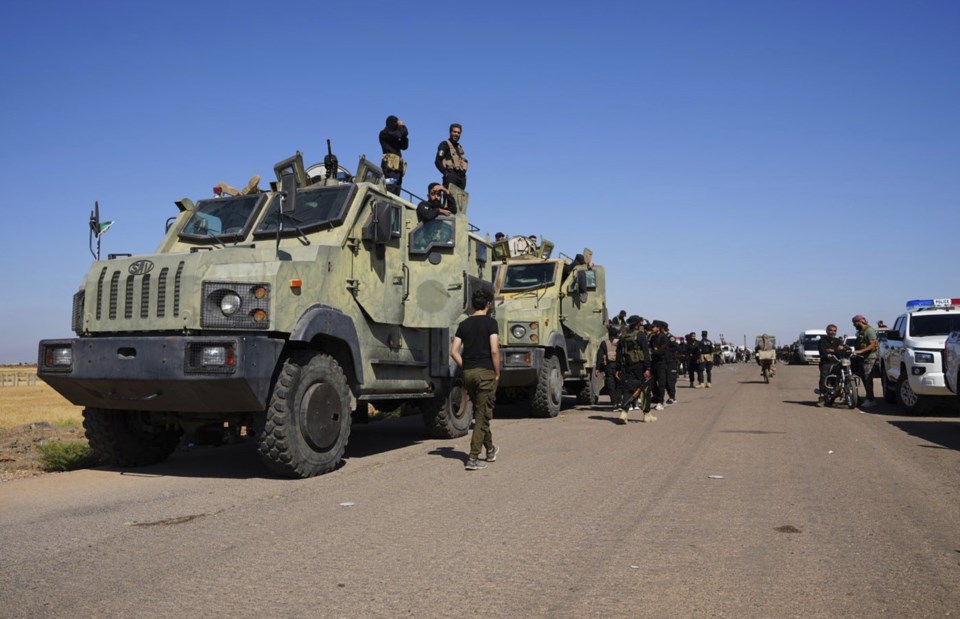
BUSRA AL-HARIR, Syria (AP) — Israel’s army said Monday it has struck military tanks in southern Syria, where government forces and Bedouin tribes clashed with Druze militias.
Dozens of people have been killed in the fighting between local militias and clans in Syria ’s Sweida province. Government security forces that were sent to restore order Monday also clashed with local armed groups.
Syria's Interior Ministry has said more than 30 people have died and nearly 100 others have been injured. The Syrian Observatory for Human Rights, a U.K.-based war monitor, reported at least 89 dead, including two children, two women and 14 members of the security forces.
The clashes in Syria initially broke out between armed groups from the Druze and Sunni Bedouin clans, the observatory said, with some members of the government security forces “actively participating” in support of the Bedouins.
Interior Ministry spokesperson Noureddine al-Baba said government forces entered Sweida in the early morning to restore order.
“Some clashes occurred with outlawed armed groups, but our forces are doing their best to prevent any civilian casualties,” he told the state-run Al-Ikhbariya TV.
The observatory said the clashes started after a series of kidnappings between both groups, which began when members of a Bedouin tribe in the area set up a checkpoint where they attacked and robbed a young Druze man.
Rami Abdurrahman, who heads the observatory, said the conflict started with the kidnapping and robbery of a Druze vegetable seller, leading to tit-for-tat attacks and kidnappings.
Syria’s defense and interior ministries were deploying personnel to the area to attempt to restore order.
The Interior Ministry described the situation as a dangerous escalation that “comes in the absence of the relevant official institutions, which has led to an exacerbation of the state of chaos, the deterioration of the security situation, and the inability of the local community to contain the situation despite repeated calls for calm.”
U.N. Deputy Special Envoy for Syria Najat Rochdi expressed “deep concern” over the violence and urged the government and local groups to “take immediate steps to protect civilians, restore calm, and prevent incitement.”
She said in a statement the clashes underscored the “urgent need for genuine inclusion, trust-building, and meaningful dialogue to advance a credible and inclusive political transition in Syria.”
In Israel, Druze are seen as a loyal minority and often serve in the armed forces.
Syria’s Foreign Ministry called for “all countries and organizations to respect the authority of the Syrian Arab Republic and refrain from supporting any separatist rebel movements.” In a statement, it called for Syrians to “cease acts of violence, surrender illegal weapons and thwart those seeking to dismantle the Syrian social fabric and sow discord and division.”
Israel sees Druze as a loyal minority
Israel has previously intervened in Syria in defense of the Druze religious minority. In May, Israeli forces struck a site near the presidential palace in Damascus, in what was seen as a warning to Syrian interim President Ahmad al-Sharaa. The strike came after dozens were killed in fighting between pro-government gunmen and Druze fighters earlier this year in the town of Sahnaya and the Druze-majority Damascus suburb of Jaramana.
Israeli Prime Minister Benjamin Netanyahu and Defense Minister Israel Katz said in a statement at the time that Israel “will not allow the deployment of (Syrian government) forces south of Damascus or any threat to the Druze community.”
Over half of the roughly 1 million Druze worldwide live in Syria. Most other Druze live in Lebanon and Israel, including in the Golan Heights, which Israel captured from Syria in the 1967 Mideast War and annexed in 1981.
While many Druze in Syria have said they do not want Israel to intervene on their behalf, factions from the Druze minority have also been suspicious of the new authorities in Damascus after former President Bashar Assad fled the country in December during a rebel offensive led by Sunni Islamist insurgent groups. On several occasions, Druze groups have clashed with security forces from the new government or allied factions.
A group led by Sheikh Hikmat Al-Hijri, a Druze spiritual leader who has been opposed to the new government in Damascus, on Monday issued a statement calling for “international protection” and accused government forces and General Security agency of “supporting takfiri gangs” - using a term for extremist Sunni militants.
‘Like unwrapping an onion’
The Druze religious sect is a minority group that began as a 10th-century offshoot of Ismailism, a branch of Shiite Islam. In Syria, they largely live in the southern Sweida province and some suburbs of Damascus, mainly in Jaramana and Ashrafiyat Sahnaya to the south.
The Druze developed their own militias during the country’s nearly 14-year civil war, during which they sometimes faced attacks by the Islamic State and other Islamist militant groups.
Israel has taken an aggressive stance toward Syria’s new leaders since Assad's fall, saying it does not want Islamist militants near its borders. Israeli forces earlier seized a U.N.-patrolled buffer zone on Syrian territory along the border with the Golan Heights and have launched hundreds of airstrikes on military sites in Syria.
The Trump administration has been pushing for the new Syrian government to move toward normalization with Israel. Syrian officials have acknowledged holding indirect talks with Israel to attempt to defuse tensions, but have not responded to reports that the two sides have also held direct talks.
U.S. envoy to Syria Tom Barrack told The Associated Press last week that he believes normalizing ties will happen “like unwrapping an onion, slowly.”
———
Sewell reported from Beirut. Associated Press writer Kareem Chehayeb in Beirut contributed to this report.
Omar Sanadiki And Abby Sewell, The Associated Press
Israel has demanded southern Syria be demilitarized. This has had the result of creating a vacuum in southern Syria. The government claims that it wants to protect civilians and restore order.

The Druze in Syria have often sought to maintain some of their own autonomy in their region, a trend that increased during the Syrian civil war.
The recent clashes have led Israel to carry out overflights in southern Syria, according to local witnesses in the country.
In addition, reports said that the IDF had targeted armored vehicles in Syria amid the clashes. This is not the first time that has happened. In fact, this is at least the third time in the last six months that this similar cycle has played out.
In essence, the way the cycle works is like this: Druze clash with local Arabs. Usually several people or up to a dozen people are killed, with victims on both sides. The government forces try to intervene. Typically, government forces oppose the armed Druze fighters who have also arrived on the scene. Israel then also threatens to intervene and sometimes carries out airstrikes or threats. Subsequently, the government says it has come to an agreement with the Druze. Commonly, the agreement is supposed to have the Druze accept government control. Generally, nothing changes, and in a month or two, there are new clashes.

The Druze served in the regime’s military like other Syrians, however, they also sought to arm themselves to protect their own interests. Most Druze live in the area of Sweida, also called Jebel Druze or Druze Mountain.
The Druze have been wary of jihadist groups and persecution. Therefore, they have tended to prefer the Assad regime as long as it didn’t oppress them too much. The regime was dominated by the Alawite minority and often tried to play groups off against each other in Syria. As such, the Druze were used by the regime. Druze in Israel and Lebanon also try to balance their interests with the state, achieving the same types of local autonomy while serving in the armed forces
What this means is that the Druze minority in Syria tends to be well armed and assertive. It also appears to be suspicious of other groups that may chafe against their autonomy, such as Bedouin and other Sunni Arab groups. According to North Press, a Syrian media outlet in eastern Syria, “a Druze militia, early on Monday, held the Syrian transitional government responsible for the recent escalation and violent clashes in Sweida Governorate, southern Syria.”
The report goes on to note that “In a statement, the Men of Dignity movement, a self-defense militia established after the outbreak of the Syrian war to defend Sweida Governorate, called for de-escalation while emphasizing the mobilization of its members to defend the region.” The statement read, “This dangerous tension the governorate is witnessing serves no party but rather threatens civil peace and paves the way for a state of chaos we reject for our people and our country.”
The Druze claim that the government has not secured the road between Sweida and Damascus. The report claims 100 people have been killed and wounded.
“We hold the Syrian government primarily responsible for the current situation,” the statement noted, “due to its failure to maintain security, its silence in the face of repeated violations, and its tolerance of affiliated factions interfering and siding with one group over another.”
It also says “Sweida was and will remain a land of dignity and coexistence. It will not be drawn into any sedition, but at the same time, we will not allow it to become an open arena for settling scores.”
Syria’s government believes a power vacuum has led to this chaos.
Clashes come after Israel demands southern Syria demilitarizedIsrael has demanded southern Syria be demilitarized. This has had the result of creating a vacuum in southern Syria. The government claims that it wants to protect civilians and restore order.
“The [Syrian] Ministry of Interior also issued a statement, attributing the worsening security situation to the absence of active state institutions and the local community’s inability to contain the crisis despite repeated calls for calm,” the report said.
The Syrian Defense Ministry “confirmed Monday the institutional vacuum that accompanied the outbreak of clashes in Sweida Governorate has worsened the state of chaos, in addition to the inability of official security or military institutions to intervene, which hindered the efforts exerted to calming down the situation there,” Syrian state media noted.
“We have followed with deep sadness and concern the bloody developments Sweida province has witnessed over the past two days, which left more than 30 deaths and nearly 100 injuries in a number of neighborhoods and towns,” the ministry said.
“In coordination with the Interior Ministry, we have deployed specialized military units to the affected areas, providing safe passages for civilians,” the report noted.
The difficulty in resolving these issues will mean continued clashes are likely. The Druze will not want to hand over their weapons to the new government.
The role of Israel is complex.
The IDF has said in recent weeks that it has captured two cells near the Golan that were linked to Iran’s Islamic Revolutionary Guard Corps (IRGC).
The IDF has also carried out recent operations on Mount Hermon. These are areas the IDF moved to when the Assad regime fell.
Some argue the IDF should intervene more in Syria. On the other hand, that could lead to more chaos in southern Syria.

No comments:
Post a Comment