De Beers strikes first kimberlite field in 30 years
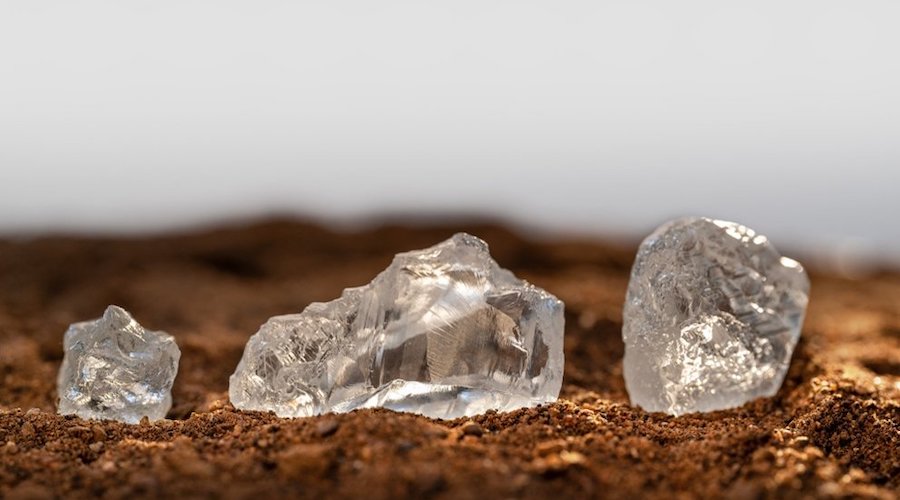
De Beers, the world’s largest diamond miner by value, and its joint venture partner in Angola, state-owned Endiama, have discovered a new kimberlite field, its first such discovery in three decades.

The diamond giant said it struck kimberlite, the most common source of mined diamonds, in its first drill hole into a high-priority target cluster in July. It plans to conduct more drilling, geophysical surveys and lab analysis over the coming months to determine the kimberlite type and its diamond potential.
“Angola is, in our view, one of the best places on the planet to look for diamonds, and this discovery reinforces our confidence,” De Beers chief executive Al Cook said in the statement.
De Beers, owned by Anglo American (LON: AAL), has explored for diamonds in Angola with Endiama since April 2022, after signing two mining investment deals with the government. In 2024, the partners expanded their agreements to cover diamond processing and further exploration.
The find comes as De Beers faces an uncertain future. Anglo American announced in May 2024 it would sell the unit or launch an initial public offering, part of a corporate shake-up following its defence against a £39 billion ($49 billion) takeover bid by Australian rival BHP (ASX: BHP).
At least six consortia are reported to be interested, including commodities billionaire Anil Agarwal, Indian diamond firms KGK Group and Kapu Gems, and Qatari investment funds. Botswana is also said to be pursuing a controlling stake.
The sale process unfolds against weak market conditions, with prices pressured by competition from lab-grown stones and slowing demand in China.
Alrosa flags high rates, inflation pressure as revenue falls
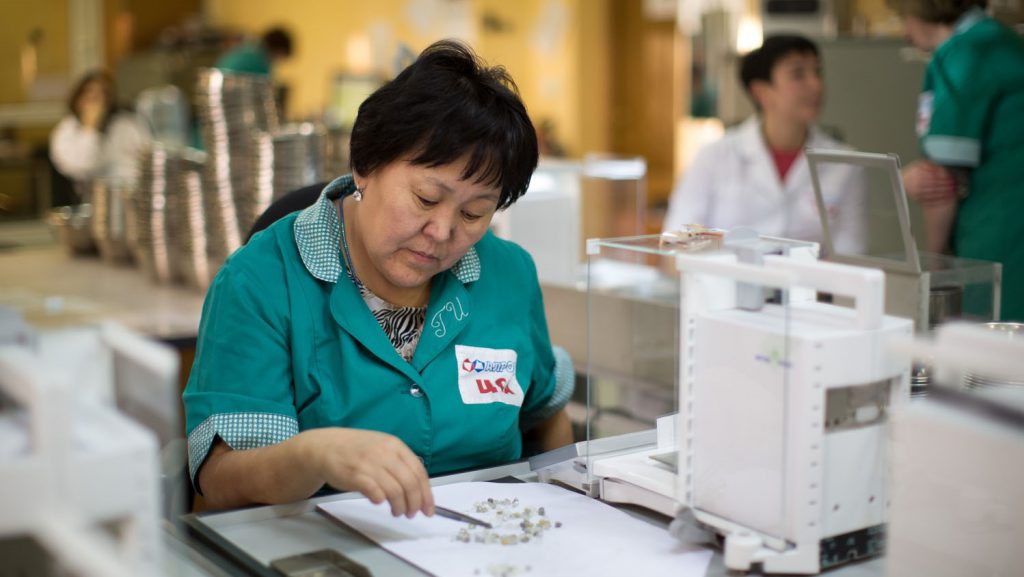
Russia’s sanctions-hit diamond producer Alrosa reported a 25% fall in first-half revenue on Tuesday, warning that geopolitics and macroeconomic uncertainties were weighing on demand as high interest rates, inflation and taxes exert pressure on profits.
Group of Seven countries banned direct imports of Russian diamonds in January 2024. This was followed by a European Union and G7 ban on imports of Russia-origin diamonds via third countries. Alrosa itself has been under US sanctions since 2022.
Alrosa’s full-year profits fell sharply in 2024, but the first half of 2025 showed signs of recovery, with net profit up 10.8% year-on-year to 40.6 billion roubles ($506.7 million).
Revenue fell 25% to 134.3 billion roubles and core earnings (EBITDA) dropped 42% to 37.1 billion roubles, Alrosa said.
Net debt jumped almost 10 times to 61 billion roubles, Alrosa’s results filing showed, but the company’s cash, cash equivalents and bank deposits rose 8.4% to 115.4 billion roubles.
“The relatively high level of the key rate and inflation continued to have an additional negative impact on the (group) in the first half of 2025,” Alrosa said, pointing to rising costs for materials and fuel.
Russia’s central bank has maintained elevated borrowing costs for several months, but has started an easing cycle, most recently trimming rates to 18% from 20% in late July.
Alrosa’s first-half profits were boosted by the sale of its stake in Angolan state-controlled diamond miner Catoca, for which Alrosa said it received 15.9 billion roubles.
A subsidiary of Oman’s sovereign wealth fund replaced Alrosa, the world’s largest producer of rough diamonds by volume, as a shareholder in Catoca under a deal formalized in May.
Angola had been under pressure to cease its long-standing partnership with Alrosa since the West imposed sanctions over Moscow’s February 2022 full-scale invasion of Ukraine.
Prior to the deal, Alrosa held a 41% stake in Catoca, with the remaining shares owned by Endiama EP, Angola’s national diamond company.
($1 = 80.1200 roubles)
(By Gleb Stolyarov and Alexander Marrow; Editing by Mark Potter)

No comments:
Post a Comment