Geneva (AFP) – Negotiators working on a global deal to curb plastic pollution had only hours left on Thursday to rescue the process after talks collapsed into disarray.
Issued on: 14/08/2025 - RFI

Countries wanting bold action to turn the tide on plastic garbage are so far apart from a group of oil-producing nations that the prospects of finding meaningful common ground before Friday -- after three years of talks – seem low.
With just over a day to go, talks chair Luis Vayas Valdivieso produced a draft text on Wednesday based on the few areas of convergence, in an attempt to find common ground.
But the draft succeeded only in infuriating virtually all corners, and the text was immediately shredded as one country after another ripped it to bits.

For the self-styled "ambition coalition" countries, it was an empty document shorn of bold action like curbing production and phasing out toxic ingredients and reduced down to a waste management accord.
And for the so-called Like-Minded Group, with Gulf states leading the charge, it crossed too many of their red lines and did not do enough to narrow down the scope of what they might be signing up for.
Plastic-eating mealworms found in Kenya offer hope for waste crisis
The bad, the very bad, the ugly
Vayas held talks with regional delegations late Wednesday that ran past midnight.
Raking over the fall-out, European Union member states held a coordination meeting early Thursday, as did a group of small island developing states struggling to cope with ocean plastic they did little to produce and have scant capacity to deal with.

Latin American and Caribbean nations and the African group of countries were also due to have their own meetings behind closed doors.
After that, the two key cross-regional blocs – the High Ambition Coalition and the Like-Minded Group -- were to have their own meetings before marching back into the plenary session, which brings all the negotiating countries together in the UN Palais des Nations' main assembly hall.
Aleksandar Rankovic from The Common Initiative think-tank, said Vayas had effectively removed all the ambitious countries' bargaining chips, meaning they are unlikely to get anything better than what is on the table.

"It's very simple: there are only two scenarios: there's bad and very bad – and a lot of ugliness in between," he told AFP.
"The bad scenario is that countries adopt a very bad treaty: something that looks like the text from Wednesday, but potentially worse.
"The very bad is that they don't agree on anything, and they either try to reconvene," or the treaty is "kept in limbo for a long time – so practically abandoned".
Plastic Odyssey and Unesco sign deal to restore marine World Heritage sites
'Repulsive surrender'
After three years and five previous rounds of talks, negotiators from 180-odd countries have been working at the United Nations in Geneva since August 5 to try to conclude a first international accord on dealing with plastic pollution.

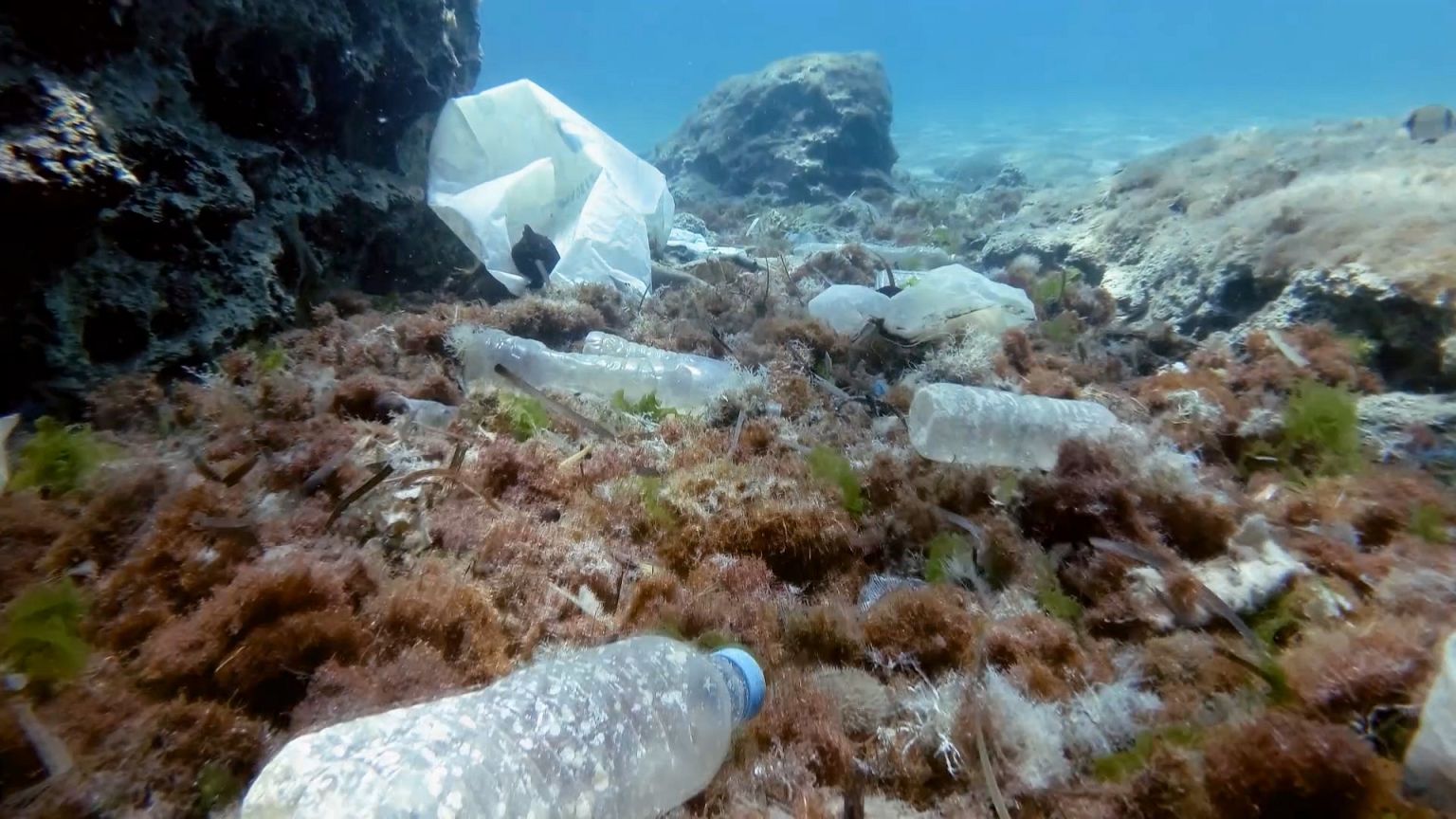
The problem is so ubiquitous that microplastics have been found on the highest mountain peaks, in the deepest ocean trench and scattered throughout almost every part of the human body.
In Wednesday's bombshell plenary, Panama said the draft text was "simply repulsive. It is not ambition: it is surrender", while Kenya said it had been "significantly diluted and lost its very objective".
The World Wide Fund for Nature said ambitious countries "must have by now recognised that there is no possible text that will be acceptable to all UN member states".
"They must then be prepared to vote their text through. There is no other way a meaningful treaty can be agreed," she said.
Mermaid’s tears: How tiny plastic pellets are flooding the environment
Lentil-sized and toxic, industrial plastic pellets known as "nurdles" – or "mermaid's tears" – are the second-largest source of microplastic pollution worldwide, with hundreds of thousands of tonnes leaked into the environment each year. As UN negotiations on curbing plastic pollution in Geneva enter their final hours, experts warn that efforts to halt their spread may fall short.
Issued on: 13/08/2025 -
FRANCE24
By: Lara BULLENS

Although it took place more than two years ago, an environmental disaster that hit the Atlantic coast in northwestern France is still having ripple effects today.
Waves of tiny lentil-sized plastic grains began washing up on the shores of Brittany and the Loire region in January 2023, numbering in the hundreds of thousands. Dubbed a “nightmare” by Christophe Béchu, then French minister for ecological transition, it was suspected that the tiny pellets spilled from a shipping container lost in the Atlantic Ocean. A lawsuit was filed but the case was soon closed, since no ship reported an incident in the area.
Despite tireless efforts by volunteers to clean up the plastic pellets littered across the shoreline at the time, more were found during the winter storms that battered the region earlier this year, according to French coastal protection union Vigipol.

Known as mermaid’s tears or nurdles, these industrial plastic pellets are the raw material used to make a variety of plastic products like bottles, pens or even car bumpers. They are made from crude oil derivatives like naphtha, measure about two to five millimetres in size and, if leaked into the environment, can cause irreversible damage to wildlife and ecosystems.
Which is likely what earned them mention in this week’s negotiations to finalise a global treaty against plastic pollution. Delegates from 184 countries have been trying to hammer out an agreement at the UN in Geneva, Switzerland, since August 5. But with less than 36 hours left and widely diverging positions slowing the talks, curbing plastic pellet pollution on a global scale seems unlikely for now.
‘A chemical cocktail’
Plastic pellets are the third-largest source of microplastic pollution in the EU, according to the European Commission, and the second-largest source of microplastic pollution worldwide. They mostly build up in marine environments but can end up on land as well, where they harm local ecosystems.
It is estimated that 445,970 tonnes of plastic pellets end up in the environment worldwide each year.
Spilled pellets are also a cause of microplastic contamination, which poses serious threats to human health. Pellets don’t biodegrade and are often ingested by animals like shellfish and fish, which humans go on to consume. Research has shown that once inside our bodies, microplastics are potential risk factors for cardiovascular disease, which can lead to strokes or heart attacks. They are so pervasive that they have even been found in breast milk, semen, brains and bone marrow.
Nurdles, like most plastics, also act as sponges for toxic products and bacteria found in their surroundings. They can attract so-called forever chemicals like PCBs and PFAs, but can also carry harmful bacteria like E.coli.
“Chemical pollution tends to stick to the surface of the pellets. So not only do they contain polluting elements within them, they also contain other environmental contaminants, [which] surround them,” says Frédérique Mongodin, marine litter policy officer at Seas At Risk, a European environmental coalition.
“They turn into a sort of chemical cocktail.”
Once released into the environment, the nurdles are difficult to clean up. There is no technique to carry out a sweeping, large-scale removal of pellets from shorelines or beaches. Most operations require the manual use of handheld tools like shovels, vacuums or screens to separate the tiny granules from their environment.
“It’s also important to note that most clean-ups are not done soon enough,” says Mongodin. “Pellets released into nature can spread within minutes,” she says, especially if they are spilled into marine environments. Given their tendency to float, pellets can travel far across oceans and seas.
Production sites cause most spills
The most catastrophic leak of plastic pellets took place in 2021, when a cargo ship carrying towers of containers filled with toxic chemicals and billions of plastic nurdles caught fire off the coast of Sri Lanka.
“It was just like out of a war movie,” environmentalist Muditha Katuwawala, who helped with the clean-up operation, told the BBC. A thick layer of nurdles strewn across the coastline looked “like snow”, he said. Dead fish and turtles washed up in swells, pellets stuck in their gills.

The X-Press Pearl cargo disaster became the largest plastic spill ever recorded. Four years on, volunteers on the island’s beaches are still sifting through the sand and finding countless nurdles.
Although colossal spills like this get the most media traction, France's Cedre research institute found that the risk of a pellet leak was highest along industrial sites and in loading, packaging or storage areas where nurdles are often stuffed in 25kg bags that hold one million pellets each.
“While incidents happen during transportation, it’s not the most important cause of pellet pollution,” says Mongodin. “At production sites, pellets are stored openly. There is nothing to prevent the pellets from flying away if a bag gets torn. And since the bags they are held in are quite thin and tear easily, this happens quite often. The bags are moved around using forklifts, for example, which can accidentally pierce them.”
The loss of plastic pellets happens at every single stage of the value chain, from producers to storage to transportation, converters and even recyclers. Petrochemical companies like Dow, ExxonMobil, TotalEnergies or Shell manufacture them before they are shipped internationally, most often by cargo ship or train.
In total, between 300 and 400 million tonnes are produced globally each year, according to Cedre.
‘Not enough’
France seems to be somewhat of a pioneer in the prevention of plastic pellet spills. An anti-waste law passed in 2022 stipulates that pellet producers must adopt certain regulations to prevent any runoff, like putting filters in drains, making sure pellets are removed from car parks, installing tarps around industrial sites and sealing transportation lorries, for example.
The EU took inspiration from the initiative and is in the process of finalising its own set of regulations, which will be implemented within the next two years.
“Now that the EU regulation has passed, hopefully we will see some change, but it takes time,” says Mongodin. “And unfortunately, some simple solutions like making packaging more rigid were not adopted in the EU law.”
On a global scale, last year the International Maritime Organization (IMO) published guidelines on how to transport pellets safely by sea as well as recommendations for clean-up in case of a spill. And as of 2026, the IMO will oblige captains to report container incidents to the nearest coastal state and the country that registered their vessel.
But for now, there are no international regulations that specifically address plastic pollution from pellets. This is why the stakes are so high at the UN talks this week.
Read more Deadlocked plastics treaty talks 'at cliff's edge'
Lisa Pastor, advocacy officer at ocean preservation group Surfrider Foundation Europe, has been anxiously attending the talks in Geneva since they began more than a week ago.
“The best approach to tackle plastic pellets would be to take preventative measures, which also means training personnel who handle them on best practices and teach them how to report any incidents so that they can be followed up quickly, minimising pollution once the damage is done,” Pastor says.
“And that’s crucial on an international level because pollution knows no borders. If there is a spill in one country, it will have consequences in another.”
But the talks are being stalled by deep divisions over whether plastic production should be included in the final treaty at all.
While the EU seems determined to rein in production, a cluster of mostly oil-producing states like Saudi Arabia, Kuwait, Russia and Iran – dubbed the "Like-Minded Group" – want the treaty to focus primarily on waste management.
“There are many lobbyists from the petrochemical industry here in Geneva. Some even belong to national delegations,” says Pastor.
“If the treaty doesn’t address production, in all honesty, it’s not up to the task. We can’t focus solely on how to report spills, managing existing pollution or clean-up operations. It’s not enough.”
After doubling between 2000 and 2019, plastic production is expected to keep rising. The OECD estimates that global production will increase by 70 percent of 2020 levels by 2040.
And with plastic waste poised to triple globally by 2060, time is running out.
 Euronews
By Monica PinnaPublished on 13/08/2025 -
We eat, breathe and drink them, but there is still much we don’t know. We’re talking about microplastics. They’re dangerous for the environment and for our health. They can absorb toxic substances and easily make their way into the food chain. What is the European Union doing about it?
The Mediterranean is the sixth largest accumulation zone for marine litter. It holds only 1% of the world’s waters but concentrates 7% of all global microplastics. This is why French scientists from the Exploration Bleue project have come off the coast of Toulon to study the impact of microplastic pollution in the Mediterranean Sea.
Their expeditions are led by the NGO Expédition 7ᵉ Continent’s 27-metre sailing vessel.
“The Mediterranean is an enclosed sea with a dense population. All human activity ends up in the sea. We study the chemical pollutants carried by plastics. What we already know is that all of them contain chemical pollution,” explains Alexandra Ter-Halle, Director of Research at the French National Centre for Scientific Research (CNRS) and scientific coordinator of the expedition.
The research involves towing two trawls for one hour to collect microplastic samples. These will then be sorted in the laboratories participating in the project. Alexandra has been studying the chemical nature of pollutants associated with plastics for years at the University of Toulouse.
“We measure and weigh microplastics; we analyse their composition. We know that over 16,000 chemical substances are used to make plastics — 4,000 of them are already classified as hazardous.”
When marine animals are exposed to microplastics, chemical substances can transfer into their bodies. Since many of these are endocrine disruptors, they impact the animals’ health. The effects on humans are not yet fully understood, as Alexandra explains:
“We know that endocrine disruptors affect the entire hormonal system in our bodies. They impact fertility and the development of cancer, but we still have many questions about this plastic pollution.”
Science is only just beginning to understand how dangerous microplastics can be for ecosystems and human health. We eat, breathe and drink them — but there’s still much we don’t know. For micro- and nanoplastics, which are often smaller than a thousandth of a millimetre, we lack precise tools to measure them or fully grasp their effects, scientists say.
The European Commission’s Zero Pollution Action Plan aims to cut microplastics by 30% by 2030. Jean-François Ghiglione, a marine microbiologist and research director at CNRS, led an unprecedented sampling campaign across nine major European rivers in 2019. He found microplastics everywhere in ‘alarming’ concentrations.
“Europe is quite advanced in this area,” explains Ghiglione. “We used to have massive plastic pollution, mainly from packaging and single-use plastics. That was the European Union’s initial target. Now, we’re hoping to see a shift in how plastic is perceived.”
So far, plastic has been viewed as waste, and efforts have focused on waste management. Ghiglione hopes the EU will drive a push for a drastic reduction in plastic production, and also come out with a list of chemical substances to be banned from use in plastics.
Europe has made progress in limiting microplastics, but Ghiglione and the scientific community are calling for more. With negotiations for a global treaty still underway, Europe and the international community face a choice: continue managing pollution, or tackle the problem at its root.

No comments:
Post a Comment