Ukraine PM orders sweeping audit of mining licences
Ukraine’s Ministry of Economy and the State Service of Geology and Subsoil will conduct an audit of all subsoil users who hold permits for strategically important deposits, following an order from Prime Minister Yulia Svyrydenko.

“We plan to check who is actually working and who is simply holding licenses without extraction. Such sites must either produce results or go back to auction for honest investors,” she wrote on Telegram on Thursday.
As reported, in mid-July this year, the Cabinet of Ministers, by Resolution No. 845, approved the lists of minerals and components of strategic and critical importance, as well as lists of subsoil plots (mineral deposits) of strategic and/or critical importance that will be offered for use through auctions or production-sharing agreements (PSAs).
The first list of strategically important minerals and components includes 11: aluminum, beryllium, copper, nickel, niobium, strontium, tantalum, titanium, uranium, and zirconium ores, as well as fluorite. Together with critically important minerals, the total list contains 28 items.
As for deposits, the list of those to be auctioned includes 60 sites, while 26 will be offered under PSAs. Of these, there is one vanadium ore deposit, one lithium ore deposit, two potassium salt deposits, five titanium ore deposits, and 17 uranium ore deposits.
President Volodymyr Zelenskyy announced back in February this year that Ukraine had begun an audit of its subsoil resources as part of preparations for a memorandum with the United States, and that the government intended to protect businesses that are legally developing them.
“There are quite a few license holders in Ukraine. This entire process (signing a memorandum on mineral development with the United States) will help us in any case. First, all of our agencies, which have never engaged in such serious legal work before, will finally conduct a real audit of existing licenses. And this is already happening,” the President said.
According to him, the last major mineral development projects in Ukraine took place 50–60 years ago.
“This allows us to bring order: to know what we have, how much it’s worth, and who owns it. There will be decisions accordingly: what’s legally owned, what’s not, which licenses are active, and which are dormant. Where ownership is fair and business is engaged, we will defend them. We need that. Where licenses are dormant and someone has plundered resources, we will reclaim them. This is important for us,” Zelenskyy added.
Svyrydenko recently said that the practical work of the Ukraine-U.S. Reconstruction Investment Fund, created in the spring–summer of this year to focus on critical minerals, will begin in September.
IN THE MIDST OF WAR

Ukraine’s largest mobile operator, Kyivstar, is set to become the first Ukrainian company to list on a US stock exchange, with plans to debut on the Nasdaq later this year. The company could raise between $50mn and $200mn through the listing.
“The first Ukrainian company on the US stock exchange could immediately raise up to $200M,” the company said, noting that the Nasdaq debut would mark a milestone for the country’s corporate sector. Kyivstar is valued at $2.21bn.
The company’s parent, Dubai-based VEON, will retain at least 80% of the shares after the offering. “Kyivstar” will be the first Ukrainian company listed on a US stock exchange, according to the company.
Founded in 1994, Kyivstar has grown to become Ukraine’s dominant mobile operator, serving millions of subscribers nationwide. The company has continued to invest in network expansion and digital services despite the impact of the war, with mobile connectivity viewed as critical infrastructure during the conflict.
The offering is expected to attract interest from international investors seeking exposure to Ukraine’s telecommunications sector and to test market appetite for listings from companies operating in high-risk environments.
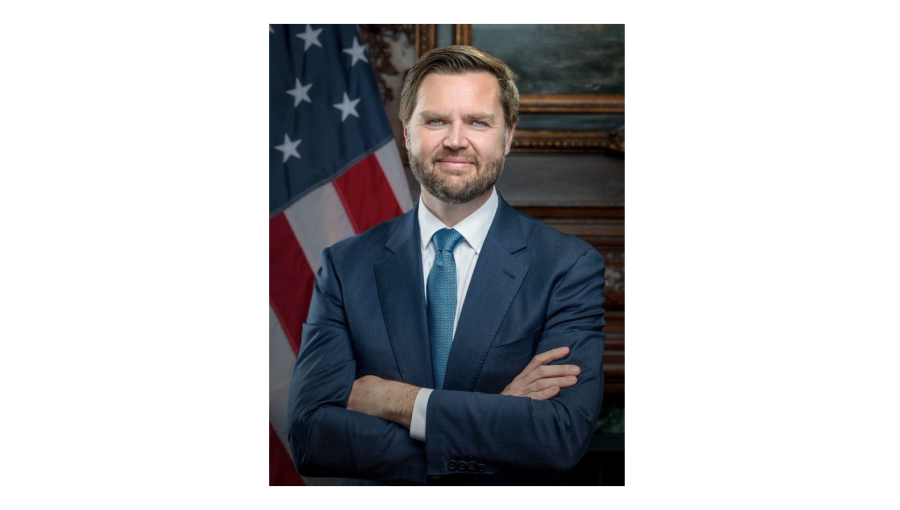
US Vice President JD Vance has said that Washington has stopped financing Ukraine’s war effort, signalling a shift in policy under President Donald Trump towards pushing European allies to take greater responsibility in supporting Kyiv.
“I think Trump believes that the US has had enough of funding the war in Ukraine. We want to achieve a peaceful resolution. But if Europe wants to buy weapons from us, that's fine with us,” Vance told Fox News.
He said the administration had told European partners that the war was taking place “on your doorstep, right under your noses,” and that they should take a bigger role in addressing Russia’s invasion.
“I think the president and I certainly believe that America is done with funding the military business in Ukraine,” Vance said, while stressing that the White House remained committed to ending the conflict. “We want to stop the killing. But Americans, I think, are tired of sending their money, their tax dollars, to this conflict.”
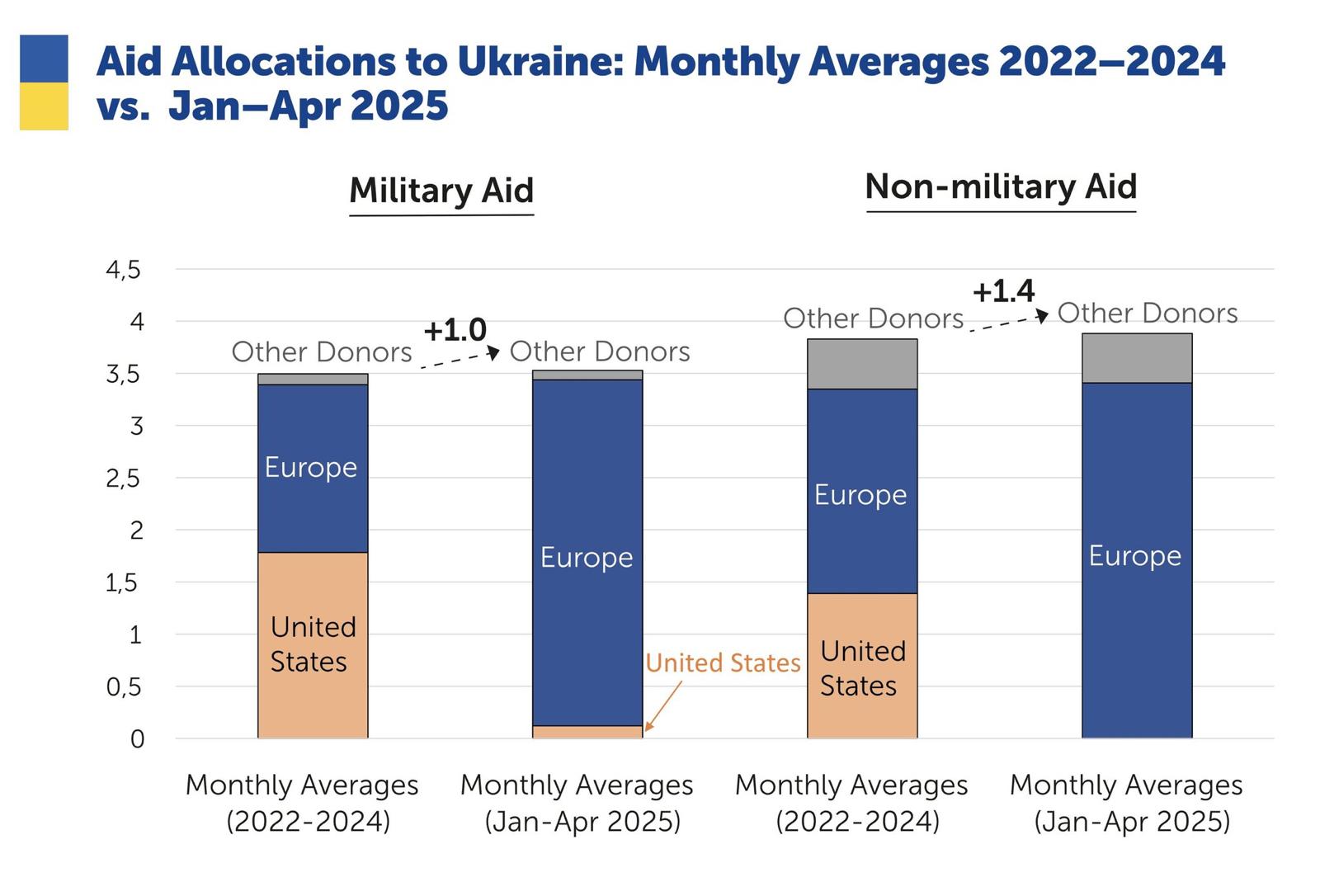
The US already stopped funding Ukraine last year when it ran out of money for Ukraine at the start of that year. Funding was eventually resumed with a $61bn aid package that was approved on April 20 when it looked like Ukraine might be defeated by Russia. Like now, Ukraine ran out of air defence missiles last spring and following a massive barrage in March, Russia went on to destroy most of Ukraine’s non-nuclear power infrastructure.
This year has played out in a similar fashion. Since US President Donald Trump took over in January, US funding has fallen off to next to nothing and the EU has taken up the bulk of the financial burden. This year Russia has again launched a devastating missile barrage in May and is now firing about four times more drones and missiles at Ukraine than at the start of this year.
Brussels said on August 10 it will provide Kyiv with over €3.2bn through the Ukraine Facility. The EU Council has approved the fourth tranche for Ukraine in 2025 under this facility, which will see Kyiv receiving more than €3.2bn in funding. The funds will be allocated to strengthen macroeconomic stability and support the operation of the public administration system.
The vice president added that Washington would work to secure a negotiated settlement between Moscow and Kyiv. “We will try to find some kind of agreed-upon solution that both Ukrainians and Russians can live with, even though neither side will be satisfied with the outcome of the negotiations,” he said.
The comments come as European leaders debate how to respond to a reduction in US military assistance, which has been a central pillar of Ukraine’s defence since Russia launched its full-scale invasion in February 2022. According to Nato figures, the US provided more than $70bn in military and financial aid to Ukraine during President Joe Biden’s term.
While the Trump administration has said it will continue to sell arms to European allies, the end of direct US funding is expected to put greater pressure on Nato members to boost their defence budgets and accelerate deliveries of equipment to Ukraine.
Ukraine needs $6bn for arms next year
Ukraine requires $6bn in funding this year to guarantee domestic weapons production in 2025, Deputy Minister of Defence Serhiy Boev said following talks with senior European Union officials in Kyiv on August 10.
Boev met Deputy Head of the EU Delegation to Ukraine Gediminas Navitskas to discuss financing for the defence-industrial complex in 2025 and 2026. He said that in order to meet planned weapons output by early 2026, funding commitments must be made in 2024.
The discussions focused on production of FPV drones, long-range strike systems and interceptor drones, as well as broader security assistance needs for 2026. Boev warned that, despite diplomatic efforts to end the conflict and international pressure on Moscow, “the aggressor continues to terrorise Ukraine and increase weapons manufacturing.” He added: “Ukraine must boost its readiness and strengthen partnerships with its allies.”
The meeting also reviewed next steps under the SAFE initiative, which is designed to integrate Ukraine into the European defence-industrial complex.
President Volodymyr Zelenskyy has previously said that Ukraine’s weapons manufacturing potential has exceeded $35bn, encompassing 1,000 types of products including artillery systems, armoured vehicles, advanced drones and missiles.
Boev emphasised that timely funding was essential to sustaining production levels and enabling Ukraine to counter Russia’s continued military build-up.

No comments:
Post a Comment