G7 Nations Agree to Ramp Up Pressure on Russia's Energy Exports
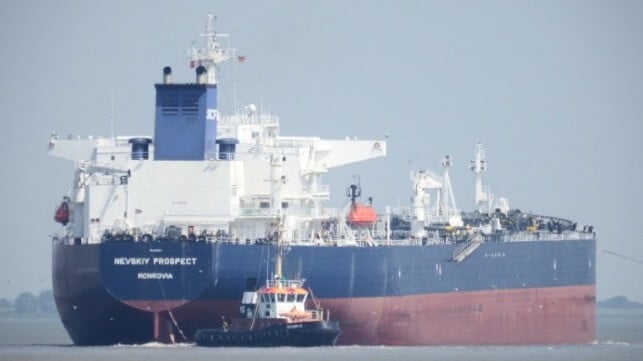
The finance ministers of the G7 nations have agreed to increase restrictions and penalties on Russia's energy exports, in hopes of convincing the Kremlin to bring an end to its ongoing war in Ukraine and its repeated violations of NATO airspace. Russia has successfully circumvented previous energy sanctions, but the new G7 measures take aim at its overseas customers in India and China, not at its shadowy and hard-to-regulate transport network.
"We agreed that now is the time to maximize pressure on Russia’s oil exports, a major source of their revenue. We will target those who are continuing to increase their purchase of Russian oil since the invasion of Ukraine and those that are facilitating circumvention," the finance ministers said in a joint declaration.
They also agreed to continue phasing out any remaining G7 imports of Russian hydrocarbons - and may take measures to restrict trade in refined products made from Russian oil. Indian refineries are the largest exporters of clean products made from Russian oil, and have sold large volumes into European markets since the beginning of the war, raising concerns about a "back door" for Russian petroleum to get into Western economies.
In addition, the ministers agreed to take measures to help Ukraine keep financing its defense - including mobilizing the value of Russian state assets that were frozen in G7-based banks at the start of the conflict. In Europe, leaders are actively discussing a plan to use $160 billion worth of frozen Russian assets to underwrite a loan to Ukraine, which would then be used to buy European weapons; as yet there is no consensus on the plan, and some EU member states have concerns about its legality.
Russian fuel shortages
Ukraine has taken its own measures to target the Russian energy sector, including both export infrastructure and internal refining capacity. Recent hits on loading terminals at Ust-Luga, Primorsk and Tuapse have reduced (or aimed to reduce) Russian petroleum producers' ability to export unrefined oil and condensate. And a constant stream of drone attacks on the largest Russian refineries have cut refining throughput capacity by an estimated 20-40 percent. Even a ban on gasoline exports - freeing up about 15 percent of refining output - has not alleviated a domestic "fuel crisis," which is so widespread that even Russian media outlets have begun to acknowledge it.
"In some regions, there has been a shortage of petrol for several weeks now," wrote Nezavisimaya Gazeta on September 29, as translated by BBC's Steve Rosenburg. "The continuation of the fuel crisis after the [Kremlin's now-extended] ban on petrol exports comes as a surprise . . . It is no longer possible to deny the signs of petrol shortages in the regions."
Government-aligned Russian paper Kommersant reported Wednesday that fuel imports from Asia may soon begin to help offset the damage to domestic refining capacity, reversing Russia's former status as a net exporter of refined products. Refineries in China, South Korea and Singapore are on the list of possible suppliers under consideration, Kommersant said. The plan calls for importing foreign fuel into ports in the Russian Far East, subsidizing it to keep costs level. This would free up about 1.3 million barrels a day of gasoline from Siberian refineries for use in western Russia.
The pressure may keep increasing. According to the Wall Street Journal, President Donald Trump has directed U.S. intelligence agencies to begin providing Kyiv with targeting information for long-range strikes deep within Russia, amplifying Ukraine's ability to carry out attacks on refineries, arms factories and military targets. Talks are reportedly under way on a deal that would allow Ukraine to buy America's long-range weapons - like the proven Tomahawk cruise missile - in exchange for U.S. access to Ukraine's highly advanced drone warfare technology.
Top image: Ian Greenwood / VesselFinder
Despite Sanctions, Russia's Arctic LNG 2 Plant is Up and Running
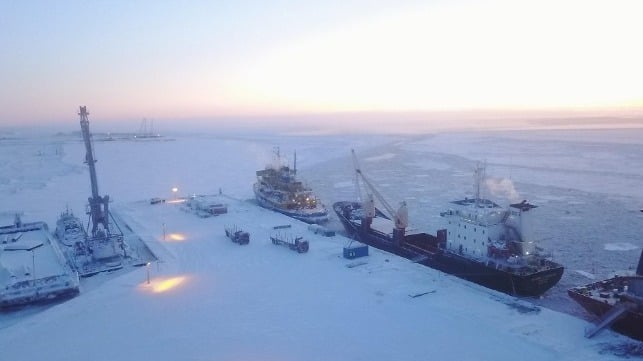
With extensive help from Chinese interests, Russian gas producer Novatek is making headway in its efforts to circumvent Western sanctions on its Arctic LNG 2 plant in the Siberian Arctic.
The remote Arctic LNG 2 facility was designed to be assembled at a large shipyard in three sections, each built on floating concrete pontoons. One by one, the pontoons would be towed into place at a terminal on the Gulf of Ob, then permanently sunk to rest on the bottom of a specially-prepared berth. This plan was moving smoothly until 2022, when Russia invaded Ukraine and the west imposed stringent sanctions on the plant's construction. Train 1 was installed in 2024, but Train 2 was delayed because of export bans on key parts from Western suppliers. The second train finally started operations just last month.
China's government (through state-owned enterprises) holds a 20 percent share in Arctic LNG 2. At present, Chinese gas companies are the plant's only customers, drawn by discounted prices - and undeterred by the threat of American sanctions.
This week, the LNG carrier Arctic Vostok arrived in Beihai and offloaded Arctic LNG 2's seventh cargo. As the winter ice season approaches in the Russian Arctic, it may be among the last this year, but that has not stopped Novatek from reaching for new records. On Wednesday, Bloomberg reported that the plant averaged 18 million cubic meters of gas liquefaction per day during September, about 14 percent above the previous record. The surge may be short-lived, as Arctic LNG 2 will have to shut down when the eastbound navigation season is over.
Novatek had planned to create a wider seasonal window for shipping Arctic LNG 2's product by building a fleet of icebreaking LNG carriers, as it did to enable exports from the neighboring Yamal LNG terminal. Sanctions scuttled this project as well: South Korean shipbuilder Samsung Heavy Industries paused work on a joint 15-ship construction venture with Russian yard Zvezda in February 2022, as soon as Western restrictions began to kick in. Zvezda retaliated by canceling the project and filing a lawsuit, and SHI reciprocated by terminating the contract. Without Korean assistance, the pace of construction at Zvezda has languished, and none of the ships in the series have yet entered commercial service. The first, Aleksey Kosygin, began sea trials this year but was back in drydock again by mid-July, according to Arctic consultant Ben Seligman.

No comments:
Post a Comment