Saturn’s icy moon may host a stable ocean fit for life, study finds
University of Oxford
image:
A new study has constrained the Enceladus’ global conductive heat flow by studying its seasonal temperature variations at its north pole (yellow). These results, when combined with existing ones of its highly active south polar region (red) provide the first observational constraint of Enceladus’ energy loss budget (<54 GW) – which is consistent with the predicted energy input (50 to 55 GW) from tidal heating. This implies Enceladus’ current activity is sustainable in the long term – an important prerequisite for the evolution of life, which is thought possible to exist in its global sub-surface ocean. Image credit: University of Oxford/NASA/JPL-CalTech/Space Science Institute (PIA19656 and PIA11141)
view moreCredit: Image credit: University of Oxford/NASA/JPL-CalTech/Space Science Institute (PIA19656 and PIA11141)
New findings from NASA’s Cassini mission show that Enceladus, one of Saturn’s moons and a top contender for extra-terrestrial life, is losing heat from both poles – indicating that it has the long-term stability required for life to develop. The findings have been published today (7 November) in Science Advances.
A new study led by researchers from Oxford University, Southwest Research Institute and the Planetary Science Institute in Tucson, Arizona has provided the first evidence of significant heat flow at Enceladus’ north pole, overturning previous assumptions that heat loss was confined to its active south pole. This finding confirms that the icy moon is emitting far more heat than would be expected if it were simply a passive body, strengthening the case that it could support life.
Enceladus is a highly active world, with a global, salty sub-surface ocean, believed to be the source of its heat. The presence of liquid water, heat and the right chemicals (such as phosphorus and complex hydrocarbons) means that its sub-surface ocean is believed to be one of the best places in our solar system for life to have evolved outside the Earth.
But this sub-surface ocean can only support life if it has a stable environment, with its energy losses and gains in balance. This balance is maintained by tidal heating: Saturn’s gravity stretches and squeezes the moon as it orbits, generating heat inside. If Enceladus doesn’t gain enough energy, its surface activity would slow down or stop, and the ocean could eventually freeze. Too much energy, on the other hand, could cause ocean activity to increase, altering its environment.
“Enceladus is a key target in the search for life outside the Earth, and understanding the long-term availability of its energy is key to determining whether it can support life,” said Dr Georgina Miles (Southwest Research Institute and Visiting Scientist at the Department of Physics, University of Oxford), lead author of the paper.
Until now, direct measurements of heat loss from Enceladus had only been made at the south pole, where dramatic plumes of water ice and vapour erupt from deep fissures in the surface. In contrast, the north pole was thought to be geologically inactive.
Using data from NASA’s Cassini spacecraft, the researchers compared observations of the north polar region in deep winter (2005) and summer (2015). These were used to measure how much energy Enceladus loses from its “warm” (0°C, 32°F) subsurface ocean as heat travels through its icy shell to the moon’s frigid surface (–223°C, –370°F) and is then radiated into space.
By modelling the expected surface temperatures during the polar night and comparing them with infrared observations from the Cassini Composite InfraRed Spectrometer (CIRS), the team found that the surface at the north pole was around 7 K warmer than predicted. This discrepancy could only be explained by heat leaking out from the ocean below. The measured heat flow (46 ± 4 milliwatts per square metre) may sound small, but this is about two-thirds of the heat loss (per unit area) through the Earth’s continental crusts. Across the whole of Enceladus, this conductive heat loss totals around 35 gigawatts: roughly equivalent to the output of over 66 million solar panels (output of 530 W) or 10,500 wind turbines (output of 3.4 MW).
When combined with the previously estimated heat escaping from Enceladus’ active south pole, the moon’s total heat loss rises to 54 gigawatts: a figure that closely matches predicted heat input from tidal forces. This balance between heat production and loss strongly suggests that Enceladus’ ocean can remain liquid over geological timescales, offering a stable environment where life could potentially emerge.
“Understanding how much heat Enceladus is losing on a global level is crucial to knowing whether it can support life,” said Dr Carly Howett (Department of Physics, University of Oxford and Planetary Science Institute in Tucson, Arizona), corresponding author of the paper. “It is really exciting that this new result supports Enceladus’ long-term sustainability, a crucial component for life to develop.”
According to the researchers, the next key step will be to determine whether Enceladus’ ocean has existed long enough for life to develop. At the moment, its age is still uncertain.
The study also demonstrated that thermal data can be used to independently estimate ice shell thickness, an important metric for future missions planning to probe Enceladus’ ocean, for instance using robotic landers or submersibles. The findings suggest that the ice is 20 and 23 km deep at the north pole with an average of 25 to 28 km globally - slightly deeper than previous estimates obtained using other remote sensing and modelling techniques.
“Eking out the subtle surface temperature variations caused by Enceladus’ conductive heat flow from its daily and seasonal temperature changes was a challenge, and was only made possible by Cassini’s extended missions,” added Dr Miles. “Our study highlights the need for long-term missions to ocean worlds that may harbour life, and the fact the data might not reveal all its secrets until decades after it has been obtained.”
Notes to editors:
For media enquiries and interview requests, contact Dr Carly Howett (carly.howett@physics.ox.ac.uk).
The study ‘Endogenic heat at Enceladus’ north pole’ will be published in Science Advances at 19:00 GMT / 14:00 ET on Friday 7 November 2025, DOI 10.1126/sciadv.adx4338
To view a copy of the paper before this under embargo, access the Science Advances press pack https://www.eurekalert.org/press/vancepak or contact: vancepak@aaas.org
About the University of Oxford
Oxford University has been placed number 1 in the Times Higher Education World University Rankings for the tenth year running, and number 3 in the QS World Rankings 2024. At the heart of this success are the twin-pillars of our ground-breaking research and innovation and our distinctive educational offer.
Oxford is world-famous for research and teaching excellence and home to some of the most talented people from across the globe. Our work helps the lives of millions, solving real-world problems through a huge network of partnerships and collaborations. The breadth and interdisciplinary nature of our research alongside our personalised approach to teaching sparks imaginative and inventive insights and solutions.
Through its research commercialisation arm, Oxford University Innovation, Oxford is the highest university patent filer in the UK and is ranked first in the UK for university spinouts, having created more than 300 new companies since 1988. Over a third of these companies have been created in the past five years. The university is a catalyst for prosperity in Oxfordshire and the United Kingdom, contributing around £16.9 billion to the UK economy in 2021/22, and supports more than 90,400 full time jobs.
Journal
Science Advances
Article Title
Endogenic heat at Enceladus’ north pole
Article Publication Date
7-Nov-2025
Copyright DR
By Joana Mourão Carvalho
Published on 07/11/2025 - EURONEWS
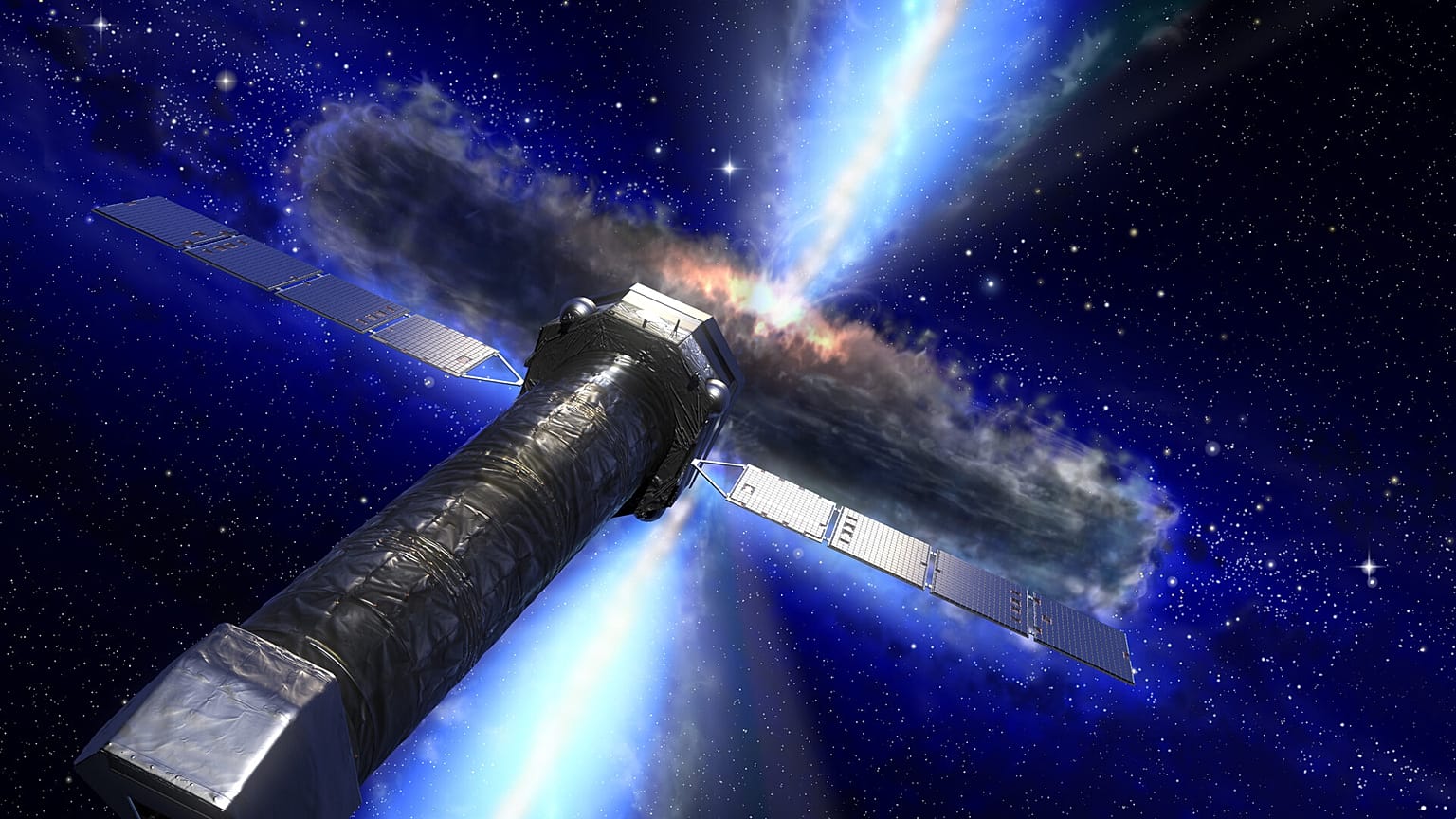
The European Space Agency's (ESA) future space observatory, the NewAthena telescope, could detect an unprecedented number of supermassive black holes – some formed when the universe was less than a billion years old.
At least that's the expectation of an international team led by Portuguese researchers who have created a simulated X-ray catalogue of the sky, using cosmological simulations to test NewAthena's ability to detect the faintest and most distant black holes.
Their research was recently publishedin the journal Monthly Notices of the Royal Astronomical Society.
"With NewAthena, it will be possible to discover around 250,000 active galactic nuclei, which are the black holes that are actively feeding," Nuno Covas, a researcher at the Institute of Astrophysics and Space Sciences (IA) at the University of Lisbon, told Euronews.
And of these 250,000, 20,000 will be around two billion years from the beginning of the universe and 35 will be around 1,000 million years from the beginning of the universe".
That's about 30 times stronger than current telescopes, Covas added.
This will be the first time that astronomers will be able to statistically study active galactic nuclei (AGNs) – the compact centre of a galaxy – in X-rays from the so-called Epoch of Reionisation, a phase in cosmic history when the universe was less than a billion years old.
According to the study authors, X-rays are an essential tool for finding these black holes while they are actively feeding, as the matter that spirals into them heats up to millions of degrees and emits high-energy radiation.
José Afonso, also from the IA and the University of Lisbon, says that currently "we have almost reached that first phase of the universe, where galaxies and black holes begin to appear".
But because NewAthena observes only a small region of the sky – an area of 10 square degrees – will make it possible to fully study those first galaxies and black holes.
Astronomers from the IA emphasise the importance of testing the potential of the NewAthena telescope to eventually overcome some of the great unknowns that still surround the formation of black holes.
One of the greatest challenges of modern astrophysics is to understand how galaxies and the black holes at their centre form and evolve together.
"What we really want is to discover these black holes giving rise to the formation of the first galaxies," Afonso said.
"Today we can't figure out what comes first. It's a bit of a game of chicken or the egg. Does a gigantic black hole appear first and then accrete a galaxy around it, or is there first the formation of the galaxy, which then somehow gives rise to the appearance of a gigantic black hole?"
He added that the telescope, by discovering these first black holes in the first galaxies, "could make it possible to understand whether these holes may have appeared in the Big Bang itself".
Israel Matute, one of the study's authors, also said that "the large-field, high-energy view of the universe provided by NewAthena will be an essential complement to the revolutionary observatories of the next decade, including LISA (NASA/ESA) and the Square Kilometre Array (SKAO)".
The NewAthena mission is currently in the development phase and should be formally adopted by ESA in 2027, but the telescope that will take an X-ray of the universe is scheduled for launch in 2037.
Another of the mission's objectives will also be to map hot gas structures and determine their physical properties.
NASA chief rebuts Kim Kardashian over moon landing claims
31.10.2025, DPA

Photo: Ian West Media Assignments/PA Wire/dpa
NASA chief Sean Duffy pushed back after US reality TV star and entrepreneur Kim Kardashian suggested on her show that the 1969 moon landing had been faked.
"Yes, we've been to the Moon before ... 6 times!" he wrote on the social media platform X.
He was responding to a clip from the latest episode of her programme, "The Kardashians," which was was released on Thursday.
"I think it was fake," Kardashian said of the Apollo 11 mission, crewed by Neil Armstrong, Michael Collins and Buzz Aldrin.
"I've seen a few videos on Buzz Aldrin talking about how it didn’t happen," she continued. "He says it all the time now, in interviews. Maybe we should find Buzz Aldrin.”
Aldrin, who was the second person to walk on the moon after Armstrong, has never denied the moon landing. Conspiracy theories suggesting it was faked have long been debunked.
In his post late Thursday, Duffy noted that the US plans to send humans back to moon as part of its Artemis programme. "We won the last space race and we will win this one too," he wrote.
The United States landed astronauts on the moon six times between 1969 and 1972, with a total of 12 men walking on the lunar surface.
Aldrin, 95, is the only Apollo 11 astronaut still living.
South Korea bets on cluster model to compete in the new space economy
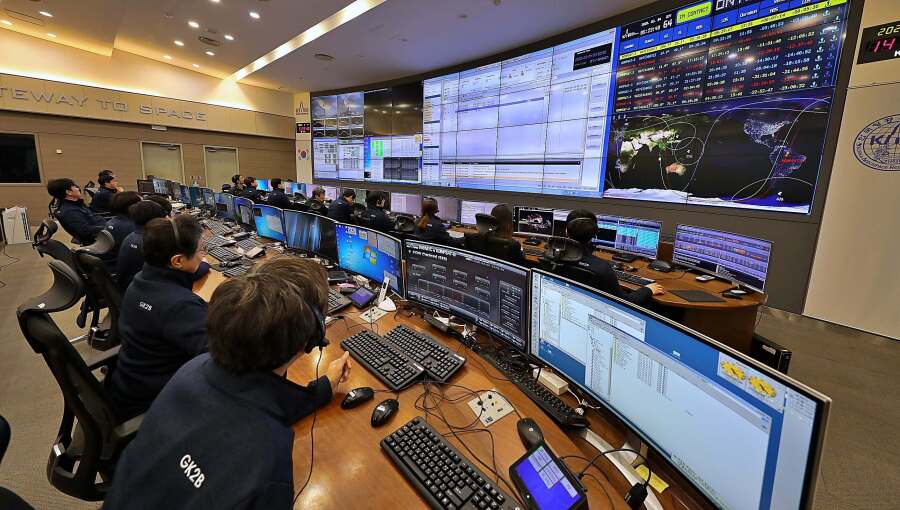
As the commercial race to dominate cislunar space accelerates, South Korea is emerging as a late but determined entrant, betting on a government-led industrial cluster strategy to position itself in the rapidly evolving “new space economy,” the Carnegie Endowment for International Peace (CEIP) has reported.
According to the report, analysts say the country’s approach offers valuable lessons in how mid-sized economies can marshal domestic coordination strengths to compete in sectors where traditional industrial catch-up strategies no longer suffice.
The “new space economy” — encompassing commercial activities in orbit around the Earth and Moon — is transforming space into what policymakers in Seoul view as a new arena of economic and technological competition. “The dynamics of the new space race are unlike any other industrial transition,” said a recent analysis from the Asia Program in Washington, which studies security and technological risks across the Asia-Pacific. “Late entrants must achieve global competitiveness from inception, without the luxury of step-by-step capability building.”
At the heart of Seoul’s effort is a nascent three-hub model designed to distribute responsibilities across key regions. The city of Sacheon anchors satellite manufacturing, Daejeon hosts research and talent development, and Goheung serves as the base for launch operations. Together, the hubs are intended to replicate South Korea’s time-tested model of close government–industry coordination that underpinned the rise of its automotive, shipbuilding, and semiconductor sectors.
Yet early implementation has exposed serious challenges. Geographic dispersion among the hubs has strained the intense daily coordination that once defined Korea’s industrial policymaking. “The physical separation undermines the collaborative density that made our traditional clusters so effective,” one industry insider in Daejeon observed. In addition, administrative friction between Daejeon and Sacheon over aerospace governance and the centralisation of the national space agency has further complicated the rollout.
The Asia Program report identifies three barriers that make space industrialisation fundamentally different from Korea’s earlier growth models. First, firms must compete globally from day one, with limited opportunity to develop behind protected domestic markets. Second, success demands simultaneous mastery across multiple cutting-edge technologies, including propulsion, AI-driven systems, and advanced materials. Third, the powerful ecosystem effects of space manufacturing — where early entrants shape global supply chains — place latecomers at an enduring disadvantage.
Despite these structural hurdles, Korea’s approach reflects a clear recognition that industrial policy must evolve to meet the realities of twenty-first-century technology competition. The government’s coordination model, refined through decades of state-led development, remains one of the few institutional assets capable of mobilising resources rapidly across sectors. “Korea’s coordination capability is its comparative advantage,” said the report. “The question is whether that strength can be adapted to industries that are inherently global and fast-moving.”
Complicating matters further CEIP reports is the convergence between defence and space technologies. As with the original Cold War-era space race, strategic imperatives continue to shape the commercial landscape. Korea’s efforts must therefore satisfy both economic competitiveness and alliance integration requirements, particularly with the United States. Analysts note that the dual-use nature of space technologies — from satellite reconnaissance to launch capabilities — blurs the line between industrial policy and national security strategy.
According to the CEIP report, the early stages of Korea’s cluster initiative will provide important evidence on whether countries with established coordination mechanisms can sustain their advantages in globally integrated industries. While still in its infancy, South Korea’s bid to carve out a position in the new space economy underscores the growing complexity of industrial policy in an age of technological convergence. The success — or failure — of its cluster strategy could determine whether the country remains a fast follower or becomes a credible participant in shaping the next frontier of global industry.
By AFP
November 5, 2025

Advantages of putting data centers in space include a constant supply of solar energy and ease of cooling the power-hungry operations
Thomas URBAIN
Tech firms are floating the idea of building data centers in space and tapping into the sun’s energy to meet out-of-this-world power demands in a fierce artificial intelligence race.
US startup Starcloud this week sent a refrigerator-sized satellite containing an Nvidia graphics processing unit (GPU) into orbit in what the AI chip maker touted as a “cosmic debut” for the mini-data center.
“The idea is that it will soon make much more sense to build data centers in space than it does to build them on Earth,” Starcloud chief executive Philip Johnston said at a recent tech conference in Riyadh.
Along with a constant supply of solar energy, data centers are easier to cool in space, advocates note.
Announcements have come thick and fast, the latest being Google this week unveiling plans to launch test satellites by early 2027 as part of its Suncatcher project.
That news came just days after tech billionaire Elon Musk claimed his SpaceX startup should be capable of deploying data centers in orbit next year thanks to its Starlink satellite program.
Starcloud’s satellite was taken into space by a SpaceX rocket on Sunday.
– Junk and radiation –
Current projects to put data centers into orbit envision relying on clusters of low Earth orbit satellites positioned close enough together to ensure reliable wireless connectivity.
Lasers will connect space computers to terrestrial systems.
“From a proof concept, it’s already there,” University of Arizona engineering professor Krishna Muralidharan, who is involved with such work, said of the technology.
Muralidharan believes space data centers could be commercially viable in about a decade.
Amazon founder Jeff Bezos, the tech titan behind private space exploration company Blue Origin, has estimated it might take up to twice that long.
Critical technical aspects of such operations need to be resolved, particularly harm done to GPUs by high levels of radiation and extreme temperatures as well as the danger of being hit by space junk.
“Engineering work will be necessary,” said University of Michigan assistant professor of engineering Christopher Limbach, contending that it is a matter of cost rather than technical feasibility.
– Sun synched –
The big draw of space for data centers is power supply, with the option of synchronizing satellites to the sun’s orbit to ensure constant light on solar panels.
Tech titans building AI data centers have ever-growing need for electricity, and have even taken to investing in nuclear power plants.
Data centers in space also avoid the challenges of acquiring land and meeting local regulations or community resistance to projects.
And advocates argue that data centers operating in space are less harmful overall to the environment, aside from the pollution generated by rocket launches.
Water needed to cool a space data center would be about the same amount used by a space station, relying on exhaust radiators and re-using a relatively small amount of liquid.
“The real question is whether the idea is economically viable,” said Limbach.
An obstacle to deploying servers in space has been the cost of getting them into orbit.
But a reusable SpaceX mega-rocket called Starship with massive payload potential promises to slash launch expenses by at least 30 times.
“Historically, high launch costs have been a primary barrier to large-scale space-based systems,” Suncatcher project head Travis Beals said in a post.
But project launch pricing data suggests prices may fall by the mid-2030s to the point at which “operating a space-based data center could become comparable” to having it on Earth, Beals added.
“If there ever was a time to chart new economic paths in space — or re-invent old ones — it is now,” Limbach said.

No comments:
Post a Comment