Frozen Aid, Gaza Shivers, and Trump’s Deal Melts Away
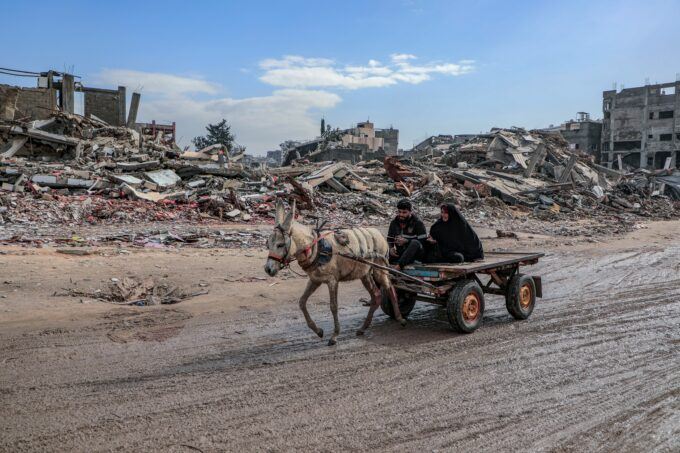
Image by Mohammed Ibrahim.
Ceasefire? Peace in the Middle East? Ask a Gazan about it (well, not one of the 360 or more that the IDF has killed during the “ceasefire”). Ask the UN, which said 10 days ago that Israel is blocking most of the desperately needed aid (food, shelter, medical) to simply keep people alive as winter descends.
According to a February 2025 assessment in Gaza, about 92% of housing units in Gaza were unfit for use, either completely destroyed or severely damaged, and almost two million people in need of essential household items and emergency shelter. Nine additional months of bombardment and displacement has intensified and deepened the crisis.
In late 2024 only about 23% of winter-shelter needs had been met, and a million displaced Palestinians were at grave risk during cold, wet weather. Humanitarian doctors warn: “Babies are at higher risk of dying from severe cold as they generate less heat than adults. Hunger compounds the risks.”
Cold winter nights mean the trickle of aid is insufficient for the needs. Gaza’s winters are not extreme by global standards—but winter is lethal when relief tents are flooded, blankets are in short supply, and there is no gas for heat.
The “ceasefire” to the two-year war did not put an end to the humanitarian crisis. Opaque processes that, according to the UN agency for Palestinian refugees, breach international law continue to severely restrict aid flows into Gaza. Detailing that enough food, tents and other essentials to fill the equivalent of up to 6,000 trucks is ready for delivery but:
“As winter approaches and famine continues to grip the population, it is critical that all this aid is allowed into Gaza without delay. Our supplies would be able to provide food … for the entire population for about three months. And that is sitting outside [in Jordan and Egypt], not able to come in. And that is the case for the other UN agencies because the restrictions and the constraints are still there.”
International humanitarian law explicitly prohibits starvation and exposure as methods of warfare. The guise of restraint and false claims of peace ring hollow when infants and children die of hypothermia in the tent camps they have called home for three years. Nighttime lows in Gaza during December often fall into the 40s, with heavy rains and flooding compounding the danger. These conditions can quickly kill malnourished children.
The loosely worded agreement, rushed to headlines by Trump, provided ambiguity and wiggle room that allows continued inhumanity or fails to enforce or implement a credible humanitarian response. Trump’s 20-point deal called for and promised “full aid” but clearly the meager amount reaching the devastated territory is grossly insufficient. A good deal would have included essential features of enforcement, timelines, and penalties to ensure real humanitarian commitments.
Human survival changes in different environments. Starvation can kill in 30 days, dehydration in three days, and hypothermia (in damp, cold, windy conditions) in just an hour or two when people do not have adequate shelter.
Camps of battered tents and soaked mattresses are testament to the blocked and delayed shipments of aid. Every child who freezes to death is an indictment—another life that could have been valued and protected in a real ceasefire and peace process.
The deal melts away without unrestricted humanitarian access and shelter materials. Trump did not negotiate roofs over their heads, dry ground under their feet, or warmth through the night. Winter is the most predictable party in this war, an aid to all those who wish for the extermination of Gazans.
Instead of taking bows and victory laps, it is time to renew humanitarian reality. The cold does not negotiate and is exposing Trump’s theatrics. It is too late for a mere conversation about housing; the need demands it. I assure you, those in the cold do not consider it a peace deal at all.
A ceasefire without shelter is not peace, it is killing by different means, and Trump’s deal leaves millions exposed. Until children can sleep under roofs instead of tarps and tents, the war has not ended, no matter what the headlines claim. Trump’s ceasefire looks more like abandonment.
batter displaced Gazans
It only took a matter of minutes after the heavy overnight rain first began to fall for Jamil al-Sharafi's tent in southern Gaza to flood, drenching his food and leaving his blankets sopping wet.
"What did the people of Gaza and their children do to deserve this?"
Issued on: 28/12/2025 - RFI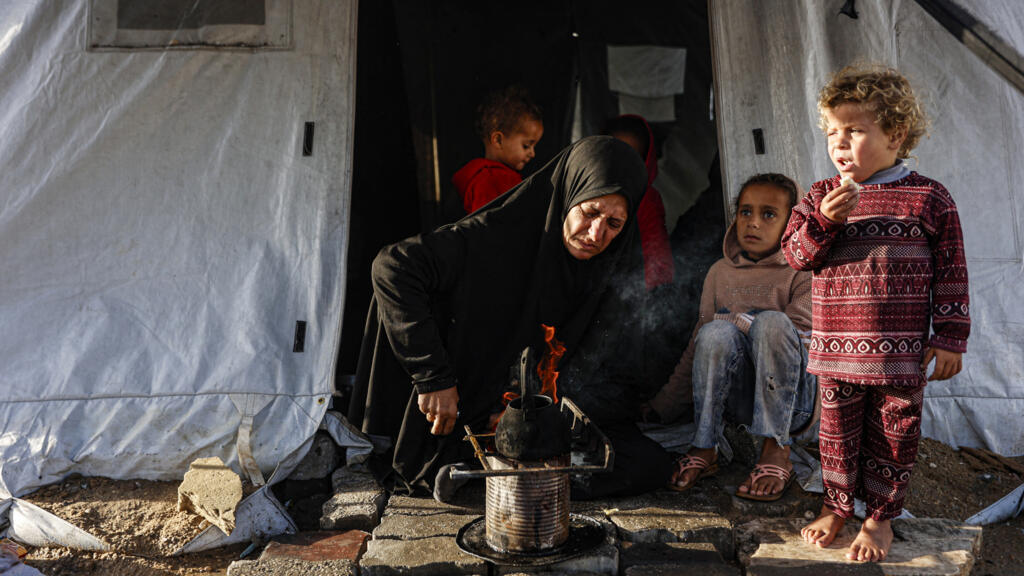 A displaced Palestinian woman heats a pot as children look on outside her tent-home as the region experiences rain and cold winter conditions, in Gaza City, 28 December, 2025. AFP - OMAR AL-QATTAA
By:RFIFollow
ADVERTISING
The winter rains have made an already precarious life worse for people like Sharafi, who is among the hundreds of thousands in the Palestinian territory displaced by the war, many of whom now survive on aid provided by humanitarian organisations.
"My children are shivering from cold and fear... The tent was completely flooded within minutes," Sharafi, 47, said on Sunday.
"We lost our blankets, and all the food is soaked," added the father of six, who lives in a makeshift shelter with his children in the coastal area of Al-Mawasi.
A fragile ceasefire between Israel and Hamas has been in place since 10 October, following two years of devastating fighting.
But despite the truce, Gazans still face a severe humanitarian crisis, and most of those displaced by the war have been left with little or nothing.
Families are crowded into camps of tents hastily erected from tarpaulins, which are often surrounded by mud and standing water when it rains.
"As an elderly woman, I cannot live in tents. Living in tents means we die from the cold in the rain and from the heat in the summer," said Umm Rami Bulbul.
"We don't want reconstruction right now, just provide us and our children with mobile homes."
Nighttime temperatures in Gaza have ranged between eight and 12 degrees Celsius in recent days.
Insufficient aid
Nearly 80 percent of buildings in the Gaza Strip have been destroyed or damaged by the war, according to United Nations data.
And about 1.5 million of Gaza's 2.2 million residents have lost their homes, said Amjad Al-Shawa, director of the Palestinian NGO Network in Gaza.
Of more than 300,000 tents requested to shelter displaced people, "we have received only 60,000", Shawa told AFP, pointing to Israeli restrictions on the delivery of humanitarian aid into the territory.
The UN refugee agency for Palestinians, UNRWA, said the harsh weather had compounded the misery of Gazans.
"People in Gaza are surviving in flimsy, waterlogged tents & among ruins," UNRWA chief Philippe Lazzarini wrote on X.
"There is nothing inevitable about this. Aid supplies are not being allowed in at the scale required."
COGAT, the Israeli defence ministry body responsible for Palestinian civilian affairs, said in mid-December that "close to 310,000 tents and tarpaulins entered the Gaza Strip recently" as part of an increase in aid under the ceasefire.
Earlier this month, Gaza experienced a similar spell of heavy rain and cold.
The weather caused at least 18 deaths due to the collapse of war-damaged buildings or exposure to cold, according to Gaza's civil defence agency, which operates under Hamas authority.
On 18 December, the UN's humanitarian office said that 17 buildings collapsed during the storm, while 42,000 tents and makeshift shelters were fully or partially damaged."Look at the state of my children and the tent," said Samia Abu Jabba.
"I sleep in the cold, and water floods us and my children's clothes. I have no clothes for them to wear. They are freezing," she said.
"What did the people of Gaza and their children do to deserve this?"
(AFP)

No comments:
Post a Comment