The UK’s Green Energy Transition Faces Critical Slowdown Amid Growing Concerns
The UK's renewable energy projects are stalling, threatening Labour's goal of 95% clean energy by 2030 and leaving a widening gap in energy production.
Massive job cuts in the North Sea's oil and gas sector are worsening economic insecurity, with renewable projects unable to fill the employment gap.
Delays in clean energy development are raising concerns over Britain's energy security, potentially increasing reliance on volatile foreign gas markets.
The United Kingdom’s green energy transition is facing a dangerous slowdown at a critical moment for the economy and the environment. The Labour Party has ambitiously planned for British energy output to be 95% clean by 2030, but many stalled renewable energy projects show that the sector may be contracting just when the government is pushing for expansion.
The United Kingdom has adopted numerous policy instruments to scale back the domestic fossil fuel industry while propping up clean energy generation. And the pressure on the oil and gas industry seems to be working – perhaps a little too well. Just last month, oil and gas firm Harbour Energy announced that it would axe hundreds of jobs in the North Sea, and thousands more positions are at risk, with little to no contingency plan for those workers. And while the government has agreed to issue a limited number of new oil and gas licenses in the North Sea, these licenses are currently being challenged in court. What’s more, oil and gas reserves in the North Sea are dwindling.
But while oil and gas are indeed on the decline, clean energy projects are not stepping in to take their place at nearly the desired rate. Projects that could offer jobs to laid-off fossil fuel workers are facing “repeated delays” and potentially untenable financial circumstances. “And the gap between one industry declining and the other rising is growing wider,” according to the BBC. This could spell major trouble not only for British laborers but also for the nation’s energy security.
The BBC notes that the slew of canceled and delayed clean energy projects could be driven by a number of causes, many of which have little to do with the invisible hand. “Because the UK government has set such an ambitious and high-profile target for clean, green power, it may be that [clean energy sector] developers are using the leverage of a halted project to get a more attractive set of price guarantees,” the BBC speculates. “It may also be that Harbour Energy is backing up the wider oil and gas industry in putting pressure on the UK government to give it a less hostile business environment,” the report goes on to note. “It took only a few minutes from the announcement of Harbour's job losses to Prime Minister's Questions, with both the Conservatives and SNP piling on the pressure.”
Clearly, creating a smooth and just clean energy transition is far from easy. Research from campaign group Oil Change International has estimated that transitioning to a renewable-powered grid without leaving oil and gas workers in the dust will cost the United Kingdom about £1.9 billion per year. “Of this, about £1.1bn would be needed to help develop the wind industry and create new green jobs; about £440m would be needed to invest in ports to make them capable of constructing and maintaining offshore wind turbines; and £355m would cover a training fund for oil and gas workers,” the Guardian reports.
Not only is the power struggle over the terms and conditions of the United Kingdom’s clean energy transition leaving many Brits in the lurch, it’s also creating a major threat to the nation’s energy security and climate goals. Without a strong renewables sector to take the place of the flagging fossil fuels industry, Great Britain will remain dangerously dependent on imported natural gas in an era of extreme political and geopolitical tensions, and all of the price volatility that comes with it.
This is bad news for British consumers, who have been battered by high energy prices over the past few years thanks to the energy crisis brought on by Russia’s illegal invasion of Ukraine and retaliatory tariffs placed on the Kremlin, one of the world’s key suppliers of oil and gas. Recent estimates suggest that approximately 11% of households in England are classed as fuel poor, 34% in Scotland, 14% in Wales, and 24% in Northern Ireland. This means that these households must spend a high proportion of their income to keep their home at a reasonable temperature.
By Haley Zaremba for Oilprice.com
Britain’s Plan to Retrain Oil and Gas Workers for Clean Energy Jobs
- The U.K. government plans to extend its windfall tax on oil and gas companies to fund the retraining of fossil fuel workers for green energy roles.
- A partnership with Norway aims to boost renewable energy investments, creating thousands of new green jobs.
- Closing tax loopholes and reallocating subsidies could generate billions for a "just transition" to a sustainable energy economy.
With plans for a green transition, millions of workers in the oil, gas, and coal sectors have become concerned for their jobs, with news of massive cuts as the energy reliance in several countries shifts away from fossil fuels. However, there could be significant potential for these workers to be retrained for positions in the renewable energy sector, based on their existing skills and experience. Further, taxing the oil industry could help provide the money needed to fund this move.
During the Covid-19 pandemic, when global oil production fell to a record low due to a decrease in demand coupled with widespread government orders to stay at home, oil and gas jobs began to decline. Several oil and gas companies went bankrupt during the pandemic, leading to a sharp decline in jobs. Meanwhile, oil companies began to invest heavily in advanced technologies, such as robotics and artificial intelligence, to allow operations to continue running with fewer workers.
Despite the increase in oil and gas output since the pandemic, jobs are still being cut across the sector. In the United States, while crude output soared, employment figures fell during five of the first six months of 2024 due to improved operational efficiencies. This trend is expected to continue as companies invest further in advanced technologies and efficiency improvements across the industry. In addition, the eventual global shift away from fossil fuels to renewable alternatives will contribute to a reduction in oil, gas, and coal jobs as roles in the renewable energy and nuclear power industries increase.
A May publication from Oil Change International (OCI) suggests that making the U.K. windfall tax on oil and gas companies permanent could provide enough financing to help North Sea workers transition to jobs in the renewable energy sector. By cutting subsidies to oil and gas producers, enough money could be raised to spend on the transition to a low-carbon economy, the report states. Approximately $2.5 billion a year is required to support the retraining of oil and gas workers, as well as to establish new infrastructure and green jobs in a “just transition”.
The report suggests that $1.46 billion would contribute to developing the wind industry and creating new green jobs, while $585 million would be invested in adapting ports to make them capable of building and maintaining offshore wind turbines, and $432 million would go towards training oil and gas workers.
The U.K.’s windfall tax is a levy on oil and gas producers that was introduced in 2022 when oil profits were soaring. The Labour government has said that the tax, also known as the energy profits levy, will be extended to March 2030, instead of expiring at the end of 2025 as originally planned. The government increased the tax to 38 percent in November, much to the dismay of many oil and gas companies.
The recent report suggests that making the windfall tax permanent could raise as much as $2.66 billion a year. Rosemary Harris, a senior campaigner at OCI, stated, “Transitioning to a renewable energy economy is one of the greatest opportunities the U.K. has to create secure, well-paid jobs for energy workers and build a fairer future.” Harris added, “But right now, the government is failing to meet the challenges facing workers and communities. As jobs disappear and the cost of living soars, communities are being left behind. This plays right into the hands of those who wish to weaponise the government’s inaction for their own profits, under the guise of caring about workers.”
OCI also wants the government to close tax loopholes, such as the “carried interest” provision in capital gains tax, which allows private equity fund managers to pay a much lower investment tax rate than they would if they had to pay income tax on it. This could raise around $651.7 million a year, according to the analysis.
In May, the U.K. Energy Ministry Ed Miliband secured a Green Industrial Partnership with his Norwegian counterparts, Ministers Terje Aasland and Cecilie Myrseth. Miliband met with several energy companies to deepen bilateral relations and boost clean energy investment in the U.K. The Plan for Change, a partnership between the two European powers, outlines plans to develop new clean energy manufacturing jobs. It also supports the development of the U.K.’s renewable energy capacity, including offshore wind and grid development. Research suggests that closer cooperation on the clean energy transition in the North Seas could lower bills, create up to 51,000 jobs, and add up to $47.9 billion to the U.K. economy.
With fossil fuel jobs in decline, governments worldwide must prepare for a just transition, supporting the retraining of oil, gas, and coal workers to prepare them for roles in the clean energy sector. However, achieving this shift will require high levels of funding for retraining programmes and related infrastructure. Recent research suggests that, in the case of the U.K., financing could be raised by making the windfall tax on oil and gas companies permanent.
By Felicity Bradstock for Oilprice.com
UK Must Realize Its Biggest Allocation Round This Year to Meet Energy Goals
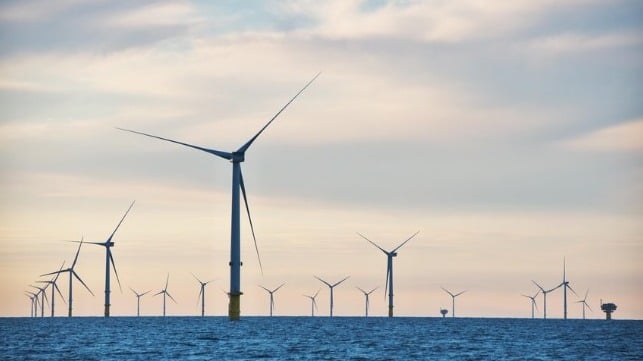
Without action to address price inflation, capital cost, and UK supply chain competitiveness, the UK’s offshore energy industry trade association OEUK warns the UK will fail to meet the government’s Clean Power 2030 (CP30) targets. The group is recommending a series of government investments building on the efforts launched by the Labour government since coming to power in 2024 while highlighting that the September wind allocation round (AR7) will have to be the biggest ever if the UK is to stay on course to meet the goals of between 43 and 51 GW of installed offshore wind capacity.
In 2024, the National Energy System Operator (NESO) published the Clean Power 2030 (CP30) report, setting out recommendations to the UK government on the design of a clean power grid by 2030. With a goal to accelerate progress to net zero by eliminating emissions that currently come from electricity generation, CP30 also aims to ensure that the heating, transport, and industry sectors are powered by electricity. Further, the association highlights its belief that the UK has the capacity to become a major exporter of wind energy.
Wind power is a key component of the UK’s energy system, its share of the UK’s electricity amounting to 29.5 percent in 2024. Of that, offshore wind contributed 17.2percent of total electricity generation.
“Meeting the government’s 2030 target of 43 and 51 GW of installed offshore wind capacity means securing £15bn of private investment in offshore wind each and every year between now and 2030,” said Thibaut Cheret, OEUK’s Wind & Renewables Manager. “The government’s next Contract for Difference auction in Allocation Round 7 (AR7), which incentivizes new low-carbon electricity generating projects, will need to secure historic levels of renewable energy procurement.”
The group is calling for the government to “front-load” the initiative, starting with efforts to ensure that Allocation Round 7 (AR7) is the most ambitious auction round yet for the UK. The Association asserts that AR7 needs to clear a record 8.4GW of offshore wind capacity to maintain the course toward CP30.
To support the build-out of the generation capacity, OEUK highlights that the timely delivery of transmission infrastructure will be essential. They highlight that rebuilding the National Grid electricity transmission grid will be a massive task. They believe a grid investment program of £58 billion ($77 billion) will be required to support 50 GW of offshore wind energy capacity by 2030.
Interconnectivity it notes will also be required. The group’s report says a North Sea integrated grid could save £37 billion ($49 billion) per year and cut wholesale prices by a fifth, and would avoid system duplication.
It is also calling for a further £65 billion ($86.5 billion) to be invested in UK offshore wind over the next five years. OEUK asserts that it has the potential to transform the growth outlook for the UK.
While they believe there should be a focus on homegrown energy, making the most of UK resources, the association, however, also says there will be a continued role for gas-fired power generation to balance the grid. It is calling for the progressive deployment of gas with carbon capture and storage technology, and in due course converting to hydrogen-fueled power generation.

No comments:
Post a Comment