RARE EARTHS
University of Arizona research aims to turn mine waste into US critical minerals domestic resource
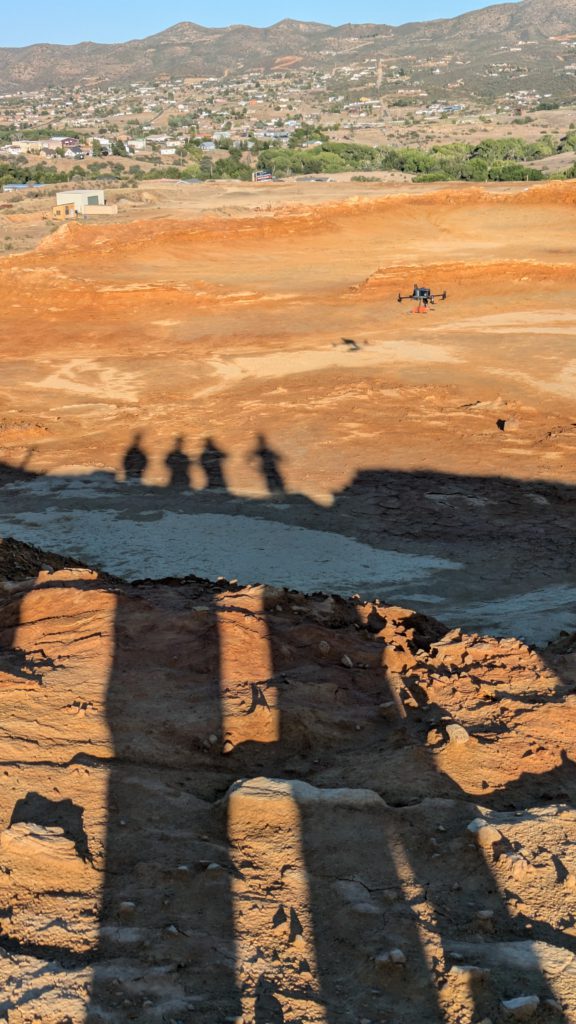
A University of Arizona–led, $3.6 million Arbor-funded research initiative is assessing whether Arizona’s historic copper mine tailings—amounting to billions of tonnes—can be economically reprocessed to recover both critical minerals and hazardous elements while reducing environmental risk.

The University Tailings Center initiative, led by Dr. Isabel Barton, Associate Professor of Mining Engineering, is focused on recovering critical minerals such as arsenic, zinc and possibly tungsten from copper mine tailings, using advanced geometallurgy and mineral characterization to turn mine waste into a domestic resource.
The project combines remote sensing, industry data-sharing, field sampling, mineralogical characterization, and techno-economic analysis, with early findings suggesting unexpected mineral occurrences at some sites, according to Barton.
While not a full resource definition, the work aims to de-risk future reprocessing and byproduct recovery, including potential changes to current mining flowsheets to prevent valuable elements from first entering tailings. Finding out how much actual usable metal can be extracted from the tailings is the end goal of the project.
“The Arizona state mine inspector for research’s office was interested in finding out whether Arizona’s billions of tons of copper mine tailings constitute a potential resource of critical elements, which many of them are also hazardous in various ways to the environment,” Barton told MINING.COM in an interview.
“The idea is that if any of them is recoverable, then recovering that would contribute to the US critical metals supply as well as reducing the environmental hazards.”
The project kicked off in Q1 2024 with 17.5 billion tons of mine waste, including copper tailings, and is accumulating at a rate of upwards of 100 million metric tons a year, Barton said.
Re-characterizing tailings
For many years public awareness about tailings was extremely limited, Barton pointed out.
“It was by definition a waste product, and so why waste money characterizing it?” And while many companies have very strong characterization programs now, and they know what they’re putting out in tailings facilities, that wasn’t always the case. I would say for most of the 20th century it was not, and so where we’ve been playing catch-up, on figuring out what’s actually in these, added to which they’ve been active geochemical systems.”
The research team is working on sampling and characterization to start, conducting remote sensing studies to characterize tailings, both at a statewide level and more focused UAV-based mapping of individual tailings facilities, working towards developing new methods.
“We are getting data from partner companies in industry, many of whom have characterized their own tailings and have been kind enough to share that information with us,” Barton said.
“The surface samples from drilling down into the tailings become the basis for extraction studies to look at how much of which critical elements we can get out relatively easily. It ends with a techno-economic analysis to look at under what, if any, market conditions extraction would make sense.”
Historical backlash
There has been significant historical backlash against projects and products that contained arsenic, mainly because of concerns about its toxicity, threats to public health and environmental hazards.
The irony is that the US needs arsenic — its classified as a critical mineral by the US Geological Survey (USGS) and other nations because it’s crucial for gallium arsenide (GaAs) semiconductors used in LED lights, lasers, integrated circuits, solar panels, and telecommunications. It also hardens lead and copper alloys, used in ammunition.
“We’re 100% import reliant on arsenic, as well as most of these other semi-metallic elements,” Barton said. Being able to produce even a small amount of those domestically would significantly help US critical metals supply.”
This year, the team is starting the techno-economic analysis using standard extraction methods, such as magnetic separation and basic leaching, and is beginning to feed data to that team.
“We have found a few exciting things,” Barton said. “Minerals that we didn’t expect in a few places have been turning up, and that actually makes me somewhat optimistic that we’ll continue to find results that we didn’t think we were going to that might lead to viable tailings reprocessing.”
“I promise you, if you put me in a fully equipped lab, I can extract anything out of any source material,” Barton said. “The difficulty is doing it cheaply enough that you don’t break the bank with the materials and labor cost of the extraction. That’s one of the things we’re trying to find out in this project…[so] we can point the way for future work.”
Career momentum
Barton noted there has been a growing recognition that the US has outsourced most of its mineral production, and that it is problematic in a geopolitical context.
“For a long time, I think people were either unaware of the drawbacks or ignored them, but recently they’ve become too obvious to ignore.”
What bodes well is that the shift could potentially attract a new generation of talent.
“The workforce is rapidly decaying, and capacity to meet the material demands of a technological future is seriously in doubt. What we’re seeing is a scramble to make up some of that ground,” she said.
“It’s an industry with a stable and bright future, and I realize that calling the mining industry stable is going to raise a few eyebrows, but the fact is we always need metals. We always need industrial minerals – the demand for them isn’t going away. It’s only increasing.”
“The other thing I would point to is a workforce retiring en masse. We’re going to need more mining engineers in 10 years than we have now, more economic geologists, more metallurgists, more of everybody related to mining.”
US to push for quicker action in reducing reliance on China for rare earths

US Treasury Secretary Scott Bessent will urge Group of Seven nations and others to step up their efforts to reduce reliance on critical minerals from China when he hosts a dozen top finance officials on Monday, a senior US official said.
The meeting, which kicks off with a dinner on Sunday evening, will include finance ministers or cabinet ministers from the G7 advanced economies, the European Union, Australia, India, South Korea and Mexico, said the official who was not authorized to speak publicly.
Together, the grouping accounts for 60% of global demand for critical minerals.
“Urgency is the theme of the day. It’s a very big undertaking. There’s a lot of different angles, a lot of different countries involved and we really just need to move faster,” the official said.
Bessent on Friday told Reuters that he had been pressing for a separate meeting on the issue since a G7 leaders summit in Canada in June, where he delivered a rare earths presentation to gathered heads of state from the US, Britain, Japan, Canada, Germany, France, Italy and the European Union.
Leaders agreed to an action plan at the summit to secure their supply chains and boost their economies, but Bessent has grown frustrated about the lack of urgency demonstrated by attendees, the official said.
Aside from Japan, which took action after China abruptly cut off its critical minerals supplies in 2010, G7 members remain heavily dependent on critical minerals from China, which has threatened to impose strict export controls.
China dominates the critical minerals supply chain, refining between 47% and 87% of copper, lithium, cobalt, graphite and rare earths, according to the International Energy Agency. These minerals are used in defense technologies, semiconductors, renewable energy components, batteries and refining processes.
The US is expected to issue a statement after the meeting, but no specific joint action is likely, the official added.
US urges others to follow its lead
“The United States is in the posture of calling everyone together, showing leadership, sharing what we have in mind going forward,” said the official. “We’re ready to move with those who feel a similar level of urgency … and others can join as they come to the realization of how serious this is.”
The official gave no details on what further steps were planned by the Trump administration, which is pushing forward to boost domestic production and reduce reliance on China through agreements with Australia, Ukraine and other producers.
The US signed an agreement with Australia in October aimed at countering China’s dominance in critical minerals that includes an $8.5 billion project pipeline. The deal leverages Australia’s proposed strategic reserve, which will supply metals like rare earths and lithium that are vulnerable to disruption.
The official said there had been progress, but more work was needed. “It’s not solved,” they added.
Canberra has said it has subsequently received interest from Europe, Japan, South Korea and Singapore.
Monday’s meeting comes days after reports that China had begun restricting exports to Japanese companies of rare earths and powerful magnets containing them, as well as banning exports of dual-use items to the Japanese military.
The meeting was planned well before that action, US officials said. China was still living up to its commitments to purchase US soybeans and ship critical minerals to US firms.
(By Andrea Shalal; Editing by Michael Perry)
Japan sets sail on rare earth hunt as China tightens supplies
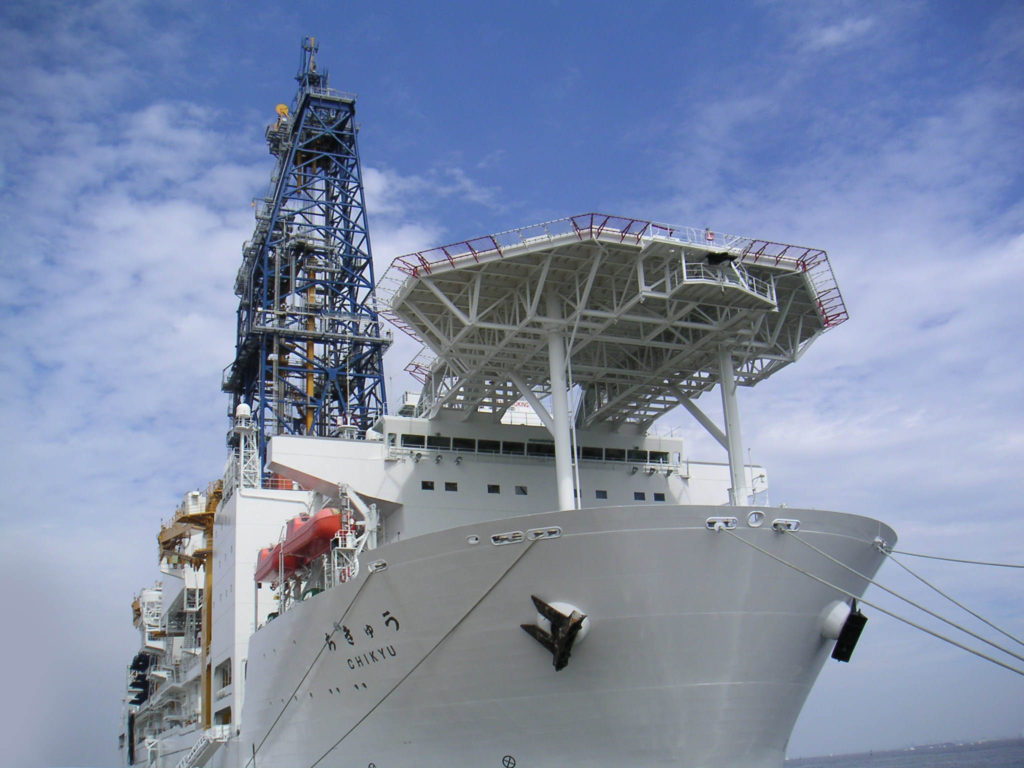
A Japanese mining ship departed on Monday for a remote coral atoll to probe mud rich in rare earths, part of Tokyo’s drive to curb its reliance on China for critical minerals as Beijing tightens supply.
The month-long mission of the test vessel Chikyu near Minamitori Island some 1,900 km (1,200 miles) southeast of Tokyo, will mark the world’s first attempt to continuously lift rare earth seabed sludge from 6 km (4 miles) deep onto a ship.
Japan, like its Western allies, has been reducing its dependence on China for the minerals vital to the production of cars, smartphones and military equipment, an effort that has taken on urgency amid a major diplomatic dispute with Beijing.
“After seven years of steady preparation, we can finally begin the confirmation tests. It’s deeply moving,” Shoichi Ishii, the head of the government-backed project told Reuters, as the vessel departed the port city of Shizuoka on a bright sunny day, with a snow-capped Mount Fuji in the background.
“If this project succeeds, it will be of great significance in diversifying Japan’s rare earth resource procurement,” he said, adding that recovering the key minerals from 6 km below sea level would be a major technological achievement.
The vessel, with 130 crew and researchers, is scheduled to return to the port on February 14.
Reducing reliance on China won’t be easy
China last week banned exports of items destined for Japan’s military that have civilian and military uses, including some critical minerals. The Wall Street Journal reported Beijing has also begun restricting rare earth exports to Japan more broadly.
Japan has condemned China’s dual-use ban but declined to comment on the report of a broader ban, which China has not confirmed or denied. Chinese state media, though, have said Beijing was weighing the measure.
Finance ministers from the Group of Seven industrial powers will discuss rare earth supplies at a meeting in Washington on Monday, sources familiar with the matter told Reuters.
Japan is no stranger to facing China’s wrath over rare earths. In 2010, China held back exports following an incident near disputed islands in the East China Sea.
Since then, Japan has reduced its reliance on China to 60% from 90% by investing in overseas projects like trading house Sojitz’s tie-up with Australia’s Lynas Rare Earths, and promoting rare earths recycling and manufacturing processes that rely less on the minerals.
The Minamitori Island project, however, is the first to attempt to source rare earths domestically.
“The fundamental solution is to be able to produce rare earths inside Japan,” said Takahide Kiuchi, executive economist at Nomura Research Institute.
“If this new round of export controls ends up covering a lot of rare earths, Japanese companies will again make efforts to move away from China, but I don’t think it will be easy,” he said.
For some heavy rare earths, such as those used for magnets in electric- and hybrid-vehicle motors, Japan is almost totally dependent on China, analysts say – a major risk for its key automotive industry.
Long-term project
Since the 2010 scare, the Japanese government and private companies have built stockpiles of the minerals, though they do not disclose volumes.
At a New Year’s party for Japan’s mining industry on Wednesday, several executives said they were better prepared than before to cope with the potential disruption, citing Japan’s diversification efforts and stockpiles.
But Kazumi Nishikawa, principal director of economic security at the trade ministry, said the government had to continually remind companies to diversify their supply chains.
“Sometimes, you know, some event happened, then the business reacts, but the event finishes, the business forgets. We have to maintain continuous efforts,” Nishikawa said on the China Talk podcast this week.
The Minamitori Island project, into which the government has sunk 40 billion yen ($250 million) since 2018, is also a long-term play.
Its estimated reserves have not been disclosed and no production target has been set. But if it succeeds, a full-scale mining trial will be conducted in February 2027.
Mining the mud was previously viewed as uneconomical due to high costs. But if supply disruption from China continues and buyers become willing to pay higher prices, the project could become viable in coming years, said Kotaro Shimizu, principal analyst at Mitsubishi UFJ Research and Consulting.
China is keeping a close watch. When the ship was conducting surveys around the island in June last year, a fleet of Chinese naval ships sailed nearby, Ishii said.
“We feel a strong sense of crisis that such intimidating actions were taken,” he said. China said its actions were in line with international law and called on Japan to “refrain from hyping up threats”.
(By Yuka Obayashi, Katya Golubkova, Tim Kelly and John Geddie; Editing by William Mallard)
Bessent says Australia, India invited to G7 meeting on critical minerals
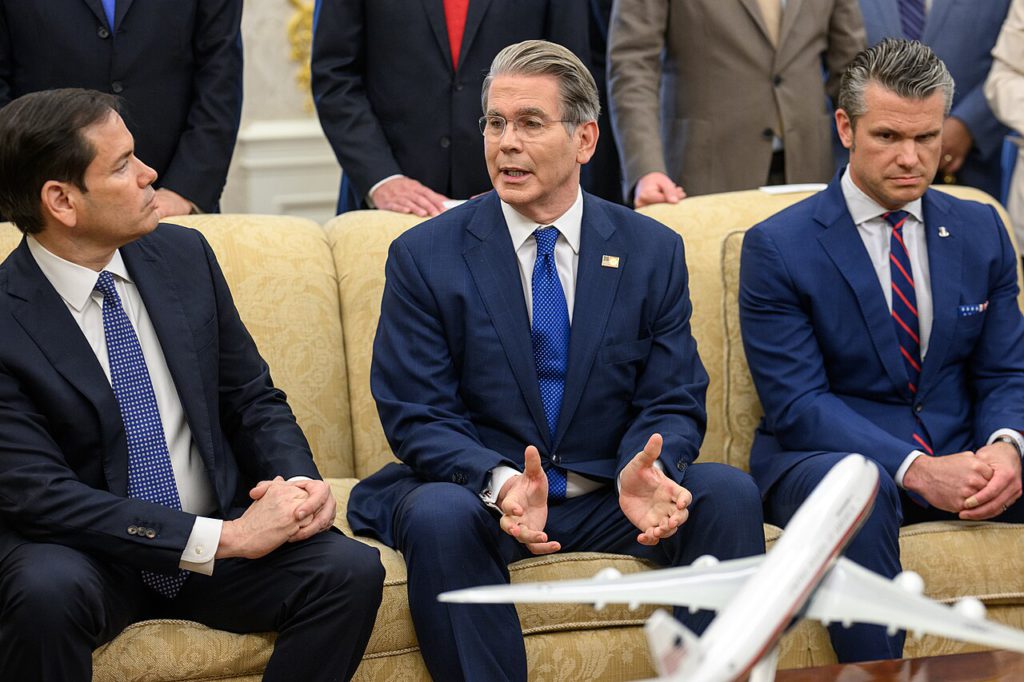
US Treasury Secretary Scott Bessent said Australia and several other countries would join a meeting of finance ministers from the Group of Seven advanced economies that he is hosting in Washington on Monday to discuss critical minerals.
Bessent said he had been pressing for a separate meeting on the issue since last summer’s summit of G7 leaders, and finance ministers had already held a virtual meeting in December.
India was also invited to attend the meeting, Bessent told Reuters in an interview after touring the Minneapolis-area engineering lab of RV and boat maker Winnebago Industries. He said he was unsure if it had accepted the invitation.
It was not immediately clear which other countries had been invited.
The G7 includes the United States, Britain, Japan, France, Germany, Italy and Canada, as well as the European Union, most of whom are heavily dependent on rare earths supplies from China. The group last June agreed on an action plan to secure their supply chains and boost their economies.
Australia signed an agreement with the US in October aimed at countering China’s dominance in critical minerals. It included an $8.5 billion project pipeline and leverages Australia’s proposed strategic reserve, which will supply metals like rare earths and lithium that are vulnerable to disruption.
Canberra has said it has subsequently received interest from Europe, Japan, South Korea and Singapore.
China dominates the critical minerals supply chain, refining between 47% and 87% of copper, lithium, cobalt, graphite and rare earths, according to the International Energy Agency. These minerals are used in defense technologies, semiconductors, renewable energy components, batteries and refining processes.
Western countries have sought to reduce their dependence on China’s critical minerals in recent years, given moves by China to impose strict export controls on rare earths.
Monday’s meeting comes days after reports that China had begun restricting exports to Japanese companies of rare earths and powerful magnets containing them, as well as banning exports of dual-use items to the Japanese military.
Bessent said China was still living up to its commitments to purchase US soybeans and ship critical minerals to US firms.
(By David Lawder and Andrea Shalal; Editing by Stephen Coates)

No comments:
Post a Comment