It’s possible that I shall make an ass of myself. But in that case one can always get out of it with a little dialectic. I have, of course, so worded my proposition as to be right either way (K.Marx, Letter to F.Engels on the Indian Mutiny)
Monday, January 12, 2026
CU
Pan Pacific hikes 2026 Japan copper premium to record $330/t
Pan Pacific Copper (PPC), Japan’s largest supplier of the refined metal, offered last month to sell it to domestic customers at a record premium of $330 per metric ton for 2026, a company source said on Friday.
The rate for physical delivery, which is more than three times the 2025 figure of $88, is paid on top of benchmark LME prices and reflects demand and supply fundamentals. It also covers costs, including those for transport and taxes.
This year’s increase reflects a sharp fall in treatment and refining charges (TC/RCs), or the fees miners pay smelters to turn concentrate into refined metal, which have boosted raw material procurement costs, prompting the company to pass on the burden to customers, the source added.
In addition, concerns that the United States could impose tariffs on copper ingots later this year have spurred speculative flows of metal into North America, tightening supply in Asia.
The source declined to be identified due to the sensitivity of the issue.
PPC is 47.8% owned by JX Advanced Metals; Mitsui Mining and Smelting owns 32.2% of the company and Marubeni owns 20%.
Like their global peers, Japanese copper smelters are contending with tumbling TC/RCs, shrinking smelting margins due to a shortage of concentrate supply and growing smelting capacity in China.
Last month, Chilean miner Antofagasta and a Chinese copper smelter agreed zero TC/RCs in 2026, two sources with knowledge of the matter said.
In 2025, outages at key mines, such as Indonesia’s Grasberg and Kamoa-Kakula in the Democratic Republic of Congo tightened supply so much that spot processing fees turned negative, leaving smelters paying for what is normally a key source of revenue.
(By Yuka Obayashi; Editing by Clarence Fernandez)
Mercuria redoubles metals push with $1.2 billion Kazakh deal
Mercuria Energy Group Ltd. is lending $1.2 billion to help fund the buyout of major Kazakh copper producer Kazakhmys, the latest in a breakneck series of deals from the trading house that’s rapidly becoming a major force in metals.
The Kazakh deal shows how Mercuria has carved out a position for itself as the most aggressive of a clutch of companies that have recently entered or returned to metals markets long dominated by rivals Trafigura Group and Glencore Plc. It’s the largest of more than $3.5 billion in metals financing and prepayment deals struck by Mercuria in little over a year since it embarked on its metals drive hiring former Trafigura co-head of metals Kostas Bintas.
Bintas, long a bullish voice on copper, has seized on a market in which supply chain fissures and the threat of US tariffs have helped drive the price of the metal to record highs above $13,000 a ton and boosted profits for traders.
In an interview, he said the Kazakhmys deal was “one of the biggest pre-financing deals ever in metals. Definitely it is the biggest of my career.”
“Historically we’ve seen deals like this more in the energy market, in terms of tenor and quantum,” he said.
Mercuria’s financing facility extends over eight years with the firm getting 200,000 tons of copper cathodes per year for the first four years and a percentage of production thereafter, Bintas said.
The deal highlights how Mercuria is rapidly becoming a key player in Kazakhstan — a country traditionally dominated by Glencore in metals and Vitol Group in oil. Mercuria has stepped in to provide financing amid the prospect of a sweeping change of ownership of the country’s most prized metals assets — as wealth and power shifts away from people who flourished during the era of former president Nursultan Nazarbayev and a new elite rises under President Kassym-Jomart Tokayev.
Once part of one of the London Stock Exchange’s biggest listed copper producers, Kazakhmys was recently bought by construction magnate Nurlan Artykbayev for an undisclosed sum. Bloomberg reported in November that Artykbayev was in talks to acquire the company, which announced in December that an agreement to sell the firm had been reached, without naming the buyer. The new owner is Qazaq Acquisition Corp., wholly owned by Artykbayev, a government registry showed on Jan. 8.
Neither Kazakhmys nor Artykbayev, approached through his company Qazaq Stroy, provided a comment in response to Bloomberg’s requests.
Mercuria earlier struck a prepayment deal with Eurasian Resources Group, another major Kazakh miner which is also facing the prospect of a change in ownership.
Trading houses have long been financiers of metal miners and smelters, paying cash upfront to be repaid by a flow of commodities, and Mercuria has stepped up the pace of its dealmaking as copper prices have ratcheted higher, in recent months announcing copper financing deals in Bulgaria, Chile, Democratic Republic of Congo and Zambia.
Bintas said that Mercuria was keen to do further such deals, and that its metals financing deals in 2026 might exceed those done last year. “There is more appetite for these sort of facilities. There is appetite to support producers on a long term basis,” he said.
The surge in copper prices is a vindication for Bintas, who has been predicting record copper prices above $12,000 since 2021. He said that the deal with Artykbayev’s company represented “a vote of confidence in our well established views of the copper market — that have by now materialized in the way we were hoping for.”
Still, he acknowledged that the rally in price led to a strong pullback in buying from physical consumers in China, which accounts for more than half of global demand for the metal.
“It’s surprising how much price rejection is taking place. The Chinese are just not buying copper, it’s true. But it’s finite — at some point you need to buy,” he said.
He predicted that the premium for US copper would pick up in the coming months as a decision on potential import tariffs nears. The threat of tariffs has been the major driving factor of copper astonishing rally, creating a premium in the US futures market and incentivizing traders to rush hundreds of thousands of tons to the US in a massive arbitrage trade.
“As you’re getting closer to June decision, we’ll see the arb recover substantially,” Bintas said.
(By Archie Hunter, Jack Farchy and Nariman Gizitdinov)
Column: US tariff pull on copper drains China’s bonded warehouses
China’s exports of refined copper surged to record levels last year as the world’s top buyer found itself in unusual competition with the US for spare metal.
The CME’s US copper contract continues to command a sizeable premium over the international price traded on the London Metal Exchange (LME) as the market prices in the potential for US tariffs. A decision has been deferred until June this year.
The premium for US delivery is sucking metal out of the global supply chain, with the ripple effect now emptying China’s bonded warehouse zones.
China’s outbound shipments jumped to 143,000 metric tons in November, bringing the year-to-date total to 698,500 tons, already an annual record.
The November tally included 57,700 tons headed to the US, all of it sourced from stocks held in bonded warehouses at Chinese ports such as Shanghai.
Refined copper was also dispatched in bulk to European destinations as the lingering tariff threat continues to fracture global trading patterns.
China’s exports of refined copper
China’s bonded stocks raided (again)
The blowout of the CME-LME arbitrage last year created an unprecedented opportunity for traders to profit by shipping physical copper to the US.
CME stocks of copper have mushroomed to over 450,000 tons, which is more than the combined inventory held by the LME and the Shanghai Futures Exchange.
LME stocks of desirable brands for US delivery, particularly Chilean metal, have been exhausted. Chinese and Russian copper accounted for 95% of registered inventory at the end of November.
Attention has returned to what has been sitting in China’s bonded warehouse zones, metal that has been physically unloaded but not yet cleared through customs for delivery to a mainland buyer.
It’s the second time this bonded inventory has been raided.
China exported, or rather redirected, 120,000 tons of refined copper to the US between February and July last year, when import tariffs seemed a racing certainty.
US President Donald Trump’s decision in July to go ahead with tariffs, but only on copper products rather than copper in refined form, appeared to kill the tariff trade.
But the CME premium has been widening again ever since as traders bet the tariff threat has only been deferred.
The November jump in shipments from Chinese ports to the United States is testament to the renewed lure of US delivery.
CME copper premium over London Metal Exchange
Plugging the gaps
China’s port-side copper inventory is also leaving to plug gaps that have opened up elsewhere as traders strip the supply chain of brands of metal that can be delivered against the CME contract to ensure a frictionless arbitrage trade.
November’s outbound flows included 16,500 tons bound for Italy as well as smaller tonnages destined for Germany, Greece and Sweden.
Such has been the scramble to ship to the US that availability has fallen and physical premiums have risen everywhere else.
Europe’s biggest producer Aurubis has aggressively hiked its premium for term sales this year to $315 from $228 per ton over the LME basis price.
Chilean state producer Codelco is asking its European customers for $325 per ton and its Chinese buyers a whopping $350 per ton, reflecting trader competition for its brands.
China remains the world’s largest copper importer, although the jump in outbound shipments caused the country’s net pull on units from the rest of the world to contract by 11% in the first 11 months of 2025.
But it too has been struggling to compete with the US premium when it comes to CME-deliverable brands.
China’s imports of Chilean copper slumped by 43% year-on-year in January-November, while those of Peruvian metal fell by a steeper 50%.
Chinese buyers have become increasingly dependent on shipments from the Democratic Republic of Congo and Russia, which accounted for 37% and 11% respectively of total imports in the first eleven months of 2025.
Global exchange stocks of copper
Signal confusion
It’s hard to know just how much copper has been sitting in China’s bonded warehouse zones in recent years.
Classified by the country’s customs department as an import, the metal only becomes statistically visible if it’s reshipped somewhere else, in which case it turns up on the export side of the trade ledger under a unique code.
But it’s clear there is a lot less now than there was before Trump first mooted import tariffs back in February.
The stripping of China’s port stocks is a sign of just how much the potential for US tariffs has upended global flows of physical copper.
It’s also a big problem when it comes to assessing what’s going on in a market that is currently punching out all-time price highs on a regular basis.
Global exchange inventory closed 2025 above 800,000 tons for the first time since 2013, which might be expected to put a dampener on the market’s bullish exuberance.
But the driver of higher visible stocks has been the CME, where copper is still arriving daily. Some of that metal may have come from the statistical shadows of China’s bonded warehouse zones, adding complexity to the global inventory picture.
The tectonic relocation of copper stocks to the US is still playing out and continues to distort both the physical supply chain and the inventory price signal.
The drain on availability everywhere else, including China’s port stocks, risks becoming more acute as long as the Trump tariff threat creates a CME premium sufficiently large to cover the costs of physical shipment.
(The opinions expressed here are those of the author, Andy Home, a columnist for Reuters.)
(Editing by Marguerita Choy)
Codelco delivers on copper growth goal — by slimmest of margins
Codelco chairman Maximo Pacheco. Credit: Codelco via Flickr
Codelco chairman Máximo Pacheco is meeting his goal of raising production at the state-owned copper giant — though only just.
Despite a fatal collapse at its largest mine, Codelco produced 1.333 million metric tons of copper last year from the Chilean operations it runs, Pacheco said in an interview. That was 5,000 tons, or 0.4%, more than the previous year.
The former Chilean energy minister and International Paper Co. executive has been working to revive output after production sank to a 25-year low amid declining ore grades and setbacks at mines and expansion projects.
That effort has been further complicated by a prolonged recovery at El Teniente, where a July 31 accident cut output by about 45,000 tons last year, Pacheco said. The 72-year-old’s term as chairman ends in May.
Codelco is targeting another modest increase this year, with output budgeted at 1.344 million tons, he said. Even a marginal gain would be welcomed by a copper market unsettled by supply disruptions that have helped drive prices to record highs.
The state company achieved the 2025 target thanks to a bumper December, which consultancy Plusmining estimates at 40% above November levels. While December typically comes in higher, that month has been exceptionally strong the past two years.
“Output is becoming increasingly concentrated toward year-end, likely reflecting more aggressive inventory management tied to meeting full-year production targets,” Plusmining founder Juan Carlos Guajardo wrote in a note on Wednesday.
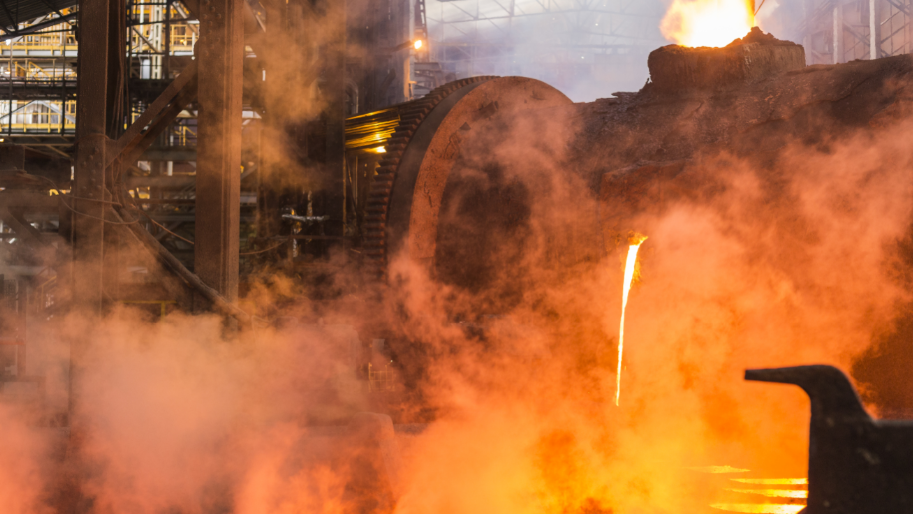

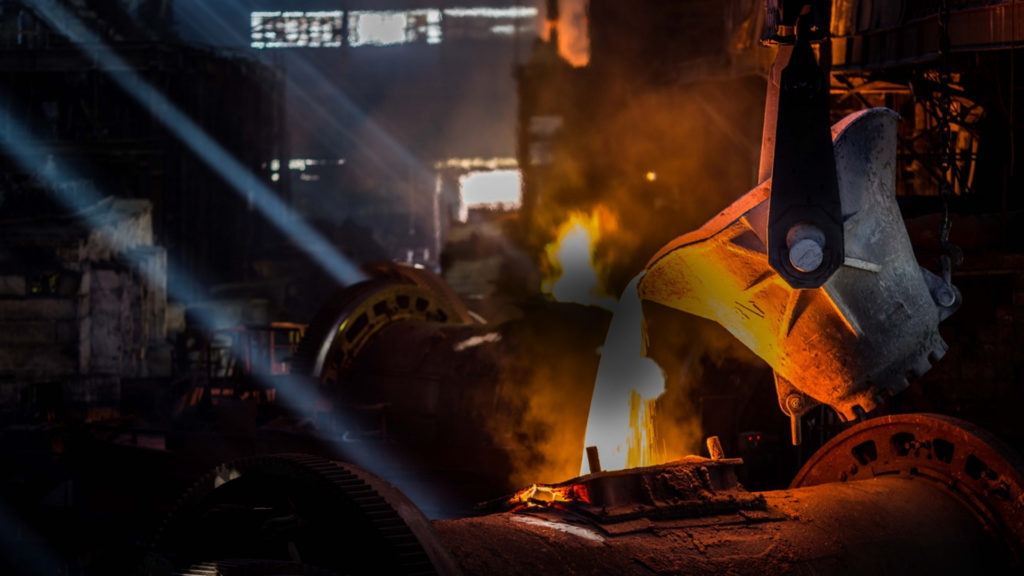 Credit: Kazakhmys
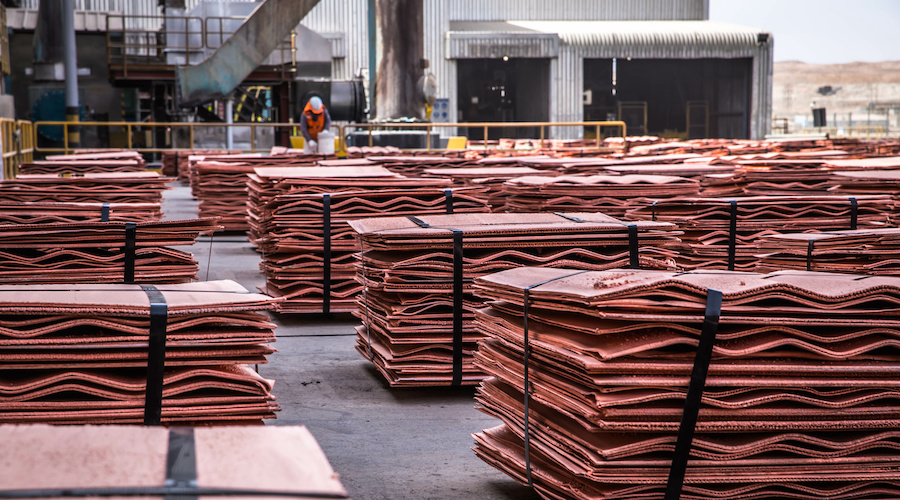 Copper warehouse. (Stock image)


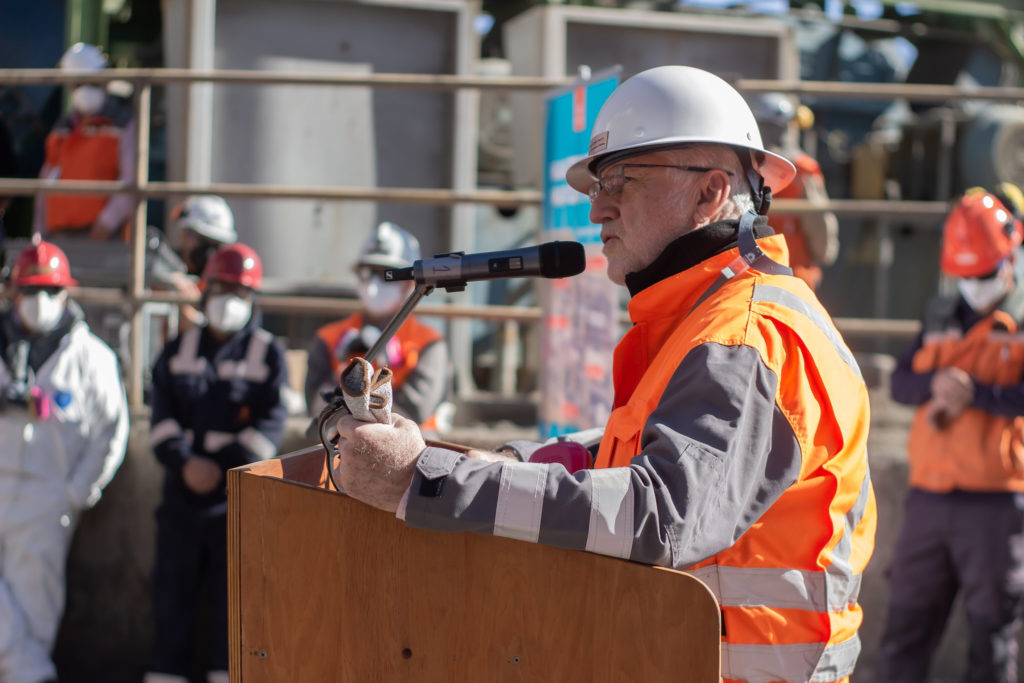 Codelco chairman Maximo Pacheco. Credit: Codelco via Flickr
No comments:
Post a Comment