Saturday, January 17, 2026

Blue Monday incoming: European index of job satisfaction developed


By Dr. Tim Sandle
SCIENCE EDITOR
DIGITAL JOURNAL
January 16, 2026


People going to work. — Image by © Tim Sandle. London, UK.

The new year often brings a fresh wave of motivation, with many people reassessing key areas of their lives, from health to career ambitions. This is commonly associated with the so-called Blue Monday, which occurs on the third Monday of each January (this year falling on January 19th).

Despite many dismissing Blue Monday as a myth, something dreamt up by recruitment agencies, for others the apparent desire for role change by many workers is reflected in search behaviour too, with searches for “new job” typically rising by 45.2% from December to January.

To mark the so-called Blue Monday calendar trigger point, the company iSelect has created a new index exploring where in the world people are most content in their jobs. This may well influence those thinking… just thinking…about a career change.

Job satisfaction is not easy to define, and it unclear how the term was defined in the survey. In general terms, job satisfaction refers to an employee’s positive emotional state, contentment, and fulfilment from their job. This stems from how well their needs and expectations align with the work itself, environment, pay, colleagues, and management.

Based on experimental outcome, how happy are people when it comes to work–life balance, career progression, and overall job satisfaction?

The European Job Satisfaction Index

RankCountryJob Security50+ Hours/Week (%)Feel Trusted by Employer (%)Confidence in Leadership (%)Future-Skills Development (%)Satisfaction Score  (/100)
1Luxembourg2.20%2.80%81.00%74.00%66.00%100
2Norway2.90%1.40%89.00%82.00%59.00%91.78
3Switzerland2.40%0.40%86.00%76.00%56.00%91.27
4Denmark4.50%1.10%89.00%83.00%55.00%87.95
5Netherlands2.60%0.30%87.00%81.00%50.00%85.42
6Australia3.10%12.50%84.00%79.00%57.00%78.47
7UK3.30%10.80%88.00%81.00%56.00%78.14
8Belgium2.40%4.30%84.00%76.00%52.00%76.33
9Sweden4.90%0.90%84.00%74.00%47.00%74.11
10Germany1.40%3.90%83.00%76.00%48.00%73.75
Luxembourg tops the list with a perfect Job Satisfaction Index of 100. The country stands out for its strong job security (2.2%) and high values alignment score (77.0%). Employees report a high level of trust in their employers (81.0%).

The UK is placed #7 in the world for job satisfaction. This is due to 3.3% of workers in the UK feel their job is insecure, while 10.8% work 50 or more hours per week. Furthermore, 88% say they feel trusted by their employer, and 81% have confidence in their leadership. Plus, over half, 56%, feel supported in developing their future skills.


MONOPOLY CAPITALI$M

Goldman Sachs’ profits jump on hot merger market


By AFP
January 15, 2026


Goldman Sachs CEO David Solomon expects another solid year of deal flow in 2026 - Copyright AFP/File I-Hwa CHENG

Goldman Sachs’ quarterly profits jumped on robust merger activity as clients seize a “window” of opportunity during the Trump administration, bank officials said Thursday.

Fueled by higher revenues from merger advisory services and financial markets trading, Goldman Sachs reported profits of $4.4 billion in the fourth quarter, up 12 percent from the year-ago period.

Executives expressed a bullish outlook on continued deal flow in 2026, noting the potential for more initial public offerings and that its backlog of anticipated future deal revenue stands at a four-year high.

CEO David Solomon said corporations sense a better climate under Donald Trump after the Biden administration, where leading antitrust officials were viewed as broadly hostile to consolidation.

“CEOs definitely believe that the art of the deal and scaled consolidation is possible now,” Solomon said on a conference call with analysts.

Overall revenues were $13.5 billion, down three percent from the year-ago period, due largely to ending its credit card business with Apple.

However, Goldman’s profits were boosted by a $2.1 billion accounting benefit from dropping the Apple credit card venture.

Investment banking fees came in at $2.6 billion in the final three months of 2025, up 25 percent. The New York banking giant also scored double-digit increases in revenues for equities trading and fixed income, currency and commodities.

Goldman’s press release did not mention specific transactions, but the company advised Metsera in its buyout of up to $10 billion from Pfizer.

In prior quarters, Goldman has pointed to $12 billion deals involving energy company NRG and in Electronic Arts’ $55 billion deal to go private.

“I think CEOs, boards are looking and saying ‘Okay, we’ve got a window here a handful of years, to consider big, huge, transformative things,'” said Solomon.

“I think the world is set up at the moment to be incredibly constructive in 2026 in M&A and capital markets activity,” Solomon said.

“What could change that? Something could go on in the world, sort of an exogenous event, or macro event that changes the sentiment,” he said, adding that this is not the bank’s view of a likely scenario.

Goldman’s earnings per share topped analyst estimates while revenues lagged projections.

Shares jumped 4.6 percent in early-afternoon trading.
CRIMINAL CAPITALI$M
Fraudsters flee Cambodia’s ‘scam city’ after accused boss taken down


By AFP
January 16, 2026


Hundreds of people fled a suspected Cambodian cyberfraud centre, after the country's most wanted alleged scam kingpin was arrested and deported
 - Copyright AFP TANG CHHIN Sothy


Sally JENSEN

Hundreds of people dragged away suitcases, computer monitors, pets and furniture as they fled a suspected Cambodian cyberfraud centre, after the country’s most wanted alleged scam kingpin was arrested and deported.

Boarding tuk-tuks, Lexus SUVs and tourist coaches, an exodus departed Amber Casino in the coastal city of Sihanoukville, one of the illicit trade’s most notorious hubs.

“Cambodia is in upheaval,” one Chinese man told AFP. “Nowhere is safe to work anymore,” he said Thursday.

Similar scenes played out at alleged scam compounds across Cambodia this week as the government said it was cracking down on the multibillion-dollar industry.

But residents said many of the people working inside the tightly secured buildings moved out several days before the arrival of authorities, and an analyst dubbed it “anti-crime theatre”.

From hubs across Southeast Asia, scammers lure internet users globally into fake romantic relationships and cryptocurrency investments.

Initially largely targeting Chinese speakers, transnational crime groups have expanded operations into multiple languages to steal tens of billions annually from victims around the world.

Those conducting the scams are sometimes willing con artists, sometimes trafficked foreign nationals who have been trapped and forced to work under threat of violence.

AFP journalists visited several alleged internet scam sites in Sihanoukville, in the wake of the high-profile arrest in Cambodia and extradition to China of internationally sanctioned accused scam boss Chen Zhi.

Few of those departing the casinos, hotels and other facilities were willing to speak with AFP, and none were willing to be identified due to concerns for their safety.

“Our Chinese company just told us to leave straight away,” said a Bangladeshi man outside Amber Casino.

“But we’ll be fine. There are plenty of other job offers,” he added.

Studded with casinos and unfinished high-rises, the glitzy resort of Sihanoukville has become a cyberscam hotbed, where thousands of people involved in the black market are believed to operate cons from fortified compounds.

Before Chen was indicted last year by US authorities who said his firm Prince Group was a front for a transnational cybercrime network, the Chinese-born businessman ran multiple gambling hotels in Sihanoukville.

A 2025 Amnesty International report identified 22 scam locations in the coastal resort, out of a total of 53 in the country.

The UN Office on Drugs and Crime estimates global losses to online scams reached up to $37 billion in 2023, and that at least 100,000 people work in the industry in Cambodia alone.


– Tipped off –


But the Cambodian government claims the lawless era has come to an end, with Prime Minister Hun Manet pledging on Facebook to “eliminate… all the problems related to the crime of cyber scams”.

Cambodia’s anti-scam commission says it has raided 118 scam locations and arrested around 5,000 people in the last six months.

Following Chen’s deportation to China, the Cambodian government has tightened the screws on some Prince Group affiliates, ordering Prince Bank into liquidation and freezing home sales at several of its luxury properties.

In recent months, China has stepped up its pursuit of the scam industry, sweeping up Chen and other key figures from across Southeast Asia to try them on its own soil.

But while Cambodia says it is “cracking down”, there are suspicions over the timing.

A tuk-tuk driver in Sihanoukville told AFP hundreds of Chinese people left one compound this week before police arrived.

“Looks like they were tipped off,” said the 42-year-old, declining to give his name.

Mark Taylor, former head of a Cambodia-based anti-trafficking NGO, said the “preemptive shifting of scam centre resources”, including workers, equipment and managers, had been seen ahead of law enforcement sweeps.

It was “seemingly the product of collusion”, he added, in a strategy with “dual ends” of boosting the government’s anti-crime credentials while preserving the scamming industry’s ability to survive and adapt.

Amnesty has accused the Cambodian government of “deliberately ignoring” rights abuses by cybercrime gangs, which sometimes lure workers with offers of high-paying jobs before holding them against their will.

AFP journalists saw several coachloads of Mandarin speakers leaving Sihanoukville on the main highway to the capital Phnom Penh.

Multiple people said they “didn’t know” where they were going or what their plans were, but appeared anxious as they anticipated law enforcement closing in.

Outside the Amber Casino, holding a fake designer hold-all, the Bangladeshi man fell in with the crowd, saying: “This is about survival now.”


How dark web criminals seek to recruit business insiders


By Dr. Tim Sandle
SCIENCE EDITOR
DIGITAL JOURNAL
January 12, 2026


Cybercriminals can find a "safe" space to operate in dark web marketplaces
. — © AFP PHOTO / Robyn BECK

Cybercriminals are actively searching for insiders from various organizations on the dark web. From dark web recruitment posts to private messages on LinkedIn, how cybercriminals enlist malicious employees to compromise a selected company.

This way cybercriminals can use malicious insiders as a direct means to access sensitive company resources, stealing confidential data or using the access to deploy a devastating cyberattack.

Real world examples

Researchers at NordStellar found dark web posts from users who claim that they are searching for employees from specific organizations over the past year. A significant part of these posts focuses explicitly on insiders who work for social media or cryptocurrency platforms.

Real world incidents highlight how these threats can translate into actual breaches — for instance, in 2025, the cryptocurrency exchange platform Coinbase revealed that cybercriminals bribed its employees to leak user information.

This is according to Vakaris Noreika, cybersecurity expert at NordStellar, who has told Digital Journal that while some cybercriminals openly recruit malicious employees through dark web posts, others are more discreet. Over the past 12 months, the NordStellar team identified 25 unique dark web posts seeking out insiders.
Insider threats take on a new dimension

“Employees can grant cybercriminals access to critical data, such as personal customer information and confidential business agreements,” says Noreika.

The expert adds: “This data can be utilized to deploy ransomware attacks, sell intel on business agreements to competitors, or to carry out sophisticated phishing scams on unsuspecting victims whose personal data they managed to get their hands on.”

According to Noreika, insider threats can be challenging to spot and, therefore, may go undetected by security teams for a significant amount of time. Employees are trusted members of the organization and have legitimate access to company resources. Consequently, it can be challenging to pinpoint any anomalies in their behaviour.

“Unlike external threats, insiders may not trigger typical security alerts, such as unusual login attempts or data transfers,” adds Noreika. “Insiders are also familiar with the organization’s internal security policies and weaknesses, allowing them to adjust their actions to avoid suspicion.”

Direct insider recruitment


Noreika emphasizes that although some cybercriminals are searching for insiders on the dark web, the recruitment process is usually carried out privately. Bad actors target specific employees within the organization, especially those with technical capabilities that aid in their operations or have access to highly sensitive company data.
Safeguarding against insider threats

For businesses seeking to protect themselves, Noreika emphasises that high observability into system and data usage is the foundation of an insider threat-resistant cybersecurity strategy. He explains that any unexpected system behaviour or access patterns must be flagged, reported, and thoroughly examined.

“Patterns of unusual behaviour are the first indicator that the user might be an insider,” says Noreika. “Security teams should keep an eye out for employees who are frequently accessing sensitive information and make sure that they have the proper authorization. Data exfiltration to external parties or devices is another major red flag to look out for.”

According to Noreika, an incident recovery plan is a significant requisite in minimizing the fallout of a cyberattack caused by insider threats. An effective recovery plan should cover incident detection and outline the key steps the organization should take to contain the threat and mitigate damage.

Google and the dark web – related news

Google will start shutting down its dark web monitoring tool — the Dark Web Report — which was designed to scan the dark web for users’ exposed personal information:January 15, 2026: The scans for new dark web breaches stop.February 16, 2026: The dark web report is no longer available, all data related to the report will be deleted.

Google previously stated its intention to focus on tools that provide customers with clearer, more actionable steps to protect their online information. However, no concrete announcements regarding new cybersecurity tools have been made by the company to date.
Niger faces dilemma over uranium shipment stuck at airport

ByAFP
January 15, 2026


Niger is one of the world's leading producers of uranium 
- Copyright AFP/File I-Hwa CHENG

Pierre DONADIEU, with Patricio Arana in Paris

A huge uranium shipment that left northern Niger in late November has been stuck for weeks at Niamey airport.

The cargo has created a diplomatic headache for the junta that seized power in 2023 and has since turned away from traditional ally France and closer to Russia.

Here is what we know about the shipment, estimated at more than 1,000 tonnes, which the Sahelian country — among the world’s leading producers of uranium — wants to sell:


– Shipment at airport –


Nigerien uranium — long mined by French firm Orano (formerly Areva) — is at the heart of the junta’s push to assert sovereignty over its resources.

In June, the military leadership announced the nationalisation of the Somair mine, an Orano subsidiary located in Arlit in the north.

Weeks later, it said it would sell Niger’s uranium on the international market.

Using satellite images, AFP has established that 34 trucks arrived at Niamey airport between December 3 and 5.

While the contents cannot formally be confirmed, several sources — including Wamaps, a group of west African journalists specialising in Sahel security — say it is the uranium shipment that left Arlit in late November.

The trucks remained inside the airport compound for nearly a month, but by January 14, only four were still visible.

“The cargo is entirely within the airport; it has been moved to secure locations,” a source familiar with the matter told AFP.

“It is not intended to leave the country anytime soon,” the source added.


– A risky route –


Moving goods out of landlocked Niger usually requires access to a neighbouring country’s port.

Niger shares borders with Nigeria and Benin.

But the junta’s relations with Abuja are tense and ties with Cotonou are even worse.

Niger accuses Benin of seeking to destabilise the country and has closed the border.

That means that the most direct route via Benin’s port of Seme-Kpodji is not an option.

The alternative would be to move the “yellowcake” — a concentrate of uranium — through Togo.

But that entails crossing western Niger and Burkina Faso, which is rife with jihadist violence.

The route would go through Torodi in southwestern Niger where the local prefect was killed earlier this year.

“Niger is hesitating because of growing security risks,”, the source said.

The Tillaberi region bordering Burkina Faso became the “deadliest region across central Sahel” in 2025, according to ACLED, an NGO that monitors conflicts.


– The air option –


The uranium could also be transported by air.

Satellite images show two Russian-made Ilyushin Il-76 cargo planes at Niamey between January 9 and 13.

But flight-tracking data analysed by AFP to identify the aircraft owners revealed no registered movements.

At this stage, the buyer of the uranium remains unknown and Moscow has not officially expressed interest in the shipment.

Russian foreign ministry spokeswoman Maria Zakharova said she would “look into the matter” and would respond “without fail”, when she was asked by AFP during a briefing Thursday.

During a visit to Niamey in the summer, Russia’s energy minister declared Moscow’s “main goal is to mine uranium” in Niger.

Russian atomic agency Rosatom later also signed a memorandum on civilian nuclear cooperation with Niger.


– Legal challenge –


In December, France launched a probe into the suspected theft of this uranium “in the interests of a foreign power”.

Orano says the cargo still belongs to it, a claim Niamey rejects and accuses the company in turn of owing 58 billion CFA francs ($102 million) in debts and unpaid bills.

The legal case could complicate matters for any country through which the shipment might transit — starting with Togo.

“This complaint has changed the balance of power,” the source said.

“Togo is now hesitating because, under its international commitments, the cargo would have to be seized immediately if it entered its territory,” the source added.
US court clears Norway’s Equinor to resume wind project halted by Trump


By AFP
January 15, 2026


Wind turbines shown in 2022 generating electricity at the Block Island Wind Farm near Block Island, Rhode Island - Copyright GETTY IMAGES NORTH AMERICA/AFP/File JOHN MOORE

A US judge on Thursday authorized work to resume on a New York offshore wind project that had been suspended under an order by President Donald Trump’s administration.

US District Judge Carl Nichols granted a preliminary injunction to the Norwegian company Equinor for its Empire Wind project, just three days after a different judge ordered the restart of a project by Denmark’s Orsted.

Trump’s Interior Department in late December suspended all large offshore wind projects in the United States, affecting five projects.

Empire Wind had requested the court’s intervention on an emergency basis, arguing in a January 6 filing that it needed to resume construction by January 16.

Without restarting by that time, “the project faces likely termination due to disruption of a tightly choreographed construction schedule dependent on vessels with constrained availability, delay costs, and the existential threat to the project financing,” said the filing.

The venture’s legal brief described the suspension order as “arbitrary and capricious.”

Nichols granted the motion after a telephone hearing Thursday with the parties. He did not rule on Equinor’s underlying challenge to the Trump administration’s action.

The project, expected to be fully operational by the end of 2027, could provide enough energy to power 500,000 homes.

Equinor has already invested more than $4 billion in the venture, which is about 60 percent complete, the company said.

Empire Wind “will now focus on safely restarting construction activities that were halted during the suspension period,” the company said.

“In addition, the project will continue to engage with the US government to ensure the safe, secure and responsible execution of its operations.”

The underlying lawsuit “will continue to proceed,” it added.

The US Department of Interior did not respond to a request for comment.


– ‘Ugly monsters’ –


The Interior Department on December 22 said it had paused leases for Empire Wind and four other offshore wind projects under construction, citing “national security.”

A press release pointed to “radar interference” due to “the movement of massive turbine blades and the highly reflective towers.”

The US Department of Energy says wind turbines “can interfere with radar systems if they are located within the line sight of these systems,” according to its website.

“In most cases, however, thoughtful wind farm site selection, planning, and other mitigations have resolved conflicts and allow wind power projects to coexist effectively with radar missions,” the agency adds.

Trump has long complained that windmills ruin views and are expensive. During a trip last summer to one of his UK golf courses, the US president urged Britain to stop subsidizing the “ugly monsters.”

The order on Empire Wind comes after US District Judge Royce Lamberth on Monday cleared another project, Revolution Wind off the coast of Rhode Island, to resume construction.

Orsted has a 50-percent stake in the project alongside a renewables infrastructure developer that is part of the BlackRock investment group.

In a one-page order, Lamberth wrote that Revolution Wind was likely to succeed in underlying litigation, faced “irreparable harm” without an injunction, and the venture’s request was “in the public interest.”

Other projects affected by the Interior Department December action are Sunrise Wind, also in New York state and the CVOW project in Virginia.

The fifth project, Vineyard Wind, has filed a challenge to the Trump action in federal court in Massachusetts.


Surveillance, harassment and bribes: everyday life for migrants in Russia


By AFP
January 15, 2026


Migrant workers are vital for Russia's economy, which is facing labour shortages amid the Ukraine offensive - Copyright AFP/File Alexander NEMENOV

Victoria LOGUINOVA-YAKOVLEVA

Facing digital surveillance, bribes, humiliation and street harassment, Kyrgyz taxi driver Alym never has an easy life in Russia.

“We have to pay, pay, pay for everything,” the 38-year-old father of two told AFP near Moscow.

“The police are constantly demanding bribes for every document, every stamp: registration, a patent, a work permit,” he said, adding some documents can cost as much as $300 off-the-books.

Pressure on the estimated 6.5 million foreign citizens in Russia — mostly labour migrants from Central Asia who work in low-skilled jobs and send wages to family back home — is ramping up from all sides.

Officials try to block their access to work and schools with tighter immigration rules, while xenophobia in the country — always high — is rising further still.

Every day Alym must send his location to authorities via the state-run Amina surveillance app, which he has to keep installed on his phone.

“If you don’t do it for three days in a row, you’re put on a blacklist that’s hard to get off,” he explained.

Being added to what is officially called the “register of monitored persons” means having bank accounts frozen and raises the risk of losing a job, being expelled from university or even deportation.


– ‘Nuts’ –


The toughening of rules was codified last year when Russian President Vladimir Putin signed a new policy designed to “limit the presence of migrants’ family members in Russia.”

According to the document, the new measures should “reduce the burden on the social and healthcare services.”

Among some of the requirements rolled out are ultra-tough language tests for the children of migrants looking to enter Russian schools.

Anna Orlova, a Russian language teacher at the Migratory Children project, has criticised both the tests and the overall policy.

“We should, on the contrary, be glad that migrants come to us. It means the Russian economy is growing,” she said.

The complicated tests, combined with other bureaucratic hurdles, led to 87 percent of migrant children being blocked from entering school in 2025, according to a federal regulator.

“The education ministry has set the goal of no longer accepting non-Russian pupils in schools. It’s nuts,” said Orlova.

Alym’s daughter, now in kindergarten, will soon have to take the test.

There are signs that high levels of societal xenophobia are seeping into the classroom.

Alym’s son, already in school, was recently beaten up by his Russian classmates.

In December, a teenager with neo-Nazi views stabbed a 10-year-old Tajik boy to death at a school near Moscow.

“A migrant’s life in Russia is difficult. The migrant becomes an enemy on whom the discontent in society is funnelled,” said Svetlana Gannushkina from Civic Assistance, a migrant rights group, which has been labelled a “foreign agent” by the authorities.

“We’re being told that they steal our jobs and undercut wages,” she added.

Those kinds of anti-immigration narratives — prevalent in many countries — have taken on an extra edge in Russia, where inflation is high and the Kremlin has hiked taxes to fund its military as the war in Ukraine enters its fifth year.


– Draft fears –


Gannushkina said the policy response has been “full of fear,” ushered in following a March 2024 massacre at a concert hall near Moscow, which killed 149 people.

The four alleged assailants, currently on trial, are from Tajikistan.

The anti-migrant sentiment has also boosted the popularity of some political groups, like the LDPR, an ultra-nationalist party allied with the Kremlin.

“I’m constantly travelling around the regions, and illegal immigration is often the top issue raised by our fellow citizens. We’re fed up with this situation,” party leader Leonid Slutsky said in a YouTube broadcast.

Slutsky accused migrants of “undermining the principles and traditions” of Russian society.

He declined to comment when contacted by AFP.

Alym wants to leave Russia by 2030, when he expects to have paid off his mortgage in Kyrgyzstan.

“Many of my compatriots have already returned, because their children weren’t admitted to school,” he said.

After four years in Russia, Alym no longer wants a Russian passport, as he once did, because of Moscow’s offensive in Ukraine.

“I don’t want to be drafted,” he said.
Syrian activist Sarah Mardini acquitted of migrant trafficking in Greece

By AFP
January 15, 2026


Sarah Mardini, a 30-year-old Syrian who sought refuge in Germany in 2015, was present at the court - Copyright AFP Yamil LAGE

A Greek court Thursday acquitted Syrian competitive swimmer and activist Sarah Mardini, whose rescue of her sister inspired a hit Netflix film, and 23 others of migrant trafficking.

The verdict came almost a month after the start of their trial at a court on Lesbos, ending a legal ordeal for the activists since 2018.

They had been charged in the Greek island with “forming a criminal organisation” and “illegally facilitating the entry of third-country nationals into Greece”.

“All defendants are acquitted of the charges” because their aim was “not to commit criminal acts but to provide humanitarian aid”, presiding judge Vassilis Papathanassiou told the court.

Prosecutor Dimitris Smyrnis had earlier recommended their acquittal, emphasising that “no independent basis establishing the criminal liability of the defendants has been demonstrated”.

Mardini, a 30-year-old Syrian who sought refuge in Germany in 2015, was present at the court along with her Irish-German co-defendant Sean Binder, AFP said.

The 2022 Netflix film “The Swimmers” is inspired by the story of Mardini and her sister Yusra, who was one of 10 athletes who competed in the Rio Olympics for a Refugee Team.

Their family made the perilous journey across the Aegean Sea in 2015, and the sisters saved other people from drowning along the way.

This is the second time Greece has brought criminal charges against the volunteers.

In 2023, they were acquitted in another case involving offences related to their humanitarian work, including “espionage”.

In 2018, Mardini was part of a group of volunteer activists with the NGO ERCI trying to help migrants reach the island of Lesbos from Turkey.

She was arrested at the time and spent three months in prison in Greece.
Iran protest movement subsides in face of ‘brutal’ crackdown

By AFP
January 16, 2026


Iranians outside of the counry have also protested against the government as it cracked down on rallies - Copyright AFP KAREN MINASYAN
Stuart Williams

The protest movement in Iran has subsided after a crackdown that has killed thousands under an internet blackout, monitors said Friday, one week after the start of the biggest protests in years challenging the Islamic republic’s theocratic system.

The threat of new military action by the United States against Iran has also appeared to have receded for the time being, with a Saudi official saying Gulf allies have persuaded President Donald Trump to give the Iranian leadership a “chance”.

Protests sparked by economic grievances started with a shutdown in the Tehran bazaar on December 28 but turned into a mass movement demanding the removal of the clerical system that has ruled Iran since the 1979 revolution.

People started pouring into the streets in big cities from January 8 but authorities immediately enforced a shutdown of the internet that has lasted over a week and activists say is aimed at masking the scale of the crackdown.

The repression has “likely suppressed the protest movement for now”, said the US-based Institute for the Study of War, which has monitored the protest activity.

But it added: “The regime’s widespread mobilisation of security forces is unsustainable, however, which makes it possible that protests could resume.”

Norway-based rights group Iran Human Rights (IHR) says 3,428 protesters have been verified to have been killed by security forces, but warns this could be a fraction of the actual toll.

Its director Mahmood Amiry-Moghaddam said authorities under supreme leader Ayatollah Ali Khamenei have “committed one of the gravest crimes of our time”.

He cited “horrifying eyewitness accounts” received by IHR of “protesters being shot dead while trying to flee, the use of military-grade weapons and the street execution of wounded protesters”.

Lama Fakih, programme director at Human Rights Watch, said the killings since last week “are unprecedented in the country”.

Monitor Netblocks said that the “total internet blackout” in Iran had now lasted over 180 hours, longer than a similar measure that was imposed during 2019 protests.


– ‘Give Iran a chance’ –


Trump, who backed and joined Israel’s 12-day war against Iran in June, had not ruled out new military action against Tehran and made clear he was keeping a close eye on if any protesters were executed.

But with the belligerent rhetoric on all sides appearing to tone down for now, a senior Saudi official told AFP on Thursday that Saudi Arabia, Qatar and Oman led “a long, frantic, diplomatic last-minute effort to convince President Trump to give Iran a chance to show good intention”.

While Washington appeared to have stepped back, the White House said Thursday that “all options remain on the table for the president”.

White House Press Secretary Karoline Leavitt told reporters Thursday that “the president understands today that 800 executions that were scheduled and supposed to take place yesterday were halted”.

Iran is the most prolific user of capital punishment after China. But there has been no suggestion from Iranian authorities — or rights activists who have repeatedly condemned a recent surge in hangings before the protest wave — that so many people were due to be executed in a single day.

Attention had focused on the fate of a single protester, Erfan Soltani, a 26-year-old who rights activists and Washington said was set to be executed as early as Wednesday.

The Iranian judiciary confirmed Soltani was under arrest but said he had not been sentenced to death and his charges meant he did not risk capital punishment.


– ‘All Iranians united’ –


Asked about a New York Times report that Israeli Prime Minister Benjamin Netanyahu warned Trump against strikes, Leavitt said: “Look, it’s true that the president spoke with (him), but I would never give details about their conversation without… the express approval by the president himself.”

The US Treasury also announced new sanctions targeting Iranian officials on Thursday including Ali Larijani, secretary of Iran’s Supreme Council for National Security.

Despite the internet shutdown, new videos from the height of the protests, with locations verified by AFP, showed bodies lined up in the Kahrizak morgue south of Tehran, as distraught relatives searched for loved ones.

At the UN Security Council in New York, Iranian-American journalist Masih Alinejad, invited to address the body by Washington, said “all Iranians are united” against the clerical system in Iran.

Iran’s representative at the meeting Gholamhossein Darzi accused Washington of “exploitation of peaceful protests for geopolitical purposes.”
MERCOSUR 

South American bloc to ink long-awaited trade deal with EU

By AFP
January 17, 2026


The treaty will favor European exports of cars, wine, and cheese, while making it easier for South American beef, poultry, sugar, rice, honey, and soybeans to enter Europe 
- Copyright AFP/File Francisco RAMOS MEJIA

Martín RASCHINSKY

The South American trade bloc Mercosur and the European Union will sign on Saturday a deal 25 years in the making to create one of the world’s largest free trade areas at a time of growing protectionism and volatility.

The long-awaited agreement comes amid the sweeping use of tariffs and trade threats by US President Donald Trump’s administration, which has sent countries scrambling for new partnerships.

Together, the EU and Mercosur account for 30 percent of global GDP and more than 700 million consumers.

The treaty eliminates tariffs on more than 90 percent of bilateral trade.

The deal will favor European exports of cars, wine and cheese, while making it easier for South American beef, poultry, sugar, rice, honey and soybeans to enter Europe.

The treaty between the EU and Mercosur nations Argentina, Brazil, Paraguay and Uruguay was agreed in Brussels last week despite fierce opposition from European farmers.

They fear the deal will lead to an influx of cheaper South American products due to production standards they consider less stringent.

Some in South America are also wary about the impact of the treaty.

In Argentina, it is estimated that there could be a loss of 200,000 jobs just from the dismantling of the local automotive industry, trade and investment researcher Luciana Ghiotto told AFP.


– ‘A powerful message’ –


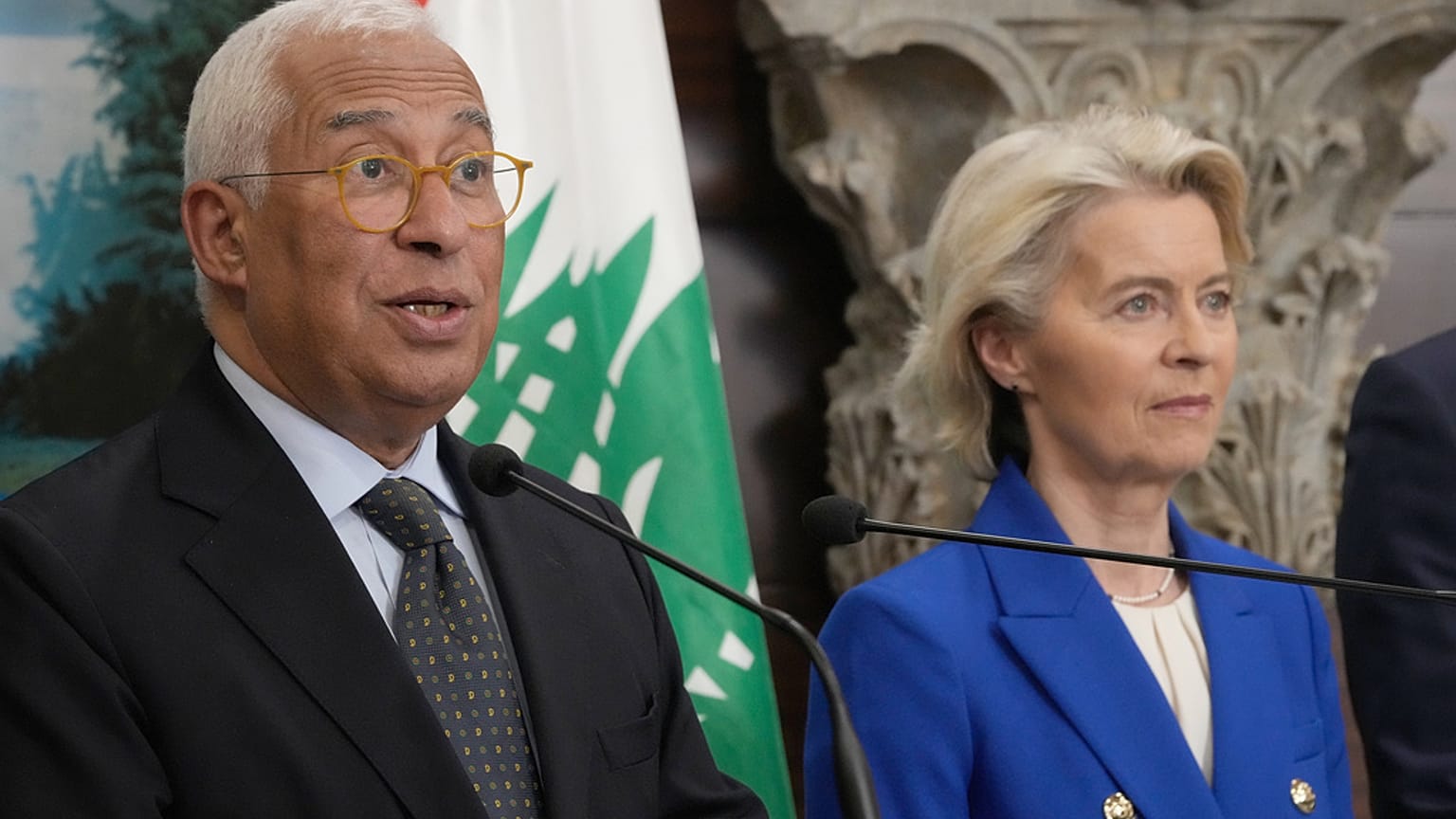
European Commission President Ursula von der Leyen, European Council head Antonio Costa and EU Trade Commissioner Maros Sefcovic will attend the signing ceremony in Asuncion.

Paraguay’s President Santiago Pena and Uruguay’s Yamandu Orsi will also be present. The attendance of Argentina’s leader Javier Milei is not confirmed.

Brazil’s President Luiz Inacio Lula da Silva, who played a key role in driving negotiations forward, will not attend.

His office said the signing had initially been planned as a ministerial-level event, and Paraguay issued “last-minute” invites to presidents.

Von der Leyen stopped in Rio de Janeiro on Friday to meet with Lula on the way to Asuncion.

She praised Lula’s role in pushing forward the negotiations, and said the deal “sends a powerful message” and shows “the power of partnership and openness. And this is how we create real prosperity.”

Lula said the agreement was “very good, especially for the democratic world and for multilateralism.”

The treaty is among several that countries are rushing to close in an uncertain global environment shaped by Trump’s tariff threats and protectionism.

On Friday, Trump threatened to slap trade tariffs on countries that do not support his plans to take over Greenland, a territory of NATO ally Denmark.

Lula added that the partnership with the EU went “beyond the economic dimension.”

“The European Union and Mercosur share values such as respect for democracy, the rule of law, and human rights,” he said.

The signing of the deal comes as Latin America is still reeling from Trump’s ouster and capture of Venezuelan leader Nicolas Maduro in a dramatic military operation this month.

Brazil, EU hail trade deal as victory for multilateralism


By AFP
January 16, 2026


President of the European Commission Ursula von der Leyen praised Brazil's President Luiz Inacio Lula da Silva for his role in negotiating the EU-Mercosur deal
 - Copyright AFP Mauro PIMENTEL
Fran BLANDY

Brazil’s President Luiz Inacio Lula da Silva and EU chief Ursula von der Leyen on Friday hailed a trade deal between the EU and South America’s Mercosur bloc as a victory for multilateralism at a time of global volatility.

The pair met in Rio de Janeiro on the eve of the signing of the deal, which has been 25 years in the making and will create one of the world’s largest free trade areas.

Lula said the signing of the deal in Asuncion, Paraguay on Saturday was “very good, especially for the democratic world and for multilateralism.”

Von der Leyen praised Lula’s role in pushing forward the negotiations, and said the deal “sends a powerful message” and shows “the power of partnership and openness. And this is how we create real prosperity.”

The deal is among several that countries are rushing to close in an uncertain global environment shaped by US President Donald Trump’s tariff threats and protectionism.

On Friday, Trump threatened to slap trade tariffs on countries that don’t support his plans to take over Greenland, part of the territory of NATO ally Denmark.

Lula added that the partnership with the EU went “beyond the economic dimension.”

“The European Union and Mercosur share values such as respect for democracy, the rule of law, and human rights.”

The signing of the deal comes as Latin America is still reeling from Trump’s ouster and capture of Venezuelan leader Nicolas Maduro in a dramatic military operation.


– Angry EU farmers –


Together, the EU and Mercosur account for 30 percent of global GDP and more than 700 million consumers.

The treaty eliminates tariffs on more than 90 percent of bilateral trade.

This will favor European exports of cars, wine, and cheese, while making it easier for South American beef, poultry, sugar, rice, honey, and soybeans to enter Europe.

The deal between the EU and Mercosur nations Argentina, Brazil, Paraguay and Uruguay, was agreed in Brussels last week despite fierce opposition from European farmers.

They fear the deal will lead to an influx of cheaper South American products due to production standards considered less stringent.

Von der Leyen will head to Asuncion in Paraguay for the signing ceremony, which Lula will not attend. His office said the signing had been initially planned as a ministerial-level event, and Paraguay issued “last-minute” invites to presidents.

In addition to host president Santiago Pena, Uruguay’s president Yamandu Orsi will also attend the signing.

The attendance of Argentina’s leader Javier Milei is not confirmed.


– Global trade deals –


Von der Leyen said it was important for her to meet with Lula before the signing, highlighting his role in the negotiations, which he made a priority of his third term in office.

“You are a leader deeply committed to the values we hold dear, democracy, the rules-based international order and respect. This is the leadership we need in today’s world.”

Lula said Brazil was also working on trade partnerships with Canada, Mexico, Vietnam, Japan and China.

Meanwhile, the EU is working on a trade deal with India, the world’s most populous nation with 1.4 billion people, whose relations have soured with Washington due to punishing tariffs.

Geopolitical tensions are also rising over strategic minerals, with Trump insisting the United States needs access to Greenland’s critical raw materials, which are largely unmined.

Von der Leyen said the EU and Brazil were also “moving towards a very important political agreement on critical raw materials” such as lithium, nickel and rare earths that “tend to become an instrument of coercion.”


China bids to host secretariat of new high seas treaty


By AFP
January 16, 2026


After years of delay, the treaty to protect the high seas was ratified in September with the approval of 60 countries - Copyright AFP/File Sameer Al-DOUMY

China on Friday proposed to host the secretariat of a new treaty governing the high seas, a surprise bid that underscores Beijing’s desire to have greater influence over global environmental governance.

China “has decided to present its candidature of the city of Xiamen to host the Secretariat” of the treaty, the Chinese mission to the United Nations wrote in a letter to Secretary-General Antonio Guterres, according to a copy seen by AFP.

The treaty will officially enter into force on Saturday, and the host country of the eventual secretariat will be decided later this year.

Until now, Belgium and Chile had been vying to host the future organization.

The Xiamen bid signals “China’s intention to help shape global rules,” said Li Shuo, director of the China Climate Hub at the Asia Society Policy Institute in Washington, calling it a “notable move.”

China’s announcement came just days after US President Donald Trump announced his country will withdraw from 66 global organizations and treaties — involving UN and non-UN entities.

They include the United Nations Framework Convention on Climate Change (UNFCCC), the parent treaty underpinning all major international climate agreements, ratified by almost every country in the world.

After years of delays, the treaty to protect the high seas was ratified in September by 60 countries. The law aims to protect biodiverse areas in waters worldwide, extending beyond countries’ exclusive economic zones.

Teeming with plant and animal life, the oceans are responsible for creating half of the globe’s oxygen supply and are vital to combatting climate change, conservationists say.

Once the treaty becomes law, a decision-making body will have to work with a patchwork of regional and global organizations already overseeing different aspects of the oceans.

These include regional fisheries bodies and the International Seabed Authority — the forum where nations are jousting over proposed rules on the environmentally destructive deep-sea mining industry.
Large crowds expected for ‘Hands off Greenland’ protests

By AFP
January 16, 2026


President Donald Trump has signalled he will stop at nothing to get US hands on Greenland - Copyright AFP Alessandro RAMPAZZO

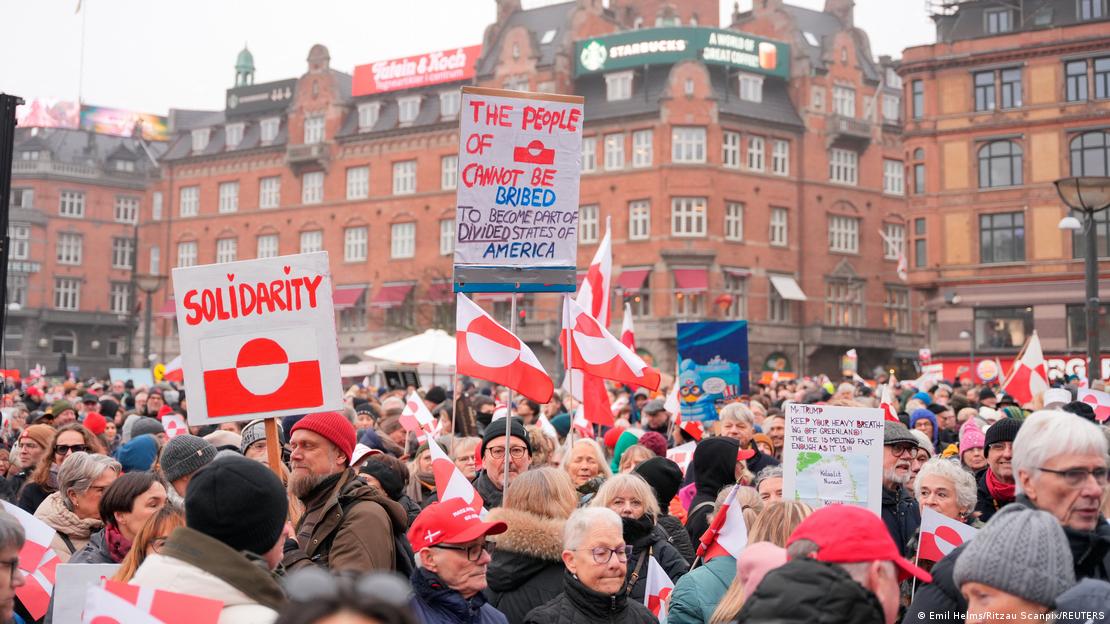
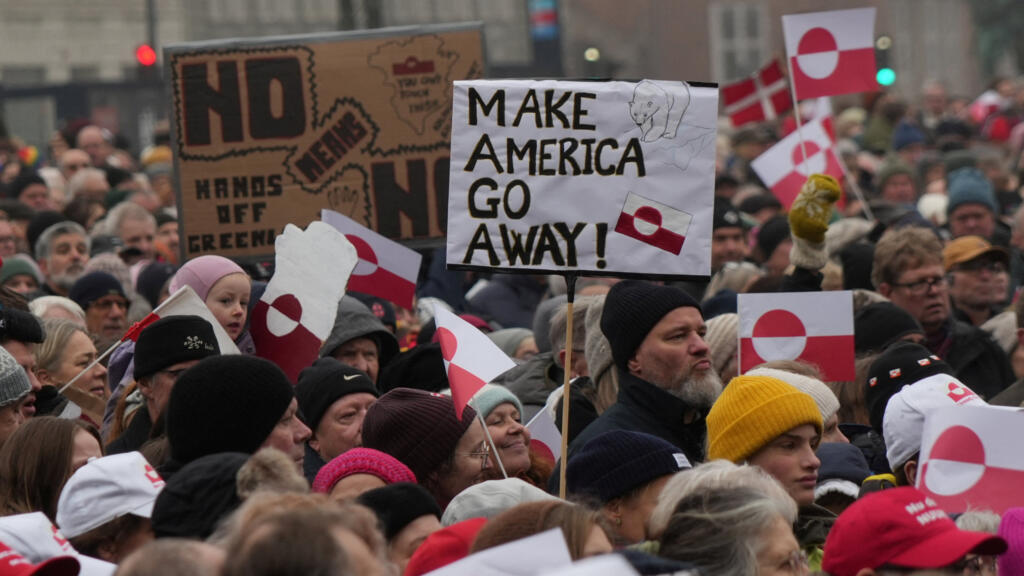
Large demonstrations are planned across Denmark and Greenland on Saturday to protest against US President Donald Trump’s designs to take over the Arctic island.

Thousands of people have indicated on social media that they intend to take part in marches and rallies organised by Greenlandic associations in Copenhagen, Aarhus, Aalborg, Odense and the Greenlandic capital Nuuk.

“The aim is to send a clear and unified message of respect for Greenland’s democracy and fundamental human rights,” Uagut, an association of Greenlanders in Denmark, said on its website.

The protests follow Trump’s warning on Friday that he “may put a tariff” on countries that oppose his plans to take over Greenland, which is an autonomous territory of Denmark.

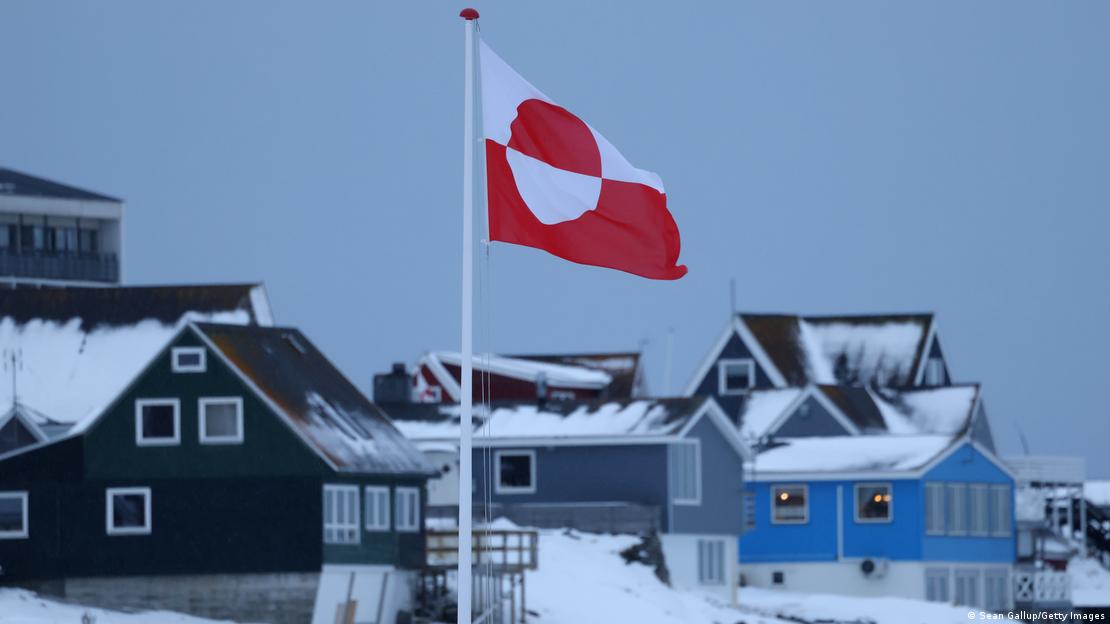
The demonstration in Nuuk is scheduled to begin at 4:00 pm (1500 GMT), to protest “against the United States’ illegal plans to take control of Greenland,” organisers said. Demonstrators would march to the US consulate carrying Greenlandic flags.

The Copenhagen rally was due to begin at 12:00 pm (1100 GMT), and make a stop outside the US embassy in the Danish capital around an hour later.

“Recent events have put Greenland and Greenlanders in both Greenland and Denmark under pressure,” Uagut chairwoman Julie Rademacher said in a statement sent to AFP, calling for “unity”.

“When tensions rise and people go into a state of alarm, we risk creating more problems than solutions for ourselves and for each other. We appeal to Greenlanders in both Greenland and Denmark to stand together,” she said.

– ‘Demand respect’ –

Uagut, along with the citizens’ movement “Hands Off Greenland”, and Inuit, an umbrella group of Greenlandic associations, were staging the demonstrations to coincide with a visit to Copenhagen by a bipartisan delegation of US lawmakers.

On the event’s Facebook page, at least 900 people in Greenland said they planned to take part in the territory, which has a total population of about 57,000.

“With this demonstration, we want to show that we are taking action, that we stand together and that we support our politicians, diplomats and partners,” Kristian Johansen, one of the organisers, said in a statement.

“We demand respect for our country’s right to self-determination and for us as a people,” added Avijaja Rosing-Olsen, another organiser.

“We demand respect for international law and international legal principles. This is not only our struggle, it is a struggle that concerns the entire world.”

According to the latest poll published in January 2025, 85 percent of Greenlanders oppose the territory joining the United States. Only six percent were in favour.


US congress members in Denmark in support of Greenland

By AFP
January 16, 2026

US Democratic Senator Dick Durbin was among the members of the US Bicameral Congressional Delegation visiting Denmark - Copyright AFP KAREN MINASYAN

A US bipartisan congressional delegation kicked off a visit to Copenhagen on Friday to express support for Denmark and Greenland after President Donald Trump’s threats to take over the Arctic island.

The 11 congressmen and women were to hold talks with Danish Prime Minister Mette Frederiksen and her Greenlandic counterpart Jens-Frederik Nielsen, among others.

Their visit came two days after a meeting in Washington where Copenhagen said Denmark and the United States were in “fundamental disagreement” over the future of Greenland, which is an autonomous territory of Denmark.

An AFP reporter in Copenhagen saw a large black van leave Frederiksen’s office shortly before noon (1100 GMT) on Friday, but her office would not confirm whether the meeting had taken place.

The US delegation was also due to meet with Danish members of parliament.

The group arrived at the offices of the Danish employers’ association Dansk Industri around midday for a meeting with business leaders.

“We are showing bipartisan solidarity with the people of this country and with Greenland. They’ve been our friends and allies for decades,” Democratic Senator Dick Durbin told reporters.

“We want them to know we appreciate that very much. And the statements being made by the president do not reflect what the American people feel,” he added.

Trump has insisted the US needs strategically-located Greenland and has criticised Denmark for not doing enough to ensure its security.

The US president has pursued that argument, despite Greenland — as part of Denmark — being covered by NATO’s security umbrella.

In addition to Durbin, the US delegation is made up of Democratic senators Chris Coons, Peter Welch and Jeanne Shaheen, as well as Republicans Thom Tillis and Lisa Murkowski.

Democrats from the House of Representatives in the delegation are Steny Hoyer, Gregory Meeks, Madeleine Dean, Sara Jacobs and Sarah McBride.

The group will be in Copenhagen on Friday and Saturday, before heading to the World Economic Forum in Davos.

NATO chief’s tactic on Trump’s Greenland threats? Change topic

By AFP
January 15, 2026

GIVING THE SECRET SOCIETY SIGN FOR 
'TO KNOW, TO WILL, TO KEEP SILENT'

NATO Secretary General Mark Rutte faces a tough balancing act over US claims on Greenland - Copyright AFP NICOLAS TUCAT
Max DELANY

US President Donald Trump’s demands to take over NATO ally Denmark’s territory Greenland have thrust alliance chief Mark Rutte into an uncomfortable position.

His strategy for now: say as little as possible and try to change the subject.

Facing warnings the crisis could tear the 76-year-old military alliance apart, the former Dutch premier has sought to keep himself and NATO out of the fray.

Instead, he’s tried to deflect Trump’s desires by stubbornly focusing on joint efforts to boost Arctic security, dodged tricky questions and even kept on praising the US leader.

That approach hasn’t always gone down too well.

At a meeting with members of the European Parliament this week Rutte was repeatedly put on the spot.

“Allow me to address you as the guy who’s looking after all of us,” said agitated Danish lawmaker Stine Bosse.

“Please give us an indication of what this alliance can do if two countries within the alliance cannot agree?”

Rutte, however, remained unfazed.

“My role as secretary general, I’m very clear — I never ever comment when there are discussions within the alliance,” he stonewalled. “You work behind the scenes.”

The alliance chief insisted his energy was squarely on making sure NATO was doing enough to protect the Arctic — a key justification in Trump’s rationale for wanting Greenland.

“I believe there is a bigger issue at stake here, and that is the defence of the high north, the defence of the Arctic area,” Rutte said.

He then went even further and repeated his argument that Trump has in fact made NATO’s alliance stronger by forcing others to spend more on defence.

“I know you will all hate me now saying this, but this is what I believe,” he said.


– ‘Keep the Americans onboard’ –


That sangfroid is a large part of the reason why Rutte is in the job.

Billed as a “Trump-whisperer”, he is one of a handful of European leaders who have been able to win the ear of the unpredictable US president.

The wily political operator converted the goodwill into a major success at NATO’s summit this summer by securing a landmark spending deal that kept Trump happy.

Among diplomats at the alliance’s headquarters, there is a general understanding of Rutte’s low-key approach.

“It’s difficult for Rutte to take the lead here as he has to keep the alliance together and keep the Americans onboard,” said Jamie Shea, a former senior NATO official now with Chatham House think tank.

“He can’t take the European side against Washington.”

While some European leaders like Denmark’s Mette Frederiksen and France’s Emmanuel Macron have been more outspoken — the concrete steps taken so far have focused on reinforcing NATO’s position in Greenland and the Arctic.

Copenhagen has sent more troops to the island and other European powers have dispatched personnel as a possible prelude to a bigger NATO deployment.

Shea said Rutte needs to hammer out the details for a potential NATO mission in the Arctic and get Trump to agree to it as a possible part of the solution.

“He needs to work behind the scenes quickly but quietly to sell the idea to the US,” Shea said.

– ‘Silver bullet’ –

The furore over Greenland comes at a delicate time as Europe grapples with Trump’s push to end Russia’s war in Ukraine.

After months of nudging, Washington finally seems to have drawn closer to Kyiv’s position — but any progress is fragile.

Meanwhile NATO itself is eyeing a potentially combustible summit with Trump in Turkey this summer where allies will have to show him they’re making good on the vow to spend more.

“Rutte knows that if he fails now he could get burnt and lose his capital with Trump,” a senior NATO diplomat told AFP.

“He wanted to save his silver bullet for Ukraine, but maybe now will have to try to manufacture another one for Greenland.”

But if Trump does eventually press ahead with his threats against Greenland, possibly even resorting to force, the NATO chief may not have an option but to intervene more forcefully.

“Rutte still has a responsibility, which is to decide when he thinks it is most appropriate to chip in,” said Camille Grand, another former senior NATO official.

“At the moment, he says he is not getting involved in disputes between member states. That may work for now, but at some point he risks being caught up in it”.

The man himself appears to be unperturbed.

“I’m thoroughly enjoying the role and the job,” he said, when an EU lawmaker asked if he feared being the last NATO secretary general.

“I was not planning to quit already, but I’m sure there will be a successor someday”.

Opinion: Trump warns of tariffs against countries opposed to Greenland takeover


By  Paul Wallis
EDITOR AT LARGE
DIGITAL JOURNAL
Ja
nuary 16, 2026


Nuuk, Greenland - Copyright AFP/File Odd ANDERSEN

Let’s be frank. Greenland is about as useful for US national security as a Kleenex against modern weapons and surveillance systems.

Note: Golden Dome, one of the supposed excuses for this frivolous exercise, is a sort of upgrade of Israel’s Iron Dome. You don’t see Israel trying to annex Cyprus on that basis, do you? You don’t see them making a static target out of their system, either.

Missile defense doesn’t and can’t work like that, especially large-scale or integrated into strategic systems. It’s like someone in the Middle Ages building a mildly threatening hot dog stand in Kazakhstan and saying it’ll stop Genghis Khan. None of the Golden Dome systems is said to be deployment-ready, anyway.

This absurdity even has a historical lineage. The US abandoned most of its Greenland bases a long time ago on pretty much that basis. It’s not and can’t be a “forward base,” it’s a sitting duck. It’s as stupid as those isolated South China Sea artificial islands.

Yet here we are 50 years later, discussing a possible forceful takeover of Greenland by the US against the express wishes of NATO. Trump now threatens tariffs being raised against any country that opposes the takeover.

It’s not just NATO that doesn’t like this. According to a Reuters/Ipsos poll, only 17% of Americans support it.

So far, we have the scenario as follows:

It’s an obsolete idea with no even theoretical military value.

NATO is firmly against it.

Americans don’t support it.

It’d be incredibly expensive and time-consuming, particularly in the event of any military clash with NATO.

The logistics alone are in the billions of dollars.

Securing Greenland against any kind of third party would be extremely demanding on military resources.

In my opinion, few things could be less in America’s best interests than to take on such an unproductive project.

Resources, you say? Not really.

Greenland’s resources are a thing at the moment in the wonderful and usually deeply misguided world of geopolitical theory.

No. The resources idea doesn’t survive much if any scrutiny. If extracting those resources was a good move or cost-viable, there are plenty of huge mining companies who’d just ring Denmark and would have done so decades ago. This isn’t a new discovery; it’s an unavoidable reality of mining.

Add this to the fact that extracting would take many years to even begin, let alone make money. Exactly like the Venezuelan oil, the oil industry won’t touch.

So what’s left of the Greenland idea?

Very little.

It would divert an enormous amount of US resources. Maintenance of so much as a pup tent in Greenland could cost a lot over time.

It would further isolate the US from its allies. Is that the objective? Because if so, it’s working.

Trade and diplomacy could become very difficult. The import-dependent US would be at the mercy of foreign exporters. The parts for “Made in USA” manufacturing may never show up.

The relationship between Canada and the US will further deteriorate if that’s even possible.

The Greenland move would directly play into the hands of any hostile nation, putting a major resource imbalance into US geophysical security. The US doesn’t have unlimited resources.

There are 8 billion people in this world, and none of them signed up for this endless imbecility.

This won’t be “America First.” It’ll be “America Alone.”

If America falls over, nobody will be in any hurry to pick this mess up.

____________________________________________________

Disclaimer
The opinions expressed in this Op-Ed are those of the author. They do not purport to reflect the opinions or views of the Digital Journal or its  
members


.