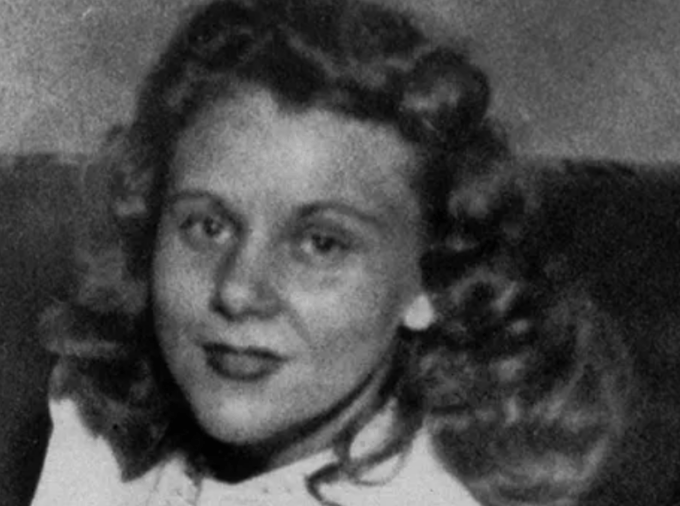
Viola Liuzzo.
There are a few new things in the US – just recycled atrocities that the media fails to recognize as sequels. In the US flash flood of bad dreams, the latest event in the drive-by-whizz of meaningless horror – the cold-blooded public execution of Renee Good – has come and gone. Good now becomes – at the moment the bullets strike – a sort of wayward example of uncertainty. Why Renee Good? At a casual glance she is none of the things that the US hates murderously – not an immigrant or a communist, not even an atheist. We learn that she has a wife and that she had been previously married twice to male partners. There is no reason to assume that the murderer, Jonathan Ross, knew any of this – and one should not speculate that he acted out of homophobic rage. Have we seen Renee Good before in the shadow play of the US news cycle? Renee Good projects a disturbing ordinariness – an old dog in the back with a grey muzzle, and a child seat next to the dog. Our bleary eyes alight for a moment on a seemingly unremarkable white woman caught in the act of briefly departing from domestic routine. Like all random murder victims, she dies in the wrong place at the wrong time.
We have a history of home-based enemies – Jews, Muslims, atheists, Unitarians, communists, Quakers, socialists – people that the FBI historically side-eyes with a measure of latent disgust, but only sporadically assaults. Fascism pulls up the mask, pulls down the pants, and reveals a fully erect gun that finally has the full blessing of the highest authorities. Renee Good is not the first upstanding White woman to be offered up at the altar of violent sacrifice – even in my own youth, we had Allison Krause (not Allison Krauss, the blue-grass fiddle savant) and Sandra Scheuer. Kent State National Guardsmen panicked and sprayed gunfire. This massacre fell well within the US tradition of mass shootings – the periodic ritual involving guns, crowds, vengeance, and paranoia. Nixon, sociopath, lia,r and war criminal that he was, understood that the optics of repression required that he tread carefully around the issue of murdering upstanding White US citizens. He called a press conference after the shooting and cleverly, in a soft, measured voice, bullshitted the public about his belief that “the protesters” wanted peace just like he did. We are really all on the same side he said. Yeah, this was the sort of flagrant dishonesty that inspired Trump. Trump figured out that racists want their bile in its most transparent form. But America’s homicidal zeal generally has tiptoed around the unique privilege of those living comfortably in the homeland. If Allison Krause and Sandra Scheuer were mere victims of paranoia and chance – catching bullets that momentarily sprayed hatred while seeking random targets – we have an obscure history of political harm toward wayward White women that has been overlooked.
Predictably, Black women are killed by police in greater numbers than White women, but researchers have compellingly argued that class, even more than race, accounts for the demographic details of police killings. One study concluded that poor White people are statistically more likely to be killed by police than middle and upper-middle-class Black people. The murder of Renee Good, however, does not fit into the typical categories of police violence that help us to place the killing of, say, Breonna Taylor into a broader context. Middle and upper-middle-class White women are among the least likely demographics to die by police violence.
However, Good was not killed by police, but by paramilitary forces (even if given official status in the current fascist system). Unlike Breonna Taylor, who was killed in a random hail of bullets by hair trigger police who had forcefully entered Taylor’s apartment in a botched effort to arrest a suspect who was not present, Good seems likely to have been targeted, at least in part, for her gender. We can’t get into the head of the murderer, Jonathan Ross, but it might not be outlandish to guess that Good’s white skin triggered the homicidal response in some way as well. If dark skinned and poor people often risk police ire as a matter of predictable institutional racism, White, educated, middleclass women have a very rare and specific way of falling afoul of violent authorities.
Good’s murder fits into a category so vanishingly small, that I can think of only one single historical incident that shares similar context – the 1965 KKK murder of civil rights volunteer, Viola Liuzzo. It may seem startling to view ICE as the linear offspring of the KKK, but the tie between Klan violence and police killings (as recognized in the famous Rage Against the Machine line, “some of those that work forces are the same that burn crosses”) ought to make us aware that right wing paramilitary violence has always been an adjunct to official power structures.
Liuzzo entered America’s most terrifying fantasy when a car with four Klansmen (one being an FBI informer) pulled alongside her vehicle on an Alabama road between Selma and Montgomery. She had Michigan license plates and a 19-year-old Black male passenger next to her. She had bravely gone to Alabama to help organize Black voters, and to ferry disenfranchised people to places of registration – in and of itself, a capital offense in Jim Crow states. Thus, the psychological triggers, within the KKK hypervigilant psyche, made her fate inevitable. Her killers likely imagined her as the very symbol of “miscegenation.” A White woman with a younger Black man on a rural stretch of road might have stirred the most violent fear in the White, masculinist heart. A klansman shot her in the head. Like with Renee Good, her car veered and crashed. Her passenger, Leroy Moton, survived by pretending to be dead. In the hierarchy of masculinist rage, the murderous impulse reserves a place for White women who stray from their cultural niche.
But death was not enough retribution – FBI head, J Edgar Hoover, launched a smear campaign against Liuzzo, accusing her of being an adulterer and a heroin addict. The Klan publicly exulted in her murder, posting pictures of her dead body, and “bragging about the murder.” The masculinist, racist mindset mobilized against Viola Liuzzo’s legacy – in death, she might have become the first White, female martyr in the struggle for racial equality. J Edgar Hoover and his allies in the Klan made every effort to erase Viola Liuzzo from historical consciousness. They succeeded in spectacular fashion. We recall John Brown, Medgar Evans, Goodman, Schwerner and Chaney and Rev. James Reeb with due reverence, but Viola Liuzzo remains as an obscure footnote.
An undergraduate research paper by Alyssa Ness observed:
“When comparing Liuzzo’s murder to other murders during the civil rights movement, it is evident that she not only received less recognition for her heroic dedication in the movement than others but was also heavily scrutinized by the government and the public through the media for defying traditional white gender roles for women of her time. Louis B. Nichols was hired by the FBI in order to manage the bureau’s interactions with news and media. Nichol’s main role in the bureau was to prevent the bureau from gaining negative attention through media and entertainment by promoting its preferred image, and any media outlet that opposed the FBI would be attacked by supporting media outlets. The FBI and press distorted the reason Liuzzo had participated in the march and what the march was about in order to gain public support. Along with Hoover and the press, traditional middle class white women tormented the legacy of Liuzzo with accusations of her being mentally ill because she was not solely fulfilled by the role of a homemaker and mother. The public and media also heavily criticized Jim Liuzzo due to his inability to keep his wife under control. The New York Times published an article calling out Liuzzo for failing to deter his wife from her fate.”
Carolyn Bryant acted out the prescribed role for southern women in the Jim Crow era. Bryant, you may recall, accused Emmet Till of making advances on her as she clerked in her family-owned grocery store in Drew, Mississippi. Till, a 14-year-old boy from Chicago, was abducted, tortured, and murdered by Bryant’s husband and another KKK-affiliated accomplice 11 years prior to Liuzzo’s murder. Perhaps Liuzzo’s killing sheds light on the psychology of Carolyn Bryant. Women like Bryant knew all too well that vigilant male paranoia circumscribed White female sexuality. Miscegenation was a crime on the books in Jim Crow states, and, as Viola Liuzzo’s fate showed, it took little evidence to provoke the paramilitary institutions that enforced antiquated laws with brutal informality.
The lynching of Emmet Till and the murder of Viola Liuzzo are linked directly to current expressions of hyper-masculine self-doubt. Renee Good, like Liuzzo, violated the unwritten rules of racial propriety that racist White men demand. Female moral fortitude in a racist society will often be conflated with sexual abandonment. In a right-wing ecosystem featuring men who obsessively ruminate about rejection (consider the widespread “Incel” movement), acts of White female resistance to racist violence serve as symbols of sexual rejection.
As White women commit themselves to the battle against ICE, the right-wing pundit sphere will indulge in ever more flamboyant methods to label activism as sexual deviance. My point is well illustrated by the lunatic writer, Naomi Wolf, in this post on X:
“Okay, I’ll just say it. I’ve seen enough videos of the faces of liberal white women in conflict with @ICE, to know what is up. Liberal men at this point (sorry) are disproportionately estrogenized, physically passive, submissive due to woke gender hectoring, or porn-addicted. White liberal women are disproportionately sexually frustrated. Policing others as in the pandemic was an outlet for them, but it was not nearly enough. The smiles you see on their faces now say it all: white women long for all out combat with ICE – who tend to be strong, physically confident, masculine men – because the conflict is a form of physical release for them. They long for actual kinetic battle and it will get even uglier.”
The right-wing politicians and pundits now engage in a desperate struggle to tarnish the memory of Renee Good and to prevent her from becoming a martyr. They will alternately insist that she engaged in domestic terrorism or that she channeled her sexual frustrations into a vicarious rendezvous with the “real men” who work for ICE. When Ross murdered Good, he sneered, “fucking bitch,” as her dead body lay in the moving car. How many men have murdered women who rejected them? Now this inchoate rage against rejection becomes a subconscious theme affixed to a new wave of political violence. While Viola Liuzzo stands out as a historical anomaly, violence toward middle-class White women who confront the brutal treatment of dark-skinned targets of the fascist state will almost certainly occur again.
I don’t believe that Renee Good’s legacy will be destroyed as authorities sullied the memory of Viola Liuzzo. We have the video for Good as we did not for Liuzzo. But isn’t it long overdue that Viola Liuzzo be recognized as one of the great heroes of the civil rights era? After all, Liuzzo’s heroism helps us to understand the tragedy of Renee Good.