Monday, August 11, 2025


Scientists may have discovered a new mineral on Mars

Exploring the surface of Mars. PHOTO: Adobe Stock.

Researchers have pinpointed a previously unknown mineral on Mars, indicating the red planet’s surface may be more actively changing than previously believed. While scientists have a solid understanding of Mars’ surface appearance, uncovering its precise composition remains a challenge.

Recently, a team of researchers believes they have identified a completely new mineral, derived from an unusual layer of iron sulfate exhibiting a distinctive spectral signature.

In a paper published on August 5 in Nature Communications, astrobiologists led by Janice Bishop from the SETI Institute detailed the detection of an uncommon ferric hydroxysulfate mineral near Valles Marineris, a colossal canyon that runs along Mars’ equator. The region, thought to have once hosted flowing water, could hold vital clues about the natural forces that shaped the planet’s surface and whether microbes once inhabited Mars.

Sulfur, a common element on both Mars and Earth, frequently bonds with other elements to create sulfate minerals. These sulfates dissolve readily in water, but because Mars has been dry for so long, these minerals likely remained on the surface since the planet lost its liquid water. Examining these minerals can reveal crucial insights into Mars’ early environmental conditions.

The research team focused on sulfate-rich zones near Valles Marineris, targeting areas that displayed unusual spectral signals from orbit, as well as layered sulfate deposits and notable geological features, Bishop explained in a statement.

In one region, they discovered layered deposits of polyhydrated sulfates, beneath which lay monohydrated and ferric hydroxysulfates.

Laboratory experiments showed that the ferric hydroxysulfate observed on Mars could only have formed in the presence of oxygen, with the formation process releasing water. These conditions also suggest it formed at high temperatures, pointing to volcanic activity as a likely source. The mineral’s unique structure and thermal properties indicate it may be entirely new to science.

Bishop explained that the material we produced in the lab seems to be a new mineral due to its unique crystal structure and thermal stability. However, we must find this mineral on Earth first before we can officially recognize it as a new mineral species.

This is not the first time researchers have potentially discovered new minerals on Mars. Back in March 2025, Roger Wiens, a Mars exploration expert and a professor of earth, atmospheric and planetary sciences at Purdue University in Indiana, directed NASA’s Perseverance rover to target some unusually pale rocks on the Martian surface with its laser. He and his team found that these rocks contain unusually high levels of aluminum linked to the mineral kaolinite. This finding was notable on its own, but what truly made it remarkable is that kaolinite typically forms only in very warm and wet conditions.

Their discovery, published in Nature Communications Earth & Environment, indicates that Mars might have been more Earth-like—warmer, wetter, and more complex—than scientists previously believed.

 

Mexico’s PEMEX eyes lithium from oilfield brines


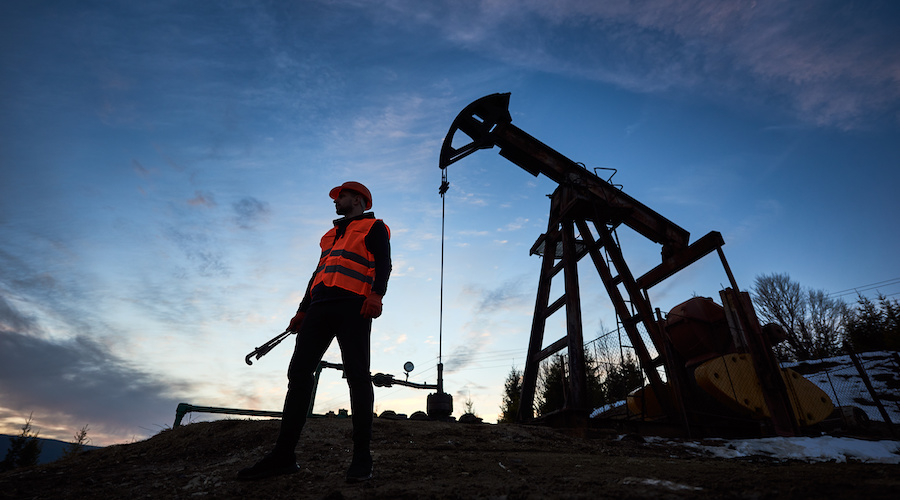
Once considered waste, oilfield brines are being repurposed into valuable resources. (Stock image by anatoliy_gleb.)

Mexico’s state-owned oil company, Petróleos Mexicanos (PEMEX), is exploring lithium extraction from oilfield brines in a bid to diversify its portfolio and advance the country’s energy transition.

Chief executive officer Victor Rodríguez said in the unveiling of the company’s 2025–2030 Strategic Plan last week that high concentrations of lithium, comparable to Bolivia’s, have been detected in drilling operations across five states. 

The company is assessing direct lithium extraction (DLE) technologies to isolate and process the metal into carbonate or hydroxide, essential materials for batteries and clean energy technologies.

As part of the plan, PEMEX may launch a new subsidiary, PEMEX Lithium, to produce so-called “petrolithium,” lithium sourced from petroleum brine. The move aligns with President Claudia Sheinbaum’s push for energy diversification and resource sovereignty. 

Sheinbaum has framed the company’s expansion into lithium as a deliberate shift away from dependence on oil production, refining, and fuel sales, opening new revenue streams in the process.

The initiative could pave the way for collaboration with the national lithium company, LitioMx, mirroring global trends in which oil majors invest in lithium to future-proof their operations.

Mexico holds an estimated 1.7 million tonnes of lithium reserves. While smaller than other Latin American producers, the country has 82 known deposits across 18 states, with the largest concentrations in Sonora, Puebla, and Oaxaca. Experts say that with targeted investment and development, Mexico could emerge as a significant player in the global lithium market.

Analysts warn that PEMEX faces steep challenges in the sector, including its lack of experience in non-energy mining, the technical hurdles of clay-based lithium extraction, and the need to meet sustainability standards. 

The government is positive and views PEMEX’s participation as a natural extension of its role in the shifting global energy landscape, with potential partnerships on the horizon with universities, innovation centres, and public enterprises abroad.

Gemfields sells Fabergé luxury brand for $50 million 

SOLD FOR A LOSS

Fabergé is famous for its ornate eggs crafted for the Russian royal family before the 1917 revolution. (Image courtesy of Fabergé.)

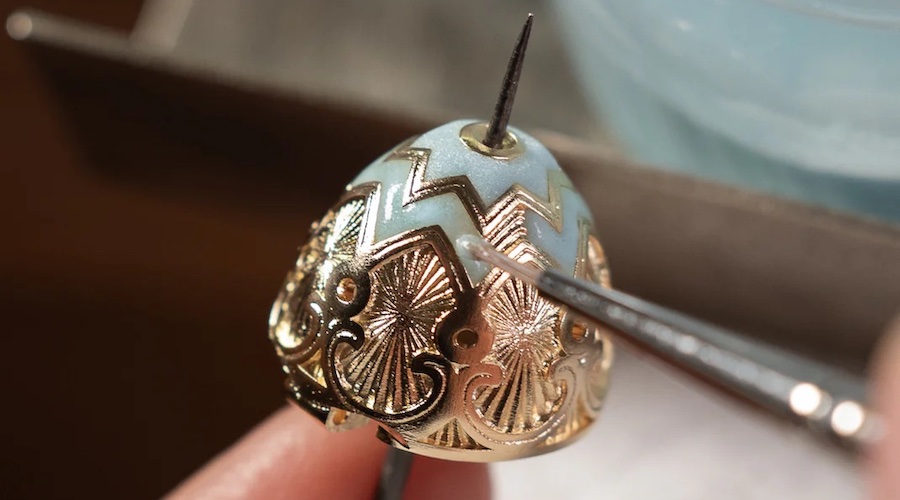
Emeralds and rubies miner Gemfields (LON: GEM) (JSE: GML) is selling its iconic jewellery brand Fabergé for $50 million, in a fresh attempt to shore up its finances.

The buyer is SMG Capital, a US investment company controlled by the technology investor Sergei Mosunov.

The deal closes a chapter that began in 2013, when Gemfields bought Fabergé from private equity group Pallinghurst for $142 million. The miner put the brand on the market in December after unrest in Mozambique forced a temporary halt at its Montepuez ruby mine

Founded in 1842 and transformed under Peter Carl Fabergé, who became goldsmith to the Russian Imperial Court in 1882, the brand has faced headwinds from a slump in the luxury goods market, a downturn that has hit diamond miners hardest. Fabergé posted revenues of $13.4 million in 2024, down from $15.7 million in 2023.

Fabergé, which was founded in 1842 and taken over and transformed by Peter Carl Fabergé in 1882, when he became official goldsmith to the Russian Imperial Court. The brand has come under pressure amid a downturn in the luxury goods market, which has hit diamond miners the hardest. It made revenues of $13.4 million in 2024, down from $15.7 million the previous year.

“The sale marks the end of an era,” Gemfields chief executive Sean Gilbertson said in a statement. “Fabergé has played a key role in raising the profile of the coloured gemstones we mine, and we will miss its marketing leverage and star power.”

The company will use the proceeds to support operations in Mozambique and Zambia.

Timeless treasures

Fabergé most iconic jewels and objects include the legendary series of ornate Easter eggs, first commissioned by Tsar Alexander III in 1885 for his wife, Tsarina Maria Feodorovna. Before the 1917 revolution, the company produced 50 of these creations for the Russian royal family. The Bolsheviks later seized Fabergé’s workshops, forcing the family into exile across Europe.

Gemfields sells Fabergé luxury brand for $50 million
A Fabergé Easter Egg. (Image courtesy of Gemfields.)

The brand passed through multiple owners over the 20th century, fetching $180 million in 1984 and acquiring the Elizabeth Arden brand three years later. It was sold to Unilever in 1989 for $1.55 billion and relaunched by the Fabergé family in 2009.

Gemfields shares have fallen about 70% since peaking at 19.4p in April 2022, dragged down by oversupply in the emerald market. The company recently delayed commissioning a second processing plant at Montepuez, citing illegal mining, permit issues and logistical setbacks.

By late morning Monday, Gemfields’ stock was up 4% at 5.95p in London and 0.74% higher in Johannesburg, valuing the company at 2.35 billion rand ($132 million).


 TEMPER TANTRUM TRUMP

Trump says gold imports won’t be tariffed in reprieve for market


THE GNOMES OF ZURICH REJOICE

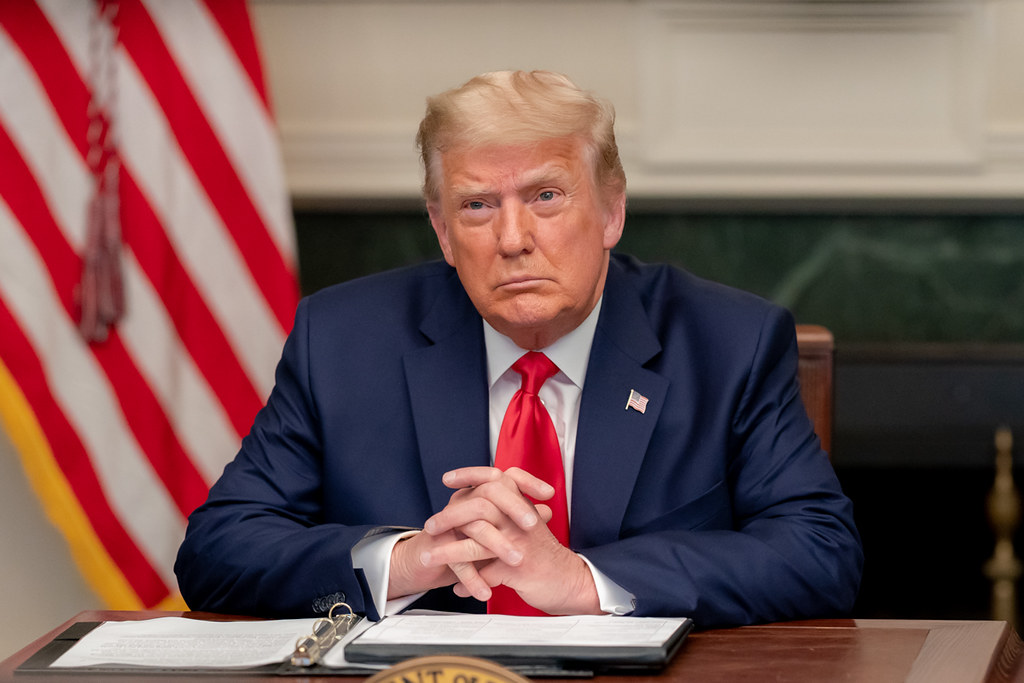
US President Donald Trump. Credit: Trump White House | Flickr under public domain licence PDM 1.0.

President Donald Trump said Monday imports of gold will not face US tariffs, weighing in after a federal ruling caused chaos and confusion in global bullion markets.

“Gold will not be Tariffed!” Trump posted on social media.

Gold futures traded on New York’s Comex and the global benchmark for spot prices in London were little-changed after Trump’s post. Spot gold pared some losses, though it was still down more than 1.2% on the day.

No formal, updated policy had yet been posted by US agencies as of Monday afternoon.

A White House official suggested last week the administration would issue a new policy clarifying whether gold bars would face import taxes, after US Customs and Border Protection stunned traders by deciding the imports would be subject to duties.

The ruling determined that one-kilogram and 100-ounce gold bars would be subject to Trump’s country-based tariffs that took effect Aug. 7. The move came in the form of a letter that was issued to a Swiss refiner inquiring about gold’s treatment, then posted publicly on the agency’s website.

Had the decision remained in place, it would have had sweeping implications for bullion around the world and potentially for the smooth functioning of the US futures contract. Gold’s role as a financial asset and global currency sets it apart from other commodities such as copper that have been roiled by tariffs.

Traders, analysts and executives across the industry had understood the bars would be exempt from Trump’s so-called “reciprocal” tariffs,” including a 39% levy on goods from Switzerland, a major exporter.

The confusion over the CBP letter had caused US gold futures to surge to a record on Friday, and traders said that shipments were freezing up in response to the shock news.

Bullion markets stabilized later Friday when a White House official told Bloomberg in a written statement that the Trump administration intends to post an executive order in the near future to clarify what it called misinformation about tariffing of gold and other specialty products.

The latest statement adds to a tumultuous year for gold, which has soared to unprecedented levels amid strong buying from central banks and as Trump’s trade war drives haven demand.

Earlier this year, physical flows were upended as traders rushed billions of dollars worth of gold and silver into the US as New York prices traded at large premiums in anticipation of potential tariffs. However, that trade came to a crashing halt after the US included gold and silver in its list of exemptions from the tariffs announced in early April.

(By Jennifer A. Dlouhy and Yvonne Yue Li)


Chinese copper maker an unlikely winner from Trump’s tariffs

Stock image.

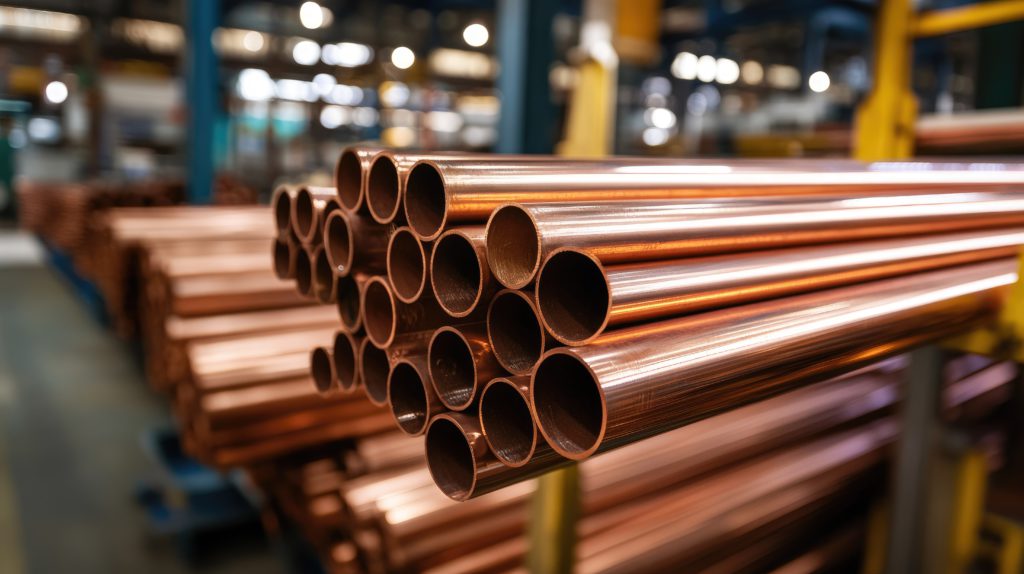
One of China’s biggest copper fabricators is set to reap a windfall from President Donald Trump’s efforts to boost US production of the metal.

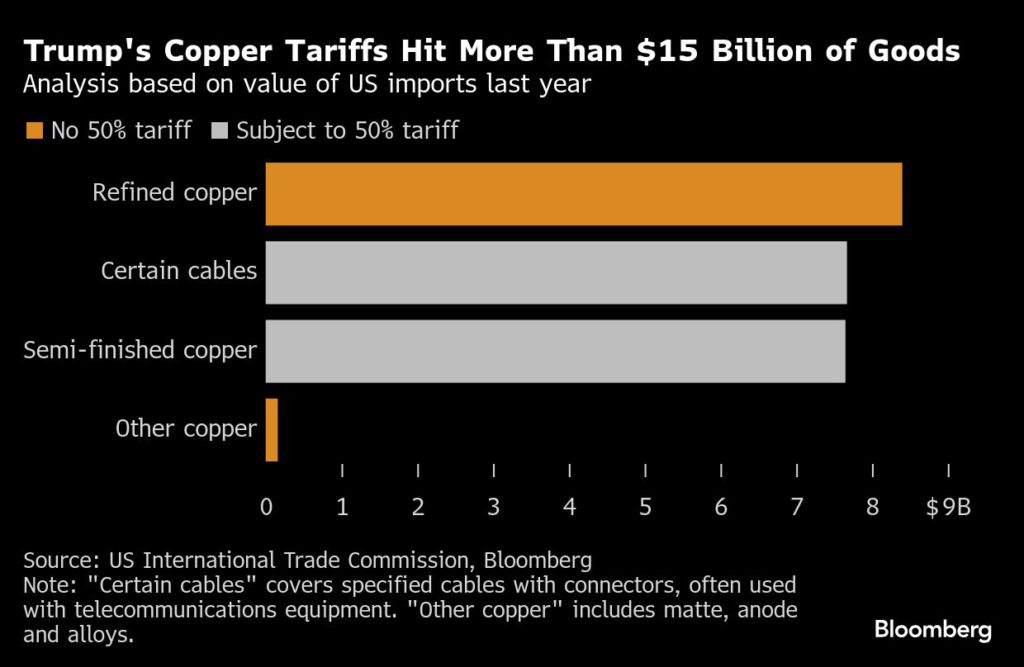
Zhejiang Hailiang Co., a major manufacturer of copper tubes used in autos, airconditioning and plumbing, might seem an unlikely winner from “America First” protectionism. But its stock has jumped nearly 20% since the Trump administration imposed tariffs at the end of July on imports valued at more than $15 billion last year.

While Washington and Beijing joust over trade, investors have zeroed in on Hailiang’s footprint in the US. The company said in 2020 it’s aiming for 100,000 tons of annual capacity at its plant in Houston. The factory had 30,000 tons as of last year. In an emailed response to questions, Hailiang said last week the expansion is proceeding, without elaborating.

The firm’s shares have outperformed other Chinese copper producers, as well as the broader CSI 300 Index, which has fallen slightly over the period. Hailiang’s total annual capacity is around 1.5 million tons.

The 50% duty on semi-finished copper, which will disrupt sales to the US while putting a premium on metal fashioned locally, may only be the first step in a Trump-led realignment of the global copper industry. The White House also ordered officials to come up with a plan in 90 days to slap tariffs on an array of other copper-intensive goods.

The US imported at least 600,000 tons of semi-finished copper last year. That’s nearly a third of its total demand, according to Citic Securities Co. As those imports become more costly, Hailiang’s US factory is expected to deliver “exceptional profits,” the brokerage said in a note.

The plant in Houston is part of a network that also includes bases in Indonesia and Morocco. Although China is the world’s biggest market for copper, the company has expanded internationally to hedge against a slowing economy at home and the risks posed by trade hostilities with western countries.

The effort may now be about to pay off after an earlier stumble. The Houston plant suffered a net loss of 35 million yuan ($4.9 million) last year due to higher labor and material costs, and expenses related to its expansion, according to Hailiang’s earnings report. That was a weight on companywide net income, which dropped 37% to 703 million yuan.

The company could also benefit from its proposed acquisition of a domestic peer. It said in December it planned to buy an undisclosed stake in Golden Dragon Precise Copper Tube Group, which also has a copper tube plant in Pine Hill, Alabama.


Barricks seeks $3.5B financing for Pakistan copper mine

Drilling at Reko Diq. (Image courtesy of Barrick.)

Barrick Mining (NYSE: B)(TSX: ABX) aims to secure up to $3.5 billion in financing from the United States and other international lenders to build a massive copper-gold mine in Pakistan, after long-promised Saudi funding failed to materialize.

Chief executive Mark Bristow told the Financial Times on Monday that the company is working on a “G7-country financing package” for the Reko Diq project, in Balochistan province. Talks involve the World Bank’s International Finance Corporation (IFC), the US Export-Import Bank and Development Finance Corporation, the Asian Development Bank, and lenders in Germany, Canada and Japan.

“There is a lot of interest to support Pakistan,” Bristow told FT, adding the $9-billion project had “focused a spotlight” on the region.

Bristow said any US government backing would give the country access to copper concentrate from the mine, though the material would still need to be processed into metal. “The challenge for the US is smelting to capacity; it’s all spoken for,” he said, noting the country needs more domestic smelters to reduce its reliance on Chinese metal imports.

Reko Diq is considered one of the largest undeveloped copper-gold deposits in the world, projected to generate more than $70 billion in free cash flow over the next 37 years and $90 billion in operating cash flow over its lifetime. The project is jointly owned by Barrick and the governments of Pakistan and Balochistan.

Phase one, targeted to begin production in 2028, is under active financing negotiations. Project director Tim Cribb said earlier this year that the mine is seeking $650 million from the IFC and International Development Association, $500 million to $1 billion from the US Export-Import Bank, and $500 million from other development finance institutions, including the Asian Development Bank, Export Development Canada and the Japan Bank for International Cooperation.

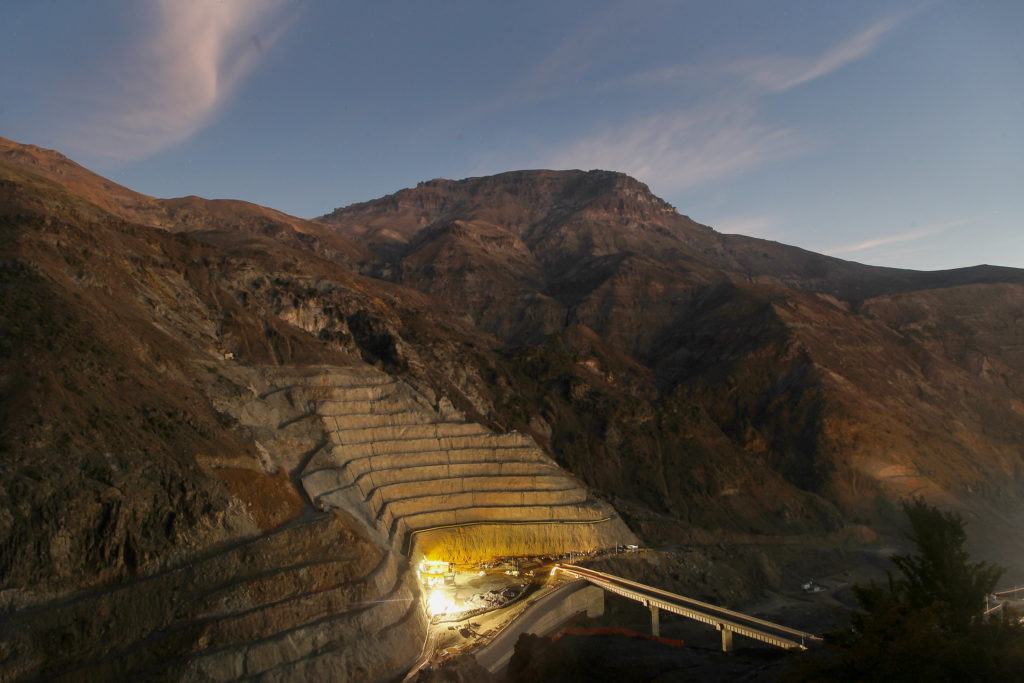
Mine collapse weighs on Codelco debt even as output resumes

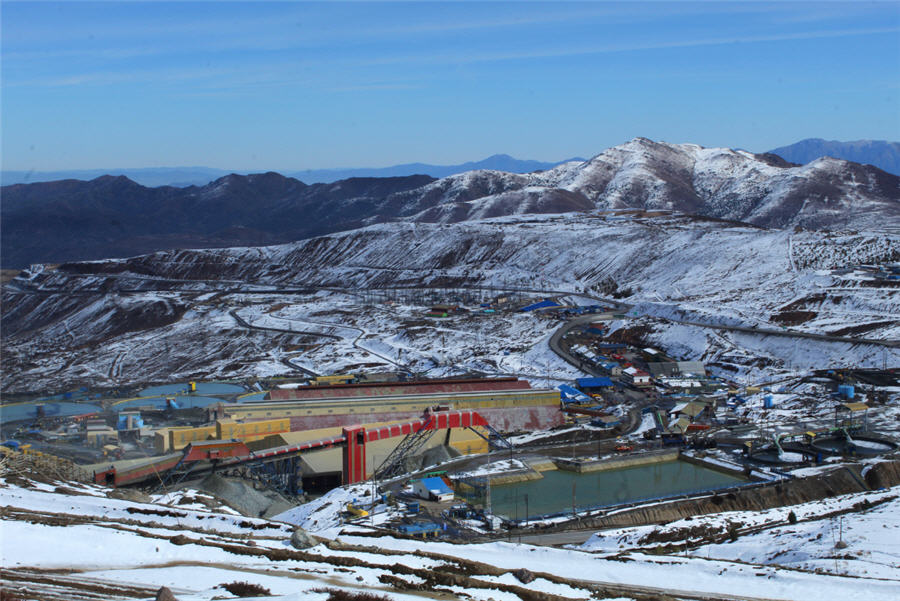
El Teniente, Chile – Image courtesy of Coldeco

Codelco’s El Teniente copper mine partially resumed production over the weekend, but the fatal accident that closed it for a week is likely to weigh on the Chilean company’s bonds for far longer.

The July 31 tunnel collapse that killed six workers hit a new section of the mine, snarling plans to revive production at the 120-year-old operation. And while older parts of El Teniente are now operating again, the newer sections may be out of action for an extended period.

The reopening of the mine came sooner than many had expected, following a week that saw estimates of the damage caused by the landslide increase. The Public Prosecutor’s Office estimated on Thursday that 3.7 kilometers (2.3 miles) of tunnel was affected by the collapse, compared with an initial assessment of about 700 meters from the company. Investigators still need to use drones to reach the worst affected areas.

“There are many unknowns regarding the extent of the damage and the efforts that it could take not only to alleviate the safety issues, but also to make it fully operational again,” said William Snead, a strategist at Banco Bilbao Vizcaya Argentaria. “Maybe some of them are not being fully priced yet.”

Investors had initially seen the accident as a human tragedy, with limited impact on finances long term. As a result, the market reaction was muted.

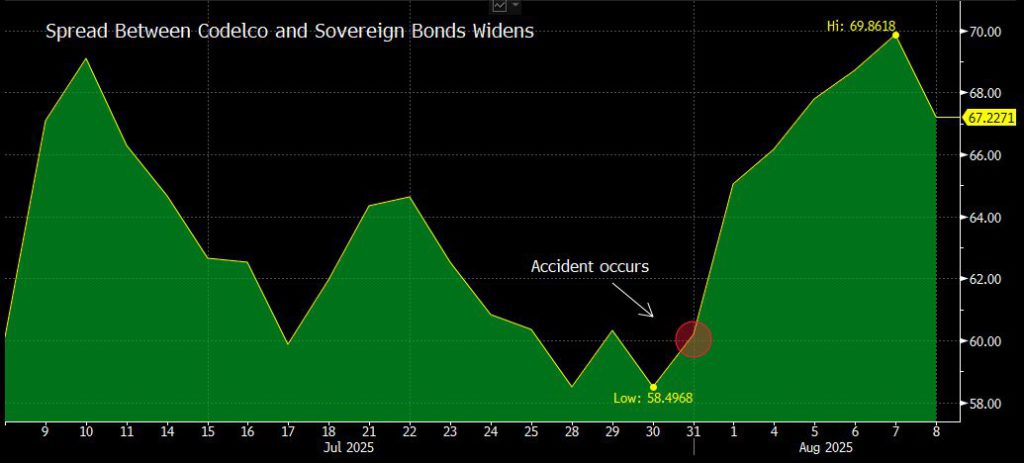
The extra yield investors demand to hold Codelco bonds over their Chilean sovereign counterparts widened about 10 basis points last week, but that only pushed it back to the levels seen a month earlier when President Donald Trump was threatening to put a tariff on raw copper imports. That threat was subsequently withdrawn.

Changing perceptions

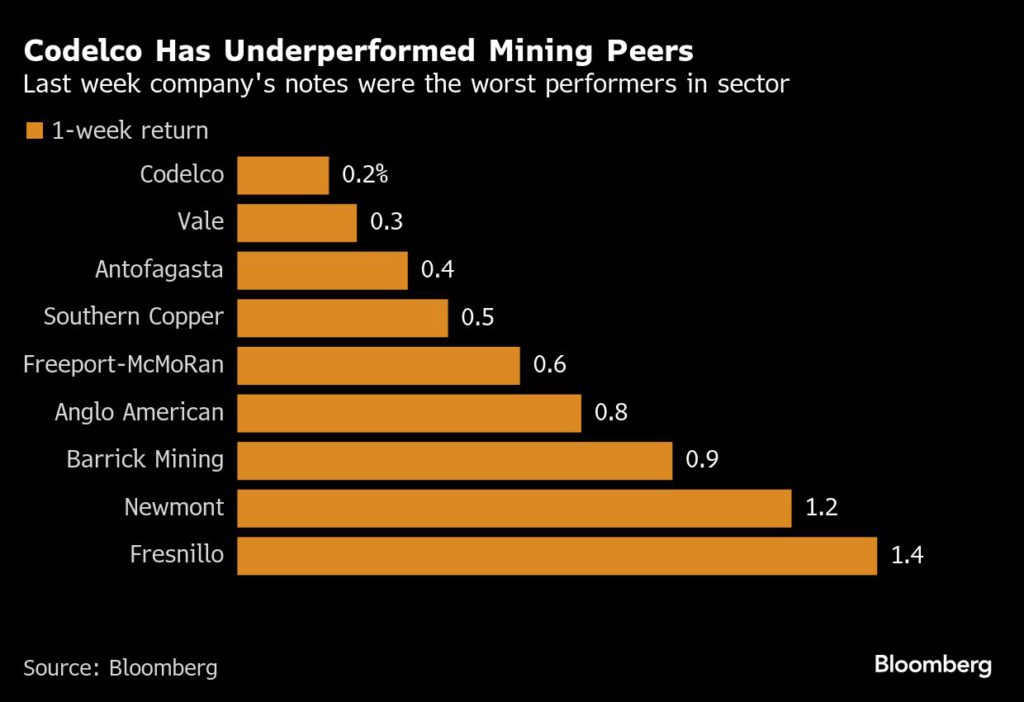
Market perceptions began to shift on Tuesday, when S&P Global Ratings warned that the accident could push up the company’s already heavy debt burden and crimp its access to new borrowing. The report stoked pressure on Codelco’s bonds, which — while they didn’t fall — were the worst performing among major mining peers last week.

Codelco had originally said the collapse damaged a new area of the mine called Andesita, which is 900 meters underground and had only just started operating, limiting its impact on production. The prosecutor now says there was also damage to another level — Recursos Norte — that had been operating for five years.

“The restart of operations at El Teniente doesn’t deal with the structural problems exposed by this tragic episode,” said Juan Ignacio Guzman, who heads GEM, a mineral consulting firm in Chile.

El Teniente accounts for a quarter of Codelco’s production and a sizable chunk of its profit.

Revival plans

The accident comes as Codelco tries to recover from a years-long output slump driven by deteriorating ore quality at its aging mines. The company’s four big expansion projects have been bedeviled by problems, with all coming in above budget and behind schedule.

“This disruption comes at a time when Codelco was aiming to recover production levels, and some of its targets are likely to be delayed or revised downward,” Snead said. “Given ongoing safety concerns, it is unlikely that the mine will return to full operations in the near term.”

Yet reviving output at El Teniente is crucial if Codelco is to get back to pre-pandemic production levels of about 1.7 million tons a year from a current rate of about 1.4 million.

Codelco delayed reporting its quarterly results, including annual production guidance, on Aug. 1 as it deals with the accident. It also opened an investigation, including convening an international panel of experts. Chairman Maximo Pacheco has vowed to take “maximum measures” if any responsibility lies with the company’s supervisors or executives.

‘New approach’

Early indications are that the seismic event that caused the collapse was probably due to mining activity rather than a naturally occurring earth tremor, according to a person with direct knowledge of the matter. That could bring mining methods at El Teniente into question.

“Mining these deeper sections will require a new approach that will delay plans even further,” Guzman said.

Codelco is already among the world’s most indebted major mining companies with debt of about six times earnings before interest, taxes, depreciation, and amortisation.

“If the impact is higher than originally perceived that could drive some negative sentiment towards the credit,” Snead said.

Still, with Codelco’s borrowing backed by the Chilean state — one of the least indebted in Latin America — the company would only pay a moderate premium if it had to go back to the market now, said Josefina Valdivia, fixed income manager at Credicorp Capital.

Yet, S&P noted the reputational damage this accident could cause. Apart from the cost associated with the collapse, the company has debt payments of about $553 million and $1 billion this year and next, respectively, according to data compiled by Bloomberg.

“It is important for management to provide updates, transparency is key,” Snead said.

(By Carolina Gonzalez and James Attwood)

Codelco begins gradual restart at Chile copper mine hit by collapse


El Teniente mine. Credit: Codelco | Flickr, under licence CC BY-NC-ND 2.0.

Codelco restarted underground and processing activities at its biggest copper mine, El Teniente, a little more than a week after suffering Chile’s deadliest mining accident in decades.

The state-owned company restarted operations over the weekend at eight underground areas deemed safe by mining and labor authorities, as well as at its smelter, Codelco said. Four other sections of the mine — near where the July 31 collapse occurred — will remain off limits as an investigation continues.

“The eight that are opening represent approximately 82% of production, and the recovery is gradual,” Mining Minister Aurora Williams said Monday in an interview with Radio ADN.

A return to work is a major boost for Codelco as the company grapples with the fallout from an incident that left six people dead and presents a sizable setback to the company’s efforts to recover from a years-long slump in production. The areas still closed include new parts of the deposit that are crucial for production in the years ahead.

On Thursday, the Public Prosecutor’s Office said inspections had shown damage to 3,700 meters (12,000 feet) of tunnel, which is about five times more than initial calculations given by Codelco.

On Monday, Codelco announced the departure of El Teniente boss Andrés Music, who will be replaced on an interim basis by operations manager Claudio Sougarret.

“This decision is not a response to the assignment of any responsibility, but rather stems exclusively from the need to focus the division’s attention on the challenges posed by the implementation of the Safe and Gradual Return Plan,” Codelco said.

(By James Attwood)