It’s possible that I shall make an ass of myself. But in that case one can always get out of it with a little dialectic. I have, of course, so worded my proposition as to be right either way (K.Marx, Letter to F.Engels on the Indian Mutiny)
Wednesday, April 02, 2025
SPACE/COSMOS
Sound frequencies of stars sing of our galaxy’s past and future
A new study led by UNSW Sydney researchers into a cluster of stars 2700 light years away reveals their stages of evolution through the ‘sounds’ they make. This discovery will allow scientists to map the history of the Milky Way and other galaxies, accelerating knowledge in the field of astrophysics.
Dr Claudia Reyes is the lead author of the study published today in Nature. While undertaking her PhD at the UNSW School of Physics, she studied 27 stars in a cluster of stars called M67. The stars in this stellar cluster were all born from the same cloud of gas four billion years ago.
She says these stars have similar chemical compositions but different masses which made them ideal for studying evolution in real-time.
“When we study stars in a cluster, we can see their whole sequence of individual evolution,” Dr Reyes says.
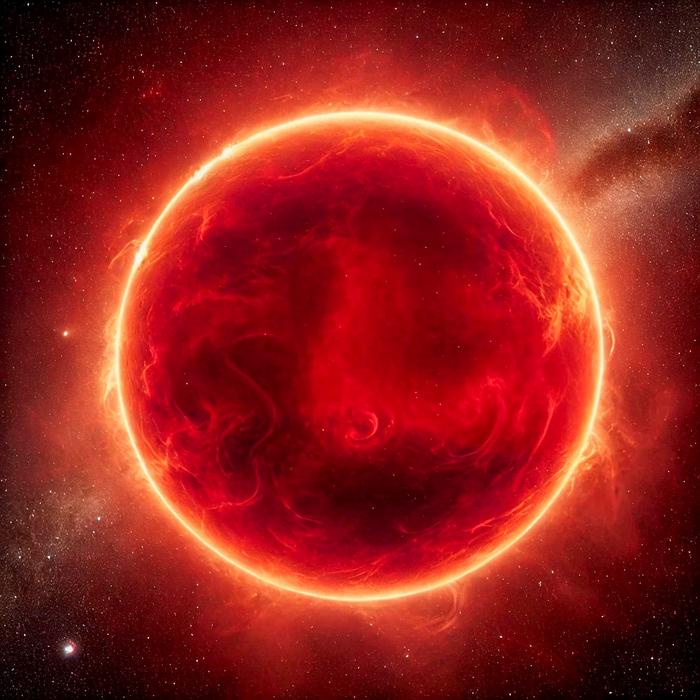
She says while these stars are the same age, it’s their mass that gives away how quickly they’ve evolved. And, she adds, M67 is a very special cluster as it includes a broad range of ‘giants’, from the smaller, less evolved subgiants to red giants – the latter being the most evolved of stars.
The study also opens ways to learn more about what our own star – the Sun – will do as it becomes bigger and older. This is because, “the Sun was born in a cluster similar to the one we studied,” says Dr Reyes.
What’s the deal with clusters?
Observing such a broad evolutionary range of stars within a single cluster has never been achieved before at such detail.
“This is the first time we have really studied such a long range of evolutionary sequences, like we have in this cluster,” says coauthor Professor Dennis Stello, also from the UNSW School of Physics.
“Verifying the age of a star is one of the most difficult things to do in astronomy, because the age of a star isn't revealed by its surface,” Prof. Stello says.
“It is what happens inside that shows how old it is.”
Because the stars in the M67 cluster are of a similar age and composition to our Sun, they can offer insights into our solar system’s past and formation, as well as its future as the Sun evolves.
“Almost all stars are initially formed in clusters,” Prof. Stello says. “They are basically big families of hundreds to thousands of stars born from one big cloud of gas.
“Usually, they would slowly disperse into a diffuse random selection of stars.
“But some of them are still within groups – clusters. You can see them when you look to the sky as areas with lots of stars close together, where they are still closely bound, like the cluster we studied here.”
A symphony in the sky
The study allows for the precise determination of a star's age and mass based on its oscillation frequencies. The frequencies by which any star ‘rings’ depends on the physical properties of the matter inside of it, giving clues about its density, temperature and age.
This was the first time researchers could interrogate the ‘ringing’ across a cluster of stars to learn more about their interiors. They used the Kepler K2 mission as the primary way to observe, or ‘listen’.
Prof. Stello says the process is like listening to an orchestra, and identifying instruments based on their sound.
“The frequency by which an instrument is vibrating – or ringing – depends on the physical properties of the matter that the sound travels through,” he says.
“Stars are the same. You can ‘hear’ a star based on how it rings.
“We can see the vibration – or the effect of the vibration – of the sound just like you can see the vibration of a violin string.”
The biggest stars have the deepest sounds. Small stars have high-pitched sounds. And no one star plays just the one note at once – each star covers a symphony of sound coming from its interior.
In space, no one can hear you scream (or sing)
Sound exists as a wave of energy, a vibration, moving through particles – solid, liquid or gas. But in space, there are no particles, which means there’s no sound.
Prof. Stello says each star is like a breathing ball of gas – cooling down and heating up – with slight changes in brightness.
“It’s these fluctuations in brightness that we watched and measured, to gauge the sound frequencies,” he says.
As stars mature towards red giants, their frequencies change and behave differently. These changes can track their evolution.
The frequency differences between the many nodes ‘played’ by a star can give clues about a star’s interior properties.
By studying the 27 stars in the M67 open cluster, the researchers could, for the first time, observe the relationship between small and large frequency differences in giant stars, which can now be applied to individual stars.
Understanding the Milky Way
To better understand the formation and evolution of galaxies, scientists need to know the age of all its components, including the stars.
Dr Reyes says this study will lead to the accurate identification of the mass and age of stars in the Milky Way – something yet to be achieved.
This is also important for understanding stars that host planets, as a star’s properties are critical for supporting life on those worlds.
Prof. Stello says frequency signatures will also be important when modelling the future evolution of our own Sun.
“This study has enabled us to probe the fundamental physics that happens inside stars, deep into their interiors, and the fundamental physics under these extreme conditions,” he says.
“This is something we still grapple with. It's important for us to build evolution models that we can trust, so that we can predict what happens not only to the Sun, but also to other stars as they grow older.
"Seeing the evolutionary phase of stars directly through the fingerprint of frequencies is what enables us to be much more certain about the ‘ingredients’ we put into our models,” he says.
What’s in the future?
Dr Reyes says their findings were unexpected.
“We discovered something new with this signature in the frequencies,” she says.
Dr Reyes says we already have data from many years of studying the Milky Way and its stars.
“The next step is to go back and look at that data,” she says. “To look for these particular frequencies that nobody thought to look for before.
They say music is the universal language of humankind, but some stars in our galaxy exhibit their own rhythm, offering fresh clues into how they and our galaxy evolved over time.
According to an international team of researchers, including scientists from The Australian National University (ANU) and UNSW Sydney, some stars exhibit fluctuations in their brightness over time, which are caused by continuous ‘starquakes’.
These fluctuations can be translated into frequencies, which can be used to determine a star’s age and other properties such as its mass.
Study lead author Dr Claudia Reyes from ANU imagined stars as musical instruments, each playing a distinct melody.
“Starquakes occur in certain stars, leading to a continuous cycle of brightening and dimming. By carefully observing these tiny fluctuations in brightness, we can listen to a star’s musical rhythm,” Dr Reyes, who completed most of this work during her time at UNSW Sydney, said.
“These fluctuations are like musical notes, similar to the vibrations of a string or the hum of a drum, that can be translated into frequencies. Each frequency tells us more about the star’s size, chemical composition and internal structure.”
Dr Reyes said that each of the stars they studied has a “shell of energy around its core” that helps keep them alive. This region of the star is like a furnace where nuclear reactions take place and elements are formed. These reactions produce very large amounts of energy, and elements produced during these reactions are emitted into the universe.
As a star ages and its mass and internal structure changes – such as when a star evolves into a subgiant or red giant – these so-called furnace regions near their core can become bigger or smaller.
When this happens, a star emits different frequencies, an important discovery that brings scientists a step closer to piecing together the history of our galaxy.
The researchers studied frequencies emitted by stars in a region of our galaxy known as the ‘open cluster M67’. Dr Reyes said the research team was interested in these specific stars because they are like siblings – they were born from the same molecular cloud at the same time and therefore share the same age and chemical composition.
Stars in the M67 cluster also share similar qualities to stars close to Earth, such as our Sun.
“We studied frequencies emitted by stars in this cluster as they evolved into subgiants and red giants – something that had never been fully explored before,” Dr Reyes said.
The scientists discovered that stars in this cluster reach a point in their life where the signature of the frequency they emit temporarily halts once it reaches a certain point, as if the signal were caught in a loop, repeating itself like a broken record, before resuming its progression. Dr Reyes calls this moment the “plateau”.
“Stars have multiple layers, similar to an onion. We discovered that the plateau occurs due to events in a specific layer of the star and at specific frequencies that are influenced by a star’s mass and metallicity,” Dr Reyes said.
“This means we can predict when and at what frequency the plateau will occur during a star’s life cycle, enabling extremely precise age estimates for stars currently in their plateau phase.
“This research helps us better understand how stars evolve and provides a new tool to estimate their age, which is crucial for studying the evolution of our galaxy.”
The research is published in Nature. This work involved scientists from ANU, UNSW Sydney, the University of Sydney, Yale University, the University of Hawaii and Massachusetts Institute of Technology.
Images and other materials available to download here.
World leaders should look to existing international law on the use of force to address the threat of space becoming ever more militarized, a new study shows.
Space has the potential to be a source and place of armed conflict and regulating military activities in space is of pressing international concern.
Tests of anti-satellite (ASAT) weapons have fuelled fears of warfare in space. Resulting space debris from ASAT weapon threatens other satellites in orbit, many of which underpin the operation of human societies and the functioning of global economies.
Conflict in space could have catastrophic effects on civilians and state interests, both on Earth and in space.
Despite the importance of satellites and the need to protect space from the effects of military activities, multilateral attempts to restrain the escalating weaponization of space have failed.
A new study argues existing laws, grounded in the UN Charter and customary international law, can help to secure international peace and security beyond the Earth’s atmosphere.
The study, by Chris O’Meara from the University of Exeter Law School, argues that existing law can be used to limit when and how states may lawfully target satellites using ASAT technologies, even in self-defence.
A clearer understanding of these rules allows states to protect their vital space assets while also addressing state concerns regarding space debris, civilian harm, and avoiding conflict in space. Adherence to these legal requirements ultimately helps to secure international peace and security on Earth and in space.
Dr O’Meara said: “The prospect of war in space is of real concern and states assert their right to act to defend their interests in that domain. Unease over the militarization or ‘weaponization’ of space is accordingly at the top of the international agenda. Although states continue to develop new counterspace weapons, adherence to established legal requirements that can be interpreted and adapted to apply in outer space has the potential to limit ASAT weapon use.”
“A clearer understanding of these requirements directly addresses pressing international concerns regarding the weaponization of space and the fear of wars between states in that domain. As we all rely on satellite-based services in our daily lives, greater clarity regarding legal restraints on warfare in space benefits us all.”
Miso is a traditional Japanese condiment made by fermenting cooked soybeans and salt. In a study publishing April 2 in the Cell Press journal iScience, researchers successfully made miso on the International Space Station (ISS). They found that the miso smelled and tasted similar to miso fermented on Earth—just with a slightly nuttier, more roasted flavor. The team hopes this research will help broaden the culinary options available to astronauts, improving the quality of life for long-term space travelers.
“There are some features of the space environment in low earth orbit—in particular microgravity and increased radiation—that could have impacts on how microbes grow and metabolize and thus how fermentation works,” says co-lead author Joshua D. Evans of Technical University of Denmark. “We wanted to explore the effects of these conditions.”
Motivated by curiosity surrounding the food options available to astronauts and how microbial communities evolve in space, the researchers set forth to test whether food fermentation was possible in space and, if so, how foods fermented in space would taste compared to their counterparts on Earth.
The researchers sent a small container of “miso-to-be” to the ISS in March 2020, where it stayed for 30 days to ferment before returning to Earth as miso. Two other miso batches were fermented on Earth: one in Cambridge, MA, and the other in Copenhagen, Denmark. Environmental sensing boxes kept tabs on the fermentation environment, closely monitoring temperature, humidity, pressure, and radiation.
Once the ISS miso was back on Earth, the team analyzed its microbial communities, flavor compounds, and sensory properties. They found that the ISS miso fermented successfully, but that there were notable differences in the bacterial communities present in the misos.
“Fermentation [on the ISS] illustrates how a living system at the microbial scale can thrive through the diversity of its microbial community, emphasizing the potential for life to exist in space,” says co-lead author Maggie Coblentz of the Massachusetts Institute of Technology. “While the ISS is often seen as a sterile environment, our research shows that microbes and non-human life have agency in space, raising significant bioethical questions about removing plants and microbes from their home planet and introducing them to extraterrestrial environments.”
The team also compared the flavor and scent of the ISS miso with that of the Earth misos. They found that the samples mostly contained the same aroma compounds and similar amino acid profiles. Also, the researchers who tasted the misos reported that all the samples tasted good, with similar salty umami flavor profiles that were recognizable as miso. However, they noted that the ISS miso had more of a roasted, nutty flavor than the Earth misos.
“By bringing together microbiology, flavor chemistry, sensory science, and larger social and cultural considerations, our study opens up new directions to explore how life changes when it travels to new environments like space,” Evans says. “It could enhance astronaut well-being and performance, especially on future long-term space missions. More broadly, it could invite new forms of culinary expression, expanding and diversifying culinary and cultural representation in space exploration as the field grows.”
Ultimately, Coblentz says she foresees the impact of this research extending far beyond a single jar of miso made in space. “We’ve used something as fundamental as food as a starting point to spark conversations about social structures in space and the value of domestic roles within scientific and engineering fields,” she says.
“The way we design systems in space sends a powerful message about who belongs there, who is invited, and how those people will experience space,” says Coblentz.
###
This research was supported by funding from the MIT Media Lab Space Exploration Initiative and The Novo Nordisk Foundation.
iScience (@iScience_CP) is an open access journal from Cell Press that provides a platform for original research and interdisciplinary thinking in the life, physical, and earth sciences. The primary criterion for publication in iScience is a significant contribution to a relevant field combined with robust results and underlying methodology. Visit: http://www.cell.com/iscience. To receive Cell Press media alerts, contact press@cell.com.
After the miso fermented for 30 days on the International Space Station, it was returned to Earth where the researchers sampled it in the lab.
The researchers taste-tested the three misos to compare the flavor profile of the space miso with that of the misos fermented on Earth. In this photo, the space miso is labeled "861."
Sagittarius C is one of the most extreme environments in the Milky Way Galaxy. This cloudy region of space sits about 200 light-years from the supermassive black hole at the center of our galaxy. Here, a massive and dense cloud of interstellar gas and dust has collapsed on itself over millions of years to form thousands of new stars.
In a new study, a team of scientists used observations from NASA’s James Webb Space Telescope to study Sagittarius C in unprecedented detail. The research was led by University of Colorado Boulder astrophysicist John Bally, Samuel Crowe at the University of Virginia, Rubén Fedriani at the Instituto de Astrofísica de Andalucía in Granada and their colleagues
The findings could help solve a long-running mystery about the innermost stretches of the galaxy, or what scientists call the Central Molecular Zone (CMZ): The region hosts high densities of interstellar gas. So why are fewer new stars born here than scientists once predicted?
The researchers discovered that powerful magnetic field lines seem to be threading through Sagittarius C, forming long and bright filaments of hot hydrogen gas that look a little like spaghetti noodles—a phenomenon that could slow down the pace of star formation in the surrounding gas.
“It’s in a part of the galaxy with the highest density of stars and massive, dense clouds of hydrogen, helium and organic molecules,” said Bally, professor in the Department of Astrophysical and Planetary Sciences at CU Boulder. “It’s one of the closest regions we know of that has extreme conditions similar to those in the young universe.”
He and his colleagues published their findings April 2 in The Astrophysical Journal. The research is part of an observation campaign proposed and led by Crowe, a fourth-year undergraduate student at the University of Virginia who was recently named a Rhodes Scholar.
And, Crowe noted, the Webb telescope’s startling images show Sagittarius C as it’s never been seen before.
“Because of these magnetic fields, Sagittarius C has a fundamentally different shape, a different look than any other star forming region in the galaxy away from the galactic center,” Crowe said.
Stellar nurseries
The research sheds light on the violent births and deaths of stars in the Milky Way Galaxy.
Stars tend to form within what scientists call “molecular clouds,” or regions of space containing dense clouds of gas and dust. The closest such stellar nursery to Earth lies in the Orion Nebula, just below Orion’s belt. There, molecular clouds have collapsed over millions of years, forming a cluster of new stars.
Such active sites of star formation also spell their own demise. As new stars grow, they begin to emit vast amounts of radiation into space. That radiation, in turn, blows away the surrounding cloud, stripping the region of the matter it needs to build more new stars.
“Even the sun, we think, formed in a massive cluster like this,” Bally said. “Over billions of years, all of our sibling stars have drifted away.”
In a separate study published today in the same journal, Crowe and his colleagues, including Bally, dove into the growing “protostars” forming in Sagittarius. Their data reveal a detailed picture of how these young stars eject radiation and blow away the gas and dust around them.
Magnetic fields
In his study, Bally explored Sagittarius C’s unusual appearance. He explained that while the Orion Nebula looks mostly smooth, Sagittarius C is anything but. Weaving in and out of this region are dozens of bright filaments, some several light-years long. These filaments are made up of plasma, a hot gas of charged particles.
“We were definitely not expecting those filaments,” said Rubén Fedriani, a co-author of the study and postdoctoral researcher at the Instituto de Astrofísica de Andalucía in Spain. “It was a completely serendipitous discovery.”
Bally noted that the secret to Sagittarius C’s filaments, and the nature of its star formation, likely comes down to magnetic fields.
A supermassive black hole with a mass about four million times greater than our sun sits at the center of the galaxy. The motion of gas swirling around this behemoth can stretch and amplify the surrounding magnetic fields. Those fields, in turn, shape the plasma in Sagittarius C.
Bally suspects that the Orion Nebula looks much smoother because it resides within a much weaker magnetic environment.
Scientists, he added, have long known that the galaxy’s innermost regions are an important birthplace for new stars. But some calculations have suggested that the region should be producing a lot more young stars than observed. In the CMZ, magnetic forces may be strong enough to resist the gravitational collapse of molecular clouds, limiting the rate of new star formation.
Regardless, Sagittarius C’s own time may be drawing to a close. The region’s stars have blown away much of its molecular cloud already, and that nursery could disappear entirely in a few hundred thousand years.
KENNEDY SPACE CENTER (FL), April 2, 2025 – The International Space Station (ISSInternational Space Station) National Laboratory is taking a giant leap in fostering new space innovators with the launch of the Orbital Edge Accelerator program. This bold initiative is designed to integrate cutting-edge startups and investment partners into the rapidly expanding space economy. Through the accelerator, six pioneering startups will be selected to receive an investment of up to $500,000 each—which is being provided by global investors Cook Inlet Region, Inc. (CIRI), E2MC, and Stellar Ventures—along with mentorship and the opportunity to launch an ISS National Lab-sponsored investigation. By bridging the gap between early-stage companies and space-based innovation, the Orbital Edge Accelerator program aims to unlock discoveries that can benefit humanity and drive new commercial opportunities in low Earth orbit.
Engaging the startup community is a strategic priority for the ISS National Lab. Having access to the unique space environment allows entrepreneurs to push the boundaries of science and technology, develop novel products, and build new businesses. Over the years, dozens of startups have been awarded flight opportunities through the ISS National Lab to advance R&D in diverse areas, from communications and remote sensing to advanced materials and biotechnology. The impact of conducting research through the ISS National Lab is notable, as startups awarded flight projects have cumulatively raised nearly $2.4 billion in funding postflight, demonstrating the value of space-based R&D in accelerating commercialization. With the launch of the Orbital Edge Accelerator, the ISS National Lab aims to build on this momentum and fuel the next wave of innovators that will shape the future space economy.
To deliver the accelerator program, the ISS National Lab is working with TechConnect, which has more than 25 years of expertise connecting innovators with high-value commercialization opportunities. In the coming months, representatives from the ISS National Lab, CIRI, E2MC, Stellar Ventures, and TechConnect will meet with interested startups at conferences and networking sessions to highlight the accelerator and discuss how space-based R&D can lead to innovation not possible on Earth. Additionally, AWS will serve as a corporate partner for the Orbital Edge Accelerator program, providing their extensive expertise and reach toward scouting and mentoring the inaugural cohort of startups.
TechConnect will host an informational webinar on April 22, 2025, at 2:00 p.m. EDT providing additional details on the scope of this opportunity and the advantages of utilizing the orbiting laboratory. To register, please visit the webinar registration page. TechConnect will also host two office hours for potential respondents to ask questions about the accelerator program. Learn more about these opportunities on the accelerator webpage.
Startups interested in the Orbital Edge Accelerator program will need to submit an application by 8:00 p.m. EDT on May 19, 2025. Once the application window closes, the ISS National Lab and investment partners will evaluate each submission and select up to 20 finalists to pitch in a virtual setting. From there, reviewers will invite six startups to join the Orbital Edge Accelerator cohort. Each startup will receive a $500,000 investment and the opportunity to submit an official proposal to utilize the ISS National Lab in a future spaceflight mission.

No comments:
Post a Comment