HRW Says US Lifting Sanctions On Syria Will Bolster Rights, Recovery
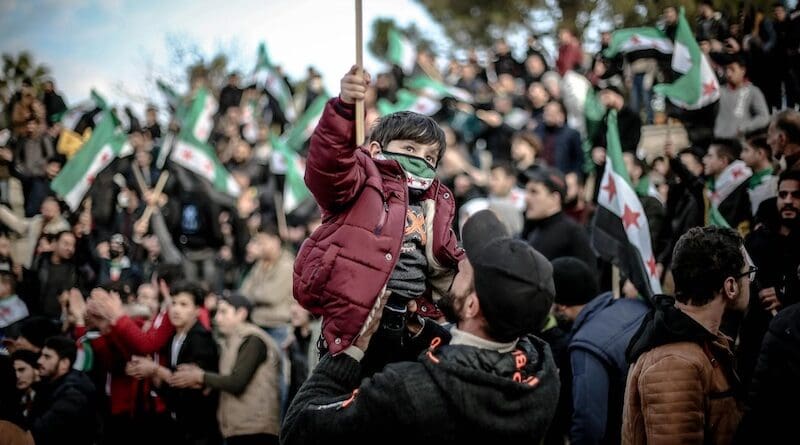
US President Donald Trump’s announcement that the United States will remove longstanding sanctions on Syria is a critical step toward improving Syrians’ access to fundamental economic rights and encouraging efforts to rebuild a country devastated by years of grueling conflict, Human Rights Watch said Friday. The announcement should be followed by concrete executive or legislative measures that remove financial and other sanctions hampering access to rights, including the right to electricity and an adequate standard of living.
Broad sanctions, which remained in place despite the ouster of the government of Bashar al-Assad in December 2024, have greatly hindered reconstruction efforts and exacerbated the suffering of millions of Syrians. The European Union and the United Kingdom have already taken steps to ease sanctions on Syria, but the EU should go further by lifting other financial sanctions, including those imposed on Syria’s Central Bank.
“Syria’s economic collapse – due, in part, to US sanctions – has pushed millions into poverty. Now there’s a glimmer of hope,” said Sarah Yager, Washington director at Human Rights Watch. “President Trump’s recent statements offer Syrians a sense that rebuilding and recovery might be possible, but only if he backs these words with quick, concrete, meaningful actions.”
Thirteen years of conflict and displacement have left much of Syria’s infrastructure in ruins, with entire towns uninhabitable; schools, hospitals, roads, water facilities, and electrical grids damaged; public services barely functioning; and the economy in freefall. Over 90 percent of Syrians live below the poverty line, with at least 9 million unable to access enough quality food; nationwide, an estimated 16.5 million Syrians require some form of humanitarian aid to meet their basic needs. Human Rights Watch previously found that broad sanctions imposed by the US and other nations hindered aid delivery in Syria, despite humanitarian exemptions.
The United States enforced the most severe measures, prohibiting nearly all trade and financial transactions with Syria.
Now, to ensure that sanctions relief meaningfully improves Syrians’ wellbeing and fundamental economic rights, the US and other governments should take measures to:
- Restore Syria’s access to global financial systems, including removing sanctions imposed on the Syrian Central Bank;
- End trade restrictions on essential goods;
- Remove energy sanctions to ensure access to fuel and electricity.
Additionally, sanctions should be lifted in good faith: relief efforts will fall short if they are conditioned on vague, shifting, or politically motivated demands. The failure to lift sanctions and the continued use of sanctions to pressure Syria into fulfilling unrelated foreign policy goals – such as security cooperation or diplomatic concessions – risk turning economic measures into tools of unlawful coercion. Any remaining conditions for sanctions removal should be narrowly tailored, clearly articulated, and rooted in international legal obligations, especially those related to human rights and humanitarian access.

Eurasia Review
Eurasia Review is an independent Journal that provides a venue for analysts and experts to disseminate content on a wide-range of subjects that are often overlooked or under-represented by Western dominated media.
Syria’s Foreign Minister al-Shaibani meets US Secretary Rubio in Antalya amid sanctions lift announcement
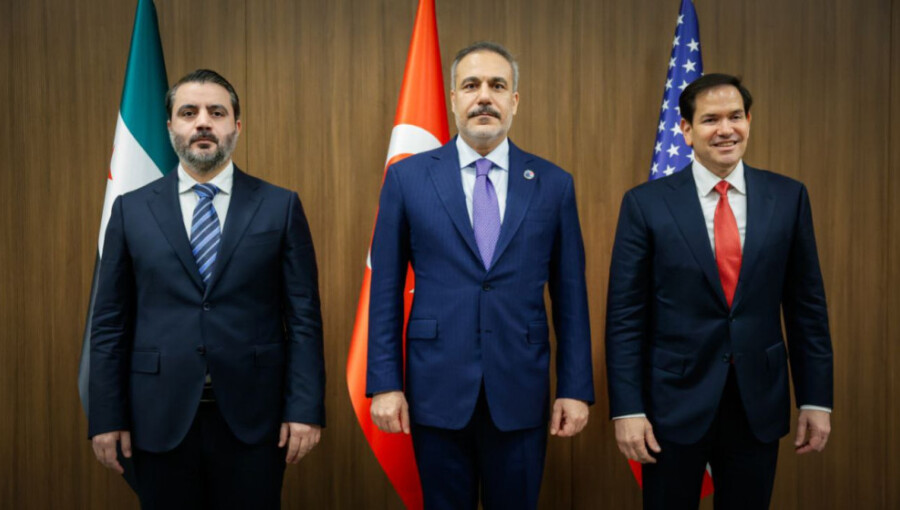
The Syrian Ministry of Foreign Affairs announced on May 15 that Foreign Minister Asaad al-Shaibani met with his American counterpart, Marco Rubio, to discuss the details of lifting sanctions on Syria.
According to the ministry, “Minister al-Shaibani met with his American counterpart Rubio in Antalya, in the presence of their Turkish counterpart, Hakan Fidan.”
The statement added: “Minister al-Shaibani discussed with Secretary Rubio the details of lifting sanctions on Syria and improving bilateral relations. They also explored ways to build a strategic partnership.”
Speaking to reporters in Antalya, US Secretary Rubio said: “Washington will issue preliminary exemptions from the legal sanctions imposed on Syria, following President Donald Trump’s announcement to lift all sanctions on the country.”
“The US wants to do everything possible to help achieve peace and stability in Syria as it emerges from a 13-year conflict,” Rubio added.
Following talks with the Syrian foreign minister, Rubio confirmed that Syria’s new leadership has shown a desire for peace with Israel and committed to working towards a pluralistic society.
“They expressed interest in peace with all their neighbours, including Israel.” Rubio added.
A Trump administration official indicated that the US Treasury Department is likely to issue general licences covering a broad range of key sectors in the Syrian economy critical for reconstruction, referring to the sanctions currently in place on Syria.
This follows US President Donald Trump’s announcement from Saudi Arabia of his intention to lift all sanctions imposed on Syria.
The initiative marked a major shift in US policy just before Trump’s meeting on May 14 with Syria’s Islamist President Ahmed al-Sharaa, the Saudi Crown Prince and Erdogan, who joined virtually.
The White House confirmed that Trump had put forward a list of demands to al-Sharaa during their meeting. He also indicated that Rubio would go over additional aspects of the plan to normalise relations with Damascus in his talks with the Syrian Foreign Minister.
The removal of sanctions has been a long-standing goal for Saudi Arabia and Turkey, which have emerged as key foreign allies of Syria’s new leadership since al-Assad was ousted in December.
Erdogan has repeatedly urged Trump to rescind US sanctions on Syria since the president returned to the White House in January.
Speaking to state broadcaster TRT Haber ahead of an informal NATO foreign ministers’ meeting in Antalya, Fidan described the leaders’ gathering as “of historic importance.”
He added that lifting sanctions would allow financial flows, investment, and infrastructure development in Syria, a country left politically fractured and devastated by war.
A day earlier, Fidan said, “Now tomorrow, we, as the three foreign ministers – Rubio, al-Shaibani, and myself – will come together after the NATO meeting in Antalya, and we will work on how to carry forward the details of the agreement that the leaders set the framework for and agreed upon.”
“Of course, there is a (congressional) leg to this matter in the US; there is an administration leg, but there is a will that Trump has put forth from the start. Within the framework of this will and the work we will do, we hope the majority of these sanctions will be lifted as soon as possible,” he added.
The High Human Cost of Syria Sanctions
On May 13, U.S. President Trump announced he is ordering the removal of sanctions on Syria.
Some of the U.S. sanctions can be quickly terminated because they were issued by Executive Order. Other sanctions, including the extremely damaging 2019 “Caesar” sanctions, were imposed by Congressional legislation and may require Congressional action to terminate.
The Syrian people are joyous at the prospect of the end of their country’s economic nightmare. In 2010, before the conflict began, Syria was a middle-income country with free education, free healthcare, and no national debt. It was largely self-sufficient in energy and food. After fourteen years of war, occupation, and strangulating Western sanctions, the U.N. reports that “nine out of ten Syrians live in poverty and face food insecurity”.
Why Syria Was Targeted
In 2007, the former Supreme Allied Commander of NATO, General Wesley Clark, publicly revealed that Washington neo-cons had a hit list of seven countries to be overthrown in the wake of 9-11. The list included Iraq, Libya, Somalia, Sudan, Lebanon, Syria, Iran.
The list is essentially the same as that identified by Benjamin Netanyahu in his 1995 book Fighting Terrorism: How Democracies Can Defeat the International Terrorist Network. The premise of this book is that Palestinian and Lebanese resistance movements are “terrorist,” and any nation that supports them should be overthrown. He targets Iran, Libya, Syria, and Sudan for supporting Palestinian rights and says. “Take away all this state support, and the entire scaffolding of international terrorism will collapse into dust.”
In 2007, Democratic Party leader Nancy Pelosi visited Syria and tried to persuade Assad to end Syria’s support of the Palestinian and Lebanese resistance movements. When Assad would not comply with US and Israeli wishes, Syria was marked for regime change. The Netanyahu and neo-conservative hit list had somehow been adopted by the Western foreign policy establishment. This was confirmed by the former French Foreign Minister Roland Dumas. In a 2013 interview he says, “I went to England almost two years before the start of hostilities (2011). I met British officials, some of whom are friends of mine. They confessed, while trying to persuade me, that preparations for something were underway in Syria. This was in England, not the US. Britain was preparing gunmen to invade Syria…. This operation goes way back. It was prepared, conceived, and planned for the purpose of overthrowing the Syrian government because … this regime has an anti-Israeli stance.”
Hybrid Warfare against Syria
The overthrow of the Syrian government was not easy. It involved massive funding from seven countries (USA, UK, France, Turkey, Saudi Arabia, Qatar, UAE). In the early years, the CIA budget alone was $1 billion per year. The campaign included military, diplomatic, media/information and economic warfare.
The regime change operation began in March 2011. While part of the population was hostile to the Assad dynasty, the majority supported the government and a secular Syria. The opposition came largely from sectarian jihadist elements, including the Muslim Brotherhood. Hundreds of factions and cells were supplied and funded by a host of countries, including Qatar, Saudi Arabia, Turkey, the U.S., and the UK. Thousands of foreigners were recruited and provided access to Syria.
The political and media war on the Assad government was intense. Historian Stephen Kinzer wrote, “Coverage of the Syrian war will be remembered as one of the most shameful episodes in the history of the American press.”
Accusations that the Assad government used chemical weapons against civilians were widely broadcast in the West. They were used to justify Western bombing attacks on Syria. Acclaimed U.S. investigative journalist Seymour Hersh uncovered evidence that the chemical weapons attacks were by the opposition, aided by Turkey, NOT by the Assad government. He had to go abroad to have the explosive article published.
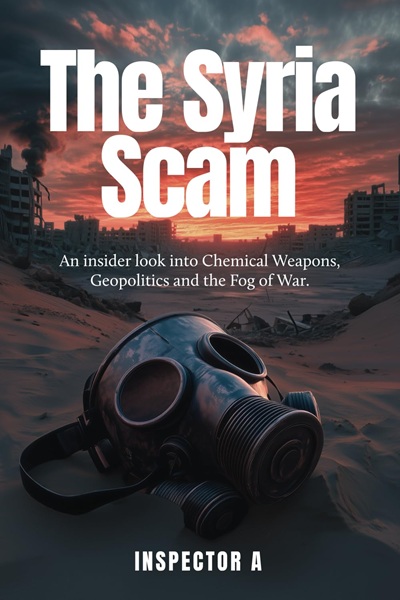 The dubious chemical weapons accusations and US driven political corruption of the Organization for the Prohibition of Chemical Weapons (OPCW) are now exposed in a February 2025 book by one of the technical professionals from the OPCW. The book is titled The Syria Scam: An insider look into Chemical Weapons, Geopolitics and the Fog of War.
By the end of 2018, the Syrian army had largely defeated the diverse jihadists. However, instead of conquering or expelling the opposition, Syria allowed them to have a safe haven in Idlib province on the border with Turkey. With Turkey, Iran and Russia seeking to find a solution through the Astana Accords, the conflict was frozen, and the jihadists were allowed to regain strength. Hayat Tahrir al Sham (HTS) became the de facto leader of the opposition factions and the government of Idlib.
The Frozen Conflict
In 2019, the U.S. turned the screws on Syria and escalated attacks on Lebanon. The extreme Caesar sanctions did what they were intended to do. They crushed the Syrian currency and economy, made it impossible to rebuild, and impoverished the vast majority of Syrians. The spreading poverty and inability to counteract it led to widespread demoralization and dissatisfaction. With consummate cynicism, the “Caesar” sanctions were named the “Caesar Civilian Protection Act”.
Meanwhile, in the HTS safe haven of Idlib province on the Turkish border to the north, conditions were very different. Although HTS was designated a terrorist organization in the U.S. and the West, they were helped economically. The HTS fighters were trained and supplied with modern military weaponry, including drones, sophisticated communications equipment, etc.. Very recently, when people from Damascus traveled to Idlib, they were shocked to find new highways, Wi-Fi widely available, and electricity 24 hours a day. Teacher salaries are ten times higher in Idlib than in Damascus.
The Fall of Damascus
With a demoralized population and Syrian army, the Assad government fell in a few weeks, and HTS, led by Ahmad Al Sharaa, took power on 8 December 2024. The new leader of Syria has been greeted and endorsed by the Gulf monarchies and Western countries that paid for and promoted the overthrow in Syria: the UK, Germany, France, Saudi Arabia, Qatar, and of course, Turkey.
Since the change, there have been numerous sectarian massacres of Alawites and Christians along the coast.
There have been attacks on Druze in Damascus. To date, there have been no punishments for the massacres of civilians. A nun reports, “there is no security” in Damascus or elsewhere in Syria.
Meanwhile, Israel has invaded and occupied all of the Golan and parts of southern Syria. They have built military bases in Quneitra and other strategic locations. Israel has carried out a bombing blitzkrieg, destroying all known Syrian ammunition depots. Israel can now fly over any part of Syria at will.
Instead of condemning the Israeli violation of Syrian land and airspace, Ahmad al Sharaa has criticized Iran and Hezbollah. In recent weeks, the new Syrian regime has arrested Palestinian leaders and closed their offices in Damascus. The normalization of relations with the Zionist state has begun.
Lifting Sanctions on Syria
Of course, the sanctions on Syria should be lifted. They never should have been imposed.
U.S. sanctions, known officially as “unilateral coercive measures”, are condemned by the vast majority of world nations. Over 70% of the world’ nations say that US sanctions are “contrary to international law, international humanitarian law, the Charter of the UN and the norms and principles governing peaceful relations among States.”
Without exaggeration, the West and their allies sponsored terrorism in Syria through Al Qaeda and other fanatical violent terrorist groups. They destroyed a once prosperous and independent nation. With a diverse Syrian population ruled by a sectarian leadership prone to violence, there may be more dark days ahead. While Israel, Turkey and the Gulf monarchies are pleased with the removal of the Assad government, a very heavy price has been paid by the majority of Syrians. And the cost is ongoing.

No comments:
Post a Comment