By The Associated Press
Updated: June 03, 2025

WASHINGTON — Meta has cut a 20-year deal to secure nuclear power to help meet surging demand for artificial intelligence and other computing needs at Facebook’s parent company.
The investment with Meta will also expand the output of a Constellation Energy Illinois nuclear plant.
The agreement announced Tuesday is just the latest in a string of tech-nuclear partnerships as the use of AI expands. Financial details of the agreement were not disclosed.
Constellation’s Clinton Clean Energy Center was actually slated to close in 2017 after years of financial losses but was saved by legislation in Illinois establishing a zero-emission credit program to support the plant into 2027. The agreement deal takes effect in June of 2027, when the state’s taxpayer funded zero-emission credit program expires.
With the arrival of Meta, Clinton’s clean energy output will expand by 30 megawatts, preserve 1,100 local jobs and bring in $13.5 million in annual tax revenue, according to the companies. The plant currently powers the equivalent of about 800,000 U.S. homes.
“Securing clean, reliable energy is necessary to continue advancing our AI ambitions,” said Urvi Parekh, Meta’s head of global energy.
Surging investments in small nuclear reactors comes at a time when large tech companies are facing two major demands: a need to increase their energy supply for AI and data centers, among other needs, while also trying to meet their long-term goals to significantly cut greenhouse gas emissions.
Constellation, the owner of the shuttered Three Mile Island nuclear power plant, said in September that it planned to restart the reactor so tech giant Microsoft could secure power to supply its data centers. Three Mile Island, located on the Susquehanna River just outside Harrisburg, Pennsylvania, was the site of the nation’s worst commercial nuclear power accident in 1979.
Also last fall, Amazon said it was investing in small nuclear reactors, two days after a similar announcement by Google. Additionally, Google announced last month that it was investing in three advanced nuclear energy projects with Elementl Power.
U.S. states have been positioning themselves to meet the tech industry’s power needs as policymakers consider expanding subsidies and gutting regulatory obstacles.
Last year, 25 states passed legislation to support advanced nuclear energy, and lawmakers this year have introduced over 200 bills supportive of nuclear energy, according to the trade association Nuclear Energy Institute.
Advanced reactor designs from competing firms are filling up the federal government’s regulatory pipeline as the industry touts them as a reliable, climate-friendly way to meet electricity demands from tech giants desperate to power their fast-growing artificial intelligence platforms.
Still, it’s unlikely the U.S. could quadruple its nuclear production within the next 25 years, like the White House wants. The United States lacks any next-generation reactors operating commercially and only two new large reactors have been built from scratch in nearly 50 years. Those two reactors, at a nuclear plant in Georgia, were completed years late and at least $17 billion over budget.
Amazon, Google and Microsoft also have been investing in solar and wind technologies, which make electricity without producing greenhouse gas emissions.
Shares of Constellation Energy Corp., based in Baltimore, were flat Tuesday.
Meta, Constellation sign 20-year clean power deal
A 20-year power purchase agreement between Meta and Constellation will secure the long-term operation of Constellation's Clinton Clean Energy Center, while the tech company is also moving forward with its process to develop nuclear capacity at new US locations.
_37521.jpg)
The power purchase agreement will see Meta purchase output from the single-unit boiling water reactor unit to support its clean energy goals, beginning in June 2027. The agreement supports the relicensing and continued operations of the nuclear facility for another two decades after the state of Illinois’s zero emission credit programme expires, Constellation said. The deal will also see Clinton’s output increased by 30 MWe through plant uprates; preserve 1,100 high-paying local jobs; deliver USD13.5 million in annual tax revenue, it added.
Clinton entered commercial operation in 1987 and is currently licensed to operate until April 2027. Constellation applied to the US Nuclear Regulatory Commission last year for a 20-year initial licence extension. That application is currently undergoing review by the regulator.
"Last year, Constellation’s announced plan to restart the Crane Clean Energy Center became national news, but despite all of the interest and overwhelming support, a key question was missed: why did we let such a valuable plant close in the first place? We all know that the closure cost our community jobs, tax revenue, more pollution and higher prices," Constellation President and CEO Joe Dominguez said. "We are proud to partner with Meta because they asked that important question, and even better, they figured out that supporting the relicensing and expansion of existing plants is just as impactful as finding new sources of energy. Sometimes the most important part of our journey forward is to stop taking steps backwards."
The Clinton plant had been slated for premature closure in 2017 for economic reasons despite being one of the best performing nuclear plants in Illinois, until the state enacted legislation establishing the zero emission credit programme, which provides financial support to the plant until mid-2027. The power purchase agreement with Meta is a market-based solution that essentially replaces the zero emission credit programme and ensures long-term operation of the plant without the need for ratepayer support, Constellation said.
With the guarantee that Clinton will continue to run for another two decades, Constellation said it is also evaluating strategies to extend the plant’s existing early site permit or seek a new construction permit from the Nuclear Regulatory Commission to pursue development of an advanced nuclear reactor or small modular reactor (SMR) at the site.
Landmarks
Meta is prioritising operating its data centres efficiently and cleanly, and said the power purchase agreement was a landmark agreement. "As we look toward our future energy needs in advancing AI, we recognise the immense value of nuclear power in providing reliable, firm electricity, and the role nuclear projects can have in supporting local economies and strengthening America’s energy leadership," the company said.
"As we have embarked on understanding and helping to grow nuclear energy in the US, we have heard from across the ecosystem that existing nuclear power plants will not be able to stay online indefinitely without partners and investments that help extend existing operating licences and increase generation capacity. It’s clear that there are many nuclear power plants serving the US that need long-term support to help our electricity grids remain reliable as energy needs grow. Keeping an existing plant operating will have the same positive effect as adding new clean energy to the grid, and avoid the disruption that has occurred when other nuclear units have retired prematurely."
Meta, a signatory of the Large Energy Users Pledge supporting the goal of at least tripling global nuclear capacity by 2050, last year announced that it would seek proposals for as much as 4 GW of nuclear capacity in the USA by the early 2030s. The company said it has seen "great progress" on its nuclear request for proposals, receiving "over 50 qualified submissions from a range of participants in the nuclear ecosystem - including utilities, developers and nuclear technology manufacturers" reflecting "a diversity of technology options, commercial terms and sites across more than 20 states".
It is prioritising sites where nuclear development can be advanced quickly with high degrees of certainty on execution and timeline, it said. It has now selected a shortlist of new nuclear projects across multiple US states that it says represent some of the most feasible opportunities, and is looking to finalise the process this year.
"Through both our nuclear RFP process and the Constellation agreement - as well as our commitment through the Tripling Nuclear Pledge - we are creating a demand signal for nuclear, which is necessary for existing units to remain in operation and for developers to permit, site, design and engineer more facilities moving forward. Our investments in nuclear energy ensure that we will have the robust energy infrastructur needed to power the AI innovations that are set to spark economic growth and prepare our communities for the future," the company said.
Collaboration aims to develop Swedish uranium deposits
Australian mineral company Aura Energy and Neu Horizon Uranium Limited plan to enter into a strategic collaboration agreement to develop Sweden's uranium resources should the country remove its prohibition on uranium mining.
_89874.jpg)
Aura Energy owns the Häggån vanadium, potash and uranium project in Sweden, which is claimed to be "one of the largest undeveloped uranium resources globally" with an Inferred Mineral Resource of 800 million pounds of contained U3O8 (307,718 tU).
Neu Horizon Uranium is an Australian-based unlisted public company focused on advancing Sweden's uranium resources. The company holds a portfolio of high potential uranium projects in key mineralised regions of Sweden.
The two companies have agreed to enter into a collaboration agreement under which Aura Energy will invest AUD100,000 (USD64,930) for a minority stake in Neu Horizon Uranium. The two companies will collaborate on key initiatives, including: government and regulatory engagement; technical cooperation on uranium extraction and processing; and administrative synergies to enhance operational efficiency.
Uranium exploration and mining has been prohibited in Sweden since 2018, but in February last year Climate and Environment Minister Romina Pourmokhtari announced that a government inquiry would look into abolishing the ban. In December, the inquiry concluded that Sweden should remove its prohibition on uranium mining to allow it to be exploited like other natural resources regulated under the Minerals Act. The government is now working through legislative process to change the legislation which is expected to be presented to Parliament for enactment on 1 January 2026.
"The Swedish government's step towards lifting the uranium mining ban mark a transformational moment for the country's energy future," said Aura Energy Chair Phil Mitchell. "Aura Energy is proud to be playing a leadership role in advancing Sweden's uranium sector. Our collaboration with Neu Horizon Uranium positions us to capitalise on the country's exceptional geological endowment and support its uranium ambitions."
Neu Horizon Uranium Chair Martin Holland added: "Every now and again, along comes an incredible opportunity in mining. This is happening in Sweden with uranium in 2025. Our collaboration with Aura Energy is a strategic step towards unlocking Sweden's uranium potential. Sweden holds large quantities of uranium resources, and this collaboration will facilitate progress in regulatory engagement and technical advancements, aligning with Sweden's vision for energy security."
Extension granted for Smolensk unit 2
Russian nuclear regulator Rostekhnadzor has issued a five-year licence extension for unit 2 of the Smolensk nuclear power plant, which will see its original 30-year life now extended to 45 years.
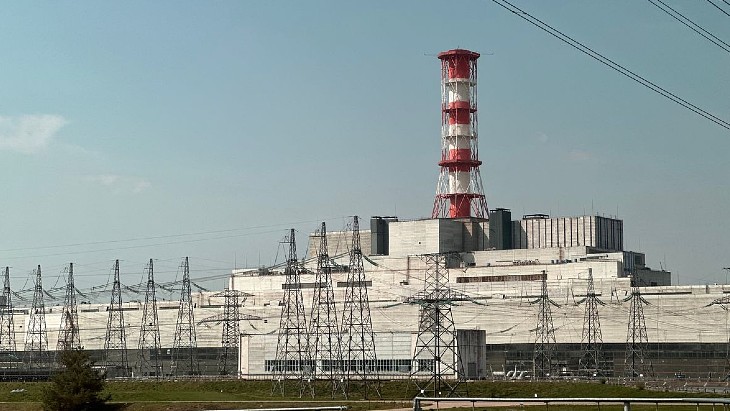
The RBMK-1000 light water graphite reactor entered commercial operation in 1985 and currently has permission to operate until 2030. The first Smolensk unit has a licence to operate to 2027 and the third unit until 2034.
Pavel Lubensky, Director of Smolensk NPP, said: "The second power unit has worked for 30 years, as envisaged by the project, and 10 years in an additional period after a large-scale modernisation and obtaining a licence from Rostekhnadzor. Now we have received the right to operate the nuclear installation for another five years, having justified the operability of its irreplaceable elements, which means that there is an opportunity to provide the consumer with about 35 billion kilowatt-hours of electricity and fulfill obligations to produce isotope products for the needs of industry and nuclear medicine."
The project to modernise Smolensk 2 began in 2006 and involved assessment of the condition of all elements and systems and large-scale measures were taken to modernise and replace equipment where necessary. Rosteckhnadzor carried out checks on the measures taken as well as the training and readiness of the workforces to operate the modernised equipment before issuing the licence extensions.
The Smolensk plant covers 75% of electricity supply to the region. According to Russia's energy plan, the Smolensk-II project is to see two VVER-TOI reactors built at a site near the existing nuclear power plant, with a target date of the mid-2030s to replace the existing units' output.
Turbine hall demolished at
Sizewell A
The demolition of the turbine hall and adjoining structures at the shut down Sizewell A nuclear power plant in the UK has been completed quicker and at less cost through the use of explosives, Nuclear Restoration Services announced.
_74189.jpg)
The football-pitch-sized turbine hall has now been razed to the ground using a series of "innovative and forward-thinking techniques" which meant the completed work was achieved in a significantly quicker timeframe than if traditional decommissioning and dismantling approaches had been followed, the company said.
Up to 700 kgs of explosives were used last November to weaken the four reinforced concrete plinths on which two 65-tonne turbogenerators stood. This marked the largest use of explosives on a UK nuclear site and the longest programmed detonation sequence in Europe, according to Nuclear Restoration Services (NRS). Since then, high reach cranes and excavators have been used to remove rubble from the weakened turbine plinths and tear down the rest of the concrete structure until the hall was completely removed.
The use of explosives reduced the project schedule by four months, costs by GBP300,000 (USD405,472) and minimised vibrations to negligible levels compared with using traditional mechanical percussion removal techniques, it said. Around 40 tonnes of CO2 emissions were also saved by minimising machinery fuel use.
More than 17,000 tonnes of concrete and rubble have been removed from the turbine hall, fire station and electrical annexe structures. This waste has been crushed, processed and reused for ongoing construction projects. About 35 miles of cable have also been removed.
A scrap metal contract has raised more than GBP3 million income to date from the sale of the 11,000 tonnes removed during the de-plant and demolition phases. This revenue will be used to offset decommissioning costs.
"This is an incredible achievement for NRS, our contract partners Erith, the Office for Nuclear Regulation (ONR) and the Nuclear Decommissioning Authority (NDA)," said Sizewell A Site Director Alan Walker. "I would like to thank everyone including those involved and our neighbours for their continued support throughout, as well as the ONR for enabling us to push the boundaries of innovation in conventional demolition together. The learning from this will be applied to other NRS projects to continue delivering efficient, value for money decommissioning and restoration of nuclear sites."
NDA Programme Manager David Rushton added: "The successful demolition of the turbine hall brings skyline change to the Sizewell A site. The innovative use of explosives provides valuable learning for future decommissioning activities, and the segregation and reuse of demolition material supports the NDA's sustainability targets."
"From the start, once satisfied with the safety evidence provided for the turbine hall demolition, ONR's inspectors permissioned key stages of the project and adopted an enabling regulatory approach throughout the work," ONR said.
Andrew Bull, ONR's Nominated Site Inspector at Sizewell A, said: "We've worked very closely with NRS, adopting an enabling stance to allow the licensee to push forward with a modern, and at times, ground-breaking approach to accelerating this major dismantling project. ONR works hard to reduce unnecessary regulatory burden and add value when it is safe to do so. This has been no better demonstrated than for the removal of the Sizewell A turbine hall, where we have played a key role in this example of decommissioning the UK's nuclear estate."
Sizewell A's two 210 MWe Magnox gas-cooled reactors operated from 1966 until 2006. Defuelling began in 2009, with fuel removed from the reactors placed in the site's used fuel storage ponds before being packaged in transport containers for shipment to the Sellafield complex for reprocessing. The final flask of fuel was shipped to Sellafield in August 2014. Sizewell A was declared completely fuel-free in February 2015. The decommissioning milestone marked the removal of 99% of the radioactive hazard from the former Magnox nuclear power station. Planning consent was given to demolish the turbine hall and electrical annexe in August last year.
The empty land that now lies where the flattened turbine hall once stood will eventually be restored and released for re-use. The whole site Sizewell A site is expected to be completely cleared by 2077.

No comments:
Post a Comment