German officials up in arms over oil, gas deposit found in Poland
DPA
Tue, July 22, 2025

Till Backhaus, Environment Minister of Mecklenburg-Western Pomerania, stands at the swimming area of the Inselsee. Stefan Sauer/dpa
Local politicians in north-eastern Germany were up in arms on Tuesday, after news broke that a major oil and gas deposit has been discovered in neighbouring Poland, with some experts also cautioning against extraction.
The find off the Polish Baltic coast by Canadian company Central European Petroleum (CEP) was hailed as a possible "breakthrough moment" in Poland, but officials across the border in Germany were quick to point out that extracting fossil fuels should not take priority in times of climate change.
"Our future does not lie in oil from the Baltic Sea, but in energy from the sun, wind and biomass," said Till Backhaus, environment minister of the coastal state of Mecklenburg-Vorpommern, which borders Poland.
"The project stands for a backward-looking industrial policy in terms of climate policy, which is contrary to the interests of the environment and tourism on the German side," he added.
Major breakthrough?
The Wolin East offshore oil field discovered by CEP is said to be located around 6 kilometres from the port city of Świnoujście on the fringes of north-western Poland. Parts of the city are located on the island of Usedom, which is divided between Germany and Poland.
According to the results of test drilling, the recoverable reserves of crude oil and natural gas are estimated at 200 million barrels of oil equivalent.
CEP said the Wolin East site is estimated to represent "the largest conventional hydrocarbon field" ever discovered in Poland and "one of the largest conventional oil discoveries in Europe in the past decade."
If the deposit is confirmed, this "may prove to be one of the breakthrough moments in the history of hydrocarbon exploration in Poland," said the country's chief national geologist Krzysztof Galos.
"The future development of this site may significantly contribute to strengthening Poland's energy security and reducing its dependence on external hydrocarbon suppliers," he told news agency PAP.
Mining could begin in three to four years, with the field estimated to be able to cover 4% to 5% of Poland's annual oil demand for several years, according to Galos.
CEP has held a licence for exploration off the western Polish coast since 2017.
Officials and experts sound alarm
Officials in the German part of Usedom were less euphoric, however, with the mayor of the town of Heringsdorf noting the area's status as a nature conservation area.
"We are a spa and holiday resort. We do everything we can to keep our beaches, our town and the sea clean," said Laura Isabelle Marisken. "Heavy industrial gas and oil extraction right on our doorstep, it's obvious that this is a massive intrusion into our natural environment."
The German Institute for Economic Research also advised against exploiting the oil field, noting not only possible considerable negative consequences for tourism, but also the risk of cross-border pollution caused by an accident.
"In addition, the promotion of fossil fuels thwarts climate protection goals," said Claudia Kemfert, head of the institute's Energy, Transport and Environment Department. "The costs and benefits [of the project] are therefore disproportionate."
Independent Driller Discovers Poland's Biggest Offshore Oil Reservoir
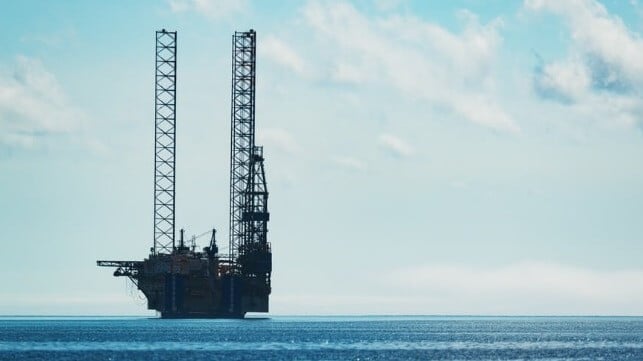
An independent Canadian E&P firm has discovered what it believes to be the largest offshore oil find in the nation's history. Though modest by global standards, it sets a new bar for oil and gas prospects in the Baltic.
According to Norwegian-owned, Calgary-headquartered driller Central European Petroleum (CEP), a new well near Wolin Island uncovered a reservoir with up to 22 million tonnes of oil (about 160 million barrels) and five billion cubic meters of natural gas. This is among the largest conventional oil discoveries in Europe in years. Across the rest of CEP's 600-square-kilometer concession area, it estimates that it has rights to another 11 million tonnes of oil and another 22 billion cubic meters of natural gas. CEP owns 100 percent of the Wolin lease area concession and has held the license since 2017.
The new well appears to contain enough oil to double Poland's reserves. Poland produces about three percent of its own oil, and 20 percent of its own natural gas, according to the IEA; the new find would make a minor contribution to energy self-sufficiency, but if it were replicated in other areas of the underexplored Polish EEZ, it could make a significant difference, Poland's chief national geologist Prof. Krzysztof Galos told TVP.
"It is also a positive investment signal that there could be more of these deposits, that it pays to look for raw materials in our basin, so who knows if there won't be more news on this from other investors," energy analyst Wojciech Jakóbik told Euronews. "This is further evidence that we have a change in Europe. Tough security is making us look again more favorably at gas and oil extraction."
Poland's foreign minister added that the discovery may even be a sign of divine favor, as it follows a string of other good news for Poland. In a social media post, minister Radoslaw Sikorski suggested that the successful drilling results mean that "God probably really loves the [coalition] government."
New Baltic Find Could Be Poland’s Largest Oil Discovery Ever

Central European Petroleum (CEP) has announced a major conventional oil and gas discovery off Poland’s Baltic Sea coast, in what could become the country’s largest hydrocarbon deposit and one of Europe’s most significant finds in the past decade.
The discovery was made at the Wolin East 1 (WE1) well, located roughly 6 kilometers from the port city of Swinoujscie in northwestern Poland. Preliminary assessments suggest the well contains an estimated 22 million tonnes of recoverable crude oil and condensate, along with 5 billion cubic metres of commercial-grade natural gas.
The broader concession area spans 593 square kilometers and may hold over 33 million tonnes of oil and 27 billion cubic metres of gas, significantly expanding Poland’s known reserves. As of 2023, the country’s estimated oil reserves stood at just over 20 million tonnes, meaning this single discovery could more than double the national total.
The WE1 well was drilled using a jack-up rig in 9.5 metres of water and reached a vertical depth of 2,715 metres.
“This is a historic moment for both Central European Petroleum and the Polish energy sector,” said CEP CEO Rolf G. Skaar. “Wolin East is more than just a promising deposit — it’s a joint opportunity to unlock the full geological and energy potential of the Baltic Sea.”
Polish officials have also emphasized the strategic implications. Krzysztof Galos, Undersecretary of State and Chief National Geologist, said the find could be “a breakthrough in the history of hydrocarbon exploration in Poland,” especially in underexplored offshore zones within the country’s Exclusive Economic Zone.
The discovery comes at a time when Poland is actively working to reduce its reliance on imported fossil fuels and strengthen energy security. CEP’s Polish subsidiary is managing the project, while the Canadian-based parent company—majority-owned by Norwegian investors—was originally founded to explore EU hydrocarbon prospects, particularly in Germany.
If confirmed through further appraisal, Wolin East could shift Poland’s energy landscape and add a new dimension to Europe’s upstream sector.
By Charles Kennedy for Oilprice.com

No comments:
Post a Comment