AFRICA
Rio Tinto’s Simandou mine may come with costly refinery twist
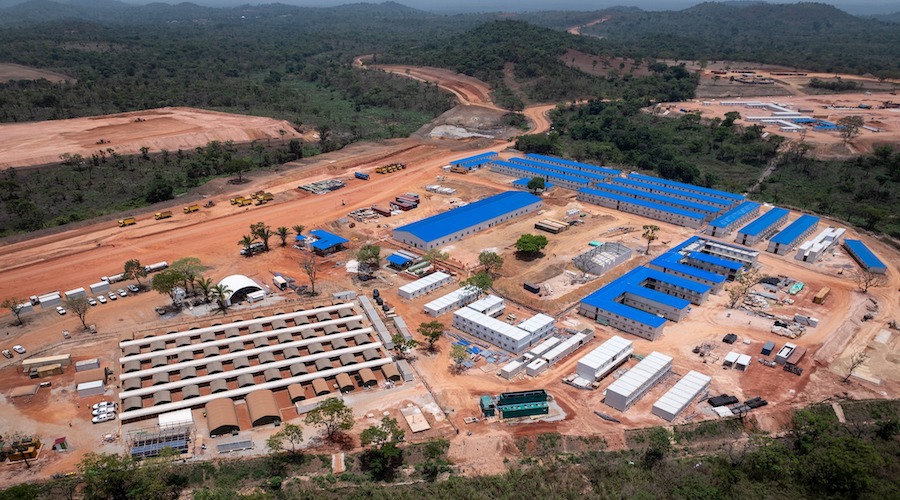
Rio Tinto (ASX: RIO) may be forced to make expensive downstream investments in Guinea as the military-led government pushes for local refining tied to the giant Simandou iron ore project.

Authorities in the West African nation, which seized power in 2021, have demanded that miners present firm plans to build domestic processing facilities. Officials argue that smelters and refineries are essential for Guinea to capture more value from its resources and to drive broader economic development.
The policy echoes a broader resource-nationalism trend across Africa, where governments are pressing companies to process minerals locally. In Guinea, the world’s second-largest bauxite producer, the government has already cancelled agreements with some miners, including Emirates Global Aluminium, over slow progress building alumina refineries.
Guinea’s minister of planning and international cooperation, Ismael Nabe, said the strategy is clear: ore mined in the country must also be processed there. “We want to build a refinery in Guinea. That’s our game plan,” Nabe told the Australian Financial Review. “If Baowu comes to Guinea, they will build a refinery before shipping it out of the country”.
The Simandou is divided into four blocks. Winning Consortium Simandou, backed by Chinese firms including steelmaker China Baowu Steel Group, controls blocks 1 and 2. Rio Tinto and Chinese state-owned Chinalco control blocks 3 and 4.
Nabe compared Guinea’s ambitions to Western Australia’s iron ore mining boom decades ago, stressing that mining revenue should also support agriculture, education, and infrastructure.
Despite tighter regulations, Guinea’s bauxite exports rose 36% to a record 99.8 million tonnes in the first half of 2025, fuelled by Chinese demand.
The country exported over 130 million tonnes last year and holds reserves estimated at 7.4 billion tonnes, according to the US Geological Service.
World’s highest grade ore
Simandou is expected to become the world’s largest and highest-grade new iron ore mine, eventually producing 120 million tonnes of premium ore annually. First ore is scheduled for November.
Rio Tinto first secured an exploration license for Simandou in 1997. but political instability has slowed progress. The project has outlasted two coups, four heads of state, and three presidential elections.
Development includes a 600-kilometre rail line linking the Simandou mountains to a new deep-water port on Guinea’s Atlantic coast. Rio Tinto will operate one of the two mines feeding the project.
Burkina Faso seeks to ease worries around mining stake plans
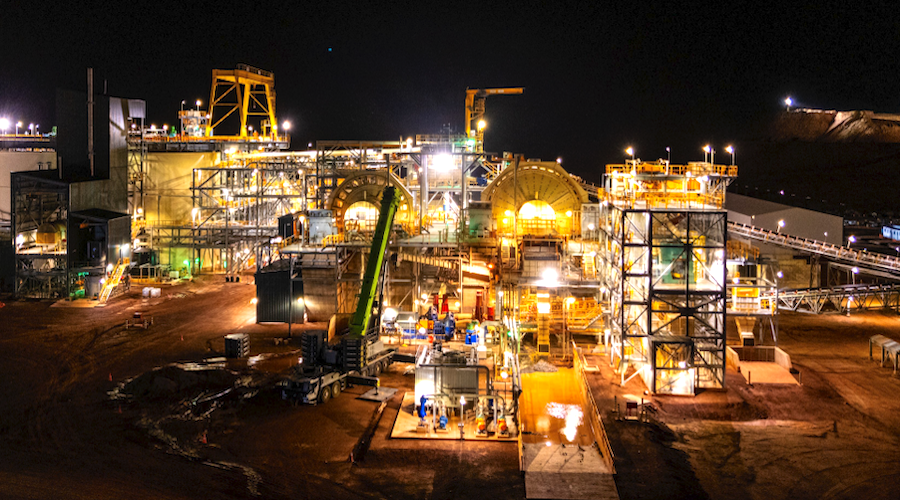
Burkina Faso has moved to reassure investors that its request to acquire an additional 35% stake in West African Resources’ (ASX: WAF) Kiaka gold mine is an option, not a demand, under the country’s new mining framework.
Speaking at a mining conference in Australia, Mamadou Sagnon, director-general of the mining registry, explained that the Mining Code introduced in July last year allows the state to secure a minimum 30% paid interest in mining projects, in addition to its 15% free-carried stake. The paid portion is linked to exploration and feasibility costs rather than the mine’s market valuation.
The Code also gives the government and local investors the right to acquire further equity on commercial terms.
“In the case of West African Resources, the government addressed a letter to solicit the opening of participation up to 35%,” Sagnon said. “For the moment, it is a solicitation – it is not forcing.”
Sagnon stressed that the measure was intended to strengthen confidence in the sector, rather than deter foreign capital.
He argued that state participation would boost confidence rather than drive capital away. “We believe that if the State is in the participation of the company, there will be more confidence to stay in the country and make more investment,” he said.
Shares in West African Resources have been halted since last Thursday. The company had previously announced trading would resume Monday.
Regional changes
Investor unease reflects broader concerns about resource nationalism in West Africa, where governments are revising mining codes to capture more local benefit. Burkina Faso’s neighbours, including Mali, have already shaken investor sentiment with new rules and political instability.
WAF’s general manager of sustainability, Mirey Lopez, declined to comment beyond referring stakeholders to the company’s announcements. “We are in dialogue with the government and we are looking forward to a resolution,” she said during her presentation at the mining conference.
Burkina Faso, Africa’s fourth-largest gold producer, has already moved major assets into its new state-owned mining company, Société de Participation Minière du Burkina (SOPAMIB).
In June, five gold mines and exploration permits, previously held by Endeavour Mining and Lilium, were transferred to SOPAMIB. The push followed the nationalisation of the Boungou and Wahgnion mines in August 2024 for about $80 million, far below their estimated $300 million value.
Newly producing
West African Resources poured first gold at Kiaka in June. The mine is now in production and is expected to average 234,000 ounces annually for 20 years starting in 2025, generating roughly $795.6 million per year at current prices.
Last week, WAF confirmed that it had aligned the equity structure of its Sanbrado, Kiaka and Toega projects with the new Code, raising the government’s free-carried stake in each to 15%.
The company also revealed that Burkina Faso had enforced a mandatory dividend rule. In August, WAF’s subsidiary Somisa, owner of Sanbrado, declared a $98.35 million priority dividend to the government, representing 15% of retained earnings through 2024. WAF expects Somisa, Kiaka SA and Toega SA will all be required to distribute 15% of profits annually, with WAF entitled to repatriate the remainder.
WAF also revealed last week that the Burkina Faso government had enforced a non-discretionary dividend rule.
Strong leader at the helm
The mining reforms reflect the growing influence of Ibrahim Traoré, the 37-year-old military leader who seized power in 2022 and declared himself president. Traoré has pushed for greater state control of resources while casting his rule as part of a Pan-African, anti-Western revival.
His supporters hail him as a defender of sovereignty. In April, thousands rallied in Ouagadougou after an alleged counter-coup attempt failed. Demonstrations spread to London, Kingston and Montego Bay, where diaspora groups praised him as a “Black liberator.”
Meanwhile, Orezone Gold (ASX, TSX: ORE), which operates the Bomboré mine, also halted trading after the news of the government’s request at Kiaka. Following weekend talks, Orezone confirmed Tuesday that authorities have no plans to purchase an interest in Bomboré, calling the Kiaka situation “specific and not a reflection of any broader intent.”

Zayd Abdul-Mumin
I love the way brother lbrahim Traore has United a lot of Africa. Keep standing strong, because the powders that be is trying to wipe us off the planet.
Jeff
Thank you Mr. President for securing what is rightfully the people’s own. Strange when you are taking ownership of what is rightfully yours there is talk about destabilizing the gold market but when the demons are robbing the people it’s OK.
Make sure your country, Mali and Niger continues to stock pile large reserves of gold, it’s the best insurance policy for any country, ask the ones in the northern hemisphere.
Africa Emerges as the New Front in Critical Minerals Power Play
By Tsvetana Paraskova - Sep 08, 2025China and the West have taken their competition to secure critical minerals to a new battleground—central and southern Africa, where the race to secure critical routes to move the critical metals to demand markets is in full swing.
The United States, Japan, and China are backing three different railway corridors in Africa, where a large part of the global copper and cobalt supply is mined.
As the U.S. and its allies look to reduce their reliance on China in critical minerals supply, these three railway corridors – all starting in Zambia and planned to end at major ports for exports – have become key to who will be able to influence the direction of said exports. In other words, the race for railway projects now will shape where the copper and cobalt will end up in the future.
At the end of last year, the U.S. announced the commitment of a loan of up to $553 million to upgrade the Lobito Atlantic Railway in Angola.
“The project is expected to expand and protect critical mineral supply chains, increase rail transport capacity, and reduce freight transit times and costs,” the U.S. said as it looks to counter China’s presence in Africa.
China, for its part, will invest, via China Civil Engineering Construction Corporation (CCECC), more than $1.4 billion in Tanzania-Zambia Railway Authority (TAZARA) to revitalize the railway infrastructure and operations.
Japan last month announced it would support the Nacala Corridor, an international corridor in southeastern Africa connecting landlocked Zambia and Malawi to the Indian Ocean via Nacara port in Mozambique.
Japan expects the Nacala project to become a transportation route for mineral resources and other goods and strengthen Japan’s resource supply chains.
“By backing railways and ports, countries are locking in long-term influence over how minerals flow,” Shahrukh Wani, an economist at the International Growth Centre at the London School of Economics, told the South China Morning Post.
Currently, China is winning the global race for critical minerals and rare earths.
China holds a dominant global position in the supply of critical minerals and rare earths, but its grip on the value chain – minerals processing and magnet production – is even tighter.
China is currently unbeatable in scale after building refining capacities over the past three decades. Early in the game, Beijing realized that refined products – not the raw materials – are the key to holding a strategically and economically dominant position in critical minerals and rare earths.
The heavily concentrated supply of critical minerals in a handful of countries and China’s export controls are raising the risk of “painful disruptions” in the market, the International Energy Agency (IEA) warned in its new annual report, Global Critical Minerals Outlook.
Despite major deals and government support in the West for building domestic supply chains, China has raised its market share over the past few years, the IEA’s report found.
In the past five years to 2024, while the rest of the world was looking for ways to bolster domestic supply, growth in refined material production was heavily concentrated among the leading suppliers.
China dominates refining for 19 of the 20 minerals the agency has analyzed, holding an average market share of around 70%.
“Three-quarters of these minerals have shown greater price volatility than oil, and half have been more volatile than natural gas,” the IEA said, noting that major risk areas include high supply chain concentration, price volatility, and by-product dependency.
The market is well-supplied with critical minerals, whose prices have dropped off from the highs seen in 2021 and 2022. In this sector, the risk is not supply itself, but its concentration in a few producers, especially China, the IEA noted.
Now the critical minerals race has expanded from mining the raw materials to control over the routes of the materials to markets.
By Tsvetana Paraskova for Oilprice.com