Will Trump’s Gunboat Diplomacy Against Venezuela Backfire?
- President Trump has deployed a significant U.S. naval force off the coast of Venezuela and escalated rhetoric, including a $50 million bounty on President Maduro, in a shift towards military pressure against the regime.
- The U.S. alleges that President Maduro and high-ranking officials are involved in narco-terrorism, leading to the designation of Venezuelan transnational crime groups as terrorist organizations.
- While a full-scale invasion of Venezuela is unlikely, the U.S. naval flotilla possesses the capability for precision missile strikes against key regime and military targets, raising the possibility of limited military action.
For a decade, the White House has failed to meaningfully engage with Latin America, a region traditionally under U.S. hegemony. This allowed global geopolitical rivals Russia, China and Iran to gain a foothold in the region as they seek to undermine Washington’s traditional dominance. In a shock move, after diplomacy and sanctions failed to initiate regime change, President Donald Trump resorted to gunboat diplomacy to pressure regional countries viewed as hostile to Washington. The primary target is Venezuela’s dictatorial regime led by President Nicolas Maduro at a time when his key backers are engrossed with their own geopolitical difficulties.
In response to the threat posed by large volumes of illegal narcotics entering the U.S. President Trump, at the start of 2025, designated various Latin American organized crime groups as terrorist organizations. These included the Mexican drug cartels along with two Venezuelan transnational crime groups: Tren de Aragua and the Cartel of the Suns or Cartel de los Soles in Spanish. Shortly thereafter, the White House doubled the bounty for Venezuela’s autocratic president to $50 million. All while escalating hardline rhetoric about the national security threat posed by the dictatorial socialist Venezuelan regime and its involvement in narcotics trafficking.
Venezuela’s autocratic leader was charged in 2020 by the U.S. Department of Justice with participating in a narco-terrorism conspiracy and conspiring to import cocaine into the United States, along with a series of weapons offences. The Department of Justice alleges President Maduro and senior regime officials partnered with the Revolutionary Armed Forces of Colombia (FARC) to flood the U.S. with cocaine. At that time, the FARC was a U.S.-listed foreign terrorist organization that had been tied to the cocaine trade for over two decades. Those serious charges arose at a time when Washington and governments around the world condemned Maduro’s illegitimate presidency.
The $50 million bounty declared by Washington is an unprecedented amount. Venezuela’s autocratic president is the first ever target to have a bounty of more than $25 million in the history of the U.S. Narcotics Rewards Program. The decision to double President Maduro’s bounty was made after the White House identified the dictatorial head of state as the leader of the Cartel of the Suns, a narcotrafficking group thought to have emerged from the Venezuelan military and now run by high-ranking regime officials. In response to the threat posed by Venezuela, which contains the world’s largest oil reserves totaling 303 billion barrels, and the trafficking of narcotics from the pariah state, President Trump deployed warships off the country’s coast.
There are now nine U.S military vessels in the Southern Caribbean off the coast of Venezuela. These include the Lake Erie, a Ticonderoga-class guided-missile cruiser, three Arleigh Burke-class guided-missile destroyers, a Freedom-class littoral combat ship and a Los Angeles-class nuclear-powered fast-attack submarine. The Iwo Jima Amphibious Ready Group with 2,200 U.S. Marines is also present. It is a rapid response force comprised of the Iwo Jima, a Wasp-class amphibious assault ship, and two San Antonio-class transport and logistical support ships. This force, while substantial and more than capable of defeating Venezuela’s navy in a pitched battle, is insufficient to invade the pariah South American state.
Estimates vary, but at least 100,000 ground troops with significant naval and air support are needed to assault Venezuela and defeat the Maduro regime. There is considerable speculation that even this number is insufficient to defeat and occupy a country larger than Iraq that possesses Latin America’s seventh most powerful military. President Maduro recently mobilized the 4.5 million-strong Bolivarian militia while calling for civilian volunteers to bolster the force’s strength. The militia, however, is poorly armed and trained, being the least combat-ready of Caracas’ armed forces, with analysts claiming its role is largely symbolic. Despite these considerable deficiencies, the militia poses a credible asymmetric threat to U.S. ground forces.
In the past, both President Trump and Secretary of State Marco Rubio have been hawkish about militarily intervening in Venezuela to topple the Maduro regime. Such an option is gaining considerable attention, especially after the abject failure of U.S. diplomacy and sanctions to spark regime change in a country holding the world’s largest oil reserves. Elements within Venezuela’s opposition are vocally calling for President Trump to invade and topple the illegitimate Maduro regime, as are many within the Venezuelan diaspora. While a full-scale invasion of Venezuela appears unlikely at this time, especially with President Trump refusing to be drawn on whether he is seeking regime change, there is a strong possibility of U.S. missile strikes.
The U.S. naval flotilla possesses the capability to launch potent surgical strikes against key regime targets such as the Miraflores Palace and El Libertador Airbase. The Arleigh Burke-class guided-missile destroyers, Gravely, Jason Dunham and Sampson are equipped with Tomahawk missiles. Los Angeles-class nuclear-powered submarine Newport News and Lake Erie, a Ticonderoga-class guided-missile cruiser, also possess Tomahawk loadouts. Tomahawk long-range cruise missiles carry a thousand-pound (454-kilogram) conventional warhead over a range of 1,500 miles (2,400 kilometers), making them a precision weapon for striking land-based targets.
This raises the possibility that President Trump will not invade Venezuela but use the flotilla’s long-range strike capability to hit key military and regime targets precisely. Indeed, President Trump recently flagged the possibility of striking land-based narco-cartel targets in Venezuela. This comes on the back of the U.S. task force intercepting and destroying a boat in the Caribbean Sea, killing eleven Venezuelans. The vessel, which departed from Venezuela, was, according to President Trump, carrying drugs to the U.S. and operated by the transnational crime group Tren de Aragua. The attack sparked considerable conjecture over its legality.
Multiple sources argue that the actions of the U.S. flotilla were unlawful because it breached international law aimed at preventing countries from interfering with vessels operating in international waters. The killing of the 11 people aboard also contravenes international law governing the use of force and the right to life. Regardless of its legality, the strike highlights the White House’s growing willingness to employ force to achieve foreign and domestic policy goals in Latin America.
Over the last decade, a lack of meaningful regional engagement from Washington has allowed traditional U.S. hegemony to be undermined. This also provided an opportunity for non-government actors such as narco-cartels and terrorist groups, including Iran-backed Hezbollah, to expand operations in Latin America. The fiasco created by the failure of other measures, including strict U.S. economic sanctions and diplomacy to secure regime change, leaves military action as the only means of toppling autocratic President Maduro. Indeed, there are signs U.S. sanctions, while seriously hurting the Venezuelan people, only strengthened the dictatorial leader’s grip on power.
While analysts and academics reject that an invasion will occur, President Trump’s gunboat diplomacy indicates that such an event, along with U.S. military strikes in Venezuela, is a possibility. In the past, President Trump and Secretary of State Rubio have been quite hawkish about the prospect of direct military action against President Maduro’s autocratic regime. This has even included discussing the prospects for a U.S. invasion of Venezuela to topple President Maduro as far back as 2018 and 2019. Fears of an inadvertent clash between the U.S. flotilla and Venezuela’s armed forces are growing. Such an event could quickly escalate to retaliatory missile strikes on Maduro regime targets, including key military bases, while vindicating the need for a land invasion.
By Matthew Smith for Oilprice.com
- President Trump has deployed a significant U.S. naval force off the coast of Venezuela and escalated rhetoric, including a $50 million bounty on President Maduro, in a shift towards military pressure against the regime.
- The U.S. alleges that President Maduro and high-ranking officials are involved in narco-terrorism, leading to the designation of Venezuelan transnational crime groups as terrorist organizations.
- While a full-scale invasion of Venezuela is unlikely, the U.S. naval flotilla possesses the capability for precision missile strikes against key regime and military targets, raising the possibility of limited military action.
For a decade, the White House has failed to meaningfully engage with Latin America, a region traditionally under U.S. hegemony. This allowed global geopolitical rivals Russia, China and Iran to gain a foothold in the region as they seek to undermine Washington’s traditional dominance. In a shock move, after diplomacy and sanctions failed to initiate regime change, President Donald Trump resorted to gunboat diplomacy to pressure regional countries viewed as hostile to Washington. The primary target is Venezuela’s dictatorial regime led by President Nicolas Maduro at a time when his key backers are engrossed with their own geopolitical difficulties.
In response to the threat posed by large volumes of illegal narcotics entering the U.S. President Trump, at the start of 2025, designated various Latin American organized crime groups as terrorist organizations. These included the Mexican drug cartels along with two Venezuelan transnational crime groups: Tren de Aragua and the Cartel of the Suns or Cartel de los Soles in Spanish. Shortly thereafter, the White House doubled the bounty for Venezuela’s autocratic president to $50 million. All while escalating hardline rhetoric about the national security threat posed by the dictatorial socialist Venezuelan regime and its involvement in narcotics trafficking.
Venezuela’s autocratic leader was charged in 2020 by the U.S. Department of Justice with participating in a narco-terrorism conspiracy and conspiring to import cocaine into the United States, along with a series of weapons offences. The Department of Justice alleges President Maduro and senior regime officials partnered with the Revolutionary Armed Forces of Colombia (FARC) to flood the U.S. with cocaine. At that time, the FARC was a U.S.-listed foreign terrorist organization that had been tied to the cocaine trade for over two decades. Those serious charges arose at a time when Washington and governments around the world condemned Maduro’s illegitimate presidency.
The $50 million bounty declared by Washington is an unprecedented amount. Venezuela’s autocratic president is the first ever target to have a bounty of more than $25 million in the history of the U.S. Narcotics Rewards Program. The decision to double President Maduro’s bounty was made after the White House identified the dictatorial head of state as the leader of the Cartel of the Suns, a narcotrafficking group thought to have emerged from the Venezuelan military and now run by high-ranking regime officials. In response to the threat posed by Venezuela, which contains the world’s largest oil reserves totaling 303 billion barrels, and the trafficking of narcotics from the pariah state, President Trump deployed warships off the country’s coast.
There are now nine U.S military vessels in the Southern Caribbean off the coast of Venezuela. These include the Lake Erie, a Ticonderoga-class guided-missile cruiser, three Arleigh Burke-class guided-missile destroyers, a Freedom-class littoral combat ship and a Los Angeles-class nuclear-powered fast-attack submarine. The Iwo Jima Amphibious Ready Group with 2,200 U.S. Marines is also present. It is a rapid response force comprised of the Iwo Jima, a Wasp-class amphibious assault ship, and two San Antonio-class transport and logistical support ships. This force, while substantial and more than capable of defeating Venezuela’s navy in a pitched battle, is insufficient to invade the pariah South American state.
Estimates vary, but at least 100,000 ground troops with significant naval and air support are needed to assault Venezuela and defeat the Maduro regime. There is considerable speculation that even this number is insufficient to defeat and occupy a country larger than Iraq that possesses Latin America’s seventh most powerful military. President Maduro recently mobilized the 4.5 million-strong Bolivarian militia while calling for civilian volunteers to bolster the force’s strength. The militia, however, is poorly armed and trained, being the least combat-ready of Caracas’ armed forces, with analysts claiming its role is largely symbolic. Despite these considerable deficiencies, the militia poses a credible asymmetric threat to U.S. ground forces.
In the past, both President Trump and Secretary of State Marco Rubio have been hawkish about militarily intervening in Venezuela to topple the Maduro regime. Such an option is gaining considerable attention, especially after the abject failure of U.S. diplomacy and sanctions to spark regime change in a country holding the world’s largest oil reserves. Elements within Venezuela’s opposition are vocally calling for President Trump to invade and topple the illegitimate Maduro regime, as are many within the Venezuelan diaspora. While a full-scale invasion of Venezuela appears unlikely at this time, especially with President Trump refusing to be drawn on whether he is seeking regime change, there is a strong possibility of U.S. missile strikes.
The U.S. naval flotilla possesses the capability to launch potent surgical strikes against key regime targets such as the Miraflores Palace and El Libertador Airbase. The Arleigh Burke-class guided-missile destroyers, Gravely, Jason Dunham and Sampson are equipped with Tomahawk missiles. Los Angeles-class nuclear-powered submarine Newport News and Lake Erie, a Ticonderoga-class guided-missile cruiser, also possess Tomahawk loadouts. Tomahawk long-range cruise missiles carry a thousand-pound (454-kilogram) conventional warhead over a range of 1,500 miles (2,400 kilometers), making them a precision weapon for striking land-based targets.
This raises the possibility that President Trump will not invade Venezuela but use the flotilla’s long-range strike capability to hit key military and regime targets precisely. Indeed, President Trump recently flagged the possibility of striking land-based narco-cartel targets in Venezuela. This comes on the back of the U.S. task force intercepting and destroying a boat in the Caribbean Sea, killing eleven Venezuelans. The vessel, which departed from Venezuela, was, according to President Trump, carrying drugs to the U.S. and operated by the transnational crime group Tren de Aragua. The attack sparked considerable conjecture over its legality.
Multiple sources argue that the actions of the U.S. flotilla were unlawful because it breached international law aimed at preventing countries from interfering with vessels operating in international waters. The killing of the 11 people aboard also contravenes international law governing the use of force and the right to life. Regardless of its legality, the strike highlights the White House’s growing willingness to employ force to achieve foreign and domestic policy goals in Latin America.
Over the last decade, a lack of meaningful regional engagement from Washington has allowed traditional U.S. hegemony to be undermined. This also provided an opportunity for non-government actors such as narco-cartels and terrorist groups, including Iran-backed Hezbollah, to expand operations in Latin America. The fiasco created by the failure of other measures, including strict U.S. economic sanctions and diplomacy to secure regime change, leaves military action as the only means of toppling autocratic President Maduro. Indeed, there are signs U.S. sanctions, while seriously hurting the Venezuelan people, only strengthened the dictatorial leader’s grip on power.
While analysts and academics reject that an invasion will occur, President Trump’s gunboat diplomacy indicates that such an event, along with U.S. military strikes in Venezuela, is a possibility. In the past, President Trump and Secretary of State Rubio have been quite hawkish about the prospect of direct military action against President Maduro’s autocratic regime. This has even included discussing the prospects for a U.S. invasion of Venezuela to topple President Maduro as far back as 2018 and 2019. Fears of an inadvertent clash between the U.S. flotilla and Venezuela’s armed forces are growing. Such an event could quickly escalate to retaliatory missile strikes on Maduro regime targets, including key military bases, while vindicating the need for a land invasion.
By Matthew Smith for Oilprice.com
Strike on Venezuelan Smuggling Boat Draws Praise, But Also Concerns
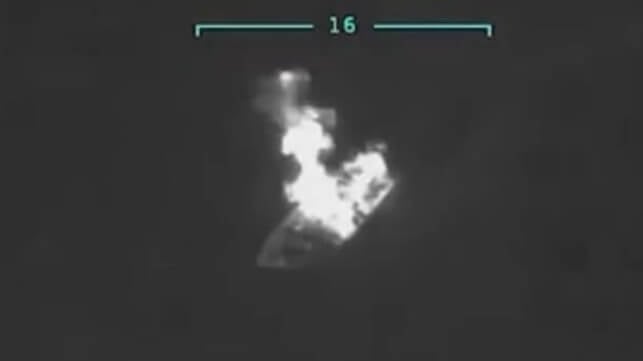
The U.S. military strike that destroyed a suspected smuggling boat off Venezuela last week was different from past practice: it was more muscular than law enforcement interdiction, sending a lethal message for deterrence - and some in the region, like Trinidad Prime Minister Kamla Persad-Bissessar, are very supportive.
But for some inside and outside the Pentagon, it also raises new legal questions. The recent dismissal of Rear Adm. Milton “Jamie” Sands III, head of Naval Special Warfare Command, may have been related to Sands' concern about the legality of impending strikes in the Caribbean, several government officials told The Intercept; other officials warned of a chilling effect in the ranks of the Judge Advocate General's Corps, which may be preventing internal dissent.
According to the Pentagon, the attack last Tuesday killed 11 people aboard a go-fast boat. U.S. Secretary of State Marco Rubio told reporters that the occupants were engaged in smuggling and were under way for Trinidad and Tobago, a typical short-haul drug route for the Venezuelan cocaine export trade. The destruction of the boat was not a one-off: Secretary of Defense Pete Hegseth pledged that "it won't stop with just this strike," a message echoed by Rubio. Both asserted that the shipment was for Tren de Aragua, a Venezuelan cartel that the Trump administration has designated a foreign terrorist organization.
Critics of the strike have highlighted several factors that stand out. The boat's occupants did not stand trial, nor was it clear if they were given the option to surrender. The alleged offense, drug smuggling, is not punishable by death in the United States for those who are convicted.
Inside the Pentagon and among some former military lawyers, these factors have created unease, and some have quietly questioned whether such a strike might be a crime under the laws of war. "Drug traffickers may be criminals but they aren’t combatants," a high-ranking Pentagon official told The Intercept.
Even if legal, others highlight that it might not be desirable, simply because it sets an example that America's adversaries could follow too.
"The United States argues that its model of courts, directed by evidence that is weighed at trial, sets it apart from authoritarian regimes. A policy of execution at sea would undermine that claim," wrote attorney Annie W. Morgan and submarine officer Lt. Cmdr. James Halsell for USNI Proceedings this week. "If Washington claims the right to strike suspected traffickers abroad, what prevents Russia or China from doing the same? Would the United States accept Beijing launching a missile at a Taiwanese fishing vessel it accuses of 'smuggling' under Chinese law?"
In the meantime, the administration is moving ahead with forceful action in the Caribbean. In addition to the amphib USS Iwo Jima and her escorts, the White House has ordered 10 F-35 fighters to deploy to Puerto Rico to reinforce the task force. "We are going to take on drug cartels wherever they are, wherever they are operating against the interests of the US," Secretary of State Marco Rubio said Tuesday.
U.S. Attacks on Venezuela Are a Threat to All of Latin America and the Caribbean
September 9, 2025
The moment of the attack on the vessel from Venezuela. (The White House).
One of President Trump’s first executive orders since returning to the presidency in January was the designation of certain drug cartels as “terrorist” organizations. In doing this, Trump signaled a renewed war on drugs with the possibility of the United States military acting unilaterally throughout Latin America.
As with much of Trump’s foreign policy, it was not immediately clear how literally one should take his threats to strike cartels and deploy special forces south of the U.S.-Mexico border. After all, the United States already has partnerships with repressive forces from Mexico to Colombia, which it established through an earlier war on drugs in the 1970s. Could these threats of military action in Latin America be nothing more than a bargaining tactic meant to secure more economic and geopolitical advantages for U.S. imperialism in Latin America?
If Trump’s recent military aggression toward Venezuela is any indication, the administration’s threats to launch a new war on drugs at the expense of any vestige of regional sovereignty should be taken very seriously.
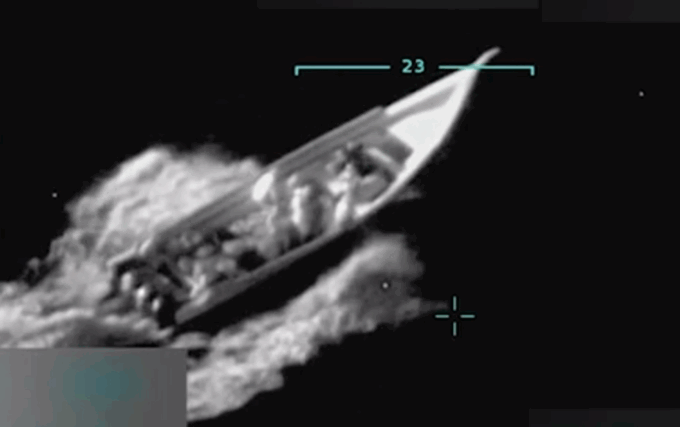
Following the deadly U.S. attack on a small boat in the Caribbean Sea on September 2 — justified under dubious claims that the boat was trafficking drugs with the backing of Venezuela’s government — the Trump administration has consistently said that it is prepared to carry out more such strikes. In an interview with Fox News on September 3, Pete Hegseth said, “President Trump is willing to go on offense in ways that others have not been.” Since that interview aired, Hegseth’s official title was changed from Secretary of Defense to Secretary of War. In a video about the rebrand of his department, Hegseth promises “We’re gonna go on offense, not just defense. Maximum lethality, not tepid legality.”
The escalation is not just rhetorical. The United States has deployed 10 stealth fighter jets to Puerto Rico for further military action in the region, and on September 6, U.S. sailors and marines carried out amphibious landing exercises in Puerto Rico, leading many people to speculate that the administration may be preparing for a regime change operation in Venezuela. Some foreign policy analysts have noted that the current level of U.S. military build-up in the Caribbean is not nearly enough to carry out a full-scale invasion of Venezuela. However, a report in CNN based on anonymous sources suggests that the administration is seriously considering military strikes within the country. Part of the calculation, according to the report, is that such strikes may be enough to squeeze Venezuelan President Nicolas Maduro into conceding power.
It may be too soon to predict how exactly the escalations against Venezuela will play out. But what should be clear is that the Trump administration is committed to establishing a new Monroe Doctrine of hegemonic dominance over Latin America. This policy will be built up through a new war on drugs, which is deeply intertwined with the war on immigrants that continues to escalate within the United States. Venezuela is currently in the eye of the storm, but there are greater implications for the entire region.
Venezuela is just the easiest target due to the longstanding bipartisan support for U.S. aggression against the country. This bipartisan hostility was shown clearly in Trump’s first term when Democrats supported a coup attempt, which ultimately failed. While Maduro has opened the way for U.S. imperialism to access Venezuela’s vast oil reserves, decades of tensions with Venezuela have left U.S. soft power and economic exploitation in the country far more limited than most anywhere else in Latin America. As a result, the Trump administration has less to lose in testing out interventionist action toward Venezuela. Similar actions would come with much greater costs to U.S. capital if tried in Mexico for example, which is far more subordinated to and compliant with U.S. imperialism
The United States has lost significant ground to its main capitalist rival, China, in terms of influence via soft power and access to markets in Latin America. As a result, many countries in the region have been hedging between the two powers and more overtly challenging U.S. dictates for the region. This is seen in Brazil’s challenge to Trump’s tariffs to try to shape the country’s political affairs and in criticism from a variety of Latin American leaders over Trump’s extreme anti-immigrant policies. These leaders have still conceded to U.S. imperialism far more than they’ve resisted, due in large part to the region’s economic subornation to the United States ,which Trump is now weaponizing with tariffs.
Nonetheless, the erosion of U.S. hegemony in the region compared to past decades is prompting Trump’s more aggressive approach. While Trump has mainly relied on economic aggression, the attacks on Venezuela show that military threats remain part of the imperialist toolkit. Whether or not Trump actually carries out intervention in Venezuela, the threats signal to every single government in Latin America and the Caribbean that the United States sees the entire region as fair game to pursue whatever acts of aggression and violations of sovereignty that it can get away with.
In response to the September 2 attack, a chorus of experts on U.S. foreign policy and international law have raised concerns about what kind of precedent the action sets. Even under the broad authority the U.S. executive branch has in carrying out military actions abroad, summary execution of alleged drug traffickers is a clear violation of the U.S. War Powers Act and international law.
Still, Trump and his cabinet have boasted that they can and will continue to flagrantly defy international norms. International law has always been applied selectively in the interests of U.S. imperialism, but presidents at least used to pretend that international norms should guide U.S. foreign policy. September 2 will certainly not be the last reminder that this administration is done playing by the old rules. If the Trump administration has its way, a new policy of “Peace Through Strength” will be written through violent intervention against the people of Latin America and the Caribbean.

No comments:
Post a Comment