COP30 Was Underwhelming, But a Path Away From Fossil Fuels Still Exists
December 3, 2025
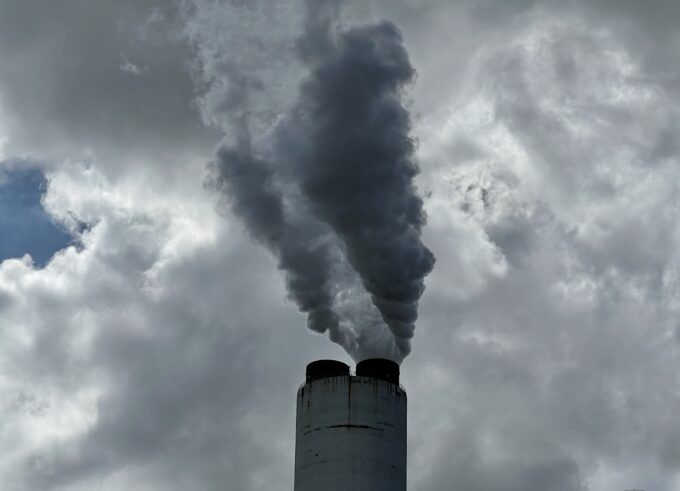
Clifty Coal Plant, Madison, Indiana. Photo: Jeffrey St. Clair.
It appeared to be a grim déjà vu when the final gavel dropped in Belem, Brazil and the COP30 text once again avoided naming fossil fuels.
But this apparent diplomatic failure obscured something more consequential: after hours of fraught, last-minute negotiations, countries reaffirmed the “United Arab Emirates consensus” from COP28 — the only UN agreement to date to reference a fossil-fuel phaseout. And the pathway it implies is already taking shape. In April, Colombia and the Netherlands will convene governments in Santa Marta, Colombia for the first global summit dedicated explicitly to the transition away from fossil fuels.
Tripling Renewable Energy, Doubling Efficiency, and Cutting Methane
At COP28 in Dubai, governments committed to tripling renewable energy and doubling energy efficiency by 2030. Combined with deep cuts to fossil methane, these pledges form a powerful trio. According to the Climate Action Tracker, fully implementing them would reduce projected warming by about 0.9°C this century, from 2.6˚C to 1.7˚C — enough to determine whether Paris Agreement targets remains within reach. If delivered, they would do more to collapse fossil-fuel demand than any language missing from the COP30 outcome text.
The energy system is already shifting. In the last two years, China has driven an unprecedented solar surge — adding more capacity in 2024 alone than the rest of the world combined, now hosting roughly half of global installed solar power, and exporting ultra-cheap panels that are flooding markets globally. As solar prices plunge, renewables are undercutting coal and gas markets globally. Doubling energy efficiency, if it can be achieved, cuts demand at a scale equivalent to adding vast new clean-power capacity, but without the economic and environmental burden of new plants.
Deep cuts to fossil methane — the primary component of gas, and a climate pollutant roughly 80 times more powerful than CO₂ over 20 years — require producers to eliminate leakage, venting, and routine flaring. These measures raise compliance costs, increase saleable gas, and make new fossil expansion harder to justify. Taken together, these commitments amount to a key part of the de facto fossil-fuel phaseout pathway.
But voluntary pledges alone won’t get us there. The Global Methane Status Report 2025 finds that despite over 150 countries endorsing the Global Methane Pledge, methane emissions continue to rise.
And even when we look beyond voluntary pledges to the domestic laws, regulations, and policy measures that represent a plan of action — as reflected in countries’ Nationally Determined Contributions (NDCs) and National Methane Action Plans — the gap remains enormous. Fully implementing all NDCs would cut global methane emissions by only about 8 percent below 2020 levels by 2030. That is far short of the 30 percent Global Methane Pledge goal and well below the 45 percent cut UNEP associates with keeping 1.5°C within reach.
The EU Leads the Way on Methane Regulation
The missing ingredient is enforcement — and the most important development on that front is not the Global Methane Pledge but the EU Methane Regulation.
Adopted in 2024, the EU rules apply not only to methane emitted within Europe but also to imported fossil fuels. Because the EU is the world’s largest importer of oil and gas — and its suppliers account for roughly 30 percent of global oil and gas methane emissions — these rules may do more to cut global methane than any voluntary pledge ever could. For the first time, countries exporting gas and oil to Europe must meet strict leak-detection, monitoring, and venting and flaring requirements. Non-compliant fuels can effectively be shut out of the EU market.
This is regulatory gravity: when the world’s largest buyer sets a standard, producers must adapt or lose access.
Some already have. Companies like ConocoPhillips have set near-zero methane-intensity targets by 2030 and earned top-tier marks for emissions reporting — clear signals that they intend to compete under strict import regimes. Meanwhile, fossil-fuel trade groups are lobbying aggressively to weaken the EU rules, arguing they threaten U.S. LNG exports. Investors disagree: in October, asset managers representing over €4.5 trillion urged the EU not to dilute nor delay its methane law, highlighting methane as a material financial risk.
The deeper truth is that the EU methane rules are already going beyond the Global Methane Pledge and achieving reductions in fossil-methane emissions across borders, backed by market access and legal penalties rather than voluntary promises.
Science points in the same direction. The International Energy Agency concludes that methane from fossil-fuel operations could be cut by around 75 percent by 2030 using technologies available today. Combined with renewable and efficiency pledges, these reductions undermine the economic case for expanding fossil-fuel production. New LNG terminals, oil fields, and long-lived gas infrastructure would rapidly become uneconomic — stranded assets in the making.
Pledges Are Not a Plan
Methane is responsible for roughly a third to a half of today’s warming, and because it is short-lived, rapid reductions can deliver measurable cooling within a decade. Without binding limits on fossil methane, the world cannot meet its climate goals, no matter how fast renewable energy grows.
This is the real lesson of COP30: pledges are not a plan. Tripling renewables, doubling efficiency, and slashing methane can transform global energy systems — but only if they are backed by binding rules, border measures, and enforcement. The EU methane regulations represent the first serious attempt at such enforcement.
The next opportunity to broaden that effort will not come at COP31, but in April 2026, when Colombia and the Netherlands co-host the First International Conference on the Just Transition Away from Fossil Fuels in Santa Marta.
It will be the first global summit to center the production side of the climate crisis. And it exists because grassroots movements made it unavoidable: years of pressure from youth organizers, Indigenous land defenders, and frontline communities pushed governments and companies toward positions once dismissed as radical — including today’s mainstream demand for a fair, full fossil fuel phaseout. Santa Marta is happening not as a symbolic gesture, but because people insisted on real action.
If COP30 could not bring itself to state that fossil fuels must be phased out, Santa Marta can. And it can ground that commitment in the tools governments have already endorsed: accelerated renewables, deep efficiency gains, and enforceable methane standards — led, in practice, by the EU.
For the United States, the moment is defining. Federal methane rules are being dismantled. But U.S. states need not wait. Colorado, New Mexico, and California already have some of the strongest methane rules in the world. By aligning with Europe’s approach — and sending governors or senior officials to Santa Marta — they can help build a transatlantic coalition for binding methane limits and an orderly fossil-fuel phase-down.
The path from COP30 requires fewer pledges and more enforceable governance. Countries already know what must be done. The task now is to turn an implicit roadmap into a binding framework capable of delivering the cuts that matter most — starting with methane in the oil and gas sector.
This first appeared on FPIF.
Environmental Crisis: It’s All About the Money
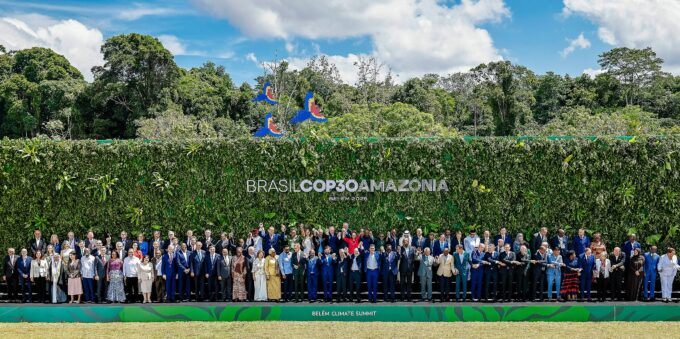
Photograph Source: Lula Oficial – CC BY-SA 4.0
For regular viewers of Amy Goodman’s Democracy Now! Program, she and her team recently reported from the COP30 conference in Belém, Brazil. This COPS spotlighted Indigenous people, and the program had numerous interviews with not only representatives of different Indigenous groups but also environmental activists challenging fossil-fuel hegemony.
The Money
Sadly, none of the well-meaning people interviewed mentioned that the global oil-and-gas cartel garnered $5.9 trillion in revenues for 2024. And the U.S. coal industry accounts for an additional $16.4 billion.
Most disturbing is Wikipedia revealing breakdown of the oil & gas revenues for individual companies by country for 2022. Its comprehensive list is drawn from data for S&P Global Commodity Insights Top 250 Global Energy Company Rankings, along with Statista and Sovereign Wealth Fund Institute.
The Wikipedia list reminds readers that Brazil’s oil-and-gas companies are relatively small companies compared to, say, those in the U.S. or Saudi Arabia. It identifies the following with 2023 revenues:
• Brazil’s three companies as YPFB ($8.1/b), Petrobras ($124.4/b) and Ultrapar ($27.8/b).
• In the U.S., it identifies 31 companies, including Chevron Corp. ($246.2), ExxonMobil ($413.6), Marathon ($179.9), Philips 66 ($175.7/b) and Valero Energy ($176.3/b).
• Saudi Arabia there are Bahri ($2.2/b) and Saudi Aramco ($604.3/b) – the world’s largest oil and gas company.
Most troubling, the Council on Foreign Relations reports, “The United States is the world’s top producer of oil and natural gas.” It adds, “The country’s economy runs on these fossil fuels, but producing and burning them releases greenhouse gas emissions that cause climate change.” And the American Petroleum Institute (API) claims it represents 600 members who produce, process and distribute its products. It adds, “America’s oil and natural gas industry supports 10.3 million jobs in the United States and nearly 8 percent of our nation’s Gross Domestic Product.”
According to Resources for the Future (RFF), a Washington-based nonprofit group, “Compared with 10 years ago, US oil and gas employment has fallen by about 40 percent while production has increased by about 60 percent for oil and almost 50 percent for natural gas.”
Going further, the FRR warns “the economic outlook for US oil and gas-producing regions is highly variable.” Among the “uncertain factors will shape those regions’ economic futures” are (i) fast-growing and emerging technologies (e.g., solar, batteries, enhanced geothermal, advanced nuclear); (ii) the potential for climate and environmental policies, both at home and abroad, to reduce demand for hydrocarbons; and (iii) the potential for low-cost producers in the Middle East to respond to expected demand declines by “opening the taps” to capture market share.
Trump and the Saudis
More troubling, money buys power and power secures influence. This was no clearer exhibited than in the recent get-together between Donald Trump and Saudi Crown Prince Mohammed bin Salman [MBS]. Not only did Trump host a lavish, black-tie dinner for the prince, but in a poorly orchestrated news conference he insisted that the prince “knew nothing” about the 2018 assassination – and dismemberment — of Jamal Khashoggi, a Washington Post columnist and Saudi dissident.
At the time, the Post reported: “A team of 15 Saudi agents flew to Istanbul on government aircraft in October and killed Khashoggi inside the Saudi Consulate, where he had gone to pick up documents that he needed for his planned marriage to a Turkish woman.”
Trump is America’s foremost let’s-make-money transactional president and, as part of MBS’s visit, the White House announced, “that Saudi Arabia will be increasing their investment commitments in the United States to almost $1 trillion ….” The original deal was for $600 million but at the press announcement, T$ Trump pushed the total to $1 trillion. For this, the Saudis will get F-35 fighter jets, tanks and other military equipment.
For Trump, his family and organization, relations with the MBS and other Saudis are all about the money. White House spokeswoman Karoline Leavitt said, “Neither the President nor his family has ever engaged, or will ever engage, in conflicts of interest.” Sure.
The New York Times recently reported on “at least four Trump-branded developments in Saudi Arabia.” These deals include:
• Diriyah: this is a $63 billion project in which “a Trump-branded property” would be part of what the Times calls “one of Saudi Arabia’s largest government-owned real estate developments.”
• Trump-branded projects: including a $1 billion Trump tower planned for Jeddah and two projects for Riyadh, the Saudi capital.
• Golf: the Saudi-backed SLIV Golf will host tournaments at the Trump National Doral Golf Club near Miami.
And there is Trump’s son-in-law, Jared Kushner, who’s become a virtual cash register for Saudi money. The Times notes, its “sovereign wealth fund has contributed $2 billion to an investment fund run by Jared Kushner … who cultivated close ties to Prince Mohammed during the president’s first term.” Together, the Saudis and Kushner’s firm took over the video game publisher Electronic Arts private around $55 billion.
At his January 2025 inauguration address, Trump came to power recalling former Maryland Lt Gov Michael Steele slogan ranted at the 2008 Republican convention, “drill, baby, drill!” Shortly after taking office, he declared in an Executive Order (14153), “Unleashing American Energy,” that it “is thus in the national interest to unleash America’s affordable and reliable energy and natural resources. This will restore American prosperity —- including for those men and women who have been forgotten by our economy in recent years.” It added, “It will also rebuild our Nation’s economic and military security, which will deliver peace through strength.”
To fulfill this goal, Trrunp has pushed for increased oil and gas lease sales. The Bureau of Land Management raised over $38 million in oil and gas lease sales for 23 parcels in Montana and North Dakota. It did this by, as one source reports, “significantly improved well economics through three-mile lateral drilling technology in the Bakken and Three Forks formations of eastern Montana.”
Most recently, Trump mandated at least 36 oil and gas lease sales for federal waters, including 30 in the Gulf and six in Cook Inlet, Alaska. A U.S. Congressional report notes, Revenues from oil and natural gas leases on onshore federal lands totaled $8.497 billion in FY2023 ….” Another source notes, “Robust offshore oil and natural gas development could generate over $8 billion in additional government revenue by 2040.”
So, when thinking about the ongoing environmental battle, don’t forget in addition to saving the planet and life on this planet, it’s also all about the money.
The result was a COP where the foes of ambition were emboldened, its proponents frustrated, and in which countries which could have shown leadership, such as China and India, refused to step up.
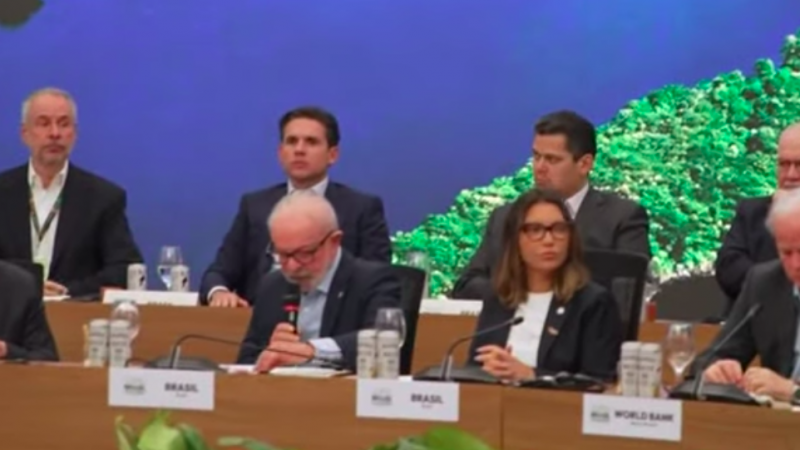
A lost opportunity
COP30 was meant to be a game changer. Hosts Brazil framed the event as the “COP of Truth”, a pivotal moment in which years of negotiation would come to fruition in ambitious, meaningful roadmaps to cut fossil fuel use and deliver on climate finance, deforestation, and Indigenous rights.
Yet despite the efforts of COP30 president, André Corrêa do Lago, to deliver, the final agreement – dubbed the Global Mutirão (or ‘collective efforts’) – offered merely a non-binding “mechanism” to help ensure a “just transition”, and a set of measures to track climate-adaptation progress.
Even the most welcome development – a commitment from wealthy nations to triple the amount of money to help poorer nations adapt to the effects of climate change – remains inadequate given it will only be reached in 2035, five years later than developing nations wanted.
No-one left COP30 believing enough had been done to keep the world on track to keep global temperatures below 1.5C or even the higher ‘safe’ limit of 2C above pre-industrial temperatures.
“Cop30 gave us some baby steps in the right direction, but considering the scale of the climate crisis, it has failed to rise to the occasion,” warned Mohamed Adow, director of the Power Shift Africa thinktank.
Corrêa do Lago admitted his frustration at the lack of delivery. The consensus nature of the talks “slow down action,” he said. A single, obstructive nation could block discussions, or a group of countries would block progress by repeating long-held, often valid, positions.
None of this was a surprise. COPs are by design global gatherings where decisions are made by consensus, not by majority vote. The hope has been that by keeping all countries on side meaningful, ambitious global progress can, eventually, be made.
But COPs are not divorced from geopolitical or economic realities. The US is led by a man who denies the climate crisis exists. Russia is at war with Europe and survives economically by selling fossil fuels. Saudi Arabia and others are also dependent on selling such fuels, and have no intention of giving up yet. They may not deny the science, but they refuse to bow to it.
Michael Jacobs, a veteran of climate diplomacy, described this group as an “axis of obstruction” which is creating “an increasingly bitter conflict at the heart of global climate politics between those who accept that the world must wean itself off fossil fuels; and those who are actively resisting in pursuit of short-term energy interests”.
The result was a COP where the foes of ambition were emboldened, its proponents frustrated, and in which countries which could have shown leadership, such as China and India, refused to step up.
COP sceptics have long argued that consensus offers only a road to ruin – a guarantee that a small number of nations will always pull the handbrake even as a majority seek speed and ambition.
Perhaps the sceptics have finally won, as the end of COP30 saw the beginning of an independent coalition of the willing, a group of nations ambitious to go further and faster to cut emissions, protect forests and provide essential climate finance to enable poorer nations to both adapt to the climate crisis, and to invest in renewable technology to curb their own emissions.
Corrêa do Lago, unwilling to walk away, will divorce his ambitious roadmap plans from the COP and UN process, establishing them on a voluntary basis outside the formal UN regime. Brazil, he said, would spend the next year overseeing two separate road map initiatives, each for fossil fuels and deforestation. He nonetheless hoped the outcomes would be adopted at a future COP.
He also announced a trade and climate body independent of both the UN climate process and the World Trade Organization to deal with tensions fuelled by measures such as the EU’s pioneering carbon border tax, which comes into effect in January.
The Netherlands and Colombia will separately host what is being billed as the first international conference on the transition away from fossil fuels in April.
Fragmentation: friend or foe?
The hope is that a more fragmented process enables swifter action towards emissions reductions, greater help for developing nations to invest in renewable energy and climate adaptation, and more protection for forests, other biodiversity and indigenous peoples.
Under new leadership or fearing diplomatic, trade or economic isolation ‘petrostates’ like the US, Russia and Saudi Arabia may eventually come onside. Given their size and – in particular for the US – their influence, a long term solution without them seems all but impossible.
But ambitious nations must also work with COP30’s third group of countries, which may hold the key to a step change in progress on emissions and adaptation.
This third group are neither blockers nor opposed to multilateral action, but are unified by a belief that their country’s needs are not addressed in current climate plans. These are mostly middle- and low-income countries, acutely aware of extreme weather and the climate crisis, but just as aware that they must balance their need to develop with climate action.
They believe their call for adequate climate finance from the world’s rich nations, for tariff removal on green technology, and for technical assistance to enable them to grow sustainably, has not been heeded. Their refusal to join with ambitious nations in building roadmaps is not so much a refusal to act – but a protest at what they see as unfair treatment.
They are also ambitious to develop, and to do so as quickly and cheaply as possible. Struggling with debt, low investment and the politics and expense of lifting people out of poverty, even though renewable technology is proven and available, for many governments fossil fuels are still more readily available and swiftly brought online, and hence offer the quickest route to development.
India’s environment minister Bhupender Yadav summed up their frustration: Climate finance, he said, must be counted in “trillions, not billions”, and rich countries need to bring forward their own net zero dates instead of lecturing others.
Small island states and least developed countries, meanwhile, have received almost none of the money they were promised. A recent UN assessment found that only around 1% of global climate finance reached small island developing states over the last decade.
In addition, affordable, accessible climate technology must be free from restrictive intellectual property barriers, argues Yadav. Only with adequate finance and access to renewable technologies free of excessive licence payments or tariffs can the world move to net zero quickly, sustainably and fairly.
A way forward
What happens next will depend on whether the ambitious bloc — especially the UK, EU, Canada and Australia — recognises that the middle group holds the key to unlocking real progress. These countries are not resisting climate action; they are demanding fairness.
That means climate finance must be delivered, and the 2035 date brought forward five years. It means opening access to clean technology, easing debt burdens, reforming trade rules and investing at scale in renewable infrastructure. It means recognising the deep links between the climate transition and international development; for some nations, including the UK and Germany, it will mean a recommitment to development as a policy priority.
If the UK and EU lead a genuine partnership with this third group — listening to their priorities and matching ambition with resources — the coalition for action will grow dramatically, enabling swifter progress and isolating the remaining petrostates. By COP31, a far broader, more united front could finally start driving the urgent transition the world needs.
Mike Buckley is the director of the Independent Commission on UK-EU Relations and a former Labour Party adviser

No comments:
Post a Comment