By AFP
December 2, 2025

Experts, environmentalists and even government officials have pointed to the role of deforestation in Indonesia's deadly floods
- Copyright AFP CHAIDEER MAHYUDDIN
Marchio Gorbiano and Dessy Sagita
The deadly flooding that has killed hundreds in Indonesia was largely the result of monsoon rains and a rare tropical storm. But something else may have played a role: deforestation.
Environmentalists, experts and even Indonesia’s government have pointed to the role forest loss played in flash flooding and landslides that washed torrents of mud into villages and stranded residents on roofs.
Forests help absorb rainfall and stabilise the ground held by their roots, and their absence makes areas more prone to flash flooding and landslides.
Indonesia is regularly among the countries in the world with the largest annual forest loss.
Mining, plantations and fires have caused the clearance of large tracts of the country’s lush rainforest over recent decades.
In 2024, over 240,000 hectares of primary forest was lost, and that was less than the year before, according to analysis by conservation start-up The TreeMap’s Nusantara Atlas project.
“Forests upstream act as a protective barrier, a bit like a sponge,” explained David Gaveau, founder of The TreeMap.
“The canopy captures some of the rain before it reaches the ground. The roots also help stabilise the soil. When the forest is cleared upstream, rainwater runs off rapidly into rivers creating flash floods.”
– ‘Prevent deforestation’ –
Environmentalists have long urged the government to better protect the country’s forests, which are a key carbon sink, absorbing planet-warming carbon dioxide.
Indonesia’s forests are also home to enormous biodiversity and some of the world’s most threatened species, including orangutans.
And in the wake of the flooding, even the country’s president urged action.
“We must truly prevent deforestation and forest destruction,” President Prabowo Subianto said Friday as the scale of the disaster began to emerge.
“Protecting our forests is crucial.”
The floods carried not only collapsed hillsides and torrents of mud, but also timber that fuelled speculation about the link between deforestation and the disaster.
On one beach in Padang, AFP saw workers dressed in orange using chainsaws to break up massive logs strewn along the sand.
The forestry ministry is reportedly investigating claims of illegal logging in affected areas, and Forestry Minister Raja Juli Antoni called the disaster a chance to “evaluate our policies”.
“The pendulum between the economy and ecology seems to have swung too far towards the economy and needs to be pulled back to the centre,” he said over the weekend.
That is a message environmentalists in Indonesia have long delivered.
In one of the worst-affected areas, Batang Toru, “there are seven companies operating along the upstream region,” said Uli Arta Siagian, forest and plantation campaign manager for conservation group Walhi.
“There is a gold mine that has already cleared around 300 hectares of forest cover… the Batang Toru Hydropower Plant has caused the loss of 350 hectares of forest,” she told AFP.
Large tracts of forest have also been converted into palm oil plantations.
“All of this contributes to increasing our vulnerability.”
– Protection and restoration –
Sumatra, where the flood damage was concentrated, is particularly vulnerable because its river basins are relatively small, explained Kiki Taufik, head of Greenpeace Indonesia’s forest campaign.
“The massive change in forest cover is the main factor in the occurrence of flash floods,” he told AFP, accusing the government of “recklessly and carelessly” granting permits for mines and plantations.
Deforestation rates in Sumatra are among the highest in Indonesia, according to Herry Purnomo, country director at the Center for International Forestry Research and World Agroforestry (CIFOR-ICRAF).
Losing forest also raises flooding risks because soil washes into rivers, raising the riverbed and reducing the capacity of waterways to absorb sudden torrential downpours, he said.
Two things are needed, added Herry, a professor at IPB University in Bogor: “Prevent deforestation, avoid it, and also carry out restoration.”
Hundreds of thousands of Asia flood survivors face food and fuel shortages
Hundreds of thousands of people stranded by the violent floods that have swept through in Sri Lanka, Indonesia, Thailand and Malaysia were on Tuesday facing increasingly alarming shortages of food and fuel. More than 1,300 have been killed in the torrents triggered by monsoon rains and cyclones.Issued on: 02/12/2025
By: FRANCE 24
Governments and aid groups on Tuesday worked to rush aid to hundreds of thousands stranded by deadly flooding that has so far killed at least 1,338 people: 744 in Indonesia, 410 in Sri Lanka, 181 in Thailand and three in Malaysia.
Torrential monsoon season deluges paired with two separate tropical cyclones last week dumped heavy rain across the region.
Climate change is producing more intense rain events because a warmer atmosphere holds more moisture, and warmer oceans can turbocharge storms.
The floodwaters have now largely receded, but the devastation means hundreds of thousands of people are now living in shelters and struggling to secure clean water and food.
READ MORELooting reported as Indonesia and Sri Lanka battle deadly floods
In Indonesia's Aceh, one of the worst-affected regions, residents told AFP that survivors who could afford to were stockpiling supplies.
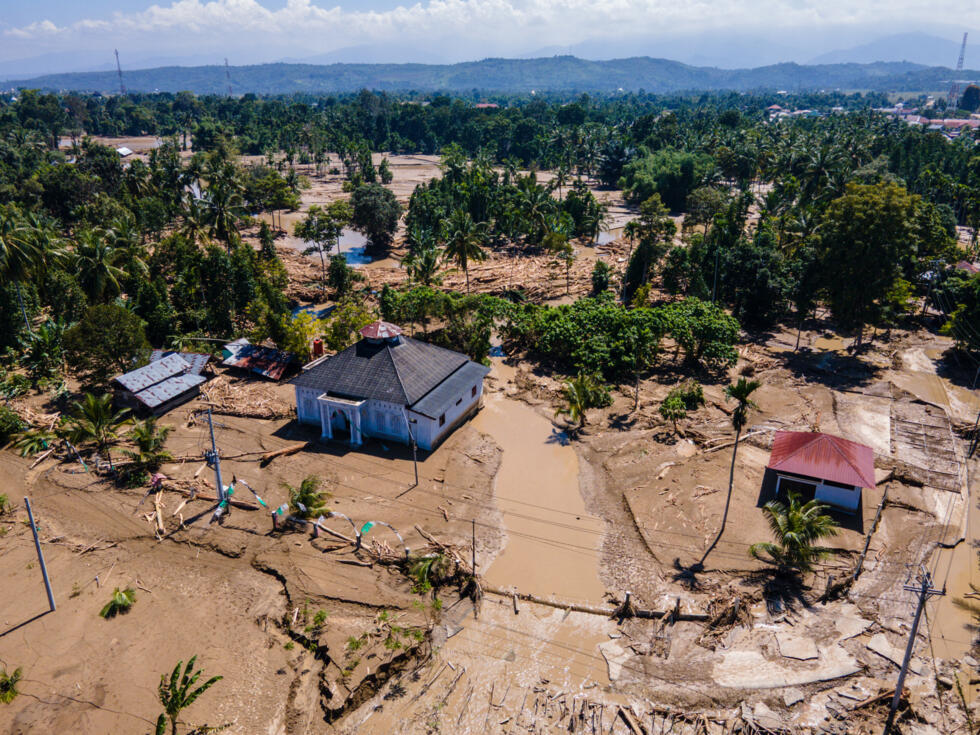
Mud surrounds a mosque in a flood-affected area in Meureudu, in Indonesia's Aceh province © Chaideer Mahyuddin, AFP
"Road access is mostly cut off in flood-affected areas," 29-year-old Erna Mardhiah said as she joined a long queue at a petrol station in Banda Aceh.
"People are worried about running out of fuel," she added from the line she had been in for two hours.
The pressure has caused skyrocketing prices.
"Most things are already sky-high ... chillies alone are up to 300,000 rupiah per kilo ($18), so that's probably why people are panic-buying," she said.
On Monday, Indonesia's government said it was sending 34,000 tons of rice and 6.8 million litres of cooking oil to the three worst-affected provinces, Aceh, North Sumatra and West Sumatra.
"There can be no delays," Agriculture Minister Andi Amran Sulaiman said.
Food shortage risk
Aid groups said they were working to ship supplies to affected areas, warning that local markets were running out of essential supplies and prices had tripled already.
"Road access is mostly cut off in flood-affected areas," 29-year-old Erna Mardhiah said as she joined a long queue at a petrol station in Banda Aceh.
"People are worried about running out of fuel," she added from the line she had been in for two hours.
The pressure has caused skyrocketing prices.
"Most things are already sky-high ... chillies alone are up to 300,000 rupiah per kilo ($18), so that's probably why people are panic-buying," she said.
On Monday, Indonesia's government said it was sending 34,000 tons of rice and 6.8 million litres of cooking oil to the three worst-affected provinces, Aceh, North Sumatra and West Sumatra.
"There can be no delays," Agriculture Minister Andi Amran Sulaiman said.
Food shortage risk
Aid groups said they were working to ship supplies to affected areas, warning that local markets were running out of essential supplies and prices had tripled already.
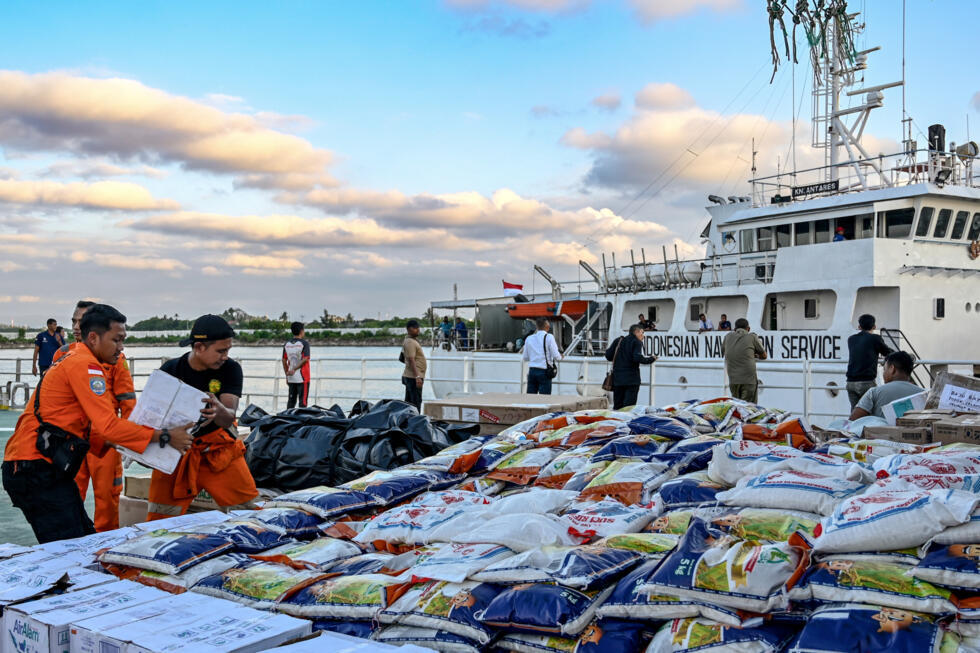
Governments and aid groups are working to ship supplies to affected areas across Indonesia and Sri Lanka © Chaideer Mahyuddin, AFP
"Communities across Aceh are at severe risk of food shortages and hunger if supply lines are not reestablished in the next seven days," charity group Islamic Relief said.
A shipment of 12 tonnes of food from the group aboard an Indonesian navy vessel was due to arrive in Aceh on Tuesday.
A million people have evacuated from their homes, according to the disaster agency.
Survivors have described terrifying waves of water that arrived without warning.
In East Aceh, Zamzami said the floodwaters had been "unstoppable, like a tsunami wave".
"We can't explain how big the water seemed, it was truly extraordinary," said the 33-year-old, who like many Indonesians goes by one name.
People in his village sheltered atop a local two-storey fish market to escape the deluge and were now trying to clean the mud and debris left behind while battling power and telecommunications outages.
"Communities across Aceh are at severe risk of food shortages and hunger if supply lines are not reestablished in the next seven days," charity group Islamic Relief said.
A shipment of 12 tonnes of food from the group aboard an Indonesian navy vessel was due to arrive in Aceh on Tuesday.
A million people have evacuated from their homes, according to the disaster agency.
Survivors have described terrifying waves of water that arrived without warning.
In East Aceh, Zamzami said the floodwaters had been "unstoppable, like a tsunami wave".
"We can't explain how big the water seemed, it was truly extraordinary," said the 33-year-old, who like many Indonesians goes by one name.
People in his village sheltered atop a local two-storey fish market to escape the deluge and were now trying to clean the mud and debris left behind while battling power and telecommunications outages.
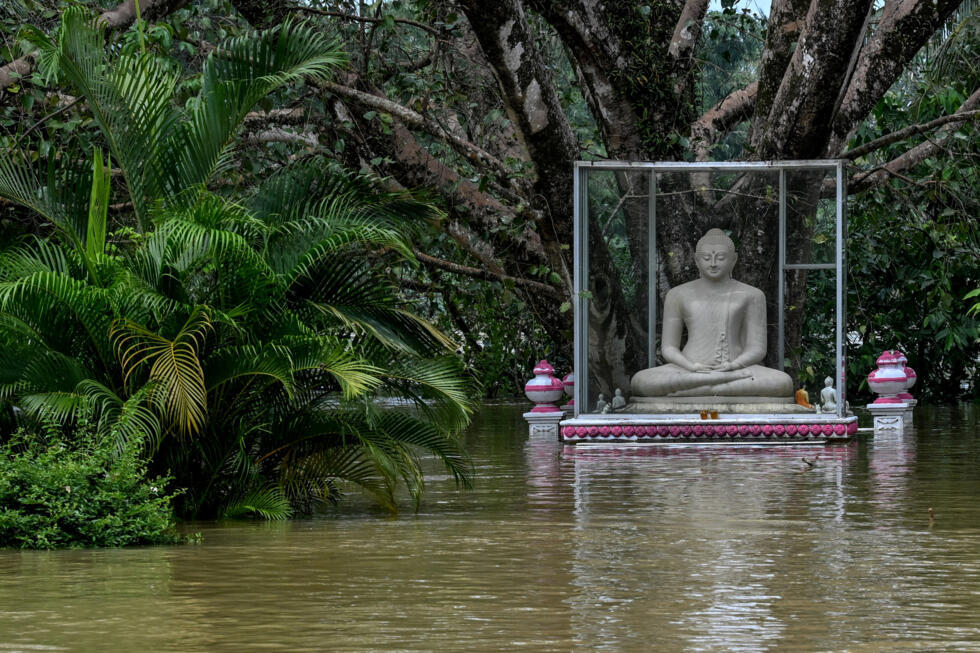
A storm brought heavy rains across all of Sri Lanka, triggering flash floods and deadly landslides that killed at least 390 people © Ishara s. Kodikara, AFP
"It's difficult for us (to get) clean water," he told AFP on Monday.
"There are children who are starting to get fevers, and there's no medicine."
The weather system that inundated Indonesia also brought heavy rain to southern Thailand.
Colombo floodwaters recede
A separate storm brought heavy rains across all of Sri Lanka, triggering flash floods and deadly landslides.
Some of the worst-hit areas in the country's centre are still difficult to reach.
President Anura Kumara Dissanayake has declared a state of emergency to deal with what he called the "most challenging natural disaster in our history".
Unlike his Indonesian counterpart, he has called for international aid.
Sri Lanka's air force, backed by counterparts from India and Pakistan, has been evacuating stranded residents and delivering food and other supplies.
In the capital Colombo, floodwaters were slowly subsiding on Tuesday.
The speed with which waters rose around the city surprised local residents used to seasonal flooding.
"It is not just the amount of water, but how quickly everything went under."
Rains have eased across the country, but landslide alerts remain in force across most of the hardest-hit central region, officials said.
(FRANCE 24 with AFP)
"It's difficult for us (to get) clean water," he told AFP on Monday.
"There are children who are starting to get fevers, and there's no medicine."
The weather system that inundated Indonesia also brought heavy rain to southern Thailand.
Colombo floodwaters recede
A separate storm brought heavy rains across all of Sri Lanka, triggering flash floods and deadly landslides.
Some of the worst-hit areas in the country's centre are still difficult to reach.
President Anura Kumara Dissanayake has declared a state of emergency to deal with what he called the "most challenging natural disaster in our history".
Unlike his Indonesian counterpart, he has called for international aid.
Sri Lanka's air force, backed by counterparts from India and Pakistan, has been evacuating stranded residents and delivering food and other supplies.
In the capital Colombo, floodwaters were slowly subsiding on Tuesday.
The speed with which waters rose around the city surprised local residents used to seasonal flooding.
"It is not just the amount of water, but how quickly everything went under."
Rains have eased across the country, but landslide alerts remain in force across most of the hardest-hit central region, officials said.
(FRANCE 24 with AFP)
Flooding Kills 1,000+ Across South Asia as Climate Crisis Fuels More Extreme Rain
“We need to confront climate change effectively,” Indonesia’s president said.
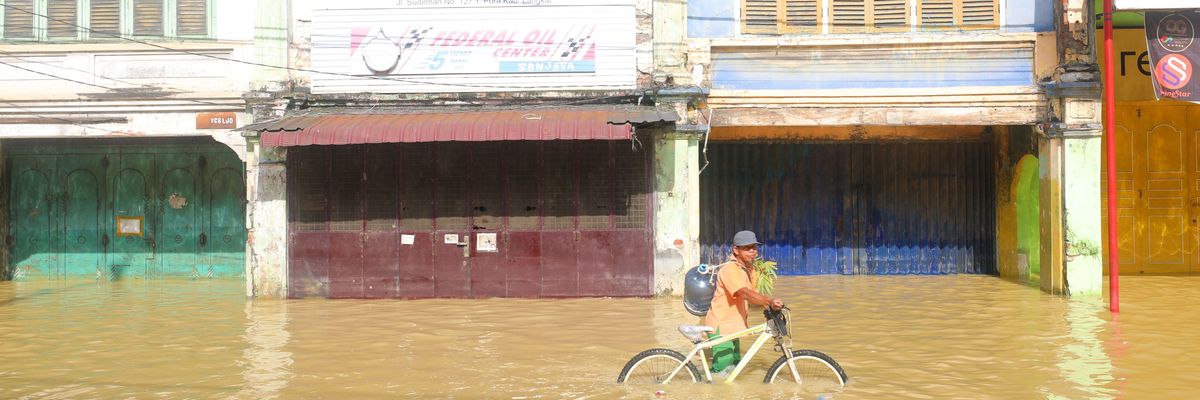
People wade through a flooded road on November 30, 2025, in Sumatra, Indonesia.
(Photo by Li Zhiquan/China News Service/VCG via Getty Images)
Stephen Prager
Dec 01, 2025
COMMON DREAMS
More than 1,100 people across South Asia have died after torrential rains fueled by warming temperatures caused widespread flooding and landslides in recent days.
Following days of unprecedented cyclone conditions, people across Indonesia, Malaysia, and Thailand have been left with their homes destroyed and forced to flee for their lives. A separate cyclone in Sri Lanka has left hundreds more dead.
RECOMMENDED...
Trump’s Climate Policies Could Cause Mass Death of Global Poor, Analysis Warns
The worst devastation has been seen in Indonesia, where Cyclone Senyar has claimed over 500 lives as of Sunday. On the island of Sumatra, rescue teams have struggled to reach stranded people as roads have been blocked by mudslides and high floodwaters. Many areas are still reportedly unreachable.
As Reuters reported Monday, more than 28,000 homes have been damaged across the country and 1.4 million people affected, according to government figures. At least 464 were reported missing as of Sunday.
Other countries in the region were also battered. In Thailand, the death toll was reported at 176 as of Monday, and more than 3 million people are reported to be affected. The worst destruction has been in the southern city of Hat Yai, which on November 21 alone experienced 335mm of rain, its single largest recorded rainfall in over 300 years.
At least two more have been killed in Malaysia, where nearly 12,000 people still remain in evacuation centers.
Sri Lanka has witnessed similar devastation in recent days from another storm, Cyclone Ditwah, that formed around the same time as Senyar. Floods and mudslides have similarly killed at least 330 people, and destroyed around 20,000 homes, while leaving around a third of the country without electricity. More than 200 people are missing, and over 108,000 are in state-run shelters, officials say.
Work has begun in Indonesia to restore damaged roads, bridges, and telecommunication services. But after he visited survivors in Sumatra, Indonesian President Prabowo Subianto said that the work will extend beyond merely recovering from the storm.
“We need to confront climate change effectively,” Prabowo told reporters. “Local governments must take a significant role in safeguarding the environment and preparing for the extreme weather conditions that will arise from future climate change.”
Southeast Asia was top-of-mind for many attendees at last month’s COP30 climate summit in Brazil. As Winston Chow, a professor of urban climate at Singapore Management University and part of the UN’s Intergovernmental Panel on Climate Change (IPCC), told the Straits Times, this is because the region “is highly vulnerable to climate change.”
“As a whole, it faces multiple climate risks and hazards, such as rising temperatures, sea-level rise, increasing droughts and floods, and the intensification of extreme events like typhoons,” he continued.
In recent years, the region has been hit by annual devastating heatwaves, resulting in record-shattering temperatures. In Myanmar, where temperatures exceeded 110°F last April, Radio Free Asia reported that 1,473 people died from extreme heat in just one month.
Floods have likewise grown more deadly in recent years. Just this month, floods killed dozens more people in Vietnam, and a pair of typhoons killed hundreds more in the Philippines and forced over a million people to evacuate their homes.
While it’s difficult to determine the extent to which any one disaster was caused by climate change, in aggregate, they are growing more intense as the planet warms.
“As the world’s oceans and atmosphere warm at an accelerating rate due to the rise in greenhouse gases from burning fossil fuels, tropical cyclones are expected to become more intense,” explained Steve Turton, an adjunct professor of environmental geography at CQUniversity Australia in The Conversation on Sunday. “This is because cyclones get their energy from warm oceans. The warmer the ocean, the more fuel for the storm.”
According to the National Centers for Environmental Information, part of the US National Oceanic and Atmospheric Administration, October 2025 was the third-warmest October on record globally and had above-average tropical cyclone activity.
“The warming atmosphere is supercharging the global water cycle, and peak rainfall rates are increasing,” Turton said. “When more rain falls in a short time, flash flooding becomes more likely.”
At COP30, protesters from across Southeast Asia assembled to demand action from global leaders. On November 10, shortly after her home in Manila was battered by a pair of typhoons, 25-year-old activist Ellenor Bartolome savaged corporations and world leaders who have continued to block global action to reduce fossil fuel usage.
“It gets worse every year, and for every disaster, it is utterly enraging that we are counting hundreds of bodies, hundreds of missing people... while the elite and the corporations are counting money from fossil fuels,” she told attendees as they entered the conference.
Ultimately, many climate activists and scientists left the conference enraged yet again, as the final agreement stripped out all language related to fossil fuels.
“We need to confront climate change effectively,” Indonesia’s president said.
People wade through a flooded road on November 30, 2025, in Sumatra, Indonesia.
(Photo by Li Zhiquan/China News Service/VCG via Getty Images)
Stephen Prager
Dec 01, 2025
COMMON DREAMS
More than 1,100 people across South Asia have died after torrential rains fueled by warming temperatures caused widespread flooding and landslides in recent days.
Following days of unprecedented cyclone conditions, people across Indonesia, Malaysia, and Thailand have been left with their homes destroyed and forced to flee for their lives. A separate cyclone in Sri Lanka has left hundreds more dead.
RECOMMENDED...
Trump’s Climate Policies Could Cause Mass Death of Global Poor, Analysis Warns
The worst devastation has been seen in Indonesia, where Cyclone Senyar has claimed over 500 lives as of Sunday. On the island of Sumatra, rescue teams have struggled to reach stranded people as roads have been blocked by mudslides and high floodwaters. Many areas are still reportedly unreachable.
As Reuters reported Monday, more than 28,000 homes have been damaged across the country and 1.4 million people affected, according to government figures. At least 464 were reported missing as of Sunday.
Other countries in the region were also battered. In Thailand, the death toll was reported at 176 as of Monday, and more than 3 million people are reported to be affected. The worst destruction has been in the southern city of Hat Yai, which on November 21 alone experienced 335mm of rain, its single largest recorded rainfall in over 300 years.
At least two more have been killed in Malaysia, where nearly 12,000 people still remain in evacuation centers.
Sri Lanka has witnessed similar devastation in recent days from another storm, Cyclone Ditwah, that formed around the same time as Senyar. Floods and mudslides have similarly killed at least 330 people, and destroyed around 20,000 homes, while leaving around a third of the country without electricity. More than 200 people are missing, and over 108,000 are in state-run shelters, officials say.
Work has begun in Indonesia to restore damaged roads, bridges, and telecommunication services. But after he visited survivors in Sumatra, Indonesian President Prabowo Subianto said that the work will extend beyond merely recovering from the storm.
“We need to confront climate change effectively,” Prabowo told reporters. “Local governments must take a significant role in safeguarding the environment and preparing for the extreme weather conditions that will arise from future climate change.”
Southeast Asia was top-of-mind for many attendees at last month’s COP30 climate summit in Brazil. As Winston Chow, a professor of urban climate at Singapore Management University and part of the UN’s Intergovernmental Panel on Climate Change (IPCC), told the Straits Times, this is because the region “is highly vulnerable to climate change.”
“As a whole, it faces multiple climate risks and hazards, such as rising temperatures, sea-level rise, increasing droughts and floods, and the intensification of extreme events like typhoons,” he continued.
In recent years, the region has been hit by annual devastating heatwaves, resulting in record-shattering temperatures. In Myanmar, where temperatures exceeded 110°F last April, Radio Free Asia reported that 1,473 people died from extreme heat in just one month.
Floods have likewise grown more deadly in recent years. Just this month, floods killed dozens more people in Vietnam, and a pair of typhoons killed hundreds more in the Philippines and forced over a million people to evacuate their homes.
While it’s difficult to determine the extent to which any one disaster was caused by climate change, in aggregate, they are growing more intense as the planet warms.
“As the world’s oceans and atmosphere warm at an accelerating rate due to the rise in greenhouse gases from burning fossil fuels, tropical cyclones are expected to become more intense,” explained Steve Turton, an adjunct professor of environmental geography at CQUniversity Australia in The Conversation on Sunday. “This is because cyclones get their energy from warm oceans. The warmer the ocean, the more fuel for the storm.”
According to the National Centers for Environmental Information, part of the US National Oceanic and Atmospheric Administration, October 2025 was the third-warmest October on record globally and had above-average tropical cyclone activity.
“The warming atmosphere is supercharging the global water cycle, and peak rainfall rates are increasing,” Turton said. “When more rain falls in a short time, flash flooding becomes more likely.”
At COP30, protesters from across Southeast Asia assembled to demand action from global leaders. On November 10, shortly after her home in Manila was battered by a pair of typhoons, 25-year-old activist Ellenor Bartolome savaged corporations and world leaders who have continued to block global action to reduce fossil fuel usage.
“It gets worse every year, and for every disaster, it is utterly enraging that we are counting hundreds of bodies, hundreds of missing people... while the elite and the corporations are counting money from fossil fuels,” she told attendees as they entered the conference.
Ultimately, many climate activists and scientists left the conference enraged yet again, as the final agreement stripped out all language related to fossil fuels.
Adaptation Finance Low-Balled, Glaring Omission of Just Transition Away from Fossil Fuels in New COP30 Text

Friday November, 21 2025,
Union of Concerned Scientists (UCS)
BELÉM, Brazil - The annual UN climate talks, COP30, are entering their final hours after a fire briefly shut down the venue yesterday. Early this morning, the COP Presidency released a raft of new negotiations text including an updated version of Brazil’s Mutirão, an overarching political package for climate outcomes put forward by the Presidency. Despite its omission from the latest text, there is increasing support for a roadmap for a transition away from fossil fuels, endorsed by over 80 countries. Also this morning, Colombia led a press conference presenting the Belém Declaration on the Transition Away from Fossil Fuels, highlighting the growing number of countries at COP30 calling for a global just transition from fossil fuels to clean energy.
Below is a quote from Dr. Rachel Cleetus, senior policy director for the Climate and Energy program at the Union of Concerned Scientists, who is on the ground at COP30.
“The new texts released this morning are disappointing across the board and the Mutirão text is much weaker than the earlier version. The COP Presidency must intensify its efforts to bridge differences, including in open and transparent plenaries in these final hours, to secure an ambitious outcome at COP30.
“The lack of finance for a clean energy transition and adaptation from richer nations—a critical part of the Paris Agreement—remains an ongoing obstacle to securing bold and fair outcomes. Political leaders from wealthier countries must show a willingness to meet their responsibilities instead of once again forcing those least responsible for the climate crisis into an inequitable compromise.
“Adaptation finance, which is a top priority for climate vulnerable nations coming into this COP, has been low-balled yet again. Lower income countries are unjustly enduring blow-after-blow from climate impacts caused primarily by heat-trapping emissions from rich nations, impacts that will worsen as the world overshoots 1.5 C of global warming. A strong outcome on funding for adaptation is essential to restore trust and deliver a fair outcome at COP30.
“The Mutirão text has completely dropped mention of a roadmap for a just transition away from fossil fuels, a glaring omission of an urgent call championed here by more than 80 countries. Fossil fuels are the root cause of the climate crisis and there is no credible pathway to meet science-based climate goals without a fast, fair, funded phaseout of fossil fuels. Lower income nations cannot make this transition rapidly, nor can they close the vast energy poverty gap that millions suffer from today, without funding from richer countries. Public finance is essential.
“More and more countries are demanding a just transition away from fossil fuels to clean energy to protect people and the planet while building thriving economies. The Belém Declaration led by Colombia is a bold complement to the roadmap nations are calling to include in the Mutirão, setting a high bar for ambition. How we make the transition away from fossil fuels to clean energy is crucial to ensuring this transition serves the needs of people, not fossil fuel interests bent on extracting profits. In addition to ramping up renewable energy and energy efficiency, a just transition must include support for workers currently dependent on fossil fuels for their livelihoods and for communities suffering from fossil fuel pollution.
“At COP28 in Dubai, nations agreed to transition away from fossil fuels. Now at COP30, billed as the ‘implementation COP,’ world leaders must secure a just transition package that sets the world firmly on a path to turn that commitment into reality within this critical decade and beyond.”
The Union of Concerned Scientists is the leading science-based nonprofit working for a healthy environment and a safer world. UCS combines independent scientific research and citizen action to develop innovative, practical solutions and to secure responsible changes in government policy, corporate practices, and consumer choices.
Friday November, 21 2025,
Union of Concerned Scientists (UCS)
BELÉM, Brazil - The annual UN climate talks, COP30, are entering their final hours after a fire briefly shut down the venue yesterday. Early this morning, the COP Presidency released a raft of new negotiations text including an updated version of Brazil’s Mutirão, an overarching political package for climate outcomes put forward by the Presidency. Despite its omission from the latest text, there is increasing support for a roadmap for a transition away from fossil fuels, endorsed by over 80 countries. Also this morning, Colombia led a press conference presenting the Belém Declaration on the Transition Away from Fossil Fuels, highlighting the growing number of countries at COP30 calling for a global just transition from fossil fuels to clean energy.
Below is a quote from Dr. Rachel Cleetus, senior policy director for the Climate and Energy program at the Union of Concerned Scientists, who is on the ground at COP30.
“The new texts released this morning are disappointing across the board and the Mutirão text is much weaker than the earlier version. The COP Presidency must intensify its efforts to bridge differences, including in open and transparent plenaries in these final hours, to secure an ambitious outcome at COP30.
“The lack of finance for a clean energy transition and adaptation from richer nations—a critical part of the Paris Agreement—remains an ongoing obstacle to securing bold and fair outcomes. Political leaders from wealthier countries must show a willingness to meet their responsibilities instead of once again forcing those least responsible for the climate crisis into an inequitable compromise.
“Adaptation finance, which is a top priority for climate vulnerable nations coming into this COP, has been low-balled yet again. Lower income countries are unjustly enduring blow-after-blow from climate impacts caused primarily by heat-trapping emissions from rich nations, impacts that will worsen as the world overshoots 1.5 C of global warming. A strong outcome on funding for adaptation is essential to restore trust and deliver a fair outcome at COP30.
“The Mutirão text has completely dropped mention of a roadmap for a just transition away from fossil fuels, a glaring omission of an urgent call championed here by more than 80 countries. Fossil fuels are the root cause of the climate crisis and there is no credible pathway to meet science-based climate goals without a fast, fair, funded phaseout of fossil fuels. Lower income nations cannot make this transition rapidly, nor can they close the vast energy poverty gap that millions suffer from today, without funding from richer countries. Public finance is essential.
“More and more countries are demanding a just transition away from fossil fuels to clean energy to protect people and the planet while building thriving economies. The Belém Declaration led by Colombia is a bold complement to the roadmap nations are calling to include in the Mutirão, setting a high bar for ambition. How we make the transition away from fossil fuels to clean energy is crucial to ensuring this transition serves the needs of people, not fossil fuel interests bent on extracting profits. In addition to ramping up renewable energy and energy efficiency, a just transition must include support for workers currently dependent on fossil fuels for their livelihoods and for communities suffering from fossil fuel pollution.
“At COP28 in Dubai, nations agreed to transition away from fossil fuels. Now at COP30, billed as the ‘implementation COP,’ world leaders must secure a just transition package that sets the world firmly on a path to turn that commitment into reality within this critical decade and beyond.”
The Union of Concerned Scientists is the leading science-based nonprofit working for a healthy environment and a safer world. UCS combines independent scientific research and citizen action to develop innovative, practical solutions and to secure responsible changes in government policy, corporate practices, and consumer choices.

No comments:
Post a Comment