Daily Mail to bag another right-wing national, tightening its pernicious grip an already lopsided media
“There are lots of grounds to be concerned about this on reasons of plurality, for competition, but more than anything else this Labour government should consider whether it is good for Britain, and good for its democracy."
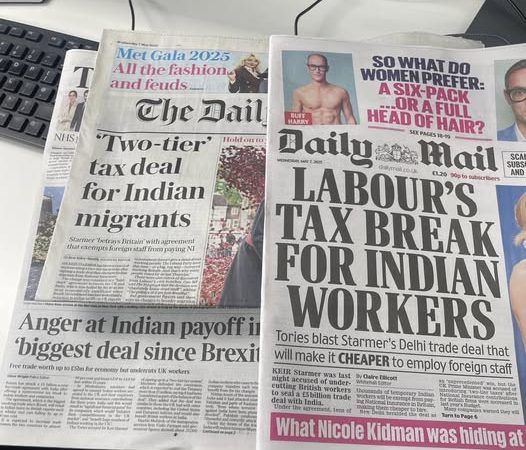
Just when it seemed Britain’s media landscape couldn’t tilt much further to the right, news broke that the Daily Mail’s owner is set to buy the Telegraph. The move marks the apparent end of a turbulent two-and-a-half-year battle for the paper, which was put up for sale after the Barclay family defaulted on debts.
On 22 November, the Daily Mail and General Trust (DMGT) confirmed it had agreed a £500 million deal with the Telegraph’s owners, RedBird IMI. The announcement came just days after RedBird Capital, the US group led by Gerry Cardinale, withdrew its own bid amid pressure from inside the Telegraph newsroom to scrutinise its alleged links to China. An earlier RedBird offer, backed by Abu Dhabi, had also prompted calls for government intervention over concerns about foreign state influence in the British press.
If approved, the deal would bring the Telegraph into the same stable as the Daily Mail, Mail on Sunday, iPaper, and Metro, tightening DMGT’s grip on yet another major national title. The company insists the Telegraph will retain editorial independence, but critics see the acquisition as yet another step toward an ever more concentrated, and ever more right-right media landscape.
Tom Baldwin, former political editor of the Sunday Telegraph and ex-communications director to Ed Miliband as Labour leader, said:
“Britain’s media is already tilted dangerously to a homogenous, right-wing, angry point of view. A merger between the Mail and the Telegraph will only exacerbate that.
“There are lots of grounds to be concerned about this on reasons of plurality, for competition, but more than anything else this Labour government should consider whether it is good for Britain, and good for its democracy, for the Daily Mail to strengthen its pernicious grip on Britain’s media.”
Former Labour leader Lord Kinnock shared the same concerns: “Everyone should be able to recognise that the creation of a right-wing press giant will plainly not improve balance of opinion and presentation.
“Indeed, it is likely to diminish competition and diversity in providing information and opinion – the most precious of all commodities.
“That would harm discernment and, therefore, democracy. I hope that the competition authority will attach prime significance to that reality.”
Online, many noted how ideologically allied the two papers are already. One Reddit user said that the Telegraph is “just the Daily Mail wearing a cravat.”
29 November, 2025
LEFT FOOT FORWARD
“There are lots of grounds to be concerned about this on reasons of plurality, for competition, but more than anything else this Labour government should consider whether it is good for Britain, and good for its democracy."
Just when it seemed Britain’s media landscape couldn’t tilt much further to the right, news broke that the Daily Mail’s owner is set to buy the Telegraph. The move marks the apparent end of a turbulent two-and-a-half-year battle for the paper, which was put up for sale after the Barclay family defaulted on debts.
On 22 November, the Daily Mail and General Trust (DMGT) confirmed it had agreed a £500 million deal with the Telegraph’s owners, RedBird IMI. The announcement came just days after RedBird Capital, the US group led by Gerry Cardinale, withdrew its own bid amid pressure from inside the Telegraph newsroom to scrutinise its alleged links to China. An earlier RedBird offer, backed by Abu Dhabi, had also prompted calls for government intervention over concerns about foreign state influence in the British press.
If approved, the deal would bring the Telegraph into the same stable as the Daily Mail, Mail on Sunday, iPaper, and Metro, tightening DMGT’s grip on yet another major national title. The company insists the Telegraph will retain editorial independence, but critics see the acquisition as yet another step toward an ever more concentrated, and ever more right-right media landscape.
Tom Baldwin, former political editor of the Sunday Telegraph and ex-communications director to Ed Miliband as Labour leader, said:
“Britain’s media is already tilted dangerously to a homogenous, right-wing, angry point of view. A merger between the Mail and the Telegraph will only exacerbate that.
“There are lots of grounds to be concerned about this on reasons of plurality, for competition, but more than anything else this Labour government should consider whether it is good for Britain, and good for its democracy, for the Daily Mail to strengthen its pernicious grip on Britain’s media.”
Former Labour leader Lord Kinnock shared the same concerns: “Everyone should be able to recognise that the creation of a right-wing press giant will plainly not improve balance of opinion and presentation.
“Indeed, it is likely to diminish competition and diversity in providing information and opinion – the most precious of all commodities.
“That would harm discernment and, therefore, democracy. I hope that the competition authority will attach prime significance to that reality.”
Online, many noted how ideologically allied the two papers are already. One Reddit user said that the Telegraph is “just the Daily Mail wearing a cravat.”
Telegraph admits Brexit is an ‘unmitigated economic disaster’
A new report also found that UK business investment is 12 to 18 per cent lower than it would have been if Britain had stayed in the EU.
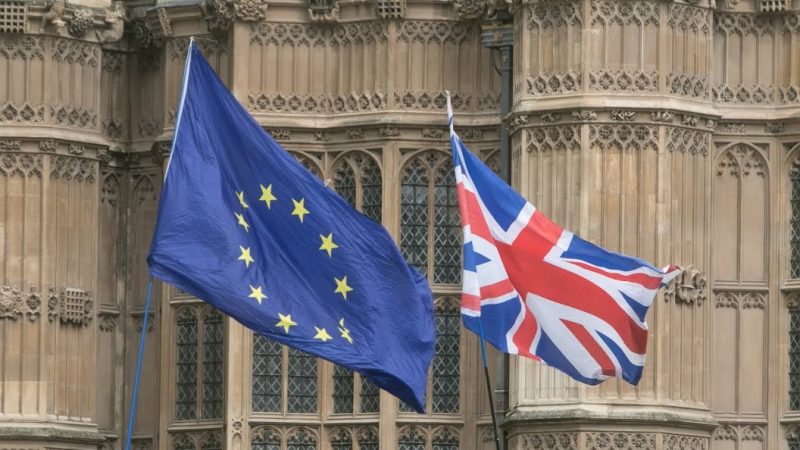
The penny has finally dropped at the Telegraph, after the newspaper was forced to admit that Brexit has been an ‘unmitigated economic disaster’.
Amid mounting evidence of the economic harm done by Brexit, with one recent study highlighting how it had reduced GDP by as much as 8%, a comment piece in the right-wing paper which campaigned to leave the EU, lamented the ‘disastrous economic consequences’ of Brexit and its failure to deliver a much promised ‘national economic renewal’.
Writing in the comment section, Jeremy Warner – who serves as the Assistant Editor at The Telegraph, wrote: “From an economic perspective at least, Brexit has so far proved close to disastrous. If leaving the EU was supposed to be a moment of national economic renewal, it has comprehensively failed to deliver as it was supposed to.”
It comes after the National Bureau for Economic Research (NBER), produced a report based on nearly a decade of data since the referendum, showing how the UK’s GDP (Gross Domestic Product) had fallen by as much as 8% from where it should be since 2016.
The NBER says that increased uncertainty and reduced demand following the decision to leave had an adverse effect on the UK economy. It stated: “We estimate that investment was reduced by between 12% and 18%, employment by 3% to 4% and productivity by 3% to 4%. These large negative impacts reflect a combination of elevated uncertainty, reduced demand, diverted management time, and increased misallocation of resources from a protracted Brexit process.”
Last month, a new report also found that UK business investment is 12 to 18 per cent lower than it would have been if Britain had stayed in the EU.
As the disastrous economic impacts of leaving the EU become ever clearer, new data released by the economists at Stanford University, the Bank of England, and the National Institute of Economic and Social Research has found that business investment loss by this year could be £275 billion or £400 billion.
Basit Mahmood is editor of Left Foot Forward
Yesterday
Left Foot Forward
A new report also found that UK business investment is 12 to 18 per cent lower than it would have been if Britain had stayed in the EU.
The penny has finally dropped at the Telegraph, after the newspaper was forced to admit that Brexit has been an ‘unmitigated economic disaster’.
Amid mounting evidence of the economic harm done by Brexit, with one recent study highlighting how it had reduced GDP by as much as 8%, a comment piece in the right-wing paper which campaigned to leave the EU, lamented the ‘disastrous economic consequences’ of Brexit and its failure to deliver a much promised ‘national economic renewal’.
Writing in the comment section, Jeremy Warner – who serves as the Assistant Editor at The Telegraph, wrote: “From an economic perspective at least, Brexit has so far proved close to disastrous. If leaving the EU was supposed to be a moment of national economic renewal, it has comprehensively failed to deliver as it was supposed to.”
It comes after the National Bureau for Economic Research (NBER), produced a report based on nearly a decade of data since the referendum, showing how the UK’s GDP (Gross Domestic Product) had fallen by as much as 8% from where it should be since 2016.
The NBER says that increased uncertainty and reduced demand following the decision to leave had an adverse effect on the UK economy. It stated: “We estimate that investment was reduced by between 12% and 18%, employment by 3% to 4% and productivity by 3% to 4%. These large negative impacts reflect a combination of elevated uncertainty, reduced demand, diverted management time, and increased misallocation of resources from a protracted Brexit process.”
Last month, a new report also found that UK business investment is 12 to 18 per cent lower than it would have been if Britain had stayed in the EU.
As the disastrous economic impacts of leaving the EU become ever clearer, new data released by the economists at Stanford University, the Bank of England, and the National Institute of Economic and Social Research has found that business investment loss by this year could be £275 billion or £400 billion.
Basit Mahmood is editor of Left Foot Forward

No comments:
Post a Comment