Saturday, November 22, 2025

The Real Models for Sustainability in Brazil Are to Be Found Outside COP30

These Amazonian communities don’t count on Brazil or UN conferences to protect them. They defend themselves.

COP30 is part and parcel of the political and economic powers that have caused the crisis. It’s high time to declare: We don’t need them.

November 21, 2025

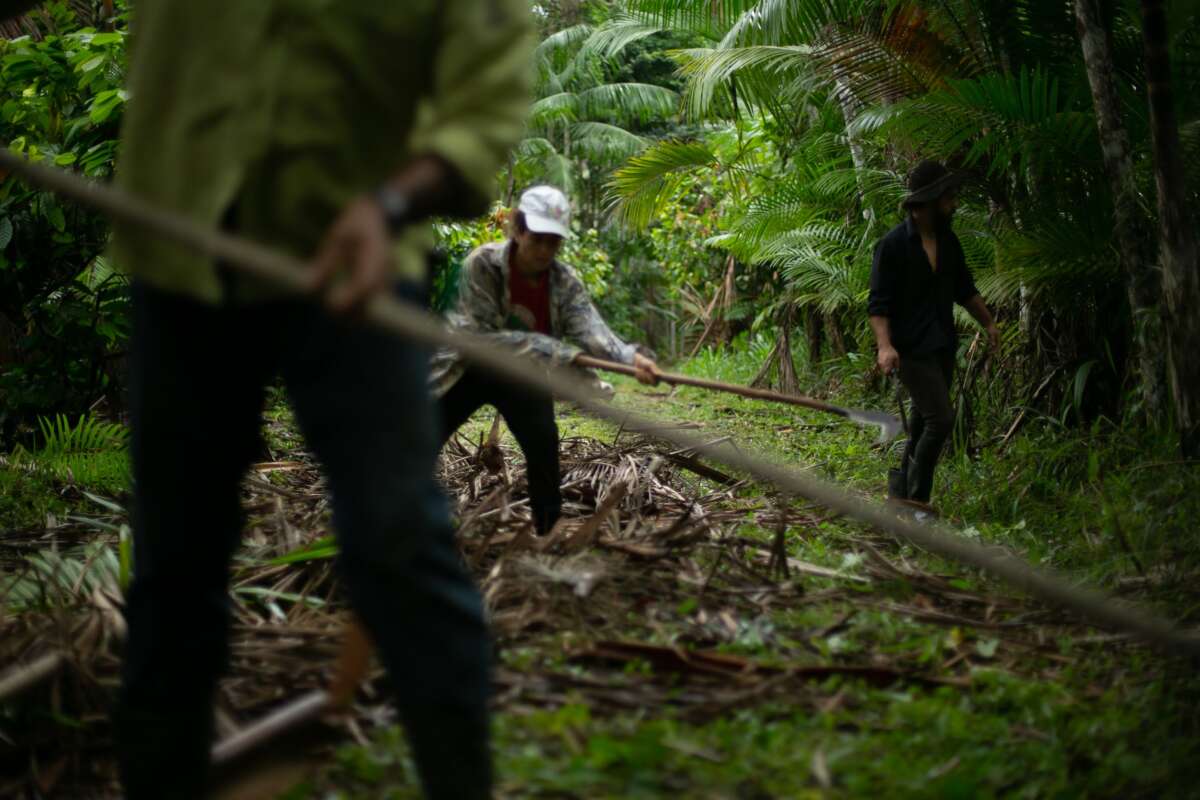
A cabruca in Terra Vista during the chocolate harvest.Teia dos Povos

A crowd of protesters — largely Indigenous Amazonian people — marched into a restricted area of the 30th annual United Nations Climate Change Conference (COP30) this month in Belém, Brazil, declaring that their forests are not for sale.

“We want our lands free from agribusiness, oil exploration, illegal miners and illegal loggers,” one Tupinamba community leader proclaimed.

Global carbon emissions continue to rise, and deforestation is moving full speed ahead across Brazil. Even amid all the pollution and destruction, however, there are still some causes for hope, but one has to look outside the heavily guarded doors of COP30, which took place from November 10 to 21, to find them.

The lands of the Ka’apor people are an island of green in a sea of scorched earth and monocrop plantations. They live in eastern Amazonia, most of which is already deforested. One reason they still have a home — and a thriving ecosystem — is because they haven’t relied on governments or private investors to protect their territory.

“Things function the same way as when this was an empire, only the names have changed. It’s the same structure.”

Since 2013, they have kept the loggers out and restored 80 percent of their deforested lands by turning to direct action, closing logging access roads, burning bridges, torching hundreds of logging trucks, and temporarily capturing hundreds of loggers, stripping them and tying them up before expelling them from the territory. Their territorial defense has included kicking out the FUNAI, the Brazilian government agency responsible for protecting Indigenous peoples, which they accuse of complicity with loggers. The Ka’apor are also eliminating influences from the state — for example, through the abolition of the single-chief system of governance imposed by FUNAI in favor of their traditional Tuxa ta Pame, a more decentralized council system.



Big Banks Poured $2B Into Oil and Gas Financing in the Amazon Since Last Year
“These investments are complicit in genocide,” said Jonas Mura, chief of the Gavião Real Indigenous Territory in Brazil. By Julia Conley , CommonDreams October 21, 2025


A key part of their strategy has been the creation of protection areas around the perimeters of their forest. “The families move here to where the loggers were entering and they stay here,” explains Marakaja, a community leader who withheld his legal name as a defense against repression. “We’ll keep supporting them going forward. We’ll keep closing access roads, creating protection areas, that’s how we do it.”

The Ka’apor resistance has not come without a price. Between 2008 and 2022, at least 11 members of their community have been brutally assassinated, with no one held accountable. The originator of the strategy of protection areas, Sarapo, died of apparent poisoning in May 2022. Hours after a settler living in the area brought him a fish as a present, Sarapo began vomiting blood and he died shortly thereafter. His community commemorates his death every year, and continues to use his strategy for self-defense.

Community leader Jerá Guarani speaks with visitors in the recovered Guarani community of Kalipety.Kasa Invisível archive

It’s a similar situation in the Atlantic Forest, home to the Guarani and other Indigenous peoples. Jerá Guarani, who is part of the council of Kalipety, a community south of São Paulo, told Truthout her community had to protest, block roads, and retake their lands by force because the government wasn’t honoring its own laws. Recounting a mobilization that took place in 2013, when Jerá’s community took inspiration from the Movimento Passo Livre — a movement advocating for free fares for public transportation — Jerá said her community began using blockades to “directly take back our land.” During that mobilization “our movement became something much more widespread, decentralized, and not patriarchal,” she told Truthout.

The climate conference, though, is far from the front lines in the Amazon, and it has proven a perfect stage for the FUNAI to wash its image. Indigenous empowerment is a principal theme at the COP30, and the FUNAI is hosting media-focused events with Indigenous representatives from around the world throughout the conference. And yet, on the ground, numerous Indigenous communities speak of FUNAI as something between an active obstacle and an unhelpful, bureaucratic burden.
COP30 vs. the Front Lines

In Kalipety and other communities, the Guarani are putting their newly regained land to good use. This means bringing back traditional practices of agrofloresta, or forest gardening. Mixing field and forest, they grow bananas, corn, beans, and many other crops together with trees that help anchor and replenish the soil and provide habitat for other species.

Instead of siloing themselves into single-issue activism, the Guarani and Ka’apor peoples address multiple overlapping concerns: helping bring Indigenous people out of material poverty while revitalizing their culture, strengthening local ecosystems as well as the resilience of human and other populations in the face of climate or economic disaster, and drawing carbon out of the atmosphere and back into the soil and the forests.


Even amid all the pollution and destruction, however, there are still some causes for hope, but one has to look outside the heavily guarded doors of COP30.

The UN itself bemoans the fact that Indigenous people “safeguard 80 per cent of the planet’s remaining biodiversity – yet receive less than one per cent of international climate funding.” This discrepancy undermines the fundamental assumptions of the UN approach, which is predominantly reliant on investment as a tool for change. Consider how much Indigenous peoples around the world do with so little money. Contrast that with green energy, which is a hub of public and private investment. The green energy boom is the impetus for a devastating wave of land theft and new mining projects, which disproportionately harm Indigenous communities and the rural poor. And while recovery of Indigenous lands and traditions has clear, positive impact on the environment, green energy has actually increased fossil fuel production.

Indigenous communities do need resources, though investment bankers and governments might not be the best allies to turn to. “If you wait for the government to do something, you’ll still be sitting around when you die,” Gah Te Iracema, a Kaingang community leader from the south of Brazil, told Truthout at COP30. The community she helps lead began using direct action three years ago to take back their lands. “Things function the same way as when this was an empire, only the names have changed. It’s the same structure,” she said.

The inflicted poverty of colonization is a major obstacle to restoring land and ancestral techniques. How, for example, can a community practice traditional food and construction techniques when the plants they once relied on have been exterminated by centuries of an economy based on mining and monocrop plantations?
Communities Develop Their Own Solutions

Teia dos Povos, the Web of the Peoples, is a growing network of anticapitalist communities that are addressing that problem through practices of solidarity and mutual aid across a growing network of autonomous communities that include land occupations by the urban and peri-urban poor, Indigenous communities, and quilombos.

In communities thriving across Brazil, human food systems work with the ecology, not in competition.


Terra Vista is one such community. Located on an abandoned chocolate plantation that had monocropped the land to death, several hundred families occupied the terrain in 1992 and held it over the course of two contentious years of conflict and several violent evictions by the police. Terra Vista is now home to more than 300 people, according to community members. When they took the land back, only grass grew there. Now, it’s a vibrant forest. Snubbing the failure of capitalist agriculture, they grow chocolate, but unlike the failed plantation system, they follow Indigenous methods, planting the diminutive chocolate trees in the understory with banana or açaí. Then they plant taller trees like jacarandá, jucá, and brazilwood. This system, called cabruca, protects the soil and creates a richer habitat. It also provides the community with other sources of food, fuel, dyes, and construction material.


A cabruca in Terra Vista during the chocolate harvest.Teia dos Povos

A cabruca in Terra Vista during the chocolate harvest.Teia dos Povos

Aside from their own chocolate factory and the schools that many children and youth in the broader region attend, Terra Vista is a laboratory for spreading food autonomy across the continent. Bruno, a longtime organizer with Teia dos Povos who asked to remain anonymous due to the risk of repression he faces, hosted me in his small apartment. He had been lugging 100 kilos of traditional seeds to Mato Grosso do Sul, over 2,000 kilometers away, to help several new communities jump start their own food systems.

Terra Vista produced 1,000 kilos of corn seed just last year, for the community’s own reserves and to help other communities. Now it is preparing fields for squash and bean seeds. Terra Vista rescues traditional seed varieties from extinction and breeds new seeds suited to different climates and soil types. Bruno showed me a patch where they’re growing milho branco, a type of white corn sacred to the Guarani Kaiowá. They call it avati moroti, father of the seeds. For traditional Guarani Kaiowá agriculture, white corn must be planted before anything else, but many communities haven’t had access to the seeds for 40 years or more.

Such a transformative, multifaceted approach to something as vital and complex as food seems impossible within COP30, where industry lobbyists and government officials who have never grown food nor been displaced from their land are the ones planning the agenda and deciding which proposals to push.

A decentralized, grassroots approach adapts well to major cities, where housing is often the point of entry for movements to achieve an ecological autonomy. In Belo Horizonte, Brazil’s third-largest metropolitan area, an estimated 100,000 people have won themselves communal housing through direct action, according to housing organizers in the city. Occupying vacant buildings in the center or vacant terrains in the periphery, residents provide themselves not only with free housing, but with living spaces that include distribution projects for clothing and other resources, free classes, film screenings, and event spaces. On the urban margins, community members have built entire neighborhoods through practices of direct action, solidarity, and mutual aid. In both settings, wherever the inhabitants can find the space, one can expect to see gardens, chickens, and composting projects, improving the access of the urban poor to nutritious food and also reminding everyone involved that ecosystemic relationships also exist in the cities.

Belo Horizonte’s housing movement empowers the Black, Indigenous, and formerly houseless people who play a vital role within it. One squatted apartment block in Belo Horizonte’s center, a Ocupação Maria do Arraial, is named after the Black community leader who was evicted in the late 19th century to build the governor’s mansion for the state of Minas Gerais. As I’ve written elsewhere, this kind of intergenerational memory, of intentional connection to lineages of struggle, sharpens our analysis and our resolve by connecting us to vast bodies of collective experience.
Rejecting COP30’s False Solutions and Embracing Real Solutions

All of these movements become more inspiring when we reflect on what would happen if social movements around the planet rejected the climate conferences and green capitalism, and instead dedicated all their passion and resources to building and connecting grassroots, ecosystemic projects. Everything from construction to agriculture could change radically.

Concrete production is responsible for 6 percent of global greenhouse gas emissions, but in these grassroots movements, existing buildings are maintained and new homes are built with recycled or natural materials. Capitalist agriculture is responsible for around 30 percent of global emissions, along with a host of related problems like deforestation, depletion and contamination of soil and water, and abusive labor conditions. However, in communities thriving across Brazil, human food systems work with the ecology, not in competition. They take carbon out of the atmosphere, restore the soil and the ecosystem, bring forests back, and create food autonomy, turning agriculture into a source of dignity and resilience.

With a dramatic shift toward localized production, the transportation sector (13.7 percent of global emissions) would need far less fuel. With cultures of art and entertainment no longer based on buying commodities, and with building techniques and life rhythms specifically adapted to our local climates, the energy and manufacturing sectors (29.7 and 12.7 percent of global emissions, respectively) could also stand a major reduction.

Finally, if we ripped up most of the asphalt needed by car culture and turned the monocrop plantations of genetically modified pine and eucalyptus back into real forests, in a matter of years we could transition to a society not with lower emissions, but a society with negative emissions, in which no one wanted for food, housing, health care, or dignity.

These movements show that we don’t have to wait another 30 years, powerless in the face of institutions that make big promises but are only successful at finding new ways to profit. We can take back the spaces we live in, transform them, and once again become reliable stewards of the ecosystems we depend on for survival.

COP30 is part and parcel of the political and economic powers that have caused the crisis. It’s high time to declare: We don’t need them.


Truthout is a vital news source and a living history of political struggle. If you think our work is valuable, support us with a donation of any size.

This article is licensed under Creative Commons (CC BY-NC-ND 4.0), and you are free to share and republish under the terms of the license.


Peter Gelderloos

Peter Gelderloos is an independent researcher, writer, and social movement participant. He is the author of The Solutions are Already Here: Strategies for Ecological Revolution from Below, Anarchy Works, The Failure of Nonviolence, and other titles. He is currently a guest fellow at the IFK-Linz.
‘Brazil Just Succeeded Where America Failed’ as Coup-Plotting Ex-Pres Bolsonaro Arrested

Trump ally Jair Bolsonaro was taken into custody over concerns he might attempt to flee the country after he tampered with his ankle monitor.


Protesters celebrate the arrest of former Brazilian President Jair Bolsonaro with drinks in front of Bolsonaro’s supporters outside the Brazilian Federal Police headquarters in Brasilia on November 22, 2025, where the ex-president had been transferred earlier.
(Photo by Sergio Lima / AFP via Getty Images)


Olivia Rosane
Nov 22, 2025
C0MMON DREAMS

Former Brazilian President Jair Bolsonaro, a right-wing ally of US President Donald Trump, was arrested in Brazil early Saturday morning following concerns he might flee the country.

Bolsonaro was under house arrest awaiting the result of his appeal after he was tried and sentenced to 27 years in prison for plotting a coup and the assassination of current Brazilian President Luiz Inácio Lula da Silva and other officials.

“Brazil just succeeded where America failed. Bringing a former president who assaulted democracy to justice,” filmmaker Petra Costa wrote on social media, as The Guardian reported.

Brazilian Supreme Court Justice Alexandre de Moraes ordered the arrest after discovering Bolsonaro’s ankle monitor had been tampered with at 12:08 am local time Saturday. Bolsonaro’s lawyers said that this was not the case, but Bolsonaro later admitted to taking a soldering iron to the device “out of curiosity” in a video released by the Supreme Court.

“This isn’t curiosity, it’s a crime,” said State Deputy to the Legislative Assembly of Rio de Janeiro Renata da Silva Souza, on social media. “Bolsonaro is not a victim: He is convicted, ineligible, and is IMPRISONED. Turning this absurdity into a justification is a mockery of Brazilian democracy.”


The ex-president’s arrest also came the same day that his son Flávio Bolsonaro had planned a protest outside the Brasilia condo where Bolsonaro has been living.

De Moraes said Bolsonaro’s tampering with his monitor fed his suspicions that he would attempt to flee the country in “the confusion that would be caused by a demonstration organized by his son,” according to The Associated Press.

“He is located about 13 kilometers (8 miles) away from where the United States of America embassy lies, in a distance that can be covered in a 15-minute drive,” de Moraes added.

Trump, who has sanctioned de Moraes and supports Bolsonaro, reacted to news of the arrest by saying it was “too bad.”

Bolsonaro was arrested around 6:00 am local time and is now detained in an approximately 130-square-foot room in the federal police headquarters in Brasilia, according to Reuters. The entire five-judge panel that originally sentenced Bolsonaro will review his detention on Monday.

Institutional Relations Minister Gleisi Hoffmann was the highest-ranking member of the current government to comment on the detention, according to Reuters.

Hoffmann wrote on social media:
The pretrial detention of Jair Bolsonaro strictly follows the rites of due process of law, overseen by the Federal Supreme Court and the Attorney General’s Office in each stage of the criminal action against the attempted coup d’état in Brazil. The decision by Minister Alexandre de Moraes is grounded in the real risks of flight by the leader of the coup organization, as well as the imminent finality of his conviction for the serving of his sentence. It also rightly takes into account the background of a process marked by violent attempts to coerce the Judiciary, such as the tarifaço and the Magnitsky sanctions. In a democracy, justice must be upheld.

Ordinary Brazilians also celebrated the news of Bolsonaro’s arrest, with some uncorking champagne bottles outside police headquarters.


“The message to Brazil, and to the world, is that crime doesn’t pay,” Reimont Otoni, a Workers’ Party congressman, said.
This CEO knows Trump fried the economy — but he helped

Robert Reich
November 22, 2025 
RAW STORY


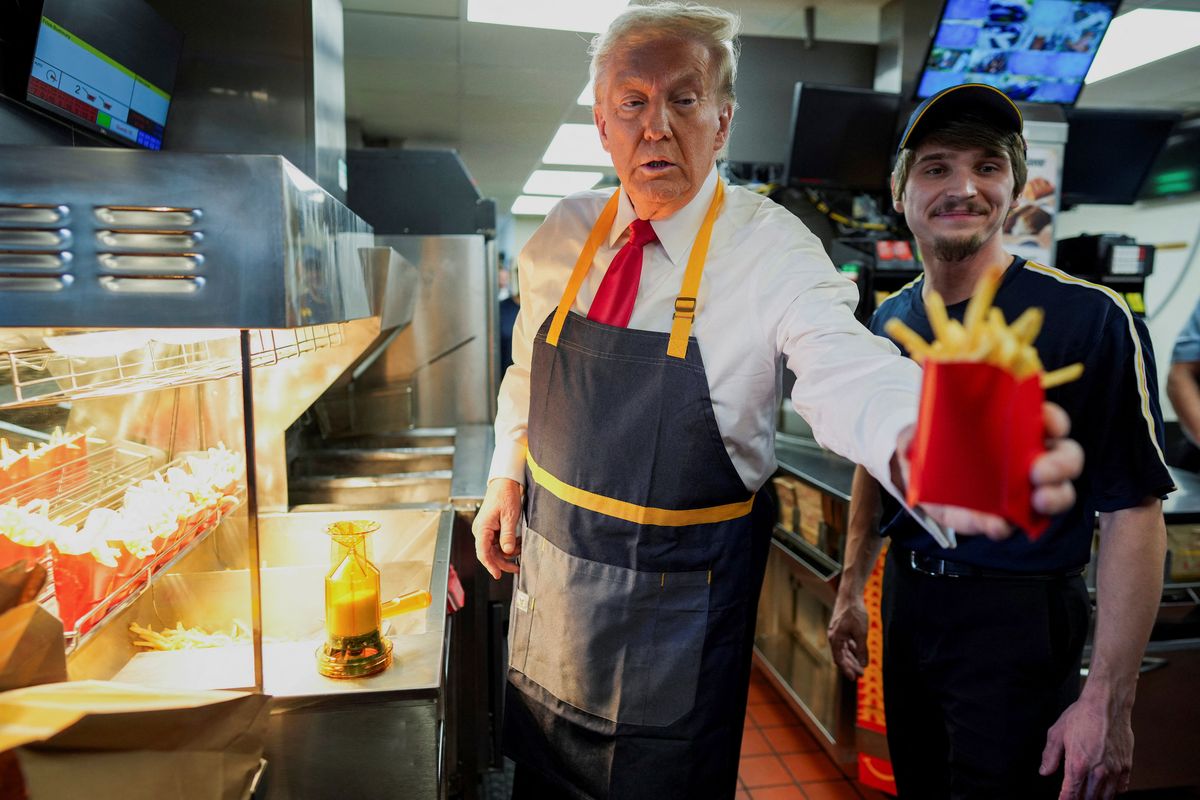
Donald Trump during a visit to McDonald's in Feasterville-Trevose, PennsylvaniaDoug Mills/REUTERS


The Big Mac has a big problem. According to the CEO of McDonald’s, fast food chains saw a double-digit dip in visits from lower- and middle-income customers in the first quarter of 2025.


The reason? He says we’re becoming a two-tiered economy, and lower- and middle-income customers can no longer afford fast food.

While the stock market is riding high and the Trump administration is slashing taxes for corporations and the rich, nothing is “trickling down” to everyday Americans.


Frankly, it’s a little galling to hear the CEO of McDonald’s complaining about income inequality, because corporations like McDonald’s are making the problem worse.

They pay their workers so little that many have to rely on food stamps and Medicaid to make ends meet — for which the rest of us pay in our taxes.

Meanwhile, their CEOs are paid roughly 1,000 times more than their typical employee.

Big corporations have a history of union busting, further reducing the power of their workers to negotiate a living wage.

Finally, they make the entire economy fragile. As wealth concentrates in the richest 10 percent, the rest of America can’t afford to buy enough to keep the economy running.

So what can we do about this? End the trickle-down hoax once and for all: Tax cuts for the wealthy make the rest of us worse off, not better.


Fight for unions. In the 1950s, when America had the biggest middle class the world had ever seen, a third of all private-sector workers were unionized. Now, it’s 6 percent.

Raise the minimum wage to $20 an hour (and higher for big corporations with billions in profits that pay their CEOs more than $20 million a year).

Bust up big monopolies with the power to keep prices high.


Demand corporations share their profits with workers, so that when corporations do better, their workers do, too.

In sum: Build an economy that works for everyone, not just those at the top. Because if we don’t, we’re all cooked.

***


Please watch our video — and share.


Robert Reich was a professor of public policy at Berkeley and former secretary of labor. His writings can be found at https://robertreich.substack.com/.

Robert Reich's new memoir, Coming Up Short, can be found wherever you buy books. You can also support local bookstores


Trump reverses course in 'remarkable admission’ of failed policy: economist

Alexander Willis
November 22, 2025 
RAW STORY


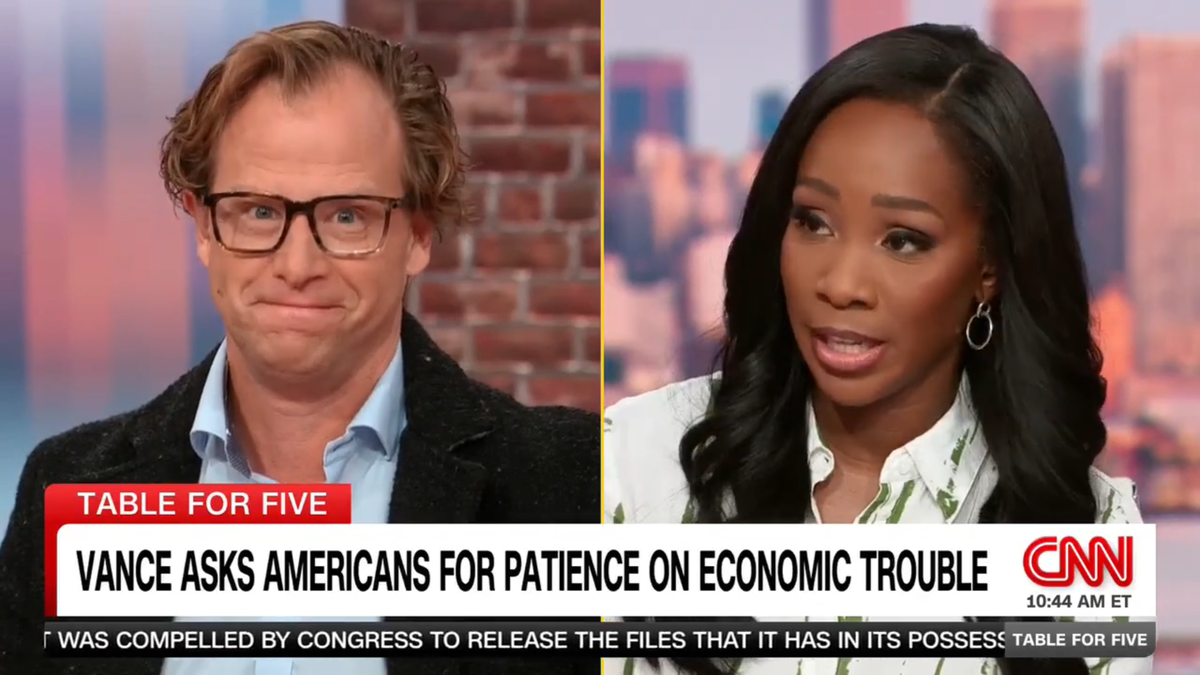
Economist Justin Wolfers (left) appears on CNN's "Table for Five,"
 Nov. 22, 2025. (Screengrab / CNN)


President Donald Trump reversed course this week after excluding certain Brazilian goods from his so-called reciprocal tariffs, a reversal that left one economist stunned on Saturday over what he called a “remarkable admission.”

“‘'I tried a policy, and oh, everyone tells me I want the cost of living to be lower, let me reverse it,’” said economist Justin Wolfers, appearing on CNN’s “Table for Five” on Saturday. “The only implication is that he's learned what [we] learned in Econ 101: tariffs raise prices!”

Trump had initially levied high tariffs on Brazil in part over its prosecution of former Brazilian President Jair Bolsonaro, who has since been sentenced to nearly three decades in prison over his role in an attempted coup after his election loss in 2023. Bolsonaro has long been an ally to Trump, and his arrest was met poorly in the White Hous


And, with Trump’s reversal on tariffs, the president had also delivered a major “political victory” to Brazil’s current left-wing president Luiz Inácio Lula da Silva.

“Trump’s decision to remove many tariffs on Brazilian products is a significant political victory for the Lula administration ahead of next year’s presidential elections – and a vindication of Brazil’s choice to pursue a calm and pragmatic negotiation strategy vis-à-vis Trump,” wrote Brazilian professor Iliver Stuenkel in a social media post this week on X.
Trump’s decision to roll back select tariffs on Brazil was made via an executive order
on Thursday, and will impact goods such as beef, fruit, coffee and coca, all of which saw prices soar in the United States in recent months.


‘The Main Course Is Inflation’: Thanksgiving Costs Surge Under Trump

Stephen Prager,
 Common Dreams
November 22, 2025


FILE PHOTO: Republican presidential nominee and former U.S. President Donald Trump reacts during a rally in Greensboro, North Carolina, U.S. October 22, 2024. REUTERS/Carlos Barria/File Photo

As President Donald Trump attempts to claim the mantle of “affordability” and boasts that grocery prices are “way down,” a new report tracking the price of several Thanksgiving staples showed they have increased by 10% over the last year, more than three times the rate of inflation.

On social media, the president recently trumpeted that “2025 Thanksgiving dinner under Trump is 25% lower than 2024 Thanksgiving dinner under [President Joe] Biden, according to Walmart.” Claiming that grocery prices are down this year, he added: “AFFORDABILITY is a Republican Stronghold. Hopefully, Republicans will use this irrefutable fact!”

Trump was technically correct that Walmart had reduced the cost of its Thanksgiving dinner by about 25%. What he neglected to mention, however, was that it had also considerably reduced the meal’s size, down from 29 individual items to 22.

The most recent Consumer Price Index (CPI) data published in September by the Bureau of Labor Statistics, meanwhile, shows that at-home grocery prices have actually risen by 2.7%. That, not the spin coming from the White House, is what voters appear to be absorbing as Thanksgiving approaches.

In a poll conducted last week by Data for Progress, 53% said they felt it would be harder to afford a typical Thanksgiving meal than last year, while just 13% said it would be easier. Meanwhile, over a third said they were compensating for rising costs by buying fewer items.

That survey was done in collaboration with the Groundwork Collaborative, the Century Foundation, and the American Federation of Teachers (AFT), which published a report on Friday showing the skyrocketing cost of several holiday staples over the past year, in large part due to Trump’s aggressive tariff regime.

While the cost of a 15-lb. frozen turkey has remained roughly steady, the report notes that this is a bit of a mirage.

“Typically, retailers use frozen turkeys as a loss leader, discounting them to get customers in the door to purchase the rest of their Thanksgiving meal, so it’s no surprise that frozen turkey prices are steady,” it explains. “However, wholesale prices for frozen turkeys have soared 75% over the past year, according to research from Purdue University, and fresh turkey prices are up 36% and likely to continue rising.”

The report attributes these sharp increases to a perfect storm of Trump policies. Tariffs have driven up the cost of feed and avian flu,“ which has worsened as a result of mass firings at the US Department of Agriculture, ”has further thinned an already shrinking flock, now at its lowest level in four decades, squeezing American farmers and consumers alike.“

Those who prefer pork or beef to turkey will not be so lucky: The price of an 8-lb. smoked bone-in spiral ham has jumped from $7.69 last year up to $11.48, a nearly 50% increase, while beef roasts are up 20%.

But many agree that the sides are what truly make a Thanksgiving meal great, and that’s where Americans’ pocketbooks will take the most significant hits.

The cost of sweet onions, an essential ingredient in stuffing, has spiked by 56% since last year. Ocean Spray jellied cranberry sauce and Seneca Foods’ creamed corn have each jumped by over 20%. And elbow macaroni from De Cecco and the Sargento cheese to put on top have each increased by double digits.

Pie fillings like pecans, apples, and the refrigerated crusts they’re served in have also all lept several times the rate of inflation. And even storing leftovers will be more costly, with heavy-duty aluminum foil from Reynolds up 40%.

The report chalks this up to Trump’s 50% tariffs on imported steel, which affect around 4 in 5 canned goods. Canned fruits and vegetables have increased by 5% over the past year, faster than the overall rate of inflation. These price hikes, meanwhile, have given companies cover to raise the prices of goods made with domestic steel, too.

Making Thanksgiving dinner with fresh fruit and vegetables may skirt some of the hikes, but tariffs on fertilizer and herbicides have also driven prices up by about 2.5%.

Tariffs on aluminum, meanwhile, have caused Reynolds’ CEO to increase the prices not just of foil, but also of other products to help absorb the cost.

The report by Groundwork, the Century Foundation, and AFT is not the only one to examine the cost of Thanksgiving foods, which are often used as a shorthand for the state of inflation.

While estimates vary based on methodology—for instance, the American Farm Bureau notes that the loss leader pricing of turkey is enough to reduce the price of a Thanksgiving meal on the whole from last year—reports across the board have found that the prices for most Thanksgiving staples are rising in tandem with food prices more broadly.

“This Thanksgiving, the main course is inflation as Trump’s policies force families to carve up their shrinking budgets,” said Lindsay Owens, Groundwork’s executive director.

Rising food prices are just the tip of the iceberg for a mounting affordability crisis: Data shows similar hikes to housing and energy costs. Meanwhile, the cost of health insurance premiums is expected to more than double next year for over 20 million Americans and increase across the board after Republicans voted not to renew a tax credit for the Affordable Care Act.

“This administration’s policies made the cost of living higher than the year before,” said AFT president Randi Weingarten. “We must do everything we can to make it easier, not harder, for working Americans to afford groceries, housing, and healthcare.”


'Suddenly exposed' DOGE employees fear prosecution after Musk abandoned them: report

Tom Boggioni
November 22, 2025   
RAW ST0RY


Current and former Department of Government Efficiency (DOGE) staffers are growing increasingly concerned that the work they did slashing government programs and eliminating jobs will come back to haunt them with the possibility of criminal prosecutions.

Worse still is their growing belief that the billionaire Elon Musk, who recruited them, won’t step up to save them by appealing to Donald Trump on their behalf should things take a turn for the worse.

As Politico’s Sophia Cai and Daniel Lippmanis are reporting, in June, a handful of so-called DOGE “tech bros” packed up their possessions and departed the sixth-floor of the General Services Administration (GSA) building where they had been living to look for new lodgings.

That move came after Musk and Trump parted ways acrimoniously in a war of words and finger-pointing with the two still keeping their distance from each other till this day, outside of occasional social media sniping at each other.

Noting that the DOGE staffers have “lived with the ever-present threat of backlash — public scrutiny, upset Cabinet officials, even the prospect that someone might assert criminal charges against them,” the report notes there is a growing sense of dread that Musk will no longer champion them if they are subject to investigations.

"Musk had not been just their visionary leader. For them, he was their protector: the man who had a direct line to Trump, who they believed could pick up the phone and secure a presidential pardon if the worst came. Without his presence in Washington, they were suddenly exposed,” Politico is reporting before adding that a recent gathering, “a senior DOGE figure named Donald Park tried to reassure his colleagues that they were still ‘brothers in arms’ and that Musk would continue to protect them.That led to another protesting and advising, “Guys, seriously get your own lawyer if you need it. Elon’s great, but you need to watch your own back.”

Questions about the future of DOGE and its employees were immediately raised after the Trump/Musk split for a department that was always considered a “moving target,” particularly since Musk had been battling with other Trump administration officials, including a physical “scuffle” with Treasury Secretary Scott Bessent.

After Musk’s departure, fissures within DOGE widened amid power struggles and departures by some who claimed, “they were quitting out of exhaustion, drained by the drama at the top and disillusioned by the collapse of the political cover that once made their work possible.”

You can read more here.


US RUSSIAN PEACE DEAL UPDATED

Op-Ed

Trump’s ‘Munich’ agreement is nothing but Russian demands. The world must reject it.


By Paul Wallis
EDITOR AT LARGE
DIGITAL JOURNAL
November 21, 2025


Ukraine's President Volodymyr Zelensky urged Hungary to stop blocking Kyiv's bid to join the EU - Copyright AFP Tetiana DZHAFAROVA

No true American president would even consider lackey status to a foreign country, let alone be a mere errand boy. Russian threats would have been met with force.

The shameful, delusional, cowardly acceptance by the Trump administration of all Russian demands in this so-called “peace deal” really is the end.

This obscenity disqualifies the US as the nominal leader of the free world. In conjunction with the instructions from the Trump administration to cease countering Russian cyber espionage earlier this year, it’s a rap sheet of pro-Russian actions.

There’s a very ugly precedent to this situation. The last time a country was divided by third parties like this, World War 2 happened a year later. The Munich Agreement in 1938 effectively guaranteed war when Hitler tried to isolate Poland in 1939.

The 28 points of this one-sided grovelling exercise didn’t even include Ukraine in the negotiations. There were no actual negotiations

There is absolutely nothing in it for Ukraine, now or in the future.

Nobody can speak for Ukraine better than Ukraine. I remember Zelensky’s talk to the Australian Parliament about rebuilding the dream when the war started.That dream must live.

The world doesn’t have to accept any such agreement.

The world has spoken with sanctions and arms for Ukraine. It has condemned all of Russia’s actions since 2014. The intolerable threat of nuclear war by Russia cannot be tolerated or forgiven. The insane aggression and crimes against humanity cannot go unpunished or unchallenged.

This is the official situation:

The world recognizes only the 1991 borders of Ukraine, guaranteed by the US and Russia.

That’s it. That’s the whole story.

There are, however, other elements in play in this grotesque melodrama.

Ukraine doesn’t have to agree to anything at all, especially an “agreement” based on negotiations upon which it wasn’t even consulted.

Ukraine’s President Volodymyr Zelensky has vowed to offer ‘alternatives’ to US leader Donald Trump on ending the war – Copyright GETTY IMAGES NORTH AMERICA/AFP/File TASOS KATOPODIS

The world doesn’t have to recognize any such agreement.

Ukraine could repudiate the rare earths agreement. The world will buy from Ukraine.

Aid from Europe and most of the rest of the world will continue.

If this is the only way Russia can even pretend to “win” this war, they must be desperate. Claims of success are always hollow.

The Russian military has disgraced its heritage and the Russian people. In 1812 and 1941, they were just defenders of their homeland. Now they’re just criminals living off the enlistment bonuses of the dead

This isn’t the famous and ferocious Red Army. It’s a Russian doll. Each doll is smaller. It’s Afghanistan cubed. Domestically, it’s been a catastrophe.

They can’t even manage their own people. When Prigozhin marched on Moscow, the response was to put up crowd control barriers. Last year, they couldn’t even control a Ukrainian incursion into Russia at Kursk. The North Koreans have had no impact except disastrous losses to themselves.

From the American perspective, it’s a very different matter. The inevitable severe political backlash against Trump will require an unequivocal reset of foreign relations. Illegal conduct by officials acting on behalf of a foreign power may also be under scrutiny.

A recognizable America, not this whining beggar at the Kremlin’s gates, will have to return.

Ukraine will have to say no. That will have to be the end of this cretinous charade.

When the Russians invaded, my comment was that the past was invading the future.

The past will never beat the future.

Freedom, freiheit, svoboda, liberte, in any language, that’s the real victory.

Slava Ukraine!

____________________________________________________________

Disclaimer
The opinions expressed in this Op-Ed are those of the author. They do not purport to reflect the opinions or views of the Digital Journal or its members.

Pulitzer winner skewers 'disgraceful' Trump deal: 'Sold out by an American president'

David McAfee
November 22, 2025 
RAW STORY


U.S. President Donald Trump gestures as he holds a press conference with Russian President Vladimir Puting following their meeting to negotiate an end to the war in Ukraine, at Joint Base Elmendorf-Richardson in Anchorage, Alaska, U.S., August 15, 2025. REUTERS/Jeenah Moon

Donald Trump's plan for Ukraine is a "disgrace," according to a foreign affairs expert who has won three Pulitzer Prizes.

Thomas L. Friedman, the foreign affairs Opinion columnist for New York Times, skewered the president for his effort to achieve the Nobel Peace Prize.

"Finally, finally, President Trump just might get a peace prize that would secure his place in history. Unfortunately, though, it is not that Nobel peace prize he so covets. It is the 'Neville Chamberlain Peace Prize' — awarded by history to the leader of the country that most flagrantly sells out its allies and its values to an aggressive dictator," he wrote. "This prize richly deserves to be shared by Trump’s many 'secretaries of state' — Steve Witkoff, Marco Rubio and Dan Driscoll — who together negotiated the surrender of Ukraine to Vladimir Putin’s demands without consulting Ukraine or our European allies in advance — and then told Ukraine it had to accept the plan by Thanksgiving." He added, "That is this coming Thursday."

Friedman then says the deal threatens the holiday itself.

"If Ukraine is, indeed, forced to surrender to the specific terms of this 'deal' by then, Thanksgiving will no longer be an American holiday. It will become a Russian holiday," he wrote. "It will become a day of thanks that victory in Putin’s savage and misbegotten war against Ukraine’s people, which has been an utter failure — morally, militarily, diplomatically and economically — was delivered to Russia not by the superiority of its arms or the virtue of its claims, but by an American administration."

The expert went on to say that, "By rewarding Putin’s unprovoked invasion of Ukraine based on his obsession with making it part of Mother Russia, the U.S. will be putting the whole European Union under Putin’s thumb."

"Trump’s message to our allies will be clear: Don’t provoke Putin, because as long as I am commander in chief, the United States will pay no price and we will bear no burden in the defense of your freedom. Which is why, if this plan is forced on Ukraine as is, we will need to add a new verb to the diplomatic lexicon: 'Trumped' — to be sold out by an American president, for reasons none of his citizens understand (but surely there are reasons)," he added. "And history will never forget the men who did it — Donald Trump, Steve Witkoff, Marco Rubio, Dan Driscoll — for their shame will be everlasting."

Read more here.


'Truly bizarre': Critics pounce on 'one of the biggest foreign policy scandals in history'

David McAfee
November 22, 2025
RAW ST0RY


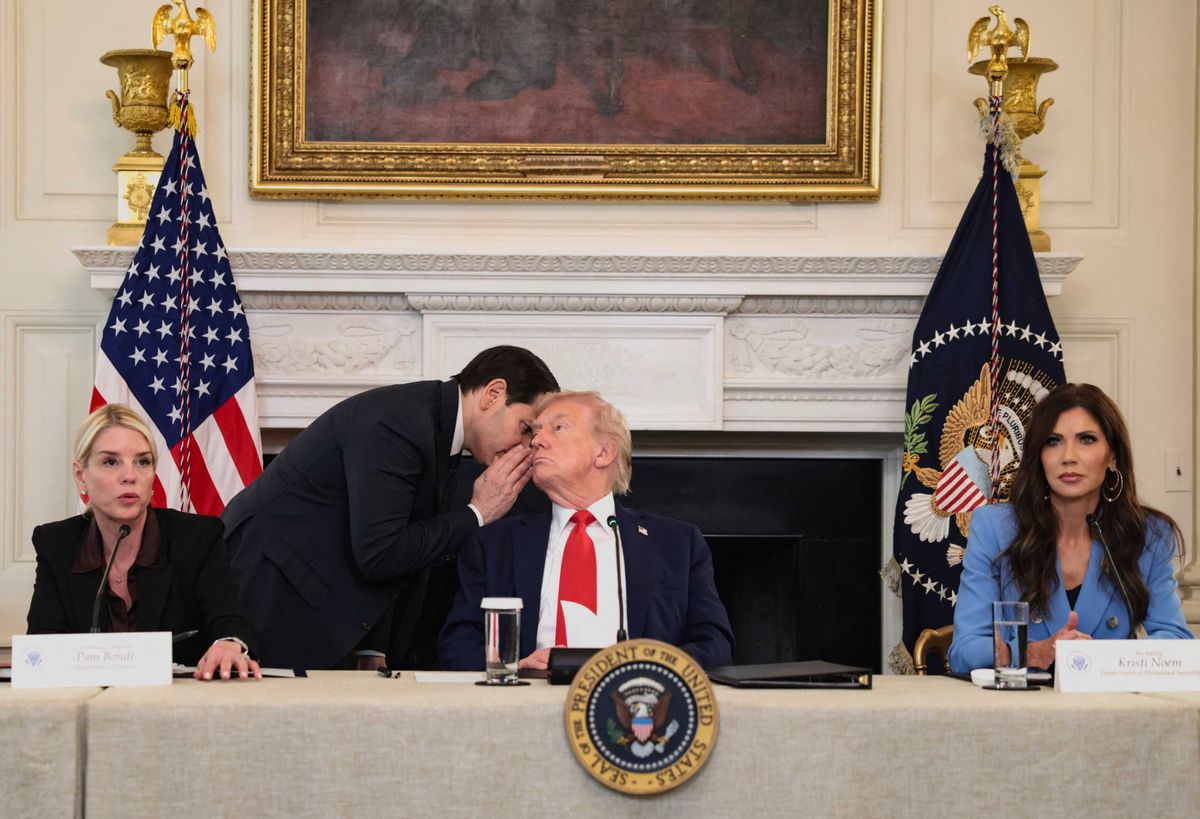
U.S. Secretary of State Marco Rubio updates U.S. President Donald Trump on the Gaza proposal during a roundtable on antifa, an anti-fascist movement Trump designated a domestic "terrorist organization" via executive order on September 22, at the White House in Washington, D.C., U.S., October 8, 2025. REUTERS/Evelyn Hockstein


A peace plan being thrust upon Ukraine was actually written by Russia, according to reports, and Marco Rubio is taking heat for confusing messaging.

Foreign affairs and defense correspondent Nick Schifrin reported the news on X:

"BREAKING: After talking to @SecRubio@SenatorRounds announces that the 28 point plan was a Russian document, not a US document," he wrote.

Sen. Angus King, one of the senators who broke with the majority of the Democratic caucus to support a deal to end the federal government shutdown, confirmed that Rubio report, saying, "According to Secretary Rubio, this plan is not the administration’s position — it is essentially the Russians’ wish list that is now being presented to the Europeans and to the Ukrainians."

That sparked outrage.

Former Lincoln Project veterans affairs adviser Fred Wellman, an ex-Republican and current Democratic campaign consultant, said, "This is the most incompetent and idiotic Administration in history," and then added, "Who is in charge?"

Political scientist Norman Ornstein responded to Wellman, saying simply, "Putin."

But there's a twist, because a State Department spokesman, Tommy Pigott, issued the following statement:

"This is blatantly false. As Secretary Rubio and the entire Administration has consistently maintained, this plan was authored by the United States, with input from both the Russians and Ukrainians."

That led to senior congressional reporter Andrew Desiderio to chime in with, "A truly bizarre series of events."

"Senators from both parties said in Halifax that Rubio told them via phone today that the Ukraine peace plan is actually a Russian document, not a U.S. proposal," he added. "State Department spox says that’s not true, it’s a U.S.-authored proposal. ???"

MeidasTouch also added, "Holy s---: here’s a tweet where Vance pushed the Ukraine 'peace plan' that Marco Rubio just admitted was written entirely by Russia. This may be one of the biggest foreign policy scandals in history."


Lindsey Graham breaks with Trump on 'problematic' Ukraine peace plan

Alexander Willis
November 22, 2025 
RAW STORY


In a rare break with President Donald Trump, Sen. Lindsey Graham (R-SC) criticized the White House’s proposed Russia-Ukraine peace plan Saturday, describing it as “problematic” while also urging Trump to reconsider.

“While there are many good ideas in the proposed Russia-Ukraine peace plan, there are several areas that are very problematic and can be made better,” Graham wrote Saturday in a social media post on X.

The White House had drafted a new plan to end the war in Ukraine as reported by The New York Times this week, a plan that would see Ukraine cede significant amounts of territory and reduce the size of its military. Drafted without involvement from Ukrainian officials, the peace plan involves concessions that Ukrainian leadership has long labeled as nonstarters.

And for Graham, long seen as a reliable backer of Trump’s agenda, the Russia-Ukraine peace plan did not meet his standards.

“The goal of any peace deal is to end the war honorably and justly – and not create new conflict,” Graham continued. “Finally, to the world: what about the fate of the almost 20,000 Ukrainian children kidnapped by Putin’s forces? This issue has to be addressed in any negotiated settlement.”
Ending the war in Ukraine has long been a priority of Trump’s, though talks with both Ukrainian President Volodymyr Zelenskyy and Russian President Vladimir Putin
have proven unsuccessful. Trump has pressed Ukraine to cede territory in recent months, going so far as to have a “shouting match” with Zelenskyy in October over his refusal to cede territory.


Ukraine, US to start talks in Switzerland on Trump’s plan to end war

By AFP
November 22, 2025


Khrystyna ZANYK

Ukraine and the US will soon meet in Switzerland to discuss Washington’s plan for ending the war with Russia, which currently heeds to some of Russia’s hardline demands, Kyiv said Saturday.

US President Donald Trump gave Ukraine less than a week to approve the 28-point plan to end the nearly four-year conflict, which would see the invaded country ceding territory, cutting its army, and pledging to never join NATO.

Meanwhile, Ukraine’s European allies, who were not included in drafting the agreement, were scrambling at the G20 summit in South Africa to come up with a counter-offer to Trump’s plan to beef up Kyiv’s positions.

“In the coming days in Switzerland we are launching consultations between senior officials of Ukraine and the United States on the possible parameters of a future peace agreement,” Rustem Umerov, who is on Ukraine’s negotiating team, wrote on social media.

“This is another stage of the dialogue that has been ongoing in recent days and is primarily aimed at aligning our vision for the next steps,” added Umerov, a former defence minister, who is now the Secretary of the Security Council.

He previously led a few rounds of negotiations with Russia in Turkey, which yielded no breakthrough. This time, Zelensky appointed his top aide, Andriy Yermak, to lead the team, according to a presidential decree.

The decree said the talks will also include “representatives of the Russian Federation.”

There was no immediate confirmation from Russia whether it would join the talks.


– Just peace –


In a joint declaration, the G20 leaders called for a “just, comprehensive, and lasting peace,” but not only in Ukraine, but also in Sudan, the Democratic Republic of Congo and the “Occupied Palestinian Territory.”

France’s Emmanuel Macron sent a somber message to the gathering, saying “the G20 may be coming to the end of a cycle,” adding that the grouping was struggling to resolve major crises around the world.

He referred specifically to a new unilateral US plan to end the war in Ukraine that accepts some of Russia’s hardline demands.

Shortly before that, Macron met with German Chancellor Friedrich Merz and UK Prime Minister Keir Starmer on the sidelines the summit, boycotted by the US, to discuss a joint response to Washington’s plan.

Starmer had earlier said the aim was to “look at how we can strengthen this plan for the next phase of negotiations”.


– Difficult choice –


Ukraine faces one of the most challenging moments in its history, Zelensky said in an address to the nation, adding that he would propose alternatives to Trump’s proposal.

“The pressure on Ukraine is one of the hardest. Ukraine may face a very difficult choice: either the loss of dignity or the risk of losing a key partner,” Zelensky said in his address, referring to a possible break with Washington.

To end the war, the US plan envisages recognising territories controlled by Moscow as “de facto” Russian, with Kyiv pulling troops out of parts of the Donetsk region.

Ukraine would also cap its army at 600,000, rule out joining NATO and have no troops from the alliance deployed to its territory.

In return, Ukraine would get unspecified “reliable security guarantees” and a fund for reconstruction using some Russia assets frozen in foreign accounts.

While Russia would gain territory, be reintegrated into the global economy and rejoin the G8, according to a draft of the plan.

Putin said the blueprint could “lay the foundation” for a final peace settlement, but threatened more land seizures if Ukraine walked away from negotiations.

Better equipped and larger in numbers, the Russian army is slowly but steadily gaining ground across the lengthy front line.

Ukrainians were meanwhile facing one of the toughest winters since the war began, after Moscow carried out a brutal bombing campaign against energy infrastructure.

This comes as a sweeping corruption probe that unveiled graft in the energy sector was unravelling in Kyiv, sparking public outcry.


Notes on the historic rise of the far right in Britain


Saturday 22 November 2025, by Thierry Labica


Against the backdrop of the bankruptcy of the historic two-party system, continued social brutalization, and after years of state racism and complicity in genocide, various shades of the British far right are now securing an unprecedented mass audience, which crystallized during a demonstration in London that brought together 150,000 demonstrators in London at the call of an avowed Islamophobic fascist. Fossil fuel interests, armaments, tax evasion and Israelism: the first benchmarks for understanding this evolution.


On 13 September 2025, a demonstration called by a notorious figure of the English fascist far right, Tommy Robinson (Stephen Yaxley-Lennon, his real name) brought together between 110,000 and 150,000 people in London. By its scale, unprecedented in Britain, this event marks a threshold of the audience of the far right — its mobilizing themes and affects — and of the fascist resurgence on an international scale.

Among the various factors and temporalities to be taken into account, one thinks of the historical trajectory of some twenty years in which the episode is part and comes to be a milestone: the racist focus on immigration owes little to the representatives of the far right itself and much to the violence of political and media discourse and to an ever more aggressively “hostile” legislative inflation for about fifteen years. It should be made clear from the outset that Labour’s responsibilities in this area from the end of the 2000s onwards were immense. Then we think of the political situation, both national and international, of which the demonstration of 13 September is a crystallisation: the deep crisis of the forces of the historic two-party system (Labour and the Conservatives), the audience for the far-right Reform UK led by Nigel Farage and Richard Tice, and the centrality of the Palestinian question and the genocide, against a backdrop of uninterrupted social degradation.

But to begin with, an overview of the personnel assembled and its main themes — as predictable as they may be — seems necessary. We will then draw attention to some, at least, of the material conditions of the event; the forces and resources which determine its possibility, the figures, and which define its content and expression.

Placed under the banner of “freedom of expression,” in other words, pluralist and democratic common sense, the event brought together a number of factions of the British far right, but also European, Australian, and American. The participants were able to hear speeches by Elon Musk and Éric Zemmour (accompanied by Jean Messiha), but also Petr Bystron for the AfD, and the Dutch Christian far rightist Eva Vlaardingerbroek (one million followers on X, more than 390,000 on Instagram and present on Fox news, GB news, and the online outlets of the far-right Sweden Democrats party, among others).

Also invited were the New Zealand Pentecostal Christian fundamentalist Brian Tamaki, convinced that the pandemic of 2020-22 or Hurricane Gabrielle were so many divine punishments for our wanderings away from God, between pornography, gay rights and abortion; the Israeli-Australian Avi Yemini, a former member of the Israeli army, a notorious provocateur who during a demonstration against the imprisonment of Robinson in 2018, declared himself “the world’s proudest Jewish Nazi”, Ezra Levant, founder of the Rebel News website and known as the “Canadian Steve Bannon”, and the British Katie Hopkins, regularly spotted alongside Robinson, a once-familiar mainstream media personality for whom asylum seekers are “cockroaches” while “our towns are festering sores, plagued by swarms of migrants and asylum seekers, shelling out benefits like Monopoly money”. Other characters of a similar kind, from Spain, Belgium, Ireland, or Denmark, were invited to offer their contribution.
The ideological matrix of the far right

Tommy Robinson, who initiated the 13 September demonstration, has become the focal point of this vast ultra-conservative and fascist movement nourished by a powerful victimhood imaginary whose martyrology now reserves a central place for him. Far from having been disqualified and marginalised by his past as a hooligan, a member of a notorious neo-Nazi organisation (British National Party from 2004 to 2005) and then the founder of an ultra-nationalist and Islamophobic organisation (English Defence League, EDL, from 2009 to 2013), Robinson has achieved the status of an exemplary incarnation of a victim of the system. A cheeky character of modest origins, abandoned by his father at the age of two, he has seen his rich career as a repeat offender (between expulsion from social networks for incitement to hatred and five prison stays for passport fraud, obstruction of justice, assaults, possession of drugs, mortgage fraud) turn into a title of bravery and glory in the face of the evil that is both oppressive and occult of a “system” whose crimes he is now revealing.

According to this version of things, the government is repressing freedom of expression (“free speech”) in order to prevent its role in the “great replacement,” “uncontrolled immigration” and the extinction of “Western civilization,” “the Islamization of our societies” and the threat of generalized “jihad.” A nightmarish vision concentrates the horror of this secret exterminatory logic of which “we” are the despised and ignored victims: “the rape of our daughters” by migrants accused not only of sexual assault on minors, but even worse, of organizing networks (grooming gangs) for the sexual exploitation of minors.

It is worth dwelling, even if too briefly, on this motif of “rape” (“of our daughters”). To begin with, there is an old panic in the face of racial mixing propagated by the non-white, savage and insatiable foreigner — many women, many children — who are incompletely civilized and, in fact, have remained in a more or less anomic state of nature and destructive of our norms. This fantastical character of the most classic racist imagination, proto-animal and presumed to be chronically overnumbered, would supposedly migrate to enjoy without limit or scruple the largesse of a national-social state to which he would never have contributed. While the brave and loyal taxpayer accepts various privations (and must be content with the distant promise of enjoyment dangled by a huge pornographic industry, from the front pages of the daily press with a large circulation), the migrant profiteer is then guilty of the general “civilizational collapse.”

It should be noted that neither Robinson nor Musk, nor Zemmour, nor Bystron, manage to refer, even in a cosmetic and opportunistic way, to which concrete social dimension of the problem could be displaced on the “civilizational” terrain. Typically, this is a case of fantastical avoidance and recoding of a truly terrible reality; the systemic neglect and abuse of millions of children in the United Kingdom, most often suffering in the silence of words they do not have, the impoverishment of all protection, care and follow-up structures, and exposed to a whole repertoire of sexual abuse and violence, a dark continent of which the dedicated organizations claim to perceive only the small emergent area. [1]

This imaginary of “rape” (and all its dark charge of repressed appetites) is thus that of a primitive jouissance at the origin of the “civilizational” collapse to which “multiculturalism” is working. It goes without saying that it remains — and must remain — disconnected from any issue of male domination, criticism of patriarchy and gender violence in order to be recoded against critical feminist thought (domestic, sexual and sexist violence — including rape — feminicide, socio-sexual relegation or the violence of child poverty that befalls millions of “our daughters” never seem to have the same rank as a mobilizer of affects here – and in truth, here do not exist, or no longer exist, at the end of what bears the features of a sadistic voyeuristic erotic reconfiguration that also seems to presume a certain fatality of rape in the last instance).

In this perspective, the “multiculturalist” left, feminists and anti-racists, as soon as they question the protective authority of fathers, brothers and husbands (over “our daughters”), and as soon as they defend the rights of migrants, are attributed a direct responsibility in the “social, moral and civilizational disaster”. Or, to quote Robinson in his video “The Rape of Britain: Part One”: “No country in the world is unaware that our government, our social services, and our police forces are sacrificing a generation of our daughters at the hands [sic] of the altar of multiculturalism [...]; There are still young girls, in every city and every big city, who are taken from us, taken from their mothers, as sex slaves at the hands of Islamic gangs.” This same motif can be found almost word for word in the intervention of Petr Bystron, of the AfD, and his defence of “our struggle” in Europe “for 2000 years”: “We don’t want our daughters, our sisters, to be raped. We don’t want our brothers, our friends, to be stabbed when they defend them.”

Elon Musk, in giant screen version, “clarified” the fundamental problem in his own way: “what I see happening here is a destruction of Britain, initially a slow erosion but rapidly increasing erosion of Britain with massive uncontrolled migration. A failure by the government to protect innocent people, including children who are getting gang raped. It’s unreal.”

For Musk, “there’s so many on the left that want to just crush debate and put people in prison just for talking, as you [Robinson] were, just for speaking their mind.” And in addition to how “the government did nothing and tried to hide it – they tried to hide these horrific crimes” there’s the violence of the left, designated as responsible for the assassination of Charlie Kirk three days earlier in the United States: “The left is the party of murder and celebrating murder. I mean, let that sink in for a minute. That’s who we’re dealing with here.”

We understand then, if it were not clear enough, that it is against the “woke mind virus” and its logic of “cancelling” terror (to “prevent debate and put people in prison”) that the banner of “free speech” has been unfurled, as a perfect This is evident after several years of generalized anti-woke political and media moral panic, and three days after the assassination of Charlie Kirk, attributed to this same “murder party”.

In the conclusion of this exchange, Musk confirms Robinson’s idea that the left is the occult force capable of controlling governments, and of organizing mass migrations from which it would then draw electorates that it would otherwise be unable to gather among the “authentically” national populations. “There’s a massive incentive on the left to import voters. So, if they can’t convince their nation to vote for them, they’re going to import people from other nations to vote for them… thus depriving the citizens of their democratic power. It’s really a voter importation thing.”

Here, more or less term for term, we find the classically anti-Semitic conspiracy imputations – but for someone who uses the Nazi salute, this cannot really be surprising – directed by the Hungarian far right against George Soros in 2017: Soros, the liberal “Jewish financier” supposedly working for the dissolution of national identities by putting his fortune at the service of a vast manipulation of migrants to Europe. This same motive, always accompanied by the quick but explicit reference to George Soros, is at the heart of a long interview offered on the far right and ardently pro-Israel GB News channel.

It should be remembered that this same victimhood of the “invasion” is the one that animated the neo-Nazi perpetrator of the Pittsburgh synagogue massacre in October 2018 (eleven dead). For the killer, Robert Bowers, the Hebrew Immigrant Aid Society (HIAS) was responsible for the arrival of Central American migrants and “evil Muslims,” which “likes to bring in invaders who kill people from here. I’m not going to stand by and watch my people being slaughtered.” The delusional justifications for the mass killings perpetrated by Anders Brevik in Norway in 2011 on young left-wing activists (71 dead) and by Brenton Tarrant in a mosque in New Zealand in 2019 (51 dead), were no different.
The origins of British racism

We can remain brief on the origin of these rhetorical figures and motifs. They have a long tradition in the history of ethno-nationalist paranoias. But above all, they have a history of recent and incessant activation by the political forces of the British two-party system over the last twenty years. In this respect, and as has already been indicated, Labour social democracy has left behind a uniformly toxic legacy since the 2000s, between the validation of the neo-Nazi British National Party’s “just concerns” in terms of the allocation of social housing and the lexicon of the “invasion” and “submersion” of the schools by the children of migrants and asylum seekers. This language has been promoted by ministers (Labour Home Secretaries) in office. In 2010, Labour’s election programme devoted a section to “crime and immigration: strengthening our territories, protecting our borders” to prepare “the next stage of national renewal”. In 2015, the merchandizing of the party’s conference offered mugs with the inscription: “Controls on immigration: I’m voting labour”.

This endless catalogue of nationalist and racist one-upmanship reached a new critical threshold when the Labour prime minister since June 2024, Sir Keir Starmer, a staunch Zionist and avowed supporter of the Palestinian genocide, hastened to express the first tribute to the American racist ideologue, Charlie Kirk. It should be noted that the condolences of Starmer and Kemi Badenoch (leader of the conservative opposition) also focused on the question of “freedom of expression” in the name of which openly racist and sexist remarks and the obscurantism that inspires them must have their place in the public debate (which cannot be applied to denunciations of the genocide and Palestinian solidarity, as we have had ample opportunity to understand).

In the aftermath of Kirk’s death, and on the eve of the “freedom of speech” demonstration called by Tommy Robinson, Badenoch declared: “The murder of Charlie Kirk is a blow to everything that Western civilization stands for: open, vigorous debate and peaceful protest.” For Boris Johnson, Kirk was nothing less than “a shining martyr for freedom of expression.”

Three weeks later, Badenoch announced the “hardest border closure plan Britain has ever seen,” which included withdrawal from the European Convention on Human Rights (ECHR) and the repeal of the Human Rights Act of 1998.

In this way, in Britain, the various shades of the far right can continue to content themselves with continuing and prospering the work of political formations that have long been hegemonic and are now both in the grip of a crisis of legitimacy of unprecedented gravity. The debt is therefore great to the Labour-Tory tandem, its multi-recidivist anti-foreigner legislation, its attacks on civil liberties, its “anti-woke” moral panic, its genocidal complicity and normalization.

This is perfectly reflected, among other things, in the mediocrity of these far-right propagandists. The exchange between Robinson and Musk, the interventions of Zemmour or Bystron have no rhetorical charm, not even the slightest danger, even, of any rhetorical charm. In this respect, 13 September carries with it the possibility of a pleasure in a nullity of which the imaginary of the “rape of our daughters and our sisters” could be an attempt at correction as sordid as it is desperate. At this point, perhaps it should be admitted, rhetorical brutality devoid of the slightest sophistication, of skill, is sufficient as a manifestation of the sheer desire for the use of force, while the Trumpist ICE militias, the fascist exaltation of Israeli genocidal power, or the giant riots and rabbles in Britain and now Ireland, show the future.
Tech, fossilism, armaments, Israelism and the heyday of neofascism

The rise of the British far right manifests itself in two obvious ways. The demonstration of 13 September is one of them; the considerable lead in opinion polls for Nigel Farage’s anti-immigration Reform UK party is another. Between Robinson and Farage is the false contradiction and the real complementarity that can exist between a delinquent-martyr who has long had no party other than his own online brand, and a notable determined to fit into an institutional framework within which he can claim to embody a majority succession.

The first, Robinson, won the support of Musk, who himself broke with Trump, to the detriment of the second, the billionaire having judged Farage too “weak” on the issue of immigration.

The official far right is now divided between Reform UK (Farage) and Advance UK, a split from Reform UK led by Ben Habib, joined by Robinson since August 2025. But at this stage, their nuances can be considered minor in view of the scale and continuity of the forces now engaged in supporting this new political configuration.

Robinson, whose audience and wealth are linked to social networks and his sales of “manifest” books, owes Musk for having regained his “freedom of expression” on a new X account, owned by Musk, whom he also thanked for the payment of legal costs (not confirmed by Musk himself).

But it is to Israelism, among the most fanatical, that the former British neo-Nazi, converted into a “free speech martyr”, frenzied Islamophobe and unconditional admirer of Israel (for which he has declared himself ready to fight in the event of war), owes a large part of his prosperity.

His sentence to thirteen months in prison for illegally filming and posting on Facebook the trial of Muslims accused of sexual assault (hence the banner of “free speech” against a woke justice system won over to the “migratory invasion”), earned Robinson an international far-right campaign “Free Tommy” (relayed by many Russian accounts as well as by Trump himself), with the support of the pro-Russian right,

Israeli-American Daniel Pipes’ ultra-Zionist Middle East Forum (MEF) paid for the legal costs and the organization of three demonstrations in support of Robinson at a cost of $60,000.

The Gatestone Institute, a pro-Israel think tank, and the David Horowitz Freedom Center, a far-right organization that describes itself as a “school of political warfare” against “the fifth column,” have published articles in defence of Robinson. In addition, the Gatestone Institute and the MEF both benefit from the largesse of Nina Rosenwald, co-president of a financial investment firm (American Securities Management), who claims to be an “ardent Zionist” and is known as the “sugar mama of anti-Muslim hate.”

Earlier, tech billionaire Robert Shillman, a regular donor to pro-Israel institutions, hired Robinson by the Canadian far-right organization Rebel Media in 2017-2018, awarding him a scholarship estimated at around $85,000 per year. This position was also accompanied by three assistant posts, each paid $2,500 per month. Robinson’s personal estate is estimated to be somewhere between £1 million and £3 million.

In October 2025, the verdict of a new trial was postponed following the official invitation extended to Robinson by the Israeli minister in charge of the diaspora and speaker of the Knesset, Amichai Chikli. There are many precedents of this kind, dating back to 2003 and the reception given by Ariel Sharon, then Prime Minister, to the neo-fascist Gianfranco Fini, an admirer of Mussolini and the apartheid wall then being built around the West Bank. However, the arrival of an influencer with no other title than that of an ex-Islamophobic hooligan is clearly a departure from the diplomatic decorum that was once de rigueur. The initiative, however, has sparked anger and incomprehension in Israel itself, and even in British Jewish community organizations, which are usually so loyal to Israel.
What place for Reform UK?

What about Reform UK and its leading figures? Farage, honorary chair, and Richard Tice, leader of Reform UK (which, unlike the other parties, has private company status), have distanced themselves from the “thug” Robinson. But like Robinson, Farage and Tice are the devoted and utterly servile relays of forces more determined than ever to do without standards and constraints that are far too cumbersome (fiscal, legal, environmental and so on), however weak or cosmetic they may be.

Farage (wealth estimated at between £3 million and £5 million) and Tice (£40 million and a tax-avoiding patriot), two authentic men of the people, both have their own programme on the conservative and Islamophobic channel, GB News, launched in 2021. In this context, both had plenty of time to challenge the reality of climate change, “absolute garbage,” according to Tice.

With this deep conviction, and for the good of all, the leaders of Reform UK defend the exploitation of Britain’s gas potential, knowing that “we’ve got potentially hundreds of billions of energy treasure in the form of shale gas,” according to Tice. It would then be “grossly financially negligent to a criminal degree to leave that value underground and not to extract it.”

Combining actions with words, Reform UK MPs, in council assemblies where they have won a number of majority positions since the last local elections, decided to repeal carbon neutrality targets and eliminate references to the “climate emergency” that have been integrated into the orientations of such assemblies in recent years. Budgets were then reallocated to other priorities, while continuing to receive subsidies earmarked for energy transition policies. Recently initiated guidelines and policies in the counties of Durham, Staffordshire, Kent, Derbyshire, and West Northamptonshire have been annulled.

But this determination in the denial of climate change and the derailment of the few existing efforts in terms of energy transition corresponds strictly to what could be expected from a “party” almost entirely in the hands of the fossil fuel industry. An investigation published in the New York Times in March 2025 showed that of the £4.75 million obtained in 2024 by Reform UK, 40% came from individuals known to have “openly disputed the reality of climate change, or from holders of investments in fossil fuels and other polluting industries”.

Other researchers have shown, for the DeSmog website, that between December 2019 and June 2024, Reform UK collected more than £2.3 million from oil and gas interests and climate sceptic figures, including, for example, Terence Mordaunt, director of the Global Warming Policy Foundation, an organization at the forefront of challenging work on climate science. This amount corresponded to 92% of total donations to the Reform UK business party. Most of these contributions also come from accounts registered in tax havens.

But the conflict of interest can be even more caricatural; Tice and Farage are employees of a chain, GB News, whose owner, Paul Marshall, owns £1.8 billion in shares in the fossil fuel sector, including Shell, Chevron, Equinor (Norway) and more than a hundred others. The DeSmog investigation also showed that in 2022, a third of GB News anchors had openly questioned climate work and half had denounced climate initiatives.

Reform UK is also the recipient of donations from an arms company, QinetiQ, which is a major beneficiary of the increase in state spending in the defence sector. “80% of QinetiQ’s revenues related to armaments come from British taxpayers alone,” according to the Byline Times, a windfall of public money which the company’s main shareholder, Christopher Harborne, redirects in part to the benefit of Reform UK, of which he is the main financier. Harborne donated nearly £14 million to Reform UK between 2019 and 2024, and paid for Farage’s two recent visits to Trump, in 2024 and 2025 at a total cost of nearly £60,000.

Between Robinson and Farage-Tice, we understand the whole issue and the meaning of “freedom of expression”: to maintain anti-migrant moral panics, by disrupting legal procedures if necessary, and to spread the myth of Islamization and the “rape” of the West; to be able to challenge climate research for the benefit of the fossil fuel lobby in the context of manifest conflicts of interest, and to defend all logics of oppression, up to the point of genocidal horror, by continuing to present oneself as a victim of feminist, anti-racist, or pro-Palestinian censorship, all in the service of the “freedom” of extraction, escape, exploitation, pollution and manipulation, conditions for the “expression” of an absolute capital.

Various components of the British far right could therefore be able to take over from the discredited parties, those who have made their bed but who still intend to ensure their survival with new anti-refugee, Islamophobic one-upmanship, and reformist sadism as proof of managerial credibility: the hell of cruelty and indifference inflicted on the children of Gaza comes from afar.

These are undoubtedly the symptoms of the transition from a decrepit parliamentary neoliberalism to the oligarchic order which is now on the way to reaching its full political fulfilment. In which case, it must be admitted, defending this indefensible requires a very great “freedom of expression”, purely fabricated, unencumbered by a justice system that is still capable of independence, a media and a press that are still free, scientific research that still assumes its critical vocation, and by any political demand for equality.

There is some good news, however, to emerge from the ongoing shipwreck of the parties that have dominated British political life until now: the deep, right-wing and sectarian Labourism, inspiring an almost universal disgust, may finally give a real chance to the emergence of a left-wing, socialist force, this time no longer condemned to the kind of peripheral and ephemeral agitation in which so much enthusiasm and momentum have inevitably ended up running out of steam and withering away until now. It remains to be seen, and to follow, the social democratic revival represented by the British Greens and, even more, what could become of Your Party, launched by MPs Jeremy Corbyn and Zarah Sultana, whose announcement alone during the summer received nearly a million messages of support and membership requests. Enough to do. Well, maybe.

Translated by International Viewpoint from l’Anticapitaliste.

Attached documentsnotes-on-the-historic-rise-of-the-far-right-in-britain_a9275.pdf (PDF - 942.6 KiB)
Extraction PDF [->article9275]

Footnotes


[1] Read the National Audit Office report, “Pressures on Children Social Care,” 2019. Also, the Centre of Expertise on Child Sexual Abuse report, S. Kewley and K. Karsna, “Child Sexual Abuse in 2023/24: Trends in Official Data,” June 2025. According to the two authors, “The number of children who are victims of sexual abuse is much higher than what is brought to the attention of public bodies. Based on available survey data, we 

Thierry Labica  is a lecturer in British Studies at the University of Nanterre and a member of the NPA.


International Viewpoint is published under the responsibility of the Bureau of the Fourth International. Signed articles do not necessarily reflect editorial policy. Articles can be reprinted with acknowledgement, and a live link if possible.