Monday, November 24, 2025

ISRAEL BREAKS CEASFIRE, AGAIN

Hundreds attend funeral of Hezbollah top commander killed in Israeli strike

Hundreds of supporters on Monday joined a funeral procession for Hezbollah military chief Haytham Ali Tabatabai and other members of the militant group whom were killed by Israeli strikes on Beirut. Israel has escalated its attacks on Lebanon in recent weeks as Hezbollah has rejected the terms of a truce that call for the group to disarm.


Issued on: 24/11/2025 
By: FRANCE 24

An Israeli strike on Sunday killed Hezbollah's top military chief and four other members of the militant group. © Ibrahim Amro, AFP

Hezbollah held the funeral Monday for its top military chief and other members of the militant group a day after Israel killed them in a strike on Beirut's southern suburbs.

Haytham Ali Tabatabai is the most senior Hezbollah commander to be killed by Israel since a November 2024 ceasefire sought to end more than a year of hostilities between the two sides.

His assassination comes as Israel has escalated its attacks on Lebanon, with the United States increasing pressure on the Beirut government to disarm the Iran-backed Hezbollah.

Israel's military said Sunday it had "eliminated the terrorist Haytham Ali Tabatabai, Hezbollah's chief of general staff".

The group announced the deaths of Tabatabai and four other members in the attack.


In Beirut's southern suburbs, a densely populated area where Hezbollah holds sway, hundreds of supporters joined Monday's funeral procession for Tabatabai and two of his companions.

Hezbollah members in fatigues carried the coffins, draped in the group's yellow flags, to the sound of religious chants, an AFP correspondent said.

The crowd yelled slogans against Israel and America, while supporters carried portraits of the group's leaders and Iran's supreme leader, Ayatollah Ali Khamenei.

Hezbollah said Tabatabai assumed the role of military leader after the most recent war with Israel, which saw the group heavily weakened and senior commanders killed.

Israel has carried out near daily strikes on Lebanon despite the truce, usually saying it is targeting Hezbollah members and infrastructure to prevent the group from rearming.
'Very limited' options

According to the agreement, Hezbollah was to withdraw north of the Litani River, some 30 kilometres (20 miles) from the border with Israel, and to have its military infrastructure there dismantled.

Under a government-approved plan, Lebanon's army is to finish disarming Hezbollah in the area by year end, before tackling the rest of the country.

Hezbollah has rejected calls to disarm.

After Tabatabai's killing, Israeli Prime Minister Benjamin Netanyahu said he would "not allow Hezbollah to rebuild its power" and urged Lebanon's government to "fulfil its commitment to disarm Hezbollah".

A source close to the group told AFP on condition of anonymity there were "two opinions within the group – those who wish to respond to the assassination and those who want to refrain from doing so – but the leadership tends to adopt the utmost forms of diplomacy at the present stage".

Last December, Hezbollah lost a key supply route through Syria with the fall of longtime ruler and ally Bashar al-Assad.

Washington is also demanding that Beirut cut off the group's funding from Iran, which slammed Sunday's killing as "cowardly".

Atlantic Council researcher Nicholas Blanford told AFP that "Hezbollah's options are very limited".

"Its support base is clamouring for revenge but if Hezbollah responds directly ... Israel will strike back very hard and no one in Lebanon will thank Hezbollah for that," he said.
Hezbollah defiance

Sunday's strike was the biggest blow to Hezbollah since the ceasefire "because of (Tabatabai's) seniority and the fact that it demonstrates the Israelis can still locate and target senior officials despite whatever protective measures Hezbollah is undertaking" since the war, Blanford added.

Senior Hezbollah official Ali Damush told the funeral that Tabatabai's killing aimed "to frighten and weaken (Hezbollah) into retreating ... surrendering, and submitting, but this goal will never be achieved".

Israel was "worried about Hezbollah's possible response – and should remain worried", he said, urging Lebanese authorities to "confront the aggression by all means ... and reject the pressures that seek to push Lebanon to comply with American dictates and Israeli conditions".

Lebanon's army says it is implementing its plan to disarm Hezbollah, but the United States and Israel have accused Lebanon's authorities of stalling.

Condemning the attack, Prime Minister Nawaf Salam said Sunday that "the only way to consolidate stability" was through "extending the authority of the state over all its territory with its own forces, and enabling the Lebanese army to carry out its duties".

A Lebanese military official told AFP last week that US and Israeli demands to fully disarm Hezbollah by December 31 were "impossible" considering personnel and equipment shortages, expressing concern at the risk of confrontations with local communities that support the group.

(FRANCE 24 with AFP)
Trump Called On to Secure Release of 16-Year-Old US Citizen Mohammed Ibrahim From Israeli Detention

“This is an American kid, so you would think that the United States government would be doing everything possible to secure his release,” said Sen. Chris Van Hollen.


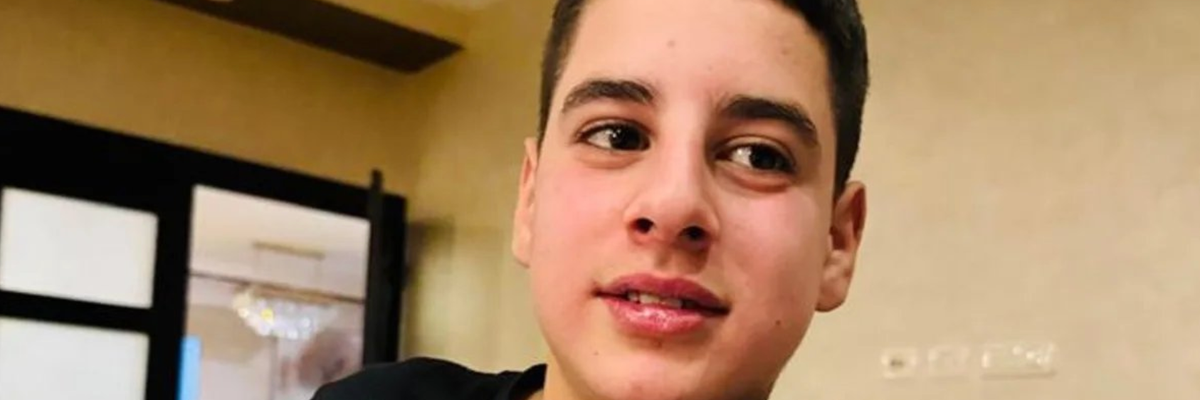
16-year-old Mohammed Ibrahim, a Palestinian-American US citizen, has been detained in an Israeli prison since February 2025.
(Photo: @infinite_jaz/X)

Julia Conley
Nov 24, 2025
COMMON DREAMS


Democratic lawmakers are ramping up demands for the Trump administration to secure the release of 16-year-old Mohammed Ibrahim, a Florida resident and US citizen, who has been detained and reportedly abused in an Israeli prison for nine months—with Sen. Chris Van Hollen leading the latest call and expressing disbelief that the US has allowed the boy to suffer in jail while it continues to provide support to the country that’s detaining him.

“This is an American kid, so you would think that the United States government would be doing everything possible to secure his release,” said Van Hollen (D-Md.). “United States taxpayers provide billions of dollars to the [Prime Minister Benjamin] Netanyahu government and the state of Israel. You would think that we would be able to get this American kid out of prison, certainly to make sure that he doesn’t get abused and beaten up in prison.”


Advocates Applaud as Pro-Palestinian Commentator Sami Hamdi Released by ICE

Ibrahim, a Palestinian-American, was arrested in February after Israeli authorities accused him of throwing rocks at settlers in illegal settlements in the West Bank, where he was vising family members with his parents. He was blindfolded and handcuffed in the middle of the night by authorities who took him to Megiddo prison, a facility known for “brutality and suffering.” He is now reportedly at Ofer prison, where he has had no contact with family members.

Van Hollen noted that Ibrahim has said he falsely confessed to throwing rocks after being beaten by Israeli soldiers.


Ibrahim’s family last week called for an independent medical expert to assess his condition after a consular official met with the boy and said he had lost weight and had “dark circles” under his eyes. The official told the family they had spoken to “multiple US and Israeli agencies” about the visit.

“This is the first time in nine months that they showed grave concern for his health, so how bad is it?” Ibrahim’s uncle, Zeyad Kadur, told Al Jazeera.

Last month, Defense for Children International - Palestine (DCIP) managed to interview Ibrahim and learned that he has been held in rooms with dozens of wother Palestinian children where there are “no heating or cooling systems” and where the detainees have faced at least one “scabies infestation.”

“The meals we receive are extremely insufficient,” he told DCIP. “For breakfast, we are served just three tiny pieces of bread along with a mere spoonful of labneh. At lunch, our portion is minimal, consisting of only half a small cup of undercooked, dry rice, a single sausage, and three small pieces of bread. Dinner is not provided, and we receive no fruit whatsoever. Occasionally, we might get a small cucumber and a tiny tomato with some meals, but this is not guaranteed.”

Ibrahim’s cousin, Sayfollah Musallet, was killed by Israeli settlers in July, in an attack that the family and Democratic lawmakers have called on the Trump administration to investigate. US Ambassador to Israel Mike Huckabee took an unusually aggressive tone when he called Musallet’s killing a “murder” and a “criminal and terrorist act” and said Netanyahu’s government should open a probe into the killing, but the US has not gone further in demanding accountability.

Ibrahim had been set to appear in court on November 9, but the hearing date has been postponed to mid-December. Van Hollen led 27 Democratic lawmakers in writing to Secretary of State Marco Rubio last month, demanding that he push for the boy’s release ahead of a visit Rubio was making to Israel.

The State Department has said it is “tracking” Ibrahim’s case and working with the Israeli government on the matter.

But weeks after the Democrats sent their letter, on November 11, the Israeli Embassy wrote to a number of congressional offices, defending Ibrahim’s detention and describing medical treatment he has allegedly received while in detention—but not mentioning reports that Ibrahim has lost significant weight since being detained.

Sen. Jeff Merkley (D-Ore.) and Rep. Don Beyer (D-Va.) are among the lawmakers who have joined the latest call for Ibrahim’s release, with Merkley appealing directly to Rubio on Saturday.

“Secretary Rubio: Act NOW to free Mohammed Ibrahim—it’s your responsibility to protect American citizens,” said the senator on social media.

Last week, Rep. Jim McGovern (D-Mass.) accused Israel of failing to live up to its obligations under the international Convention of the Rights of the Child by imprisoning Ibrahim—who’s just one of more than 300 Palestinian children in indefinite “administrative detention” in Israeli jails.


“It’s long past due that President [Donald] Trump, Secretary Rubio, Ambassador Huckabee do what we say is the number one responsibility of our embassies overseas, which is to protect American citizens,” said Van Hollen.

In Ibrahim’s home state of Florida, Democratic US Senate candidate Jennifer Jenkins said last week that Ibrahim’s case is “a matter of basic human rights.”

“He is a child from our community, and he deserves dignity, medical care, and to come home safely. This is not partisan,” said Jenkins. “As a mom and an advocate for our kids, I support the urgent calls for his release and urge Secretary Rubio to use every tool to bring Mohammed home.”


Australia’s Compulsory Voting System


Keeping it Dull


There has been an insufferable degree of smugness of late in the chatting classes about Australia’s electoral system. A special for Australian Broadcasting Corporation produced by veteran journalist Annabel Crabb has done much to swell the heads of officials, politicians and pundits. But the production called Civic Duty has to be seen alongside a general sense of puffed-up worth on Australia’s singular compulsory voting system. From the outset, the nature of the relationship between citizens (we might say subjects, given that Australia retains as its head of state the British monarch) and polity is made clear: you do not have a right to vote but an obligation to. Not doing so entails penalties and tribal disapproval.

Voting became compulsory through the Australian Commonwealth in 1924. The argument was a familiar one: people were simply not taking their electoral duties seriously enough. That voting was a right that might just as well be exercised by not voting was an argument few could fathom among the electoral moralists. With the gains of the Labour Party in the December 1903 elections, significant enough to eventually see them form a short-lived minority government, there was grumbling from the explorer turned politician Sir John Forrest. “What we have now,” he blustered in March 1904, “is government by minorities. The polling details of the December elections show that Australia is in the hands of minorities. That is all wrong.” As only majorities should rule, the electors had to be taught a lesson for their irresponsibility of choice. “If the people won’t use their voting privilege, then I think there should be compulsion.”

Dullness is the default position of the compulsory voting exercise, and pundits are delighted with that fact. Extremists, the colourful and the idiosyncratic are whittled down by forcing people to the ballot box. “Compulsory voting,” political theorist Anthoula Malkopoulou crows, “is known as the great leveller.” It also dilutes right-wing populism, which the author thinks most appropriate, implicitly suggesting that the left-wing variant might somehow survive. (It does not.) Compulsory voting is therefore “preventive in that it structures the socio-political space in a manner that reduces the appeal of populist claims.”

A superb example of this celebration of the dull and drab in politics is supplied by Nick Dyrenfurth, Executive Director of the John Curtin Research Centre, and co-author Tony Shields. From the outset, their prejudice is thickly displayed: compulsory voting prevents the likes of Donald Trump ever winning leadership, showing that democracy, if exercised correctly, can prevent certain types from getting in. This political illiteracy is accompanied by the erroneous presumption that compulsory voting somehow “ensures that government reflects the whole community, not just the loudest or the wealthiest.” The authors never stop to consider what that reflection entails.

What becomes clear is that gamey flavour in politics is not something Australian political strategists, representatives or planners can cope with. It’s far better to have that sort of pungency boiled down to something reliable, stable and tolerable. “Compulsory voting,” Dyrenfurth and Shields explain, “also keeps parties anchored to the centre. To win, you must persuade a majority of voters, not merely fire up your base. Voluntary systems reward polarisation, as parties chase intensity over breadth. Our system rewards persuasion and compromise.”

Not true: the system indulges apathy from both the politician and the voter, only suggesting persuasion towards an argument. Ask most voters turning up on election day (and those increasingly doing their pre-poll) and you are bound to find little “breath” in terms of argument. In many cases, you are lucky to find any argument at all. Politics remains the preserve and industry of a small, solipsistic community of parties whatever their stripe, and compulsory voting lends nothing to enlighten the general voter.

Which brings us then to the serious flaw in compulsory voting: that it never accounts for how informed the voter is. At polling booths and stations, the elector will encounter an avalanche of how-to-vote-cards explaining why the party or candidate wishes you to vote in a certain way. Given that Australia also has a preferential system, this can prove critical, as a candidate may well win on the voting preferences of other, more like-minded contenders.

All of this is mighty fine when it comes to process but does nothing to tease out how knowledgeable the voter is. Ask any cohort of university students if they understand how many chambers make up federal parliament, let alone how many seats they are in each, and you are greeted with the embarrassed silence of failed civic education. What comes to mind is a form of Pavlovian conditioning. Don’t go deeply into the reasons for engaging in a course of conduct: just do it. This sentiment is well exemplified by Louise Rugendyke of the Fairfax press: Australians don’t really want to see how the famed “democracy sausage” is made when they turn up to vote; they just want to eat the wretched thing, assume they have done their duty and “not think about it for another three years.”

Binoy Kampmark was a Commonwealth Scholar at Selwyn College, Cambridge. He lectures at RMIT University, Melbourne. Email: bkampmark@gmail.comRead other articles by Binoy.

Energy Affordability+, Not Energy Dominance


Two of the most significant dates in my life as a progressive activist and organizer are April 4, 1968 and August of 2003. The 1968 date is the day Martin Luther King, Jr. was killed. His killing pushed me to finally do something about racial injustice and the Vietnam War rather than just reading and thinking about them.

August of 2023 was when there was a brutal heat wave in western Europe which led to 70,000 deaths, primarily of elders. This was my wakeup call as far as the climate crisis, leading to several months of book-reading to understand how bad things were, which led to a decision later that year to begin working on this issue. Ever since it has been at the top of my list as far as where I put my energies and time as an organizer: locally, statewide, regionally and nationally.

My primary focus on all those levels, since 2013, has been working and taking action to obstruct the buildout of fracked gas pipelines, gas compressor stations and Liquified Natural Gas (LNG) export terminals. That work quickly led me to learn about FERC, the Federal Energy Regulatory Commission, the most important federal agency that most US Americans have never heard of.

FERC is primarily the regulator of the US electrical grid. In 1977 when it was created by Congress, replacing the Federal Power Commission, it was also given the responsibility of regulating the methane gas industry, which in the 21st century has become primarily a fracked gas industry.

How have they “regulated” it? By giving the gas industry over 99% of the permits that they apply for to build new pipelines, compressor stations to push the gas along and import (in the past) and export (now) LNG terminals along US coastlines, primarily in Texas and Louisiana.

In 2020, a study done by the House of Representatives Oversight Committee, chaired by Representative Jamie Raskin, looked at FERC’s record between 2000 and 2020 and found that of the 1,027 applications to them by industry for permits, only six were denied. This is why the movement which has been fighting FERC and calling for it to be reformed, or replaced by a Federal Renewable Energy Commission, describes it as a rubber stamp agency.

For over 11 years a national organization, Beyond Extreme Energy, has been refusing to quit in its efforts to change this outrageous situation. For a while, from 2021 to 2023, under the leadership of then-FERC chairperson Richard Glick (no relation), actions were taken to make this happen. But when dirty-coal owner and Senate Energy and Natural Resources Committee chairperson Joe Manchin ratcheted up his support for coal, oil and gas in March of 2022 and, in collaboration with Republicans and a few other Democratic Senators, attacked Glick very openly, these efforts were seriously undercut.

Now comes Trump. On his first day as President, January 20, he issued two Executive Orders to “streamline the permitting process for [fossil fuel] infrastructure projects” and declare a “national energy emergency.” The purpose: to set back the shift to solar and wind and accelerate new coal, oil and methane gas projects. FERC is central to this destructive plan.

Last month, on October 7, FERC issued a “final rule” to severely reduce the ability of affected landowners, communities and environmental organizations to legally challenge methane gas infrastructure projects FERC approves. The reason given for doing so was to “encourage the orderly development of plentiful supplies of natural gas. . . particularly the development of data centers to advance artificial intelligence.”

But there’s more. Three weeks ago former Republican Senator Rick Santorum called for the DC Circuit Federal Court of Appeals to be removed as the place where court challenges to FERC permits are heard and decided. The headline blared, “DC Circuit Court is blocking America’s energy dominance.”

Why this extreme call to action?

Over the last five years this court has made a number of decisions upholding the need for FERC to take seriously the rights of landowners fighting eminent domain for corporate gain, environmental justice (ej) and other communities opposing proposed new polluting gas pipelines and infrastructure projects, and those groups defending the earth’s ecosystems challenged by global heating.

Over the last 11 years climate justice activists have demonstrated at a big majority of the monthly meetings of the five FERC commissioners who are the decision-makers. 200 or more people have been physically removed from the meetings for speaking out—there is no public comment period—and permanently banned from ever going to this meeting again. For the last year and a half, led by Beyond Extreme Energy, every single meeting has been met with action outside and some kind of inside action.

The latest was this past week when a small group of us dressed up in black judges robes to underline the importance of continuing court oversight of this now-Trump-dominated agency. We will do so again at their next meeting on December 18 and keep taking action to shine as bright a spotlight as we can on this increasingly more well known but still dangerous, extremely dangerous, threat to ej communities and the world’s ecosystems. It is one important front of the battle to prevent climate catastrophe and shift rapidly off fossil fuels to the wind, solar, battery storage and energy conservation that our children and grandchildren desperately need.

Ted Glick has been a progressive activist and organizer since 1968. He is the author of the recently published books, Burglar for Peace and 21st Century Revolution, both available at https://pmpress.org. Read other articles by Ted, or visit Ted's website.


No Truth in the World – Part II


Read Part I.

Truth today is not measured by justice but by geopolitical convenience. Nations are told who to admire and who to despise, and the contradictions are suffocating.

Castro vs. Mandela: Contradictory Legacies

Fidel Castro: After the Cuban Revolution in 1959, the U.S. imposed an embargo in 1960, later tightened in 1962. Its original intent, according to declassified CIA documents, was to “bring about hunger, desperation, and the overthrow of the Castro government.”1 Despite Cuba’s achievements in literacy and healthcare, Castro was vilified as a dictator. Yet in Havana in December 1975, he declared:

“We shall defend Angola and Africa! The imperialists seek to prevent us from aiding our Angolan brothers. But we must tell the Yankees to bear in mind that we are a Latin-American nation and a Latin-African nation as well. African blood flows freely through our veins.”2

Nelson Mandela: Once branded a terrorist by the U.S. and UK, Mandela was later celebrated as a saint. After his release in 1990, he toured America, raising funds and political support. President George H.W. Bush welcomed him, and Congress honored him.3 Yet Mandela himself testified to Cuba’s decisive role:

“The decisive defeat of the aggressive apartheid forces [in Angola] destroyed the myth of the invincibility of the white oppressor. The defeat of the apartheid army served as an inspiration to the struggling people of South Africa.”

In Havana in July 1991, Mandela proclaimed:

“What other country has such a history of selfless behavior as Cuba has shown for the people of Africa?”4

This selective framing reveals that sainthood or villainy is often assigned not by moral struggle but by political utility. The Cubans who perished in Angola and Namibia—the young flowers of Cuba—remain largely unhonored in Western narratives, even though Mandela himself acknowledged their blood as part of his liberation.

The Cry of Mourning

The hundreds of Cuban youth who died in Southern Africa were not mercenaries but volunteers. Between 1975 and 1991, over 425,000 Cubans served in Angola at the request of the Angolan government, fighting apartheid South Africa’s invasions.5 Their sacrifice was immense, yet in American and Western press, Castro was demonized while Mandela was canonized.

This is the contradiction that burns: the Cubans died for Mandela’s freedom, but their names are erased from the saintly narrative. The U.S. celebrated Mandela while continuing to suffocate Cuba with embargoes condemned by the UN for 33 consecutive years.6

A World Choking on Contradictions

We celebrate human ingenuity while tolerating human cruelty. We canonize certain leaders while vilifying others, not on the basis of truth but on the convenience of empire. We reach for the stars but fail to reach for each other.

If there is “no truth in the world,” it is because truth has been suffocated by propaganda, selective memory, and the machinery of war. The challenge is not only to expose these contradictions but to demand a new direction—one where the genius of humanity is harnessed for life rather than death, for cohabitation rather than domination.

Until that shift occurs, the world will continue to choke. And the cry for truth will remain the most urgent, unanswered call of our time.

Endnotes:

  • 1
    Peter Kornbluh and William M. LeoGrande, eds. Cuba Embargoed: U.S. Trade Sanctions Turn Sixty. Washington, D.C.: National Security Archive, February 2, 2022. Available at: National Security Archive.
  • 2
    Fidel Castro. “Speech at Havana Rally on Angola.” December 15, 1975. Transcript reprinted in The Militant, Vol. 78, No. 45 (December 15, 2014). New York: Pathfinder Press.
  • 3
    United Nations General Assembly. Necessity of Ending the Economic, Commercial and Financial Embargo Imposed by the United States of America Against Cuba. Resolution adopted October 29, 2025 (A/RES/80/7). New York: United Nations.
  • 4
    Nelson Mandela. “Speech at Rally in Matanzas, Cuba.” July 26, 1991. In How Far We Slaves Have Come, by Nelson Mandela and Fidel Castro. New York: Pathfinder Press, 1992. Nelson Mandela Foundation Archive.
  • 5
    See note 2.
  • 6
    See note 3.
Sammy Attoh is a Human Rights Coordinator, poet, and public writer. A member of The Riverside Church in New York City and The New York State Chaplains Group, he advocates for spiritual renewal and systemic justice. Originally from Ghana, his work draws from ancestral wisdom to explore the sacred ties between people, planet, and posterity. Read other articles by Sammy.


Elon Musk vs. Dungeons and Dragons


A New Front in the Culture Wars

Dungeons_and_Dragons_game.jpg

I’ve never played Dungeons & Dragons, but plenty of my family members do, and they consider it to be one of the world’s most engaging table top games; a game that also promotes community. And, like any game that has been around for more than fifty years, there’s bound to be changes. And, with changes, comes angry voices in opposition. One of the angriest right now is Elon Musk.

Writing for The Atlantic, Adam Serwer recently detailed Musk’s fury over changes to the game and the way Wizards of the Coast, the company behind D&D, has begun reckoning with its past

Last November, on X, the billionaire tycoon Elon Musk told the toy company Hasbro to ‘burn in hell.’ Hasbro owns the company Wizards of the Coast, which produces the game Dungeons & Dragons. Wizards had just released a book on the making of the game that was critical of some of its creators’ old material. ‘Nobody, and I mean nobody, gets to trash’ the ‘geniuses who created Dungeons & Dragons,’ Musk wrote. The book acknowledged that some earlier iterations of the game relied on racist and sexist stereotypes and included ‘a virtual catalog of insensitive and derogatory language.’ After a designer at Wizards said that the company’s priority now was responding to ‘progressives and underrepresented groups who justly took offense’ at those stereotypes, and not to ‘the ire of the grognards’—a reference to early fans such as Musk—Musk asked, ‘How much is Hasbro?,’ suggesting that he might buy the company to impose his vision on it, as he’d done with Twitter.

According to Mint’s Ravi Hari (with inputs from Deutsche Welle), “Musk has become increasingly vocal about the gaming industry, especially on his platform X (formerly Twitter).” He noted that “Too many game studios … are owned by massive corporations,” adding, “xAI is going to start an AI game studio to make games great again!”

Dungeons & Dragons was the original role-playing game, born in the early 1970s after insurance underwriter and cobbler Gary Gygax met a student named Dave Arneson at a Midwestern tabletop gaming convention. In his piece, Serwer explains how their breakthrough came from shifting away from reenacting historical battles with miniatures toward a more character-driven, improvisational style involving a Dungeon Master, dice rolls, and narrative collaboration. It was, as he puts it, essentially “a game of pretend.”

Serwer’s piece, “Why Elon Musk Needs Dungeons & Dragons To Be Racist: The fantastical roots of ‘scientific racism,’” goes beyond the game’s mechanics, tracing how fantasy itself carries the weight of 20th-century ideas about race. He delves into J.R.R. Tolkien’s The Hobbit, fantasy’s seminal 20th-century text, published in 1937, and the Lord of the Rings series that followed it. Both were “written, an era in which many Westerners believed that ‘races’ shared particular natures, characteristics, and capabilities. That genetic determinism seeped into the books. Although uncountable readers were inspired by the tales of its diminutive heroes defying stereotypes to save the world, some drew other conclusions. The books, and the ideas embedded in them, would go on to have a magnetic appeal to the political forces Tolkien had rejected.”

Serwer points out that in the early days, the game was  “largely confined to the white, nerdy, male subculture in which it was born. Most of these players wouldn’t have thought much about the racial meaning of the game—even when the stereotypes were blatant, like one inspired by a ‘traditional African-analogue tribal society’ set in a jungle featuring dark-skinned ‘noble savages’ and ‘depraved cannibals.’ But for kids like me, [Jewish and Black] the meaning was always there.”

Although business wise D&D had always been “in financial peril,” sales grew during the Great Recession, “while the retail hobby stores that doubled as hangout spots where many kids were introduced to the game started to close. No one expected the game to experience a sudden renaissance,” Serwer writes. “But it did. In 2011, the sitcom Community ran a D&D-themed episode. The nostalgic horror show Stranger Things, which debuted in 2016, showed kids playing D&D together. As other geeky pastimes became more mainstream—such as Disney’s Marvel juggernaut—the stigma once associated with those activities began to fade, a process I’ll call ‘de-geekification.’”

Protests following the murder of George Floyd led the D&D development team to acknowledge “in a blog post that some earlier versions of the game offered portrayals of fantasy creatures that were ‘painfully reminiscent of how real-world ethnic groups have been and continue to be denigrated. That’s just not right, and it’s not something we believe in.’

In 2022, Wizards announced that it would be removing the word race from the game and substituting species, noting that “‘race’ is a problematic term that has had prejudiced links between real world people and the fantasy peoples of D&D worlds.”

So where does that leave Elon Musk? Will he continue his personal crusade against the direction D&D is taking? Will he attempt to buy Hasbro? Or launch a gaming empire of his own? What’s clear is that his outrage is about much more than a hobby: it’s about who gets to define the stories we tell, the worlds we imagine, and the futures we fight over.

Bill Berkowitz is a longtime observer of the conservative movement. Read other articles by Bill.

Antifa and Neo-Nazis clash — guess which Trump calls a foreign terror group?

Jordan Green,
 Investigative Reporter
November 24, 2025 
RAW STORY


A video still shared by the State Department on X allegedly shows an attack carried out by members of Antifa Ost in Budapest, Hungary in February 2023. Courtesy State Department

The Trump State Department officially added a German antifascist group and three other European far-left groups to its list of foreign terrorist organizations last week.

But the action, which freezes U.S. assets and imposes penalties on anyone who offers support to the groups, ignored a transnational neo-Nazi group that has committed acts of violence of its own and is linked to the murder of two men in Florida.

The State Department announcement about plans to apply the terror designation to Antifa Ost accused the group of conducting “numerous attacks against individuals it perceives as ‘fascists,’” specifically citing “a series of attacks in Budapest in mid-February 2023.”

What the announcement leaves out is that the attacks allegedly committed by Antifa Ost took place during an annual gathering, the “Day of Honor,” organized by neo-Nazis to commemorate a battle fought by the German army and local collaborators against the Soviet Union in Hungary during World War II.

By the State Department’s own admission, “extreme right sympathizers … attacked groups they took to be antifascist demonstrators” during the event.

The first “Day of Honor” march in 1997 was organized by the Hungarian chapter of Blood and Honour. Members of the international Blood and Honour group and its armed wing Combat 18 continue to attend the event, according to a report financed by the German Foreign Ministry.

Canada added Blood and Honour and Combat 18 to its list of proscribed terrorist entities in 2019, alongside the UK and Germany. A Spanish court ordered the dissolution of the group in that country.


The Canadian government describes Blood and Honour as “an international neo-Nazi network whose ideology is derived from the neo-Nazi doctrine of Nazi Germany,” while saying Combat 18 “has carried out violent actions, including murders and bombings.”

As noted by the Canadian government, Blood and Honour members pleaded guilty to murdering two unhoused men in Tampa, Fla. in 1998, reportedly “because they considered them inferior.”

“It sure shows the game here that’s afoot,” Tom Joscelyn, a senior fellow at Just Security, recently told a podcast, adding that the Trump administration is “going after what they claim is this international terrorist menace in antifa” by sanctioning Antifa Ost.

“But they’re not going after the neo-Nazi group, which is by far larger and has also committed acts of violence in this context. I think it puts everything in stark relief.”


‘Greatly inflating the threat’


Joscelyn has written extensively about al-Qaida and was a principal author of the final report of the House January 6thCommittee.

“There is a threat from antifa adherents inside the U.S., and no one will be surprised if there’s a successful antifa-style attack in the future,” Joscelyn told Raw Story.

“However, the administration is greatly inflating the threat for their own political purposes while ignoring well-established threats from far-right and neo-Nazi groups.”


In order to designate a group as a foreign terrorist organization, the State Department is required to demonstrate that a group’s activities “threaten the security of U.S. nationals or the national security (national defense, foreign relations, or the economic interests) of the United States.”

Thomas Brzozowski, formerly domestic terrorist counsel for the Department of Justice, said the State Department announcement cited “no attacks or alleged attacks on Americans” and “no plots against Americans” by members of Antifa Ost or the three other left-wing groups.

“We do not discuss deliberations or the potential deliberations of our designations process,” an unidentified State Department spokesperson said in a statement to Raw Story.

The German government has said the threat posed by Antifa Ost has “decreased significantly” thanks to the successful prosecution of several prominent members, according to Reuters.

The outlet reported that the German government said it was not consulted by the U.S. before plans to designate Antifa Ost as a foreign terrorist organization were announced.

Brzozowski said he thinks “even the folks at State know” there’s no way to show Antifa Ost as a legitimate national security threat.

“And they’re doing their best, I’m sure,” he said. “But come on! They’re put in a bind. They’ve got to deliver, or else they’re going to get fired.

“The sequencing is all backwards at this point. And that’s dangerous. Because
 this is really political theater, is what it is. This is giving effect to a presidential directive.”


Brawling with neo-Nazis

The violence at the “Day of Honor” event in Budapest has been politicized in Hungary.

Légió Hungária, a neo-Nazi group that assumed responsibility for organizing the event from Blood and Honour, receives support from the ruling Fidesz party, led by Trump ally Viktor Orbán, according to the 2023 report by B’nai B’rith and Amadeo Antonio Foundation, underwritten by the German Foreign Ministry.

In 2019, members of Légió Hungária vandalized a Jewish community center in Budapest during a nationalist gathering commemorating the 1956 uprising against the Soviet Union, as reported by the State Department during Trump’s first term.

This September, Hungary declared Antifa Ost a terrorist organization, in alignment with Trump’s agenda.

But the Trump administration has remained silent on the 2019 attack carried out by Légió Hungária, as well as reports cited by B’nai B’rith that participants in the 2020 “Day of Honor” chanted, “Jews out!”

The report also cited “Holocaust denial and distortion, historical revisionism of World War II, and worship of the Waffen-SS as core ideological elements of the event.”

Shortly after taking office this year, President Trump announced the launch of a Task Force to Combat Anti-Semitism, which accused U.S. universities of turning a blind eye to the issue, amidst an administration campaign to deport pro-Palestine activists.

“Anti-semitism in any environment is repugnant to this nation’s ideals,” said Leo Terrell, senior counsel to the assistant attorney general for civil rights and leader of the task force, when the effort was launched.

“The [Justice] Department takes seriously our responsibility to eradicate this hatred wherever it is found.”

The Department of Justice did not respond to a request for comment from Terrell for this story.

Despite Légió Hungária receiving state backing, Hungary’s Supreme Court reportedly upheld a police ban on the 2023 “Day of Honor,” finding: “Extreme groups are expected to appear at this event. The holding of the event in their presence may be accompanied by considerable attack on public order and peace.”

But, as a 2023 State Department report noted, neo-Nazis sidestepped the ban.

“Media outlets reported that despite the police ban, several hundred extreme-right and neo-Nazi sympathizers gathered in the Buda Castle to commemorate ‘Day of Honor.’ Police successfully prevented them from clashing with a group of 100-200 Hungarian and international counter-protesters in the area,” the report reads.

“According to statements by police, antifascist demonstrators elsewhere in the city assaulted several individuals they assumed to be affiliated with the extreme right,” the report continues.

“Similarly, extreme right sympathizers reportedly attacked groups they took to be antifascist demonstrators.”

The circumstances of violence allegedly committed by antifascists in Budapest is telling, Joscelyn told Raw Story.

“The U.S. went from designating al-Qaida for the 9/11 hijacking to designating overseas antifa adherents for brawling with neo-Nazis,” he said.

The State Department’s selective sanctions against antifascists while turning a blind eye to neo-Nazi violence reveals the Trump administration’s actual objectives, Joscelyn added.

“You saw even during the No Kings protests there were very prominent MAGA Republicans that said this was an extremist effort and warning of violence and warning of events that didn’t happen.

“That shows how desperate the administration and its supporters are to portray its opposition as extremists. The concept of antifa is the cudgel they’re using to bash their opposition.”

Jordan Green is a North Carolina-based investigative reporter at Raw Story, covering domestic extremism, efforts to undermine U.S. elections and democracy, hate crimes and terrorism. Prior to joining the staff of Raw Story in March 2021, Green spent 16 years covering housing, policing, nonprofits and music as a reporter and editor at Triad City Beat in North Carolina and Yes Weekly. He can be reached at jordan@rawstory.com. More about Jordan Green.