Zaporizhzhia restart timetable
suggested, Ukraine rejects plan
Zaporizhzhia Nuclear Power Plant has been under Russian military control since March 2022 and its director has said he expects Russian licences for operation of all units to be obtained by the end of 2027. Ukraine's Energoatom says any talk of restarting the units is a violation of nuclear and radiation safety standards.
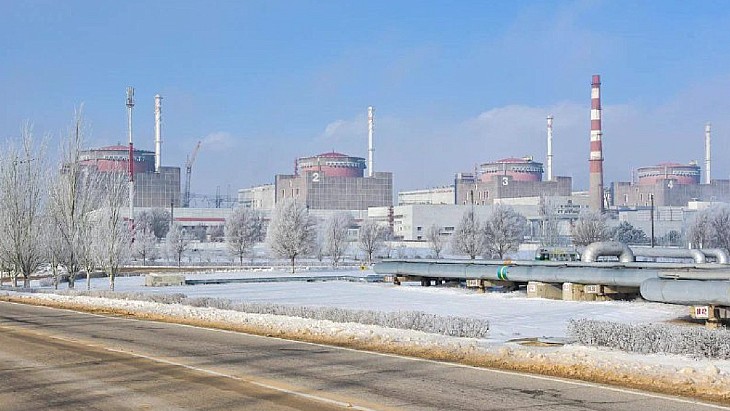
The current director of Zaporizhzhia Nuclear Power Plant (ZNPP), Yuriy Chernichuk, in comments reported by Strana Rosatom said: "Our units have been idle for a long time. Before launching, we will have to carry out a large complex of works to inspect the equipment, repairs, confirm the operability, readiness of the unit for operation."
Russia's nuclear regulator had temporarily recognised Ukrainian nuclear supervision license, he said, but all ZNPP's operations must meet Russian regulations and laws by 2028 for all units.
He said: "We are considering the most realistic option is to first launch units 2 and 6, whose active zones are loaded with Russian-made fuel. All of them were stopped back in September 2022, and since then none of them have operated in generation mode."
One key area of work, he said, was the water supply, following the destruction of the Kakhovka dam, which had previously supplied water. He said they were working on various options, including using the Dnieper river as a source "but of course, it will take a certain amount of time to implement them. I will say this cautiously: it is not one day or one month. And I must immediately stipulate that the starting point for the implementation of all the measures that we are discussing will be the end of hostilities and some guarantee of peace and quiet at the Zaporizhzhya NPP and the territory adjacent to it".
He also said that there would need to be work done to restore power lines from the plant and to decide on the customers for the output of the plant, saying it might provide the chance to redirect the capacity of Rostov NPP "to the energy-deficient North Caucasus ... 6000 MW is quite a serious capacity even for such a large country as ours. Naturally, this will require a redistribution of electricity flows".
The most labour-intensive work required would be inspecting, repairing and preparing equipment and the units for operation. The licence for the first unit expires at the end of 2025 so a new licence will be needed from Russia's nuclear regulator Rostekhnadzor, even if the unit is in cold shutdown. He also said there were other issues, such as there not being a railway line to the plant for the transport of nuclear fuel.
Ukraine rejects restart planning
The Zaporizhzhia Nuclear Power Plant was Ukraine's largest, with six units, before it came under Russian military control in March 2022. It is positioned on the frontline of Russian and Ukrainian forces and its future has reportedly been one of the subjects tackled in talks held recently seeking a potential ceasefire and end to the conflict.
Energoatom, which operates Ukraine's nuclear power plants, has maintained throughout the conflict that the only way to restore safety and security at ZNPP is for an end to the Russian occupation and its return to the control of its legal Ukrainian operator, Energoatom.
Energoatom added: "The technical state of the ZNPP and the conditions created ... such as limited communication lines with the power grid, exhaustion of design service life for fuel and equipment, unqualified unlicensed personnel, non-availability of ultimate heat sink, etc, provide solid grounds to confirm that restarting the plant in its current state is technically impossible."
The company said that the condition of critical safety systems had worsened and said that military presence at, and around, the site "are key risk factors that cannot be ignored".
The International Atomic Energy Agency (IAEA) has had experts at the plant since September 2022 as part of efforts to minimise safety and security risks, including during periods where there has had to be a reliance on back-up diesel generators when external power supplies have been lost.
In IAEA Director General Rafael Mariano Grossi's latest update on the situation, he said agency staff this week "reported hearing military activities at varying distances away from the site. The team continued to monitor nuclear safety and security, conducting a walkdown of the reactor buildings of units 1, 3 and 5 and of the turbine halls of units 1 and 2".
Agency teams at Khmelnitsky, Rivne and South Ukraine nuclear power plants all reported hearing air raid alarms over the past week, and at Chernobyl a drone and a loud explosion was heard on 30 March.
Second German waste repatriation shipment from UK completed
The second of three planned shipments from the UK to Germany of high-level waste in the form of vitrified residues has been completed. The waste has now been delivered to an interim storage facility at the Isar nuclear power plant site.
_80580.jpg)
Seven flasks containing the vitrified residues - the radioactive waste has been transformed into a stable glass-like form - travelled by rail from the Sellafield site in Cumbria to the port of Barrow-in-Furness before being loaded on to the Pacific Grebe, a specialist nuclear transport vessel operated by the UK's Nuclear Transport Solutions (NTS), which set sail on 26 March.
Having arrived at the northern German port of Nordenham, the flasks were transferred from the ship to railway wagons on 1 and 2 April. The waste was then transported by rail to the Isar federal storage facility, arriving on 3 April.
Over the coming days, the containers will gradually be transferred to the interim storage building. There, they will first be prepared in the maintenance area by the interim storage operator, the federally owned BGZ Gesellschaft für Zwischenlagerung mbH, and then stored.
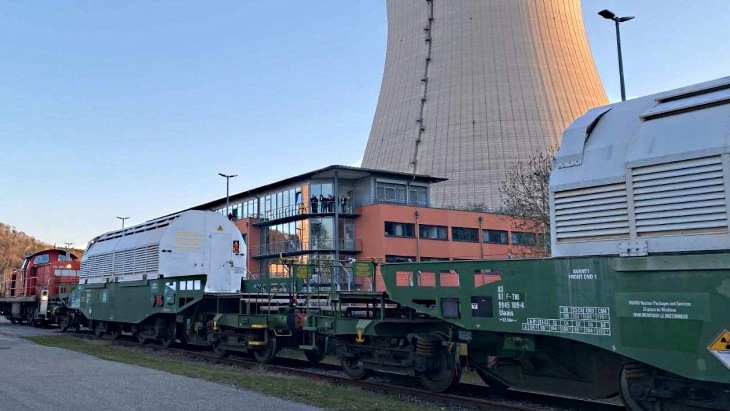
The waste arrives at Isar site by train (Image: PreussenElektra)
"The storage of the seven containers in the interim storage facility marks the end of a comprehensive project that involved intensive preparation at a high level of security," says Markus Luginger, head of the Isar interim storage facility. "I would like to thank my dedicated team and the institutions involved with whom we prepared the storage."
Germany's Federal Office for the Safety of Nuclear Waste Management (BASE) issued a licence in April 2023 for the storage of the vitrified waste at the Isar interim storage facility, which is licensed to hold a maximum of 152 casks of high-level radioactive waste and "according to current plans, there will be 28 fewer high-level waste casks there than originally intended, including the casks containing the vitrified waste".
Until 2005, German utilities shipped used fuel from nuclear power plants to La Hague in France and Sellafield in the UK for reprocessing and recycling. The utilities have contractually committed to taking back waste from the reprocessing of their fuel elements abroad. Furthermore, there are international agreements between Germany and the UK that ensure this takeback.
Until 2011, reprocessed waste was sent to the Gorleben interim storage facility in Lower Saxony, where 108 casks of vitrified radioactive waste have been stored, which was "already a large proportion of the total waste to be returned from reprocessing". According to BASE, as part of the Site Selection Act of 2013 to seek a repository for high-level radioactive waste, the remaining vitrified waste abroad was to be stored in interim storage facilities at nuclear power plant sites.
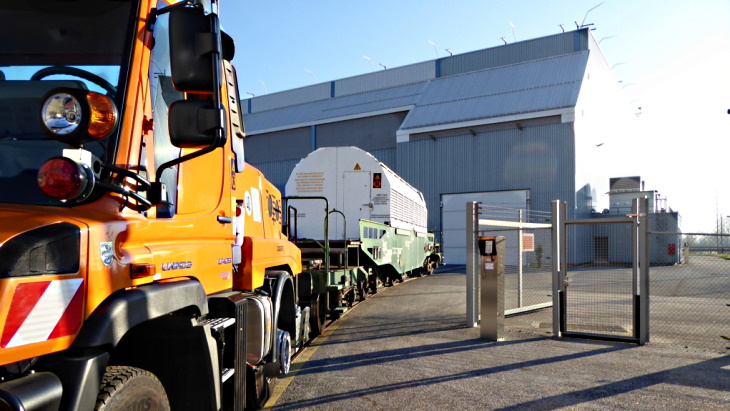
One of the flasks at the Isar interim storage facility (Image: BGZ)
The first shipment from the UK, of six flasks each with 28 containers of high-level waste, to Biblis, took place in 2020.
Sellafield Ltd's programme manager Jonathan Clingan said: "Thanks to the excellent work of various teams at Sellafield Ltd, NTS and other partners in the UK and overseas, we have safely delivered the second Vitrified Residue Return to Germany, delivering a key milestone in the UK government's commitment to returning waste to overseas customers."
"Following the successful transport to the Isar site, we are confident that the final transport of reprocessing waste to Brokdorf will proceed just as smoothly," said Guido Knott, Managing Director of PreussenElektra. That shipment is scheduled to take place next year.
France's Orano completed the 13th and final rail shipment from France of vitrified high-level nuclear waste, to Philippsburg, in Germany in November 2024. In total 5310 tonnes of German used fuel was processed at Orano's La Hague plant up to 2008. The inter-governmental agreement governing those operations included a provision that the equivalent in mass and radioactivity of the waste contained in the used fuel elements must be returned to Germany.
Second-last high level waste shipment departs UK for Germany
The second of three planned shipments of high-level radioactive waste has left the Sellafield site in northwest England and is being transported by rail and sea to its destination at the Isar interim storage facility in Germany.
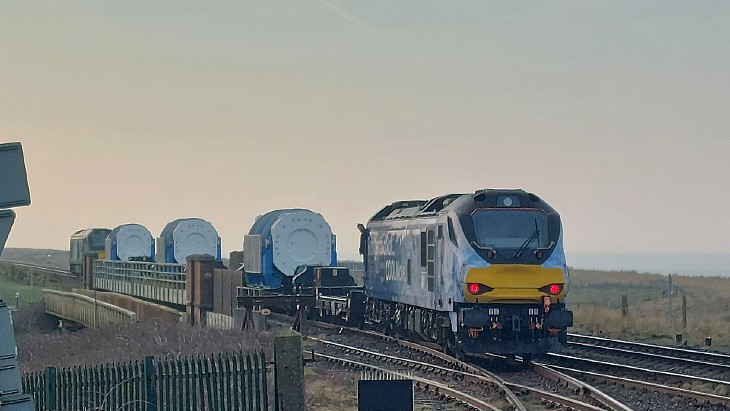
Seven flasks containing the vitrified residues - the radioactive waste has been transformed into a stable glass-like form - travelled by rail to the port of Barrow-in-Furness before being loaded on to Pacific Grebe, a specialist nuclear transport vessel operated by the UK's Nuclear Transport Solutions, which set sail on Wednesday.
The first shipment, of six flasks each with 28 containers of high level waste, to Biblis, took place in 2020.
The waste comes from the reprocessing and recycling of Germany's used nuclear fuel at the Sellafield site, with Nuclear Transport Solutions saying: "Vitrified Residue Returns are a key component of the UK’s strategy to repatriate high- level waste from the Sellafield site, fulfil overseas contracts and deliver on government policy."
According to Germany's Federal Office for the Safety of Nuclear Waste Management (BASE) the transport licence was approved in December, with the repatriation of German waste a binding requirement under international law.
In its guide to the waste it says that until 2005 German utilities shipped used fuel from nuclear power plants to La Hague in France and Sellafield in the UK for reprocessing: "The resulting liquid waste was then melted down into glass and has since been gradually returned to Germany. The last shipment of this waste from France was returned in November 2024." There is one more shipment planned, after the current one, from the UK to complete the repatriation.
The federal office issued a licence in April 2023 for the storage of the vitrified waste at the Isar interim storage facility, which is licensed to hold a maximum of 152 casks of high-level radioactive waste and "according to current plans, there will be 28 fewer high-level waste casks there than originally intended, including the casks containing the vitrified waste".
According to German nuclear specialist GNS: "The waste is massively shielded from external radiation. In the reprocessing plant, the waste is mixed with liquid silicate glass and poured into cylindrical stainless steel containers, which are then sealed tightly after hardening. These containers, filled with the hardened glass mixture, are called "glass moulds". For transport and storage, the moulds are placed in ... massive, more than 100-tonnes cast iron and stainless steel containers, which have been proven in extensive tests to provide both strong shielding and to be safe under extreme conditions."
Until 2011 reprocessed waste was sent to the Gorleben interim storage facility in Lower Saxony, where 108 casks of vitrified radioactive waste have been stored, which was "already a large proportion of the total waste to be returned from reprocessing". According to BASE, as part of the Site Selection Act of 2013 to seek a repository for high-level radioactive waste, the remaining vitrified waste abroad was to be stored in interim storage facilities at nuclear power plant sites.
"The aim was to avoid giving the impression that Gorleben had already been chosen as the site for a final storage facility during the open-ended search for a repository site. In 2015, the federal government, the federal states and the utility companies agreed to store the remaining radioactive waste in Biblis, Brokdorf, Niederaichbach (Isar nuclear power plant) and Philippsburg," BASE says.
France's Orano completed the 13th and final rail shipment from France of vitrified high-level nuclear waste, to Philippsburg, in Germany in November 2024. In total 5310 tonnes of German used fuel was processed at Orano's La Hague plant up to 2008. The inter-governmental agreement governing those operations included a provision that the equivalent in mass and radioactivity of the waste contained in the used fuel elements must be returned to Germany.
Until March 2011 Germany obtained a quarter of its electricity from nuclear energy, using 17 reactors. Following the Fukushima Daiichi accident eight reactors were closed immediately and the rest were scheduled to be closed by the end of 2022. Following the start of the Russia-Ukraine war, there was a brief extension for the last three operating nuclear power reactors - Isar 2, Emsland and Neckarwestheim 2 - but they closed in April 2023.
India sets up committees to propose nuclear acts changes
Minister of State Jitendra Singh has told the Indian Parliament that the process has begun to discuss and propose amendments to the Atomic Energy Act and the Civil Liability for Nuclear Damage Act, to encourage private sector participation in nuclear projects.

India has plans for a rapid expansion of its nuclear energy capacity - from 7 GW to 100 GW by 2047, with Minister of Finance Nirmala Sitharaman's budget speech earlier this year promising amendments to the two key bits of Indian legislation.
The Atomic Energy Act has precluded private-sector investment in India's civil nuclear industry and the Civil Liability for Nuclear Damage Act has been a stumbling block for overseas nuclear power plant vendors as it gave plant operators unlimited legal recourse to the reactor supplier in the event of a nuclear accident.
Jitendra Singh, minister for science and technology, earth sciences and nuclear energy, has now confirmed to the Indian parliament that the Department of Atomic Energy has set up committees including members from the department itself, the Indian Atomic Energy Regulatory Board, the NITI Aayog public policy think-tank and the Ministry of Law & Justice to discuss and propose the amendments to the two acts.
"The Committee also have to look at the aspect of the waste management, fuel sourcing & handling, decommissioning, implementation of security and safeguards. The activities related to the amendment in the Acts involves various stages of inter-ministerial consultations as well as scientific solution," he said in a 2 April written answer to the Lok Sabha. He said it was "not feasible to give a timeline" for these activities.
Last week India's largest power utility NTPC Ltd - which is under the administrative control of the Ministry of Power - invited Expressions of Interest "from interested and capable entities for cooperation in indigenising Pressurised Water Reactor (PWR) technology and establishing large-capacity (1000 MW & above) PWR-based Nuclear Power Plants in India on concept to commissioning basis, subject to approval from Government of India".
The target capacity it is looking at is 15 GW. The broad framework for cooperation includes "a commitment to the gradual transfer of key technologies of proposed PWR based nuclear reactors to India, fostering longterm capability building" and "minimum 60% Indigenisation of components for the first reactor unit and progressively increase to more than 95% for the last reactor unit, ensuring a steady transition to self-sufficiency in nuclear technology. This can either be done through an Indian Subsidiary/JV (joint venture) company of the applicant or through tie up with Indian companies".
They are also suggesting a commitment for a lifetime supply of nuclear fuel and the establishment of a fuel fabrication facility under International Atomic Energy Agency safeguards. The expression of interest also suggests there would be an undertaking for "the operation and maintenance of the nuclear power plant for an initial period of five years post-commissioning, ensuring smooth and efficient performance till NTPC personnel are able to confidently take over".
Holtec SMRs in India?
Meanwhile the USA's Holtec International says the US Department of Energy has authorised it to transfer SMR-300 small modular reactor technology for deployment in India.
The company says the authorisation names two Indian companies - Larsen & Tubro and Tata Consulting Engineers - and Holtec’s own India-based subsidiary, Holtec Asia, as eligible entities for Holtec to share necessary technical information.
Holtec says that "action to add additional GOI-owned (Government of India-owned) entities such as NPCIL, DAE, AERB and NTPC, to the eligible list has been delayed until the matter of assurances needed by the US from India is resolved to both countries' satisfaction".
Kris Singh, Holtec’s CEO, said: "Our SMR-300 checks every box relevant to India's needs and circumstances, such as a standardised design that is seismically competent to be deployed anywhere in India, one that requires only 25 acres of land to house two reactors, one that can be operated using air (in lieu of water) as the 'waste heat sink' in a water-challenged region, and one that can be substantially shop manufactured requiring minimal field erection effort."
Holtec says it plans to adapt the SMR-300 for 50Hz electricity if successful in the UK's small modular reactor selection process, "which will pave the way for use in India and other 50 Hz markets" - 60Hz is used in the USA.
India and the USA signed a civil nuclear cooperation agreement (also known as a 123 Agreement) in 2008, after India - which is not a signatory of the international Nuclear Non-proliferation Treaty - reached a safeguards agreement with the International Atomic Energy Agency. Kovvada, in Andhra Pradesh, was earmarked for the construction of six AP1000 pressurised water reactors as long ago as 2016, but contractual arrangements have yet to be finalised.
A techno-commercial offer for Kovvada submitted by Westinghouse in 2016 became invalid following the company's bankruptcy and subsequent takeover by Brookfield Business Partners, Singh told the parliament's upper house on 3 April. The government is waiting for Westinghouse to submit a revised offer, but the company has not yet done so because of "issues related to provisions of the CLND Act", Singh said in the written answer to the Rajya Sabha.
In January the then National Security Advisor Jake Sullivan said the USA was finalising the necessary steps to remove long-standing regulations that have prevented civil nuclear cooperation between India's leading nuclear entities and US companies
US national labs identified as potential AI sites
The US Department of Energy has announced plans to co-locate data centres and new energy infrastructure on its lands, and identified 16 potential sites it says are uniquely positioned for rapid data centre construction.
_18499.jpg)
The list of sites is included in a Request for Information to inform possible use of Department of Energy (DOE) land for artificial intelligence (AI) infrastructure development, which says they are "uniquely positioned for rapid data centre construction, including in-place energy infrastructure with the ability to fast-track permitting for new energy generation such as nuclear". The list includes national laboratories, defence-related sites and the sites of two former federally-owned uranium enrichment plants.
The plans are in accordance with executive orders on Removing Barriers to American Leadership in Artificial Intelligence and Unleashing American Energy Executive Orders signed earlier this year by President Donald Trump. They were announced by Energy Secretary Chris Wright during a visit to the DOE's National Renewable Energy Laboratory (NREL) laboratory in Golden, Colorado, who said the global race for AI dominance is "the next Manhattan project".
The DOE said it was seeking input from data centre developers, energy developers, and the broader public to further advance this partnership. The information collected will be used to inform development, encourage private-public partnerships and enable the construction of AI infrastructure at select DOE sites, targeting the start of operation by the end of 2027. The Request for Information also aims to gather information on potential development approaches, technology solutions, operational models, and economic considerations associated with establishing AI infrastructure.
In March, Wright announced actions to ease permitting rules and regulations for construction projects at the national laboratories, which DOE said would accelerate "much-needed critical infrastructure improvement projects" while saving "hundreds of millions" of taxpayer dollars.
The sixteen sites in the RFI are:
- Idaho National Laboratory
- Paducah Gaseous Diffusion Plant
- Portsmouth Gaseous Diffusion Plant
- Argonne National Laboratory
- Brookhaven National Laboratory
- Fermi National Accelerator Laboratory
- National Energy Technology Laboratory
- National Renewable Energy Laboratory
- Oak Ridge National Laboratory
- Pacific Northwest National Laboratory
- Princeton Plasma Physics Laboratory
- Los Alamos National Laboratory
- Sandia National Laboratories
- Savannah River Site
- Pantex Plant
- Kansas City National Security Campus
Teaming agreement signed for Estonian SMR project
Estonia's Fermi Energia and South Korea's Samsung C&T Corporation Engineering & Construction Group have signed a teaming agreement to collaborate on the deployment of two BWRX-300 small modular reactors in Estonia.
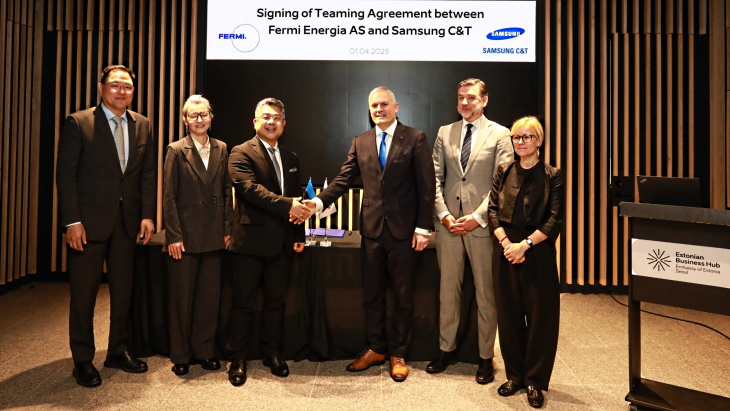
Under the teaming agreement - signed in Seoul on 1 April - the cooperation between Fermi Energia and Samsung C&T will focus on key aspects of the project, including the formation of an Engineering, Procurement, and Construction (EPC) partnership, site constructability review, cost estimation, and financing strategies. The agreement also positions Samsung C&T as a potential EPC Prime Contractor and key commercial partner in the Estonian small modular reactor (SMR) project.
This collaboration builds upon a memorandum of understanding signed between the two companies in November 2024.
As part of the agreement, Fermi Energia and Samsung C&T will work together during the pre-Front-End Engineering Design (Pre-FEED) phase to establish project terms and budget estimates. The Teaming Agreement also outlines plans for a full FEED phase, setting the stage for the regulatory approval and construction process.
The two companies plan to begin full-scale business procedures as early as the second half of this year, and the project aims to be commercially operated in 2035.
"The cooperation extends beyond Estonia, as both parties recognise the broader potential of SMR deployment across Northern Europe," Fermi Energia said. "Through this partnership, Samsung C&T aims to play a key role in at least 10–15 BWRX-300 reactor projects across the region, leveraging economies of scale and minimising project risks."
"We will strengthen our position as a global SMR player along with the successful promotion of Estonia's first SMR project," said Kim Jeong-eun, head of the nuclear power plant sales team at Samsung C&T.
"The signing of this teaming agreement reflects our commitment to preparing for a cost-effective and timely deployment of SMRs in Estonia," said Fermi Energia CEO Kalev Kallemets. "Nuclear energy is not a simple technology, and for a country of Estonia's size, it can only be implemented in cooperation with reliable, democratic partners. South Korea is already an important partner for Estonia in defence equipment manufacturing, and Samsung C&T's experience in nuclear energy and large-scale power construction will be essential for ensuring SMR deployment in Estonia and Northern Europe stays on schedule and within budget."
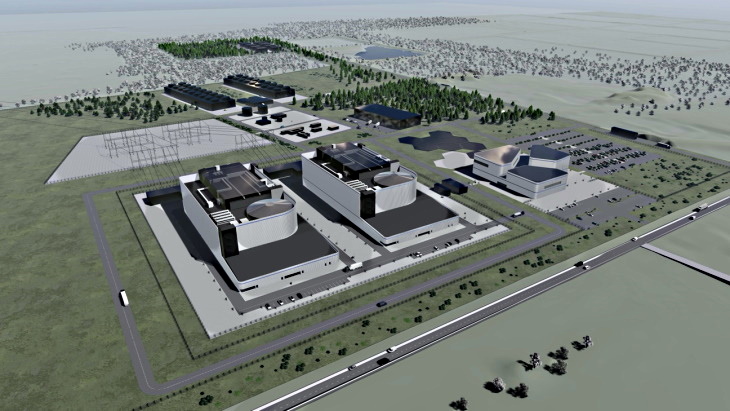
A visualisation of a two unit BWRX-300 power plant (Image: Fermi Energia)
Fermi Energia was founded by Estonian energy and nuclear energy professionals to develop deployment of SMRs in Estonia. In July 2019, the company launched a feasibility study on the suitability of SMRs for Estonia's electricity supply and climate goals beyond 2030, following a financing round from investors and shareholders.
In February 2023, the company selected GE Hitachi Nuclear Energy's BWRX-300 SMR for potential deployment by the early 2030s. GEH's BWRX-300 design is a 300 MWe water-cooled, natural circulation SMR with passive safety systems that leverages the design and licensing basis of GEH's ESBWR boiling water reactor.
In January this year, Fermi Energia submitted an application to Estonia's Ministry of Economic Affairs and Communications to begin the state spatial planning process for a 600 MW nuclear power plant. The municipal councils of Viru-Nigula and Lüganuse have formally agreed to participate in the spatial planning process, with decisions made in September 2023 and March 2024, respectively.
Fermi Energia expects to submit a construction permit application for the proposed plant in 2029, with construction targeted to begin in 2031. The first of two SMRs is set to be operational by the second half of 2035.
The Estonian parliament - the Riigikogu - passed a resolution in June last year supporting the adoption of nuclear energy in the country, paving the way for the creation of the necessary legal and regulatory framework. The parliament based its decision on analysis conducted by the Nuclear Energy Working Group, which concluded that the adoption of nuclear energy in Estonia was feasible.
New agreement enables continued development of Polish plant
Polskie Elektrownie Jądrowe and the Westinghouse-Bechtel Consortium have agreed the terms and conditions of an Engineering Development Agreement for Poland's first nuclear power plant after a previous agreement expired.
_46692.jpg)
In November 2022, the then Polish government selected Westinghouse AP1000 reactor technology for construction at the Lubiatowo-Kopalino site in the Choczewo municipality in Pomerania in northern Poland. In September 2023, Westinghouse, Bechtel and Polskie Elektrownie Jądrowe (PEJ) - a special-purpose vehicle 100% owned by Poland's State Treasury - signed an 18-month engineering services contract under which Westinghouse and Bechtel will finalise a site-specific design for a plant featuring three AP1000 reactors.
However, that contract expired at the end of March without a new agreement being concluded.
PEJ has now announced that an Engineering Development Agreement (EDA) - the so-called 'bridge agreement' - has been signed, establishing the framework for cooperation between PEJ and the Westinghouse-Bechtel Consortium for the upcoming months.
"The EDA opens the next stage in the construction of Poland's first nuclear power plant and enables continuation of project work, which will facilitate obtaining the necessary administrative decisions, licences and permits, etc, and initiate a further phase of in-depth geological surveys at the project site," it said.
PEJ added: "The agreement reached and the compromise worked out provide a solid and sustainable foundation for the continuation of partnership under the project. The Engineering Development Agreement will be signed after completing the governance process. Hence, the planned project work to inform the documents for Poland's first nuclear power plant required by applicable laws continue according to the adopted schedule."
"Today we are one step further in implementing the project of building the first Polish nuclear power plant," said Wojciech Wrochna, Government Plenipotentiary for Strategic Energy Infrastructure, Secretary of State in the Ministry of Industry. "The completion of negotiations between Polskie Elektrownie Jądrowe and the consortium of Westinghouse and Bechtel is a confirmation of our common determination to implement this undertaking.
"The signing of the so-called bridge agreement opens the next stage of our cooperation, which will allow for the effective implementation of the design process and then the construction of this facility, which is key to energy security."
Polish Prime Minister Donald Tusk said: "Negotiations on the bridge agreement with contractors have been completed and I would like to thank Minister Marzena Czarnecka and the team that worked on a better form of agreement. The first piece of good news: we are continuing the construction of the nuclear power plant. The second piece of good news: we have reached an agreement with our American partners in such a way that this agreement is much better from our point of view.
In late March, President Andrzej Duda signed a bill that designates funds from the national budget for the construction of Poland's first nuclear power plant. Under the bill, PEJ is set to receive PLN60.2 billion (USD15.5 billion) in public funding between 2025 and 2030. The remaining funding will be obtained from financial institutions, primarily foreign institutions supporting exports originating from equipment suppliers' countries, including export credit agencies, in particular the American export credit agency Export-Import Bank of the United States.
The aim is for Poland's first AP1000 reactor to enter commercial operation in 2033.
Eletronuclear used fuel storage unit gets extended licence
Brazil's National Nuclear Energy Commission has given an extendable 40-year authorisation for the operation of the Complementary Dry Storage Unit for Spent Fuel at the Angra nuclear power plant site.
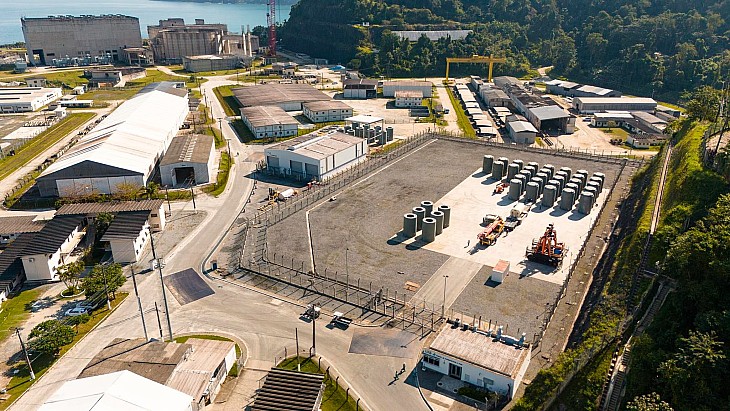
Eletronuclear said the facility, which received its initial operation authorisation in 2021, was designed to accommodate up to 72 of the Holtec Hi-Storm FW dry storage casks, with the capacity to receive fuel until 2045.
In its announcement in the Official Gazette, the National Nuclear Energy Commission (CNEN) said assessments had shown there was "sufficient guarantee that the operation ... can be conducted without undue risk to the safety of workers, the public and the environment with regard to the areas of nuclear technical safety, radiological protection and physical protection of facilities and materials".
Eletronuclear said that it welcomed the authorisation as it does not see used fuel as radioactive waste because of the potential to resuse it in the future.
CEO Raul Lycurgo said: "This is an important milestone for Eletronuclear and the Brazilian nuclear sector. It confirms that, with respect to the most stringent safety and efficiency standards, we are ready to ensure the safe storage of spent fuels and continue our commitment to generating clean and sustainable energy for Brazil. The operation of the UAS (Complementary Dry Storage Unit for Spent Fuel) not only ensures the safety of the facilities but also reinforces the role of nuclear energy in the national energy matrix, with the potential for future reuse of used fuels."
Under a turnkey contract signed in 2017, Holtec of the USA supplied Eletronuclear with HI-STORM FW systems and related equipment for dry storage of used fuel from Angra units 1 and 2. Angra 1 is a Westinghouse-designed 609 MWe pressurised water reactor (PWR), while Angra 2 is a Siemens-designed 1275 MWe PWR. The units have different architectures and licensing bases, adding to the complexity of the project. Holtec modified their respective cask handling cranes and equipment for loading the fuel into the multi-purpose canisters and for moving the canisters to the dry storage facility.
The storage facility is designed to receive fuel elements after the cooling process in pools at the plants. They are stored in canisters made of steel and concrete to guarantee safety. It is a system which is used in the USA and is designed to withstand extreme events such as earthquakes and floods.
It includes physical security, radiation and temperature monitoring, an armoured access control centre and a storage warehouse with a technical workshop, designed and constructed by Holtec. The facility was constructed because the storage pools of both units were reaching full capacity.
Nuclearis, DeepGeo agree to collaborate
US-based multinational repository developer DeepGeo and Argentina-based reactor technology start-up Nuclearis have signed a memorandum of understanding to evaluate the integration of DeepGeo's multinational services as a solution for any wastes generated by Nuclearis's microreactor technologies.

Under the terms of the MoU, the companies will consider technical, legal, regulatory, and financial challenges that may prevent the use of multinational repositories for this purpose. They will also share information and jointly collaborate to promote nuclear energy adoption in emerging markets, particularly in Africa.
DeepGeo noted that this is the first such agreement between a light water reactor vendor and the multinational repositories developer. Nuclearis is now the second reactor technology start-up company to back this innovative waste disposal option, following the signing of a similar agreement in November last year with Danish advanced reactor designer Copenhagen Atomics.
Nuclearis is developing innovative pressurised water microreactors that are multi-functional, providing not only electricity but also heating and supporting industrial applications such as hydrogen production, hydrotreated vegetable oil biofuel, syngas, and biochar. By focusing on sectors that are traditionally difficult to decarbonise, the company aims to contribute to reducing carbon footprints across various industries. Its N1 microreactor design currently under development is expected to be constructed underground and operate without refueling for at least 20 years. At the end of its operational life, the reactor vessel transitions to a decay pool and dry storage solution, eliminating the need for external handling of used fuel.
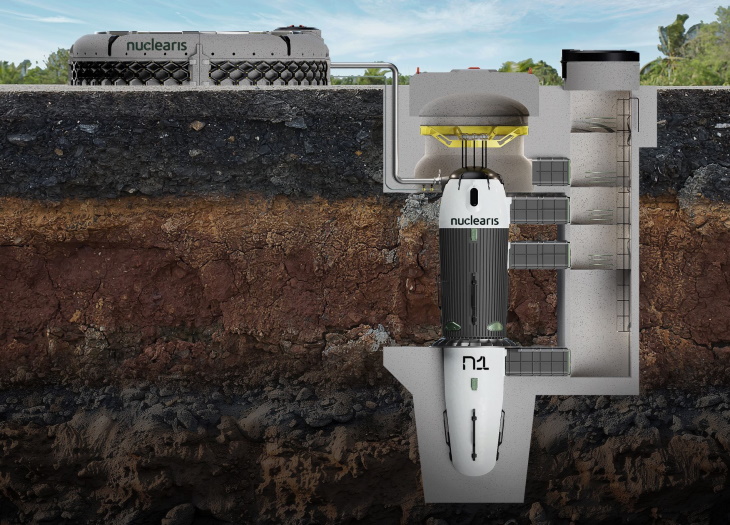
(Image: Nuclearis)
According to DeepGeo, disposal pathways are less clear for advanced reactor developers that are pursuing novel technologies and business models, such as leasing concepts and providing 'nuclear energy as a service'. Many start-ups, it says, are "not satisfied with the rate of progress on national disposal facilities and cannot afford to bank on them, as investors require strict assurances of sustainable waste management".
Leading international organisations, DeepGeo said, have long recognised that multinational repositories (MNRs) are essential for many established nuclear countries, which face acute challenges in the form of small waste inventories, unsuitable geology, and public opposition. "It is increasingly clear that MNRs can also help facilitate the development of SMRs and advanced reactors," it added.
"We are thrilled to be partnering with Nuclearis, who have demonstrated clear nuclear industry leadership in considering not only their technology but the full nuclear fuel cycle," said DeepGeo President Link Murray. "An innovative nuclear sector needs innovative waste solutions. We are committed to working with all forward-thinking technology and project developers to help make the advanced nuclear future a reality."
"Our partnership with DeepGeo is a pivotal move in solving one of the nuclear industry's most pressing challenges - responsible management of spent fuel," said Nuclearis CEO Santiago Badran. "By working together, Nuclearis and DeepGeo are advancing not only safe and efficient energy generation but also ensuring long-term environmental stewardship. This collaboration represents a crucial step towards sustainable nuclear energy."
Beloyarsk BN-600 fast neutron reactor gets 15-year extension
Russian nuclear regulator Rostekhnadzor has approved a 15-year life extension to 2040 for the Beloyarsk nuclear power plant's unit 3, a BN-600 fast neutron reactor.
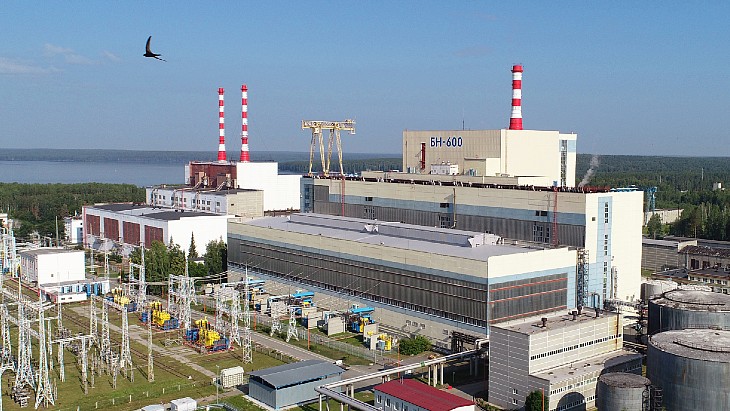
It follows a comprehensive assessment of the condition of the unit - including the reactor vessel and internal elements and heat exchanger supports - which concluded that the "equipment fully complies with all modern safety standards". The extension to 2040 will take it to 60 years of operation.
A large-scale modernisation programme began in 2009 which included the installation of a second reactor emergency protection system, an emergency dampening system using an air heat exchanger and a back-up reactor control panel. That allowed an extension for 10 and then a further five years to 2025. Further work has been carried out, including the replacement of steam generators and circulating pumps of the first reactor circuit as part of the further 15-year extension process.
Ivan Sidorov, director of Beloyarsk NPP, said: "Power unit 3 of the Beloyarsk NPP is a key link for the future of nuclear energy. It was here that the first assemblies based on used nuclear fuel - MOX fuel - were industrially tested, and now new assemblies are in the active zone to confirm the high quality of fuel and materials for future fourth-generation power units BN-1200M and BREST. Even more important is the invaluable knowledge of our personnel, obtained as a result of the reliable operation of fast neutron reactors."
The nuclear power plant operates units with fast neutron reactors with sodium coolants - the BN-600, connected to the grid in 1980, and BN-800, connected to the grid in 2015, are the world's largest such power units. The life extension will mean the unit can generate an extra 60 billion kWh of electricity.
The sodium-cooled BN-series fast reactors are part of Rosatom's Proryv, or 'Breakthrough', project to develop fast reactors with a closed fuel cycle whose mixed oxide (MOX) fuel will be reprocessed and recycled. As well as its generating capacity unit 3 is seen as strategically important in terms of testing technical solutions for future fast reactors such as the BREST-OD-300 fast reactor with lead coolant and the BN-1200 planned for Beloyarsk.
Italian government eyes investment in Newcleo
Innovative reactor developer Newcleo said it has "deep appreciation" for the Italian government's "strategic interest and support for the company" after two ministers said the government plans to invest in the company as part of the country's reintroduction of nuclear energy.
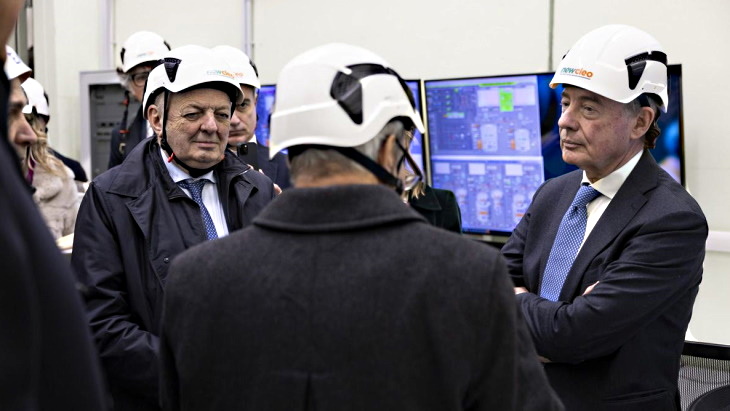
Following talks on the development of new-generation nuclear power, a joint statement was issued by Italy's Minister of the Environment and Energy Security Gilberto Pichetto Fratin and Minister of Enterprise and Made in Italy Adolfo Urso.
"The two ministers confirmed their full agreement on the government's strategic interest in Italy's active participation in the development of innovative technologies in the sector, with a particular focus on the projects promoted by Newcleo, a leading Italian company in the design of advanced third-generation and fourth-generation reactors," it said.
It continued: "In fact, the government intends to provide concrete support to strengthen the national industrial supply chain dedicated to innovative nuclear energy, recognising its fundamental importance in guaranteeing the country's energy security, environmental sustainability and technological competitiveness."
According to a Reuters report, the government "could invest, through one or more state-controlled entities, as much as EUR200 million (USD216 million) in Newcleo".
Paris-headquartered Newcleo said that it welcomes the interest shown, adding: "We are pleased that the government intends to strengthen Italy's industrial position in this sector through concrete support for our company."
According to Newcleo's delivery roadmap, the first non-nuclear pre-cursor prototype of its lead-cooled fast reactor (LFR) is expected to be ready by 2026 in Italy, the first reactor operational in France by the end of 2031, while the final investment decision for the first commercial power plant is expected around 2029.
Earlier this month, Newcleo announced it is to collaborate with Italian designer, manufacturer and installer of machinery and plants for the iron and steel industry Danieli Group on integrating Newcleo's LFRs with Danieli's steelmaking technology.
In late February, Italy's Council of Ministers approved a draft law calling for the government to adopt a series of legislative decrees to create the legal framework for the reintroduction of nuclear power, which was phased out following a referendum in 1987. The government said the text is aimed at "the inclusion of sustainable nuclear and fusion in the so-called 'Italian energy mix' and intervenes organically from an economic, social and environmental perspective, within the framework of European decarbonisation policies with a time horizon of 2050, consistently with the objectives of carbon neutrality and security of supply".
The draft law has been submitted to parliament for final approval.

No comments:
Post a Comment