Soviet-era spacecraft plunges to Earth after 53 years stuck in orbit
Story by Marcia Dunn
Published on 10/05/2025 -
A Soviet-era spacecraft plunged to Earth on Saturday, more than a half-century after its failed launch to Venus.
Its uncontrolled entry was confirmed by both the Russian Space Agency and European Union Space Surveillance and Tracking. The Russians indicated it came down over the Indian Ocean, but some experts were not so sure of the precise location. The European Space Agency’s space debris office also tracked the spacecraft's doom after it failed to appear over a German radar station.
It was not immediately known how much, if any, of the half-ton spacecraft survived the fiery descent from orbit. Experts said ahead of time that some if not all of it might come crashing down, given it was built to withstand a landing on Venus, the solar system’s hottest planet.
The chances of anyone getting clobbered by spacecraft debris were exceedingly low, scientists said.
Launched in 1972 by the Soviet Union, the spacecraft known as Kosmos 482 was part of a series of missions bound for Venus. But this one never made it out of orbit around Earth, stranded there by a rocket malfunction.
Much of the spacecraft came tumbling back to Earth within a decade of the failed launch. No longer able to resist gravity’s tug as its orbit dwindled, the spherical lander — an estimated 3 feet (1 meter) across — was the last part of the spacecraft to come down. The lander was encased in titanium, according to experts, and weighed more than 1,000 pounds (495 kilograms).
 Related video: Soviet space hardware is set to crash down to Earth, but where? (The Weather Network)
Any surviving wreckage will belong to Russia under a United Nations treaty.
After following the spacecraft’s downward spiral, scientists, military experts and others could not pinpoint in advance precisely when or where the spacecraft might come down. Solar activity added to the uncertainty as well as the spacecraft’s deteriorating condition after so long in space.
After so much anticipation, some observers were disappointed by the lingering uncertainty over the exact whereabouts of the spacecraft’s grave.
“If it was over the Indian Ocean, only the whales saw it,” Dutch scientist Marco Langbroek said via X.
As of Saturday afternoon, the U.S. Space Command had yet to confirm the spacecraft's demise as it collected and analyzed data from orbit.
The U.S. Space Command routinely monitors dozens of reentries each month. What set Kosmos 482 apart — and earned it extra attention from government and private space trackers — was that it was more likely to survive reentry, according to officials.
It was also coming in uncontrolled, without any intervention by flight controllers who normally target the Pacific and other vast expanses of water for old satellites and other space debris.
___
The Associated Press Health and Science Department receives support from the Howard Hughes Medical Institute’s Science and Educational Media Group and the Robert Wood Johnson Foundation. The AP is solely responsible for all content.
Marcia Dunn, The Associated Press
Story by Marcia Dunn
Published on 10/05/2025 -
A Soviet-era spacecraft plunged to Earth on Saturday, more than a half-century after its failed launch to Venus.
Its uncontrolled entry was confirmed by both the Russian Space Agency and European Union Space Surveillance and Tracking. The Russians indicated it came down over the Indian Ocean, but some experts were not so sure of the precise location. The European Space Agency’s space debris office also tracked the spacecraft's doom after it failed to appear over a German radar station.
It was not immediately known how much, if any, of the half-ton spacecraft survived the fiery descent from orbit. Experts said ahead of time that some if not all of it might come crashing down, given it was built to withstand a landing on Venus, the solar system’s hottest planet.
The chances of anyone getting clobbered by spacecraft debris were exceedingly low, scientists said.
Launched in 1972 by the Soviet Union, the spacecraft known as Kosmos 482 was part of a series of missions bound for Venus. But this one never made it out of orbit around Earth, stranded there by a rocket malfunction.
Much of the spacecraft came tumbling back to Earth within a decade of the failed launch. No longer able to resist gravity’s tug as its orbit dwindled, the spherical lander — an estimated 3 feet (1 meter) across — was the last part of the spacecraft to come down. The lander was encased in titanium, according to experts, and weighed more than 1,000 pounds (495 kilograms).
Related video: Soviet space hardware is set to crash down to Earth, but where? (The Weather Network)Any surviving wreckage will belong to Russia under a United Nations treaty.
After following the spacecraft’s downward spiral, scientists, military experts and others could not pinpoint in advance precisely when or where the spacecraft might come down. Solar activity added to the uncertainty as well as the spacecraft’s deteriorating condition after so long in space.
After so much anticipation, some observers were disappointed by the lingering uncertainty over the exact whereabouts of the spacecraft’s grave.
“If it was over the Indian Ocean, only the whales saw it,” Dutch scientist Marco Langbroek said via X.
As of Saturday afternoon, the U.S. Space Command had yet to confirm the spacecraft's demise as it collected and analyzed data from orbit.
The U.S. Space Command routinely monitors dozens of reentries each month. What set Kosmos 482 apart — and earned it extra attention from government and private space trackers — was that it was more likely to survive reentry, according to officials.
It was also coming in uncontrolled, without any intervention by flight controllers who normally target the Pacific and other vast expanses of water for old satellites and other space debris.
___
The Associated Press Health and Science Department receives support from the Howard Hughes Medical Institute’s Science and Educational Media Group and the Robert Wood Johnson Foundation. The AP is solely responsible for all content.
Marcia Dunn, The Associated Press
The transfer of "Gagarin's Start", the launchpad for the world's first spaceflight, will be finalised by June.
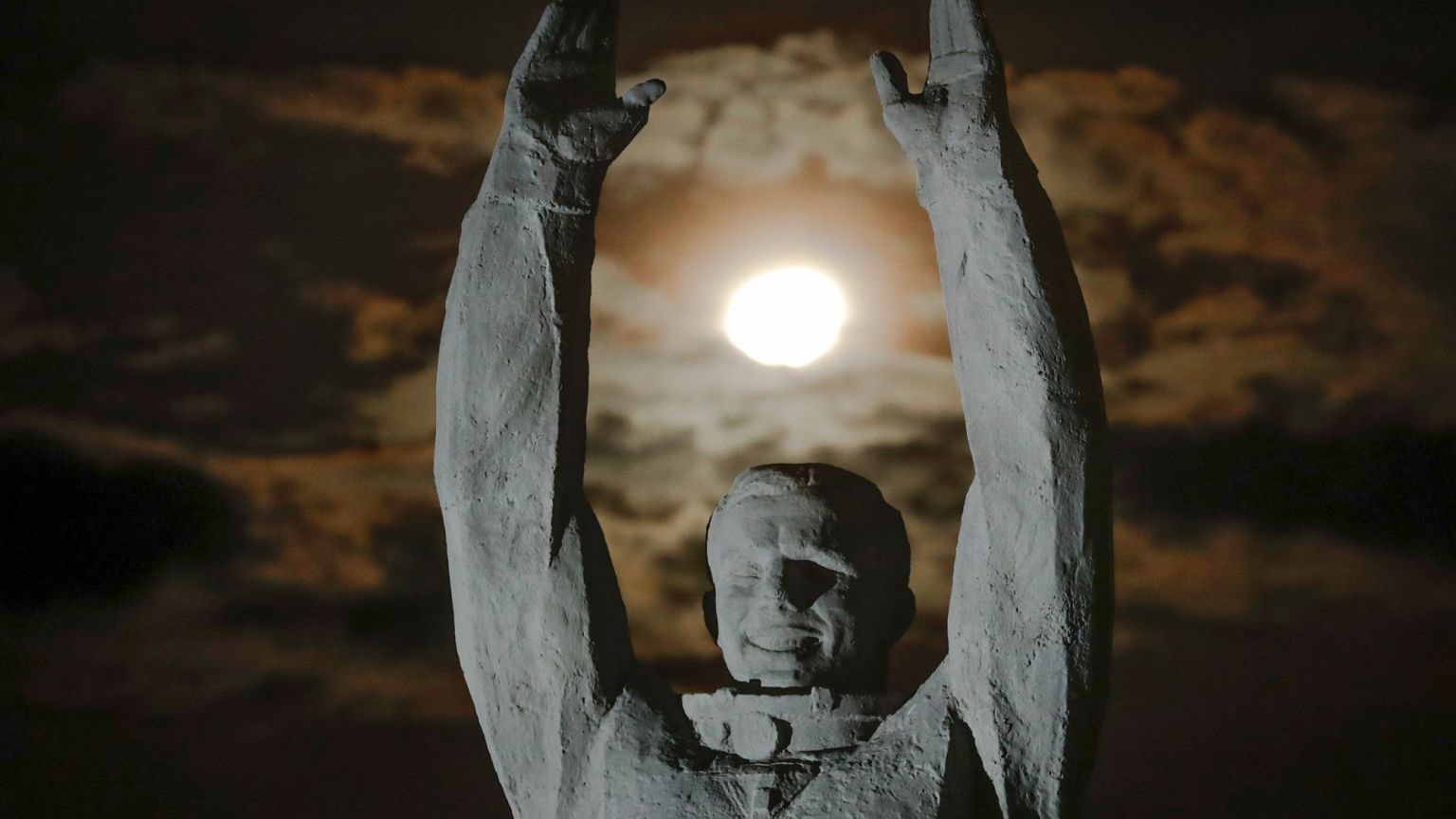
Copyright AP Photo
By Galiya Khassenkhanova
Published on 09/05/2025 -
Russia will return the oldest and most famous launch pad in the Baikonur Cosmodrome, also known as “Gagarin’s Start,” to Kazakhstan, handing it over by 1 June.
Kazakhstan plans to turn the world’s first crewed space launch site — which was decommissioned back in 2019 — into a museum.
“The Gagarin’s Start was decommissioned due to its unsuitability for launching the new Soyuz-2 rockets, which are now launched from the 31st platform of the cosmodrome,” said the spokesperson for the Kazakh Ministry of Digital Development, Innovation and Aerospace Industry.
To fund the site's modernisation, Russia and Kazakhstan partnered with the United Arab Emirates and signed a trilateral agreement in 2021.
However, the project stalled amid shifting geopolitical dynamics. Russia’s war in Ukraine forced countries to reevaluate their partnership and the use of Soyuz-2 rockets.
In the meantime, Russia turned its attention to its own launching sites of Plesetsk and Vostochny, shifting commercial launches to one of them.
While it still leases Baikonur from Kazakhstan until 2050, it has presented Kazakhstan with a list of 234 facilities it no longer needs, to be struck from the lease agreement. According to authorities, 53 have already been accepted by the Kazakh side.
“The Russian side will continue to use the Baikonur Cosmodrome in the future. A total of nine launches were planned for 2025, of which two were completed,” the ministry said.
Meanwhile, Kazakhstan continues to develop its own Baiterek space complex, though progress has been slow. Experts warn that delays, coupled with the waning relevance of Baikonur, could result in outdated infrastructure and missed economic opportunities.
From launch site to heritage landmark
The Gagarin’s Start, also known as Baikonur Site 1 or Site 1/5, holds deep historical significance. In 1961, Yuri Gagarin became the first human to journey into space from this pad. The Earth’s first artificial satellite, Sputnik, was also launched from this pad.
After mulling over an upgrade, Russia’s space agency Roscosmos initially proposed turning the launch pad into a museum, citing the importance of preserving the site as a global heritage site. Soon to be in charge of the project, Kazakhstan hopes to increase Baikonur's tourism potential by opening it to the public.
“Given the historical significance of the Gagarin’s Start and for the purpose of developing tourism at the Baikonur complex, the Kazakh side, in collaboration with the Russian side, plans to create a museum complex dedicated to the history of space exploration,” said the statement by the Kazakh ministry.
The future museum will showcase rockets, space equipment and other artefacts from Baikonur’s 70-year history.
Both sides will also work on including the launch pad in the UNESCO World Heritage List.
Currently, visiting Baikonur requires a special permit issued two months in advance, limiting broader access. The ministry said it was working on reducing the time needed to obtain the access permit and develop a digital pass.
Officials hope the museum project will boost the region's domestic and international tourism.
Copyright AP Photo
By Galiya Khassenkhanova
Published on 09/05/2025 -
Russia will return the oldest and most famous launch pad in the Baikonur Cosmodrome, also known as “Gagarin’s Start,” to Kazakhstan, handing it over by 1 June.
Kazakhstan plans to turn the world’s first crewed space launch site — which was decommissioned back in 2019 — into a museum.
“The Gagarin’s Start was decommissioned due to its unsuitability for launching the new Soyuz-2 rockets, which are now launched from the 31st platform of the cosmodrome,” said the spokesperson for the Kazakh Ministry of Digital Development, Innovation and Aerospace Industry.
To fund the site's modernisation, Russia and Kazakhstan partnered with the United Arab Emirates and signed a trilateral agreement in 2021.
However, the project stalled amid shifting geopolitical dynamics. Russia’s war in Ukraine forced countries to reevaluate their partnership and the use of Soyuz-2 rockets.
In the meantime, Russia turned its attention to its own launching sites of Plesetsk and Vostochny, shifting commercial launches to one of them.
While it still leases Baikonur from Kazakhstan until 2050, it has presented Kazakhstan with a list of 234 facilities it no longer needs, to be struck from the lease agreement. According to authorities, 53 have already been accepted by the Kazakh side.
“The Russian side will continue to use the Baikonur Cosmodrome in the future. A total of nine launches were planned for 2025, of which two were completed,” the ministry said.
Meanwhile, Kazakhstan continues to develop its own Baiterek space complex, though progress has been slow. Experts warn that delays, coupled with the waning relevance of Baikonur, could result in outdated infrastructure and missed economic opportunities.
From launch site to heritage landmark
The Gagarin’s Start, also known as Baikonur Site 1 or Site 1/5, holds deep historical significance. In 1961, Yuri Gagarin became the first human to journey into space from this pad. The Earth’s first artificial satellite, Sputnik, was also launched from this pad.
After mulling over an upgrade, Russia’s space agency Roscosmos initially proposed turning the launch pad into a museum, citing the importance of preserving the site as a global heritage site. Soon to be in charge of the project, Kazakhstan hopes to increase Baikonur's tourism potential by opening it to the public.
“Given the historical significance of the Gagarin’s Start and for the purpose of developing tourism at the Baikonur complex, the Kazakh side, in collaboration with the Russian side, plans to create a museum complex dedicated to the history of space exploration,” said the statement by the Kazakh ministry.
The future museum will showcase rockets, space equipment and other artefacts from Baikonur’s 70-year history.
Both sides will also work on including the launch pad in the UNESCO World Heritage List.
Currently, visiting Baikonur requires a special permit issued two months in advance, limiting broader access. The ministry said it was working on reducing the time needed to obtain the access permit and develop a digital pass.
Officials hope the museum project will boost the region's domestic and international tourism.


No comments:
Post a Comment