Netanyahu Wants “Permanent War” in Gaza, Not a New Ceasefire
We get an update on ongoing ceasefire negotiations between Hamas and Israel from former Israeli peace negotiator Daniel Levy. The latest proposal, mediated by U.S. Middle East envoy Steve Witkoff, “walks back the commitment for a permanent ceasefire, Israeli withdrawal and allowing in of humanitarian aid.” It’s a bad deal for the Palestinians that will allow Israel to continue its ethnic cleansing of Gaza, says Levy. Meanwhile, families of Israeli hostages are protesting Israeli Prime Minister Benjamin Netanyahu’s delays in securing a deal as he works toward “permanent war” and the eventual annexation of Gaza. “None of this would be possible if so much of the Israeli media and society was not mobilized in support of this, and none of that would be possible if Israel wasn’t treated with impunity.” Levy also responds to the latest massacre of Palestinians at an aid site operated by the U.S.-Israeli aid initiative, the Gaza Humanitarian Foundation.
Transcript
This is a rush transcript. Copy may not be in its final form.
AMY GOODMAN: We begin today’s show with Gaza ceasefire talks, which are underway after Israeli military tanks opened fire Sunday and killed at least 30 Palestinians near Rafah in southern Gaza as they were waiting for aid. More than 170 others were wounded. Israel has denied responsibility. The aid site is operated by the U.S.-Israel-backed Gaza Humanitarian Foundation. This is a witness named Ibrahim Abu Saud, who described the attack to Al Jazeera.
IBRAHIM ABU SAUD: [translated] They said there was aid, and we were supposed to enter at 5:30. We were advancing toward the Al-Alam roundabout near the sea, and there was a lot of gunfire. The quadcopters came and said there was no aid today. At 6:00, the tanks were firing, but no one was doing anything to the Israelis.
AMY GOODMAN: Soon we’ll go to Gaza to talk more about the attack with a doctor who treated survivors and with a local NGO coordinator, but first we get an update on how negotiations are continuing over a possible ceasefire.
Over the weekend, Hamas submitted its response to a proposal by U.S. Middle East envoy Steve Witkoff. Hamas is offering to release 10 living hostages and 18 bodies in return for Israel’s release of Palestinian prisoners. Hamas is also seeking a complete end to Israel’s war on Gaza and withdrawal of Israeli troops from Gaza, but Witkoff has called Hamas’s response “totally unacceptable.”
Meanwhile, in the United States, authorities in Boulder, Colorado, have arrested a man accused of using a makeshift flamethrower and another incendiary device to attack a crowd of people taking part in a weekly walk honoring Israeli hostages in Gaza. Eight people were injured with burns, at least one in critical condition. The FBI said the attack is being investigated as an act of terrorism.
For more, we’re joined in London by Daniel Levy, president of the U.S./Middle East Project, a former Israeli peace negotiator under Prime Ministers Ehud Barak and Yitzhak Rabin.
Daniel, welcome back to Democracy Now! First, if you can talk about where the ceasefire proposal stands right now?
DANIEL LEVY: Good to be back, Amy, although the circumstances continue and worsen in terms of how dire they are.
That ceasefire diplomacy, first of all, let’s be very clear, this doesn’t have to be a partial release of the Israelis being held. That’s a modality that the Israeli side has pushed for, instead of being willing to bring a total, definitive end to this, all the Israelis living and dead out, a full cessation, full withdrawal, etc. It’s important to remember that the agreement reached at the very beginning of Trump’s term, if people cast their minds back, Israelis being held were released. There were six weeks of a largely respected — not entirely on the Israeli side — ceasefire. That arrangement was that one would segue from a first phase into subsequent phases of releases towards a permanent ceasefire. Israel broke that ceasefire. It not only broke that ceasefire, but it launched probably the most barbaric of its assaults over the ensuing weeks, if one measures that in terms of the degree of the blockade and starvation regime imposed on Gaza. Talks resumed.
Where are we? The U.S. did something which should have been obvious all along, and further shame on the Biden administration that it didn’t do this. It spoke directly through envoys to Hamas. Adam Boehler, the hostage envoy, and subsequently someone called Bishara Bahbah, has been in direct talks with the Hamas leadership conducting these talks. They apparently reached an arrangement. That arrangement was apparently then rewritten at Israel’s assistance, put American stars and stripes on it and repackaged as an American proposal put forward by Witkoff. That seems to be Witkoff playing the regular game of America putting forward Israeli positions. That’s, if you like, channeling his inner Biden or Blinken. That proposal — let’s be very clear: That proposal walks back the commitment for a permanent ceasefire, Israeli withdrawal and allowing in of humanitarian aid.
Now, given that the Israeli prime minister is basically telling us the following, that his government is telling us the following: “We can have a pause, we can get some of the Israelis back, and then we will resume our” — I’ll use the word — ’genocide.’” They don’t quite say it, but they say everything that constitutes a genocide, that they will continue the ethnic cleansing, the squeezing of Palestinians into smaller areas in Gaza, the plans for resettlement, the killing, the destruction. By the way, they’re also pursuing similar goals in the West Bank. So, Netanyahu is saying, “You give us back some, and then your people can rest. Our soldiers can rest. Our troops can rest for 60-odd days. And then we’ll double down and make it even worse.” That is not a deal anyone should accept. The ball is now back in Witkoff and Netanyahu’s court. From what we’ve seen so far, one shouldn’t be hopeful. But that’s where we stand, Amy.
AMY GOODMAN: I wanted to go to what happened on Saturday in the streets of Tel Aviv, Israeli protesters demanding an immediate ceasefire and release of remaining hostages. This is Yotam Cohen, brother of hostage Nimrod Cohen.
YOTAM COHEN: We are facing moral bankruptcy. Netanyahu is abandoning our loved ones in captivity and crushing the Israeli ethos upon which we were raised, for which, for his own political motives, we are left with no other option but to turn to the United States special envoy to the Middle East. Please, Mr. Witkoff, if the hostage deal outline is accepted, place a comprehensive deal on the table immediately, one that will end the war and ensure the return of all remaining hostages. Don’t let Netanyahu torpedo this deal and resume the fighting, the fighting that will cause the living hostages their lives.
AMY GOODMAN: That’s the brother of hostage Nimrod Cohen. Also at the protest Saturday in Tel Aviv was protester Amram Zahavi.
AMRAM ZAHAVI: And usually I want to apologize to the world to be a Jew and Israeli in a country that behaves like the Germany, the Nazis at 1940. I say that Israel is now a complete copy of what happened in Germany and the atrocity and the genocide that Israel is doing in Gaza.
AMY GOODMAN: That’s Israeli protester Amram Zahavi. If you can respond, one, to the family member of a hostage and to these Israeli protesters in the streets? And does that put pressure on Netanyahu?
DANIEL LEVY: I wish I could tell you that it puts the requisite level of pressure on Netanyahu. So, what we have, Amy, is a situation where many of the families of the Israelis still being held, and of those who have been released already, and their supporters have taken to the streets because they have clarity on this, that the person preventing this deal — not as Witkoff tells us, Hamas, just like Blinken and Biden told us, but it’s Netanyahu who’s preventing a deal, because he wants a permanent war. You now have a former Israeli prime minister acknowledging what the International Criminal Court, the International Court of Justice, so much of the world has acknowledged for so many months, which is that Israel is committing war crimes. This is what former Prime Minister Olmert has said. You have 1,500-plus Israeli academics who have written to the heads of the universities, saying they must distance themselves from the war crimes that Israel is committing.
In the meantime, much of the Israeli official political opposition is against Netanyahu for a variety of reasons but is not calling out the crimes that are being committed, is not opposing his war. And Netanyahu sees his best political path as continuing the war, and he also sees that this is the fulfillment of the ideological vision of trying to permanently remove the Palestinians. Israel set up a directorate. I’ll give you the name of it. It’s the Directorate for the Voluntary Emigration of Gaza Residents, headed by a colonel, Yaakov Blitstein, inside the Defense Ministry. Now, there’s nothing voluntary about trying to get rid of people when you’re starving and kettling them into ever smaller areas.
None of this would be possible if so much of the Israeli media and society was not mobilized in support of this, and none of that would be possible, Amy, if Israel wasn’t treated with impunity externally. Of course, the U.S. leads that, but beyond it, we’re now hearing words. We’re now hearing much more relevant rhetoric from Israel’s Western allies, but we’re not seeing the commensurate actions. We’re not seeing Europeans, Canadians, others imposing an arms embargo, seizing Israeli foreign assets. We’re not seeing Israel isolated from international sport. As long as there is impunity, these crimes will continue.
There are people who say, Amy, that you have this tension between America first and Israel first inside Trump world, that the kind of cultural war of Palestine-Israel fought domestically — so, what’s being done with universities, with funding, with foreign students — by the way, we, of course, see the extremely courageous and very on-point messages in some of the commencement speeches. But that domestic deployment of Israel-Palestine is a little different from the geopolitical management, where the Trump administration have not gone along with Israel’s position on Iran, on the continuing to strike the Houthis — they did, and then they stopped — on Syria sanctions. They visited — he visited the Gulf, but not Israel. So, there is — there is some cracks there. There are some divisions. Unfortunately, what you don’t have is any acknowledgment of Palestinian humanity from this administration, but it is an administration talking to Hamas that conceivably could still put forward a ceasefire plan, but that will depend on much more pressure. That’s not where they are today, and that’s not the zeitgeist that we’re seeing.
AMY GOODMAN: Very quickly, because we’re going to a doctor in Gaza, and you could imagine these hospitals are incredibly busy, I wanted to get your comment on Israel’s denial that it was involved in the killing of at least 30 Palestinians who went to get aid, who were told by quadcopters that they can go to the Gaza Humanitarian Foundation to get aid, and then were gunned down. Israel is saying it wasn’t them, the Israeli military, who did that. And also what happened in Boulder, this man, shirtless, with some kind of flamethrower, burning eight Americans who were standing in vigil for Israeli hostages?
DANIEL LEVY: So, let me touch on that first. Of course, any attack on people exerting their right to protest, to rally anywhere, certainly including in the U.S., including in Boulder, Colorado, that’s a criminal act. That person should have the full force of the law brought against them. There’s no question in terms of condemning what was done there. I don’t see how anyone could condemn that but think it’s OK that in another part of the world a country shoots people who are desperately trying to get some aid and starves and besieges a population of 2 million-plus civilians. So, that’s the Boulder situation.
Look, in terms of the Israeli denials, we understand that approximately 75 Palestinians have been killed in the under a week that this new authority has been functioning. I call it genocide profiteering, a private company distributing aid. Israel has denied. We’ve been here before, right, Amy? It’s not our first rodeo. Israel immediately issues its denial, comes up with some spurious counterclaim, hopes the news cycle moves on. In the end, we find out that the denials were worth precisely nothing. One has to acknowledge that the media has been banned from there. If Israel wanted to get its story out, let the media in. And if the media took itself seriously, then it would point that out — the mainstream media, I’m not talking about Democracy Now!, of course. There are citizen journalists who you can always turn to. There are people on the ground. You’re about to do that. So, there’s no credibility to that, to that claim.
But if I may, one point on this Gaza Humanitarian Foundation, so-called, there is a mechanism to get aid to the people in Gaza. It’s tried and tested. It’s through the U.N. and other aid delivery systems that work according to humanitarian principles. Israel’s claim that Hamas has been siphoning off that aid, and that’s how it stays in power, has been repeated. It’s spurious. It has not been proven. What Israel is doing here by creating these zones, by making announcements on quadcopters, by sending people across great distances in Gaza, and then shooting those people, it is a layer of cruelty that tears at the very humanity of all of us, yet another layer of cruelty. And even if the Palestinians aren’t what keeps you awake at night, we should be clear that what Israel is establishing here in terms of undermining the fundamentals of global principles of humanitarian assistance should matter to everyone, just as the way Israel has used AI — Lavender, they called it — robotics in such appalling ways in their strikes in Gaza, and just as genocidal actions and narratives have been normalized. We have to bring an end to it. You’re about to hear the horrors of what is going on on the ground. Everyone must redouble their efforts to end this. Stop genocide, end apartheid, sanctions now.
AMY GOODMAN: Daniel Levy, I want to thank you for being with us, president of the U.S./Middle East Project, former Israeli peace negotiator under Prime Ministers Ehud Barak and Yitzhak Rabin.
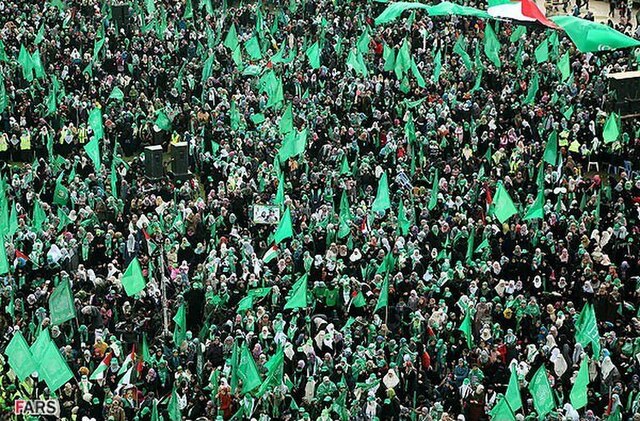
On May 31, 2025, DropSite News published the full text of Hamas’s formal response to the latest ceasefire proposal—13 detailed points that together amount to a rare and far-reaching offer. In it, Hamas pledged to relinquish control of Gaza to a neutral, nonpartisan Palestinian governing body, allow the unimpeded flow of humanitarian aid, and enter a framework toward a permanent ceasefire. In return, the group requested internationally binding guarantees—particularly from the United States—that Israel would not simply pause long enough to reload before resuming its military assault.
This is not political theater. It’s a document rooted in diplomatic channels, responding to a U.S.-backed proposal being brokered through Egypt and Qatar. Hamas is offering to take itself out of power in exchange for a serious end to hostilities and occupation.
Yet despite this, Israel—and its enablers in Washington—are saying: no deal.
Earlier in May, DropSite News’ Jeremy Scahill obtained a previous version of the ceasefire agreement. That draft included a provision in which Hamas would hand over governance of Gaza to an independent technocratic committee. That clause vanished in the final version, reportedly at the insistence of Israel—with full U.S. backing. Now, with the May 31 document, Hamas has publicly reaffirmed its willingness to transfer authority. Once again, the Israeli government is rejecting the offer.
If this were a war being waged to dismantle Hamas, such a rejection would be nonsensical. But if Hamas is merely a convenient villain—an ever-useful pretext for continued occupation, bombardment, and apartheid—then the refusal begins to make perfect sense.
A Pretext, Not a Threat
For decades, Hamas has served as Israel’s geopolitical screen. Its violence, reactionary ideology, and attacks on civilians offer endless justification for Israel’s siege of Gaza, its blockades, and its targeted assassinations. But Hamas’s utility is not just in what it does—it’s in how it can be used.
So long as Hamas governs Gaza, Israel can frame the conflict not as a national liberation struggle by millions of stateless Palestinians, but as an asymmetric war against a group of extremists. That framing is crucial. It turns occupation into counterterrorism. It transforms colonial control into self-defense.
A politically defanged Hamas threatens that narrative. A Gaza governed by technocrats with international legitimacy—and with Hamas no longer in charge—could put the spotlight back where it belongs: on Israel’s expanding settlements, its systematic denial of Palestinian rights, and its refusal to negotiate toward a sovereign Palestinian state.
Manufactured Extremism Has Precedent
This is not a conspiracy theory—it’s a matter of historical record. During the 1980s, Israeli authorities saw value in supporting Islamist organizations as a counterweight to the secular nationalism of the Palestine Liberation Organization (PLO). Brigadier General Yitzhak Segev, Israel’s former military governor in Gaza, openly admitted in an interview with The Wall Street Journal that he had funneled Israeli money to Islamist groups. The goal, he said, was to fracture Palestinian unity and weaken the secular left.
By the early 2000s, the plan had matured. Hamas, once marginal, had become a dominant political force. It won democratic elections in Gaza in 2006 and ousted Fatah in 2007. The Israeli response was to impose a blockade on Gaza, isolate Hamas internationally, and launch periodic military campaigns that turned neighborhoods into rubble and civilians into statistics.
But in every one of those campaigns, Hamas’s presence has made it easier for Israel to dismiss global criticism. “We’re fighting terrorists,” they say—even as entire families are killed in their homes.
The Real Threat: Palestinian Unity
This is why the May 31 document matters so deeply. Hamas has proposed something Israel has long insisted it wanted: an end to their governance of Gaza. They are offering, conditionally but seriously, to step away from power. And Israel is not only uninterested—it appears threatened.
Why? Because a unified Palestinian front—one not led by Hamas but by a broadly supported, nonpartisan leadership—poses the real political threat. Such a leadership would be harder to bomb, harder to demonize, and far more persuasive on the international stage. It could shift the center of gravity from violence to diplomacy, from managing conflict to resolving it.
It’s no coincidence that every Palestinian attempt at political reconciliation—between Hamas and Fatah, or among other factions—has been met with deep unease not only from Israel, but from its Western backers. Division is strategic. Chaos is useful. And Hamas, as much as it is bombed and blamed, is also instrumental to preserving that chaos.
What Israel Fears Most
Here’s the truth: Israel doesn’t fear Hamas. It needs Hamas. What it fears is a legitimate Palestinian government rooted in international law, democratic representation, and anti-colonial solidarity. It fears a Palestinian voice that the world might actually listen to.
If Hamas steps down and a neutral technocratic committee takes over, the next step is international pressure to recognize Palestinian statehood, end the blockade, dismantle the occupation, and stop collective punishment. That’s the real threat—not Hamas rockets, but global legitimacy for Palestinian liberation.
The Bottom Line
So let’s be honest: if Hamas’s continued rule is the reason Israel cannot make peace, then its voluntary exit should have been cause for celebration. Instead, it’s being quietly rejected—again.
What that tells us is disturbing but not surprising. Hamas may be violent, theocratic, and often politically toxic—but in the calculus of Israeli power, it is also essential. Not because it strengthens Palestinian resistance, but because it weakens Palestinian credibility. It turns liberation into terrorism. It allows occupation to masquerade as self-defense.
So when you see Hamas offering to step aside—and Israel insisting they remadon’t miss the paradox. Interrogate it. Because the logic of this war, as presented, doesn’t hold. The real logic is not about defeating Hamas. It’s about ensuring the conditions that keep Hamas—and the violence it enables—exactly where it is.
The Freedom Flotilla: Bravely Breaking the Siege Against Gaza

Many people, armed only with moral and political convictions, would be too intimidated to confront an army or navy directly. But not all.
Twelve nonviolent human-rights activists with the international Freedom Flotilla Coalition (FFC) are currently sailing a small boat, the Madleen, to Gaza. They hope to create a humanitarian sea corridor through Israel’s illegal blockade. If all goes well, they should arrive this weekend, with “baby formula, flour, rice, diapers, women’s sanitary products, water desalination kits, medical supplies, crutches, and children’s prosthetics.”
They know the danger. Ten volunteers were killed by Israeli commandos when they boarded the Mavi Marmara in 2010. But, as Greta Thunberg said before she embarked last Sunday, “We are doing this because no matter what odds we are against, we have to keep trying, because the moment we stop trying is when we lose our humanity.”
How Palestinians See It
The history is important, and one does not have to approve of Hamas’ attack against Israeli civilians in October 2023 to understand that.
During the Nakba in 1948, at least 750,000 Palestinians were violently displaced from their homelands by Zionist paramilitaries and nascent Israeli forces. As Palestinian-Canadian Samah Al-Sabbagh recently told a crowd, those who survived that colonial onslaught left their “homes, land, olive groves, even the freshly baked bread.”
The occupation has never stopped, and now the violence is more high-tech and all-inclusive in its reach. In Gaza, bombs (largely supplied by the United States) have destroyed homes, apartment buildings, schools, universities, hospitals, mosques, churches, and more—leaving thousands buried under rubble. Adding to that nightmare, doctors report the intentional killing of children with high-velocity bullets that can destroy surrounding tissues and organs.
The death toll is staggering. As of May 27, 2025, the Palestinian Ministry of Health in Gaza reports that at least 54,056 people, including at least 17,400 children, have been confirmed as killed in Gaza since October 2023.
For those still living, Israel’s stranglehold on international humanitarian aid has created widespread malnutrition and starvation, with babies and children the most vulnerable. “One in five people in Gaza, about 500,000 people, faces starvation, the Integrated Food Security Phase Classification platform said on May 12,” according to the UN. Indeed, the UN calls Gaza the “hungriest place on Earth.”
Israel and its fellow perpetrators, including the United States, refuse to take seriously the rulings by the International Criminal Court and the International Court of Justice, much less the many human-rights groups decrying genocide, and less still the students and people in the streets making a ruckus for justice.
Perhaps the perpetrators think that ignoring the voice of the people will make it stop, that heartbroken people will give up their moral and legal agency. They should think again.
The history is important, and one does not have to approve of Hamas’ attack against Israeli civilians in October 2023 to understand that.
During the Nakba in 1948, at least 750,000 Palestinians were violently displaced from their homelands by Zionist paramilitaries and nascent Israeli forces. As Palestinian-Canadian Samah Al-Sabbagh recently told a crowd, those who survived that colonial onslaught left their “homes, land, olive groves, even the freshly baked bread.”
The occupation has never stopped, and now the violence is more high-tech and all-inclusive in its reach. In Gaza, bombs (largely supplied by the United States) have destroyed homes, apartment buildings, schools, universities, hospitals, mosques, churches, and more—leaving thousands buried under rubble. Adding to that nightmare, doctors report the intentional killing of children with high-velocity bullets that can destroy surrounding tissues and organs.
The death toll is staggering. As of May 27, 2025, the Palestinian Ministry of Health in Gaza reports that at least 54,056 people, including at least 17,400 children, have been confirmed as killed in Gaza since October 2023.
For those still living, Israel’s stranglehold on international humanitarian aid has created widespread malnutrition and starvation, with babies and children the most vulnerable. “One in five people in Gaza, about 500,000 people, faces starvation, the Integrated Food Security Phase Classification platform said on May 12,” according to the UN. Indeed, the UN calls Gaza the “hungriest place on Earth.”
Israel and its fellow perpetrators, including the United States, refuse to take seriously the rulings by the International Criminal Court and the International Court of Justice, much less the many human-rights groups decrying genocide, and less still the students and people in the streets making a ruckus for justice.
Perhaps the perpetrators think that ignoring the voice of the people will make it stop, that heartbroken people will give up their moral and legal agency. They should think again.
A Global Civil Society Initiative of Unarmed Civilians
Huwaida Arraf is a Palestinian-American lawyer and activist. She has worked with the International Solidarity Movement, the Free Gaza Movement, and more recently the FFC. Her rationale for sending small, unarmed boats in nonviolent direct actions against Israeli policy? “Our governments have failed. And so the people are taking action.”
Lawyers Arraf and Luigi Daniele assert that there is a strong legal basis for citizens taking action, as world governments ignore their “clear and urgent humanitarian obligations.”
In August 2008, the Free Gaza Movement successfully delivered aid to Gaza, using two small fishing boats named Liberty and Free Gaza. Participants included 44 activists from 17 countries, and they promised that they’d keep returning “until the siege on Gaza was broken.”
Included in the aid they brought were 200 pairs of hearing aids—far short of the 9,000 requested—because so many children were experiencing hearing loss as a result of Israel’s sonic booms.
Two years later, on May 31, 2010, the Israeli navy swarmed the Mavi Marmara. This ship was part of a larger flotilla, carrying nearly 700 people, which was attempting to deliver 10,000 tons of humanitarian aid to Gaza. The Israelis killed 10 activists—one died after being comatose for four years—and wounded fifty more.
Although the UN Human Rights Council declared the attack illegal—and despite Prime Minister Netanyahu’s apology to Turkey, whose citizens were killed—Israel continued its oppressive blockade.
Between 2010 and 2024, the FFC continued to challenge the siege. But “all ships were pirated by the IOF, and participants were assaulted, kidnapped, interrogated, imprisoned, and/or deported.” (“IOF” identifies the IDF as an occupation force.)
By May 2, 2025, the FFC had prepared their next attempt. The ship was named Conscience as an appeal to the world’s conscience. It was sitting in international waters near Malta, waiting for the volunteers to board and set out for Gaza. But the crew heard drones, and Conscience was struck by two explosives.
“The bombing was a deliberate act of aggression and intimidation,” the FFC wrote on their website. “Four crew members were injured, the ship was set ablaze, communications were severed, and the vessel was left adrift and taking on water. The attack occurred in European waters, in violation of international law.”
Huwaida Arraf is a Palestinian-American lawyer and activist. She has worked with the International Solidarity Movement, the Free Gaza Movement, and more recently the FFC. Her rationale for sending small, unarmed boats in nonviolent direct actions against Israeli policy? “Our governments have failed. And so the people are taking action.”
Lawyers Arraf and Luigi Daniele assert that there is a strong legal basis for citizens taking action, as world governments ignore their “clear and urgent humanitarian obligations.”
In August 2008, the Free Gaza Movement successfully delivered aid to Gaza, using two small fishing boats named Liberty and Free Gaza. Participants included 44 activists from 17 countries, and they promised that they’d keep returning “until the siege on Gaza was broken.”
Included in the aid they brought were 200 pairs of hearing aids—far short of the 9,000 requested—because so many children were experiencing hearing loss as a result of Israel’s sonic booms.
Two years later, on May 31, 2010, the Israeli navy swarmed the Mavi Marmara. This ship was part of a larger flotilla, carrying nearly 700 people, which was attempting to deliver 10,000 tons of humanitarian aid to Gaza. The Israelis killed 10 activists—one died after being comatose for four years—and wounded fifty more.
Although the UN Human Rights Council declared the attack illegal—and despite Prime Minister Netanyahu’s apology to Turkey, whose citizens were killed—Israel continued its oppressive blockade.
Between 2010 and 2024, the FFC continued to challenge the siege. But “all ships were pirated by the IOF, and participants were assaulted, kidnapped, interrogated, imprisoned, and/or deported.” (“IOF” identifies the IDF as an occupation force.)
By May 2, 2025, the FFC had prepared their next attempt. The ship was named Conscience as an appeal to the world’s conscience. It was sitting in international waters near Malta, waiting for the volunteers to board and set out for Gaza. But the crew heard drones, and Conscience was struck by two explosives.
“The bombing was a deliberate act of aggression and intimidation,” the FFC wrote on their website. “Four crew members were injured, the ship was set ablaze, communications were severed, and the vessel was left adrift and taking on water. The attack occurred in European waters, in violation of international law.”
Madleen: Never Give Up
The activists say of the Madleen, “She may be small, but her mission is powerful: To break the silence. To challenge Israel’s illegal blockade through nonviolent direct action. To stand firmly and unapologetically, with Gaza.”
The Madleen set sail on June 1, one day after the fifteenth anniversary of the murderous assault on the Mavi Marmara. Activists gathered in Catania, Sicily, in preparation for their launch. The boat is named for Gaza’s first gender-role-defying fisherwoman; she personifies FFC’s steadfastness.
The ship’s namesake, Madleen, fell in love with the sea as a young child. When she was only 13 years old, she took over her injured father’s fishing boat and became the main breadwinner for her family. Although Madleen’s focus was on her family’s survival—not politics—she shared the fishermen’s encounters with Israeli patrols. She recounted, “They often directly attacked my boat. They stole my fishing nets more than once. The thing was that each time they attacked me, I would get a little stronger. I never gave up.”
Years later, she hopes her two daughters will become “two strong fisherwomen.”
May Madleen and the activists happily meet in Gaza this month. And may this stubbornly committed “civil society initiative of unarmed civilians” help the world see that legal and moral obligations are not overridden by governments’ corrupt colonial agendas.
To that end, the FFC asks that people raise their voices and contact the media and government officials to express support for breaking the siege against Gaza.
Readers can track the progress of the Madleen in real time and explore ways to support the FFC’s work. They promise: “We sail until Palestine is free.”
The activists say of the Madleen, “She may be small, but her mission is powerful: To break the silence. To challenge Israel’s illegal blockade through nonviolent direct action. To stand firmly and unapologetically, with Gaza.”
The Madleen set sail on June 1, one day after the fifteenth anniversary of the murderous assault on the Mavi Marmara. Activists gathered in Catania, Sicily, in preparation for their launch. The boat is named for Gaza’s first gender-role-defying fisherwoman; she personifies FFC’s steadfastness.
The ship’s namesake, Madleen, fell in love with the sea as a young child. When she was only 13 years old, she took over her injured father’s fishing boat and became the main breadwinner for her family. Although Madleen’s focus was on her family’s survival—not politics—she shared the fishermen’s encounters with Israeli patrols. She recounted, “They often directly attacked my boat. They stole my fishing nets more than once. The thing was that each time they attacked me, I would get a little stronger. I never gave up.”
Years later, she hopes her two daughters will become “two strong fisherwomen.”
May Madleen and the activists happily meet in Gaza this month. And may this stubbornly committed “civil society initiative of unarmed civilians” help the world see that legal and moral obligations are not overridden by governments’ corrupt colonial agendas.
To that end, the FFC asks that people raise their voices and contact the media and government officials to express support for breaking the siege against Gaza.
Readers can track the progress of the Madleen in real time and explore ways to support the FFC’s work. They promise: “We sail until Palestine is free.”
The Madeleine Ship: A Message Of Solidarity With Gaza And Resolve To Break the Blockade

Sunday, June 1st, a small ship from the International Freedom Flotilla Coalition will set sail from the port of Catania in Sicily (Italy). The coalition named the ship “Madeleine” in honour of Palestinian fisherwoman Madeleine Kullab, the youngest professional fisherwoman in the world and the only one in Palestine.
The ship also carries a number of international activists and a cargo of symbolic humanitarian aid intended to be delivered to Gaza. Most importantly, it carries a message of solidarity with Gaza, a message of defiance and determination to continue popular efforts to break the Israeli blockade of the Gaza Strip, and an affirmation of the Palestinians’ fundamental right to communicate with the world by sea and their right to establish a humanitarian corridor to bring in aid and relief supplies during the war of extermination waged by the Israeli occupation state against Gaza.
The departure of this ship comes less than a month after an Israeli drone attacked the “Dameer” ship in international waters off the coast of Malta, which was en route to Gaza.
Our message as an international committee to break the siege on Gaza; as a founding member of the Freedom Flotilla International Coalition; and as international solidarity movements is first and foremost to our people in Gaza. It means that we, as international activists, as Palestinians abroad, and within solidarity action groups, affirm that feelings of inadequacy, abandonment, and helplessness weigh heavily on us and could kill us. However, we are working hard and trying, within our capabilities and in every possible way, along with solidarity activists from among friends of Palestine, defenders of Gaza, and those who reject the crimes of the occupation.
We raise our voices loudly that we are with you and that we are striving to impose an influential popular stance that rejects the war and demands the opening of the crossings and the entry of relief aid and essentials to the people of Gaza. This is the least we can do toward those who sacrifice themselves and everything they own for freedom and dignity, for the homeland, and for the holy sites.
The second message is to emphasise that the targeting of ships attempting to break the siege and Israeli piracy in international waters will not deter us from continuing our efforts to break the siege and to exert pressure for the opening of the crossings and the entry of aid and essentials.
We are undertaking this risky effort, knowing the extent of the crimes committed by the apartheid and settler colonial state, Israel. However, these crimes will not prevent us from fulfilling our humanitarian duty. We say to the occupying state that these crimes will not bring peace and stability to the Israeli people in the region. There can be no peace without ending the occupation and restoring the land and rights to the indigenous people.
Our small ship, the “Madeleine”, will set sail, carrying a limited number of international activists who refuse to remain silent and submit; who refuse to accept the continued crimes of the occupation; and who refuse to accept the positions of their countries, which have remained inactive and have not taken tangible measures to stop the war.
Indeed, many of these countries are accomplices in this crime through their silence and by providing the occupation with all forms of military, political and intelligence support.
Our ship, the “Madeleine,” carries a message of love, peace, and support for our people in Gaza, along with activists, and a message of protest against all countries of the world that remain silent about the continued blockade and the prevention of food and basic necessities for more than two million Palestinians in Gaza.
It sends a special message to neighbouring countries that are only separated from Gaza and Palestine by the decisions of their rulers, their positions of abandonment, and their fear for their thrones from an erratic US president, Trump, and his agent in the Middle East, Netanyahu.
This ship, the “Madeleine,” and other ships breaking the blockade, also say to Arab and Muslim rulers: Shame! This silence and abandonment of their families and neighbours is unbecoming of the innate loyalty of Arabs and Muslims. What will history record about your positions at this most critical stage in the history of the Palestinian cause and the entire region?
However, the rulers’ abandonment of Gaza does not absolve peoples of their humanitarian responsibility and their duty to act, each according to their circumstances and ability. No human being with dignity and humane feelings can stand idly by and watch what is happening to our people in Gaza, let alone if he were an Arab and Muslim, and Gaza, the land of pride and sacrifice, was only a stone’s throw away from him.
This maritime movement is paralleled by a popular land movement attempting to reach the Rafah crossing, break the land blockade, and bring in aid that has been accumulating in Arish and Rafah for months. This movement is represented by three major international events. The first is the Global March for Gaza, which calls on activists worldwide to travel to Cairo, from where they will organise themselves to move toward Gaza. They hope that the Egyptian authorities will facilitate their movement, or at least refrain from placing obstacles and barriers in their path, citing security pretexts that are convincing to no one. The second of these land movements is the Arab Steadfastness Convoy, which will travel from Tunisia to Libya, then to Cairo and Rafah, arriving in Gaza. Like its predecessors, we will receive support from the International Committee and the International Coalition to Break the Siege on Gaza. The third movement is the diplomatic and human rights convoy launched by Palestinian human rights organisations, coordinated with numerous countries, and supported by hundreds of solidarity and human rights organisations worldwide. This effort aims to pressure for the opening of the crossings, especially the Egyptian Rafah crossing, which has been closed most days since the beginning of the war in October 2023. The closure has been tightened further over the past three months. This contradicts international laws, morality, values and the principles of Arab brotherhood. It is a betrayal of the rights of neighbours; especially during a time of the insane war that spares no effort and uses starvation as a deadly weapon to achieve Netanyahu and Trump’s plans to empty Gaza of its people or kill them. Worse still, their ultimate aim is to impose absolute hegemony of the occupying state over the entire region and crown Netanyahu as the sole leader of the Middle East.
A Minute of Silence for 25,000 Palestinian Children Killed and 17,000 Orphaned… is That Too Much?
May 31, 2025
On March 26, 2025, a physics and chemistry teacher at the Janot-Curie High School in the city of Sens (Yonne, France)) held a one-minute’s silence to honor Palestinian children killed by Israeli bombings in Gaza with her sophomore class (students aged 16-17). She was immediately suspended and is now subject to disciplinary proceedings. The Dijon rectorate (regional education authority) deemed her initiative a “breach of the obligation of neutrality incumbent on civil servants”. It was at the request of students, moved by the images coming out of Gaza, that she organized this minute of silence after class had officially ended (the bell had rung), informing her pupils that participation was voluntary and that anyone wishing to leave was free to do so.
The teacher—who has chosen to remain anonymous—has said she does not regret her gesture, believing that “this is something the Ministry of Education should have done long ago.” She also stressed that her action was intended to respond to her students’ distress over the situation in Gaza.
Her suspension has drawn criticism, primarily from teachers’ unions and student associations. With the exception of La France Insoumise (a left-wing party), the political sphere has remained silent. The French Education Minister, Élisabeth Borne (a former Prime Minister), has been conspicuously absent from the debate.
Meanwhile, on that same date, the head of OCHA (the UN Office for the Coordination of Humanitarian Affairs), Tom Fletcher, told the BBC Radio 4 Today programme that 14,000 babies in Gaza could die within the next 48 hours if humanitarian convoys did not reach the besieged Palestinian enclave. Since March 2, Israel has been blocking or allowing only trickles of aid into Gaza. This blockade has been condemned by several NGOs—Doctors of the World, Oxfam and the Norwegian Refugee Council among them—which warn of a “total collapse” of humanitarian aid and denounce “one of the worst humanitarian failures of our generation.”
To date, over 25,000 Palestinian children have been killed in Gaza, more than 50,000 injured (many maimed or permanently disabled) and 20,000 orphaned (according to UNICEF).Yet, for the Dijon Academy, taking the initiative to hold a minute’s silence in their memory is an act deserving of punishment. As of May 26, the teacher remains suspended and her pupils deprived of her instruction.
The “rectorate”—an anonymous administrative body in media reports—has not faced public accountability. The Rector of the Dijon Academy, Mathilde Collety, and the departmental education inspector, Jean-Baptiste Lepetz, have kept themselves out of sight. Administration, by its nature, its vocation and its cowardice, does not personalize itself. This attitude recalls that of their predecessors under the Vichy regime: Rector Jean Mercier and inspector Maurice Ory, regarding the fate of Jewish children arrested and detained in Yonne’s camps at Saint-Denis-lès-Sens, Vaudeurs and Saint-Maurice-aux-Riches-Hommes, then sent on to Pithiviers and Beaune-la-Rolande and ultimately to Auschwitz-Birkenau.
“We hardly need to discover the North Pole to realize how administrative jargon erases cruelty and pain behind false objectivity“, writes Edith Fuchs at the end of her long research in the departmental archives of Sens, trying to understand how her mother, Cilly Affenkraut, then a mother of three, was arrested in Sens in July 1942 by the French gendarmerie, deported to Auschwitz and murdered *. In such circumstances, she asks, what becomes of the “gift of action” that Hannah Arendt attributes to the human condition as the very mark of our political capacity?
When people are prevented from acting freely and morally in the face of injustice and cruelty, we lose something essential about what it means to be human.
Notes.
*[Edith Fuchs, “Between Testimony and History: Saint-Denis-lès-Sens 1940–1942,” Revue d’Histoire de la Shoah 2013/2 No. 199, pp. 445–456].
May 31, 2025
The prosecution of Kneecap’s Liam Óg Ó hAnnaidh – stage name Mo Chara – under British terrorism laws is one of the clearest signs that the ideological architecture that maintains a level of support, or at least acceptance, for Israel, is crumbling. It comes in the same week that Mahmoud Khalil appeared in a US immigration court after a month in detention, threatened with deportation for his Palestine solidarity activism. In the same month, Germany has ordered the deportation of four Palestine solidarity activists – again, none of them have been convicted of a crime. And this week, a number of activists appeared in court in Ennis for taking direct action against US military aircraft in Shannon. Judge Gabbett refused to allow the passport of one of the activists, Nell Buckley, to be returned to her, meaning that she will not be able to travel to London for a work trip. This follows a long-running pattern of Garda heavy-handedness, a particularly egregious example being the strip searching and cavity searching of Mothers Against Genocideactivists arrested after peacefully protesting outside Dáil Éireann.
The intensification of repression is a sign that the establishment’s narrative – all the talk of “both sides”, the demands for condemnation of Hamas, the spurious accusations of anti-semitism – simply does not wash anymore. Israel is committing a genocide in Gaza. The world knows Israel is committing a genocide in Gaza. And the world knows the genocide is being supported politically, economically and militarily by the United States, the European Union and the United Kingdom.
The scale of horror in Gaza continues to reach new, unimaginable levels. Last week Israeli Finance Minister Bezalel Smotrich said, “We are annihilating everything that remains in the strip.” Whatever aid is being allowed in is purely for the sake of optics, “so the world does not accuse us of war crimes”. Half a million people in Gaza now face starvation – not a famine; a genocide. Israel continues to bomb hospitals, homes and tents. The people of Gaza – long the subject of new military technologies that are later sold as “battle-tested” – face ever more dystopian forms of brutality, such as the use of quadcopter drones to shoot children.
Meanwhile, the Western political establishment is scrambling to make this about anything other than its complicity with the genocide. We’re hearing the first murmurings about sanctions from the EU and the UK, even as they continue to arm Israel. The Irish government continues to pretend that it doesn’t know that weapons are being transported through Irish airspace. On Friday, a FedEx flight flew through Irish airspace carrying F-35 fighter jet parts destined for Nevatim air base in Israel.
Bono has seen fit, after 20 months of genocide, to come out and call for Israel to “be released from Netanyahu”. The call, which came on the same day that a poll showed that 82% of Israelis support the ethnic cleansing of Gaza, is not some courageous stand for peace. By essentialising Netanyahu and separating him from the Zionist project, Bono is merely continuing his long-standing crusade in service of empire.
This is the story – not Kneecap, as the band themselves have said: “Gaza is the story. Genocide is the story.”
However, what is happening with Kneecap tells us a lot about the story of Gaza. It shows the deep hypocrisy of a Western political establishment that is outraged by the alleged flying of a so-called “terrorist” flag, while it arms a terrorist state that is committing a genocide.
The British establishment is pulling out all the stops to silence Kneecap and their message, because the message they are carrying is that of a global mass movement that, if it deepens, could threaten the entire western imperialist order. Kneecap and other artists have come to the fore, not as artists standing above the political struggle, but as a part of it – influenced by the movement and in turn helping to deepen and shape that movement with their art. They have filled a gap that has been left by a political establishment that is deeply complicit in genocide – from Trump’s full-throated support of the ethnic cleansing of Gaza, to Keir Starmer’s support for Israel’s right to withold water and electricity from Gaza, to the Irish government allowing weapons through Irish airspace and the US military through Shannon Airport.
Kneecap are being targeted precisely because the message they are carrying is so political. It is grounded in an unapologetic opposition to Israel, from the blunt “Fuck Israel”, to the statement of fact played at all their gigs: “Israel is committing a genocide against the Palestinian people.”
It doesn’t stop there, however. It was Kneecap’s message at Coachella that was the tipping point for the establishment and what provoked the backlash they are currently facing. There, they directly called out US imperialism: “It [the genocide] is being enabled by the US government who arm and fund Israel despite their war crimes.”
This goes to the heart of what needs to be done to stop the genocide. This is a US genocide just as much as it is an Israeli one. The US has supplied the bombs, the bullets and the billions of dollars Israel needs to inflict this genocide. The US is currently working with Israel to use aid as bait, drawing people further South in order to facilitate the total ethnic cleansing of Gaza. There isn’t a world where Israel can be confronted without confronting US imperialism. Kneecap are clear on this, not just with their message at Coachella, but elsewhere. In a recently aired RTÉ documentary, Liam Óg spoke about how some people believe their stance on Palestine may have prevented them being nominated for the Oscars:
“If it comes down to awards or breaking America by sacrificing what you believe in, then America can go and fuck itself.”
This is no liberal, hand-wringing humanitarianism. It is a radical politics that is rooted in anti-imperialism – a politics that is gaining in support. And for this reason, the political establishment wants to silence not just Kneecap, but huge numbers of activists who are taking action against their genocide. In some ways, this is a sign of progress for the Palestine solidarity movement. The hauling of activists through the courts, the deportations and threats of deportation, the brute force that is being inflicted on protesters – the power of states to inflict this repression has always been there, but it hasn’t been necessary on this scale until now. Now, since the beginning of the genocide in October 2023, cracks have begun to appear in the political hegemony.
As western states crack down, it is imperative that the global solidarity movement responds with a deepening of the political struggle. The idea that Israel must be isolated diplomatically, politically and economically in order for it to be defeated might be a clear idea for many people. Artists like Kneecap can push this idea and win more people to it. The next step is to use the wider support for Kneecap to invigorate the mass movement and raise the level of the political struggle; to bring the tens of thousands who are chanting Free Palestine at gigs or sharing ‘Solidarity with Mo Chara’ posts back out onto the streets, back into the heart of the movement to drive the murderous Western establishment onto the back foot.
Between Judaism and Zionism
May 31, 2025
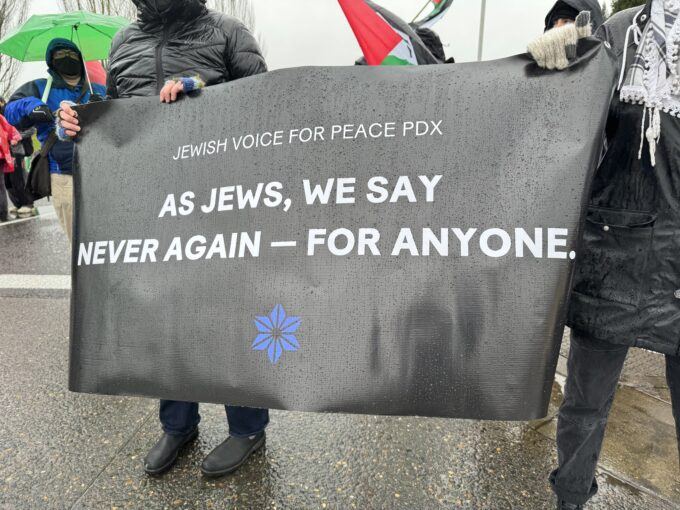
Photograph by Nathaniel St. Clair
I began to read Being Jewish after the Destruction of Gaza by Peter Beinart (Knopf, 2025) as the governments of Canada, France and the UK publicly declared that the Palestinian people’s suffering under Israel’s 19-month onslaught is intolerable. A cynic might say that this recent opposition is more about public relations to shield the global public from images of Palestinian kids being killed and starved in Gaza. This is a hi-tech enclosure of the commons, e.g., Palestinian land loss to the state of Israel via U.S. proxy for the benefit of a geopolitical order of, by and for private investors. This exercise of American hard power is a symptom of a rotting liberal democracy in which the two-party system serves millionaires and billionaires whose votes with their donor dollars perpetuate war and waste.
As a live-streamed genocide in Gaza unfolds, the author focuses on the roles of Judaism and Zionism amid Israeli expansion via Uncle Sam’s military aid wrapped in, according to him, “the story Jews tell ourselves to block out the screams.” Beinart focuses on the clash between Judaism and Zionism. To this end, he critiques the supremacist ideology of Zionism, legitimated with a false equation to Judaism, a religion. In today’s context of social media communication and saturation, Zionism as a dominant narrative is facing perhaps its biggest legitimation challenge from American Jews of a younger generation. Beinart is tuned into this contradiction.
Israel’s current barbarism against the Palestinians has an American parallel. Consider the California history that I did not learn as a boy. During the Gold Rush era, white settlers stole Native land amid a murder spree. The tribal population of 150,000 fell to 30,000. Meanwhile, 3,000 enslaved people of African descent lived and worked in this so-called free state [Discovering Daniel Blue: My Search for Significance, Purpose and Legacy (KP Publishing Company, 2025)].
Social media’s impact clashes with bipartisan support and its corporate paymasters that equate critical views of Israeli Zionism with anti-Judaism, going so far as to compare Palestinian resistance to Nazism. Beinart pushes back, unpacking this false equivalence in his five-chapter book. He names the groups whose messaging relies upon the falsification of Palestinian resistance to Israeli colonization as anti-Jewish, citing in part the Talmud, a central text in Judaism and source of Judaism’s law and study of God and faith.
There is an historical process linked to Israel’s state violence against Palestinians that benefits capitalist interests seeking to grow on the rebuilding and repopulating of Gaza. Crucially, it is on the public’s radar screen, thanks to President Trump’s transactional rhetoric. His declaration about the beautiful future awaiting private developers and financiers in the beachfront property of Gaza when the Palestinians are removed, once seen, can’t be unseen.
Take England’s Parliamentary Acts of 18th and 19th centuries, an exercise of state power and its legal use of force. These Acts drove peasants off the common lands, which became private property of the upper class, with severe penalties, including capital punishment. A parallel process, adjusted for the current moment, began in Gaza after October 7, 2023. A Democratic president oversaw shipments of military aid to Israel, and that is continuing with his GOP successor, in part providing Israel with 2,000-pound bombs to maim and murder Palestinians.
I see Beinart’s take on a moral revolt against Zionism in the context of a far-right political trend to replace democratic liberalism with autocratic extremism. The dual trends are two sides of the same coin, ruling beliefs and practices of a system destroying planetary society from the Amazon rainforest to the Arctic Sea and all points in between. For example, the U.S. military-industrial complex, directly and by proxy in the case of Israel, is the leading generator of carbon emissions cooking the planet.
Israel’s obliteration of Gaza after the surprise and unsurprising attack of Hamas on an Israeli settlement on October 7, 2023, hastens even liberal writers like Beinart to repeat unfounded rape allegations against the Palestinian attackers (page 90). To be clear, sexual violence is real and widespread. Allegations of it need attention, but fabrications also serve as a propaganda tool for ruling interests to control the narrative during military operations of a colonizer (Israel) against the colonized (Palestinians).
“Human Rights Watch was not able to gather verifiable information through interviews with survivors of or witnesses to rape during the assault on October 7, and there is only one public account reportedly from such a survivor.” https://www.hrw.org/news/2024/
At the end of the day, Beinart’s view of the state’s role in capitalist societies—in and out of Israel—to guide the growth of private investment limits his view of liberation solutions for the oppressed and oppressors. Thus his advocacy for a spiritually Jewish solution to U.S.-backed Israeli-led forever wars in the Middle East is, in my view, a necessary but insufficient step. In his book, for instance, he cites, favorably, Rabbi Abraham Joshua Heschel, whose take on the role of individuals in capitalist society includes this quote: “Indifference to evil is worse than evil itself, [and] in a free society, some are guilty, but all are responsible.” However, the capitalist class controls the state and its legal use of violence. Poor and working-class people, unless and until they organize, lack a countervailing power to change the policies and politics of a capitalist state, waging forever wars against the biosphere and humanity.
There are limits to a moral argument for peace and social justice amid the current moment of ecological and social decay. Changing the foreign policy of the U.S. political system, for example, requires mass mobilization making demands on the state—such as healthcare and livable wages for all versus genocidal warfare in Gaza. Faith-based citizens certainly have a part to play. The great, late historian Alexander Saxton covers this nexus in Religion and the Human Prospect (Monthly Review Press, 2006).
Jewish communities can and are playing a role in such a transition, a process that Beinart is a part of—not apart from—as an academic and author with access to mainstream media. Faith-based groups such as Jewish Voice for Peace, the grassroots organizations of Reverend William Barber II, president and senior lecturer of Repairers of the Breach, lead the way, along with other like-minded American advocates such as Public Citizen and the Council of American-Islamic Relations that are fed up with business as usual and pressing for structural social change that puts people before profits.

We, the members of the Gaza Tribunal, having gathered in Sarajevo from 25 to 29 May 2025, declare our collective moral outrage at the continuing genocide in Palestine, our solidarity with the people of Palestine, and our commitment to working with partners across global civil society to end the genocide and to ensure accountability for perpetrators and enablers, redress for victims and survivors, the building of a more just international order, and a free Palestine.
We condemn the Israeli regime, its perpetration of genocide, and its decades-long policies and practices of settler colonialism, ethno-supremacism, apartheid, racial segregation, persecution, unlawful settlements, the denial of the right to return, collective punishment, mass detention, torture and cruel and inhuman treatment and punishment, extrajudicial executions, systematic sexual violence, demolitions, forced displacement and expulsions, ethnic purges and forced demographic change, forced starvation, the systematic denial of all economic and social rights, and extermination.
We are horrified by the Israeli regime’s systematic devastation of Palestinian lives, lands, and livelihoods, including its intentional destruction of all sources and systems for food, water, healthcare, education, housing, culture, as well as mosques, churches, aid facilities, and refugee shelters, and its targeting of medical personnel, journalists, aid workers, and United Nations staff, and its direct targeting of civilians, including children and older persons, women and men, girls and boys, persons with disabilities and those with medical conditions.
We demand an immediate withdrawal of Israeli forces and an end to the genocide, to all Israeli military action, to forced displacement and expulsions, to settlement activities, to the siege of Gaza and restrictions on movement in the West Bank. We call for the immediate and unconditional release of all prisoners, including the thousands of Palestinian women, men and children held in abusive Israeli detention facilities. We insist on the immediate resumption of massive humanitarian aid to all of Gaza without restriction or interference, including food, water, shelter, medical supplies and equipment, sanitary equipment, rescue equipment, and construction materials and equipment. We call as well for a complete withdrawal of all Israeli forces from all Lebanese and Syrian territory.
We call for an end of the smearing of UNRWA and other humanitarian workers, for the free and unhindered access of UNRWA and all other United Nations and humanitarian organizations in all areas of Gaza and the West Bank, for full compensation by the Israeli regime for damage caused to UN and humanitarian facilities, alongside full compensation and reparations to the Palestinian people, and for full accountability for the harassment, abduction, torture, and murder of UNRWA and other humanitarian workers and their families.
We call on all governments and on regional and international organizations to end the historic scandal of inaction that has characterized the past nineteen months, to urgently respond with all means at their disposal to end the Israeli assault and siege, to uphold international law, to hold perpetrators to account, and to provide immediate relief and protection to the people of Palestine.
We denounce the continued complicity of governments in the perpetration of Israeli war crimes, crimes against humanity, and genocide in Palestine, and the shameful role of many media corporations in covering up the genocide, dehumanizing Palestinians, and in the dissemination of propaganda fueling anti-Palestinian racism, war crimes, and genocide.
We equally denounce the wave of persecution and crackdowns on human rights defenders, peace activists, students, academics, workers, professionals, and others, perpetrated by Western governments, police agencies, the private sector, and educational institutions. We honor those who, despite this persecution, have had the courage and moral convictions to stand up and speak out against these historic horrors, and we insist on the full protection of the human rights of free expression, opinion, assembly, and association, as well as the right to defend human rights without harassment, retaliation, or persecution.
We reject the unjust tactic of smearing as “antisemites” or “supporters of terrorism” all those who dare to speak up and act to defend the rights of the Palestinian people and to condemn the injustices and atrocities of the Israeli regime and its perpetration of apartheid and genocide, or those who criticize the ideology of political Zionism. We stand in solidarity with all those who have been smeared or punished in this way.
We are convinced that the struggle against all forms of racism, bigotry, and discrimination necessarily includes the equal rejection of Islamophobia, anti-Arab and anti-Palestinian racism, and antisemitism. It also includes an acknowledgment of the horrific effects that Zionism, apartheid, and settler-colonialism have had and continue to have on the Palestinian people. We commit to fighting all such scourges.
We also reject the destructive ideology of political Zionism, as the official state ideology of the Israeli regime, of the forces that colonized Palestine and established the Israeli state on its ruins, and of pro-Israel organizations and proxies today. We insist, in the words of the Universal Declaration of Human Rights, that all human beings are born free and equal in dignity and rights, and that there are no exceptions to this rule. We call for decolonization across the land, an end to the ethno-supremacist order, and the replacement of political Zionism with a dispensation founded on equal human rights for Christians, Muslims, Jews, and others.
We are inspired by the courageous resistance and resilience of the Palestinian people in the face of over a century of persecution, and by the growing movement of millions standing in solidarity with them around the world, including the principled advocacy and nonviolent action of thousands of Jewish activists who have rejected the Israeli regime and its ethnonationalist ideology, and have declared that the Israeli regime neither represents them nor acts in their name.
We recognize the right of the Palestinian people to resist foreign occupation, colonial domination, apartheid, subjugation by a racist regime, and aggression, including through the use of armed struggle, in accordance with and as recognized in international law and as affirmed by the United Nations General Assembly.
We recall that the Palestinian right to self-determination is jus cogens and erga omnes (a universal rule not subject to exception and binding on all states) and is non-negotiable and axiomatic. We recognize that this right includes political, economic, social, and cultural self-determination, the right to return and full compensation for all harms suffered in a century of persecution, to permanent sovereignty over natural resources, and to non-aggression and non-intervention. We respect Palestinian aspirations and full Palestinian agency and leadership over all decisions affecting their lives, and we stand in solidarity with them.
We are gravely concerned at the direction of international relations, international politics, and international institutions, and by attacks on those international institutions that have challenged genocide and apartheid in Palestine. We believe that the normative foundations of the global order, grounded in human rights, the self-determination of peoples, peace, and the international rule of law, are being sacrificed at the altar of ruthless political realism and obsequious deference to power, with the people of Palestine left undefended and vulnerable on the front lines. We insist that another world is possible and intend to fight to bring it about.
We fear that the nascent and flawed international normative order, built up since the Second World War, with human rights at its center, is at risk of collapse as a result of the sustained attack waged on the system by the Israeli regime’s Western allies in their quest to buttress Israeli impunity. We pledge to oppose this attack and to work to protect and advance the project of building a world in which human rights are governed by the rule of law, beginning with the struggle for Palestinian freedom. And we believe that the weaknesses and inequities hard-wired into the international system from the start, including the geopolitical right of exception codified in the United Nations Security Council veto, the disempowerment of the General Assembly, and the structural obstacles that mitigate against the enforceability of International Court of Justice (ICJ) decisions, must be reformed and rectified.
We demand immediate action to isolate, contain, and hold accountable the Israeli regime through universal boycott, divestment, sanctions, a military embargo, suspension from International organizations, and the prosecution of its perpetrators, and we commit ourselves to this cause. We equally demand individual criminal accountability for all Israeli political and military leaders, soldiers, and settlers implicated in war crimes, crimes against humanity, genocide, or gross violations of human rights, as well as accountability for all persons and organizational actors guilty of complicity in the regime’s crimes, including external proxies of the Israeli regime, government officials, corporations, arms manufacturers, energy companies, technology firms, and financial institutions.
We applaud the International Court of Justice (ICJ) for its ongoing historic genocide case against the Israeli regime and for its landmark advisory opinion findings on the illegality of the Israeli occupation, of the apartheid wall, and of the Israeli practice of apartheid and racial segregation, and its findings that the rights of the Palestinian people are not dependent upon or subject to negotiation with their oppressor and that all states are obliged to abstain from treaty, economic, trade, investment, or diplomatic relations with Israel’s occupation regime. We celebrate the principled action of South Africa in bringing to the ICJ the historic genocide case against the Israeli regime.
We call on all states to ensure the implementation of all provisional measures adopted by the ICJ in the genocide case against Israel, to fully respect the findings of the ICJ in its advisory opinion of July 2024, to comply with all elements of the United Nations General Assembly resolution of 13 September 2024 (A/ES-10/L.31/Rev.1), ending all arms trade with and implementing sanctions on the Israeli regime, and to support accountability for all Israeli perpetrators. We urge civil society organizations and social movements around the world to initiate and strengthen campaigns to support the ICJ’s decisions and opinions on Palestine, and to press their own governments to abide by them.
We similarly applaud the International Criminal Court for (albeit belatedly) issuing arrest warrants for two senior Israeli regime leaders and call on the ICC to both expedite action on these cases and to issue further warrants for other Israeli perpetrators, both civilian and military. We call on all ICC State Parties to urgently act on their obligations to arrest these perpetrators and hand them over for trial, and we demand that the United States lift all ICC sanctions and cease all obstruction of justice.
We express our gratitude and admiration to the independent special procedures of the United Nations Human Rights Council for their expert contributions and for their strong and principled voices in holding the Israeli regime to account and defending the human rights of the Palestinian people. They have shown themselves to be the conscience of the organization, and we call on the United Nations and all member states to defend and support these mandate holders without fail. We applaud, as well, the principled action of those United Nations agencies that have acted to defend the rights of the Palestinian people and to provide aid and relief to the survivors of genocide in Palestine in the face of unprecedented risks and obstacles, foremost among them, UNRWA.
We believe that the world is approaching a dangerous precipice, the front edge of which is in Palestine. Dangerous forces in both the public and private spheres are pushing us toward the abyss. The events of the past nineteen months, and our own deliberations, have convinced us that both key international organizations and most countries of the world, whether acting individually or collectively, have failed in defending the human rights of the Palestinian people and in responding to the Israeli regime’s genocide in Palestine. We are convinced that the challenge of justice now falls to people of conscience everywhere, to civil society and to social movements, to all of us. As such, our work in the coming months will be dedicated to meeting this challenge. Palestinian lives are at stake. The international moral and legal order is at stake. We must not fail. We will not relent.
The Second-Class Citizenship of Palestinian Israelis

Palestinians in Israel have a complex relationship with the state in which they live. They have been citizens of the country for more than sixty years, but not full-fledged citizens, as Israeli historian Ilan Pappé indicates in his book The Forgotten Palestinians. They navigate a precarious position between Jewish Israelis and Palestinians in the occupied territories. But their experiences are rarely the focus of attention.
In an interview with Jacobin, Pappé speaks about this special role. He discusses Palestinian history and discrimination within Israeli territory, which has changed since the first publication of the book in 2011 — and why Palestinians in Israel in particular could play a central role in peace efforts.
Magdalena Berger: Between the Mediterranean Sea and the Jordan River, there are essentially three groups of Palestinians: Those in the occupied territories of the West Bank and Gaza, those in East Jerusalem, and those who are citizens of Israel. Can you describe how the situation of Palestinians in Israel differs most significantly from the others, and why they are “forgotten,” as the title of your book argues?
Ilan Pappé: The Palestinians inside of Israel are those Palestinians who were not expelled during the Nakba, the catastrophe of 1948. They have a very different history than other Palestinian groups, because they were part of the Jewish state from the beginning. The other Palestinians were either refugees inside historic Palestine or outside historic Palestine; they came under Egyptian rule in the Gaza Strip or Jordanian rule in the West Bank in 1967. During that very time, between 1948 and 1967, Palestinians in Israel were put under military rule.
Like the West Bank today?
Yes, military rule is now familiar to most people when it refers to the West Bank and the Gaza Strip. It’s the same military rule based on the same British colonialist regulations that gives the army a totally free hand in regulating the life of the occupied population. The army can take people to prison without trial, they can destroy their houses, and, of course, in some cases expel or shoot them. This was the reality for Palestinians inside of Israel until 1966.
While Palestinians in Gaza and the West Bank came under Israeli rule after 1967, the situation for Palestinians inside of Israel got better during this time. They became citizens. I would not say full citizens, but at least they were not subjected to military rule anymore.
But they suffered from more hidden kinds of segregation and discrimination. Much of this discrimination was, however, not yet legalized. Before the 2000s, most Israeli politicians tried, at least in theory, not to push for legislation that discriminated against people because they were Arabs and not Jews.
In the last twenty-five years, the political system of Israel moved significantly to the right. I suppose this significantly impacted Palestinians citizens of Israel.
Yes. In 2000, the Israeli political elite began to legislate against Palestinians in Israel. All kinds of unofficial practices against them suddenly became legal. For instance, Palestinians always had very limited access to land — they could not expand their areas — but now it also became illegal for them to do so. It was also forbidden for them to talk about the Nakba.
All of this culminated in the Nationality Law in 2018, which officially stated that Palestinians can be individual citizens of Israel, but they cannot be part of a national community. And this refers not only to 1948 territory — from the river to the sea, there is only one nation, the law says, and this is the Jewish nation. There is no other nation there.
The discrimination against Palestinians inside of Israel is not as dramatic as in the West Bank, not to mention what’s happening in Gaza. But compared to Jewish citizens, they are second-rate, if not third-rate, citizens. Even before the changes of law in the early 2000s, as I argue in the book, they were living in a semi-apartheid state — some even say a full apartheid state. Palestinians were discriminated against all along because of who they were and not because of what they did.
You describe how little Palestinians and Israelis genuinely interact with one another. At one point, you say that there are too few marriages between the two groups to even study the phenomenon.
Yes, we always joke about that. A sociologist in Haifa said, there is no need for a sample, because he knew all of them. I mean, Zionism is a colonialist movement that colonized Palestine for the last 120 years. But it is one of the few colonial movements that never learned the language of the colonized people and never mingled with them.
Even in apartheid South Africa, there were more relationships between whites and Africans than there [are relationships between Israelis and Palestinians] in Palestine. But that’s the nature of Zionism: it is a Jewish supremacy and exclusivity, and therefore the pressure on mixed couples is huge. Most of them find themselves outside the country eventually.
But how do Israelis and Palestinians engage with each other on a day-to-day basis? What forms of contact are there?
There is very strong segregation, particularly in the education sector. But the universities are a mixed space, the businesses as well. Public transport is not segregated. As one scholar has argued: This is not a petty apartheid. You don’t have separate toilets, benches, or buses. The segregation is much more hidden.
So, yes, there are meeting places. But I’ll give one example to illustrate my point: Israel created several development towns in the north of the country. The idea was that these would be exclusively for Jews and increase their number in the Galilee, because Israel was worried that there were too many Arabs in the area. This was a project called the Judaization of the Galilee.
There was, however, a lack of opportunities in the Palestinian villages around these towns. As a result, those Palestinians who were a bit better off were willing to pay twice or three times the rent in order to move to those new areas. These supposedly pure Jewish towns are now much more mixed than they were before. Sometimes life is simply stronger than state ideology. So there is interaction between the groups all the time. I was born in Haifa, where the interaction is probably even more visible.
The problem is that the political system, the cultural system, the education system — they all try to deliberately destroy this interaction and genuine coexistence. So from above, there is a great effort to make sure that this kind of living together is not nurtured and cannot develop. If you left it to people themselves, I think it would naturally develop. But if it develops, it defeats the whole idea of an exclusive Jewish state. The members of the Israeli political elite don’t want that.
In the West, people often respond to accusations of apartheid in Israel by pointing out that some Palestinian citizens have made quite notable achievements. You’ll find Palestinians working as doctors, civil servants, and even professional athletes. Some have been elected to the Knesset or appointed as Supreme Court judges. But does highlighting these individual success stories really challenge the bigger picture when it comes to claims of apartheid?
That’s like saying because India had a female prime minister for a moment, the situation of women in India is absolutely fine. Of course, such symbolic achievements are important, but they never indicate the reality on the ground.
Most people under the poverty line in Israel are Palestinian citizens. They are constantly discriminated against, by the police, by the criminal system, everywhere. Not to mention the fact that if they express their Palestinian identity individually or collectively, they are in danger of being imprisoned in their own homeland.
Let’s take the health system for instance: Israeli doctors have immigrated in large numbers, and some of these positions were filled by Palestinian citizens. Normally it is very difficult to get into Israeli health facilities because there are quotas in these facilities. During the time when the Communist Party was quite powerful in Israel, Palestinians could complete their medical studies in the Eastern Bloc. Now they are doing it in Italy and Romania.
It is the same issue as in the mixed towns: sometimes reality defeats ideology. But if a Palestinian doctor today dares to show compassion with the children of Gaza, they are threatened with suspension, just because they put a humane post on Facebook.
You mentioned the power of the Communist Party — what explains its earlier strength and popularity, especially among the many Palestinians who were actively involved in the party?
When Israel was established, at least until 1967–68, it wanted to have a good relationship with both the Soviet Union and the United States. It also hoped that Jews from the Soviet Union would eventually immigrate to Israel. This is why it allowed the Communist Party to operate, whereas, for instance, any attempt of Palestinians in Israel to establish a pure national party was barred.
Some Palestinian people might have been attracted to socialist or Marxist ideology, but many of them found it to be the only party where they could express themselves as Palestinians. It was the only party in which Arabs and Jews were equally treated. There were other Palestinians in other parties, but they mainly served as tokens there. They were not treated as equal members. In the Communist Party, Palestinians and Jews were working on equal footing and treated each other with respect and equality. Probably, they had the best model for how life should have been.
But like so many other leftist movements, the party plays only a minor role today. Why is that?
Once Israel ceded its relationship with the Soviet Union — namely, when it was clear that the Soviet Union sided with the Palestinian liberation movement — Israel became less positive toward the Communist Party.
And like everywhere else in the Arab world, the Left did not deliver. It did not deliver the liberation of Palestine; it did not bring social justice, democracy, and rights. So a lot of people went to other ideological places. In Israel, Palestinians were attracted to a purer national identity, with no need to cover it up with communism, and to political Islamic ideologies.
When you look at different political fractions of Palestinians, it is obvious that many of the more militant groups arose in exile. They had particularly strong bases in the refugee camps of Lebanon, Syria, and Jordan. Were there also notable militant organizations among Palestinians citizens of Israel?
No, there weren’t, because of two things: First, in the 1970s, the Palestine Liberation Organization (PLO) decided that each Palestinian group should fight for the liberation of Palestine according to the circumstances in which it found itself. There was no pressure on the Palestinians in Israel to join the guerilla warfare that other Palestinian groups were engaged with, either in the occupied territories or from the refugee camps. Second, the Palestinian political and intellectual leadership in Israel made the strategic decision not to use guerilla warfare to secure their rights and contribute to the Palestinian cause.
This was a very conscious decision. And there was of course always the fear of a possible Israeli reaction. As we can see in Gaza today, such a reaction would have certainly been genocidal.
Your book was first published in English in 2011, and a lot has changed since. You’ve already mentioned the Nation-State Law, and of course it’s hard to talk about anything related to Israel and Palestine today without the war in Gaza looming in the background. How has the aftermath of October 7 affected the daily lives of Palestinians within Israel?
As I said, already from 2000 onward and especially since the election of the right-wing government in November 2022, the policy of the Israeli government and parliament became very harsh toward Palestinians, through both legislation and through practices on the ground. That was even before October 7. And another thing that had nothing to do with October 7 was the way that Israel allows criminal gangs to operate freely in the Palestinian villages and areas.
These are gangs of young people who are heavily armed — and nobody is trying to disarm them. Neither the police nor the secret service nor the army. They are allowed to operate absolutely freely. They are mostly engaged in fighting each other for space and territory. But as always, a lot of innocent people are being hit. Almost every day, we have a murder, including murders of children. It is very clear that some of them were collaborators with the Israeli secret service before the Oslo Accords, and they were recruited from the occupied territories. The Israeli government feels as if it benefits from what they call “Arabs killing Arabs.” That’s why they don’t care if people in Palestinians villages are terrorized.
October 7 was used as a pretext to remove even the little freedom of expression and protest that Palestinians in Israel used to have. Israel acted as if what Hamas did was something the Palestinians in Israel did. Therefore, they are not allowed to demonstrate any compassion to the Palestinian babies in Gaza. It is considered support for terrorism. People get arrested for such things without trial. This is why many people are afraid to speak out; they fear they might lose their jobs or be arrested. As one of the leaders of the Palestinian community in Israel put it, it is even worse than the days of military rule between 1948 and 1966. It is a very difficult and dangerous moment in the life of this community.
With reference to the Kafr Qasim massacre of 1956, where Israeli border police killed forty-eight Palestinian citizens of Israel for unknowingly violating a curfew, you write that in Israel it always takes “some kind of catastrophe” for anything to change. The situation in Gaza is perhaps the greatest imaginable catastrophe. How will it change the future of Israel and Palestinians in Israel specifically?
We had hoped that, once the initial shock and trauma had passed, those who still regard themselves as liberals in Israel would realize that the only way to change Israel is through the formation of a strong alliance between Palestinian and more progressive Jewish citizens. But that is not happening. October 7 turned those who regarded themselves as liberal Zionists into more extreme right-wing Zionists. So we don’t really have liberal Zionist political forces anymore. That means that the Palestinian community in Israel will be further isolated.
But that is in the short term. In the long run, I think that October 7 was a wake-up call that the way the Jewish state was developed — as a supremacist state, a racist state based on oppression, occupation, and ethnic cleansing — is not working.
Yes, Israel is still powerful and has powerful allies, and the Palestinians are weak and cannot liberate themselves or end their oppression. But they will continue their struggle. And the world is beginning to understand that they are the victims — and not Israel. These processes will persist. We can already see that those Israelis who want a normal, democratic, liberal life don’t find it in Israel. They go to places like Germany or elsewhere. And those left behind don’t seem to be capable of running a state.
I am not sure the United States will always be there to pay for Israel’s expenditures. We can also see that the international community has had enough, at least the civil society. Yes, this has not impacted many governments yet, but it will surely happen. Therefore, I think that, ironically, the Palestinians in Israel are the only people who can offer a bridge from the unacceptable reality of apartheid, genocide, and ethnic cleansing to genuine coexistence — as it existed in Palestine before the arrival of Zionism.
In your book, you say they are the only ones who know Israelis not only as settlers or soldiers.
Yes. And one day, when there will be reconciliation and a different reality between the river and the sea, they are the ones who can create a win-win situation for both sides. Because if not, instead of restitution, we get retribution, and that is terrible to think about. That is why the Palestinians in Israel are such an important community. And instead of understanding that their future really is in the hands of this particular group of Palestinians, the Israelis are limiting and destroying it.
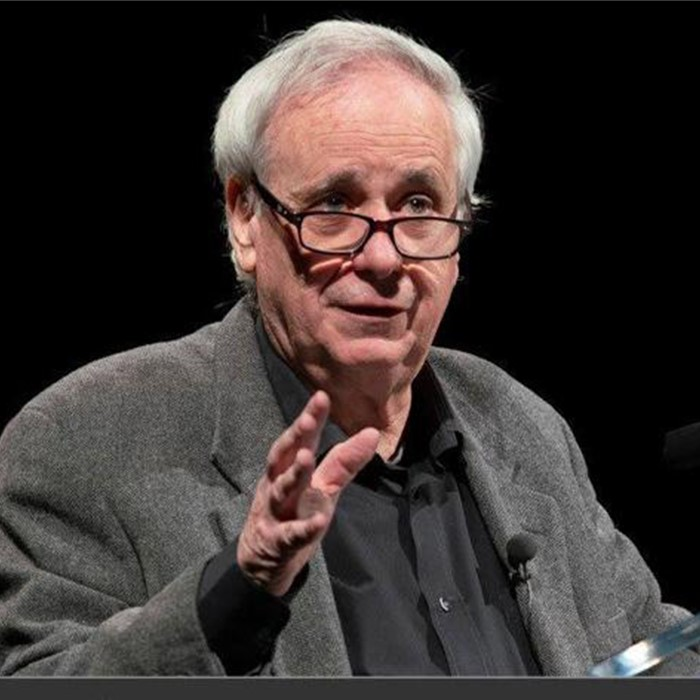

No comments:
Post a Comment